Category: I&B Ministry

  • Reproduce newspapers in electronic form: I&B Ministry

    Reproduce newspapers in electronic form: I&B Ministry

    NEW DELHI: The government intends to bring ‘reproduction of any newspaper in electronic form’ within the ambit of the Press and Registration of Books Act.

    In the amendments proposed to the PRB Act, the Information and Broadcasting Ministry (I&B) has also proposed inclusion of a section which says ‘paid news’ means publishing any news or analysis in the publication for a price in cash or kind as consideration.

    The amendments, which have been placed on the website of the ministry, also says that ‘facsimile edition’ of a publication means an exact replica in full or in part of the original edition of a foreign publication ‘in so far as the contents concerned and may not include title’, subject to the condition that any page is not published in part.

    The government also proposes to establish a Press and Registration Appellate Board to be constituted by the central government, by notification in the official gazette, consisting of a chairperson and another member, to be nominated by the Press Council of India, established under section 4 of the Press Council Act 1978 from among its members.

    It says any dispute relating to registration of newspapers or publications would be referred to a ‘specified appellate authority’ that may be prescribed by the central government.

    Under the amendments, publication means newspapers, magazines, journals or newsletters printed periodically and published in India ‘including its reproduction in electronic form or any syndication, facsimile edition, and Indian editions of periodicals published outside India.’

    While noting that the Press Registrar General will consider all applications of new titles ‘as soon as practicable’, the amendment says an application for a title may be rejected if it is ‘same or similar to that of a known foreign publication’, subject to the proviso that ‘the same or similar title shall not be rejected if the Indian entity seeking the title has a tie-up with the owners of the title of such a foreign publication’.

    The amendment further says that no publication shall be printed and published in India except with the prior approval of the central government granted if such publication is owned by or has investment from any individual who is not an Indian citizen or foreign unincorporated body of individuals or body corporate incorporated under the law of any country other than India.

    Furthermore, the Press Registrar General may reject, after giving the person concerned an opportunity of showing cause against the action proposed to be taken, and holding an inquiry into the matter, if he is satisfied that the publication mentioned in the declaration is found indulging or having indulged in the practice of ‘paid news’, on the basis of adjudication by the Press Council of India or any other quasi-judicial/judicial authority. Till a decision is taken, the Press Registrar General may suspend the publication of such publication.

    Furthermore, any person aggrieved by an order of a specified authority refusing to authenticate a declaration under section 10 or cancelling a declaration under section 19 (l) (a) to (d) may appeal within 60 days from the date on which such order is communicated to him to the Press and Registration Appellate Board and may entertain an appeal after the expiry of the said period, if it is satisfied that the appellant was prevented by sufficient cause from appealing on time.


    The Appellate Board may, after calling for the records from the specified authority and after making such further inquiries as it thinks fit, confirm, modify or set aside the order appealed against. The decision of the Appellate Board shall be final in respect of provisions given in sub section 19(1) (a) to (d).

    Any person aggrieved by an order of the specified authority for suspension of publication under the provision of section 19(1)(e) will still be free to approach a court of law.

    In case of change of name or place of press, a fresh declaration will not be necessary if this information is given to the specified authority within five days.

    It shall be the duty of the publisher, and owner in the absence of the publisher, of every publication ‘to furnish details of the advertisement revenue of the publication as and when asked for.

    Whoever prints or publishes any book or publication otherwise than in conformity with the provision of section 3 will have to explain the reasons for this and to complete the formalities as specified in this section.

    In its penal provision, the government has said that any contravention of sub-section (1) will invite a fine not exceeding Rs 5,000 in addition to suspension of the publication for a period of 30 days.

    Furthermore, whoever owns any press, other than in conformity with the provision of section 4 will have to explain for such activity and to complete the formalities as specified in that section. For contravention of sub section (1), the person shall be liable to a fine not exceeding Rs 5,000 in addition to sealing of the printing press for a period of 30 days.

    The amendment says that ‘In particular and without prejudice to the generality of the foregoing power’ such rules may provide for all or any of the following matters, namely: the period of suspension of the declaration under sub-section (i) of section 19 , and the manner of filing appeals to the specified appellate authority under sub-section (1) of section 20.
  • Govt. defends advisory to TV news channels on PM’s Independence Day Speech

    Govt. defends advisory to TV news channels on PM’s Independence Day Speech

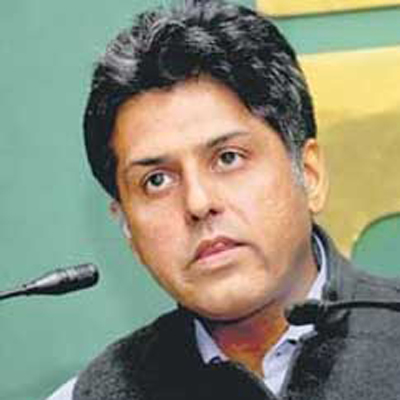
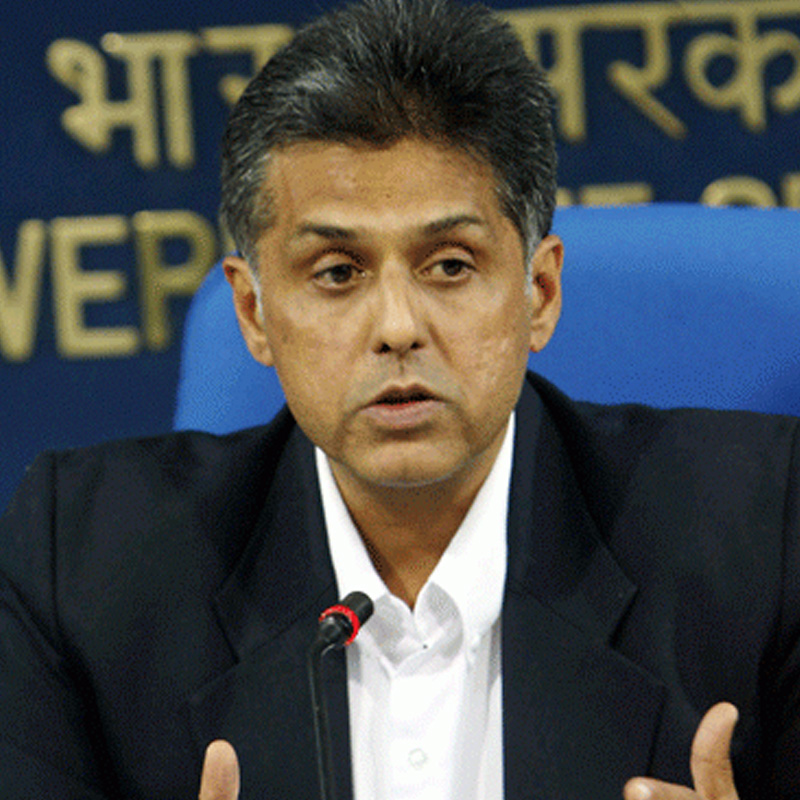
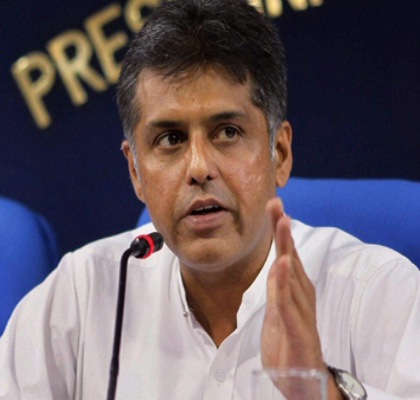
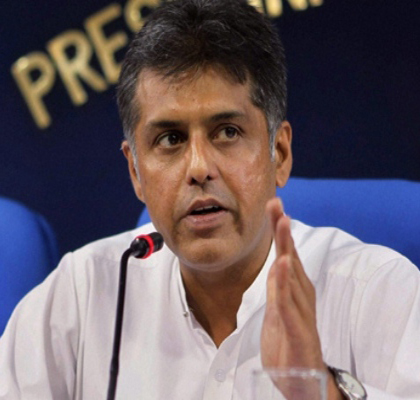
    NEW DELHI: Information and Broadcasting Minister Manish Tewari today staunchly defended the advisory issued by his Ministry asking news television channels to make a distinction between a speech delivered by the Prime Minister from the ramparts of Red Fort on Independence Day and speeches made by different political leaders.

    He said at a press meet here that the President’s address to the nation on the eve of Republic Day or the Prime Minister’s address on Independence Day were not speeches made as leaders of any party but as leaders of the nation. It was therefore wrong to draw parallels between these speeches and those made by leaders of different political parties.

    At the same time, he drew attention to the word ‘advisory’ and said the Ministry’s viewpoint was meant to be just that and not any dictat to the media.

    He said the present government had always stood for freedom of the media and would continue to do so.


    Referring to a question about a film on Sardar Patel, he said that the National Film Development Corporation would consider such a proposal if any filmmaker plans to do so.

    He reiterated that while the United Progressive Alliance had always given newspaper advertisements on the birth and death anniversaries of eminent leaders, but it was the previous National Democratic Alliance which had failed to do so, according to figures given by the Directorate of Advertising and Visual Publicity.

    Referring to the government’s view on opinion polls conducted by different media publications before the elections, he said that his party was not opposed to them but it could not be denied that such polls could be manipulated. He said the Congress party’s stand on this had been consistent. He said that the Central Election Commission had in fact sought the opinion of all political parties on this issue. While the stand of his party was consistent, the Bharatiya Janata Party had been opposed to opinion polls in 2004 but had supported these in its present view given to the Commission.    

  • Tewari issues clarification on Sardar Patel ad releases by govt

    Tewari issues clarification on Sardar Patel ad releases by govt

    NEW DELHI: The Government gave out 2164 newspapers advertisements on the occasion of the birth anniversary of Sardar Vallabhbhai Patel between 1998 and 2003.

    Interestingly, the Information and Broadcasting Ministry said in a statement in response to statements by certain political leaders that no advertisements were released during the years 1999, 2000 and 2001.

    However, 20,915 newspapers were given the advertisement between 2004 and 2013. No advertisement was given in the year 2008. 


    The Ministry said the Directorate of Advertising and Visual Publicity had been regularly releasing advertisements on the birth anniversary of prominent national leaders including Sardar Patel.

    In this context, I and B Minister Manish Tewari said: “The Ministry of Information & Broadcasting has always followed a policy to acknowledge the contribution of prominent national figures in nation building by releasing advertisements. The advertisements released on the birth anniversary of Sardar Patel are part of the continued policy of this Ministry of expressing gratitude to great leaders for instilling confidence and inspiration in the young minds.”  

  • I&B Ministry dictates channels to follow the programme code

    I&B Ministry dictates channels to follow the programme code

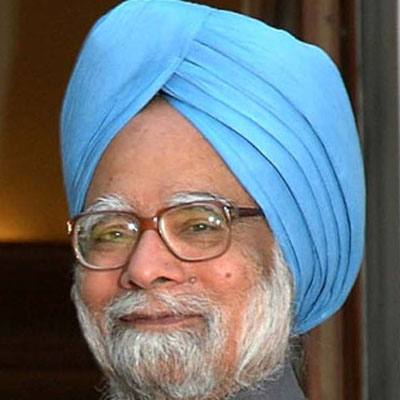
    NEW DELHI: Taking umbrage at constant comparisons of the speech of Prime Minister Manmohan Singh on Independence Day to that of other political leaders, the Information and Broadcasting Ministry today advised all News and Current Affairs TV Channels to follow the provisions of the Programme and Advertising Codes ‘scrupulously’.

    An advisory issued by the Ministry also said it was necessary to keep ‘the significance of the solemn days like Independence Day, etc. in view while carrying the speech of the Prime Minister and the President of India’.

    The Ministry said any further violation of the provisions of the Programme/Advertising Code would attract penal provisions stipulated in Section 20 of the Cable Television Networks (Regulation) Act 1995 and the terms and conditions of uplinking and downlinking guidelines.

    The advisory was issued in exercise of powers under Uplinking/Downlinking Guidelines issued by it, the terms of permission granted to the Channel to uplink or downlink TV Channels and under Section 20 of the Act.


    The Ministry said that the ‘telecast of this kind of programme on a day when the entire nation was celebrating its 67th Independence Day is highly objectionable. The Prime Minister spoke from the Ramparts of the Red Fort as the Prime Minister of the country and not as a leader of a political party.’

    ‘Therefore, on such a solemn day to put him in an artificial competition with anyone is not appropriate. On Independence Day when the Prime Minister addresses the nation and the country is united in the emotions of national integrity, patriotism and national fervor, the attempt by certain TV channels to denigrate the status of the Prime Minister can best be described as sensational against all norms of ethical journalism.’

    The Ministry pointed out that under Section 5 of the Act read with Rule 6 (1Xa) & (i) of the Cable Television Networks Rules 1994 as amended from time to time, ‘no programme can be transmitted/retransmitted on any Cable Service which contains anything offending against good taste or decency; and criticises, maligns or slanders any individual in person or certain groups, segments of social, public and moral life of the country.’

    It added that according to the basic conditions/obligations of permission/approval for
    Uplinking/Downlinking of TV Channels in India, the channels are bound to follow the Programme Code and Advertising Code as prescribed under the Act and rules framed there under. 

  • FTII to get Rs 800 mn for infrastructure development in 12th Plan

    FTII to get Rs 800 mn for infrastructure development in 12th Plan

    NEW DELHI: The Film and Television Institute of India (FTII) is expected to receive a sum of Rs 800 million under the 12th Plan for infrastructure development.

    Information and Broadcasting Minister Manish Tewari told Parliament that for the 11th Plan an amount of Rs 373.1 million was provided. Funds are provided under Plan and Non-Plan heads to the Institute.

    The Institute has reported an average teacher-student ratio of 1:7. The salaries of the staff and faculty are governed by Pay Commission recommendations. The development plans proposed by the Institute are taken up as part of Plan schemes and funds are provided accordingly. Every administrative/financial issue being brought to the notice of the Ministry is addressed at highest level.

    Courses are being conducted regularly from 2009 onwards. Due to backlog in completion of courses, a delay has occurred in awarding certificates. Notice has been issued for students who have successfully completed their courses, to collect their diplomas. FTII has also initiated steps to clear backlog in a time bound manner.

  • I&B frowns on news channels showing adult film content

    I&B frowns on news channels showing adult film content

    NEW DELHI: The Information and Broadcasting Ministry has asked news and current affairs channels not to show as part of news any clips from feature films that violate the Programme Code prescribed under the Cable Television Networks (Regulation) 1995.

    In an advisory issued by the Ministry, it took note of the fact that certain news channels were showing film clips not suitable for unrestricted public exhibition.

    It has been pointed out by the Ministry that Rule Six of the Cable Rules 1994 are clear that no programme or film scenes that are not suitable for unrestricted exhibition or have been certified by the Central Board of Film Certification as suitable for unrestricted exhibition will be shown.

    Furthermore, the Programme Code also makes this amply clear, the Ministry said in the advisory issued under Section 20 of the Act.

  • Several cases of paid news during assembly polls: Soni

    Several cases of paid news during assembly polls: Soni

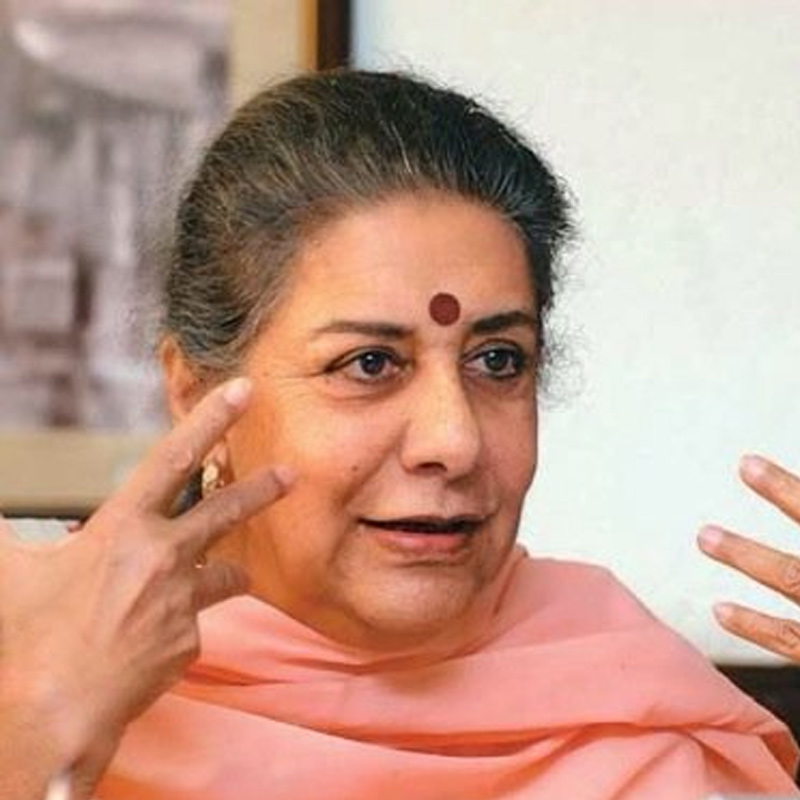
    NEW DELHI: Information and Broadcasting Minister Ambika Soni has said that the recent Assembly elections in five states had thrown up several cases of paid news.

    She said: “Special observers were appointed (by the Election Commission) to check the menace of paid news in the recent Assembly elections as well as in the elections in Tamil Nadu earlier. Some pink papers (business newspapers) have also been reported to have indulged in paid news.”

    Speaking on the sidelines of an event here, she drew attention to the large number of players in the electronic and print media, and its impact on news coverage.

    She regretted that the malaise of paid news which has grown especially since 2009, was not limited just to election time.

    “(Paid news) is something which weakens the freedom of the media, and all who argue for it,” Soni added.

  • Radio For The Community

    Radio For The Community

    Radio is theater of the mind. Once you get people laughing, they’re listening and you can tell them almost anything.

    That’s the motto of Radio MUST, Socho, seekho, bolo, badlo, chamka do duniya ko, jeeet lo is jahaan ko….

    (This motto has been composed into a tune by a few students and recently Shankar Mahadevan very cordially sung it for us)

    Community radio – as the name suggests – is radio for the community, by the community and of the community.

    Of course, the meaning of the word community is interesting and differs from person to person. Today, in the age of radio revolution, the airwaves may appear to be jam packed, but there is still a lot of space for a community radio.

    Essentially in India, the concept of community radio is still very unclear as it was never cultivated. But after the Supreme Court verdict that the airwaves are public property, many licences for community radios are being given all across the country. But still, for us Indians who still can’t properly differentiate between traditional radio and the new private radios, community radio is altogether a new concept. Many people will further ask, ‘do we really need another kind of radio? Or is there space for such kind of a radio?’

    The community radio movement has gained a lot of pace over the years in the US, UK South America and Australia. In places like Bolivia, there are community radios even for minors and are doing pretty well. It makes sense to have a dedicated community radio for say NRIs residing in a English county or a community radio that caters to the specific needs of the farmer community. Basically a community radio is a non profit, non commercial application used to share information among the given community.

    The traditional public radio broadcasting service is a strictly guarded and regulated medium of the government to provide information which they think is right. And we have the new players i.e. the private radio broadcasters for whom it’s a medium to invest in the long run and make money out of entertainment.

    Having stated the different types of radio, we need to understand a very basic thing and that is ‘radio par dikhta nahi hai’. One who truly understands this fundamental point will rule the airways. Maybe that’s the reason why most of the radio stations in the metros sound the same.

    But talking about community radio, in today’s world, it has a great role to play in terms of providing correct, precise and useful information to the people on a host of topics. Be it farming practices, garbage management, health consciousness, etc. Sounds pretty serious and gross… But if all this information can be transferred through the radio waves in an entertaining manner, the purpose is served. And that’s exactly what you mean by infotainment.

    Many universities across the country are now being given licences to operate community radios in their campuses. A community radio service can be heard across a 15 km area as it can have a maximum of 50W transmitter. Anna FM of the Annamalai University, Chennai, was the first campus community radio to be set up in India and it is still doing very well. Many universities have followed but have not been able to match up to the level of broadcast set by Anna FM.

    Last year, Mumbai University also got a license to operate an FM community radio from its campus. Not many people have imagined or tried to use the FM radio waves to provide academic information to the people. But Radio MUST @107.8FM (Mumbai University student’s transmission) will dare to explore the hidden treasure of infotainment through this community radio. In a city like Mumbai, which already has eight FM stations, what can a simple FM community radio offer or can it make a difference?

    With nearly 75 departments in the university, along with 400 colleges in and around Mumbai affiliated to the university, Radio MUST has huge potential. Also, being a part of the sesquicentennial celebrations (150 yrs) of the university, people have great expectations from Radio MUST. With the radio station coming up at the Kalina campus, this FM community radio needs to be handled with care and in an innovative manner.

    Here we would like to set a benchmark in terms of the programming. With Mumbaikars already having had a feel of what FM radio is all about, it will be a great challenge at Radio MUST to provide a similar kind of programming and packaging without the popular music.

    The content will be sheer infotainment. Information ranging from academic to social issues to civic responsibilities to slum redevelopment to career options to college festivals to exams and more. The possibilities are unlimited. Not just students but even ex students and volunteers can join in the bandwagon to share important and interesting information through this community radio.

    We at Radio MUST hope to utilize the radio waves efficiently with a lot of entertainment. This community radio will be a professionally managed non commercial radio and may just turn out to be the nursery for future radio professionals. This radio station will be run by all the students and these students will get a stipend paid by the university for all the work they do. So it becomes a double incentive for all.

    We also plan to upgrade out systems in the near future as the colleges affiliated to Mumbai University are spread over a large area geographically. Also, we plan to stream it live on the Mumbai University website for greater coverage.

    Already students from various colleges are working on a variety of programs. So you may soon be able to tune in to Munnabhai and Circuit discussing management fundas, Devdas and Chandramukhi talking about HIV AIDS awareness, James Bond talking about careers in forensic sciences. The list is pretty impressive… mixed together with information about exams, results, festivals, college happenings, social messages etc. this will be an open forum for all who want to make this city a better place to live.

    And who better than the future of the country, the youngsters, the students, to do the job. With all the rules and regulations for a FM community radio being followed, Radio MUST will become a must for all of us.

    Do you have an opinion on brands taking a social stance. Help Pankaj Athawale write the next chapter. Post your thoughts to editor@indiantelevision.com

    (The author is Mumbai University FM community radio head Pankaj Athawale)

    (The views expressed here are those of the author and Indiantelevision.com need not necessarily subscribe to the same)

  • CAS: Government to revert to Delhi HC next week

    CAS: Government to revert to Delhi HC next week

    NEW DELHI: The government is likely to revert to the Delhi High Court with a status report on CAS’ rollout early next week even as the Indian Broadcasting Foundation (IBF) has raised several queries on addressability’s efficacy.

    “A senior official of the information and broadcasting ministry admitted that it has to go back to the court with a feedback on CAS, but said it’s timing is still not clear.

    “One month for us would be calculated from the day we received a certified copy of the court order. As on 10 March, a verbal order was passed,” the official said.
    Still, the official also added that the court would have to be apprised of
    the progress on CAS front and “it would be done.” With diverse signals emanating from the industry stakeholders, the government is slightly confused, the official said.

    However, the deluge of facts and figures relating to CAS and various time lines proposed by stakeholders also gives the government some breathing space.

    On 10 March, the Delhi High Court directed the government to implement CAS in Kolkata, Delhi and Mumbai within a month’s time. The judgment came on a petition filed by some MSOs, including INCablenet and Hathway.

    While a large section of the cable fraternity has been pushing for quick
    implementation of CAS, a section of broadcasters and consumer organisations want a certain comfort level before CAS is rolled out.

    IBF AGAINST PRICE CONTROL UNDER CAS

    Meanwhile, the IBF in a submission to the government has said that there should not be any price control in a CAS-enabled regime and the issue of piracy should be addressed as a priority.

    “Under the Trai (sector regulator) recommendations to government for CAS implementation, presented on 1 October, 2004, it was recommended that there should be no price control in addressable markets. In view of this, we believe that for CAS notified areas, there should be no price fixation,” the IBF letter states setting the cat amongst the pigeons (read the cable operators).

    The letter, a copy of which is available with Indiantelevision.com, drops broad hints that pay broadcasters would not give a la carte price for consumers — something that has been in demand for over a year now during confabulations on CAS.

    “Broadcasters are whole sellers to cable operators as the consumer price for cable TV is fixed by the operators,” IBF has said, adding all pending litigations and outstanding dues involving the cable industry must be resolved before CAS is rolled out.

    Hinting that the claims of MSOs and cable ops on availability of set-top boxes might be exaggerated, the IBF goes on to state that effective steps should be taken to ensure that in the notified areas, adequate number of boxes is available with MSOs and last mile operators to cater to the demand.

    “There should be no instance that consumers want to install STBs and
    MSOs/LCOs are unable to provide them. MSOs/LCOs would also need to ensure that there is proper coordination between them and their LCOs. The MSOs/LCOs should provide a detailed STB implementation plan,” the IBF letter says.

    The broadcasters have also urged the government to ban carriage fee, which is demanded by cable operators and also given by most major broadcasters whether free to air or pay.

    “The IBF members are of the view that the government should make sure that cable operators not demand carriage fee from the broadcasters… in view of the fact that they collect subscription revenue from the subscribers,” the letter states.

    Another point raised by the IBF is that since CAS is being mandated by the government, unlike in other countries where market forces bring about its rollout, other addressable systems like DTH, IPTV and broadband should also be similarly mandated to create “a level playing field” for those platforms.

  • Prasar Bharati grant down, fourfold increase in loans

    NEW DELHI: Even as the grant-in-aid to Prasar Bharati in the budgetary allocations for the Information and Broadcasting Ministry for 2007-2008 has come down, there has been a more than fourfold increase in the loans to the public broadcaster over the current financial year.

    The loan to Prasar Bharati has been fixed at Rs 2,174.4 million as compared to Rs 411.1 million as sanctioned in the Revised Estimates for 2006-07. The grant-in-aid has come down further, from Rs 11,748.2 million in the Revised Estimates for 2006-7 (as compared to the Budgetary allocation of Rs 12,340.7 million) to Rs 10,639.3 million. All this is apart from the investment of Rs 2,174.4 million.
    In keeping with a decision taken with the budget for 2000-01, Prasar Bharati is being funded as a full-fledged autonomous body with effect from April 2000. The grant-in-aid is to cover the gap in resources of Prasar Bharati in meeting its revenue expenditure, while the loans are to finance the capital expenditure.

    The total budgetary allocation for the I&B Ministry for 2007-08 is Rs 16,818.4 million as compared to Rs 16,600 million in the Revised Estimates for 2006-07 (as against a Budgetary allocation of Rs 17,160 million in the Budget).

    While there is no announcement of any new programmes, the Budget document says the allocation of Rs 220.8 million for buildings and machinery includes funds for the multi-storey building of the Films Division in Mumbai, the Phase II building of the National Film Archives of India in Pune, and a mini Media Centre of the Press Information Bureau in Delhi.