Category: I&B Ministry

  • MIB urges industry to buck up on implementing TV ratings

    MIB urges industry to buck up on implementing TV ratings

    NEW DELHI: There has been some hue and cry about the manner in which the Ministry of Information & Broadcasting (MIB) has apparently rushed to notify the latest policy guidelines for TV ratings. Following the notification, there have been fears that unless TAM goes to court and gets a stay order on the MIB’s guidelines, industry will most likely be without TV ratings for at least six to seven months. This is because Broadcast Audience Research Council (BARC) states that it will be ready to roll out its ratings only in the third or fourth quarter of 2014. 


    This has alarmed professionals such as Madison chairman Sam Balsara who has gone on record to state that the industry should plead with the Ministry to delay the implementation of the guidelines, and that the industry cannot do with a TV ratings-dark period. 


    MIB officials are pretty clear that this time it is for real. Says a senior Ministry official: “The entire TV ratings shouting match has been going on since 2007. Industry has been complaining that TAM’s methodology is flawed, and they have done nothing about it over the years. And the murmurings against it have been going on for more than a decade.” 


    He goes on to add, that MIB intervened only on the industry’s insistence and now the industry will have to drink its bitter dose of medicine, no matter what. 


    “We have given the industry and TAM enough time to rectify the situation and find an amicable authentic and reliable solution,” says another MIB official. “The Amit Mitra committee report indicated what needs to be done way back n 2010. Why wasn’t it followed and why were corrective steps not taken by TAM or the industry? TAM will have to follow the guidelines and register with us before 30 days are up, otherwise cease operating. We are not against individuals or companies; we are clear that a due process and the rules for TV ratings need to be followed so that transparency and credibility are associated with TV viewership ratings.” 


    In fact, another MIB official was quite critical of the industry-backed TV ratings body BARC too. 


    “It’s taken them three years to get here,” the senior official says. “First, BARC told us that the ratings will be up and running by June 2013, then they told us they would do so by March 2014, and now they are saying September or October 2014. This is simply not acceptable. We timed our rules and regulations based on the fact that BARC would be up by March 2014 and that industry would not have to be troubled by the absence of ratings.” 


    Another senior official appeals that the MIB cannot keep waiting forever for industry to get its act together. “The industry has been dragging its heels for a long time on the TV ratings issue. Now is the time for it to sprint to the finish line, and faster than ever before,” he says. The longer it takes to get its ratings going, the longer it will be without ratings.”


    The fact that TAM Media might challenge the Ministry’s notification in court has not disturbed the MIB at all. “If it goes to court, we will fight it tooth and nail,” says the MIB official. “Industry has to understand, the MIB means business. Let industry also be serious about its business.” 


    “It’s strange, isn’t it?” another official asks rhetorically with a smile on his face. “Industry complains when the ratings are there; they are complaining now that the ratings will not be there for some time. Let it realise that indeed there will be no ratings for a while and come up with a workable solution in their absence which works well for broadcasters, advertisers and agencies. The ball is in industry’s court now. ”

  • MIB issues order on guidelines for TV rating agencies

    MIB issues order on guidelines for TV rating agencies

    MUMBAI: The clock has started ticking as of yesterday, 16 January, when the Ministry of Information and Broadcasting (MIB) passed its order regarding TV rating guidelines. The ‘policy guidelines for television rating agencies in India’ have been issued by the Ministry after the cabinet approved it on 9 January.


    The guidelines will come into effect thirty days from the date of issuance of the order. Current rating agency TAM now has 29 days left to bring the guidelines into effect and comply with it.


    Attached below is the full annexure of the guidelines.


    Click here to read the annexure


    Await detailed report…


    Click here to read the earlier report

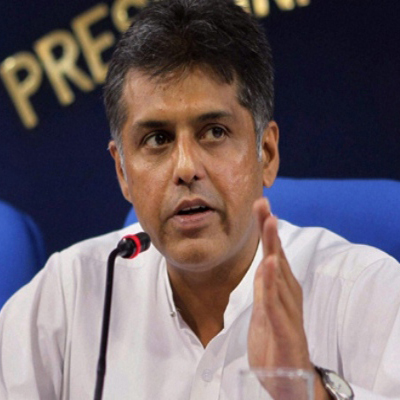
  • I&B minister  Manish Tewari inaugurates BES Expo 2014

    I&B minister Manish Tewari inaugurates BES Expo 2014

    NEW DELHI: The Information and Broadcasting minister Manish Tewari inaugurated the 20th International Conference and Exhibition on Terrestrial and Satellite Broadcasting – BES Expo 2014, today at New Delhi. Speaking on the occasion he said, “The last two decades have witnessed exponential growth in both the broadcasting and telecom sectors, giving rise to 800 plus television channels.”

    Commenting on the problems and challenges faced by the broadcasting sector due to competition for market share, he said the union cabinet has recently approved the proposal of the Ministry of Information & Broadcasting for a comprehensive regulatory framework in the form of guidelines for Television Rating Agencies in India. These guidelines cover detailed procedures for registration of rating agencies, eligibility norms, terms and conditions of registration, cross-holdings, methodology for audience measurement, a complaint redressal mechanism, sale and use of ratings, audit, disclosure, reporting requirements and action on non-compliance of guidelines. 

    Also speaking at the function, Ministry of Information & Broadcasting secretary Bimal Julka, said the ministry is planning to strengthen community radio movement in India, which would help in giving voice to the voiceless. 

    The BES expo is being attended by over 300 eminent broadcasters, media industry professionals and experts from India and abroad. The three day long expo will have deliberations on issues such as terrestrial broadcasting, future of TV, digitization, disaster broadcast systems for information dissemination, regulatory framework in broadcasting and other important issues related to the broadcasting industry. 

  • I&B ministry to take up cable TV monopoly recommendations

    I&B ministry to take up cable TV monopoly recommendations

    MUMBAI: The inter-ministerial committee in the information and broadcasting ministry (MIB) is likely to take up the Telecom Regulatory Authority of India’s (TRAI’s) recommendations on controlling monopoly/market dominance in the cable TV sector this week. These were released by the TRAI on 26 November 2013. This was revealed by MIB minister Manish Tewari to the Times of India (TOI) yesterday.


    According to the TRAI recommendations, a barometer known as the Herfindahl Hirschman Index (HHI) is to be used to measure monopoly of MSOs or cable TV service providers in a market which as defined as a state (with certain exceptions).


    The recommendations state that “the threshold value for any individual/group/entity contribution to the market HHI should be no more than 2500.”  According to the TOI report, this constitutes 50 per cent market share, the market being defined as a state.


    The TRAI recommendations further state that “any M&A among MSO(s) or between an MSO and LCO in a relevant market shall require the prior approval of the regulator. The decision on any proposal, complete in all aspects, shall be conveyed within 90 working days.”


    They go on to further add that in “the cases where any group’s contribution to HHI in a market is more  than 2500 as on the date of issue of guidelines, such legal entity/ ‘group’ shall take necessary remedial measures, within 12 months from the date of issue of guidelines, so as to limit  its ‘control’ in various MSO(s)/ LCO(s) in such a way that the  contribution to market HHI of that ‘group’ reduces to less than or equal to 2500.”


    Tewari told the TOI that the ministry was “seriously looking at introducing a cap on the market share of MSOs to stop monopolistic practices, whether due to political pressure or political ownership, to protect plurality and diversity of content.” 

  • TV ratings: Ownership & FDI questions

    TV ratings: Ownership & FDI questions

    MUMBAI: To have foreign direct investment (FDI) in TV ratings or not, that is the question. And the recently-cleared TV ratings guidelines by the Cabinet Committee of Economic Affairs (CCEA) have brought this to the fore by their silence on this score. While announcing that the CCEA had given the go ahead to the ministry of  information and broadcasting (MIB) last week to the Telecom Regulatory Authority of India (TRAI)-recommended  guidelines for a regulatory framework for TV ratings in India,  minister Manish Tewari had this to say.


    “In so far as FDI is concerned we would make a separate reference to TRAI with regard to the quantum and need of FDI that should be permitted in ratings agencies. After the TRAI recommendations, the question of allowing FDI would be looked at. So as we speak, no FDI will be permitted in TV ratings agencies till we don’t have a recommendation on it.”


    Although the 2013 recommendations do not have any mention of FDI, it is noteworthy to point out that TRAI’s 2008 consultation paper on TV ratings does. The paper says that stakeholders feel that FDI should be restricted to 20 per cent in a TV ratings agency.  It also goes on to suggest that since no security issues were involved and little or no competition was prevailing (only two agencies existed at that time – TAM and aMap  and no regulation existed), that it would be okay of no if no FDI limit was imposed.  “Generally FDI encourages world class technology and international best practices,” TRAI had stated in the paper.


    So even as the TRAI was of the opinion that FDI was all right in 2008, in 2013 it gave the issue an ignore. Currently FDI limits for broadcasters are 100 per cent  for non-news and current affairs channels, for news channels 26 per cent, for cable TV 74 per cent, for DTH 49 per cent, for print 26 per cent for general news etc.


    Tewari stated that the question of FDI would be looked at after the TV ratings guidelines are notified by the ministry. Could the earlier recommendation of 20 per cent work as a guideline today? Or is the government going to be averse to FDI totally?


    Let us take a look at the other major guideline of cross holding in the TV ratings provider. The guideline states very clearly:  ‘No single company/legal entity either directly or through its associates or interconnect undertakings shall have substantial equity holding that is, 10 per cent or more of paid up equity in both rating agencies and broadcasters/advertisers/advertising agencies.’


    If one looks at the holding pattern of Mediametrie – the French ratings agency – which is soon to be announced as the Broadcast Audience Research Council’s (BARC’s) ratings partner,  France Televisions holds 22.89 per cent equity in it, TF1  10.8 per cent, Radio France 13.5 per cent and Union des Annonceurs 11.77 per cent.


    France Televisions in turn owns 49 per cent of TV5 Monde while AEF (formerly called France Monde) that runs France 24 owns 12.6 per cent of France Televisions. Quite a convoluted holding structure, but clearly one where broadcasters could be owning more than 10 per cent equity in the TV ratings provider.


    However, BARC officials are quick to clarify that it is BARC which will be providing the ratings and not Mediametrie. The latter is only a technology supplier and ratings are being outsourced to it. It owns no equity in the ratings company which is BARC. Hence, the question of more than 10 per cent equity ownership by broadcasters in Mediametrie is irrelevant and there will be no violation of TRAI’s guidelines, they emphasise.


    BARC, on its part is a non-profit organisation under section 25 of the Companies Act, with nominated representatives from the Indian Broadcasting Foundation, Indian Society of Advertisers, and Advertising Agencies Association of India. In a response to TRAI’s consultation paper, BARC had stated that even though the three may have conflicting interests in the ratings process, its articles of incorporation clearly state that “each has an equal voice in the design, and monitoring of the rating system, and in the administration of BARC, irrespective of the funding pattern.”


    TAM, on the other hand, has woes on both fronts as it not only does not comply with the FDI guidelines it also is has issues on the cross holding guideline as it is owned jointly by the WPP group and AC Nielsen. It is even listed on the WPP site as one of its companies.


    The key question that everyone is asking at the time of writing is whether TAM Media will move court against the guidelines, as they have come into force so many years after it has been operating in India with the equity and cross holding structures that it has. Or will it give up the fight and pack up just like Coca-Cola did in the seventies, when the government ordered it to reduce the FDI in it to 40 per cent.

  • Cabinet gives go-ahead to TV ratings regulatory mechanism

    Cabinet gives go-ahead to TV ratings regulatory mechanism

    NEW DELHI:  The Union Cabinet today gave the go-ahead to the television ratings guidelines ,which had earlier been proposed by the Telecom Regulatory Authority of India (TRAI) in September 2013, cleared by the Ministry of Information and Broadcasting (MIB) in November. The ministry had then forwarded the proposed guidelines for the cabinet’s approval. With the cabinet’s clearance the MIB will now have regulatory control over TV ratings agencies in India.


    This was disclosed by MIB minister Manish Tewari after the cabinet meeting.


    The guidelines cover detailed procedures for registration of ratings agencies, eligibility norms, terms and conditions of registration, cross holding restrictions, methodology of audience measurement, a complaint redressal mechanism, sales and use of ratings, audit, disclosure norms, reporting requirements and action on non-compliance of guidelines etc.


    The guidelines state that TV ratings providers – including TAM Media which is the industry standard currently – will have to first get registered with the MIB. The registration will be given to them only if they comply with the rules the TV ratings guidelines have enumerated. Among these figure:


    * No single company / legal entity either directly or through its associates or interconnect undertakings shall have substantial equity holding that is, 10 percent or more of paid up equity in both rating agencies and broadcasters/advertisers/advertising agencies. 


    * The ratings agency should have a net worth of at least Rs 20 crore.


    * Panel homes for audience measurement shall be drawn from the pool of households selected through an establishment survey. A minimum panel size of 20,000 is to be implemented within six months of the guidelines coming into force. Thereafter the panel size shall be increased by 10,000 every year until it reaches 50,000. 


    * Ratings ought to be technology neutral and shall capture data across multiple viewing platforms viz. cable TV, Direct-to- Home (DTH), Terrestrial TV etc. 


    * Secrecy and privacy of the panel homes must be maintained. 25 percent of panel homes shall be rotated every year. 


     * The rating agency shall submit the detailed methodology to the Government and also publish it on its website. 


    * The rating agency shall set up an effective complaint redressal system with a toll free number. 


    * The rating agency shall set up an internal audit mechanism to get its entire methodology/processes audited internally on quarterly basis and through an independent auditor annually. All audit reports to be put on the website of the rating agency. Government and TRAI reserve the right to audit the systems /procedures/mechanisms of the rating agency. 


    * Non-compliance of guidelines on cross-holding, methodology, secrecy, privacy, audit, public disclosure and reporting requirements shall lead to forfeiture of two bank guarantees worth Rs 1 crore furnished by the company in the first instance, and, in the second instance shall lead to cancellation of registration. For violation of other provisions of the guidelines, the action shall be forfeiture of bank guarantee of Rs. 25 lakh for the first instance of non-compliance, forfeiture of bank guarantee of Rs 75 lakh for the second instance of non-compliance and for the third instance, cancellation of registration. 


    * A time of 30  days would be given to the existing rating agency to comply with the guidelines. 


    * The guidelines would come into effect immediately from the date of notification. 


    The Guidelines for Television Rating Agencies in India are designed to address aberrations in the existing television rating system. These guidelines are aimed at making television ratings transparent, credible and accountable. The agencies operating in this field have to comply with directions relating to public disclosure, third party audit of their mechanisms and transparency in the methodologies adopted. This would help make rating agencies accountable to stakeholders such as the Government, broadcasters, advertisers, advertising agencies and above all the people. 


    Television Rating Points (TRPs) have been a much debated issue in India since the present system of TRPs has reportedly not found favour with industry, consumer groups, broadcasters, agencies, government who have said they are riddled with several maladies such as small sample size which is not representative, lack of transparency, lack of reliability and credibility of data etc.


    In 2008, the MIB had sought recommendations of TRAI on various issues relating to TRPs and policy guidelines to be adopted for rating agencies. TRAI, in its recommendations in August 2008, had amongst other things recommended the approach of self-regulation through the establishment of an industry-led body, that is the Broadcast Audience Research Council (BARC). 


    The MIB had constituted a Committee under the Chairmanship of Dr. Amit Mitra, the then Secretary General FICCI, in 2010 to review the existing TRP system In India. The committee also recommended that self-regulation of TRPs by the industry was the best way forward. 


    Since, the BARC could not operationalise the TRP generating mechanism, the  sought recommendations of TRAI in September 2013 on comprehensive guidelines/accreditation mechanism for television rating agencies in India to ensure fair competition, better standards and quality of services by television rating agencies. TRAI recommendations on Guideline for Television Rating Agencies were received in September 2013. While supporting self-regulation of television ratings through an industry-led body like BARC, TRAI recommended that television rating agencies shall be regulated through a framework in the form of guidelines to be notified by MIB. It also recommended that all rating agencies, including the existing rating agency, shall require registration with MIB in accordance with the terms and conditions prescribed under the guidelines. 


  • Tewari believes internet represents the largest ungoverned space on earth

    Tewari believes internet represents the largest ungoverned space on earth

    NEW DELHI: While border control, visa regulations and immigration formalities were the ground realities in connecting the global youth, it is undeniable that the march of technology, through the use of the internet, has enabled them to become a part of the global conversation, Information and Broadcasting Minister Manish Tewari said today.


    Speaking at the Plenary Session of Youth Prasar Bharati Divas, Tewari said that internet represented the largest ungoverned space on earth and every two days more data is produced than since the dawn of civilisation to the year 2000. This technology has given rise to a virtual civilization that allows young people who have the desire and passion to connect with others with similar aspirations around the world.

    He said during his overseas travel in recent months, he has discovered that the younger generation has a common aspiration: to make a life for themselves and make the world a better place to live in. In this context, Tewari suggested that PBD should evolve a non-formal connect in an unstructured manner to allow the youth across the world to connect with one another seamlessly.

    The session provided insights into India’s fast emergence as a youthful and exuberant nation where approximately 50 per cent of the working population falls in the age group of 18- 35 years.


    There has been some reverse migration in which a number of experienced and educated NRIs are now returning home to use their knowledge to build an inclusive and economically sound future for the country.


    This has led to the creation of a unique synergy wherein young Indians worldwide are now set to shape the future of the Indian growth story. This synergy is expected to be directed by the core principle of inclusive prosperity and driven by innovation and technology.

  • The Year of Rapid Change

    The Year of Rapid Change

    By Ranjan Thakur

    The year 2013 witnessed a large number of activities in Prasar Bharati and Doordarshan.  A major achievement of Doordarshan was in rebranding its Free-to-Air DTH services as ‘DD Freedish’ which highlights its USP of being Free-to-Air.  Earlier, the name DD Direct Plus did not catch on because the rural audience could not connect with the name.  The name ‘DD Freedish’ now adequately conveys the USP of the product and the DTH service which is quite popular and far ahead of its paid rivals, is likely to increase its popularity further.

    The project of commissioning of enhanced capacity to 120 channels up from the present 59 channels is likely to be completed by March, 2014 and will substantially enhance the popularity of the product.  It is expected that given the background of the ongoing digitisation process in the country, a large number of cable users will shift to the DD’s Freedish in 2014 especially during the Phase III and Phase IV of the digitisation process when it will start touching the semi-urban and rural viewers.

     A matter of great satisfaction for Doordarshan has been the successful auction of the channel slots for the private channels on the DD’s Freedish platform.  A series of steps, including staggering of the auction process, enhanced the revenue of DD by nearly 40 per cent from the previous rounds of auction.  Presently, the platform is commanding an annual carriage fee of Rs 6 crore per channel due to its large reach.

    DD looks forward to the conclusion of the process of launching its international channel, DD India in the territory of Europe.  DD has received a very lucrative offer from one of the major operators in Europe for placement of DD India w.e.f. January, 2014, which is likely to be accepted with the approval of the Prasar Bharati Board soon.  DD India has already been launched in Canada and will be launched in the territories of Korea, Middle East and Central Asia in Early 2014. 

    The availability of DD India over the entire Europe including northern parts of Africa will substantially enhance the popularity of DD India globally.  As the stakeholders are aware that a global channel requires substantial investment, DD proposes to expand the global footprint of DD India in a phased manner after analysing the experience in Europe, Korea, Canada and Central Asia.

    Doordarshan is in the process of finalising its FPC for the expansion of its international channel which will be a mix of news and general entertainment.

    Doordarshan also successfully upgraded the four regional channels of Bihar, Uttar Pradesh, Madhya Pradesh and Rajasthan during 2013.  These channels were working in four hour terrestrial mode only while substantial investment in infrastructure, equipment and manpower had already been made.  In order to effectively utilise the investment made in these locations, a decision to upgrade these channels to 24 hour cable and satellite channel was taken and implemented within a period three months without any major investment. 

    The current TAM data indicates that while DD-Bihar and DD-Uttar Pradesh are already No 1, DD- Madhya Pradesh is No 2 while DD-Rajasthan is No 3, in their respective states in terms of popularity.  The upgradation of these four state channels is a major step forward to tap the regional television market.  DD now proposes to move on to upgradation of DD-Jharkhand, DD-Uttarakhand, DD-Chattisgarh and DD- Himachal Pradesh on the same pattern of the four channels.  It was our experience that the viewership of terrestrial channels was adversely affected in cable and satellite territories which needed to be addressed.  Given the success of the four regional channels upgradation, Doordarshan is confident that this process will be completed shortly and these channels are likely to be quite popular in their territory.

    We (at DD) expect the next year to be an exciting year when a number of these initiatives will start yielding results for DD with substantial enhancement of revenue besides sourcing of quality software.

    DD has enhanced its role in the industry’s body namely Indian Broadcasting Federation and has a place on the Board of Directors after quite some years.  DD expects to play its rightful role being the only public broadcaster in the country and share its experiences while lending its strength to the industry body.

    DD is on the Board of Directors of the Broadcast Audience Research Council (BARC), an initiative of the industry to develop alternative TV ratings.  DD has substantially increased its role in BARC and as the industry is aware, an alternate television rating system based on the audio watermarking technology is likely to be initiated by June, 2014.

    Doordarshan has set up a professional Audience Research Unit to analyse the available data related to the television rating points.  In the process, Doordarshan has shut down its Doordarshan Audience Research Team (DART), an in-house system.  The present practice of a professional Audience Research Unit has now brought DD at par with its private counterparts.

    Amongst several other major initiatives, Doordarshan is in the process of finalisation of external partners for monitoring its channel’s popularity of various networks, especially cable as there have been concerns that the law of the land is not being followed in this regard.  DD expects to partner with professional agencies in order to monitor the violations of the law which is likely to improve its viewership as in absence of any carriage fee being paid by DD, cable operators tend to put DD channels in the difficult to watch remote places.  DD has finalised the process to appoint a professional agency to provide electronic programming guide to its channels on all cable and DTH platforms besides upgrading its own EPG system on DD’s Freedish.

    Doordarshan is in the last stages of finalising the process of outsourcing its corporate advertisement sales of DD News which has faced some difficulties in the recent past.  The hiring of a professional agency is likely to improve its marketing of commercial time.  DD has also floated an RFP to improve its billing system which would network the entire Doordarshan Kendras for effective marketing, monitoring and billing of the commercial ad time.  DD has also focused on the Government business through its Development Communication Division and it is expected that a record increment of 40 per cent in Government revenue received by DD will be registered in this current financial year.

    DD has finalised its new commissioning guidelines which are based on the industry accepted practices of Advertisement Funded Programme, revenue sharing and simulcast.  These new guidelines are expected to source better quality programming for DD while allowing outside producers to share the positive revenue gained from quality products.  This policy will also not require DD to commit itself to funding low quality and low cost programming.

    DD is working towards the amendment of the mandatory sharing of Sports Signals Act, 2007 as the present Act requires all sporting events of national importance to be carried on DD National only, where the opportunity cost makes the present arrangement financially unviable.  DD was proud to have won the exclusive broadcast rights for the recently concluded World Chess Championship in Chennai.  DD has won some major legal battles for the transmission of sports in India as the entire validity of the mandatory sharing of sports Signals Act, 2007 has been questioned in courts.  The recent legal victory of Doordarshan in regard to ICC T-20 World Cup Championship in June, 2013 was a shot in the arm for DD.

    DD has decided to e-auction its film slots in order to bring in transparencies to the entire system and also enhance revenue by allowing the bidders to buy slots on the best prices as deemed fit.

    We expect the next year to be an exciting year when a number of these initiatives will start yielding results for DD with substantial enhancement of revenue besides sourcing of quality software.

    (Ranjan Thakur is additional director general – programmes, Doordarshan. The views expressed in the above article are the author’s personal views)
  • Prasar Bharati to be upgraded as MIB plans to invest Rs 3,500 crore in it

    Prasar Bharati to be upgraded as MIB plans to invest Rs 3,500 crore in it

    MUMBAI: The government broadcaster, Prasar Bharati is set to see a major advancement. Reportedly, the Ministry of Information and Broadcasting (MIB) is planning to invest close to Rs 3,500 crore on upgrading the pubcaster’s broadcast infrastructure and network development, especially in the border areas of Jammu and Kashmir and the North-Eastern states.

    According to a report by The Hindu Business Line, the proposal has been recommended by the Expenditure Finance Committee and is up for approval from the Cabinet Committee on Economic Affairs (CCEA). “The funds are expected to be used to strengthen the transmission in border areas by augmenting the broadcast infrastructure so as to counter anti-terrorist activities, among other initiatives,” reveals the daily.

    Apart from this, the fund is also expected to be used for digitisation of transmitters and studios of All India Radio (AIR) and Doordarshan, High Definition TV, expansion of DD Direct to Home and modernisation of DD and AIR. 

    Reportedly, the Ministry is already monitoring this project through inter-ministerial meetings with representatives from the Ministries of Home Affairs, External Affairs, Defence, and the Cabinet Secretariat, among others.

    Currently, 273 TV transmitters are operational in the border districts. “In J&K, five high power TV transmitter projects are under implementation, while plans are afoot to put in more transmitters in the Indo-Nepal border,” reports the daily.

  • Licensed Indian channels drop to 784

    Licensed Indian channels drop to 784

    MUMBAI: It has come under flak in the past for being rather liberal in issuing licences to TV broadcasters. But the Ministry of Information and Broadcasting (MIB) has been cracking down on this front over the past year or so.

    And this is evident from the list of permitted private satellite TV channels which the MIB released on 2 December 2013. According to the list, there are 784 channels which have been allowed to beam over India.

    The MIB’s 2012 official list had 848 channels when it was released on 20 December 2012. That means around 64 licences have been revoked in the past year.

    After the Sarada Group scam last year, the MIB had sent notices to various companies asking for details about their shareholdings and structure. It then started the process of cancelling licences based on their response.

    Among the reasons that it gave for the revocation figured: companies had not started broadcasting even a year after being issued a licence and shareholding patterns and directors were changed without the ministry being informed.

    The MIB has also gone easy on issuing new licences to potential broadcasters. Some 50 applications are pending with it, according to industry officials.

    The files for licence clearances have piled up because several representative meetings between the MIB and the Ministry of Home Affairs have been postponed over the past two months, point out industry executives.

    A highly-placed industry source reveals: “A meeting was supposed to happen last week and this week as well, but it failed to take place.”

    Among some of the channels which are awaiting MIB’s nod include: Epic TV, Al Arabiya News, Maha Movie, Blue TV etc.

    Another source adds: “State elections and general elections have been a priority for the government. We, as an industry, are worried and feel that licenses are not on its priority list.”

    Click here for List of permitted Private Satellite TV channels as on 02.12.2013

    Click here for List of permitted Private Satellite TV channels as on 20.12.2012