Category: I&B Ministry

  • I&B in talks with ISRO to resolve transponder issue: Bimal Julka

    I&B in talks with ISRO to resolve transponder issue: Bimal Julka

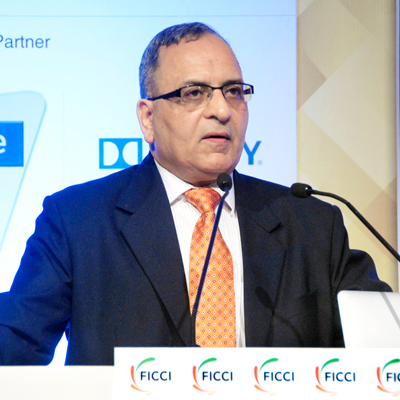
    MUMBAI: Day one of FICCI FRAMES 2014, the 15th chapter of the annual convention, witnessed a couple of significant announcements by Information & Broadcasting Secretary Bimal Julka.


    “DTH operators have complained that the limited transponder capacity has led them to completely depend on the Ku band. We are engaged in discussions with ISRO (Indian Space Research Organization) and the Department of Space to ensure this problem is resolved at the earliest,” said Julka in an assurance that the I&B Ministry was seriously looking at DTH operators’ demand for more transponders.


    With taxes levied on DTH platforms currently including an average of 10 per cent of entertainment tax, licence fees, additional customs duty on set top boxes (STBs), service tax and spectrum charges, Julka touched upon DTH players’ demand for rationalizing taxes so as to help them boost investment in infrastructure development and customers’ activation. “We are in talks with the Ministry of Finance and a consultation on this is on its way. We should be able to resolve the issue soon,” he said.


    On the subject of applications for launching new channels pending with the Ministry, Julka said, “An inter-ministerial committee has been set up under the I&B Ministry to look at granting permissions. There are around 800-odd channels currently, while 245 applications are pending for grant of permission. On one side, we get complaints that there are not enough revenues for broadcasters, while on the other side, we are flooded with applications for grant of permission for channels.” He said that in times to come, there would be a large number of mergers and acquisitions among broadcasters. The I&B Ministry is also in talks with the Ministries of Home Affairs, Corporate Affairs and External Affairs to ensure a more smooth process for granting permissions. “At least now, the Ministry of Home Affairs has granted permission and security clearance for channels-to-be for a period of 10 years,” he said.


    During his speech, Julka highlighted the strong partnership the Ministry shares with various stakeholders. “We have come out with policies that bring in a paradigm shift in the Media and Entertainment (M&E) industry. We are at the cusp of a major change with digitization, and this will help India put its best foot forward. The change has to be supported by liberal progressive policies that will encourage investment and ensure sustainable business models, promote entrepreneurship and create innovations,” he said. India has 77 million cable TV homes, of which 29 per cent are serviced by DTH operators while Doordarshan’s Free Dish reaches out to nearly 9 million homes. There are roughly 396 non-news channels and 60,000 cable TV operators, 6000 multi system operators (MSOs) and approximately 360 broadcasters; he informed, pointing out that the first two phases of cable TV digitization had been completed in about 42 cities with over 30 million STBs installed. “This was a mammoth task which has been undertaken with the coordination of all stakeholders,” Julka said. “About 110 million STBs are required to be installed in phases III and IV of DAS. Unless these phases are completed, we will not be able to fully harness the fruits of digitization. This is an excellent industry for employment generation.” Lavishing praise on digitization, he said, “It will change the way television is consumed. It will put India in the league of advanced countries.”


    On entertainment tax, he informed that preliminary data from state governments reveals a two to three-fold increase in collection of entertainment tax. “The data from news broadcasters shows approximately 30 per cent reduction in carriage fees in phase I cities and data from MSOs shows increase in subscription fees of about 35 per cent to broadcasters,” he said. Stressing on the need to fill in consumer application forms (CAFs), he said, “This is an ongoing exercise. I hope that the MSOs and LCOs are engaged in this exercise and will soon finish it.”


    While digitization would bring in transparency which in turn would bring in foreign direct investment (FDI) in broadcasting, Julka didn’t shy away from acknowledging the challenges. “Filling of CAFs, choice of a la carte channels, computerized billing to consumers, and the revenue sharing module between MSOs, LCOs and broadcasters is taking some time, but I am sure it will be resolved soon,” he assured, adding that the government would step in at any time it deems fit. On the ongoing issue of credible ratings, he said, “We are glad that the BARC has been set up. I will request BARC to speed up its process so that we can generate ratings without any delay.”

    Julka stressed the importance of digitization. “We need to see complete digitization throughout the country. Also, there are issues of registration of MSOs, monopoly restriction on MSOs and LCOs, and content monitoring. While vertical monopoly and cross media holding is a big issue, it is also engaging the MIB. We will consult the stakeholders before taking a decision on this,” he said on a concluding note.
  • Number of news and non-news TV channels is almost equal in the country

    Number of news and non-news TV channels is almost equal in the country

    NEW DELHI: Six private television channels got the government’s approval in the past month. But the number of news and non-news channels remains almost equal. The Information and Broadcasting Ministry revealed that a total of 792 TV channels have got permission in the country.


    A statistics by the I & B Ministry released today, reveals that the number of news and current affairs channels is 392 while the number of non-news (general entertainment channels) is 400. Of the total, 669 TV channels including 372 news channels have been given permission to uplink and downlink from within the country.


    There has been no change in the past month in the total number of channels uplinked from overseas that are allowed to downlink into the country. Out of these 91 channels, 75 are general entertainment channels. In all, nine channels received permission in 2014, all for uplinking from India.


    A total of 32 channels (just one more than last time) including 28 general entertainment channels are allowed to uplink from India but not downlink – thus they are aimed at other countries.


    The channels that received permission in January this year are the GEC channel ‘Hastey Raho’ owned by Sangeet TV Network in Hindi, English and all other Indian Schedule Languages; the news channel Satlon News owned by Satlon Enterprises in Gujarati, Hindi and English; the Maha Movie channel owned by Teleone Consumers Products in Hindi, English and all other Indian languages; and the GEC channel Green TV owned by Nomad Films in English, Hindi and regional languages.   


    In February, the channels that received permission were the news channel NSN News owned by Bhole Baba Real Estate Developers in Hindi, English and all other Indian languages; the non-news Daati Ahsas owned by Bhole Baba Real Estate Developers in Hindi, English and all Indian languages; the non-news Satkar owned by Cobol Communications in English and all Indian languages; and the news channel Prabhatam LIFELINE owned by Naman Broadcastings and Telecommunications in Hindi, English and regional languages.


    The lone channel to get permission this month was the Bengali non-news channel Fatafati owned by Squoosh Entertainment.


    On its website, the Ministry also uploaded the names of the companies that own these channels, the language, and the date when the permission was granted.

  • Implementation of first two phases of cable TV digitisation has taught valuable lessons: Tewari

    Implementation of first two phases of cable TV digitisation has taught valuable lessons: Tewari

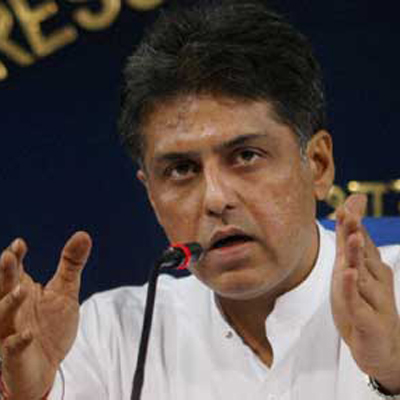
    NEW DELHI: Information and Broadcasting Minister Manish Tewari has said the first two phases of digitisation of cable television provided a learning experience as far as implementation of the process was concerned.


    Speaking at the 8th Indian Magazine Congress in the capital on the theme “Winning through Innovation”, he said these lessons would be incorporated while implementing the remaining two phases. The Minister reiterated that Digitisation was bound to be a game changer for the sector and would define contours of orderly growth.


    While providing qualitative choices to the consumer, digitisation would also ensure that the subscription revenues and skewed business models are rectified. The Government has already decided to merge phases III and IV and complete the entire process by December this year.


    While the first phase of digitisation covering the four metros had come into effect from November 2012 (though it was stayed in Chennai following a court order and was implemented marginally in Kolkata after initial reluctance), the second phase covering 39 cities was implemented by 31 March 2013.


    The Government is still considering the proposal to merge Phase III covering all urban areas (Municipal Corporations/Municipalities) and Phase IV covering rest of India to 31 December 2014. The present dates for these two phases are 30 September 2014 and 31 December 2014 respectively.


    Ministry sources told indiantelevision.com that if the government achieves its target, it will overtake countries like the United States and the United Kingdom which set long deadlines.

  • Filmmakers in India and Canada to explore co-productions

    Filmmakers in India and Canada to explore co-productions

    NEW DELHI: Filmmakers in India and Canada are expected to benefit in pooling their creative, artistic, technical, financial and marketing resources for the co-production in the years to come.


    This follows the signing of an India and Canada Audio-Visual Co-Production Agreement that will enable Indian and Canadian film producers to utilise a platform for collaboration on various facets of film making.


    The agreement is expected to lead to the transparent funding of Film Production and will boost export of Indian Films into the Canadian Market.


    The agreement is expected to deepen the engagement between the critical sectors of the film industries of both countries there by providing a new chapter of collaboration. The agreement was signed by Information and Broadcasting Ministry Secretary Bimal Julka and Canadian High Commissioner to India Stewart Beck.


    The agreement will also lead to exchange of art and culture among the two countries and create goodwill and better understanding among the people of both the countries which will boost cultural ties between the two countries.


    The agreement will provide an opportunity to create and showcase India’s ‘Soft Power’ and lead to employment generation among artistic, technical and non-technical human resources engaged in the film production including post-production and its marketing.


    Since the agreement is expected to boost the utilisation of Indian locales for shooting, it will increase the visibility/prospects of India as a preferred film shooting destination across the globe and will lead to the inflow of Foreign Exchange into the country.


    In the past, similar agreements have been signed with Italy and the United Kingdom in 2005, Germany and Brazil in 2007, France in 2010, New Zealand in 2011, and Poland and Spain in 2012.


    The co-production agreements signed so far seek to achieve economic, cultural and diplomatic goals. For filmmakers, the key attraction of a treaty co-production is that it qualifies as a national production in each of the partner nations and can access benefits that are available to the local film and television industry in each country. Benefits accruing from such agreements include government financial assistance, tax concessions and inclusion in domestic television broadcast quotas.


    India’s co-production agreements are unique for international producers as the country offers technically qualified film crew at reasonable rates, a large pool of talented actors and the multitude of shooting locations. The other benefits are that the co production is treated at par as a national film and is eligible for the National Film Awards and the Indian Panorama section of International Film Festival of India. Such films also get the opportunity to be released through the Indian distribution network, and hence co production opens up the Indian consumer market to the foreign producer.

  • Govt says TV industry to be Rs 50,140 crore in 2014

    Govt says TV industry to be Rs 50,140 crore in 2014

    NEW DELHI: With the general elections coming closer, the government is ensuring that the public becomes aware of the good work it has done in the 10 years of its regime. One of the departments flaunting its feat is the Ministry of Information and Broadcasting (MIB) that issued a statement today which claimed a paradigm shift in information dissemination and policy measures which has led to a vibrant information order in the last ten years.


    The Ministry says that with the growth of television channels from 130 in 2004 to 788 in 2014, India has become the third largest TV market with close to 154 million TV households, next to China and the United States. At the same time, the size of the TV industry has witnessed an exponential growth as well. The value of the TV industry is valued at Rs 50,140 crore in 2014 from Rs 18,300 crore in 2006.


    MIB says that the initiatives undertaken by it enabled the discourse of ‘India Story’ to be disseminated across different platforms. It also aimed at providing quality information to the masses, thereby ensuring that the inclusive growth perspective is spread. 


    The Ministry also claims to have pursued policies in order to utilise the benefits of technology and ensure that a framework is built enabling growth and change for the broadcasting landscape in the country. It says that the digitisation process has brought transparency in the system with 30 million STBs being installed in the first two phases.


    Some of the highlights of the decade have been the implementation of various guidelines including policy guidelines for uplinking and downlinking of TV channels (amended in 2011), policy guidelines for HITS broadcasting services (2009), policy guidelines for IPTV (2008), Revision of FDI Policy in five segments of broadcasting sector (2012), policy guidelines for TV rating agencies in India (2014) and policy guidelines on direct to home services (2001).

    In the film sector, the panel under the Chairmanship of Punjab and Haryana High Court retired Chief Justice Mukul Mudgal examined issues of certification under the Cinematograph Act 1952. The Committee reviewed major areas of concern pertaining to Advisory Panels; Guidelines for certification and issues such as portrayal of women, obscenity and communal disharmony; Classification of Films; Treatment of Piracy; Jurisdiction of the Appellate Tribunal; Review of the provisions of the Cinematograph Act, 1952.The committee has recently submitted its report which is being reviewed by the Ministry. 

    One of the key highlights of the film sector has been the National Museum of Indian Cinema (NMIC) showcasing India’s rich film heritage over the past 100 years. The Museum is situated in the 6,000 square-foot Gulshan Mahal – a heritage building. The museum is a ready-reckoner of the history of Indian cinema showcasing technological aspects of production and screening of films, as well as its social aspects during the past 100 years. Through its interactive galleries, it traces the evolution of celluloid from the Lumiere Brothers, Raja Harishchandra onwards, and showcases Indian cinema in three stages – silent era, golden era and the modern era.

  • I&B Ministry makes senior-level transfers of Indian Information Service Officers in media units

    I&B Ministry makes senior-level transfers of Indian Information Service Officers in media units

    NEW DELHI: As part of several senior-level transfers in the media units of the Information and Broadcasting Ministry (I&B Ministry), Indian Information Service officer of the 1993 batch R C Joshi has been transferred as Director in the Directorate of Advertising and Visual Publicity.


    Joshi replaces Y K Baweja who is being moved to take his position as director (Media and Communications) in the Press Information Bureau (PIB).


    Chitra Gupta, who is currently assistant director (Media and Communications) at PIB in Guwahati, will join as assistant director in DAVP in Kolkata. Additionally, she will also hold charge of Doordarshan Kendra in Kolkata.


    S Mathias, who is presently additional director general (news) in the News Services Division of All India Radio, will also work on ‘loan basis’ for Doordarshan News till further orders.


     M S Rajnikanth, who is currently deputy director (News) in Doordarshan News in Delhi is being moved to Bangalore as director (M & C) in PIB.


    A K Srivastava, on repatriation from the deputation post as comptroller and auditor general will move as deputy director in the Indian Institute of Mass Communications as assistant professor.


    Pragya Paliwal Gaur, director under order of posting after her services were surrendered by the Health Ministry, will move as Director (M&C) in PIB.


    Vijay Kumar, who is presently director (M&C) in PIB Patna, is moving as director in the Publications Division in Delhi.


    H Rehman and K K Pant, both deputy director (M&C) in PIB, Delhi, are being moved as deputy director DPR (Defence) and deputy director (News) in DD News in Delhi respectively.  


    Pravin Kavi, assistant director (News) in All India Radio in Lucknow is to take Rehman’s place in PIB.


    N C Juyal, assistant director (News) in DD News, will be the assistant director (M&C) in PIB.

  • 786 licensed Indian channels as on 31 January

    786 licensed Indian channels as on 31 January

    MUMBAI: The MIB has released the list of permitted private satellite TV channels in India as on 31 January, 2014.

    According to a report published by the Information & Broadcasting Ministry (I&B Ministry), as of 31 January, 2014, the number of permitted private satellite TV channels in the country stands at 786; out of which 389 are news and current affairs channels, while the remaining 397 are non-news and current affairs ones.

    An earlier report published by the I&B Ministry pegged the number of permitted private satellite TV channels in India as on 2 December, 2013 at 784, with 395 of these being non-news and current affairs channels, implying two non-news and current affairs channels have been added to the list between 2 December, 2013 and 31 January, 2014.

    Out of the 786 channels, 664 TV channels have been permitted for uplink as well as downlink from India. 31 TV channels permitted for uplink but not downlink in India and 91 channels have been permitted only to downlink into India (uplinked from aboard).


    Of the 786 permitted private satellite TV channels in the country, 369 news channels and 295 non-news channels have both up-linking and down-linking permission, four news and 27 non-news channels have permission only to uplink, while 16 news and 75 non-news channels have permission just to down-link

    Sometime ago, indiantelevision.com had reported how the I&B Ministry – already under the scanner for being too liberal in issuing licenses to broadcasters – was exercising restraint in a damage control exercise of sorts.

    It doesn’t come as a surprise that the Ministry official list released on 20 December, 2012 had 848 permitted private satellite TV channels which has gone down to 786 in the latest list.

  • Tewari justifies rules for regulation of television audience rating agencies

    Tewari justifies rules for regulation of television audience rating agencies

    NEW DELHI: Information and Broadcasting (I&B) Minister Manish Tewari today addressed the attendees of the fifth CEOs round table conference organised by the Confederation of Indian Industries today. He said that the television rating points rules are an attempt to make the process transparent, credible and accountable. At the same time, the endeavour was to address aberrations in the existing rating system.


    Tewari added that this initiative was based on the past recommendations of the Parliamentary Standing Committee for Information Technology, the Telecom Regulatory Authority of India (TRAI) and the Amit Mitra Committee.


    The Government had also been approached in the past by the industry stakeholders to rectify the existing flaws. The long term objective was an attempt to usher a system with defined rules within an existing framework.


    Meanwhile, he said the digitisation process during Phase III and IV would have to focus on the interest of the consumers in order to ensure that they were partners in the process rather than adversaries.


    For this purpose, the industry would have to run a focussed consumer awareness campaign, whereby the consumer would have to be sensitized about the benefits accruing from this process.
     

    Tewari said the campaign would have to focus on improved quality of viewing and related qualitative benefits accruing to the consumer as a result of the implementation process. The lessons of the implementation during Phase I and Phase II would also have to be taken into account while outlining the implementation roadmap for the remaining phases.


    For digitization to succeed, the industry would have to make efforts to ensure that the consumer was an integral component in the digitisation value chain. At the same time, the comprehensive approach would also ensure the emergence of viable business model for the industry.

    On the issue of monopolies in the cable TV sector, Tewari said that regulator had already made its recommendation and the issues involved were being examined by the Inter Ministerial Committee (IMC).


    The Minister also said that the regulatory framework ought to be stable and transparent for all stakeholders for the broadcasting sector to grow. This would ensure orderly growth for the sector in the long run

  • Noronha becomes DG of Field Publicity as I&B Ministry announces top-level changes

    Noronha becomes DG of Field Publicity as I&B Ministry announces top-level changes

    NEW DELHI: K Ganesan is being posted as the new director general of the Directorate of Advertising and Visual Publicity in the Information & Broadcasting (I&B) Ministry in place of G Mohanty, who has sought voluntary retirement.


    Mohan C Handak takes the place of Ganesan as press registrar as the Registrar of Newspapers in India (RNI).


    A P F Noronha will take place of Chandak as Director General of the Directorate of Field Publicity. Noronha was until now Director General (Media and Communications) in the Press Information Bureau (PIB) and also Officer on Special Duty in the Information & Broadcasting Ministry.


    All these officers are senior officers of the Indian Information Service.

  • MIB: Now on to DAS phase III & IV

    MIB: Now on to DAS phase III & IV

    MUMBAI: Within days of the Telecom Regulatory Authority of India (TRAI) giving out its fact sheet on how digital addressable system (DAS) phase I and II have progressed, the Ministry of Information and Broadcasting (MIB) directed all the stakeholders also known as  ‘the task force of digitisation’ to assess its progress and chart out a road map for the coming year.


    The meeting saw minister Manish Tewari, secretary Bimal Julka, additional secretary Supriya Sahu, leading MSOs such as Den CEO S N Sharma, The One Alliance president Rajesh Kaul, LCOs, News Broadcasting Association (NBA) secretary Annie Joseph, Indian Broadcasting Foundation (IBF) secretary Shailesh Shah and Tata Sky CEO Harit Nagpal. After speaking to everyone about the issues faced in DAS phases I and II and Sahu’s presentation on the value that digitisation was creating in the country, Tewari gave the go ahead to implement the next two phases.


    However this time it won’t be with two deadlines but rather a one stretch implementation across the remaining parts of the country with just one deadline of 31 December 2014. Although the ministry was of the opinion that two deadlines should exist, the TRAI had voiced its opinion in 2011 that phase III and IV could be achieved simultaneously.


    All the stakeholders brought out the issues they had faced in the first two phases to which the minister warned them to sort out their own problems internally or this would lead to a postponement of complete national digitisation – which would not bode well for the industry.  He also told everyone to keep working in coordination even now – and iron out any wrinkles or resolve all problems so that digitisation can progress further.


    Tewari said that the upcoming elections may slow down the process but digitisation is here for good and there’s no stopping it now.  The IBF and NBA have been asked to once again air promos highlighting the importance of digitisation.


    Now that the green signal has been given, all stakeholders can now attack the rest of the country without having any boundaries. But this is the toughest part as the issues they will face in the interiors will be much higher  and more difficult to resolve than metros and towns. Phase I and II saw nearly 25 million set top boxes being seeded while phase III and IV will see about 75 million more boxes being put in place.


    The minister has also assured support saying that the issues in the previous phases will be addressed as they move towards the next ones.