Category: I&B Ministry

  • I&B Ministry-bashing unwarranted, says NDTV’s Narayan Rao

    I&B Ministry-bashing unwarranted, says NDTV’s Narayan Rao

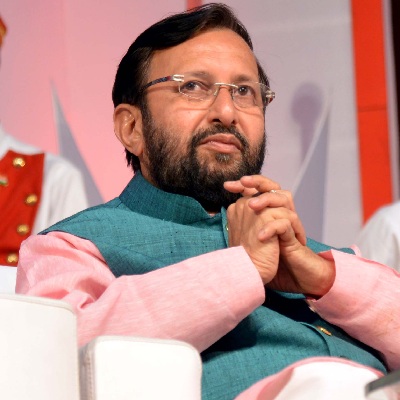
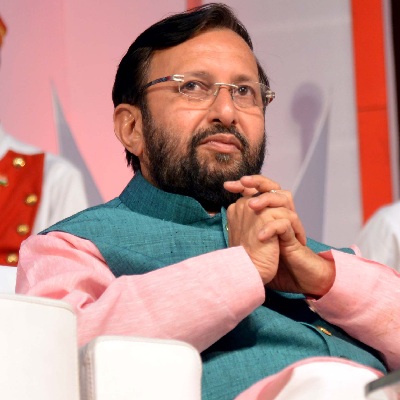
    MUMBAI:  For the past one and a half years, India has been undergoing stomach churning change in the television industry thanks to the government mandated rollout of digitisation. With the due date to complete digitisation nationwide getting closer (31 December), much needs to be done. Now, with a new government in place and new Information and Broadcasting (I&B) Minister Prakash Javadekar assuring the industry that digitisation will be implemented, expectations are only rising.


    The recent CII meeting that took place with Javadekar saw industry stalwarts express their woes and wish-lists to the minister. They also expressed their displeasure at the inefficiency of the I&B bureaucracy.


    I&B joint secretary of broadcasting Supriya Sahu and I&B secretary Bimal Julka were targets of accusations of delays in clearances and permissions.


    Some other industry leaders – while appreciating the fact that the I&B Ministry  pushed through DAS, whereas CAS in 2006-2007 just fell through –  have lambasted even the TRAI – along with the I&B Ministry – at industry  gatherings over the past six months for not moving fast and determinedly enough on many issues that have impacted their businesses.


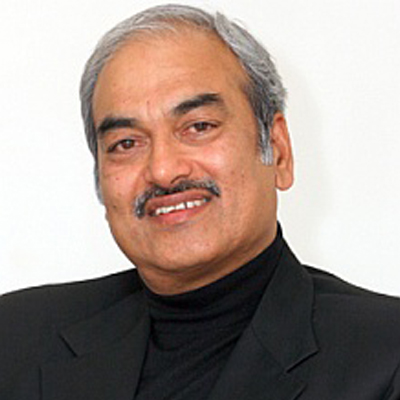
     NDTV vice chairperson and News Broadcasters Association president KVL Narayan Rao thinks that industry needs to keep a cool head and not resort to bureaucracy bashing. Narayan Rao has nearly 30 years work experience; half of that was spent in the bureaucracy with the Indian Revenue Service (1979-1994); the other half has been with the news network NDTV.


    Says he: “I think the attack on the bureaucracy, particularly that on the I&B Ministry, was quite unfair. We currently have some highly efficient officials at the I&B Ministry who have shown a lot of understanding of our issues and have tried to do all they can to solve them. Supriya Sahu and Bimal Julka come immediately to mind.”


    At the CASBAA India 2014 conference in New Delhi earlier this year, Sahu made a detailed presentation on the progress and benefits of digitisation stating that only 10 broadcasters had shared data with the Ministry. She appealed to other broadcasters to share revenue data with them so that the government could ascertain whether the digitisation dividend was really coming the way of industry.


    If one harks back to 2012 almost everyone was cynical that the government mandated digital addressable system (DAS) rollout would ever become a reality. Almost everyone scoffed at even the suggestion. But it was a determined ministerial secretariat led by the then secretary Uday Kumar Varma and his team which consisted of Supriya Sahu and her directors Reijemon who pushed it through – along with the TRAI. Julka who replaced Varma has been following the same narrow strait.


    Hence Rao feels that constant hurling of barbs at ministry officials is unpalatable. Says he:  “Please remember that this is virtually the same lot of officials who ensured the implementation of the first two phases of digitisation which isn’t an easy task at all, who also issued the notification on ratings agencies, a long pending demand of the industry, and issued over 400 permissions for channels and who have allowed self/independent regulation to prevail. Yes there have been delays now and then but how much of that can be attributed to the bureaucrats is debatable.”


    Indeed, several initiatives were taken by the I&B mandarins. Officials regularly met (at one time it was almost weekly) with industry executives – whether from broadcasting, MSOs, or LCOs – to asses digitisation’s progress. The security clearance check that directors of various channels were subject to – which pained many a broadcaster – came at the behest of the Ministry of Home Affairs.


    When a large grouping from the broadcasting industry  rose against the only TV ratings agency TAM, it was the I&B Ministry that took note of it and came up with policy guidelines for TV viewership monitoring. It was the Ministry which also pushed the institution of Broadcasting Audience Research Council, which the industry had kept in cold storage for almost half a decade.


    After the Saradha chit fund scam, the Ministry quickly stepped in and did a check of the shareholding pattern of various channels to prevent repeats of a similar nature.


    When TRAI came out with the 10+2 ad cap regulation, the Ministry supported the broadcasters’ view in keeping it at bay till digitisation pans out, though nothing concrete has come out of it as yet.


    Additionally, while the Ministry did use the stick, it also doled out carrots by extending DAS deadlines on more than a few occasions – keeping in mind the realities on the ground – to give it a reasonable chance at success. Despite the long rope extended by both TRAI and the I&B Ministry, industry at the cable TV and MSO level has yet to begun physical billing for DAS subscribers even in some phase I cities. Forget about phase II.


    Says a media observer: “Agreed for the last three or four months of the UPA regime the Ministry’s focus was on the election; industry issues were not a high priority. It was not a fault of the civil servants alone; the Ministry itself and the government on the whole could not move, thanks to the losses in the New Delhi state elections, and the stigma of corruption which kept hitting the Congress I in its face. I can understand some sections of the industry getting edgy, nervous and agitated for many a broadcaster’s, DTH operator’s business plans are linked to digitisation’s success and the fact that bureaucrats and ministries don’t throw a spanner in the works.”


    She adds: “But we have to remember we have a new government led by Narendra Kumar Modi who has a lot more freedom than the previous regime. There’s a lot of positivity around, even though there are economic challenges on hand. The industry should look ahead, and not back. Things can only get better, and with experienced officials in the Ministry at helm, it will be easier to push through things. New ones could end up taking longer as they will have to come to grips with the sector – and that takes time.”


    That’s a piece of advice which the irate members of the industry can ponder upon.
  • Major reshuffle of IIS officers by I&B Ministry

    Major reshuffle of IIS officers by I&B Ministry

    NEW DELHI: The Information and Broadcasting Ministry is all set for a major reshuffle of Indian Information Service (IIS) officers posted all over the country.


    Senior IIS officer S. R. Kar has been posted as director (Media and Communications) in the Press Information Bureau following his promotion to the selection grade. Kar will continue to look after the work of DPR (Defence) as well.


    K Muthukumar, who was until now posted in the Prime Minister’s Office, has been transferred to Doordarshan News as additional director general.


    Jane Namchu who was special correspondent for Prasar Bharati in Kathmandu has been posted in the Directorate of Field Publicity in Siliguri. He succeeds Akash Luxman who has been posted as director (lEC) in the Rural Development Ministry.


    D M Kakadia has been moved from the Rural Development Ministry as director (News) in DD News.


    R K Jain has on repatriation from Directorate of Film Festivals been posted as director (News) in the News Services Division in All India Radio.


    Manisha Verma who was until now director (M&C) in PIB, New Delhi has been moved as chief media in the Health and Family Welfare Ministry and will also look after the publicity work of the Ministry, which has currently been under the charge of PIB officers.


    Raj Kumar moves from the Central Board of Film Certification’s Delhi office to become Director (M&C), PIB.


    K Satish Nambudiripad will become a director (M&C), PIB on repatriation from the Consumer Affairs, Food and Public Distribution Ministry.


    A K Mishra moves from CBFC Cuttack to become director in the Directorate of Advertising and Visual Publicity. He replaces R K Jain who has been moved to Bhopal as director in DFP with additional charge of RNU, DD Kendra in Bhopal.


    Prabhavati Akashi who was director (M&C) in PIB, New Delhi is being moved as director of DFP in Pune. She is replaced as Director (M&C), PIB, New Delhi by Maushami Chakravarty on repatriation from Heavy Industries Ministry.


    S K Mohapatra who was Deputy Director (M&C), PIB, New Delhi is now being moved as deputy director (M&C), PIB in Kolkata.


    J Kamraj, deputy director (News), DD News, New Delhi is to be the new deputy director (News), DD Kendra in Chennai.


    Neetu Sona M., until now assistant director (News), in NSD: AIR, New Delhi is moving as assistant director to the Publications Division in Thiruvananthapuram.


    Sukhendu Das, until now assistant director (News), DD Kendra in Imphal is to join as assistant director (News), DD Kendra in Kolkata. He replaces R L Borathakur who is being moved as assistant director (News), DD Kendra in Guwahati.

  • MIB issues advisory to channels over depiction of rash driving scenes

    MIB issues advisory to channels over depiction of rash driving scenes

    MUMBAI: The death of minister of rural development Gopinath Munde a few days after him taking charge of the office shook not just the nation but the government as well. Taking note from the incident, the Information and Broadcasting Ministry (MIB) has issued an advisory to channels regarding depiction of rash, negligent or dangerous driving scenes/images.


    The Ministry of Road Transport and Highways (MRTH) has highlighted that depicting such incidences on programmes, news features and serials could be against public interest. Therefore, the MIB has advised TV channels that on the request of the MRTH such images or scenes may not be usually portrayed on TV channels.


    In the case where such a depiction becomes unavoidable, the scenes/images must be accompanied by messages such as ‘over speeding kills’ , ‘driving two-wheeler without helmet is dangerous and illegal’ and ‘driving four-wheeler without seat belt is dangerous and illegal’.


    The MIB urges all TV channels including Doordarshan to be extremely cautious with regard to such situations. Letters have been sent to the News Broadcasters Association, Broadcast Contents Complaints Council, The Advertising Standards council of lndia, All TV Channels and Doordarshan.


    The advisory is applicable to print publications as well.

  • Government keen to resolve issues facing M&E industry

    Government keen to resolve issues facing M&E industry

    NEW DELHI: While exuding confidence in the Media and Entertainment industry in the country, Information and Broadcasting Minister Prakash Javadekar today said it was important for the stakeholders to keep the welfare of the citizens in mind.


    He said he knew the sector had immense opportunities and the world “is fascinated by our culture and Indian cinema is becoming very popular.”

     
    “Education and entertainment are the primary needs after roti, kapda and makaan (food, cloth and shelter),” Javadekar added.


    The Minister said that his attempt in keeping with the mandate of the new government would be to take decisions on pending issues as soon as possible as “delay is out, decision is in.”  The work of the government is not to create roadblocks but to give impetus to entrepreneurship and industry. 

    Addressing the ASSOCHAM meet on media and entertainment, SCREENS 2014, the Minister, said the path-breaking initiatives on digitisation were bound to improve the quality of television broadcasting in the country. Both the government and the industry should work together for the welfare of the consumers. “There are issues of distribution, there are issues of taxation,” he added.

    “We, both the industry and the government, have to think about the final consumer. Government and industry have to think about the welfare of common citizen and to that end we are partners, we are the facilitators,” he said. 


    Later, Additional Secretary (Films) Raghvendra Singh said that the government was in the process of revamping the Cinematograph Act 1952 which had been drafted when there was no television or other media,


    Realising that media and entertainment was the biggest market in terms of consumer needs; the government is also on the threshold of announcing a major initiative for curbing piracy.


    He was conscious that entertainment tax being a state subject was not uniform, and that there was a grievance about service tax. He hoped all these issues would be subsumed in the proposed Goods and Sales Tax, which the government hopes to bring forward soon.


    He said that the government was very keen to upgrade the Film and Television Institute of India and the Satyajit Ray Film and Television Institute, also to set up a centre of excellence for animation and special effects as soon as possible.


    He also informed that the government was finalising its work on the National Film Heritage Mission for assessment of preservation and restoration of film material.


    “Funds have already been provided in the Ministry’s allocations for anti-piracy measures but this was not possible without collaboration from the industry itself,” said Singh.


    Telecom Regulatory Authority of India member Vijayalakshmy K Gupta stressed that addressability has led to better television and online video viewership has grown 13 per cent between December 2012 and December 2013.


    It has also led to reduction of carriage fee, she claimed on the basis of the first two phases of digital access system.


    She said that TRAI was firm on its decision not to permit state or central government units in private radio or television broadcasting.


    She felt that as far as cinema was concerned, there was need for a Film Commission for dealing with various issues.


    TRAI advisor N Parameshwaran said, “One major problem is that all multi-system operators are ‘pulling in different directions’ and therefore it is difficult to resolve their problems.”  


    He agreed that there was need for rationalisation of taxes in the country as far as media and entertainment were concerned.


    He said TRAI was already working on the issue of increasing bandwidth in view of 4G technologies coming in after HD.


    He denied charges by cable operators that broadcasters or MSOs were being protected as he said they had also been prosecuted for violating rules.

  • Prakash Javadekar says UPA government suppressed media

    Prakash Javadekar says UPA government suppressed media

    MUMBAI: “There are 16 crore TV homes in the country, but only 8000 to 9000 peoplemters are being utilised to measure TRPs,” said Union Minister for Information and Broadcasting Prakash Javadekar during his Mumbai visit on 21 June.


    The ever smiling Javadekar, did not fail from raising a few relevant issues even during his packed schedule. The Minister addressed the press on two occasions during the day. While he was the chief guest at the ‘Narad Gaurav Puraskar’ award ceremony organised by the Vishava Sanvad Kendra, he also was present at the Foundation Day celebration of the Mumbai Marathi Patrakar Sangh.


    Javadekar also stressed on how every channel was fighting to gain the maximum eye balls. “In this quest, every channel claims to be numero uno, but how is that possible and especially with only 8000-9000 peoplemeters measuring TRPs?” he questioned.  


    Every form of media, according to the I&B Minister, must evolve their own mechanisms which are independent to behave in a responsible manner. “Since India’s own freedom struggle, the freedom of the press has not come free. Great leaders have sacrificed and therefore the freedom of the press must be preserved,” he emphasised.


    The newly appointed Minister also dropped a word of caution. He said, “The UPA government had followed a draconian emergency mindset.”  He added that he has come some files pertaining  to a channel called Janam where the previous government had shown tremendous reluctance in providing the necessary licenses as one of its promoters was allegedly a RSS sarsanghchalak. “This should not be the case as the same principles should be followed for all channels,” he expressed.


    The channels promoters told a newspaper that they had been given the run around for a couple of years but a licence was issued with the explaination being that one of the channel’s promoters is associated with the RSS. They additionally informed the newspaper that those backing Janam  were NRIs and one of the promoters’ father was a RSS member.


    Javadekar has apparently written about this case to home minister Rajnath Singh, and it’s quite possible that its licence will be processed and cleared soon, says the newspaper.


    Commenting on the current media scenario, Javadekar concluded by saying that sensationalism is not journalism.

  • FICCI welcomes MIB’s assurance of stable policy regime

    FICCI welcomes MIB’s assurance of stable policy regime

    NEW DELHI: The Federation of Indian Chambers of Commerce and Industry (FICCI) has applauded the statement of Information and Broadcasting Minister Prakash Javadekar that the new government would follow a stable policy regime and time-bound speedy mechanism with transparency.

    FICCI also expressed satisfaction on the assurance of the Minister that providing information, entertainment and knowledge to the citizens would be the priority of his Ministry.


    “Opening 1000 community radio stations is a good move. This will help in spreading knowledge and information among the common citizens of the country and also will help in generating employment,” FICCI said.

    FICCI had earlier met the Minister and shared with him FICCI’s ‘Policy Roadmap for the Media and Entertainment Sector in India,’ comprising key recommendations for the television, film, print, radio, AVGC and live events sectors.


    FICCI expressed confidence that the implementation of these recommendations will provide the much-needed boost to the media and entertainment sector, which has tremendous potential for dynamic growth and multiplier effect on employment generation without much spending from the public exchequer. 


  • Government committed to communicating with people across media platforms: Javadekar

    Government committed to communicating with people across media platforms: Javadekar

    NEW DELHI: Information and Broadcasting Minister Prakash Javadekar today promised a stable policy regime with transparency and time-bound mechanism and said efforts would be streamlined so as to make the process of clearances speedy and transparent.

    He said while addressing the “CEOs Roundtable on Media & Entertainment” by Confederation of Indian Industry (CII) that the government has always promoted the Media & Entertainment fraternity as partners in growth and would remain a facilitator to encourage the growth of the industry and provide a roadmap in the interests of the people.

    Javadekar said the potential of the Indian M&E industry is untapped and endorsed the CII vision of taking the Indian M&E industry to $100 billion by the end of this decade. He said the government will be “partner in progress” with the growth of the M&E industry.

    Reacting to suggestions from stakeholders, Javadekar said the policies of this government would be people-centric and would aim at meeting the aspirations of the common citizens. He added that providing information, entertainment and knowledge to the citizens would be the priority of the Ministry. Innovative approaches would be encouraged so as to ensure quality information.

    “This government is about communication and consensus. We will create a process in which decisions will be taken in four weeks which was taking four months earlier,” he said with reference to decisions pertaining to the broadcast sector.

    The Minister was categorical that the ongoing digitisation will not be abandoned, Radio phase III licensing will be processed faster, news allowed in FM radio, current DAVP rates will be relooked and self regulation advocated for print medium.

    The Minister also emphasised on the need for expanding the reach of Community Radio and aimed at opening up of 1000 Community Radio Stations in near future.

    Referring to the vision of Prime Minister Narendra Modi of ‘Speed, Skill and Scale’, the Minister urged the media industry to strive to attain new heights.  

    Praising new-age technologies, he described how the social media platforms had changed the dimensions of news reporting.

    While recognising the importance of the Freedom of Speech and Expression he emphasised on the need for responsible journalism. Javadekar assured the stakeholders that their suggestions on various policy issues would be looked into in a time-bound manner.

    Earlier, I&B secretary Bimal Julka assured the media that the Ministry would work as a facilitator for the industry and would work towards single-window clearances ‘with no multiple grills’ for better transparency and accountability. He said the phase III FM Radio auctions will be completed by December 2014. Julka also made a request to the M&E industry to present budget proposals to his Ministry by 23 June to be presented to the Finance Ministry.  

    40 top CEOs of the M&E sector interacted with the Minister and were confident that pending decisions will not be further delayed by the new government. Issues related to broadcast, films, DTH, cable, radio, print, news broadcast were briefed by industry leaders at the CII roundtable.

     “We believe that the soft power of Indian M&E sector can bring innumerable benefits to the Indian economy. The M&E industry provides direct employment to around 10 million people and has the potential to double the number. This sector also is on the cusp of achieving the same global success that the Indian IT industry has achieved,” said CII president Ajay Shriram.

    CII Media and Entertainment Committee and group CEO, Viacom 18 Media, Sudhanshu Vats said accountability, clarity and foresight from M&E stakeholders will take the sector to new heights.

    In his opening address CII DG Chandrajit Banerjee said that an innovative push from the government in an enabling regulatory infrastructure and policy reforms will create a world class knowledge driven entertainment in India. 


  • FICCI proposes a road map for M&E to Prakash Javadekar

    FICCI proposes a road map for M&E to Prakash Javadekar

    NEW DELHI: The Federation of Indian Chambers of Commerce and Industry (FICCI) has called for constitution of a task force for improving screen density in India. This is also to ensure that entertainment tax is fully subsumed in the GST without creating a window for its levy at the local level.


    In a road map presented to Information and Broadcasting Minister Prakash Javadekar, FICCI expressed confidence that this would provide the much-needed boost to the Media and Entertainment (M&E) sector.


    A delegation led by FICCI president Sidharth Birla stated that the M&E sector had tremendous potential for dynamic growth and multiplier effect on employment generation without much spending from the public exchequer.


    The ‘Policy Roadmap for the Media and Entertainment Sector in India’ comprises key recommendations for the television, film, print, radio, Animation, Visual Effects, Gaming & Comics (AVGC) and live events sectors.


    In a move that will cause a lot of consternation among working journalists, the industry body has called for abolition of the Wage Board Act for the print sector and for  urgent announcement of fiscal relief measures for newspapers.


    The roadmap calls for early enactment of the amended Cinematograph Bill so that the rights of all stakeholders can be protected.


    In the television broadcast sector, FICCI wants relaxation in FDI limits in news broadcasting and infrastructure status to the cable sector, apart from smooth and orderly implementation of digitisation.

     
    The body urged the government to ensure that the process of auctions under FM Radio Phase III rolls out smoothly without any further delays. The auctions should be completed by September or October this year and Phase II licenses which expire from April 2015 are extended well before the end-date.


    Referring to reduction in channel separation, the government must immediately accept Telecom Regulatory Authority of India’s recommendations so that an FM revolution can be brought about. A larger number of radio stations will also mean more job creation and a much wider programming variety for the people of each city. The chamber has also called for allowing news in an unrestrained manner and increasing FDI in FM radio to 49 per cent.


    For the AVGC Sector, it has recommended creation of an investment fund, incubation and market development fund, tax relief, skills and talent development, co-production treaties and focus on kids’ channel in terrestrial broadcasting space.


    FICCI expressed its gratitude to the Minister on his announcement regarding the launch of a dedicated channel for kids and animation content on the national broadcaster Doordarshan.


    Given the vast and intensive reach of Doordarshan across the country, this initiative will – by popularising kids and animation content – create a demand for original intellectual properties in the sector provide an enormous boost to its growth. Indian kids’ and animation content has long been battling the challenge of outpacing global competitors – and a dedicated forum for distribution such as an exclusive channel from the national public broadcaster will act as a boon for the sector.


    FICCI expressed the hope that appropriate steps will be taken soon by Prasar Bharati and Doordarshan to make the vision of a kids and animation channel in the public broadcasting space a reality in the very near future.


    It has been asking for creation of a dedicated kids and animation channel from Doordarshan for several years, and has been lobbying this initiative at various levels in the Ministry, as well as with Prasar Bharati and Doordarshan. FICCI had even taken a delegation of industry stakeholders to the Prasar Bharati CEO, a couple of years earlier and made a presentation for a dedicated kids channel by Doordarshan.

    The benefits of a ‘DD Kids’ Channel’ would be manifold: not only would it be instrumental in catalysing original IP creation for animation and kids’ content in the country but also serve as a medium for the dissemination of content that is uniquely Indian in its cultural ethos.


    While Indian myths and tales continue to be of interest to children in India today, broadcast content for children and animated shows continue to be largely dominated by foreign-made IPs.


    Thus, the launch of a kids and animation channel by the national public broadcaster would ensure greater exposure for Indian-made content, which would in turn give a new lease of life to diverse value-based indigenous stories and allow for their packaging in attractive formats that appeal to today’s children.


    The initiative will serve as a reinvigoration of our country’s rich cultural heritage and help inculcate quintessentially Indian mores and ethics in the young minds of India – compensating in some measure for the lost art of storytelling in today’s nuclear-family-dominant society. 

  • I&B Ministry to hold Open House Meetings with broadcasters

    I&B Ministry to hold Open House Meetings with broadcasters

    NEW DELHI: The Information and Broadcasting Ministry, which had asked prospective broadcasters to deal directly with the Ministry, has now decided to hold Open House Meetings. The meeting which will be held twice a month will give more opportunity for access to information with respect to processing of increasing number of broadcasters’ requests.


    The Open House Meetings will commence from next month with regard to permissions for television channels or teleports and not to appoint any intermediaries or consultants.


    All broadcasters have been asked to send e-mails to dirbc-moib@nic.in and navil.kapur@nic.in at least one day in advance so that latest information can be provided. 


    Earlier on 11 June, the Ministry had issued a public notice, similar to the one issued late last year, according to which anyone who wished to apply for permission to start a television channel, teleport or various permissions under the Uplinking and Downlinking guidelines, could seek clarifications at the Open House held every month for the purpose and also get information on pending issues.


    The Ministry will not entertain any intermediary, consultant, advisor, consultancy organisation or firm to liaise with the Ministry on behalf of applicants and permission holders for following up on their requests.


    The Ministry follows an absolutely transparent and open process to grant various permissions to television channels, teleport operators, news agencies etc.


    In addition, the Ministry has also put in place a specialised software, Satellite Television Channels Application Tracking System (STATS), for those who have already applied to the Ministry for various permissions. An ID and password has been given to all of them to track the status of their pending applications.


    The Ministry is in the process of automating the entire Broadcasting Wing to ensure that an online mechanism is brought for various applications. Once in operation, this web enabled software will help applicants to apply online and also make payments of various fees etc., through the payment gateway.


    All applicants and permission holders have therefore been advised not to approach anyone who claims to be an advisor, consultant or facilitator on behalf of applicants.

  • I&B asks TV channels to show censor certificates before airing movie trailers

    I&B asks TV channels to show censor certificates before airing movie trailers

    NEW DELHI: All television channels need to show the censor certificate before telecasting any film or movie trailer, the Information and Broadcasting Ministry has clarified.


    The Ministry has reiterated its advisory sent on 6 January 2011 in this connection.


    Any further violation of the programme code may attract strict penal provisions as detailed in Section 20 of the Cable Television Networks (Regulation) Act 1995 and as provided under the Uplinking/ Downlinking Guidelines.


    The Ministry said it had come to its notice that a number of TV channels continue to telecast films without displaying Central Board of Film Certification (CBFC).


    The notice said: “It has also been noticed that channels are sometimes showing trailers of new films without showing CBFC. Showing films/film trailers without CBFC is a violation of the cinematograph Act, 1952 as enshrined in Rule 6 [l] (n) of the Cable Television Networks Rules 1994 which also provide that no film or film song or film promos of film trailer or music videos or music albums or their promos, whether produced in India or abroad, shall be carried on cable service unless it has been certified by the CBFC.”


    The Ministry therefore has advised all TV channels again to display the CBFC before telecast of any film/film trailer which is clearly visible to the viewers.


    They have also been advised to strictly follow Rule 6 (1) (n) while showing any film, song, film promo, music video, music albums or their promos.