Category: I&B Ministry

  • Javadekar’s personal website launched by Jaitley

    Javadekar’s personal website launched by Jaitley

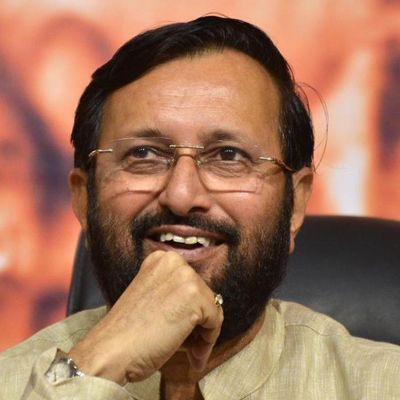
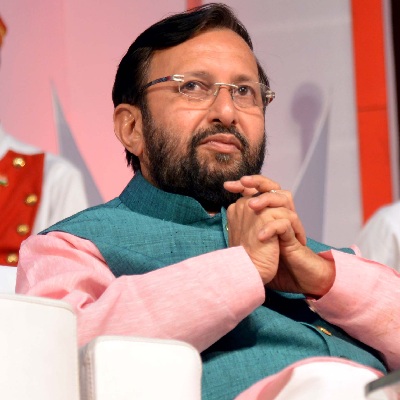
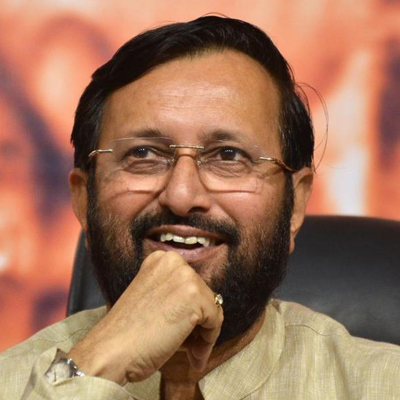
    NEW DELHI: In keeping with the new initiatives on social media, Information and Broadcasting Minister Prakash Javadekar has launched a personal website whereby he can interact with the youth in the country.


    The website, launched by Finance Minister Arun Jaitley has among its features a News Update button which gives event wise information.


    The website prakashjavadekar.com also contains the Minister’s tweets, press releases, photographs, speech and audio-visual package about an event.           


    The youth can interact with the Minister through the ‘Connect with Me’ section.


    The Minister’s corner, Minister’s contact details and social media profiles are other areas which help easy interaction with the Minister.


    Google news, Youtube Crawler have also been linked with the website to reflect real-time updates, as are all major Social Media platforms of the Minister.

  • MIB warns MSOs against disconnection signals to LCOs

    MIB warns MSOs against disconnection signals to LCOs

    MUMBAI: The Government today warned multi-system operators against disconnecting signals of local cable operators without due notice specifying reasons and said any violation of this would viewed seriously and action against erring MSOs.


    The directive comes even as more than twenty cases are pending before the Telecom Disputes Settlement and Appellate Tribunal (TDSAT) relating to disconnection of signals by distributors to MSOs or MSOs to LCOs.


    The Information and Broadcasting Ministry said Chapter V of Standards of Quality of Service (Digital Addressable Cable Systems) Regulations 2012 issued by Telecom Regulatory Authority of India (TRAI) is clear that ‘no multi system operator (MSO) shall disconnect the signals of a TV channel of a linked local cable operator, without giving three weeks’ notice to such local cable operator, clearly specifying the reasons for the proposed disconnection.’


    The Regulation further says notice of disconnection of signals of TV channels is also required to be published in two leading local newspapers of the State in which the service provider is providing the services, out of which one notice shall be published in the newspaper in the local language of the area.


    The Ministry said it had been brought to its notice that some MSOs are disconnecting signals to cable subscribers without giving any notice in violation of the Regulation.


    The Ministry said this is also in violation of the undertaking given by MSOs in form 2 of their application which states: ‘We shall ensure that my/our cable television network shall be run in accordance with the provisions of the Cable Television Network (Regulations) Act 1995 and the rules made thereunder, regulations, orders, guidelines or the directions issued by the Central Government or the Authority from time to time.’

  • 100 days of the I&B Ministry

    100 days of the I&B Ministry

    NEW DELHI: The Narendra Modi led NDA government has completed 100 successful days in power. And in these days, the Information & Broadcasting (I&B) Ministry has done its bit to woo the Media and Entertainment industry.


    Listing the achievements was I&B Minister Prakash Javadekar, through a press meet in Delhi.


    The government is launching a new 24×7 channel for the northeast called Arun Prabha in order to provide a strong platform for expression of cultural identities and for creating greater awareness regarding the region.


    Even as a Task Force has been constituted to steer the remaining two phases i.e. phase III and phase IV of digitisation in India, the government has made efforts towards fulfilling the long pending demand of domestic manufacturers of Set Top Boxes to get tax concession (C Form benefit) in order to compete with imported STBs.


    He said this will pave the way for implementation of digitisation initiative in India and see digitisation of about 80 million Cable TV homes in India. It is also a step towards the Prime Minister’s dream of a Digital India as digitisation will enable quick penetration of broadband connectivity in India.


    The Minister talked of initiatives taken in different sectors aimed at enhancing the outreach of policies and programmes across platforms. Some of the initiatives undertaken have been innovative involving people’s participation, enhancing government’s presence on the social media platforms and strengthening communication at the grassroots.


    He said Rs 100 crore had been allocated to Kisan Channel, which will disseminate real time information to the farmers regarding new farming techniques, water conservation, organic farming etc.


    In order to facilitate Ministries/Departments in registering their presence on social media the Ministry had organised a half day training workshop on 11 July.


    The Telecom Regulatory Authority of India (TRAI) has on the request of the Ministry given recommendations on migration of FM Radio Broadcasters from phase-II to phase-III which is under examination.


    Goa has been declared the permanent destination for the International Films Festival of India to develop the “Brand IFFI” on the lines of other International Film Festivals. Although the decision to move IFFI to Goa was taken in 2004 when the National Democratic Alliance was in power, a fresh Memorandum of Understanding was being signed year-to-year for the Festival.


    The three-day North East Film Festival held in Delhi recently will henceforth be an annual feature organised by the Directorate of Film Festivals.


    The Film and Television Institute of India and the Satyajit Ray Film and TV Institute are to be institutes of National Importance and an Act of Parliament will be passed for this. The proposed Bill would enable both the Institutes to award its own degrees and diplomas and start new activities on the lines of IITs and IIMs.


    The office of the Registrar of Newspapers for India (RNI) has streamlined its Single Window Public dealing mechanism at its office. RNI has achieved 100 per cent success in online e-filing of annual statements by publishers for 2013-14.


    Under the Rs 100 crore set aside for “Supporting Community Radio Movement in India,” 600 community radio stations will be set up across the country in the 12th Five Year Plan. This major initiative of the new government will strengthen the link with the population living in rural and marginalized areas.


    The Home Ministry has agreed to the proposal of the Ministry for not seeking security clearance for such channels whose security clearance have already been sought earlier along with the Board of Directors. This decision has paved the way for speedy clearance of additional television channel permissions, which will benefit the broadcast industry in a big way.  After the decision was taken, 23 TV channels have already been permitted by the Ministry.


    The proposal has been cleared for Rs.600 crore National Film Heritage Mission (NFHM) to preserve India’s film legacy by the Expenditure Finance Committee in the Finance Ministry. The draft Cabinet Note has been circulated to the concerned Ministries and the Note will shortly be submitted for approval of the Cabinet.


    To ensure people’s participation in Government Advertising through Crowd-Sourcing of Advertisements, the advertisement for important events are to be designed by the people. The Independence Day advertisement designed on these lines and DAVP has invited suggestions for the proposed advertisement to be brought out on 5 September to observe “Teachers Day”.


    For Independence Day, the advertisements were crowd sourced for the first time and Independence Day coverage was extended to all media platforms. Similarly, a series of press conferences being organised to highlight the initiatives of the Government and the same approach is being adopted to ensure information dissemination across all platforms.
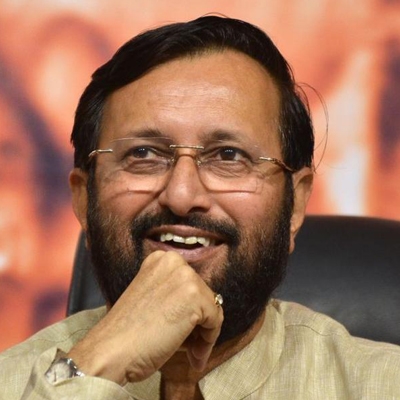
  • Prakash Javadekar asks MSOs to deploy indigenous STBs

    Prakash Javadekar asks MSOs to deploy indigenous STBs

    NEW DELHI: Information and Broadcasting (I&B) Minister Prakash Javadekar has said the government has initiated efforts to promote greater production of indigenous set top boxes (STBs) so that Indian consumers stop using low-grade imported STBs as digitisation grows in the country.


    The Minister said that he had called a meeting of manufacturers in mid-August and was surprised to learn that good quality Indian STBs were not only being made but were being exported.


    He therefore wondered why multi-system operators and local cable operators only installed imported STBs for which there was no arrangement for servicing.


    Javadekar said that he expected another 120 million homes to be covered by digital addressable system (DAS) by the end of 2016 and he would prefer that they all install Indian STBs.


    He said that DAS will not only bring better quality television but also value added services.


    He regretted that the process of digitisation appeared to have slowed down in the last 15 months but said the new government will take quick action to overcome the delays.


    The Government has already announced that Phase III of digitisation will be completed by December 2015 and the final phase by December 2016

  • Stern warning to News Live TV for showing disturbing visuals of dead bodies and badly injured people

    Stern warning to News Live TV for showing disturbing visuals of dead bodies and badly injured people

    NEW DELHI: The government today issued a warning to News Live TV channel for showing ‘extremely disturbing visuals of dead bodies and badly injured people including children which were not only disturbing but could also hurt the sentiments of the viewers.’


    In a stern directive to the channel to follow the Programme and Advertising Code as well as the Downlinking/Uplinking Guidelines, the Information and Broadcasting Ministry said ‘visuals were neither morphed nor blurred. The visuals appeared to be in bad taste and against the sensitivities of the victim’s family. Hence, the visuals appeared to offend good taste and decency. The visuals also did not appear to be suitable for children and for unrestricted public exhibition.’


    Any violation shall entail such action against the channel as deemed fit in accordance with the Cable Television Network (Regulation) Act, 1995 and the Rules framed thereunder as also the terms and conditions of the permission granted under uplinking/downlinking guidelines.


    Earlier, a show cause notice was issued to the channel on 5 November last year for the visuals carried in several news bulletins during 2012 and 2013. Initially, the channel said it was required to keep the recordings for only 90 days and therefore was unable to reply as the recordings had been destroyed.


    The Ministry thereafter sent recordings in its own possession and also referred the matter to the Inter-Ministerial Committee which considered the matter on 4 July this year where a representative of the channel was also present.


    The IMC observed that telecast of news bulletins were clear violation of the provisions of the Programme Code, particularly Rules 6(l)(a),6(lXo), and 6 (5) of Cable Television Network Rules, 1994. The IMC observed that even though the channel had accepted their fault and apologised for their mistake, they cannot escape the responsibility of ensuring content on their channel which must invariably be in conformity with the Programme Code.


    ‘News Live’ TV Channel is also governed by the provisions of Uplinking/Downlinking Guidelines and Pride East Entertainments while applying for the uplinking/downlinking permission had undertaken to abide by the Programme and Advertising Codes and the Uplinking/Downlinking Guidelines, read with the permission granted to ‘News Live’ TV Channel. 

  • Govt. rejects TRAI proposal for lower reserve fee for FM phase III auctions

    Govt. rejects TRAI proposal for lower reserve fee for FM phase III auctions

    NEW DELHI: The recommendations by the Telecom Regulatory Authority of India (TRAI) to review the reserve price for FM phase III auctions have not found favour with the Information and Broadcasting (I&B) Ministry.


    TRAI had recommended a change, after going through the views expressed by radio channel operators and new stakeholders that the price was too high.


    However, the Ministry has pointed out to TRAI that the reserve price was fixed by a Group of Ministers and later approved by the Union Cabinet.


    TRAI had expressed apprehensions that the auctions could be jeopardized since many operators felt the price was too prohibitive. The phase III reserve fee formula (highest bid of phase II), has already led to a lot of opposition from broadcasters.


    When asked if this would lead to lesser number of bidders for phase III, I&B secretary Bimal Julka told indiantelevision.com, “We will cross the bridge when we come to it. At this moment, I can only say that we have accepted the TRAI recommendations with some exceptions.” 

    When the process begins – hopefully expected to start by October as indicated by Ministry sources – phase III is set for auction of 839 FM channels across 294 cities. These sources did not feel the reserve price was a major issue as the players likely to bid for the channel are large parties.


    However, the Ministry sees nothing wrong with the TRAI recommendation of allowing 15-year licence period for operators migrating from phase II to phase III as phase II had provided for 10 years of licence.


    TRAI had also recommended a lower minimum channel spacing of 400KHz for FM radio broadcast, as against 800KHz now, to allow more radio stations which has not been accepted by the Ministry. 

    The recent 2G auctions which came as a result of an order of the Apex Court had justified the need for a low reserve fees.


  • 112 MSOs get 10 year licence under DAS for specified areas

    112 MSOs get 10 year licence under DAS for specified areas

    NEW DELHI: A total of 112 multi system operators (MSOs) all over the country have been granted permanent registration for 10 years to operate the digital addressable system (DAS).


    The MSOs had been given provisional permission earlier. The latest list is as on 22 August.


    Those who have got permission include IndusInd Media and Communications, Hathway, Manthan Broadband, Den Network, Home Cable, Digicable Network, Delhi Distribution Company and Asianet Satellite Communications.


    According to a list issued in late July, 16 MSOs had been refused permission. It also said that Kolkata based Digicable Communications had been denied permission after the break-up of the joint venture with Digicable Networks of Mumbai, which has received permission for Greater Mumbai, National Capital Territory of Delhi and Greater Kolkata.


    MSO sources, however, said that the approved list was in addition to the 140 whose names had been approved in March last year.


    The Ministry website mib.nic.in has listed the areas and the date from which the MSOs have been given permission.

  • I&B Ministry issues new deadlines for DAS phase III and IV

    I&B Ministry issues new deadlines for DAS phase III and IV

    NEW DELHI: It is official now. The new dates for digitisation of cable television in the entire country have been announced. While indiantelevision.com was the first to write about the extension in the date given for digitisation of phase III and IV, Information and Broadcasting Ministry officials have said that while phase III has been postponed to December 2015, phase IV can be completed by December 2016. The move has been taken to allow great indigenisation of production of Set Top Boxes (STB) to meet the demands of digital addressable system (DAS).


    Earlier, the government had set 31 December 2014 as the date by which the cable sector across the country would be completely digitised.


    In the first two phases of digitisation, which included cable TV households in the four metros and other major cities, most of the STBs that were installed had been imported from other countries.


    After he took over as Information and Broadcasting Minister, one of the major areas of focus of Prakash Javadekar has been indigenisation of the digitisation drive and Ministry sources said the new dates are in keeping with inputs supplied to the Minister in this connection.


    The Ministry has made efforts to get STBs declared as Telecommunication Network Equipment which will enable domestic manufacturers to get exempted from certain taxes, an official said.


    Nearly 110 million STBs are required to be installed in cable TV households in the remaining two phases of digitisation and the extended deadline will ensure that the domestic manufacturers prepare themselves and meet this demand, officials said. 

  • Contribution of filmmakers from north east appreciated globally: Julka

    Contribution of filmmakers from north east appreciated globally: Julka

    NEW DELHI: Information and Broadcasting secretary Bimal Julka has lauded the role played by cinema in the cultural integration of the country with the north-eastern states and said it is the rich cultural legacy of the north east cinema from renowned film personalities which creatively impact the young minds of the country.


    Tracing the journey of films from the region, Julka said story lines, professional and technological expertise of the industry of films from the region have been appreciated at the global stage.


    Speaking at the closing ceremony of the north east film festival fragrances, Julka said the participation of stakeholders associated with the film industry was critical. He invited suggestions from the people for the approach, methodology and philosophy regarding the future roadmap of convening such festivals. 


    Appreciating the efforts and initiative of the I&B Ministry, Meghalaya Governor K K Paul said it is the fragrances from north east which brought the diverse culture of the region to the centre stage. Dr Paul added that the perceived gaps among the cultures could be filled with the appropriate and positive messaging from radio, TV and films.


    The three-day long film festival concluded with the screening of Pradip Kurbah’s film RI. The screening of the closing film was preceded by a cultural event that saw classical pianist Nise Meruno’s performance and rendition of Naga folk-based choir by ‘Nagaland Singing Ambassadors’. 

  • Rare peep into the fragrant culture and traditions of the north east

    Rare peep into the fragrant culture and traditions of the north east

    NEW DELHI: Inaugurating the three day North East Film Festival, Information and Broadcasting Minister Prakash Javadekar said that the Government is fully committed to mainstream new initiatives in the North Eastern region in all sectors including the film industry.


    He also added that there was need to harness the rich potential of the region with regards to its geographical and cultural diversity. The initiatives outlined in the budget reiterated the commitment of the Government in mainstreaming the North East region.


    The theme of the three day North East Film Festival was ‘Fragrances from the north east.’


    Speaking at the event, the I&B Minister said, “The film festival would be a memorable cultural experience in showcasing the potential of the region in the Media and Entertainment sector of the region. A testimony to this fact was the increasing number of awards won by the films from the north east at the National Film Awards every year. The Ministry would always be supportive in providing all possible support for promoting films in the region. The Satyajit Ray Film and Television Institute at Kolkata provided a platform to the students of the north eastern region to harness their talent in the domain of film making.”

    On the occasion, Meghalaya Chief Minister Mukul Sangma also highlighted the different initiatives undertaken by the State Government to build a strong base for film making in the region. He specifically referred to the policies being developed to provide infrastructure to host any international film festival, and also to help filmmakers who wanted to come to the region to shoot their films. 
     

    The inaugural function was attended by actors and directors from the region, including Manju Borah, Geetanjali Thapa, Oinam Gautam Singh, Mapuia Chawngthu, Alex Lalchhuankima, Abdul Muzid, Tashi Lhamu, Leishangthem Tonthoingambi Devi and Meena Debbarma.


    The function was followed by a cultural evening by Papon, singer and composer along with his band ‘The East India Company’.


    While Khawnglung Run (Mizoram), directed by Mapuia Chawngthu was the opening film of the festival, the closing film of the three-day Festival concluding on 24 August will be RI: Homeland of Uncertainty, directed by Pradip Kurbah.


    Directorate of Film Festival director Shankar Mohan stated, “This festival was in continuation of a focus on films from the north east during the last International Film Festival of India in November last year, and the Festival of Indian Panorama films held in Shillong in March this year.”
     

    The festival will also include an exhibition of paintings, exhibition-cum-sale of handicrafts and artifacts from the north east organised by the Culture Ministry and special north east food stalls representing cuisines from all eight states of north-east. It will be curated by veteran journalist and filmmaker Utpal Borpujari. 


    Other films being screened at the event includes Yarwng in Kokborok by Joseph Pulinthanath; Phijigee Mani in Manipuri by O Gautam Singh; Sonam in Monpa by Ahsan Muzid, Ajeyo in Assamese by the renowned Jahnu Barua etc.