Category: I&B Ministry

  • Government to issue advisory over usage of social media

    Government to issue advisory over usage of social media

    NEW DELHI: The government is expected to issue an advisory/circular with respect to government usage of social media over the internet.


    This was indicated by additional solicitor general Sanjay Jain in the Delhi High Court during the hearing of a public interest litigation by former Bharatiya Janata Party leader K N Govindacharya challenging the use of private American-based sites such as Yahoo and Gmail for sending out government information.  


    Jain said, “Service categorised as sale of time and space for advertisements over Internet was earlier in negative list but with effect from 1 October 2014, it has been put back on the positive list and is now a taxable service.”

    He said that he would on the next date of hearing on 28 November  make a categorical statement with respect to taxation issue raised in the petition.


    Meanwhile, the Court has asked why the use of private email accounts like Yahoo and Gmail by government officials should not be stopped as it would lead to public/official records being taken outside the country which is a violation of the law.

    Justices Badar Durrez Ahmed and Siddharth Mridul said, “Public records are going outside India. Are you (Centre) willing to say there is no difficulty in government documents going to US servers? You should stop usage of non-NIC email accounts by government officers.

    “On the one hand we are complaining against National Security Agency (of US) snooping and on the other hand, we are allowing it (public records) to go out.”


    The court, however, took on record the submission of additional solicitor general (ASG) Sanjay Jain that “immediate steps will be taken to ensure there is no violation of Public Records Act with a view that all electronic official communication is not taken out of India, insofar as email communication of public records is concerned”.

    The ASG also submitted in court that a draft email policy of the government has been finalised for presentation before the Cabinet in two to three weeks, and it only needs approval of the minister concerned.

    The submissions were made in response to the query regarding the status of the government’s email policy and what would be the interim measures that would be put in place to prevent official records from going outside India till all the government departments are provided accounts in servers run by National Informatics Centre.

    The ASG also said that they have increased capacity of NIC servers to handle one million accounts from the earlier limit of five lakhs and would be further expanding the same.

    The Court agreed with contention of advocate Virag Gupta, appearing for Govindacharya that the Public Records Act does apply in the present case. “You cannot have it (public records going outside India), its against the law,” the bench said to the ASG.

    Govindacharya in his PIL has sought that the government be directed to use only NIC servers for sending official emails, instead of using the services of foreign sites like Google and Yahoo.

    The petition has contended that government departments like Delhi Police and the Indian Railways are not entitled to create accounts on social networking sites.


    It has also sought recovery of taxes from the websites on their income from operations in India.

    The petition has also alleged that the sites have no mechanism for protection of children from online abuse, claiming that children below 18 years are entering into an agreement with the social networking sites to open accounts, which is against the Indian Majority Act, the Indian Contract Act and also the Information and Technology Act.

    Facebook and Google had earlier submitted affidavits in the court detailing the protective measures available on their sites to ensure their product is not misused. They had said their statement of rights and other terms and conditions prohibit children below 13 years of age from registering an account and creating more than one personal account.

    They had said they also have strict policies in place to delete any objectionable or misleading content they come across on their sites.


    The petition has alleged that due to non-verification of users, more than eight crore of Facebook users across the world were found to be “fake”, which the website admitted before a US authority. 
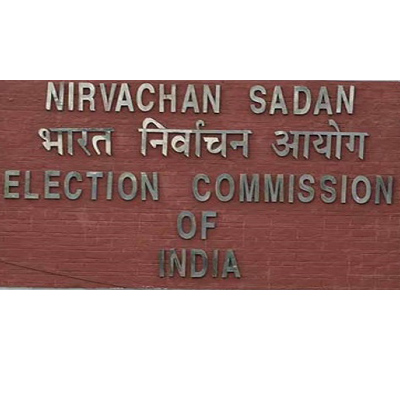
     

  • Three-tier committees set up by Election Commission to monitor paid news

    Three-tier committees set up by Election Commission to monitor paid news

     NEW DELHI: Following the announcement of elections to the state assemblies of Jharkhand and Jammu and Kashmir next month, the Election Commission of India on 23 October said that it had put into force a mechanism to deal with the issue of ‘paid news’.


     The mechanism provides for three-tier Media Certification and Monitoring Committees (MCMC) at district, state and ECI level.


     It has also placed on its website eci.gov.in revised comprehensive instructions on paid news.


    Necessary instructions have been issued to the CEOs of the poll going states to ensure briefing of political parties and media in the districts about ‘Paid News’ and the mechanism to check paid news. The MCMCs of all states have been trained to do their job.


     With the model code of conduct coming into effect immediately, the Commission has made elaborate arrangements for ensuring their effective implementation and any violation of these guidelines would be strictly dealt with. The Commission re-emphasises that the instructions issued in this regard from time to time should be read and understood by all political parties, contesting candidates and their agents/representatives, to avoid any misgivings or lack of information or understanding/interpretation.


     The commission attaches great importance to preparation and implementation of a perfect communication plan at the district/constituency level for the smooth conduct of elections and to enable concurrent intervention and mid-course correction on the poll day.


    It has directed the chief electoral officers of the polling going states to coordinate with the officers of the Telecommunication Department in the state headquarters, BSNL authorities, the representatives of other leading service providers in the states so that network status in the states is assessed and communication shadow areas be identified. The CEOs have also been advised to ensure best communication plan in their states.


    All critical events will be video-graphed. District election officers will arrange sufficient number of video and digital cameras and camera teams for the purpose. The events for videography will include filing of nominations, scrutiny thereof and allotment of symbols, first level checking, preparations and storage of electronic voting machines, important public meetings, processions etc. during campaign, process of dispatching of postal ballot papers, polling process in identified vulnerable polling stations, storage of polled EVMs, counting of votes etc.


     Webcasting, videography and digital cameras will also be deployed inside polling booths wherever needed.


    CDs of video recordings will be available on payment to anyone who wishes to obtain a copy of the same.


     The elections will take place in five phases in both states from 25 November onwards and the counting will be done simultaneously on 23 December.

  • Roadmap soon on converting IIMC into Communication University: Javadekar

    Roadmap soon on converting IIMC into Communication University: Javadekar

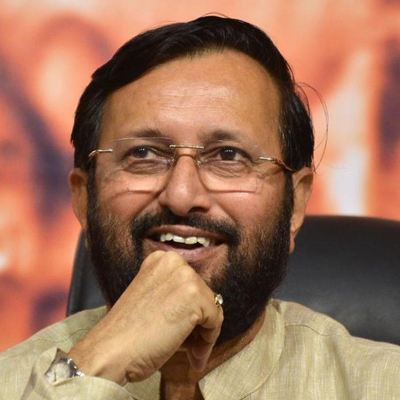
    NEW DELHI: Information and Broadcasting Minister Prakash Javadekar has said steps are being initiated shortly to upgrade the Indian Institute of Mass Communication into a ‘Communication University.’
     
    A roadmap would be prepared soon by the Ministry, he said, inviting suggestions from the public especially the young generation.
     
    Javadekar said a specific corner would be developed on the I&B Ministry’s website for these suggestions to be placed for the perusal of the Ministry. The entire process was part of the Prime Minister’s Communication Vision which laid emphasis on ‘Participative Communication’- a process which linked the key stakeholders including the media fraternity.

     
    The Minister stated this while delivering the address at the 47th Convocation Ceremony of the Indian Institute of Mass Communication and the launch of the Golden Jubilee Celebrations of the Institute in Delhi.

    Javadekar said press freedom came with an element of responsibility. Throughout history, the responsibility of the press had been flagged on different occasions. He exhorted the students who were conferred diplomas to avoid sensationalism at all costs and fight the menace of paid news. A young journalist ought to work with passion, compassion in a mission mode without commission. He called upon the students to balance information taking into account the sourcing of information from different media sources which included new and traditional media streams. These aspects would lay down the architectural framework for ethical journalism in the future.


    He called upon the IIMC to undertake studies to understand the different aspects of elections related to the communication process and the electoral system. The Minister also unveiled the new logo to commemorate the golden jubilee celebrations of IIMC. He inaugurated the new bilingual website of IIMC.

    IIMC has the distinction of being universally recognised as a centre of excellence in the field of journalism, media and mass communication teaching, training and research. A total of 341 students were conferred with their Diplomas at this Convocation which included students from six Centres of IIMC, at New Delhi and Dhenkanal, as well as at the newly opened Regional Centres at Aizawl in Mizoram, Amravati in Maharashtra, Jammu in J&K and Kottayam in Kerala. The PG Diploma courses were conferred in Journalism Hindi and English, Advertising& Public Relations, Oriya Journalism and Urdu Journalism. Special awards were also conferred in different categories to 31 students across all courses. 

  • New central service officers need to be tech-savvy: Bimal Julka

    New central service officers need to be tech-savvy: Bimal Julka

    NEW DELHI: Information and Broadcasting secretary Bimal Julka has said that young officers training in central services need to be tech-savvy and to keep pace with the rapidly changing information and communication scenario.

    The challenge is to respond swiftly and firmly in real-time basis, he added, noting that the electronic media was developing at a very fast pace.

    “Reaching out to the masses at the grass-root and involving them in the development process is one of the biggest challenges before the Government”, he said while delivering his address at the valedictory function of induction training for the officer trainees of Indian Information Service (IIS) – 2013 and 2014 batch – at Indian Institute of Mass Communication.

    Julka said that the role of information service officers was critical in meeting this challenge as it enabled the bridging of the gap between people and the government. He exhorted the officer trainees to develop specialised communication strategies and tools for the successful implementation of various flagship programmes of the government such as Prime Minister’s Jan-dhanYojana, Swachh Bharat Mission, Beti Bachao, and Shramev Jayate Karyakram.

    Julka said his Ministry acts as a facilitator and enabler of government communication


  • LCO forums appeal to Minister Javedekar for their inclusion in new task force

    LCO forums appeal to Minister Javedekar for their inclusion in new task force

    KOLKATA: The local cable operators (LCOs) have once again appealed to the Minister for Information & Broadcasting Prakash Javedekar that the last mile owners (LMOs) associations/federations from all the four corners of the country must be a part of the new task force.


    The task force was set up for the implementation of digitisation in the country and particularly to oversee the execution of the last two phases of digital addressable system (DAS).


    It should be noted that on 8 October, when all the stakeholders met, the LCOs expressed their view of not being given a voice in the task force.


    “We have requested our president Arvind Prabhoo to communicate to the Minister and to ensure that MCOF be a part of the new task force and that LMO associations/federations from north, south, east and west of India must be part of the new task force,” said Maharashtra Cable Operators Foundation (MCOF) core committee member Bobby Shah.


    He added, “The Minister himself has noticed and mentioned that more than two to four LMO association/federation must be in the task force.”


    Reiterating the new government’s plan to transform the country into Digital India with the ideology ‘saabke sath saabke liye’, Kolkata-based Cable & Broadband Operators’ Welfare Association’s secretary Swapan Chowdhury said the forum has sought government’s intervention to the system, which would work in a transparent manner with a scope of protecting the livelihood of millions of people of our country.


     “We appreciate government’s endeavors to re-look and re-construct the digital addressable cable TV system and accordingly take up time to reconstruct the task force,” the LCOs said.


  • Centre asks States to ensure Right of Way to cable ops for implementing DAS

    Centre asks States to ensure Right of Way to cable ops for implementing DAS

    NEW DELHI: In a move that will give a sigh of relief to cable operators all over the country, the Centre has written to state governments to give ‘right of way’ to cable operators who want to lay cables or erect posts to complete the work of digital addressable system (DAS).

    In a letter, the Information and Broadcasting Ministry said that Section 48 of the Cable television Networks (Regulation) Act 1995 is clear in this regard.

    The letter notes that Phase I and II of DAS have been successfully completed and efforts are on to implement the next two phases which have been modified to 31 March 2015 for all other urban areas (Municipal Corporations/Municipalities) and rest of India by 31 December 2015.

    Additional secretary Jitendra Shankar Mathur has in his letter asked the chief secretaries in all states to issue instructions to field officers to extend the facility of ‘right of way’ to the cable operators.

    He has also suggested that copy of his letter may be appended to the instructions to be sent to field officers, and said he was prepared to answer any queries in this regard.

    Sec 48 of the Cable Television Networks (Regulation) Amendment Act 2011 regarding Right of Way (RoW)


    (1) Subject to the provisions of this Act, any cable operator entitled for providing cable seNices may from time to time lay and establish cables and erect posts under, over, along, across, in or upon any  immovable  property  vested  in or  under  the  control  or  management  of a public authority.

    (2) Any public authority under whose control or management any immovable property is vested may, on receipt of a request from a cable operator,  permit the cable operator  to do all or any of the following acts, namely:-

    a)   to place and maintain underground cables or posts; and

    b)   to enter on the property, from time to time, in order to place, examine, repair, after or remove such cables or posts.

    (3)   The facility of right of way under this section for laying underground cables, and erecting posts, shall be available to all cable operators subject to the obligation of reinstatement or restoration of the property or payment of reinstatement or restoration charges in respect thereof at the option of the public authority.

    (4) When the public authority, in public interest considers it necessary and expedient that the underground cable or post placed by any cable operator under the provisions of this section, should be removed or shifted or its position altered, it may require the cable operator to remove it or shift it or alter its position, as the case may be, at its own cost in the time frame indicated by public authority.

    (5)  The  Central  Government  may  lay  down  appropriate  guidelines  to enable  the  State Governments to put in place an appropriate mechanism for speedy clearance of requests from cable operators for laying cables or erecting posts on any property vested in, or under the control or management of, any public authority and for settlement of disputes, including refusal of permission by the public authority.

    (6) Any permission granted by a public authority under this section may be given subject to such reasonable conditions as that  public  authority thinks fit to impose as to the payment of any expenses, or time or mode of execution of any work, or as to any other matter connected with or related to any work undertaken by the cable operator in exercise of those rights.

    (7)  Nothing in this section shall confer any right upon any cable operator other than that of user for the purpose only of laying underground cable or erecting posts or maintaining them.


  • Citizens’ Charter of MIB makes commitments for ensuring certain services

    Citizens’ Charter of MIB makes commitments for ensuring certain services

    NEW DELHI: The Information and Broadcasting Ministry today undertook to facilitate sustained annual growth rate of 13 percent for the media and entertainment sector and ensure free flow of information to the public and safeguard freedom of press and media.


    In a Citizen’s Charter released by it, the Ministry also said the aim was to effectively disseminate information on the policies, programmes and achievements of government using emerging technologies, promote development of broadcasting industry in India; strengthen the public service broadcaster and work towards universal digitisation of broadcasting by 2017.


    The aim was also to expand FM radio network to all cities of 100,000 and above by 2014-15 and community radio service for empowering local communities.


    The Ministry undertook to create a policy framework for the development of value based content for healthy entertainment of people of all ages; and restore, digitalise, preserve and enhance public access to the archival wealth of films, video and audio resources.


    It would support digital conversion of Indian films by 2016-17 and upscale human resources development and set up centers of excellence for the media and entertainment sector.


    The Charter not only contains the names and contact details of officers concerned but also the maximum time limit for various activities being handled by it, documents required and the entry fee. It also includes details of service standards, number of months to be taken for various activities, and the addresses of media units.  


    The Ministry said the aim was to create an enabling environment for sustained growth of media and entertainment sector, facilitate value based wholesome entertainment and effectively disseminate information on government policies, programmes and achievements.


    The services mentioned in it include issue of Issue of license for providing DTH services to prospective licensee, Issue of License to Multi System Operators, Issue of license for providing HITS services to prospective licensee, Registration of Television Rating Points (TRP) Agencies to operate in India, Setting up teleports by TV Channels for up linking/ down linking, Issue of permission for Up linking/ Down linking of TV Channels uplinked from India, Issue of Permission for Down linking of TV Channels uplinked from Abroad.


    The details have been placed on the website of the Ministry mib.nic.in.


  • Viewers of pay TV channels should not be burdened with ads: Javadekar

    Viewers of pay TV channels should not be burdened with ads: Javadekar

    NEW DELHI: Even as a few broadcasters continue to grapple with the ad cap issue in the Delhi High Court, Information and Broadcasting Minister Prakash Javadekar today said pay channel viewers should not be burdened with advertisements.


    He said that while the government felt the logic of permitting advertisements was logical in the case of free-to-air channels, it would shortly decide whether this kind of restriction should also apply to pay channels who also earned through subscriptions. FTA channels have no other means of revenue apart from advertisements.


    The Minister was answering a question relating to the 10+2 ad cap presently permitted to all television channels. 


    The News Broadcasters Association and other stakeholders have already challenged the 10+2 formula in the Delhi High Court and it is pending hearing.


    While the NBA contends that news broadcasters being free to air do not earn any other revenue, the government has reiterated that the ad cap was part of the Cable TV Networks Regulations 1994 and the Cable TV Networks (Regulations) Act 1995. 


  • Govt will provide all facilities to local STB manufacturers for DAS: Javadekar

    Govt will provide all facilities to local STB manufacturers for DAS: Javadekar

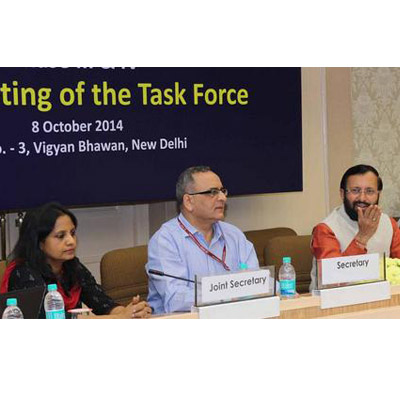
    NEW DELHI: Information and Broadcasting Minister Prakash Javadekar today clarified that the new dates for Phase III and IV for digital addressable system were the outer limits but all attempts would be made to achieve the target well before that.


    Reiterating that the main aim of the new deadlines was to encourage DAS with use of India-made set top boxes, he told the first meeting of the DAS task force for the final two phases here today that the Government has facilitated C form issue for indigenous manufacturers.


    At the outset, he said the entire digitisation programme was an integral part of Prime Minister Narendra Modi’s Digital India plan.


    He also pointed out that he represented the viewer and consumer, who had no voice unlike the other stakeholders who were present at the meeting.


    Javadekar said the cable TV digitisation process aimed at providing the consumer with greater choices and affordable and qualitative options. The overall objective was to be sensitive to the needs and choice of the consumer. The choice of the consumer was paramount in defining the inputs, strategies and roadmap for the remaining phases of the digitisation process.


    He called upon the manufacturers to innovate and explore new technologies for addressing the different consumer tastes and needs.


    The Minister added that in the next phase of digitisation, the price mechanism offered to the consumer would be a key determinant of the process, particularly as DAS was being extended to rural areas. As a consequence, it was mandatory for all stakeholders to sensitise the consumers on the benefits of the process in view of the rural outreach of the programme. 

    Regarding the indigenisation of STBs, the Minister said that the concerns of the industry had been taken up with the Finance and Communications and IT Ministries and STBs were declared as part of ‘telecommunication network’.


    The Minister said the task force ought to identify timelines for implementation so as to ensure the timely completion of Phase III and Phase IV. All issues concerning the key stakeholders needed to be debated at length so as to ensure the mainstreaming of the process with the existing policy. The need of portability of set top boxes so as to provide the option of interoperability to the consumers was an issue that could be looked into by the concerned stakeholders.


    Every meeting of the task force was critical as it identified critical inputs so as to ensure the effective implementation of the timelines and processes. Every viewer should be able to get the best viewing experience over the next two years, he added.


    He also wanted portability for STBs on the lines of portability for mobile phones and said the government and the task force will study this issue.


    Earlier speaking on the occasion, I and B secretary Bimal Julka said the task force provided an important platform to debate and overview issues related to the digitisation implementation. It also provided an opportunity to understand the concern of stakeholders.


    The experience of such meetings during the first and second phase of implementation of the programme had been extremely useful in streamlining the roadmap for effective implementation. He said the consumer is the judge of what he gets to see and content rules. He said a lot of complaints had been received from stakeholders during the implementation of the first two phases but he hoped to get more suggestions as well.


    The meeting saw various stakeholders raise issues concerning them. Taxation was raised by STB manufacturers and auditing was requested by consumer groups. The broadcaster suggested that the deadline should be reduced to 2015 for both phases. No TRAI member attended the meeting.


    Javadekar also assured that there will be sub committees that will monitor the process of digitisation.  

  • DAS task force to meet on 8 October amidst protests

    DAS task force to meet on 8 October amidst protests

    NEW DELHI: Almost a month after its constitution, the task force set up for the implementation of digitisation in the country and particularly overseeing the execution of the last two phases of Digital Addressable System (DAS) is expected to meet on 8 October at 10:30 in Delhi.


    However, local cable operators who have already expressed their protest at not being given a voice in the Task Force have not been invited to the meeting.


    Talking about the meeting, Information and Broadcasting Ministry secretary Bimal Julka told indiantelevision.com that all the stakeholders named in the task force order of 12 September had been nominated and are expected to be at the meeting. Although an official of the Information and Broadcasting Ministry denied this.


    LCOs who form the backbone of the cable television system in the country said no organisation of LCOs had been included in the task force or invited in the meeting.


    Meanwhile, ASSOCHAM Media and Entertainment Committee co-chairman Sujatha Dev informed the industry body that she is unaware of how a representative of ASSOCHAM was nominated to the task force.  


    National Cable & Telecommunication Association president Vikki Choudhry has in a letter to the I&B Minister Prakash Javadekar alleged that “In spite of all your endeavours taken to clean up the mess that had been created on account of DAS by the previous UPA government, few officials still attached to the MIB are bent on misleading and misguiding you on this much controversial DAS issue.”


    He has also pointed out that certain categories had not been invited to the task force meeting despite them being directly involved in implementation of DAS which included five Independent MSOs one each from North, South, East, West and North East region, five registered LCO associations one each from North, South, East, West and North East regions, a representative of the Association of Regional Television Broadcasters of India/ Regional News Broadcasters Association, five prominent consumers organisations, one each from North, South, East, West and North East regions, a representative of ASSOCHAM and a representative of Telecom Equipment Manufacturers Association of India (TEMA).


    Choudhry added that while there had been mention of these in the order of 12 September constituting the task force, no persons had been nominated for these categories.


    Additionally, he also revealed that there was no representation / invitation sent to Conditional Access System Vendors (an integral part of the entire DAS) and Subscriber Management System (SMS) that controls the entire DAS ecosystem after integration with the CAS.


    According to the 12 September order, the new task force was to be headed by I&B additional secretary as chairperson, with Telecom Regulatory Authority of India (TRAI) principal advisor for broadcast and cable satellite, I&B Ministry joint secretary broadcasting, representatives from the MSO Alliance, five independent MSOs one each from north, south, east, west and north east regions, five registered LCO associations one each from north, south, east, west and north east regions, representatives from the Indian Broadcasting Foundation, News Broadcasters Association, Association of Regional Television Broadcasters of India, DTH Association, FICCI, CII, ASSOCHAM, CEAMA, Department of Telecommunications, Department of Electronics and Information Technology, DG: Doordarshan, DG: All India Radio, BECIL, BIS, five prominent consumer organisations one each from north, south, east, west and north east regions and 33 state level nodal officers one each from the states/union territories governments.

    The task force was to act as an interface between the government and the industry in matters related to implementation of DAS in the cable TV sector and monitor the execution of DAS. It also will have to analyse the roadblocks that may come in the way of digitisation and suggest measures.


    While NBA and IBF will be participating in the meeting, representatives of cable operators associations from different states are protesting against the exclusion of LCOs and MSOs from the meeting.