Category: I&B Ministry

  • India steps up fight against digital piracy

    India steps up fight against digital piracy

    MUMBAI: The Ministry of Information and Broadcasting has opened the floor to industry voices as it plans a major revamp of India’s digital anti-piracy armour.

    A public notice issued on 7 November invites inputs from film producers, broadcasters, OTT platforms and telecom players on tackling the fast-spreading menace of online content theft. With billions lost each year to pirated movies and shows, the government is keen to tighten its grip on digital delinquents.

    Stakeholders have been asked to share their experiences on identifying and removing pirated content, plugging technological gaps, improving coordination with enforcement agencies and adopting global best practices that fit India’s media landscape.

    Suggestions can be emailed to digital-mediamib@gov.in within 20 days of the notice. The move signals a renewed push to build a stronger, smarter defence for India’s creative economy, before the pirates sail any further.

  • India’s information ministry wages war on clutter as Diwali clean-up campaign hits fifth year

    India’s information ministry wages war on clutter as Diwali clean-up campaign hits fifth year

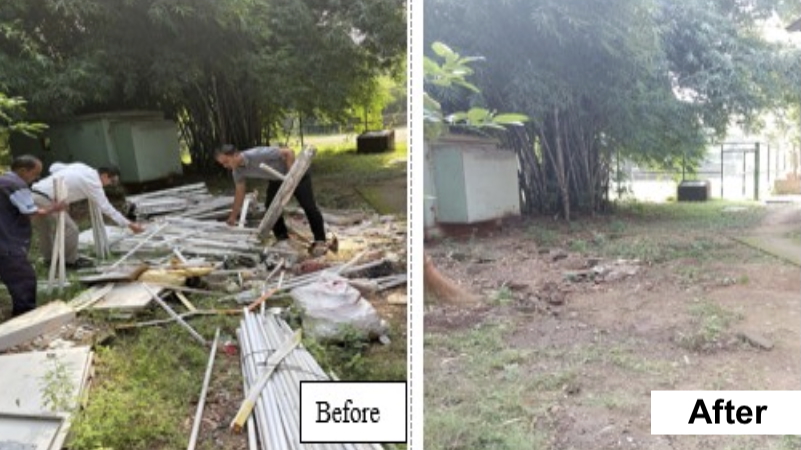
    NEW DELHI: India’s ministry of information and broadcasting has turned spring cleaning into a competitive sport. Armed with bin bags and a zeal for decluttering, the ministry and its field offices have spent the first fortnight of October purging files, scrapping vehicles and flogging off mountains of metal—all in the name of Special Campaign 5.0, the government’s latest push to institutionalise cleanliness and slash bureaucratic bloat.

    The campaign, which kicked off on 2 October, has already produced impressive tallies. The ministry has conducted 493 outdoor campaigns, cleaned 973 spots and condemned 104 vehicles to the scrapyard. Some 143,000 kg of scrap have been disposed of, generating Rs 34.27 lakh in revenue and freeing up 8,007 sq ft of space—enough to house a small army of civil servants, or at least their paperwork.

    The assault on pendency has been equally vigorous. Officials have reviewed 13,900 physical files, weeding out 3,957, and tackled 585 electronic files, closing 165. A total of 301 public grievances, 57 appeals, 16 parliamentary references, two state government references and one prime minister’s office reference have also been cleared—proof that even the most entrenched bureaucratic backlog can be shifted with sufficient motivation.

    The ministry has deployed teams of officers to field offices across the country to oversee progress, ensuring that the campaign’s lofty goals—enhanced workplace cleanliness, increased productivity and responsible e-waste management—are met with more than just lip service.

    Diwali, the festival of lights, traditionally inspires Indians to scrub their homes and workplaces in anticipation of prosperity. The ministry is clearly hoping that disposing of dead weight will do the same for government efficiency. Whether the momentum lasts beyond the campaign’s end date remains to be seen—but for now, at least, India’s information bureaucracy is lighter, leaner and Rs 34 lakh richer.

  • Central government  drives Bind scheme with Rs 2,539 crore push

    Central government drives Bind scheme with Rs 2,539 crore push

    NEW DELHI: India’s public broadcasters are in the middle of their most ambitious revamp in decades. The government told Parliament this week that its Broadcasting Infrastructure and Network Development (Bind) scheme — approved for 2021–26 with an outlay of Rs 2,539.61 crore — is advancing on schedule, with close to Rs 981 crore already spent.

    The five-year programme is designed to modernise Doordarshan and Akashvani (All India Radio) with digital transmission, high-definition studios, new FM towers and a wider footprint in border, tribal and left-wing extremism–affected regions. The ministry said no major funds have lapsed, though procurement delays occasionally slowed spending, now being addressed through tighter monitoring.

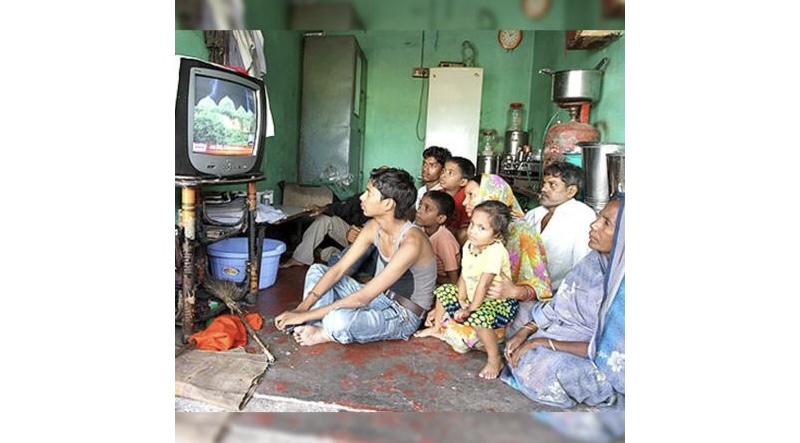
    One of Bind’s biggest successes is the expansion of DD Free Dish, India’s only free-to-air DTH service. Channel count has surged from 104 in 2019 to 510 today, including 92 private broadcasters, 50 Doordarshan services and 320 educational channels. Popular Akashvani stations such as FM Gold, Rainbow and Vividh Bharati are also available on the platform, making free access to information and entertainment more widely available.

    Akashvani’s terrestrial coverage now spans 90 per cent of India’s geography and 98 per cent of its population. Alongside its traditional FM network, more than 260 AIR channels are now accessible through the NewsonAIR mobile app. To further strengthen reach, 59 new FM transmitters have been approved under the scheme.

    In parallel, Prasar Bharati has entered the OTT space with Waves, launched in 2024. The digital platform aggregates infotainment, news, education and cultural content, and integrates feeds from Doordarshan and AIR. Officials say Waves is helping extend public broadcasting to younger, mobile-first audiences and to Indians overseas.

    The Bind scheme, covering all states, represents an attempt to reposition public service broadcasting in a hyper-fragmented media market.

    For New Delhi, the strategy is as much about access as it is about influence — ensuring that public broadcasting reaches underserved communities while competing with private players on technology and content.


  • Piracy gets a reality check as India sets up anti-piracy task force

    Piracy gets a reality check as India sets up anti-piracy task force

    MUMBAI: India’s pirates may soon find their screens going blank. The Ministry of Information and Broadcasting (MIB) has announced the formation of a dedicated task force to crack down on online piracy, a menace that drains Rs 224 billion annually from the country’s entertainment industry, according to the 2024 Rob Report by EY and IAMAI.

    The scale of the problem is staggering with 51 per cent of Indian media consumers admitting to watching pirated content, both theatres and OTT platforms are losing revenue hand over fist. The Cinematograph Amendment Act 2023 had already introduced stricter penalties and empowered authorities to clamp down on illegal recordings and transmissions. Now, with a specialised task force, the fight against piracy is set to gain sharper teeth.

    Welcoming the move, JioStar CEO and IAMAI Digital Entertainment Committee (DEC) chair Kiran Mani called it a “timely and necessary step” that would directly channel industry expertise into decisive solutions. “By bringing together the collective experience of the ecosystem, we can help shape solutions that protect India’s creative economy and drive long-term growth,” he said.

    Echoing the urgency, Inshorts co-founder and CEO DEC Co-chair Deepit Purkayastha noted that piracy remains “one of the biggest hurdles” for the sector. “This task force is a chance to work hand in hand with the government to find solutions that really work. Together, we can set the stage for a stronger and more trusted entertainment industry,” he added.

    With stricter laws in place, industry leaders aligned, and the new task force gearing up, India’s media and entertainment sector has a rare chance to curb piracy, safeguard creativity, and expand its global influence. For once, it looks like the pirates may not have the last laugh.

  • Govt sharpens TRP policy: advisory roles out, conflict of interest curbed

    Govt sharpens TRP policy: advisory roles out, conflict of interest curbed

    NEW DELHI: In a move set to shake up the television ratings ecosystem, the ministry of information & broadcasting has proposed amendments to its decade-old policy on television rating agencies in India and opened the floor for public comments.

    The fresh draft tweaks the 2014 guidelines with sharper guardrails. Among the headline changes: rating agencies must now be Indian-registered companies under the Companies Act, 2013, and are barred from offering consultancy or advisory services that could lead to a conflict of interest with their core job—ratings.

    In a bid to declutter the framework, the ministry has deleted clauses 1.5 and 1.7, along with the proviso tagged to clause 1 post explanation.

    (Clause 1.5 basically states that “any member of the board of directors of the television rating company shall not be in the business of broadcasting/ advertising/advertising agency.)

    (Clause 1.7 states that the company shall comply with the following cross holdings requirements, namely.
    (a) No single company/ legal entity, either directly or through its associates or inter-connected undertakings, shall have substantial equity holding in rating agencies and broadcasters/advertisers/ advertising agencies.
    (b) No single company/legal entity, either directly or through its associates or inter-connected undertakings, shall have substantial equity holding in more than one rating agency operating in the same area.
    (c) The cross-holdings restriction will also be applicable in respect of individual promoters besides being applicable to legal entities.
    (d) A promoter company/member of the board of directors of the rating agency cannot have stakes in any broadcaster/ advertiser/advertising agency either directly or through its associates or inter-connected undertakings.
    Explanation: For the purpose of para 1.7, substantial equity shall mean equity of 10% or more of paid-up equity. Having a substantial equity holding in companies shall constitute a cross-holding. Provided that the eligibility conditions stipulated at 1.5, 1.6 and 1.7 will not be applicable in the self-regulation model where the industry-led body, such as, Broadcast Audience Research Council (BARC) itself provides the rating.)

    The new norms will apply not just to future applicants but also to existing players in the market.

    Stakeholders and the general public have 30 days to respond to the draft, preferably via email to the ministry. The consultation marks a significant step towards transparency and credibility in India’s ratings architecture—a space often marred by controversy and trust deficits.

    The complete amendment order and policy guidelines are available on the I&B ministry’s website.

  • NBDSA cracks the whip: news channels caught in a spin over sensationalism

    NBDSA cracks the whip: news channels caught in a spin over sensationalism

    MUMBAI: The News Broadcasting & Digital Standards Authority (NBDSA) has been rather busy, doling out a series of rulings that have left several prominent Indian news channels with a bit of egg on their faces. It appears some broadcasters have been playing fast and loose with the facts, prompting the watchdog to flex its regulatory muscles.

    In a decision that’s got everyone talking, ABP News found itself in the NBDSA’s crosshairs over one 7 September 2024, interview with the former BJP MP, Brij Bhushan Sharan Singh. The complainant, Indrajeet Ghorpade, wasn’t chuffed about the alleged “character assassination” of olympic wrestler Vinesh Phogat. The NBDSA, clearly not amused by the chuckles at Phogat’s expense, closed the complaint with an “observation to take care of the issue,” effectively telling ABP to mind its manners. It seems some interviews are more of a grapple than a chat.

    Not to be outdone in the “oops” stakes, Times Now Navbharat received a stern talking-to for a broadcast from 5-6 September 2024, titled ‘अवैध मस्जिद’ पर महिलाओं ने मुसलमानों पर खुलकर सब बता दिया ! (Women openly tell everything about illegal mosques). Ghorpade, a busy chap indeed, also lodged this complaint, citing misleading thumbnails and a rather leading line of questioning about Shimla’s Muslim population. The NBDSA, advising broadcasters to ensure “tickers and thumbnails should conform to the actual version of the discussions/interviews,” has told Times Now Navbharat to snip, snip, snip that thumbnail from the video, if it’s still lurking online. A case of “don’t judge a broadcast by its cover,” perhaps.

    Meanwhile, Zee News felt the heat over a quartet of programmes aired on 15 and 16 October 2024, all revolving around the rather unsavoury (and frankly, bizarre) concept of “thook jihad” and “urine jihad”. Utkarsh Mishra’s complaint highlighted how a perfectly sensible UP law about CCTV cameras in eateries was spun into a battle against “thook jihad,” seemingly legitimising “state-sponsored and legislative targeting based on one’s religious identity”. The NBDSA, clearly unimpressed by this “spitting image” of sensationalism, issued a warning to Zee News not to “repeat such violations.” They’ve also been told to scrub the offending videos from their digital presence. Looks like Zee News got a bit of a sticky wicket there.

    Finally, Citizens for Justice & Peace landed Times Now Navbharat in hot water again, this time for 19 August 2024, programmes dissecting “teaching in Madrasas in Bihar”. The complaint alleged inflammatory language and selective reporting surrounding claims about “Pakistan-Published books” and “non-Muslims as ‘Kafir’”. The NBDSA, after a good long chinwag with both parties, concluded that the broadcasts had indeed fallen short of journalistic standards. They’ve directed the broadcaster to take down the objectionable segments and, in a polite but firm tone, told them to get their house in order.

    In all four cases, the NBDSA emphasised the importance of factual integrity, responsible language, and a strong editorial spine. The verdicts serve as a wake-up call to India’s noisy newsrooms: shock and sensationalism may fetch eyeballs, but they won’t go unchecked.

    For some broadcasters, it’s clearly time to trade outrage for oversight — or risk a growing pile of takedown notices. 

  • Information and broadcasting minister Ashwini Vaishnaw highlights growth of creator economy

    Information and broadcasting minister Ashwini Vaishnaw highlights growth of creator economy

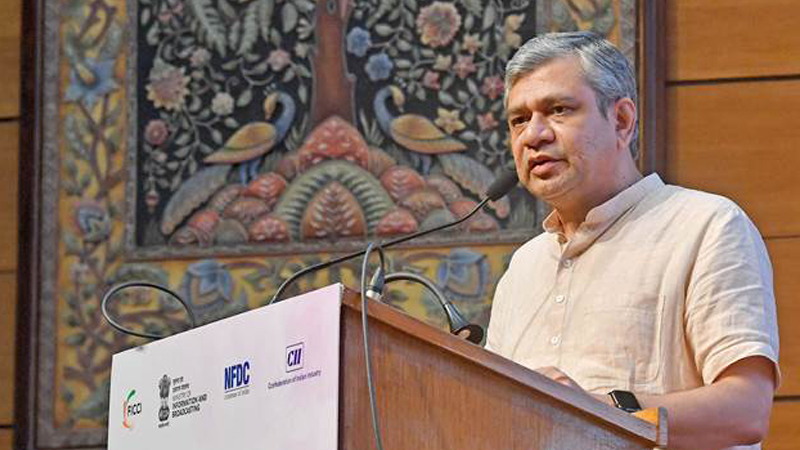
    MUMBAI: Union minister of information & broadcasting Ashwini Vaishnaw stated that the media landscape is undergoing a significant shift due to the exponential growth of the creator economy. Speaking to representatives from approximately 20 national and regional media outlets on Saturday, he emphasised the fundamental changes occurring in content creation and its associated economy.

    “The world of creators and their economy is going through a fundamental change. With the advent of technology, the old model is giving way to the new model, creating opportunities as well as challenges,” said Vaishnaw.

    He highlighted how technology has enabled broader participation in content creation, noting, “Gone are the days when a large studio was necessary for producing content. Today, a creator from a remote village in Jharkhand or Kerala can produce high-quality content and garner millions of views.”

    Vaishnaw mentioned the World Audio Visual & Entertainment Summit (Waves), scheduled to take place in Mumbai from 1-4 May, which has already received over 100,000 registrations. He explained that Waves aims to establish itself as a global platform for media and entertainment, similar to the role of Davos for economic policies. The summit will also recognize top innovators with awards for their contributions to the evolving global media and entertainment sector.

    Leaders from various media organisations expressed their appreciation for the government’s initiative in conceptualizing Waves as a platform to connect policymakers, creators, industry leaders, technology companies, and start-ups.

    Information and broadcasting secretary Sanjay Jaju welcomed the participants and emphasised the importance of collaborative dialogue in shaping the future of the media landscape. He underscored the ministry’s commitment to engaging with stakeholders across different platforms and acknowledged the active participation of media organizations in the lead-up to Waves 2025.

    Vaishnaw reiterated that the creator economy is experiencing rapid growth and that prime minister Narendra Modi has acknowledged the contributions of creators to the economy and in promoting India’s soft power globally. He stated that Waves is intended to become a global connector for creators, buyers, and markets, facilitating scalable creative solutions.

    Secretary Sanjay Jaju emphasized the significance of collective discussion in determining the future direction of the media industry and the ministry’s commitment to engaging with stakeholders.

  • Parliament panel turns up the heat; asks MIB to give timeline for broadcast bill

    Parliament panel turns up the heat; asks MIB to give timeline for broadcast bill

    MUMBAI: In a  rebuke, the Standing Committee on Communications and Information Technology has demanded that the ministry of information and broadcasting stop dithering and set a firm deadline for the long-delayed Broadcasting Services Regulation Bill, The Economic Times has reported.

    The parliamentary panel, clearly miffed at the glacial pace of progress, wants the controversial legislation tabled in Parliament “at the earliest” – governmental code for “you’ve been dragging your feet for too long.”

    The ministry’s second draft of the broadcast bill had a spectacularly brief public life last year – introduced with fanfare in July only to be hastily withdrawn in August after media stakeholders threw a collective wobbly over the secretive consultation process.

    Industry insiders were particularly hot under the collar about vague terminology that could potentially hand sweeping powers to bureaucrats – a prospect about as popular in newsrooms as a pay cut.

    In its response to the parliamentary committee’s prodding, the ministry promised a fresh draft would emerge after “detailed consultations.” It outlined a tortuous path ahead: consultations will be followed by a draft cabinet note, inter-ministerial ruminations, and eventual submission for the cabinet’s consideration.

    The committee’s action taken report makes it crystal clear that lawmakers’ patience is wearing thinner than a politician’s promises during election season.

    Having previously recommended that the government “expedite” formulation of the law while ensuring adequate consultations, the committee has now upped the ante by demanding a concrete timeline.

    The original draft bill had been available for public commentary from 10 November to 9 December 2023, with the deadline later extended to  15 January 2024 – but more than a year later, a revised version remains elusive .
    Industry observers note that the regulatory vacuum continues to leave India’s vibrant broadcasting sector in limbo, with outdated rules struggling to address the challenges posed by streaming platforms and social media content.

    “At this rate, we’ll have holographic television before we get a broadcasting law,” remarked one cynical media veteran.

  • Indian govt presents Waves 2025 to 100 ambassadors and high commissioners

    Indian govt presents Waves 2025 to 100 ambassadors and high commissioners

    MUMBAI: In a glitzy push to make India the hotbed of global media action, the government rolled out the red carpet for its ambitious World Audio Visual & Entertainment Summit (Waves) 2025  today at Sushma Swaraj Bhawan in New Delhi in the presence of 100 ambassadors and high commissioners. MIB officials made a  hard sales pitch  to prod them and make them realise that the Indian government is extremely serious about Waves 2025 and they in turn should carry this message back to their national governments and ensure robust participation from their respective countries. 

    Waves 2025—set to make a splash in Mumbai from 1 to 4  May 2025—promises to be a star-studded affair that will see the worlds of tech, media and entertainment collide in spectacular fashion.

    Union minister for external affairs S. Jaishankar didn’t mince words about the summit’s significance: “Economic and political rebalancing is moving towards cultural balancing. We are not truly global if we are not truly local. Waves 2025 captures the spirit of this endeavour.”  

    He urged the ambassadors and high commissioners to familiarise their governments regarding the opportunities of global collaborations courtesy the Waves 2025 initiative.

    Meanwhile, information & broadcasting minister Ashwini Vaishnaw turned up the heat, declaring that “the intersection of creativity, media and technology is transforming the media landscape of the world and reaching a new level of convergence.” He teased that “some of the biggest names” in the industry would be gracing the Mumbai bash.

    Not to be outdone, Maharashtra chief minister Devendra Fadnavis jumped into the fray, drumming up Mumbai’s credentials as the “financial and entertainment capital of India” that serves as the “perfect backdrop” for the summit.

    “Waves 2025 is a movement,” Fadnavis proclaimed, while welcoming the establishment of the Indian Institute of Creative Technology which the government has committed to set up in Mumbai with Rs 391 crore being allocated for it. He expressed hope that “media will continue to be a force for good,” in a world where technology and creativity are increasingly getting into bed together.

    Minister of state for information & broadcasting, L. Murugan effusively stepped up to say that Waves  2025 will open  the door  “to joint ventures, co-productions, and business expansion, enabling global media companies to engage with India’s creative sector.  We remain steadfast in creating a conducive environment for the M&E industry, supporting ease of doing business, content localisation, and infrastructure development.”

    Information & broadcasting secretary Sanjay Jaju revealed that the four-day extravaganza will feature multiple tracks designed to make waves across the industry:
    * A global media dialogue featuring ministers and policymakers
    * Thought leaders Track with knowledge-sharing sessions
    * Waves exhibition showcasing storytelling innovations
    * Bharat pavilion highlighting India’s media heritage
    * Waves  Bazaar to facilitate business networking
    * WaveXcelerator to back media startups with mentorship and moolah
    * Waves Culturals featuring performances that blend Indian and international talent

    Also present was  Maharashtra government chief secretary Sujata Sauni who exchanged a memorandum of understanding relating to Waves 2025 with Jaju. 

    The organisers are also playing up Waves 2025’s integration with the orange economy, positioning the summit as a catalyst for economic growth and job creation through creative industries.

    With Mumbai ready to throw open its doors to thought leaders grappling with issues from AI to streaming revolutions, intellectual property rights, misinformation, and media sustainability, Waves 2025 is gearing up to be the first summit of its kind to tackle these hot-button issues by promoting cultural diversity, innovation, and equitable access to media platforms.

    As the countdown begins, all eyes are now on whether this media matrimony can truly deliver on its lofty promise of becoming “the biggest unifying factor between country to country, people to people and culture to culture in the digital age.”

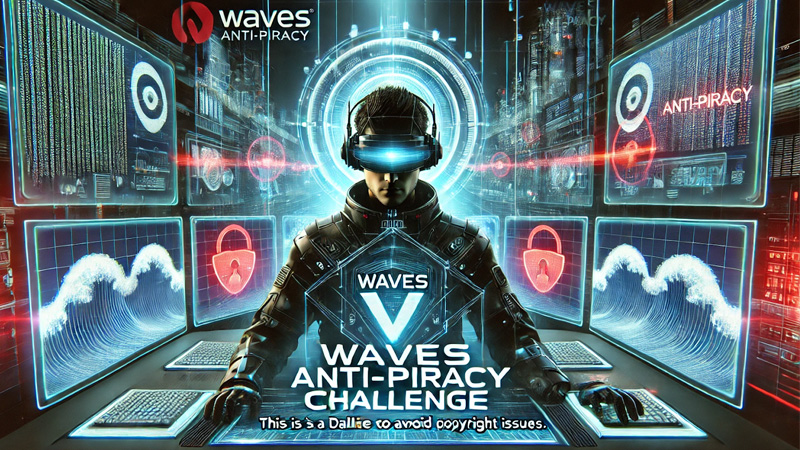
  • Waves anti-piracy challenge sparks digital security revolution

    Waves anti-piracy challenge sparks digital security revolution

    MUMBAI: Piracy is the digital equivalent of sneaky pickpocketing—except here, it’s entire films, shows, and creative works vanishing into the dark web. But India has decided to put an end to this digital thievery with the Waves anti-piracy challenge, an ambitious initiative aimed at safeguarding digital content in an era where technology evolves faster than your favourite streaming algorithms. Organised as part of the Create in India Challenges, this competition has drawn a staggering 1,296 registrations, proving that fighting piracy is not just a noble cause—it’s an urgent one.

    The challenge, backed by the ministry of information and broadcasting in partnership with the Confederation of Indian Industry (CII), zeroes in on fingerprinting and watermarking technologies to combat unauthorised distribution, piracy, and content manipulation. And it’s not just a contest; it’s a digital battleground where individuals, research teams, startups, and established organisations are vying to create the ultimate piracy-proof tech.

    A core segment of the World Audio Visual and Entertainment Summit (Waves), this anti-piracy initiative is set to unfold in Mumbai from 1-4 May 2025, where the global media & entertainment (M&E) industry will converge to witness the next wave of content protection. With four key pillars—Broadcasting and infotainment, AVGC XR (Animation, Visual Effects, Gaming, Comics, Extended Reality), digital media and innovation, and films—this summit is India’s bold declaration that it’s ready to lead the fight against digital piracy.

    Why does it matter? Because piracy is no longer just about grainy bootleg DVDs or sketchy torrent sites—it’s an evolving beast that threatens content creators and industries alike. The Waves Anti-Piracy Challenge is a clarion call to India’s brightest minds, encouraging them to develop indigenous solutions that will protect digital content integrity.

    The create in India challenges have already attracted over 73,000 registrations, a testament to the country’s booming interest in media security. With a clear focus on fingerprinting and watermarking, this initiative aims to:

    .  Provide a launchpad for homegrown companies to showcase their security solutions.

    .  Foster novel techniques that improve digital content traceability and protection.

     .  Ensure seamless integration of anti-piracy technologies into media workflows.

     .  Support the development of cutting-edge solutions addressing both current and future piracy challenges.

    Piracy has evolved from sneaky DVD sellers at traffic signals to sophisticated cyber operations threatening billion-dollar industries. India’s response? Unleashing an army of innovators through Waves. This initiative ensures that content creators—from Hindi cinema studios to indie game developers—can secure their intellectual property with robust, state-of-the-art technologies.

    As the Waves summit approaches, anticipation builds for the groundbreaking ideas that will emerge. Supported by industry leaders, policymakers, and tech pioneers, this challenge doesn’t just showcase innovation—it paves the way for real-world applications that will safeguard India’s digital future.