Category: High Court

  • NBA challenges amended Cable TV rules in Kerala High Court

    NBA challenges amended Cable TV rules in Kerala High Court

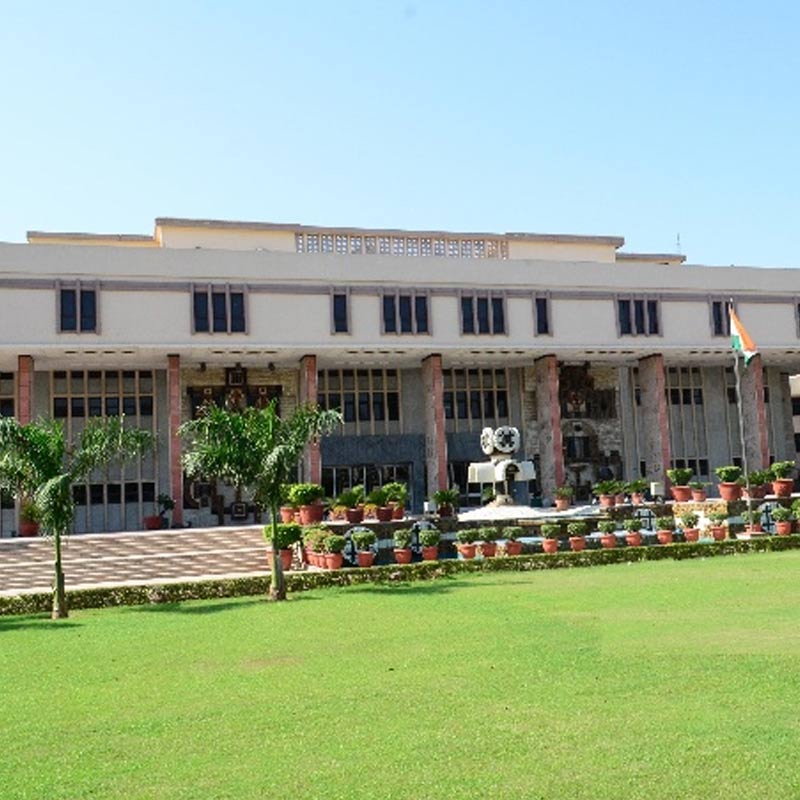
    New Delhi: The Kerala high court has directed the ministry of information and broadcasting (I&B) not to take any coercive action against members of the News Broadcasters Association (NBA) over non-compliance with the Cable TV Act.

    The court issued the orders on a plea filed by the NBA which represents several news channels against certain provisions of the amended Cable TV Rules which provide for an oversight mechanism over the content of news channels. The court has also issued notice to the ministry and sought its stand on the NBA’s petition within two weeks.

    In its plea, NBA contended that the amended provisions in the Cable TV Rules create an oversight mechanism that gives the executive “unfettered, unbridled and excessive powers to regulate the content of the television channels of the news broadcasters”.

    NBA’s counsel told the court that the amended rules are similar to the new IT rules which NBA had challenged recently. “Under the amended Cable TV Rules also, the oversight mechanism would be headed by an additional secretary-level officer who would have the power to overrule decisions of the self-regulatory body already in place and which is headed by a retired judge of the Supreme Court,” he added.

    Last month, the Centre had notified the Cable Television Network (Amendment) Rules, 2021 to provide for a three-layer statutory mechanism for the redressal of consumer’s complaints relating to the content broadcast by TV channels.

    The amended rules stipulate a three-layer grievance redressal mechanism – self-regulation by broadcasters, self-regulation by the self-regulating bodies of broadcasters, and an oversight mechanism by the central government. The rules require each broadcaster to establish a grievance or complaint redressal mechanism, appoint an officer to deal with the complaints, display the contact details of their grievance officer on their website or interface and be a member of a self-regulating body.

    As per the rules, any person aggrieved by the content of a programme of a channel may file his/her complaint in writing to the broadcaster first. “The broadcaster shall, within 24 hours of a complaint being filed, generate and issue an acknowledgment to the complainant for his information and record. The broadcaster shall dispose of the complaint and inform the complainant of its decision within 15 days of receipt of such complaint,” the rules stated.

  • Bombay HC upholds TRAI’s NTO 2.0 except second provision of twin conditions

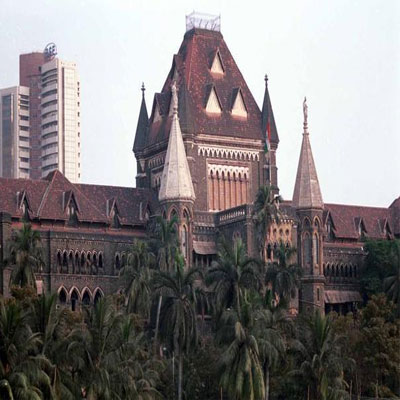
    KOLKATA: After a long legal battle between broadcasters and the telecom regulatory authority of India (TRAI), the Bombay High Court on Wednesday pronounced judgment on the amended new tariff order (NTO 2.0) case. 

    The court has upheld the constitutional validity of NTO 2.0 but has partly struck down the second provision of the twin conditions.

    As per the second provision, the a-la-carte rates of each pay channel (MRP), forming part of a bouquet, shall in no case exceed three times the average rate of a pay channel of the bouquet of which such pay channel is a part. The court has mentioned the clause as an arbitrary condition. 

    The Indian Broadcasting Foundation (IBF), along with other broadcasters had filed a writ petition in the Bombay High Court against TRAI in January 2020, soon after the regulations came into place.

    More to follow…

  • Govt serves ‘one last notice’ to Twitter to ‘immediately’ comply with IT rules

    New Delhi: The government on Saturday issued ‘one last notice’ to Twitter Inc asking it to immediately comply with the new IT rules, failing which it could face stern action and lose exemption from liability under section 79 of the IT Act, 2000. This essentially means that the platform could be held responsible for content posted by the users.

    “The provisions for significant social media intermediaries under the Rules have already come into force on 26 May and it has been more than a week but Twitter has refused to comply with the provisions of these rules,” the ministry of electronics and information technology (MeitY) wrote to Twitter’s deputy general counsel, Jim Baker on Saturday.

    According to the ministry, the US company has not informed about the details of the chief compliance officer. The resident grievance officer and nodal contact person nominated is not an employee of Twitter Inc in India, as required by rules. Furthermore, the office address of Twitter Inc shared by the company is that of a law firm in India, which is also not as per rules.

    Twitter’s refusal to comply with the rules demonstrated its “lack of commitment and efforts towards providing a safe experience for the people of India on its platform,” it said. The ministry highlighted that the US tech giant has been operational in India for over a decade and “it is beyond belief that it has still doggedly refused to create mechanism that will enable the people of India to resolve their issues on the platform in a timely and transparent manner and through fair processes, by India based, clearly identified resources.”

    Though with effect from 26 May, “consequences follow” given Twitter’s non-compliance with rules, however, the ministry wrote, as a “gesture of goodwill”, it is giving Twitter Inc one last notice to immediately comply with the rules, failing which it will be liable for consequences as per the IT Act and other penal laws of India.

    The new IT (Guidelines for Intermediaries and Digital Media Ethics Code) rules, 2021, recommend a three-tier mechanism for regulation of all online media. As per the rules, each significant social media intermediary is required to appoint a chief compliance officer, a nodal contact person for 24×7 coordination with law enforcement agencies and a resident grievance officer. All three should be resident Indians.

    The intermediaries are also required to prominently publish on their website, app or both, the name of the grievance officer and his/her contact details as well as the mechanism by which a user or a victim may make a complaint. The grievance officer would be required to acknowledge the complaint within 24 hours and resolve it within 15 days from its receipt. The government has also asked the significant social media intermediaries providing services primarily in the nature of messaging “to enable identification of the first originator of the information.”

  • IT rules not applicable to search engines: Google

    IT rules not applicable to search engines: Google

    KOLKATA: The new IT rules for digital media are not applicable to search engines, Google argued in the Delhi high court on Wednesday. It also urged the court to set aside a single judge order passed earlier in relation to the removal of ‘offending content’ posted on a website.

    The single judge’s decision, last month, had come while dealing with a case in which a woman’s photographs were uploaded on a pornographic website without her consent by some miscreants. Despite court orders, the content could not be removed in its entirety over the internet, even as the offenders kept reposting it on to other sites.

    The judge had “mischaracterised” its search engine as a ”social media intermediary” or ”significant social media intermediary”, Google has contended.

    “The single judge has misinterpreted and misapplied the New Rules 2021 to the appellant’s search engine. Additionally, the judge has conflated various sections of the IT Act and separate rules prescribed there under, and has passed template orders combining all such offences and provisions, which is bad in law,” Google said in its appeal against the judgement, reported PTI.

    The Delhi high court bench comprising chief justice D.N. Patel and justice Jyoti Singh said no interim order will be passed on Google’s plea. The bench has issued notice to the central government, the Delhi government, the Internet Service Providers Association of India, Facebook, the pornographic site and the woman, on whose plea the single judge’s ruling was delivered, to submit their responses on the issue by 25 July.

  • WhatsApp appoints grievance officer for India

    WhatsApp appoints grievance officer for India

    KOLKATA: Amid talks over implementation of new IT rules, messaging platform WhatsApp has appointed Paresh B Lal as grievance officer in India.

    WhatsApp has updated the new appointment on its website so users can contact Paresh B through a post box in Banjara Hills at Hyderabad in Telangana state. As per a PTI report, other large digital companies like Google have also started updating their websites to reflect the respective appointments of grievance officers in these organisations. Twitter also informed the Delhi high court that it has appointed the grievance redressal officer.

    The government issued new intermediary guidelines for social media platforms on 25 February with a three-month deadline. It directed intermediaries to appoint a grievance officer based in India for a time-bound redressal of user complaints. As per the rules, a social media intermediary is also required to appoint a chief compliance officer, a nodal contact person for 24×7 coordination. They will also have to publish a monthly compliance report mentioning the details of complaints received and action taken.

    After the rules came into effect on 26 May, the ministry of electronics and information technology (MeitY) wrote to “Significant Social Media Intermediaries” (SSMIs) asking for details of compliance.

    Under the new “the Information Technology (Intermediary Guidelines and Digital Ethics Code) Rules, 2021,” SSMIs are defined as social media companies with more than 50 lakh registered users. Hence, Twitter, Facebook, Facebook-owned WhatsApp and Instagram fall under the SSMIs category.

  • Twitter complies with new IT rules

    Twitter complies with new IT rules

    New Delhi: The social media giant Twitter on Monday told the Delhi high court that it has appointed the grievance redressal officer, as required under the new IT (guidelines for intermediaries and digital media ethics code) rules, 2021.

    The court was hearing a plea by one Amit Acharya, alleging that Twitter India has not complied with the IT Rules, according to which it was required to appoint a Resident Grievance Officer, Nodal Officer and Chief Compliance officer to look into any complaints against the platform.

    Appearing on behalf of the US company, senior advocate Sajan Poovayya shared a letter dated 28 May, claiming that the company has already made the requisite appointment. However, the claim was disputed by the petitioner who argued that Twitter’s GRO details could not be found when a complaint was sought to be made against certain objectionable tweets, The Indian Express reported. He also alleged that the microblogging platform has appointed a US resident as the Grievance Officer, contradictory to what the IT rules mandated.

    During the course of hearing, the court has also made it clear that “if the rules have not been stayed then they have to be complied with”.  It issued a notice to Twitter and gave the company three weeks to put the details on record. The case was adjourned for next hearing on July 6.

    The government had released a circular on 26 May enquiring about compliance with the said rules by all SSMIs under the Rules. As per the rules, each significant social media intermediary is required to appoint a resident grievance officer, chief compliance officer, a nodal contact person for 24×7 coordination with law enforcement agencies. He/she would be required to acknowledge the complaint within 24 hours and resolve it within 15 days from its receipt.

    All three should be resident Indians. They will also have to publish a monthly compliance report mentioning the details of complaints received and action taken. The intermediaries are also required to prominently publish on their website, app or both, the name of the grievance officer and his/her contact details as well as the mechanism by which a user or a victim may make a complaint.

  • Bombay HC tells Mumbai police not to harass Hansa employees

    Bombay HC tells Mumbai police not to harass Hansa employees

    NEW DELHI: Bombay high court told Mumbai police not to harass Hansa Group’s employees by calling them every day to the crime branch. This was in response to a plea moved by the research agency citing harassment faced by its staff allegedly on account of their reluctance to give false statements against Republic TV in the ongoing TRP scam case.

    Media reports suggest that the bench of justices SS Shinde and MS Karnik have issued notices in the matter and granted the respondents – namely Mumbai police commissioner Parambir Singh and two other officers – liberty to file their reply. The court has also recorded a statement made on behalf of the police that Hansa's employees will only be called in twice a week till the next date of hearing.

    The court will examine the submissions from both sides and added, "…in the interregnum, you cannot call them (Hansa Research) every day. They are complainants, not the accused."

    Hansa Research in its plea alleged that the crime branch officials were pressuring its employees to “retract” a report, based on which Republic TV had claimed it was not among channels named in the TRP scam case. They were repeatedly called to the crime branch and made to wait for hours on end from October 12 onwards. The petition named assistant police inspector (Crime Branch) Sachin Vaze, Mumbai police commissioner Parambir Singh, assistant CP and chief investigating officer Shashank Sandbhor, Maharashtra government and the CBI as respondents.

    Read more news on Hansa Research

    "This is a unique situation where the first informant in the crime is being harassed by the investigating agency and treated like an accused only for a false statement …petitioners are being used by police and media to attack each other," the plea said.

    The petitioners stated that they told crime branch officers repeatedly that they could not confirm or deny the report since they were not aware what the ‘Hansa report’ cited by Republic TV was, as the channel had not sought their permission or informed them about using the report, and only parts of the report were telecast. They said that they will have to see the entire document to ascertain its veracity.

    On 6 October, Hansa Research Group lodged an FIR against its employee Vishal Bhandari after he was found allegedly accepting payments illegally to make certain households watch specific TV channels to fudge TRP. Several arrests have been made in the case.

  • TRP Scam: Hansa Research moves Bombay High Court, claims harassment from Mumbai crime branch officials

    TRP Scam: Hansa Research moves Bombay High Court, claims harassment from Mumbai crime branch officials

    New Delhi: Hansa Research Group has moved the Bombay HC, alleging that Mumbai Police’s crime branch officers probing the case are pressuring its employees to “retract” a report, based on which Republic TV had claimed it was not among channels named in the TRP Scam case. It has urged the court to transfer the probe to CBI or another state agency, accusing the Crime Branch of being “biased”.

    The media report said that the group has filed a petition and the four petitioners – Hansa Research, its director Narsimhan K Swamy, CEO Praveen Nijhara and deputy GM Nitin Deokar – contended that since October 12, several employees of the company have been repeatedly called to the crime branch office and were pressured to make a “false statement” disowning the report telecast on Republic TV on October 10 – referred to as the “Hansa report”.

    They mention that they are caught in the crossfire in a “battle-like situation between Mumbai Police and certain sections from media for the last few months…. It is evident that the petitioners are being used by police and certain section from media as means to attack each other and petitioners are suffering from collateral damage in this.”

    The petition further stated: “Harassment caused to the petitioners by respondent no. 1 (Assistant Inspector Sachin Vaze) is only with a view to extract a statement, albeit false, from them that the…purported Hansa report shown on Republic TV since October 10 is not that of the petitioner no. 1 but a fake one.”

    Read more news on Hansa Research

    The petitioners stated that they told crime branch officers repeatedly that they could not confirm or deny the report since they were not aware what the ‘Hansa Report’ cited by Republic TV was, as the channel had not sought their permission or informed them about using the report, and only parts of the report were telecast. They said that they will have to see the entire document to ascertain its veracity.

    The petition names assistant police inspector (Crime Branch) Sachin Vaze, Mumbai Police commissioner Parambir Singh, assistant CP and chief investigating officer Shashank Sandbhor, Maharashtra government and the CBI as respondents.

    The petition stated that on October 26, four directors of the company and one vice-president (finance) were present at the crime branch office. The petitioners claimed that while the crime branch officers again told the petitioners to deny ‘Hansa report’ as fake, they also disallowed their lawyer to enter the premises. They were then informed that they were being arrested and their phones were seized, the petition further stated.

    The petitioners alleged that since October 12, when Nijhara and Deokar first went to the crime branch office, their employees have been “kept detained there for over 200 man hours for no justifiable reason”. The only objective of the crime branch, the petition alleged, is to “keep them detained and pressurise and frustrate them so that they make a false statement according to the desire of respondent no 1 (Vaze) for reasons best known to him.”

    The petition is likely to be heard by the court later this week.

    Earlier, the group moved the city civil court seeking an order restraining Republic TV from citing the report as ‘Hansa Report’ since they were not informed by the channel. The city civil court, however, refused to grant the injunction.

    On 6 October, Hansa Research Group lodged an FIR against its employee Vishal Bhandari after he was found allegedly accepting payments illegally to make certain households watch specific TV channels, allegedly to fudge TV TRP ratings. Several arrests have been made in the case. 

  • Madras High Court issues orders to Tamil Nadu, central government & brand endorsers in PIL against online gaming

    Madras High Court issues orders to Tamil Nadu, central government & brand endorsers in PIL against online gaming

    NEW DELHI: Acting on a PIL against the ill-effects of online gaming filed by an advocate Mohammed Rizvi, the Madras High Court has issued notices to Cricket team captain, Virat Kohli, President of Board of Control for Cricket in India (BCCI), Saurav Ganguly and the Central and Tamil Nadu governments. 

    The TN government, represented by AAG Sricharan Rangarajan, has asked for 10-days time to file a response. The case has thus been adjourned to 19 November.

    The court also voiced concern that lives have been lost due to online games and the lack of law governing such issues in Tamil Nadu.

    The PIL also names Telecom Regulatory Authority of India (TRAI) and celebrity endorsers such as actors Prakash Raj, Tamannah Bhatia, Rana Daggubati and Sudeep as respondents.

    In his petition, Razvi had risen serious concerns about gaming addiction and social stigma. He cited instances of children who have died by suicide on account of playing online games similar to the Blue What challenge and after losing in PUBG to state exposure to online gaming introduces the kids to a world of crime and negative thinking,

    Other instances where people have died because they have lost money while playing Online Rummy and online gambling were also highlighted by him. 

  • Bollywood associations & producers file legal suits against Times Now & Republic TV

    Bollywood associations & producers file legal suits against Times Now & Republic TV

    NEW DELHI: The trouble surrounding the nation’s news broadcasting industry does not seem to be dying down. Last week, a few channels got embroiled in the TRP manipulation scandal, and now the Indian film fraternity appears to have joined forces against them.

    Four Bollywood industry associations and 34 leading film producers have filed a civil suit before the Delhi High Court against Republic TV’s Arnab Goswami and Pradeep Bhandari, and Times Now’s Rahul Shivshankar and Navika Kumar, on their coverage of the drugs probe being carried out by the Narcotics Control Bureau in connection with the Sushant Singh Rajput death case.

    The suit urges the court to restrain these channels – along with their editors and journalists – from making “irresponsible, derogatory and defamatory remarks” against Bollywood and the members of the film fraternity. 

    The producers have taken exception to several derogatory phrases used during the coverage such as ‘dirt,’ ‘filth,’ ‘scum,’ ‘druggies’ and expressions such as ‘it is Bollywood where the dirt needs to be cleaned,’ ‘all the perfumes of Arabia cannot take away the stench and the stink of this filth and scum of the underbelly of Bollywood,’ ‘This is the dirtiest industry in the country,’ and ‘cocaine and LSD drenched Bollywood’.

    The suit states, "The livelihood of persons associated with Bollywood is being severely impacted by the smear campaign being run by the Defendants. This is in addition to the ongoing pandemic which has resulted in extreme revenues and work opportunity loss. The privacy of the members of Bollywood is being invaded, and their reputations are being irreparably damaged by painting the entire Bollywood as criminals, seeped in drug culture, and making being part of Bollywood as synonymous with criminal acts in the public imagination."

    In their plea, the producers have asked Delhi High Court to pass directions ordering Times Now and Republic TV to withdraw, recall and take down all the defamatory content published by them against Bollywood. The suit also seeks that the channels and the four people mentioned abide by the provisions of the Programme Code under the Cable Television Networks Rules, 1994.

    While the producers don't call for blanket media gag in the Sushant Singh Rajput investigation, they want the court to stop reportage that violates the law. The suit further asks the channels not to conduct media trials of Bollywood personalities and to stop interfering with the privacy of those associated with Bollywood.

    Reacting to the lawsuit, Times Now news editor Rahul Shivshankar said in a tweet that filing cases against journalists "that have only sought justice for those who are wronged" would set a bad precedent.


    Navika Kumar also took to Twitter, saying: "All the A-listers can come together but India will continue to fight for the truth. You can’t intimidate us."