Category: High Court

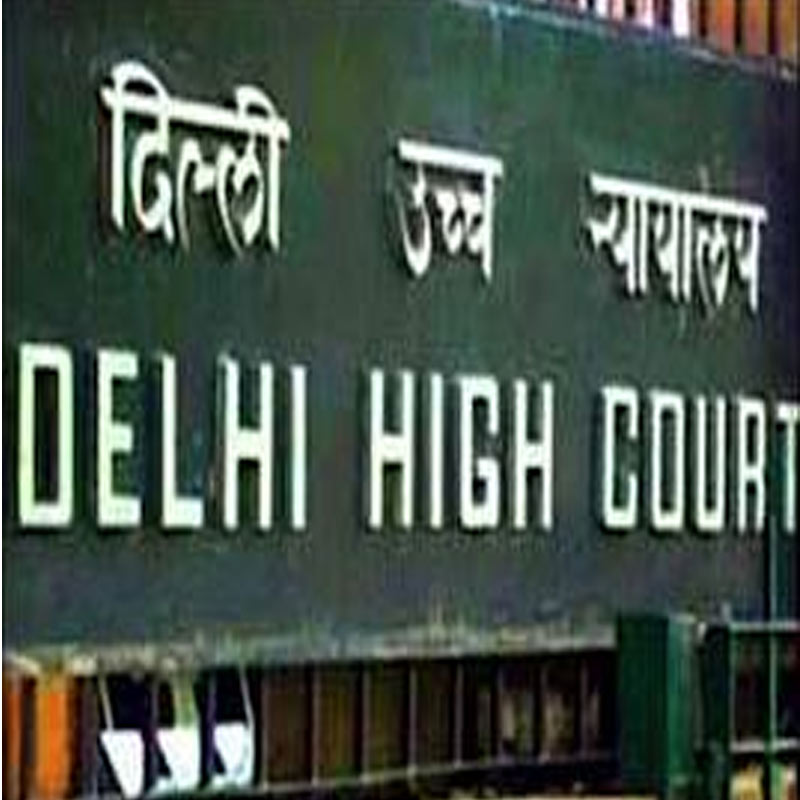
  • Prasar Bharati moves Delhi HC against deferred live telecast

    Prasar Bharati moves Delhi HC against deferred live telecast

    NEW DELHI: A day after terrestrial broadcaster Doordarshan was granted “deferred live” telecast rights to the ongoing cricket series between India and the West Indies, Prasar Bharati approached the Delhi High Court again on the matter.

    A two-judge bench of the Delhi High Court has listed for tomorrow arguments in the appeal filed by the pubcaster against the order yesterday by a single-judge directing Nimbus, the rights holder for BCCI organized cricket events in India, to give the feed to Doordarshan with a seven-minute time lag.

    Prasar Bharati sources told Indiantelevision.com that the pubcaster’s appeal was based on the validity of the Uplink-Downlink Guidelines issued in November 2005 that perforce allows DD to get the telecast feed. The pubcaster’s argument is that the guidelines are clear that the live feed should be given to both Doordarshan and AIR and that there is “no provision (in the guidelines) for a deferred telecast.”

    Prasar Bharati has contended that viewers in the country cannot be divided into two segments and that there has to be equitable distribution of signals for all viewers, irrespective of whether they are linked to DTH, cable or non cable homes.

  • Delhi High Court, Tdsat refuse to grant stay on Cas

    Delhi High Court, Tdsat refuse to grant stay on Cas

    NEW DELHI: This seems to be the last word on Cas (conditional access system). The Delhi High Court and Tdsat (Telecom Disputes Settlement and Appellate Tribunal) today made it clear in separate verdicts that Cas had to roll out on 1 January, ending the efforts of broadcasters and some multi-system operators (MSOs) to obtain a stay.

    The High Court heard arguments in two appeals clubbed together, filed before it against the roll out of Cas, while Tdsat heard appeals against the tariff rate being fixed at Rs 5 per channel as well the interconnection order by Trai, regarding sharing of revenue between the MSOs, last mile operators (LMOs), and the broadcasters.

    The Delhi High Court, refusing to grant more time to MSOs, said that there is no question of Cas not being rolled out on the notified date. It asked the two petitioners to file replies which will be heard after the court vacation ends.

    Star Broadband Services, a MSO in Delhi whose licence for operating under Cas had been cancelled by Trai in an order dated 14 December, had moved the court saying that it was getting ready for Cas roll out but needed more time.

    NGO Shakti had filed application seeking postponement on the ground that the MSOs were not yet ready with the infrastructure for Cas implementation on the due date. Hence, Cas should be postponed indefinitely.

    Meanwhile, in a separate hearing, the Tdsat declined to grant stay on an appeal filed by ESPN and SET Discovery.

    The Tdsat sat through the final arguments by Trai and MSOs and the rejoinder by the broadcasters (ESPN and SET), and asked them to file written submissions, to be taken up after the vacation, but said that nothing that would be argued or heard later would mean that Cas will not roll out on the impugned date.

    The Tdsat had been told earlier by the broadcasters’ counsels that there was no rationale in the tariff fixed and that the Chennai model, where Cas had been found to be effective without Trai intervention in pricing, had left the subscribers happy. The broadcasters held that the ‘facts’ shown by Trai and the ‘assumption’ on which they based their order were mutually contradictory.

    The counsel for SET Discovery dubbed this as non-application of mind, and said this was unacceptable when Trai is issuing such a momentous order that would govern the industry for a long time.

    The counsel for the broadcasters said that Trai’s fixing of price was based on such arbitrary assumptions that went against the survey report quoted by the Authority itself.

    The Trai senior counsel, in his argument yesterday, had caused a flutter in the court, showing that the broadcasters had completely failed in Chennai and that only 3.7 per cent of the total cable households there had opted for pay channels because the prices fixed by the pay channels were too high.

    This revelation had almost every sit up, and the judges had asked whether this means that Chennai cable homes had the option of both CAS and non-CAS operation. Trai senior counsel Rakesh Dwivedi said that was correct, and that the vast majority had not take the offer.

    Dwivedi also argued that the Chennai model in any case could not be extended to Mumbai, Kolkata or Delhi, as in Chennai, four out of the five most popular channels are FTAs, and only one of the top five is a pay channel The case is the reverse with the other three metros.

    In fact, he argued that by fixing the ratio of revenue sharing at 45 per cent, Trai had actually given the broadcasters three benefits at one go: it has got rid of underdeclaration as a perennial problem; cut out ‘piracy’ that broadcasters had accused LMOs of indulging in; and given them a 300 per cent rise in their revenues.

    He argued that the broadcasters had complained that under the present system of operations, the LMOs and MSOs retain 85 to 90 per cent of the revenue from subscriotion, and only 15 per cent reach them, and that too becomes difficult to collect. “We are ensuring them a 45 per cent share and besides, the bulk of their revenue, as they claim, from advertisements remains intact,” the Trai counsel said.

    The counsel for SET Discovery today in his rejoinder said that while Trai had the legal authority to fix the tariff, it was the manner in which that had been done that bordered on perversity.

    His argument was that the Trai had itself admitted that there was not enough material on which the fixation was based.

    The SET Discovery counsel held that Trai had been referring to a document, an IMRB survey that was two and half years old and today could not be valid, since so many FTAs have now become pay channels. He said also that the budgets of households had increased manifold and that Trai had fixed the tariff without adequacy of material to support that pricing.

    Besides, the Trai had so long not brought up the issue of the IMRB survey, which had not been mentioned in the Consultation Paper issued by Trai, nor in later discussions, and was only using it to justify a wrong decision taken without any basis.

    The SET Discovery counsel also held that the Trai itself had repeatedly admitted in the court that any price fixation is arbitrary. The price, thus, fixed could not be held to be legal.

    SET Discovery’s last plea was that Tdsat should ask Trai to undertake a fresh survey and base the new tariff fixation on that. He said that actually the price fixed should be around Rs 10 per pay channel, and that if the price is fixed now at Rs 5, then there would never be an upward revision, even if Trai held a review. Public ire would prevent that upward revision, if Trai did the review at all, which he doubted would ever happen in actuality.

  • HC adjourns Star, Sony case against Trai to 18 Jan

    HC adjourns Star, Sony case against Trai to 18 Jan

    NEW DELHI: The Delhi High Court bench hearing the case on the issue of the Telecom Regulatory Authority of India’s (Trai) constitutional standing to be a regulator was adjourned after a sizeable time spent in hearing the initial arguments from both ESPN and Sony as well as the multi-system operators (MSOs). The issue will come up for hearing again on 18 January.

    The MSOs, who are supporting Trai, were represented by Dr Abhishekh Singhvi, CS Vaidyanathan and Aryama Sundaran, whereas the boradcasters’ consel was Soli Sorabjee. ESS and Sony had moved the Delhi HC, challenging Trai’s constiutional standing.

    The court heard the initial arguments and felt that since the parties concerned have not completed filingrejoinders and counters the matter may be postponed till the next date.

    The case relates to the cable rules empowering Trai as CAS regulator. The High Court is hearing only the constituional issues on the matter and the quantum issues are beig heard by TDAST.

    Spokesperson for the MSOs refused to divulge details of the arguments as the matter is subjudice, and the counsel was not available till late evening.

    Tomorrow, hearings are slated for three cases in TDSAT. The first is on a appeal by ESPN on the August 24 order Trai of fixing tariff at Rs five per pay channel, and second is also an appeal by ESPN against the Trai order of 24 August on distribution margins for pay channels, which as per the order stand at 45 per cent for broadcasters, 30 per cent for MSOs and 25 per cent for local cable operators. The issue of Cas rule relating to signing of a standard contract is also coming up during this hearing, with the MSOs opposing the ‘forcible’ signing of a contract.

    The third case also relates to the same issues, on an appeal filed by Sony Entertainment Television.

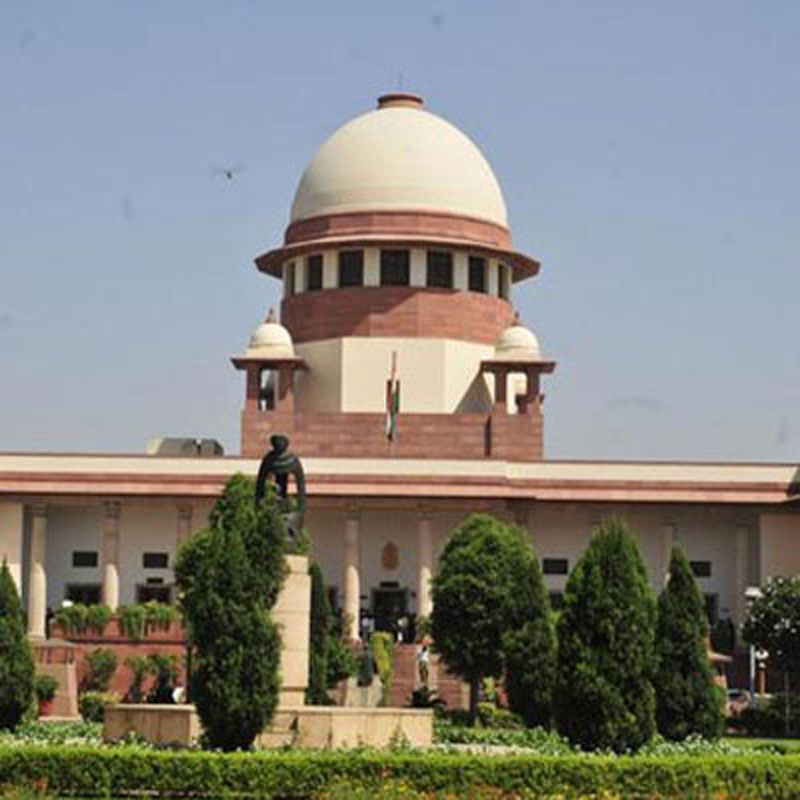
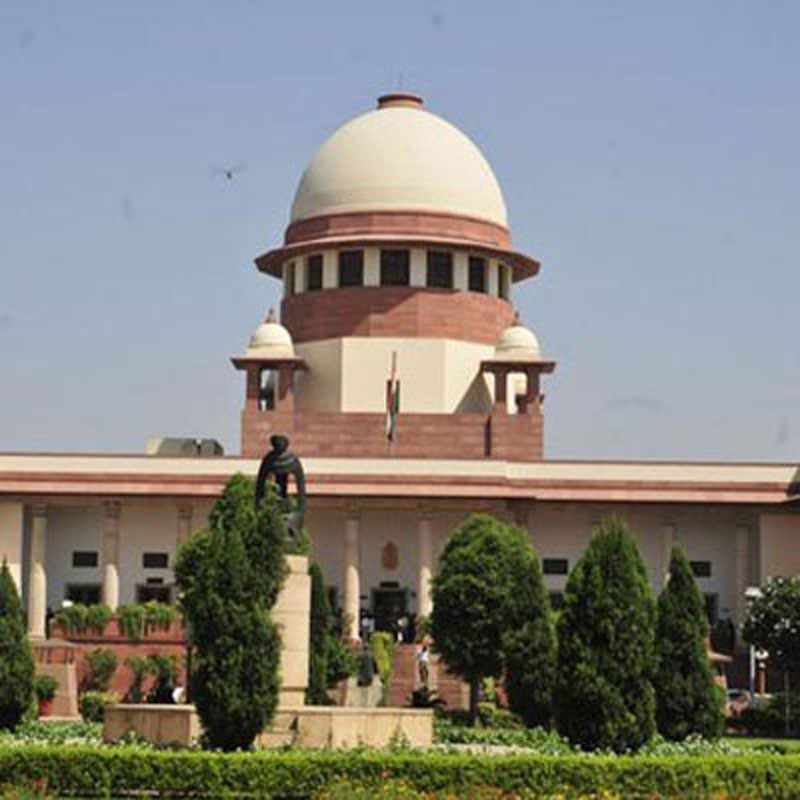
    The Surpeme Court will hear the final arguments in the case filed by Sea TV, an affiliate of Zee Group based in Agra, on the issue of underdeclaration of the number of households by the cable operators.

    Sea TV had applied for access to Star channels two years ago, and the broadcaster had said that they had given access to Moon TV. Sea TV should get the signal from Moon TV, Star had pointed out. However, Zee had intervened saying Sea TV was bound to be given access and had disputed that an MSO (in this case the Moon TV) or an LCO can be an agent of a broadcaster, which was the genesis of the case being heard.

  • ‘Salaam-e-Ishq’ music: Saregama wins interim injunction against T Series

    ‘Salaam-e-Ishq’ music: Saregama wins interim injunction against T Series

    MUMBAI: The Kolkata High Court has passed an interim order against Super Cassettes Industries Ltd. (T Series) on December 1, 2006, preventing the music label from marketing the version recording of the song Babuji from the (1954) film Aar Paar, used in the Hindi film, Salaam-e-Ishq, following a petition by Saregama India Ltd. (‘Saregama’) that the latter held the copyright to the song.

    The producers of the yet-to-be released film, Mad Orion Pictures, sought permission from the copyright holders of the song, Saregama, to use the version of the original song in their upcoming film.

    Such permission was granted on the condition that while the song could be picturised on and used only in the film itself, it was not to be sold as a recording on any audio cassettes or CD’s. However, in violation of the license, the producers gave the music rights to T Series who have released the song, asserts an official release.

    Following this a case was filed by Saregama in Kolkata High Court and following a hearing late last week, an interim order has been passed to the effect that the music of the film cannot be sold until further orders from the Court. The matter is due to appear for hearing on 10 December 2006.

  • HC sets 1 Jan ’07 deadline for CAS implementation

    HC sets 1 Jan ’07 deadline for CAS implementation

    NEW DELHI / MUMBAI: The many meanderings the CAS (conditional access system) story, which began in 2003 with a government notification, could well have reached its final denouement.

    The Delhi High Court today passed an order that makes it imperative on the government to ensure that the three metros of Mumbai, Kolkata and the Capital itself be fully “CAS delivered” on or before 1 January 2007.

    And making clear its resolve that there be no further delays in the matter, the court declared that all pending and any new issues related to CAS raised by the government would be taken up only after the CAS’ implementation deadline of 31 December 2006. It therefore set the next date of hearing on the matter for 10 January 2007.

    The court also recorded a commitment by the joint secretary broadcasting Baijendra Kumar in this regard. The government official’s commitments were taken on record by the court as part of an order passed on 10 March 2006, which had directed the government to implement CAS in Kolkata, Delhi and Mumbai within a month’s time.

    The government also assured the court today that a new notification on CAS would be issued by 31 July 2006.

    The government’s stand on the issue means that from 1 January 2007 all pay channels will have to pass through a set-top box (STB) on a mandatory basis or else they stand to be blacked out of all cable homes in the metros.

    Multi-system operators (MSOs) have welcomed the court’s decision as addressability would make the industry transparent on subscriber numbers. “Addressability will benefit the entire industry as well as the subscribers,” said Wire and Wireless India Ltd (WWIL) CEO Jagjit Kohli.

    Hathway Cable & Datacom CEO K Jayaraman feels this time round there is a lot of clarity on pricing, STBs and choice with a regulatory framework in place. The fear among consumers that CAS pricing would be the same or even more than what is prevailing on analogue cable is unfounded.

    “Addressable pricing is set in motion by the recent TDSAT (Telecom Disputes Settlement and Appellate Tribunal) ruling in the DTH (direct-to-home) case. If that is the trendsetter, broadcasters will have to make their content available on digital cable at half the price of what they are quoting on analogue systems. The customers, thus, do not have to worry about paying more for all the channels that they are getting now. And in any case, in a CAS regime they are select the channels they want to watch,” he said.

    Besides, MSOs are making available the STBs on rental scheme. “Customers will not be locked to the boxes and can move to other services. The regulatory framework is setting things in place,” he added.

    Commenting on the development, MSO Alliance chief Ashok Mansukhani said, “We are delighted by the outcome. CAS will enable the cable industry to deliver more choice to consumers at competitive prices.”

    The industry also feels that a five-month breathing period is a practical implementation schedule. But how ready are the MSOs? “WWIL is fully prepared to roll-out STBs not only in the notified areas but throughout the country,” Kohli said. It will be using Headend in the Sky (HITS) technology which will enable it to cover the entire country with a single Digital Headend. “Our value-added boxes will enable subscribers to browse internet, chat, send & receive e-mails, on their existing TV sets without the necessity of having a personal computer. STBs will also have full triple play features including facility for VOIP digital telephone lines using their existing telephone instruments,” he added.

    Among the other features being introduced by WWIL are movie on demand (MOD) /video on demand (VOD), pay per view (PPV), interactive games, smart card based real time payment solution and e-banking, the company said in an official release.

    MSOs and independent cable operators will have to work out commercial agreements with broadcasters including fixing of channel rates. Said SET Discovery Ltd president Anuj Gandhi, “Now the focus will be on MSOs to show their preparedness for CAS. We hope to be ready with our rates in the next three months. By setting 1 January as the deadline, we will have to compress the time frame a bit.”

    A clutch of MSOs had filed a petition in the Delhi HC in 2004 alleging that the government’s stand on CAS and keeping it in abeyance has resulted in heavy financial losses to the cable industry.

  • CAS rollout: Delhi HC ‘no’ to government plea for more time

    CAS rollout: Delhi HC ‘no’ to government plea for more time

    NEW DELHI: The Indian government yet again pleaded for more time to roll out CAS — six months to be exact — but a Delhi court has refused to accede to the request, asking for a final stand on the issue by the next date of hearing.

    According to information available with Indiantelevision.com, even the broadcast regulator pleaded for two to three months time to sort out CAS-related issues like pricing of TV channels.

    The Telecom Regulatory Authority of India (Trai) submitted to the Delhi High Court today that it has initiated a dialogue with the industry stakeholders on issues related to CAS, which would take a few months time to complete and some consensus arrived at.

    However, the court was critical of such pleas and fixed the next date of hearing for 19 July.

    On the arguments forwarded by the government for more time, the court said the maximum that could be given is 90 days as authorities have already consumed considerable time in carrying out an earlier order of the court.

    On 10 March, the Delhi HC had directed the information and broadcasting ministry to roll out CAS in Kolkata, Delhi and Mumbai within a month’s time.

    The court observed that if the government is unable to sort out CAS matters, then it could also explore the possibility of going ahead with the rollout based on the Chennai model.

    Chennai is the only city in India where CAS has been rolled out and running smoothly since 2003.

    A clutch of MSOs, including Hathway and INCablenet, had filed a case against the government on CAS in the Delhi High Court late 2004, alleging that keeping addressability in abeyance had resulted in financial losses to the petitioners.

    In the representation made before the court today, the petitioners alluded to the possibility of the government having plans to do away with mandated CAS completely. In this regard they made references to the relevant sections from the draft Broadcast Bill 2006, which is currently being circulated amongst government organisations for further feedback.

    When the government counsel expressed his ignorance of a draft Broadcast Bill, leave alone plans of junking CAS by making it voluntary, the counsel for the petitioners furnished a section of the draft Bill in the court.

  • Delhi High Court restrains 92 cable operators from unauthorised telecast of World Cup

    Delhi High Court restrains 92 cable operators from unauthorised telecast of World Cup

    NEW DELHI: The Delhi Court granted stay to ESPN Star Sports, the official broadcaster of the Fifa World Cup, in favor of its application for a civil suit filed against 92 cable operators across the country for unauthorised broadcast of the Fifa World Cup restraining all the cable operators from showing Fifa through any other channel other than ESPN Star Sports.

    The channel has an exclusive deal with Fifa to telecast all the matches of the Fifa World Cup in territory of India. After this order anyone still showing FIFA World Cup through any other channel will be held in contempt of court and liable for prosecution, says an official release.

    Elaborating on this, ESPN Software India Pvt Ltd AVP Affiliate Sales Rajesh Kaul says, “No other channel, whether pay, free to air or terrestrial is authorised to provide, show or distribute the Fifa World Cup Germany 2006 in the territory of India. Also carriage, reception or distribution of the Fifa World Cup Germany 2006 by any MSO, Cable Operator, Sub-Operator without written authorization from ESPN Star Sports is a violation of copyrights and hence an illegal activity. Strict and legal action will be taken against the operators who violate the court orders. Post the order; police raids have already been started.”

    The 92 cable operators restrained from the unauthorized telecast are from Tamil Nadu, Jharkand, Maharashtra, Gujarat, Assam, Tripura, Karnataka, Kerala, West Bengal, Bihar and Punjab, adds the release.

    “The 92 cable operators across the country were broadcasting by means of wireless diffusion the services of free to air international channels like TV 5 Cambodia TV, CC5 Channel, CCTV1, Super Sports, Multi-choice and Dream Satellite, thereby infringing the copyright of ESPN Star Sports. Today after an application in the Delhi High Court, the judge has restrained these operators from carrying and distributing the World Cup by any means whatsoever, without authorized permission from ESPN Star Sports. Operators showing the Fifa World Cup through other channels should stop this to avoid legal court action,” adds Kaul.

  • Delhi HC orders Government to implement CAS within four weeks

    Delhi HC orders Government to implement CAS within four weeks

    NEW DELHI / MUMBAI: In a decision that could have major ramifications for the Indian television industry, the Delhi High Court has ordered the government to enforce the rollout of addressability in cable pay television (conditional access system or CAS) in India within four weeks.

    Delivering its verdict on a writ petition filed by a bunch of MSOs, after reserving the judgement for several months, the court also directed the government to pay damages worth Rs 100,000 to the petitioners. The court has ordered the government to make haste on the report of the Telecom Regulatory Authority of India (Trai), which has been pending before it since October 2004.

    The court has ordered the government to revoke its notification of 27 February 2004 that scrapped the rollout of CAS in the three metros of Mumbai, Delhi and Kolkata in phases (it eventually got implemented only in Chennai). This in effect will revive the notification of 10 July 2003 which provided for partial CAS in these three metros.

    The Delhi HC also said that the government cannot denotify an earlier notification on CAS and keep the issue in limbo. The government has the right to appeal against the order in Delhi HC and Supreme Court.
    No immediate reaction, however, was available from the government as information and broadcasting ministry officials said that the court verdict is being “studied in its entirety.”

    The court gave the order in response to a writ petition filed by MSOs in response to the government’s decision to withdraw CAS. The petitioners include Hathway, INCablenet and RPG’s cable company that was bought over by Siti Cable last year.

    Reacting to the court direction on CAS, MSO Alliance president Ashok Mansukhani said that their viewpoint stands vindicated. “The verdict is a clear direction to the government to start the process of CAS, which will help bring transparency in the market and choice to consumers.”

    Added Hathway Cable & Datacom CEO K Jayaraman: “We will cooperate wholeheartedly with the government to roll out CAS.”

    But with Tata Sky preparing to launch in June, is the timing too close for cable to have an advantage over direct-to-home (DTH)? “The deployment of digital cable is going to be in a phased manner as directed by the court in line with the last notification. It will evolve first in the notified areas of the metros specified, like south Mumbai and Delhi. Besides, cable networks who can offer value additions to subscribers like data and telephony will stand to gain. Also, analogue cable will be available,” said Siticable CEO Jagjit Kohli.

    Will supply of boxes at such a short notice be a matter of concern? Cable Operators’ Federation of India head Roop Sharma brushes aside such criticisms saying, “The cable industry has enough stock of set-top boxes.”

    Welcoming the judgement, Sharma further said, “This would break the monopoly of broadcasters and bring respite to consumers also.”

    However, National Cable and Telecom Association president and owner of Delhi’s Home Cable Network Vikki Chowdhry was more cautious in his reaction, saying the full text of the court order has to be seen before jumping to any conclusion.

    According to Chowdhry, if the court order pertains to CAS rollout in only south zones of some cities, as once had been discussed earlier, then the impact would be neutralised and “create legal and operational problems.”

    Chowdhry added that if the south zone formula was implemented by the government, then his company would appeal against it to higher authorities, including the Supreme Court.

    The court dismissed the government’s contention that implementation of CAS was unjustifiable. The government has been ordered to compensate the MSOs for losses incurred due to the non implementation of CAS to the tune of Rs 100,000.

    In January, information and broadcasting secretary SK Arora appeared before the court and sought three months time to implement CAS in the country. The request was rejected by Justice Vikramjit Sen. Petitioner Hathway Cable Datacom’s counsel Indu Malhotra submitted that the government was only buying time to delay the implementation of CAS.

    Additional solicitor general PP Malhotra, who appeared for the government, had submitted that the issue of CAS had been decided by another division bench of the High Court in December 2003.

    CAS rollout plan as originally envisaged in 2003:

    * Initial 15-day period will be used primarily for creating consumer awareness about CAS, procurement of set-top boxes by cable operators and MSOs, and for broadcasters of pay channels to conduct promotional campaigns.

    * Each of the three notified metro cities (Delhi, Mumbai, and Kolkata) would be divided into four zones for the purpose of staggered rollout of the addressable system of transmission of pay channels.

    * After the initial 15-day period, within a one-month time frame, in Zone A in each metro, pay channels can be watched only with the use of STBs. Pay channel consumers in this zone will be charged, in addition to the price of the basic tier plus taxes, only for the individual channels of their choice as per the pre-announced rates set for them.

    Consumers of free-to-air (FTA) channels, who will not need an STB, will be charged only the basic FTA channel package charge plus taxes. In zones B, C, and D, cable operators will charged only for the basic tier plus taxes for all channels, including all available pay channels.

    * From Day 1 of the second month onwards, CAS will take effect in Zone B in each metro, while in zones C and D subscribers will pay only for the basic tier plus taxes for all channels.

    * And so it follows in Zone C from Day 1 of the third month onwards and Zone D from Day 1 of the fourth month onwards.