Category: High Court

  • Delhi HC to further hear Kantar case tomorrow; hints at an interim arrangement

    Delhi HC to further hear Kantar case tomorrow; hints at an interim arrangement

    NEW DELHI: The deadline for implementing the TV ratings agencies policy is inching closer. But Kantar Market Research Services, a shareholder of current and only ratings agency TAM, had decided that it had to challenge the guidelines in the Delhi High Court.


    While still not giving it a stay order today, the court has decided that it will continue hearing the case. The next date of hearing is tomorrow. Kantar counsel today argued that the directive of the ministry on TV ratings guidelines had been done under an executive action, which can be questioned in a court of law. Counsel for Kantar also said that since the Broadcast Audience Research Council (BARC) was still under formation, there would be a total blackout if TAM is not allowed to function.


    Justice Manmohan while hearing the case remarked that though he was in favour of concluding the hearing before 15 February, he would ‘consider issuing an interim arrangement if the hearing goes on longer than that date’. 15 February is when the guidelines will become effective.


    The three respondents Union of India, the Telecom Regulatory Authority of India (TRAI) and the News Broadcasters Association (NBA) will present their case on Kantar’s petition for an interim stay order tomorrow. 


    Click here for the updated story

  • No stay order for Kantar for now: Delhi HC

    No stay order for Kantar for now: Delhi HC

    NEW DELHI: It was just a week ago that one of the shareholders of TAM – Kantar Market Research decided to move the High Court against the TV ratings guidelines. Now, as the case was taken up in the Delhi High Court today, the issue has become a little clearer.
     

    According to the HC, Kantar won’t get a stay order on the petition for now just because the deadline to make the TV ratings guidelines is effective from 15 February. However, Judge Manmohan said that Kantar’s case will be heard again on 11 February and a final decision will be taken then.
     

    Counsel for Kantar, Harish Salve argued that the stay order was necessary as the guidelines were not framed under any statute of law. Additional Solicitor General Rajeev Mehra, appearing on behalf of the Union of India, said that the guidelines had been recommended by the Telecom Regulatory Authority of India (TRAI) which was a statutory body. The judge also remarked the same. Both Mehra and the counsel for TRAI accepted the notice and agreed to file their affidavits within time.


    The other big development in the case was the inclusion of the News Broadcasters Association (NBA) also coming as an intervener and joining the case as the third respondent apart from the Union of India and the TRAI. NBA counsel, A J Bhambhani pointed out that TAM only covered about 8000 homes in India, which doesn’t cover all the TV homes and thus isn’t a complete survey.
     

    Interestingly, the judge curious to know why instead of TAM approaching the court, a stakeholder Kantar has taken the step. To this, Salve said that the move was taken as Kantar is a major shareholder in TAM and the guideline related to cross holding affects Kantar and not TAM.


    Responding to a question posed by the judge, Salve said that TAM had nothing to gain by pushing up the TRPs. Its clients were advertisers and broadcasters and not the common viewer. Any rigs in ratings would be strongly protested against, he said. Salve also brought to the fore that regulations or guidelines need to be placed before the Parliament for approval.
     

    The case will now be heard once again on 11 February with Kantar fighting it out against the government, TRAI and the NBA.


  • TAM shareholder Kantar takes Indian govt to court on TV ratings guidelines

    TAM shareholder Kantar takes Indian govt to court on TV ratings guidelines

    MUMBAI: So Indian TV ratings agency TAM Media will not go down without a fight. At least if one goes by the action of one of its shareholders  Kantar Market Research Services. The latter approached the Delhi High Court on 20 January, filing a writ petition against the Union of India. The writ petition states that the government’s TV ratings agency registration regulations have put the existence of its venture TAM in jeopardy, and that too after it has been operating in India for more than 15 years.

    Diya Kapur, who appeared on behalf of Kantar – during the hearing today – appealed that TAM has been in the business for a very long time and the new guidelines on cross holding restrictions will mean that it will have to go out of business.

    Kantar Market Reserach Services Pvt Ltd, a shareholder of television rating agency TAM Media, was today directed by the Delhi High Court to file in a week an affidavit detailing its shareholding in any advertising/ broadcasting companies either directly or indirectly.


    A bench of justice Manmohan directed Kantar and its director Thomas Puliyel, who have challenged the guidelines for television rating agencies, to also mention “the Indian companies in which the petitoner (Kantar) holds shareholding.”

    High Court judge Justice Manmohan then asked Kantar to furnish documents relating to the shareholding pattern in TAM. “This would be in the form of an affidavit detailing its shareholding in any broadcasting firm/advertising agency, either directly or indirectly.The affidavit would also mention any other Indian company in which the petitioner holds any shareholding. It would also state that none of the aforesaid companies in which Kantar have shareholding in excess of 10 per cent has done business for any entity which was involved in any ratings exercise done by TAM. If that is not so, then the details of such instances shall be given,” the single member bench said.

    The court gave Kantar Media a week to come back with the documents and adjourned the hearing for 29 January.

    But already industry sources are questioning why did Kantar Market Research Services decide to approach the courts alone? Why did TAM Media not do so? And why did only one of the two shareholders seek legal redressal? Why wasn’t AC Nielsen also a party to the case against the Union of India?  These are questions to which indiantelevision.com has no answers to right now. But keep watching this space for further developments.

    Agencies and advertisers will be too. Various stakeholders – who need ratings to know how their money is being spent – have been urging TAM Media to take legal recourse as they are quite averse to a situation of a TV ratings dark period. But with now one of its stakeholders taking steps to try and remedy the situation, they have some hope.

    The ministry of information and broadcasting is quite clear that the course has been set and there is no going back. Speaking to indiantelevison.com MIB officials have been quite clear that they don’t want to be seen favouring anybody – especially TAM. “Industry and TAM have been given a long time to do course corrections on the ratings,” said a MIB official. “More than half a decade. Why did they not do so? Why complain now? In fact, we did not want a ratings blackout; based on industry feedback earlier – they had said BARC ratings would start rolling by March 2014 – we went easy on the TV ratings regulations and got government approval in mid-January 2014. TAM had 30 days to shape up; if it did not do so, then there would be a minimal rating blackout period, with BARC rolling out its ratings.”

    In fact, even as the Telecom Regulatory Authority of India (TRAI) had recommended a tranistion period of six months for TAM Media, the MIB had in its recommendations said zero days, but that was finally extended to 30 days by the Cabinet.

    The MIB has stated that it will take on any legal challenges, which are posed against the regulations.  Industry executives can expect some skirmishes ahead – at least in the courts.


  • HC restricts TRAI from taking coercive action against Kalaignar TV

    HC restricts TRAI from taking coercive action against Kalaignar TV

    MUMBAI: Most of 2013 kept the industry preoccupied  with the 12 minute ad cap saga. After the Supreme Court passed a judgment that barred the Telecom Disputes Settlement Appellate Tribunal (TDSAT) from looking at appeals against the Telecom Regulatory Authority of India (TRAI) regulations, the appeals were then moved to the Delhi High Court.


    And the latter passed an interim order that forbade the TRAI from taking any coercive action against channels  that had appealed in the HC,  even if they did not adhere to the 12 minute per hour limit.


    Now, the Tamil GEC run by political party, DMK, Kalaignar TV has got a favourable order from the HC after it also appealed against the TRAI regulation. The HC has asked the regulator not to take any coercive action against the channel and has asked the latter to submit to it weekly ad duration data.


    In December, many channels had moved the court who were then given a hearing date of 13 March 2014. Kalaignar TV’s writ petition will also be heard along with the others on the same date. The channel was also a part of the list of appeals that had come up before the TDSAT but were told to move it to the Delhi HC after the SC judgement.  


    TRAI had passed a quality of service regulation for limiting advertising air time to 12 minutes per hour in mid-2013.

  • High Court muzzles media against sexual harassment case against ex-judge

    High Court muzzles media against sexual harassment case against ex-judge

    NEW DELHI: In a directive that has not been taken kindly by the media, the Delhi High Court yesterday restrained the media from publishing and telecasting the contents of the law intern’s complaint of sexual harassment against former Supreme Court judge Justice Swatanter Kumar.


    Ordering deletion of alleged defamatory parts of the news items and the photograph of Justice Kumar within 24 hours, Justice Manmohan Singh, in his interim order, also asked the media not to carry the photographs of Justice Kumar, who is also the National Green Tribunal Chairperson in their future news reports.


    “The defendants number 1 to 5 (media houses and the law intern) are further restrained from telecasting and printing the photograph of the plaintiff (Justice Kumar),” the judge said while pronouncing the order in a packed court room.


    Interestingly, the Court order came a day after the Supreme Court issued notice to Justice Kumar on a petition filed by the law intern.


    The High Court also made it clear that its order will remain effective till 24 February, the next date of hearing, and issued notices to the woman intern, two English news channels, and a leading English daily.


    The court had earlier reserved its interim order on the plea of Justice Kumar seeking to restrain media from reporting, publishing or telecasting news relating to the law intern’s complaint against the judge, saying only court proceedings can be reported “nothing more, nothing less”.


    The plea had also sought a ban on repeat of the television programmes on the subject.

    Justice Kumar has also demanded Rs. 5 crore as damages from the law intern, who made the allegation against him, and three media groups that publicised her complaint.

    Senior advocate Mukul Rohatgi, appearing for the former judge, had said Justice Kumar has an “illustrious career spanning 43 years in the legal field as a lawyer and as a high court and the Supreme Court Judge and more over, his fundamental right of good name and reputation cannot be allowed to be blackened by the media.”


    The petition has also said, “pass a decree for damages in favour of the plaintiff and against defendant number 1 to 5 jointly and severally at least for an amount of Rs 5 crore only or for any higher amounts as this court may be pleased to determine…”

  • Chennai & DAS: Madras High Court puts I&B, TRAI in a tough spot

    Chennai & DAS: Madras High Court puts I&B, TRAI in a tough spot

    MUMBAI: It seems like deja vu. It was around this time last year that Information and Broadcasting (I&B) Minister Manish Tewari was urging the Telecom Regulatory Authority of India (TRAI) to move fast on deciding on the issue whether the Tamil Nadu Arasu Cable TV Corp should be given a digital addressable system (DAS) licence. The TRAI had responded with a paper issued on 28 December 2013 on “Issues related to entry of certain entities into broadcasting and distribution activities.”

    It had recommended that the Central Government, State Governments and their entities should not be permitted to enter into the business of broadcasting and distribution of TV channels. Based on that, a DAS licence was not issued to Arasu, despite continued pressure from the Centre’s allies AIADMK and Tamil Nadu chief minister Jayalalithaa.

    Now the ball has landed back with the I&B Ministry over the weekend, with the Madras High Court reportedly telling it to once again take a stand on the MSO’s DAS licence. The court also directed the TRAI not to take any coercive action against it even if it continues to deliver analogue signals to its six million odd subscribers in the state. And it also said the case was adjourned for four weeks.

    “..it is not known to this court why the Centre has not taken any decision on the application of Arasu. When the authorities of the Union of India and the state instrumentality are not in a position to take any decision on granting or receiving the DAS licence, as the case may be, the ultimate sufferers are the subscribers. Therefore, I am of the considered opinion that the subscribers cannot be put to hardship. As such, there cannot be any disconnection of signals to the subscribers by the authorities,” said Justice V Dhanapalan on Friday.

    The Madras High Court issued these orders based on a petition that Arasu cable had filed with it. Arasu, on its part, had taken a decision to move the courts following TRAI’s announcement, earlier this month, that Chennai’s cable TV operators, broadcasters, and MSOs should take positive steps towards complete DAS in Chennai – one of the initial phase I metros – or face its wrath.

    Clearly, the I&B Ministry is in a catch 22 situation. The TRAI in its recommendations has been clear on disallowing state control in cable TV and DAS.

    With the Madras High Court now telling the Ministry to reconsider its earlier stance on it, could the court’s direction provide it with a parachute? With the current government at the Centre appearing to be on shaky ground following the Congress (I) debacle in four states, it might well use this as a trump card to win some points with the AIADMK in what appears to be building up as a tough battle for it in the 2014 elections. Additionally, the ministry and the TRAI also wants tardy Chennai to move full steam on digitisation and licensing the largest player Arasu – albeit it being state owned – might well help it achieve that objective.

    But should the I&B Ministry continues to hold on to its position that it will not issue the licence, digitisation might not really progress as Arasu will not take things lying down as it is a tour de force in the state and in the city of Chennai. With the court ruling in its favour, Arasu is well within its rights to continue with its analogue feed now, no matter how much the TRAI cracks the whip. And that’s something which will make the government’s digitisation diktat look incomplete, with one major metro abstaining from it, as it has been doing for nearly a year or so now.

    Meanwhile, local cable TV in Chennai continues to be pained by what’s being going on in the state. Some cable TV operators who are not part of Arasu’s network in Chennai went on a hunger strike yesterday to protest against the analogue signals being transmitted by it.

    “First and foremost a call needs to be taken on Arasu’s licence but more importantly TRAI needs to caution broadcasters who are giving these analog signals to them. They should be asked to sign official deals with MSOs for giving digital signals only,” says Chennai Metro Cable TV Operators Association General Secretary M.R. Srinivasan.

    Clearly, it seems as if the I&B ministry and the TRAI are caught between a rock and a hard place. Where will the two go from here now is anyone’s guess!

  • Gujarat HC adjourns TRAI DAS order till 13 December

    Gujarat HC adjourns TRAI DAS order till 13 December

    MUMBAI: The Telecom Regulatory Authority of India (TRAI), the central government and the Gujarat state government has time until 13 December to submit their responses to the Gujarat High Court. The three parties were dragged to court by the Gujarat Cable Operators Association (GCOA) on issues associated to the digitisation process.

    The Court adjourned the case since the lawyers representing the MSOs did not turn up for the hearing, says Pramod Pandya

    The court hearing which took place on 6 December was adjourned till 13 December as the lawyers representing the multi-system operators (MSOs) were not present at the court hearing. “It was TRAI that made MSOs a party in the case. The Court adjourned the case since the lawyers representing the MSOs did not turn up for the hearing,” said Gujarat Cable Operators Association president Pramod Pandya.

    Earlier, GCOA had filed a petition to the HC, challenging the legality of Telecommunication (Broadcasting and Cable) Services Tariff and the Telecommunication (Broadcasting and Cable Services) Interconnection Regulations. After this, in its hearing on 13 November, the Court had asked the TRAI and government to declare the reasons for formulating the existing laws pertaining to tariff and interconnection.


    Pandya had earlier told Indiantelevision.com that the TRAI aims to remove the local cable operators. “We have challenged all the notifications passed by TRAI. This includes revenue share, consumer application forms (CAFs) and billing,” he said. 

    The parties were given 15 days to submit their responses; however, it’s almost a month now since the first Court hearing took place. “We are hopeful that the HC will come out with its judgment on 13 December hearing,” he concluded.

  • Allahabad HC asks government to form statutory forum for complaints against electronic media

    Allahabad HC asks government to form statutory forum for complaints against electronic media

    NEW DELHI: The Allahabad High Court has said that the government needs to provide a statutory forum for electronic-media where people can both approach and ventilate their grievances.

    In the petition filed by social activist Dr Nutan Thakur, Justice Devi Prasad Singh and Justice Ashok Pal Singh of the Lucknow bench said for any misconduct committed by the print media statutory forum is available in the form of Press Council of India but no such forum is available for the electronic media.

    The court felt that no such statutory forum is available and this does not seem to be proper in a country which is run by the rule of law and governed by the democratic polity and hence the union needs to provide statutory forum for electronic-media.

    The order said electronic media immediately affects peoples’ mind and it is well established that paid news items are often used by the media, which is an instance of abuse of power. Hence, prima facie electronic media should also be regulated and supervised by a statutory autonomous forum like the Press Council and the government should have provided some statutory forum to redress the grievance of the news items or other items of the electronic media.


    The order said electronic media immediately affects peoples’ mind and it is well established that paid news items are often used by the media, which is an instance of abuse of power. Hence, prima facie electronic media should also be regulated and supervised by a statutory autonomous forum like the Press Council and the government should have provided some statutory forum to redress the grievance of the news items or other items of the electronic media.

    The court directed the government to file an affidavit bringing on record its stand on this issue, within four weeks.


    The petition had been filed against the Information and Broadcasting Ministry and the News Broadcasters Association.

  • Election Commission to allot time to five state assemblies for poll broadcast on DD, AIR

    Election Commission to allot time to five state assemblies for poll broadcast on DD, AIR

    NEW DELHI: All India Radio and Doordarshan, which provides a platform to political parties for their poll broadcasts before election, will also organise panel discussions or debates at the Kendras/Stations for the forthcoming elections, for the state assemblies of Rajasthan, Madhya Pradesh, Chhattisgarh, Mizoram and the National Capital Territory of Delhi.

    The eligible party can nominate one representative for this programme, but only the Election Commission of India will approve the names of coordinators for the panel discussion and debates in consultation with the Prasar Bharati Corporation.

    The Commission, in the previous years, has worked out a schedule to provide different time slots for poll broadcasts to different parties.

    Only the ‘national parties’ and ‘recognised state parties’ will be eligible to avail the facility of the broadcast and telecast time.

    A base time of 45 minutes will be given to each party uniformly on the Regional Kendras  of  Doordarshan network and All India Radio network in the States/UT of Rajasthan, Madhya Pradesh, Chhattisgarh, Mizoram and NCT of Delhi. The additional time to be allotted to the parties has been decided on the basis of the poll performance of the parties in the last assembly election. The facilities will be available at the Regional Kendra of the All India Radio and Doordarshan in the states and then will be relayed by other stations within the states.

    In a single session of broadcast, no party will be allotted more than 15 minutes.

    The period of broadcast and telecast will be between the last days of filing the nominations and will end two days prior to the date of the poll. However, there will be no telecast or broadcast during the 48 hours before the polls close, as per specific provisions of the Representation of People Act, 1951.

    Prasar Bharati, in consultation with the Commission, will decide the actual date and time for broadcast and telecast. This will be subject to the broad technical constraints governing the actual time of transmission available with the Doordarshan and All India Radio.

    The guidelines prescribed by the Commission for telecast and broadcast will be strictly followed. The parties will be required to submit transcripts and recording in advance. The parties can get this recorded at their own cost in studios that meets the technical standards prescribed by Prasar Bharati, or at the Doordarshan/All India Radio Kendras.


    Alternatively, they can have these recorded in the studios of Doordarshan and All India Radio by advance requests. In such cases, the recordings may be done at the State Capital and at timings indicated by Doordarshan/All India Radio.

    Time Vouchers will be available in the denomination of five minutes with one voucher having time allotment from one to four minutes. The parties will be free to combine them suitably.

    Introduced for the first time for the Lok Sabha elections in 1998, the scheme of free broadcasts was extended by the Commission to the State Assemblies held after 1998 and General Elections to the Lok Sabha in 1999, 2004 and 2009.

    With the amendments in the Representation of People Act 1951, “Election and Other Related Laws (Amendment) Act, 2003”, and the rules notified in that, equitable time sharing for campaigning by recognised political parties on electronic media now has statutory basis.

    In exercise of the powers conferred by clause (a) of the Explanation below section 39A of the Representation of People Act, 1951, the Central Government has notified all such broadcasting media that are owned or controlled or financed wholly or substantially by funds provided to them by the Central Government, as the electronic media for the purposes of that section. Therefore, the Commission has decided to extend the said scheme of equitable time sharing on electronic media through Prasar Bharati Corporation to the ensuing General Elections to the State Legislative Assemblies.
  • Sanjay Dutt to spend 42 months in jail in Mumbai blasts case, SC commutes sentence

    Sanjay Dutt to spend 42 months in jail in Mumbai blasts case, SC commutes sentence

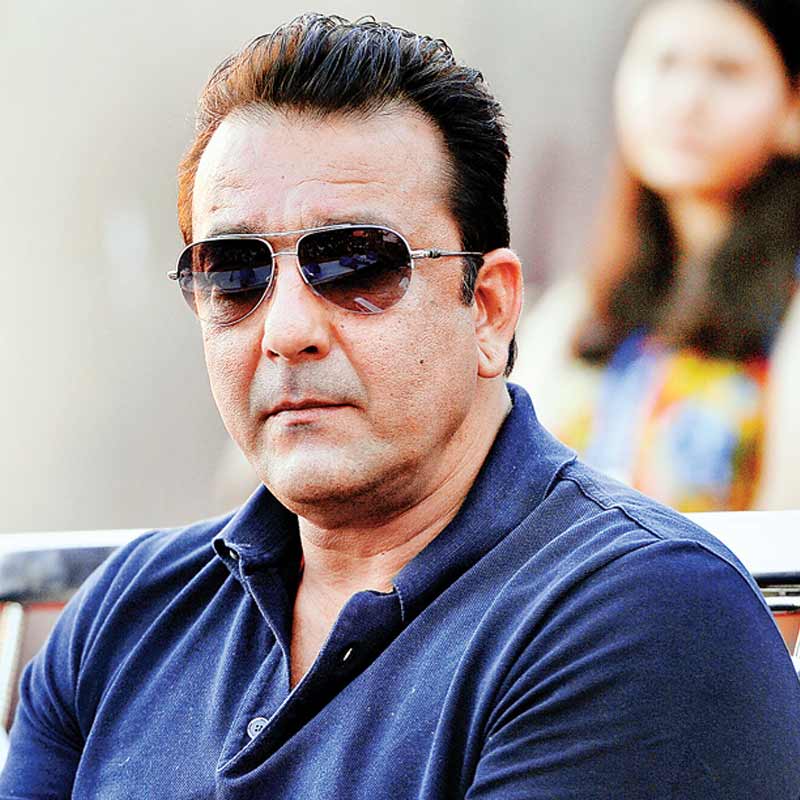
    New Delhi: The Supreme Court today gave some relief to actor Sanjay Dutt in the Mumbai blasts case as it commuted his jail sentence from six years to five years but would in effect be in jail for three and a half years.

    The actor was given a six-year jail term by the TADA court. The court took cognizance of the fact that the actor had already spent 18 months behind the bars during the trial.

    At the same time, the apex court rejected his probation plea and directed him to surrender within four weeks.

    Referring to Dutta, the court said: ‘the circumstances and nature of offence was so serious that he cannot be released on probation. “… (the) evidence and materials perused by the TADA court in arriving at the decision against Dutt was correct.”

    The actor had been convicted for illegal possession of a 9mm pistol and an AK-56 rifle, but was acquitted of more serious charges of criminal conspiracy.

    The Court also pronounced judgment in the case of others convicted for the blasts.

    After 10-month hearing that started on 1 November 2011, the Court had in August 2012 reserved its verdict in the case.

    On 12 March 1993, Mumbai was rocked by a series of blasts that killed 257 people and left 713 injured.