Category: High Court

  • ‘India’s Daughter’ ban extended till 15 April, HC seeks MIB advisory

    ‘India’s Daughter’ ban extended till 15 April, HC seeks MIB advisory

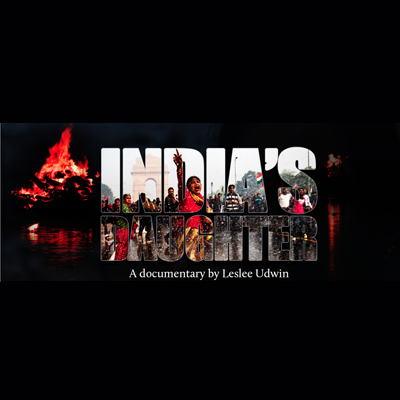
    NEW DELHI: The ban on the telecast of the controversial BBC documentary India’s Daughter by Leslee Udwin about the 16 December, 2012 Nirbhaya gang rape will continue till 15 April, though the film continues to be available on the Internet.


    The Delhi High Court today (18 March) asked the central government to place before the court the advisory issued by it on 3 March prohibiting exhibition of the documentary.


    A division bench of Chief Justice G. Rohini and Justice R.S. Endlaw posted for 15 April the two public interest litigations (PILs) before it for revocation of the ban on the documentary’s telecast.


    A different bench had yesterday declined to immediately revoke the ban on the telecast of the documentary. It said it has “no problem” about airing the documentary but the case (appeals of the convicts against death sentence) was pending before the Supreme Court. 


    It also observed that media trials tend to influence judges by subconsciously creating pressure.


    The documentary is about the gang rape of a 23-year-old trainee physiotherapist, who was brutally assaulted in a moving bus in Delhi. The film kicked up a storm after one of the convicts Mukesh Singh justified the action. 


    The documentary also has comments from the convicts’ counsel A.P. Singh and M.L. Sharma, who allegedly made derogatory remarks against women and who have alreadybeen issued notices by the Bar Council of India.


    The PILs said that the ban on the documentary was in clear violation of fundamental rights under Article 19 of the constitution.


    They sought direction to declare as illegal the act of banning the documentary by the Home and Information and Broadcasting Ministries, and the Delhi Police commissioner.


    The Centre on 3 March issued an advisory to ban the broadcast of the documentary and the trial court had banned it on 4 March until further orders.


    The pleas also sought direction for the Supreme Court registry to constitute a three-judge special bench to hear the appeals of the four death row convicts, pending since 25 August, 2014.


    The Supreme Court, in July, put on hold the execution of the four convicts in the case. Going by the chatter on social media, the public at large wanted to see the documentary, as within a day of it being put up on YouTube, it was viewed by more 2.86 lakh people, the pleas said.
     

  • Delhi HC refuses to lift ban on ‘India’s Daughter;’ says media trial influences judges

    Delhi HC refuses to lift ban on ‘India’s Daughter;’ says media trial influences judges

    NEW DELHI: The Delhi High Court today refused to stay the ban on BBC’s documentary India’s Daughter by British filmmaker Leslee Udwin on the Nirbhaya gang rape of December 2012, saying the case was sub judice in Supreme Court and allowing its display in the masses could affect the case.
     

    Justices BD Ahmed and Sanjeev Sachdeva said media trials tend to influence judges by subconsciously creating pressure. Although the judges said they were prima facie not opposed to airing of the documentary, it should be released after the Supreme Court decides the appeals of the convicts in the matter.
     

    “Media trials do tend to influence judges. Subconsciously a pressure is created and it does have an effect on the sentencing of the accused/ convict,” it said in support of its observation.


    The bench was of the view that the documentary could “interfere with the justice system” but refused to pass any interim orders. “Had it been originally placed before us, we would have asked you to place material before us on why the ban should be lifted. But it has come here from the roster bench of Chief Justice, so we will not pass any interim orders.”


    Observing that airing of the video could make or ruin the case of one of the rape convicts, Mukesh, it said, “Whether he has shown remorse or not would be considered at the time of his sentencing. Why not wait till the Supreme Court decision?”


    On the contention that ban on airing of the video till the apex court judgement could also lead to gag on reporting of all sub judice matters, the bench said, “We agree.” It said that earlier media had a self-imposed code of not reporting sub judice matters, but now “media has thrown it (the code) to the winds.”


    The Central government represented by advocate Monika Arora opposed airing of the documentary saying it would give a platform to the convict to air his views and that it also contains derogatory statements against the victim. 

    She also said that the Information and Broadcasting Ministry only issued an advisory to cable TV networks to abide by the magisterial court’s order banning airing of the documentary.

    The petitioners claimed that since the documentary was freely available on the Internet, and its viewing by lakhs of people had caused no untoward or law and order situation, there are no grounds for banning the video. The petitioners also said that parts of the convict’s interview are already part of the judgment in the case by the trial court and High Court and thus are public records.

    The court had earlier refused to give urgent hearing after three law students –Vibhor Anand, Arun Menon and Kritika Padode– in their two separate PILs said “fundamental right of freedom of speech and expression have been infringed due to government’s illegal action to ban the broadcast.” They had approached the High Court after a trial court on 4 March had banned until further orders the broadcast of the interview of 16 December, 2012 gangrape convict Mukesh Singh, allegedly conducted in July 2013 inside Tihar jail.


    Earlier, a trial court had restrained the media from broadcasting or publishing the interview of Mukesh Singh after the Delhi Police moved the court seeking the restraint. The Information and Broadcasting Ministry had also issued an advisory to all television channels not to broadcast the film or excerpts from it.


    The pleas had sought lifting of the ban on the ground that it is “a look at the mindset of one of the convicted rapists.” One of the pleas had also sought direction to the Bar Council of India to expedite action against the two lawyers — advocate AP Singh and ML Sharma — who had allegedly made derogatory anti-women remarks in the documentary. It also claimed that the parents of the gangrape victim have not objected to the telecast of the documentary.


    Meanwhile, Udwin told the Los Angeles Times that the Indian government should hang its head in shame for banning her film. 

    However, the government claims she was permitted to interview the convicts in jail when she said was doing research and would not use the film for commercial purposes. The film has already been aired in several countries including the United States and the BBC4 in the United Kingdom. NDTV was to have aired the film on International Women’s Day but could not do so in view of the ban.

  • Early hearing on ‘India’s Daughter’ ban refused; HC to hear case on 11 March

    Early hearing on ‘India’s Daughter’ ban refused; HC to hear case on 11 March

    NEW DELHI: Even as the film continues to be available on internet, the Delhi High Court refused to give urgent hearing to a public interest litigation (PIL) seeking lifting of the ban on telecast of a controversial documentary India’s Daughter featuring an interview of one of the four convicts in the 16 December gang rape case.  


    A bench of justices B.D. Ahmed and Vibhu Bakhru said there is no such urgency in the matter and it will be heard on Wednesday (11 March). 


    The court’s response came after two law students — Arun Menon and Kritika Padode — sought urgent hearing in their PIL, saying the ban on the documentary is a clear violation of their fundamental rights under Article 19 of the Indian Constitution.  


    The Information and Broadcasting Ministry also issued an advisory to all television channels to not broadcast the documentary.


    The government has sought an explanation from Tihar jail authorities over how the convict was interviewed while being in judicial custody.  


    A similar petition was filed last week, by a law student, who sought lifting of the ban on the ground that it is “nothing but an honest look at the mind and mindset of one of the convicted rapists of the young woman.”


    Today’s plea also sought direction to the Bar Council of India to expedite action against the two lawyer — advocate A.P. Singh and M.L. Sharma — who had allegedly made derogatory anti-women remarks in the documentary. 


    The plea also said that a direction be issued to the Supreme Court registry to constitute a three judge special bench to hear the appeals of the four death row convicts, which is pending since 25 August, 2014. The apex court in July had stayed the execution of the four convicts in the gang-rape and murder case.


    The other petition prepared by Vibhor Anand said that the public at large wanted to see the documentary as within 24 hours of its being put up on YouTube, it was viewed by more 2.86 lakh people. 


    Meanwhile, another bench of the High Court hearing another case relating to rape pulled up the Central and Delhi government for failing to make even a single documentary or use the visual medium in any manner to educate people about the nature of sexual offences and the stringent punishments involved.


    It also noted the ‘disgusting’ trend of people in high positions to make ‘vile’ statements while voicing their tasteless anti-women opinions. “What is in bad taste are the irresponsible and vile statements made very often by erudite people who hold reputable positions and place in diverse fields, and show no signs of shame while voicing their warped and misogynistic ideals,” said the court. 


    “We express our disgust and displeasure at the apathy and insensitivity of the Union of India and Delhi Government for having failed to take steps to produce even a single documentary or for that matter take the help of any other visual media to educate the people of Delhi, about the nature of sexual offences concerning women and child and create awareness amongst them about the existing laws and stringent punishments provided against such offences despite several directions having been given by this Court,” observed the division bench consisting of Justice Kailash Gambhir and Sunita Gupta, while also comparing this apathy to the efforts of a foreigner.


    “In contrast, one individual, a British filmmaker, could make a documentary film on the brutal gang rape that has managed to kick up a storm and trigger a furore in India,” said the court while hearing an appeal against a judgement sentencing a rape accused.


    The court further noted that the freedom of expression guaranteed under the Constitution was not absolute. “Clause (2) of Article 19 of the Indian Constitution enables the legislature to impose certain restrictions on free speech. And, these reasonable restrictions should be kept in mind by one and all before giving vent to their opinions and views.”


    Meanwhile, the news channel NDTV on International Women’s Day (8 March) showed a  blank screen at the time slated for the telecast with only a visual of a lamp, the words ‘India’s Daughters’ and a scroll running beneath it putting out statements issued by the Editors Guild of India and others. 


    The Guild slammed the government’s move to ban the film, calling the ban wholly unwarranted and based on misunderstanding of the power and the message behind the film.

  • Delhi HC stays telecast of film on Nirbhaya; MIB asks channels not to show excerpts

    Delhi HC stays telecast of film on Nirbhaya; MIB asks channels not to show excerpts

    NEW DELHI: In a day of speedy action, the Delhi High Court today upheld the stay on telecast of a documentary based on interviews including one with a convict in the 16 December, 2012 Delhi gang-rape case. 

    The court also banned telecast of the documentary on the internet too. “Cops can act if the film is aired,” the Delhi high court said on Wednesday. 

    Earlier in the day, in statements in both the Lok Sabha and Rajya Sabha, Home Minister Rajnath Singh said the government will be moving the court, and also informed members that a police complaint was filed against the film, India’s Daughter produced and directed by British filmmaker Leslee Udwin and co-produced by Indian TV journalist Dibang. He said stay orders had been taken from a local court last night itself after he had learnt about the film. (The Rajya Sabha was adjourned for some time in the morning following an uproar by the opposition on the issue.)


    The Information and Broadcasting Ministry also posted an advisory on its website asking private television channels not to air excerpts from the film as this was violative of the Cable TV Networks (Regulation) Act 1995 and the Downlinking Guidelines and was also sub judice as an appeal by the main convicted Mukesh Singh was pending. Mukesh Singh along with three others was convicted and sentenced to death last year.


    In Parliament, the Home Minister admitted that the no-objection certificate to shoot the documentary featuring interview of convicted inmates in Tihar jail of cases related to atrocities against women was given by the ministry of home affairs on 24 July, 2013, adding that “in future, no one will be given permission to interview rapists.”


    “The government has taken necessary legal action and obtained restraining order from the court on disseminating the contents of the film,” he said. 

    “Our government condemns the incident of 16 December, 2012, in the strongest possible terms and will not allow any attempt by any individual group or organisation to leverage such unfortunate incidents for commercial benefits,” he said. 

    “The respect and dignity of women constitute a core value of our culture and tradition… our government remains fully committed to ensuring safety and dignity of women.” 

    The minister added that he had sought information regarding the conditions under which permission was given for the interview. “If needed, responsibility will be fixed (for granting permission),” Singh said while making the statement in the Lok Sabha. 

    He said permission was given by jail authorities to shoot the documentary, with condition of taking prior approval of jail authorities before publishing the research paper or for releasing documentary film which “is being made for totally social purposes without any commercial interest, as conveyed.”

    Other conditions included that only those inmates will be interviewed who give written consent, and that the complete unedited footage of the shoot in Tihar jail premises will be shown to jail authorities to ensure there was no breach of prison security. 

    “This documentary features one of the accused of the Nirbhaya case. It came to the notice of jail authorities that conditions have been violated. Hence a legal notice was issued to them on April 7, 2014,” the Home Minister said. The minister said the documentary makers were asked to return the unedited footage and also not to show the film as it violates the permission condition.

    “The documentary film was shown to jail authorities where it was noticed that the documentary film depicts the comments of the convict which are highly derogatory to dignity of women,” he said. 

    A physiotherapy student was raped and assaulted with an iron rod after she was tricked into boarding an unregistered private bus to go home after watching a movie with a male friend on December 16, 2013. The girl later died in a hospital in Singapore.

    Mukesh Singh, one of the convicts in the gang-rape case, justified the action in the documentary, saying women who go out at night had only themselves to blame if they attracted the attention of molesters. 


    Reacting to the Delhi High Court’s order, producer-dorector Leslee Udwin told indiantelevision.com that she was confident that the film would ultimately be telecast in India after a senior government official sees the film. She also said that due permissions had been obtained and the film has even been shown to the jail authorities. She said that this film however will be shown in other countries. She wondered how anyone could go to court and file a PIL without seeing the film in its entirety and merely based on media reports. 

  • IBF asked to file affidavit in Kantar case; matter put off to 12 May

    IBF asked to file affidavit in Kantar case; matter put off to 12 May

    NEW DELHI: The Indian Broadcasting Foundation (IBF) was today formally impleaded in the Kantar case in Delhi High Court and asked to file its affidavit in the matter.


    Thereafter, Kantar Market Research will file its rejoinder and the matter has been fixed by Justice Rajiv Shakder to 12 May.


    The case had been filed by Kantar Market Research challenging the Policy Guidelines for Television Rating Agencies in India, and in particular on the clause relating to cross-media ownership. The matter had come up last in September 2014.


    Meanwhile, the interim order on the case will continue that will allow Kantar’s subsidiary TAM Media Research to publish ratings till the verdict on the case is out.


    Although TAM and Broadcast Audience Research Council (BARC) were the only two applicants under the guidelines as of December 2013, TAM has still not received any response from the Information and Broadcasting Ministry on its application.


    The News Broadcasters Association (NBA) has been impleaded early in the case in favour of the guidelines.


    While declining to stay the Guidelines in February last year, Justice Manmohan had stayed sections 16.1 and 16.2 of the Guidelines, thus giving freedom to TAM to offer ratings to its clients.


    The sections relating to cross-holding, which state that the same company cannot hold shares in both TRP companies and the media are 1.7a and 1.7d.


    Kantar had argued that any action relating to Fundamental Rights had to be done through an act of Parliament and not by an executive order. Any attempt to regulate television rating agencies was tantamount to interfering with the freedom of speech and expression under Article 19(1)(a), it had argued. 

  • Centre’s opinion sought on YouTube uploads; notice issued on AIB case

    Centre’s opinion sought on YouTube uploads; notice issued on AIB case

    NEW DELHI: The Bombay High Court has asked the Information and Broadcasting Ministry’s opinion on the screening mechanism of YouTube uploads.


    This followed a public interest litigation (PIL) against the AIB Roast programme by law professor Sharmila Ghuge, who sought guidelines for a screening mechanism to keep a check on obscene and vulgar videos uploaded on YouTube.


    AIB (All India Bakchod) filed an intervention application in the matter. “We oppose this petition. It was a humorous show for a private audience. None of the private audience found it offensive. The language was excessive, but within the bounds of humour,” AIB’s senior counsel Mahesh Jethmalani told the division bench of Justices V.M. Kanade and Revati Mohite Dere.


    The court admitted the intervention plea. AIB will file a reply, if any, to the petition within the next two weeks. The Union of India too has been directed to file its opinion within two weeks. The court will hear the matter next on 3 March.


    Along with the PIL, the petitioner also submitted a copy of the CD about the programme, which was conducted in Mumbai in December last year. Its videos were uploaded on YouTube later. The petitioner also transcribed the excerpts of the show, and told the court that the content was objectionable.


    When the court said that only those who are defamed can file a defamation suit, Ghuge’s advocate Shyam Dewane said, “This (programme) has crossed the limits of morality. The language used is such that it crosses the limit of decency. It is obscene to the core, and it particularly affects the minds of the youths.”


    In the PIL, Ghuge said, “Whereas, the film stars have made a deliberate attempt to lower the dignity of women by showing their insensitive attitude towards the most heinous crime of rape by passing several jokes on rape and gang rape enjoying the flavour of humour for the most unfortunate act any women can ever face in her life. Not only this, cracking jokes on gays, race, rape, ebola and making homophobic jokes is an absolute insult to not only to women but all the individuals.”


    She has said such remarks will adversely affect the youth of the country. “That such a rapid augmentation of audience to this video is unquestionably aiming to adversely affect the youth of this nation. Particularly the sway and influence of these film stars is beyond imagination on the youth. These celebrities are youth icons and the young generation blindly follows them which indeed is misleading and disgraceful for the nation in such incidences.”


    Dewane said there was need for a mechanism to filter out vulgar and obscene videos from YouTube. The court thereafter sought Union government’s say on the matter.


    “That the video of the AIB show, which has been uploaded on 28 January, 2015 has not been verified by any of the authorities, whether the content of the video is suitable to be thrown open to public at large. The said video has been uploaded by the organisers of the AIB show as evident from the titles of the video. Neither the organisers nor the respondents felt the need and importance of verifying the content before putting the video on air, which needless to state has gone viral amongst people, more particularly youths,” the PIL has stated. 

  • Delhi HC bars DD from sharing 2015 World Cup feed with cable ops

    Delhi HC bars DD from sharing 2015 World Cup feed with cable ops

    NEW DELHI: Delhi High Court has barred public broadcaster Doordarshan from sharing the live feed of the 2015 Cricket World Cup, of which ESPN and Star have the exclusive broadcasting rights, with cable operators.


    A bench of Justice Badar Durrez Ahmed and Sanjeev Sachdeva passed the order on the plea of Board of Control for Cricket in India (BCCI), ESPN and Star who had contended that cable TV operators were getting live feeds through DD channels free of cost, resulting in loss of revenue for them.


    The Court however refused to grant relief of striking down a 2000 notification issued by Prasar Bharati which made it mandatory for cable operators to carry DD National and DD News channels. Simultaneously, the Court also rejected the additional prayers by ESPN Star to strike down section 3 of the Sports Act, which makes it mandatory for them to share with Prasar Bharati the live feed of sporting events of national importance.


    A DD official who did not want to be named told indiantelevision.com that under the Sports Broadcasting Signals (Mandatory Sharing with Prasar Bharati) Act 2007, DD could show the matches only on its terrestrial network and via its direct-to-home platform, Freedish. “The directive by the Court appeared to be a precautionary measure aimed at warning cable operators who pirate the signals and not Doordarshan,” the official said.


    A legal expert dealing with broadcasting laws told indiantelevision.com that since the ‘must-carry clause’ had not been struck down, it would be very difficult to prevent the local cable operators from showing the matches. The expert indicated that DD may need to approach the Court to seek clarity on the order.


    In the order, the Court said: “The appeal as well as writ petition (civil) 8458/2007 are allowed to the extent that the live broadcasting signal shared by ESPN/STAR by virtue of the Sports Act with Prasar Bharati, shall not be carried in the designated Doordarshan channels under the must carry obligation cast by the Cable TV Network Act on cable operators. This shall operate prospectively.”


    In its directive, the Court observed that while the advertisement revenue received by DD in respect of the shared content of the sports channels was to be shared in the ratio of not less than 75:25, “it still does not cater to the loss of subscription revenue” by ESPN and Star.

    BCCI, Nimbus Communications and the two sports channels (ESPN and Star) had challenged the High Court’s single judge November 2007 order rejecting their pleas that no cable television network, Direct-to-Home (DTH) Network, multi-system network or local cable operator could broadcast such sports events without a licence from the content owners.

  • Calcutta HC extends Digicable Comm interim stay till 6 April

    Calcutta HC extends Digicable Comm interim stay till 6 April

    KOLKATA: Granting relief to Digicable Comm once again, the Calcutta High Court has extended the interim stay till 6 April 2015.

    Previously, the Calcutta High Court had put the stay order on the cancellation of the registration of Kolkata-based multi-system operator (MSOs) till 17 January 2015, citing that Digicable Comm, having been in business for quite some time and would suffer irreparable loss and injury, unless appropriate ad-interim protection is granted to them.

    Jishnu Saha, a senior advocate for the petitioners, did hope for an extension of the interim order. An extension was also sought to file the affidavit-in reply since affidavit-in-opposition had been filed out of time. “Interim order already granted is extended till 6 April, 2015 or until further order, whichever is earlier,” said DigiCableComm Services operations and technology VP Lokesh Agarwal, quoting the letter.

    As hoped, time to file affidavit-in-reply has been extended till 27 January, 2015, he further said.

    It should be noted that in July last year, the Ministry of Information and Broadcasting (MIB) had cancelled the registration of Digicable Comm. Services.

    Digicable Comm, a joint venture (JV) between Digicable (51 per cent) and Kolkata-headquartered Multicar Group (49 per cent) was formed in the year 2009, to gain the foothold in the West Bengal market.

    Digicable Comm is hopeful that after appealing to the Ministry of Home Affairs (MHA) and moving to the High Court, the decision would be in favour of the MSO. “We are happy to get the stay order extended from the High Court. Slowly we will expand in the region,” added Agarwal.

    MHA cancelled the company’s permanent registration on 18 July due to denial of security clearance.

    Cable TV experts when asked to comment on the reason for the denial of security clearance by authorities said this might be due to Amit Nag who was the then chief executive officer (CEO) and on the board and the application for DAS (digital addressable system) had his signature.

    Now, going forward what happened with the MSO here is not hidden from anyone. Nag not only resigned from Digicable but had convinced around 412 of the 600 cable operators affiliated to Digi Cable to switch to Hathway along with him. More than 400 LCOs affiliated to DigiCable when switched to Hathway did not think that they would have to spend sleepless nights and some even behind bars, cable TV sources said.

    At present, Digicable Com which boasted more than four lakh connections in the KM area is left with less than 50,000 set top boxes (STBs).

    “We will follow the mandates. We are hopeful that the authorities would consider the minute details presented by us,” said Agarwal.

  • Ad cap case adjourned to 24 March

    Ad cap case adjourned to 24 March

    NEW DELHI: The Delhi High Court today adjourned the petition by the News Broadcasters Association (NBA) and others challenging the advertising cap of 12 minutes per hour sought to be imposed by the government to 24 March.


    The bench was unable to hear the case today in view of the pendency of large number of part-heard matters.


    The assurance given by TRAI to not take any action against any channel pending the petition, will continue and the Court has, at the regulator’s instance, directed that all channels to keep a record of the advertisements run by them. It can be noted that the ad cap case was adjourned to 21 January, 2015 when it last came up for hearing on 20 November, 2014.


    During the hearing on 25 September, NBA counsel Nisha Bhambani had sought adjournment in view of the senior counsel S Ganesh not being in Delhi.


    Earlier on 15 July, the Court had adjourned the case as the final hearing of the bunch of petitions challenging the ad cap sort to be imposed by TRAI as the authority had not finalised its rejoinder.


    The case had been previously heard in the High Court on 17 December, 2013 and 13 March, 2014.


    The NBA had challenged the ad cap rule, contending that TRAI does not have jurisdiction to regulate commercial airtime on television channels.


    Apart from the NBA, the petition have been filed by Sarthak Entertainment, Pioneer Channel Factory, E24 Glamoru, Sun TV Network, TV Vision, B4U Broadband, 9X Media, Kalaignar, Celebrities Management, Eanadu Television and Raj Television.


    The news and regional broadcasters fear that the capping of commercial airtime will curtail their ad revenues. They also argue that the ad cap must be brought only after the benefits of cable TV digitisation start kicking in.

  • Delhi HC wants to know if DTH players can run FM channels and VAS

    Delhi HC wants to know if DTH players can run FM channels and VAS

    NEW DELHI: The Delhi High Court has sought a response of the Information and Broadcasting Ministry and six direct-to-home (DTH) operators on a public interest litigation seeking to restrain DTH service providers from carrying any channel or value added service (VAS) which are not registered with or permitted by the government.

    The court passed the order on the plea of Hyderabad-based NGO Media Watch-India (MWI) which alleged that DTH service providers carry self-promotion advertisements in violation of uplinking and downlinking guidelines.

    Listing the matter for 4 March next year, a bench of Chief Justice G Rohini and Justice P S Teji issued notice to the Ministry as well as six DTH providers – Bharti Telemedia, Tata Sky, Dish TV, Sun Direct TV, Reliance Big TV and Bharat Business channel.

    Counsel Gaurav Kumar Bansal said that value added services like ‘movie on demand’ or games are provided without specific licence from the Ministry. The NGO has said that even FM radio channels are being illegally provided and has sought orders restraining the DTH operators from providing these services.

    The petitioner contended that the Ministry instead of taking action against these entities has been playing the role of a spectator while “statutory guidelines are being flouted with impunity by the private DTH operators”.

    Meanwhile, the Telecom Regulatory Authority of India (TRAI) had recently issued a consultation on regulating platform services of service provider including MSOs cable operators and DTH operators and has also given the recommendation on 19 November which are under consideration of the Ministry.