Category: Regulators

  • India steps up fight against digital piracy

    India steps up fight against digital piracy

    MUMBAI: The Ministry of Information and Broadcasting has opened the floor to industry voices as it plans a major revamp of India’s digital anti-piracy armour.

    A public notice issued on 7 November invites inputs from film producers, broadcasters, OTT platforms and telecom players on tackling the fast-spreading menace of online content theft. With billions lost each year to pirated movies and shows, the government is keen to tighten its grip on digital delinquents.

    Stakeholders have been asked to share their experiences on identifying and removing pirated content, plugging technological gaps, improving coordination with enforcement agencies and adopting global best practices that fit India’s media landscape.

    Suggestions can be emailed to digital-mediamib@gov.in within 20 days of the notice. The move signals a renewed push to build a stronger, smarter defence for India’s creative economy, before the pirates sail any further.

  • MIB reboots TV ratings policy with tougher rules and wider audience lens

    MIB reboots TV ratings policy with tougher rules and wider audience lens

    MUMBAI: The Ministry of Information and Broadcasting (MIB) has turned the spotlight back on television ratings and this time, it’s rewriting the rulebook. In a move that could reshape the country’s broadcast measurement landscape, the government has released a new draft of its Policy Guidelines for Television Rating Agencies in India, introducing the sharpest set of reforms since the framework was first notified in 2014.

    In a notice dated 6 November 2025, the ministry invited public comments on the proposed amendments until 5 December 2025. Eleven years after the original guidelines and a year after a limited 2024 revision,, the latest draft signals a decisive shift towards greater transparency, accountability, and inclusivity in how India measures what its 800-million-plus television audience watches.

    The 2025 draft makes it clear that the government wants to raise the bar on both credibility and fairness. At the top of the list is a tightened eligibility criteria only companies registered under the Companies Act, 2013 can apply for registration as a rating agency. This ensures stricter oversight and legal accountability, closing loopholes that allowed loosely structured entities to operate in the past.

    The draft also raises the minimum net worth requirement from Rs 3 crore to Rs 5 crore, to be verified by a statutory auditor. The higher capital threshold aims to bring financial discipline and deter smaller, unstable firms from entering the highly sensitive ratings ecosystem, where even minor discrepancies can have major commercial implications.

    Perhaps the most impactful change is in the area of ownership and cross-holdings long seen as the Achilles heel of India’s TV measurement structure. The new draft enforces a 20 per cent cap on equity holding between broadcasters and rating agencies, extending the restriction to individuals, promoters, and associated entities. In simpler terms, no one player can own significant stakes on both sides of the table.

    This is a substantial tightening compared to earlier versions, which allowed partial overlaps subject to disclosure. The ministry’s reasoning is straightforward measurement credibility can’t coexist with commercial entanglement. In a crucial clarification, the 2025 draft exempts self-regulatory industry bodies such as BARC, recognising that such collective models function under different governance mechanisms.

    Another standout update is the focus on panel expansion. To make television measurement more representative of India’s diverse demographic and linguistic spread, the MIB has mandated a minimum panel size of 80,000 homes within six months of notification, with an increment of 10,000 homes annually until the sample reaches 1.2 lakh households. Agencies may exceed this number if their operational or business needs demand.

    This is a major leap from the 2024 proposal, which had suggested a modest 50,000–70,000 range. The expansion aims to reduce sampling bias, especially in smaller towns and rural areas where television habits differ significantly from metros.

    The policy also explicitly prohibits the inclusion of any employee, officer, or affiliate of the rating agency in the viewership panel, a new compliance safeguard designed to eliminate even the faintest hint of internal manipulation.

    In a nod to the shifting patterns of media consumption, the 2025 draft directs that all audience measurement systems must now be technology-neutral. That means ratings must include data from connected TVs, smart devices, and other digital viewing platforms, reflecting the hybrid nature of modern Indian households where linear and OTT viewing coexist seamlessly.

    The guidelines acknowledge that audience measurement today is no longer about a single screen in a living room but about a dynamic, multi-device reality, a clear move to keep pace with how India actually consumes content.

    In what could be a major relief for advertisers and rival broadcasters, the MIB has finally closed the landing page loophole. For years, channels have been accused of artificially boosting ratings by auto-playing content on viewers’ TV sets through default landing page placements.

    The new clause explicitly states that viewership from landing pages shall not be counted in official ratings, although broadcasters may continue to use such pages for marketing or promotional purposes. This measure brings India’s practices in line with international rating standards and reinforces the ministry’s commitment to clean, authentic data.

    The 2025 draft also lays down retrospective applicability, meaning that even existing agencies will have to align with the new norms once the policy is finalised. This is a departure from the 2024 version, which had proposed a transition period. The message is clear: compliance cannot wait.

    The government has also stressed that while the policy sets minimum conditions, industry bodies can adopt higher self-regulatory standards. The intention is not to micromanage, but to create a robust baseline that ensures fairness, accuracy, and accountability across all stakeholders.

    According to ministry officials, the reforms aim to make the Indian television rating system credible enough to withstand both global scrutiny and domestic scepticism. With advertising spends on TV and digital now exceeding ₹90,000 crore annually, the stakes are higher than ever.

    While the final policy is still under review, early responses from industry watchers suggest cautious optimism. Broadcasters and advertisers have welcomed the technology-neutral approach and expanded panel mandate, noting that these changes will help restore faith in ratings data after years of contention. However, smaller agencies have raised concerns about the steep jump in capital requirements, arguing that it could limit competition.

    In essence, the 2025 draft represents India’s effort to future-proof its audience measurement infrastructure. From traditional broadcast homes to connected screens, the government’s focus is on fairness, transparency, and scalability.

    When the final policy is notified, it will not only determine how ratings are gathered and reported, it will also influence how advertising money flows, how content is valued, and how credibility is built in a market where every rating point can swing millions of rupees.

    Because in today’s media economy, where screens may have multiplied but attention has shrunk, one truth remains constant: numbers tell stories and the story is only as strong as the trust behind it.

  • TRAI gives logo designers more time to make their mark

    TRAI gives logo designers more time to make their mark

    MUMBAI: Looks like creativity just got an extension. The Telecom Regulatory Authority of India (TRAI) has decided to give designers a little more breathing room for its logo design competition for India’s digital connectivity rating framework.

    Originally slated to close on 5 November 2025, the submission deadline has now been extended by 10 days, with entries accepted until 15 November 2025.

    The competition, announced on 16 October 2025, invites designers from across India to create the official logo for the new national rating framework that aims to measure and promote digital connectivity standards across the country.

    The extension follows multiple requests from participants seeking additional time to refine their designs, a sign that the competition has sparked keen interest among India’s creative community.

    So, for those still sketching, shaping, and shading their ideas, there’s a little extra time to draw inspiration, and perhaps draw the winning design that could become the face of India’s digital future.
     

  • India’s TV distributors scramble to meet year-end audit deadline

    India’s TV distributors scramble to meet year-end audit deadline

    NEW DELHI: India’s television distribution platforms will have to race against the clock. The Telecom Regulatory Authority of India (TRAI) has fired a warning shot at cable, DTH and IPTV operators who haven’t completed their mandatory annual audits for 2025—and the deadline is looming.

    In a notice dated 31 October, joint adviser Sapna Sharma laid down the law: get audited by 31 December or face financial penalties. The warning follows a regulatory review that found many distribution platform operators have simply skipped their legally required system audits this year.

    The interconnection regulations, first notified in March 2017 and amended six times since, are crystal clear. Every TV distributor must audit their systems once per calendar year using an empanelled auditor or the state-run Broadcast Engineering Consultants India Ltd. Miss that deadline and the financial disincentives kick in automatically.

    The regulator’s patience appears to be wearing thin. Multi-system operators, IPTV platforms, direct-to-home services and headend-in-the-sky operators have just two months to sort themselves out. The audit process isn’t quick either—it must include a final report from the auditor, meaning operators who dawdle now risk running out of time altogether.

    The message from TRAI is unambiguous: comply or pay up. With 2025 ticking away, India’s TV distributors have nowhere left to hide.

  • India’s information ministry wages war on clutter as Diwali clean-up campaign hits fifth year

    India’s information ministry wages war on clutter as Diwali clean-up campaign hits fifth year

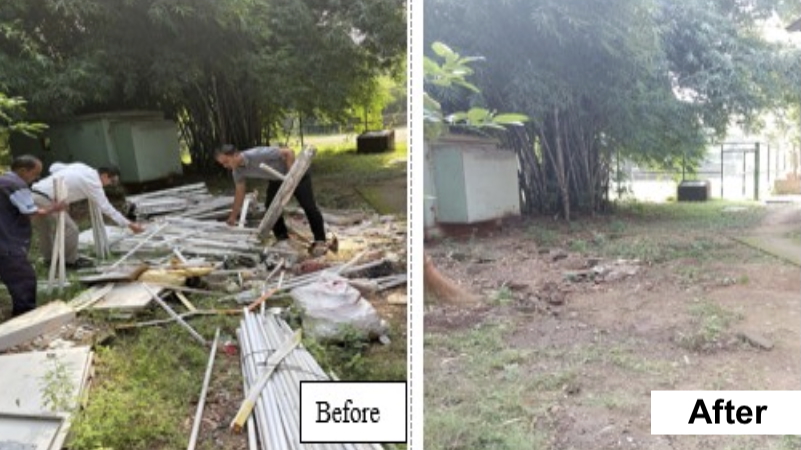
    NEW DELHI: India’s ministry of information and broadcasting has turned spring cleaning into a competitive sport. Armed with bin bags and a zeal for decluttering, the ministry and its field offices have spent the first fortnight of October purging files, scrapping vehicles and flogging off mountains of metal—all in the name of Special Campaign 5.0, the government’s latest push to institutionalise cleanliness and slash bureaucratic bloat.

    The campaign, which kicked off on 2 October, has already produced impressive tallies. The ministry has conducted 493 outdoor campaigns, cleaned 973 spots and condemned 104 vehicles to the scrapyard. Some 143,000 kg of scrap have been disposed of, generating Rs 34.27 lakh in revenue and freeing up 8,007 sq ft of space—enough to house a small army of civil servants, or at least their paperwork.

    The assault on pendency has been equally vigorous. Officials have reviewed 13,900 physical files, weeding out 3,957, and tackled 585 electronic files, closing 165. A total of 301 public grievances, 57 appeals, 16 parliamentary references, two state government references and one prime minister’s office reference have also been cleared—proof that even the most entrenched bureaucratic backlog can be shifted with sufficient motivation.

    The ministry has deployed teams of officers to field offices across the country to oversee progress, ensuring that the campaign’s lofty goals—enhanced workplace cleanliness, increased productivity and responsible e-waste management—are met with more than just lip service.

    Diwali, the festival of lights, traditionally inspires Indians to scrub their homes and workplaces in anticipation of prosperity. The ministry is clearly hoping that disposing of dead weight will do the same for government efficiency. Whether the momentum lasts beyond the campaign’s end date remains to be seen—but for now, at least, India’s information bureaucracy is lighter, leaner and Rs 34 lakh richer.

  • TRAI rings the spam alarm as digital consent and 1600-series plans take charge

    TRAI rings the spam alarm as digital consent and 1600-series plans take charge

    MUMBAI: Spam beware, India’s digital regulators are tightening the screws. The Telecom Regulatory Authority of India (TRAI) convened the 9th Joint Committee of Regulators (JCoR) at its New Delhi headquarters on October 16, 2025, marking another decisive step towards a safer, cleaner digital ecosystem.

    The high-level meet brought together representatives from the Reserve Bank of India (RBI), Securities and Exchange Board of India (SEBI), Pension Fund Regulatory and Development Authority (PFRDA), and the Ministry of Electronics and Information Technology (MeitY), alongside officials from the Department of Telecommunications (DoT), Ministry of Home Affairs (MHA), Ministry of Consumer Affairs (MoCA), and the National Payments Corporation of India (NPCI). Industry heavyweights including Google, Meta, GSMA, and COAI were also present to discuss collective measures against spam and cyber fraud.

    Central to the deliberations was the progress of the Digital Consent Acquisition pilot, currently underway at 11 banks under joint supervision by TRAI and RBI. On track for completion by February 2026, the pilot aims to ensure consumers have greater control over consent for commercial communications, a key tool in fighting spam.

    Meanwhile, TRAI pushed ahead with plans to fully adopt the 1600-series numbering system for banking, financial services, and insurance (BFSI) communications, with a phased sunset timeline agreed in collaboration with sector regulators. The committee also flagged the need for flexibility for small-scale businesses, with TRAI set to issue guidance soon.

    Other significant outcomes included mandatory whitelisting of all URLs, OTT links, APKs, and callback numbers used in SMS communications. This initiative, paired with a crackdown on shortened links and blacklisting errant entities, aims to curb fraudulent messaging at scale. The committee also discussed enhanced PE-end security measures, including real-time credential validation and CAPTCHA enforcement for OTP systems, to bolster trust and safeguard users’ digital interactions.

    TRAI chairman Anil Kumar Lahoti highlighted the importance of collaboration. “In a digitally connected economy, cooperation among regulators for digital services, financial services, consumer protection, and law enforcement is paramount. The JCoR continues to be a crucial platform for ensuring orderly digital connectivity and cracking down on spam and cyber fraud. Today’s decisions underscore our shared commitment to a secure and transparent digital communication ecosystem,” he said.

    The committee’s discussions also reflected an emphasis on public deterrence, with plans for TSPs and TRAI to publish blacklisted entities involved in spamming activities. Such transparency is expected to reinforce compliance while warning potential violators.

    By combining regulatory oversight, technological interventions, and industry collaboration, TRAI and its partners aim to transform India’s digital messaging landscape making spam less profitable, fraud less frequent, and user trust more robust. With these initiatives, the 9th JCoR meeting set a precedent for proactive governance in India’s rapidly evolving digital communication space.

  • TRAI chief Lahoti charts bright future as India’s media waves hit full stream

    TRAI chief Lahoti charts bright future as India’s media waves hit full stream

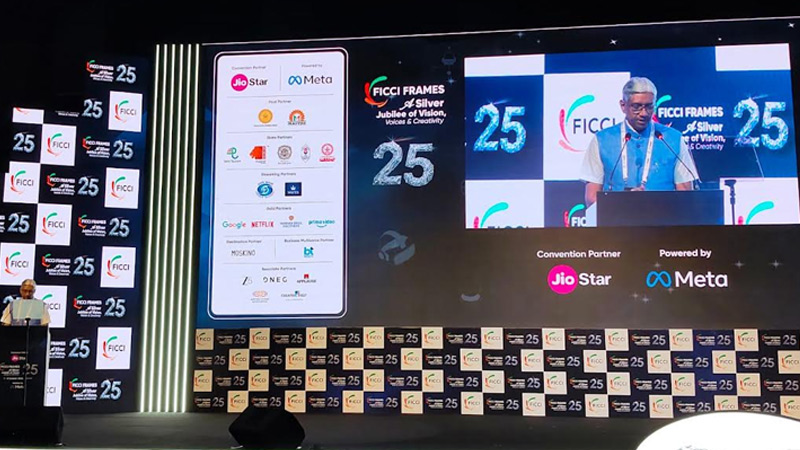
    MUMBAI: When it comes to India’s media and entertainment sector, the waves are getting bigger and TRAI Chairman Anil Kumar Lahoti is steering them with both vision and precision. Addressing the 25th Ficci Frames 2025, Lahoti delved into the vibrant evolution of broadcasting, distribution, and regulation in India.

    Lahoti highlighted that the media and entertainment (M&E) sector contributed Rs 2.5 trillion to the Indian economy in 2024 and is projected to grow at a CAGR of 7 per cent, crossing Rs 3 trillion by 2027. Within this, television and broadcasting alone generated nearly Rs 680 billion last year. He reflected on how the past 25 years have seen phenomenal transformation from analogue to digital transmission, standard definition to high definition, and now 4K video. Advances in audio quality and the proliferation of smart TVs have multiplied consumer choice, making content more accessible than ever.

    Yet while home screens have expanded to 40–50 inches and beyond, smartphones and 4G/5G broadband are opening new frontiers. OTT users now exceed 600 million, around 41 per cent of India’s population, yet linear TV remains central, with roughly 190 million TV households, 160 million linear subscriptions, and over 100 million households yet to enter the ecosystem many of whom will start with linear TV.

    The broadcast ecosystem is vast: 300 plus broadcasters, 900 plus TV channels, 388 private FM radio stations, and numerous national and international streaming platforms. Distribution involves 800 plus MSOs, 4 DTH operators, 1 HIDS operator, and a rapidly growing IPTV network, alongside 80,000 plus local cable operators. Public broadcasters Doordarshan and All India Radio operate 35 TV channels and 591 radio stations, respectively. While TRAI regulates linear TV and radio, digital content over the internet falls under the IT Intermediary Guidelines and Digital Media Ethics Code Rules 2021.

    Lahoti emphasised the complexities of linear TV’s multi-player ecosystem. “Our challenge is to ensure fair, non-discriminatory deals for all players, large or small, across geographies, while balancing innovation and regulation,” he said. TRAI has been proactive, recommending policy reforms, simplified licensing under the Telecommunication Act 2023, and a regulatory framework for ground-based broadcasters, enabling transmission through non-satellite means, a significant shift from the existing satellite-only mandate.

    Financial stress in FM radio has also been addressed, with TRAI recommending the rollout of digital radio services in 13 A-plus and A-category cities. Lahoti noted that rapid technological advancement from wired and wireless broadband to AI and cloud computing is reshaping content creation, distribution, and consumption. With India’s linguistic diversity 22 major languages and hundreds of dialects the opportunities for content creators are immense.

    He also referenced the prime minister’s recent Waves Summit speech, highlighting the Orange Economy, powered by creativity, culture, and content. “Dream big, tell India’s untold stories, and invest not just in platforms but in people,” Lahoti quoted. The message was clear: the screen may be getting smaller, but the content’s impact is enormous.

    As India’s M&E sector continues its remarkable growth, Lahoti stressed collaboration among stakeholders as essential to realising this vision. TRAI, he said, is committed to enabling orderly growth, simplifying compliance, and fostering innovation, ensuring a competitive and inclusive broadcasting ecosystem.

    Wrapping up, he wished Ficci Frames continued success, expressing hope that the debates and discussions at the forum will guide the industry toward a brighter, smarter, and more connected media landscape.

    In a sector worth Rs 2.5 trillion today and poised for Rs 3 trillion tomorrow, with 600 million OTT users, 190 million TV households, and a dynamic mix of technology and creativity, India’s media waves are indeed at full stream and TRAI is firmly at the helm.
     

  • TRAI dials up the future with digital radio tune for 13 Indian cities

    TRAI dials up the future with digital radio tune for 13 Indian cities

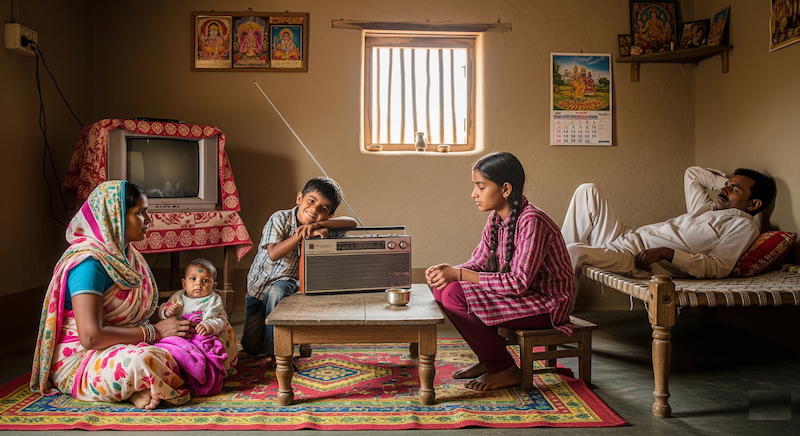
    MUMBAI: Static is out, digital is in. The Telecom Regulatory Authority of India (TRAI) has turned up the volume on the country’s radio landscape with fresh recommendations to kick-start digital radio broadcasting in India’s biggest markets.

    The policy blueprint covers four A+ cities Delhi, Mumbai, Kolkata and Chennai and nine A cities including Bengaluru, Hyderabad, Pune, Ahmedabad and Jaipur. Reserve prices have been set for spectrum auctions, ranging from a hefty Rs 194.08 crore for Mumbai to Rs 20.52 crore for Kanpur.

    So what’s the buzz? Under TRAI’s plan, new broadcasters will launch in simulcast mode, meaning one frequency can now beam one analogue, three digital and one data channel. Existing FM players will be allowed to migrate voluntarily within six months of auctions, by paying a migration fee linked to auction prices and their earlier entry fees.

    The regulator is also pushing for a single digital radio technology standard for India, with the government tasked to finalise it either through consultations or embedding it into the spectrum auction process.

    Broadcasters opting in must get their simulcast services on air within two years, with licences lasting 15 years. A sunset date for analogue FM will come later, depending on digital adoption.

    The money matters are equally detailed: an annual authorisation fee of 4 per cent of Adjusted Gross Revenue for most cities, dropping to 2 per cent for the first three years in border, hilly and island territories. Flexible payment instalments, spread across 15 years, mirror telecom spectrum auctions protecting the government’s Net Present Value (NPV) while easing upfront pressure on broadcasters.

    In a move sure to please commuters and audiophiles, TRAI has urged the government to push manufacturers to ensure digital receivers are built into mobile phones and car infotainment systems. Meanwhile, Prasar Bharati may be asked to share its towers and infrastructure with private players at concessional rates.

    From opening auctions for two new spot frequencies per city to freeing broadcasters to choose their own genres, the roadmap aims to democratise India’s airwaves while adding sparkle to an industry often accused of playing the same old tune.

    For listeners, it means better sound quality, more choice and even value-added services riding on those data channels. For broadcasters, it’s a new stage to perform on and this time, the spotlight is firmly digital.

  • Delhi HC orders X user to pay Rs 5 lakh to TV Today over defamatory posts

    Delhi HC orders X user to pay Rs 5 lakh to TV Today over defamatory posts

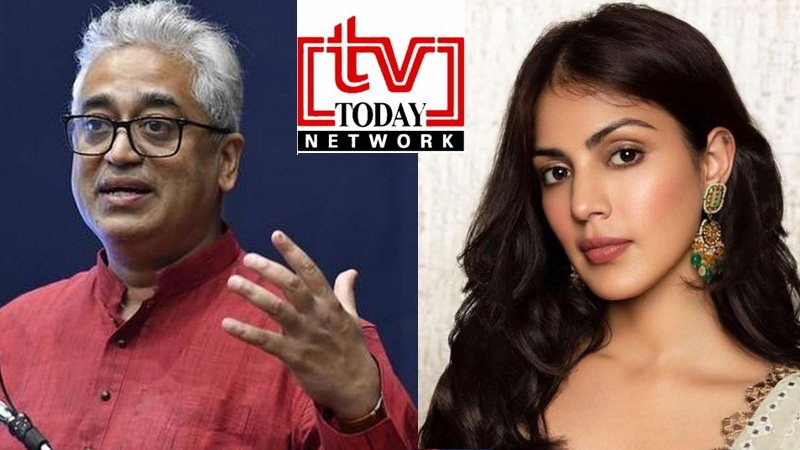
    MUMBAI: The Delhi High Court has directed X user Anurag Srivastava to pay Rs 5 lakh in damages to TV Today for defamatory posts on X targeting the channel and its journalist Rajdeep Sardesai. The posts were made in reaction to an interview with actor Rhea Chakraborty that aired in 2020.

    Justice Purushaindra Kumar Kaurav held that the posts were “highly defamatory” and had not been backed by evidence, despite the defendant being given enough opportunity to do so.

    “The Court finds that the objectionable tweets were highly defamatory and remain unsubstantiated by the defendant, despite having been afforded sufficient opportunity to do so. Such an irresponsible act of the defendant has to be deprecated.

    “Having considered the overall circumstances, this Court deems it just and proper to award Rs 5,00,000 as general compensatory damages to the plaintiff, to redress the reputational harm, emotional hardship, and loss of professional credibility caused by the conduct of the defendant,” the order read.

    The case was filed in 2020 by TV Today against Srivastava, who operated the handles @theanuragkts and @theanuragoffice on X (formerly Twitter).

    Soon after the interview went live, Srivastava posted derogatory comments about Sardesai, including calling him a “dalla,” (a derogatory Hindi term implying ‘pimp’), and comparing him to controversial preacher Zakir Naik. He also alleged that Chakraborty had bribed both Sardesai and the channel to secure the interview.

    TV Today told the court that these remarks were part of a “systematic attack” on the anchor and the network’s reputation. It added that the damage extended to its business as well, pointing out that annual income fell from Rs 899.57 crore in 2019–20 to Rs 819.92 crore in 2020–21.

    Srivastava later deleted the posts and assured the court that he would not repost them. Interim orders had already restrained him from uploading similar content.

    The High Court has now directed him to pay Rs 5 lakh to TV Today as compensation for reputational harm and loss of credibility.

  • India cuts FM radio reserve prices to revive stagnant sector

    India cuts FM radio reserve prices to revive stagnant sector

    NEW DELHI: India’s telecom regulator has recommended sharp cuts in reserve prices for FM radio channel auctions, acknowledging the sector’s struggle against streaming services and stagnant revenues that have barely recovered from pre-pandemic levels.

    The Telecom Regulatory Authority of India (TRAI) on 23 September  proposed reserve prices 30 per cent below previous valuations for three cities seeking radio licenses. Bilaspur in Chhattisgarh would see its reserve price set at Rs 83 lakh, down from a calculated valuation of Rs 1.18 crore. Rourkela in Odisha faces a reserve floor of Rs 1.20 crore against a Rs 1.71 crore valuation, whilst Rudrapur in Uttarakhand gets a Rs 97 lakh reserve price from a Rs 1.39 crore assessment.

    The cuts reflect harsh realities facing India’s private FM radio industry. Total advertising revenues peaked at Rs 2,382 crore in 2018-19 but crashed to Rs 941 crore during the pandemic’s first year. Recovery has been sluggish, reaching just Rs 1,819 crore in 2024-25—barely matching 2019-20 levels despite more channels operating.

    “The sector is facing increased competition from digital audio platforms,” TRAI noted, warning of “substitutability effects” as younger listeners migrate to on-demand streaming services that offer playlist curation and skip functions unavailable on traditional FM.

    The regulator’s move follows disappointing recent auctions. In July 2025, only 63 of 730 available channels across 234 cities found buyers, highlighting weak industry demand despite government efforts to expand FM coverage.

    TRAI also introduced a new “category E” classification for 18 small cities in hilly regions of Himachal Pradesh, Uttarakhand and Jammu & Kashmir, setting their reserve prices at just Rs 3.75 lakh each. These locations would operate with lower transmission power than existing categories, reflecting challenging terrain and smaller populations.

    The recommendations include several industry-friendly measures: allowing FM broadcasters to stream content online simultaneously, permitting news and current affairs programming for up to 10 minutes per hour, and offering instalment payment options similar to telecom spectrum auctions.

    Most significantly, TRAI urged the government to delink annual licence fees from non-refundable entry fees for all operators—not just new entrants. Current rules tie existing broadcasters’ annual costs to auction prices set by later bidders, creating unpredictable expense burdens that “impinge on the business model for FM operators.”

    The authority also recommended allowing voluntary infrastructure sharing and reducing mandatory co-location requirements with state broadcaster Prasar Bharati, whose rental charges some operators claim could be recovered through independent infrastructure within 2.5 years.

    India currently operates 388 private FM radio channels across 113 cities. The sector employs thousands and serves as a crucial local information source, particularly during emergencies. However, its financial sustainability increasingly depends on adapting to digital competition whilst maintaining terrestrial broadcasting’s unique community connection advantages.