Category: News Headline

  • Brands navigate trust, AI and culture to thrive in today’s media landscape

    Brands navigate trust, AI and culture to thrive in today’s media landscape

    MUMBAI: If marketing is war, then the battlefield is shifting from loud campaigns to sharper trust-building, from chasing clicks to curating culture. That was the resounding theme at the session “Driving Performance and Brand Reputation in a Dynamic Media Landscape” at the 3rd India Brand Summit 2025, where five marketing heavyweights unpacked what it takes to stay relevant when algorithms, attention spans, and authenticity collide.

    On stage were Harshita Hemnani (Bharti AXA Life Insurance), Argho Bhattacharya (Payu), Sayantani Das (Jumboking Burgers), Ritu Mittal (Bayer South Asia), and Anita Subramanian (JLL), with Abhishek Pujar of IAS steering the discussion.

    The conversation quickly zoomed in on artificial intelligence not as a futuristic buzzword but as an everyday reality. Mittal argued, “AI-generated content is a broad term not all of it is bad. If brands use AI to scale authentic storytelling and create contextual variations, it’s a powerful ally. But when AI content becomes clutter or poor quality, that’s when reputations get dented.”

    Das agreed that authenticity must rule over noise. “The brand will win not by shouting the loudest, but by being contextual and authentic,” she said, pointing out how creative variations and asymmetric segmentation now matter more than ever in cutting through digital saturation.

    Culture, too, emerged as a defining battleground. “You can’t drop a generic festive message and expect it to resonate,” said Hemnani. “Brands need to mirror the cultural mood whether it’s Diwali, Pongal or Christmas and be seen in environments reflecting joy, togetherness, and Indianness.”

    For Subramanian, real estate marketing offers lessons in nuance: “Trust is everything. Technology can scale, but human-led experiences are irreplaceable. That’s where AI works best augmenting, not replacing, authenticity.” She highlighted how launches today are often creator-led, citing international examples where communities turn content into commerce.

    Bhattacharya, from PayU, brought in the customer lens. “Consumers don’t care about brands, they care about what you can do for them. Value is the keyword, whether it’s price, quality, or convenience. Festivals amplify this tendency to spend, but the trick is to stay transparent, relevant, and valuable.”

    When the debate turned to balancing short-term performance with long-term reputation, the panel agreed there’s no either/or. “It’s not performance versus brand anymore, it’s about balance,” said Mittal. “Whether that’s 70-30 or 50-50 depends on your category and consumer priorities, but both are critical for sustainable growth.”

    Looking ahead, panellists predicted disruption from agentic AI, niche AI tools for smaller cohorts, and experience-driven marketing that fuses data with human insight. As Mittal summed up: “Responsible AI, trust, and personalisation will define the winners. In the long run, transparency and authenticity will separate brands that thrive from those that fade.”

    With over 300 delegates in attendance, the session reinforced a striking truth: in an era where algorithms increasingly decide visibility, the ultimate differentiator remains deeply human trust, culture, and value.

  • Fast and festive: Instamart’s quick India sale delivers deals in minutes

    Fast and festive: Instamart’s quick India sale delivers deals in minutes

    MUMBAI: No time like the present, especially when the present arrives in 10 minutes. Instamart has kicked off its ‘Ouick India movement 2025,’ promising shoppers lightning-fast festive deals with savings of up to 90 percent.

    http://quickindiamovement.in

    Running from 19 to 28 September on the Swiggy and Instamart apps, the sale is packing in over 50,000 products: from iphones and smart speakers to Barbie dolls and beauty essentials, all dropped at your doorstep in minutes.

    Tech lovers can score blockbuster discounts on top smartphones like the iphone 17, Oneplus, Samsung, OPPO and Motorola, alongside hot gadgets such as the Lenovo ideapad slim 3, JBL flip 5 speakers and Philips smart home must-haves. Beauty buffs, meanwhile, can nab a Plum green tea face wash for just Rs 99, while toy fans get their pick of LEGO and Barbie.

    Adding a playful twist, shoppers voted for their favourite deals to appear during the daily golden hour (5–7 pm), unlocking crowd-pleasers such as the Oneplus 13r at Rs 38,999, Hammer airflow earbuds at Rs 349 and a 20-piece Cello opalware dinner set at Rs 799. Hourly price drops promise even more surprises.

    Instamart, CEO, Amitesh Jha called it “the country’s mega-festive season sale delivering thousands of products at unbeatable value and speed… no more waiting days for your orders to arrive.”

    On top of jaw-dropping deals, banks and wallets are sweetening the pot with instant discounts and cashback offers, including 10 percent off with Axis, ICICI, RBL and HSBC cards, plus extra rewards for Swiggy HDFC credit card and Phonepe UPI users.

    Backed by leading brands such as boat, Philips, Pampers and Nestasia, Instamart’s quick India movement is shaping up as the fastest way to tick off every festive wish list. Because why wait for tomorrow’s deals, when today’s can be at your door in ten minutes flat?
     

  • Ad green: IAS and Good-Loop take carbon out of the digital equation

    Ad green: IAS and Good-Loop take carbon out of the digital equation

    MUMBAI: Less hot air, more clean air. That’s the promise as Integral Ad Science (IAS) teams up with Good-Loop to help advertisers track and shrink their digital carbon footprint, without the added cost.

    Fresh from the launch of the ‘Global media sustainability framework’ at Cannes, IAS has now rolled out advanced emissions measurement across every ad impression on the open internet. The move means advertisers can monitor, manage, and meaningfully reduce the environmental impact of their digital campaigns, all while still ticking the usual boxes for viewability, fraud prevention, and brand safety.

    Good-Loop, a B corp on a mission to make advertising climate-friendly, has already been powering IAS’s emissions measurement for three years. The collaboration now goes mainstream, offering advertisers across the globe a chance to see exactly how green, or not, their media buying really is.

    Good-Loop’s Founder & CEO, Amy Williams put it plainly “We now know, in no uncertain terms, the environmental impact that media buying has, and it’s time to take this information into the mainstream, to change our industry for the better.”

    IAS, CEO, Lisa Utzschneider added: “Sustainability in advertising requires more than promises, it needs accountability. Every impression we measure will now come with data on its carbon impact.”

    With new carbon legislation around the corner and sustainability pledges stacking up, the move sets a precedent: carbon counts as much as clicks. And as the industry warms to greener metrics, IAS and Good-Loop’s initiative could help cool things down for the planet.

  • CX marks the spot as brands bet big on experience over everything else

    CX marks the spot as brands bet big on experience over everything else

    MUMBAI: What do movie remixes and customer experience (CX) have in common? Both, as it turns out, need staying power, emotional hooks, and the ability to get even the toughest crowd on their feet. That was the mood at the 3rd India Brand Summit 2025, where CX leaders gathered for a session titled CX-Led Growth: Why Experience is the Ultimate Differentiator and the conversation hit all the right notes.

    Session chair Deloitte India, partner Vivette D’Cruz set the tone by urging brands to design CX not just for today but for the decades to come: “Make it like a remix that still works 20 years later evergreen, adaptable and impossible to resist.”

    From there, the panellists spanning sectors from entertainment and holidays to manufacturing and consumer goods unpacked how experience has become the real battlefield for brand loyalty.

    Mahindra Holidays & Resorts India VP for customer operations Shweta Srivastava traced CX’s rise from a back-end support function to boardroom strategy. “Customer experience has evolved from reactive firefighting to being a core driver. Many companies now have Chief Customer Experience Officers at the table,” she said. Her advice: pick three metrics that matter most, whether CSAT, NPS, or retention, and make them part of leadership KRAs. That way, ownership spreads across functions finance, supply chain, marketing not just the service desk.

    She recalled an e-commerce fix designed through empathy: “We created a ‘green pass’ tag for loyal customers, flagged in the CRM. It allowed frontline agents to override rigid return policies and say ‘no questions asked’ because loyalty deserves flexibility.”

    Panasonic Electric Works India head of customer services Rakesh Gupta highlighted how embedding CX into culture requires mapping the entire customer journey. From browsing switches on a website to watching demo panels at a shop, installation, servicing, and even product disposal, every stage was considered. “We even run chai-samosa meetings with electricians, train dealers, and reward loyalty. Because one grumpy ‘Chotu’ at the store can undo months of marketing effort,” he quipped.

    Digital tools like AR/VR are now part of the mix. Customers can virtually test whether a fan matches their walls or a plate complements their curtains. Panasonic also recently piloted a “ballroom” model where its most skilled technicians guide local teams through AI-driven video support, saving costly travel and slashing resolution times.

    Hindalco Industries (Aditya Birla Group) head of customer centricity Namita Bohara stressed that in B2B, trust is built as much through billing details as through product quality. “We measure customer satisfaction through something we call the Fairness Index tracking not just value but whether customers feel they are treated fairly. Even small requests like a GST line item on an invoice matter hugely in cementing loyalty,” she explained.

    Her mantra: listen, learn, act, and close the loop by showing customers how their feedback drove change. Increasingly, Hindalco is co-creating solutions with clients, anticipating needs before they arise.

    For Shemaroo head of digital marketing Anvesha Poswalia CX boils down to emotional connect. “We’ve pivoted from B2B to B2C. Customers come to us not for discounts but for goosebumps,” she said. Citing the Gujarati film Umrooni Pen Paar, she described how Shemaroo turned its launch into a cultural moment by encouraging audiences to share their own ‘first threshold’ stories. “It wasn’t just about streaming a film, but sparking conversations people related to. That’s how you build loyalty,” she said, adding: “Our mission is to make Gujaratis fall in love again with Gujarati cinema.”

    Hamilton Housewares’ head of CX & Service, Uday Bhosale, argued that technology must augment, not replace, human connection. “Fifteen years ago, call centres were the only channel. Today, we have bots, Whatsapp, emails, even AI answering calls. But businesses must decide where to draw the line. Use bots for order status or FAQs, but when frustration and emotions enter, only a human should step in,” he warned.

    He noted that 70 per cent of companies deploying AI for cost-cutting miss their targets. The better approach: let AI assist agents by surfacing faster answers, while humans handle empathy-driven queries.

    Shweta added that transparency in personalisation is non-negotiable. “Customers should feel their data is enhancing their experience, not invading privacy. In our membership model, we use past holiday behaviour to design plans that fit their lives. When personalisation feels helpful, it works,” she said.

    The session ended with consensus: CX is less about one-off “wow” moments and more about remixing consistency with innovation. Whether through loyalty councils, AI-enhanced service, fairness indices, or goosebump-worthy cultural campaigns, the goal is to make CX the evergreen anthem of brand growth.

    As one speaker summed it up, “Technology and human connection must work hand in hand because in the end, customers don’t just remember the transaction, they remember the feeling.”

  • Brands unplugged as CXOs decode trust, traffic and tech at IBS 2025

    Brands unplugged as CXOs decode trust, traffic and tech at IBS 2025

    MUMBAI: When it comes to building brands in today’s attribution-obsessed world, traffic isn’t just on the roads, it’s the lifeblood of every founder’s morning routine. That was the cheeky starting point at the CXOs Unplugged: Building Brands in the Age of Attribution session at the 3rd India Brand Summit 2025, where candid confessions flowed as freely as marketing buzzwords.

    Bartisans co-founder Jovita Mascarenhas admitted she checks Shopify impressions before coffee: “How many people even got to know about us? Conversion comes later. Awareness is the scariest metric.” For Abhinav Pathak, CEO & Co-Founder of Escape Plan, the stress of traffic is daily revenue pressure: “Yesterday’s traffic, today’s revenue. I’d be on my toes with WhatsApp broadcasts to make up the gap.”

    But traffic panic wasn’t the only anxiety in the room. Aseem Shakti founder & CEO Swati Singh delivered a sharp warning on the limits of AI: “A major disruption will come from the growing skepticism around AI-generated content. Trust is diminishing. Offline marketing will be just as important as digital in the next few years.” Her mantra: trust-building is oxygen for the present, but authentic storytelling is the food that sustains brand longevity. “If you feed your company junk food weak storytelling, it may survive today but not thrive tomorrow.”

    Taboola advertising account director Vibhu Anand pushed back gently, arguing AI is less about hype, more about real-time insights. “AI is a phase everyone’s jumping on, but it’s about finding your niche. It’s still going to need people to guide the insights. Trust-building will require heavy investment in technology.” Taboola itself is testing Deepadive, an AI engine to keep readers loyal to publisher sites in an age of content drift.

    The conversation veered into funding scars when Mascarenhas recalled her early VC experience: “They once told me, ‘Shut down.’ Cocktail mixers in India? People thought it was fruit juice. Building a category takes patience VCs often don’t have.” Her solution has been doubling down on storytelling, a mother-son brand journey, clean ingredients, and unapologetic positioning in a culture wary of drinking at home.

    Pathak echoed the need for balancing numbers with narrative. “Performance marketing is oxygen, but content is fitness. I want my brand to last 10, 20, 50 years, not just today.” She confessed Shark Tank still drives virality every month, but admitted splurging on radio and film premieres despite fuzzy attribution because “it builds trust and perception.”

    And if consumer trust is wobbling, commerce itself isn’t slowing. Mascarenhas quipped that “quick commerce will continue disrupting retail for the next few years,” underscoring how founders now battle both shrinking consumer patience and multiplying competition.

    Wondrlab COO Sanju Menon, session chair, kept the banter flowing, but the takeaway was clear: in an age where every click is tracked, brand-building is about patience, authenticity, and choosing when to lean on dashboards versus when to lean into storytelling.

    As Anand put it, “It’s more expensive to acquire a new user than keep a repeat one. Storytelling and trust may not show up on a dashboard tomorrow, but six months down the line, they slash your acquisition costs by 25 per cent.”

    Attribution may be the age we live in, but as the CXOs unplugged, it’s still trust, traffic, and timeless storytelling that keep brands truly alive.

  • Ram Charan takes aim as brand face of Archery Premier League debut

    Ram Charan takes aim as brand face of Archery Premier League debut

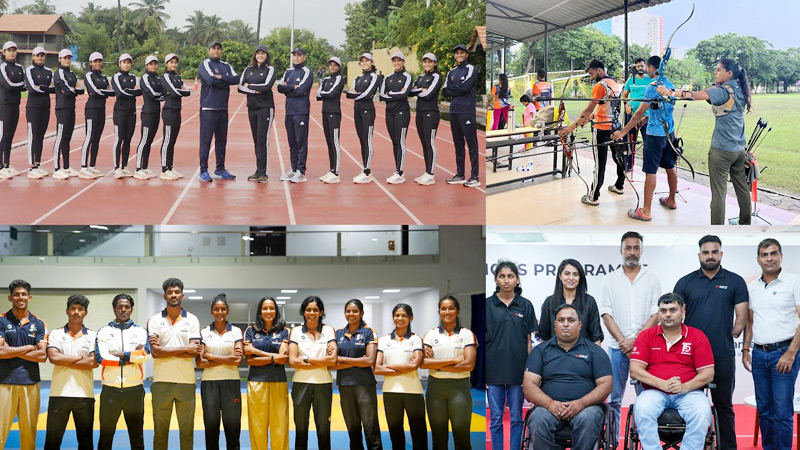
    MUMBAI: When archery meets star power, the bullseye is bound to shine brighter. The Archery Association of India (AAI) has roped in actor and global icon Ram Charan as the brand ambassador for the first-ever Archery Premier League (APL), which will debut from 2–12 October 2025 at the Yamuna Sports Complex, New Delhi.

    The APL is a franchise-based spectacle set to feature six teams, bringing together 36 of India’s finest archers alongside 12 international sharpshooters including athletes from the world’s top 10 rankings. In a global first, recurve and compound archers will compete together under floodlights, promising a gripping format designed to dazzle fans and elevate the sport’s international profile.

    For Ram Charan, the association is more than symbolic: “Archery stands for discipline, focus, and resilience values I resonate with. The APL provides Indian archers a world-class platform while drawing global attention to the sport. I’m proud to support this pioneering initiative.”

    AAI President Arjun Munda called the league the realisation of a long-cherished dream: “The APL will create opportunities for young talent across India’s villages and take the sport to the next level. With Ram Charan on board, we believe archery will inspire countless new fans.”

    AAI Secretary General Virendra Sachdeva underlined the league’s transformative vision: “Much like leagues in cricket or kabaddi, the APL brings professional standards, visibility, and global competitiveness to Indian archery. It’s not just a league, it’s a stepping stone towards India’s Olympic dream.”

    Backed by World Archery, World Archery Asia, and India’s Sports Ministry, the league promises to be a landmark moment for Indian sport. With archers locked, stars aligned, and the countdown ticking, Delhi is set for ten days of precision, passion, and plenty of bullseyes.

  • Imagine by Ample gamifies iphone 17 pre-bookings with ‘Imagine More’

    Imagine by Ample gamifies iphone 17 pre-bookings with ‘Imagine More’

    MUMBAI: Booking a phone just got an upgrade. Imagine by Ample has shaken up India’s premium retail market with its “Imagine More” campaign: a gamified, consumer-first approach to iphone 17 pre-bookings that promises more than just a transaction.

    Conceptualised by creative agency Schbang, the campaign cuts through the usual clutter of offers and queues by focusing on “more offers, more rewards, more experiences.” At the heart of the innovation lies the ‘More Portal’: a seven-day gamified Whatsapp journey that keeps customers engaged from pre-booking to delivery, with surprises, rewards, and interactive touchpoints along the way.

    Ample Group, chief marketing officer, Neha Jindal explained, “With the iphone 17, we’ve gone beyond convenience to create a first-of-its-kind platform that makes the journey fun, engaging, and rewarding. At Imagine, Apple fans don’t just upgrade, they celebrate.”

    Backed by 36 micro-influencers, eight city-specific PR rollouts, and regional storytelling in Tamil, Malayalam, and Bangalore-centric activations, the campaign ensures Apple enthusiasts across India feel both excited and included.

    “This launch was never about just enabling pre-bookings,” said Schbang’s Vrinda Bajaj. “It was about crafting an experience that built anticipation at every step, so Apple fans felt celebrated, not just serviced.”

    With 47 stores across south India and a strong digital footprint, Imagine by Ample has already cemented itself as one of India’s leading Apple-exclusive retailers. By transforming a routine pre-order process into an immersive, gamified journey, it has now raised the bar for how brands can create loyalty and excitement in a crowded market.

    In short, Imagine isn’t just selling iphones, it’s selling the thrill of the wait.

  • India’s rare black tiger prowls onto National Geographic’s October cover

    India’s rare black tiger prowls onto National Geographic’s October cover

    MUMBAI: Black is the new roar. India has made global headlines as a rare black tiger from Odisha’s Similipal national park takes centre stage on the cover of National Geographic’s October 2025 edition.

    The striking image, captured by Indian photographer and National Geographic explorer Prasenjeet Yadav, shines a spotlight on one of the world’s rarest big cats, and on India’s growing role in wildlife conservation.

    Similipal is home to about 30 tigers, nearly half of which carry the rare genetic mutation that gives them their striking pseudo-melanistic coats. Photographing one of these elusive cats, known as T12, was no easy feat. Yadav spent more than three months patiently tracking and observing before capturing the defining moment.

    “Being out in the forests of Similipal was intense and humbling,” Yadav reflected. “To see this story now on National Geographic’s cover is both an honour and a reminder of why we document India’s extraordinary wild heart.”

    The cover story, praised by Nat Geo editor-in-chief Nathan Lump, goes beyond the image itself. It underscores the importance of genetic diversity, warning that saving animals is just the first step, ensuring their long-term survival demands broader action.

    Jiostar’s Alok Jain, who oversees National Geographic in India, added: “This almost mythical sight reflects the power of nature’s mysteries and continues Nat Geo’s legacy of ground breaking storytelling.”

    The achievement also highlights the tireless work of the Odisha forest department, scientists, and conservationists working to protect fragile ecosystems. More than a photograph, it is a global reminder of India’s conservation commitment.

    With this historic cover, National Geographic not only celebrates the rare black tiger but also elevates India’s role in safeguarding the planet’s most extraordinary wildlife, one frame at a time.
     

  • TCS reaps growth honours with Everest Group’s 2025 Elevate recognition

    TCS reaps growth honours with Everest Group’s 2025 Elevate recognition

    MUMBAI: Scaling new peaks comes naturally to TCS. Tata Consultancy Services has been crowned with the ‘Growth Honor’ of the year at Everest Group’s 2025 Elevate Honors in Dallas, a recognition that applauds its industry-leading organic growth and market impact.

    The IT giant marked a staggering 39.4 billion dollars in total contract value and 30 billion dollars in revenues in FY25, consolidating its position as one of the world’s most powerful tech players. Everest Group noted TCS’ consistent revenue growth among global peers with revenues above 5 billion dollars, calling it proof of delivery excellence, operational strength, and innovation at scale.

    “This award reflects our unwavering commitment to growth, driven by our expertise in AI and digital transformation, and the trust our clients place in us,” said TCS, global head – analyst relations, Nikhil Shahane.

    The recognition caps a landmark year for TCS. In 2025, it became the world’s second-largest IT services brand, with a valuation of 21.3 billion dollars, and secured a spot in Fortune’s ‘World’s Most Admired Companies.’ Meanwhile, Whitelane Research ranked TCS first for customer satisfaction in Europe, for the twelfth consecutive year.

    Everest Group, partner, Ronak Doshi said: “Elevate Honors are based on fact-based, analyst-driven research. Honourees like TCS are recognised solely for high performance and excellence.”

    TCS’ growth story is being fuelled by next-gen bets, especially on artificial intelligence. The firm recently appointed a chief AI and services transformation officer and expanded services spanning AI, cloud, data, cyber security, and digital engineering. Its global clientele includes the top names in banking, telecom, retail, healthcare, and entertainment.

    With over 600,000 employees across 55 countries, TCS is not only delivering technology-led transformation but also investing in long-term partnerships, sustainability, and community impact, including sponsorship of marathons from New York to London to Sydney.

    In short, TCS isn’t just climbing mountains, it’s building them.
     

  • Sony cards speed past limits with blazing 1800 MB/s read and 1700 MB/s write

    Sony cards speed past limits with blazing 1800 MB/s read and 1700 MB/s write

    MUMBAI: When it comes to speed, Sony just hit fast-forward. The tech giant has launched its Cfexpress 4.0 Type A cards in India, promising blistering performance for professional creators with read speeds up to 1800 MB/s and write speeds up to 1700 MB/s more than double their predecessors.

    The new CEA-G1920T (1920 GB, Rs 97,490) and CEA-G960T (960 GB, Rs 59,990) cards, along with the MRW-G3 card reader (Rs 17,990), hit stores and e-commerce platforms on 20 August 2025. Built for Sony’s Cinema Line and Alpha cameras, the cards are designed to handle the ever-demanding world of high-bitrate 4K and above video, long shoots, and instant data transfer.

    The upgrades aren’t just about speed. With a minimum sustained write speed of 400 MB/s, these cards guarantee uninterrupted recording of cinematic-quality footage. Their durability has also been levelled up, the reinforced resin body is five times stronger than previous models and can survive drops from 7.5 metres. Bend resistance has been enhanced to withstand forces up to 150 newtons, making them ready for the chaos of on-location shoots.

    The compact design means portability without compromise, supporting lightweight camera bodies while packing in serious storage muscle. Meanwhile, the MRW-G3 reader, built exclusively for Cfexpress Type A, supports USB 40 Gbps transfer speeds, ensuring that even massive files fly from card to system in record time. With its heat-dissipation design, the reader is also engineered for stability during prolonged workflows.

    For photographers, videographers, and filmmakers juggling huge files under pressure, Sony’s latest launch isn’t just storage, it’s a workflow accelerator. With capacity, speed, and ruggedness in one pocket-sized package, these cards ensure creators spend less time waiting and more time making.