Category: News Headline

  • Hopeline success in FM private radio Phase II

    Hopeline success in FM private radio Phase II

    MUMBAI: Tuning into the radio industry. The FM private radio industry is gearing up for a massive expansion. Radio Tuning in-Again, the session at the second day of Ficci Frames 2006. The panelists emphasized on the government looking at permitting multiple frequencies including granting of news and current affairs, HR practices, expansion of listenership and impending base for advertisers and a sophisticated listenership measurement system.

    Entertainment Network Ltd ( manages the brand Radio Mirchi) CEO AP Parigi says that the various FM stakeholders have been hammering that multiple frequencies should be permitted, which would spur the launch and growth of niche channels in this category.

    The demand of multiple frequencies from various stakeholders of the industry seems to be long pending. Though the regulator does not permit any licensees to own multiple frequencies in same city, the panelist urges the government to look into the matter.

    Win 94.6 FM managing director Gautam Radia concurs with Parigi on the government to provide permission of multiple frequencies, which may witness diversification in content, which in turn may push the list of listenership.

    Radia does not hesitate to point out that if the government grants the authorization of the same, it will come with ‘a rider’. According to him, the government may enforce the licensees to operate one of the multiple frequencies to cater to the local listeners by conversing in local languages.The Win 94.6 in Mumbai, had to be shut down due to the heavy licence fee during the FM radio phase I.

    The augmentation of niche channels is achievable if it is pushed by the market leaders of the industry, Parigi says, “The niche channels should be supported by the market leaders and profitable companies in this business during the infancy”.

    He briefly touches on the aspect of news and current affairs, which have been restricted to the industry as of now. He says if these restrictions are removed, radio can educate its listeners on locally relevant information and discussions, besides having a good mixture of entertainment and news.

    The industry is concerned over the lofty music royalties. Recently, the Association of Radio Operators of India (AROI), a body of FM radio licencees, had decided to petition the government rationalization of music rights fee, tax sops. Radia mentioned that the soaring music fee is not affordable by players playing in the smaller cities and towns. Paragi agrees to the same and is looking at fair music royalties with the launch of new stations across 91 cities.

    Big River Radio (India) Private Ltd managing director Sunil Kumar lay stress on programming, which to him is a ‘challenge’. “The need to develop programmes in 22 major languages and over 100 major languages/ dialects,” he says. Music scheduling software for radio, according to him is a ‘no-no’ as it is best suited for western environment.

    Kumar believes that the objective of the industry should include amplifying the listnership and advertisement, establish brand and capture a defined segment. Besides, the above objectives, the industry has to tactfully combat challenges especially with respect to the HR practices.

    Parigi points out that the HR practice has to designed in such a manner that it ‘learn, earn and grown rather than learn, earn and go’. Retaining and developing talents remains a worry and has to be sought out with the best HR policy.

    Besides, the challenges, the stakeholders are gung-ho about the future, which is identified as the appropriate place in the galaxy of entertainment. The size of the industry, at present, is pegged at Rs 3 billion, according to a study by the Federation of Indian Chambers of Commerce and Industry (FICCI) and PricewaterhouseCoopers. It is anticipated to register a robust growth of 32 per cent over the next few years to touch Rs 12 billion (nearly $270 million) in revenues by 2010 on the back of a robust economy and easing of stiff investment rules.

    Media planners acknowledge that the advertisement base of radio is anticipated to surge with the launch of approximately 200 stations, which is likely to propel the development of the FM category. Insight president Raj Gupta believes the verdict is positive amongst the media planners.

    Stating it as value for money, Gupta indicates, “Radio that has moved from background to foreground has higher affinity of youth. The youth category products are likely to migrate to radio.” To him, radio will be the new habitat for youth.
  • Telugu stars, Matrix Labs promoter to take 60% stake in Maa TV

    Telugu stars, Matrix Labs promoter to take 60% stake in Maa TV

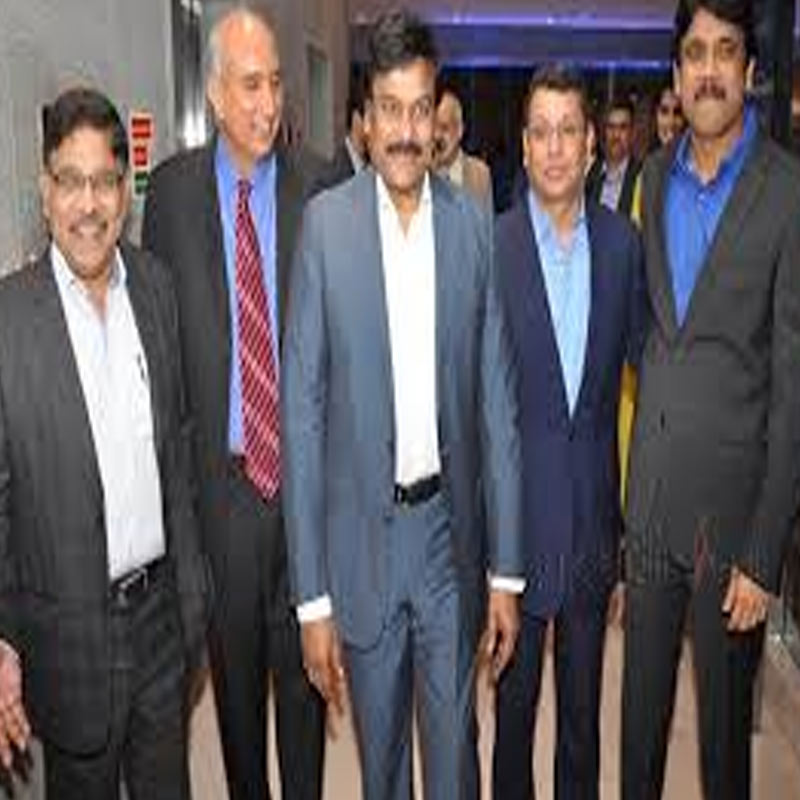
    MUMBAI: The Telugu television market is poised to become the new hot spot with superstars Nagarjuna and Chiranjeevi acquiring stake in Maa TV Network Ltd, the company which owns and operates a Telugu general entertainment channel.

    Along with Matrix Laboratories Ltd (a listed company), promoter N Prasad, Nagarjuna and Chiranjeevi will hold 60 per cent of Maa TV in a purchase deal worth Rs 400 million, a source close to the deal tells Indiantelevision.com. A formal announcement will be made soon.

    “In the revised capital structure of Maa TV, the three of them will have equal stake. The company will have a fresh infusion of Rs 500 million with the original promoter putting in Rs 100 million,” the source says.

    Maa TV founder-promoter Murali Krishna Raju’s holding will come down to 20 per cent after the restructuring. Raju, along with his associates, held around 80 per cent stake in the company. His individual holding was 50 per cent, the source adds.

    The fresh capital will be used to revamp the channel and fund other expansion programmes. “The whole business plan is being reworked. The company is finalising its strategies,” the source says.

    The restructuring will involve hiring of professionals including a chief executive. While Nagajuna and Chiranjeevi will also provide their creative inputs, Prasad has come in as a financial investor. “This will mark Prasad’s first investment into media,” the source says.

    Maa TV has been in search of funds for a long time and was earlier in talks with Star India and Sun TV. The entertainment channel was banking on movies, events and interactive mobile-based shows to drive in numbers but late last year introduced soaps in its programming lineup.

    Star India is planning to launch a Telugu channel in January, a market which is dominated by Sun Group’s Gemini TV and ETV Telugu. Zee made its entry in the South market with its Telugu entertainment channel in May 2005.

  • Govt turns down IBF plea on downlink norm

    Govt turns down IBF plea on downlink norm

    NEW DELHI: The Indian government has turned down a request from the Indian Broadcasting Foundation (IBF) to extend the 180-day deadline for fulfilling newly-formulated downlinking norms by broadcasting companies.

    In a letter to the information and broadcasting ministry, the IBF, an apex body of TV companies operating in India, had sought two months extension on the deadline since the downlink application form had been put out by the ministry on its website around 25h January 2006.

    The government had given all TV companies a 180-day period from 11 November 2005 (when the guidelines were formulated and announced) to fulfill all conditions listed in the downlink policy to get landing rights in India.

    The Indian government’s downlink policy has been a subject of debate in the broadcast industry with some players and industry bodies like the Hong Kong-based Casbaa terming the conditions harsh that will affect various business models of companies concerned.

    Amongst the many conditions, the most important one being that all TV channels beaming into India will have to register themselves with the government/designated authority and establish a permanent establishment here irrespective of the fact whether they are uplinking from India or outside.

    Establishment of permanent establishment in India is aimed at making TV companies, managing channels uplinked out of India, answerable to Indian laws. This would also result in a higher outflow of money as taxes to be paid in India.

    In the past, there have been instances when the Indian arm of foreign
    broadcasting companies have pleaded before disputes tribunal that they were not governed by Indian laws as they are mere advertising concessionaries undertaking marketing activities.

  • Eric Freeman named Walt Disney Internet Group vice president technology

    Eric Freeman named Walt Disney Internet Group vice president technology

    MUMBAI: The Walt Disney Internet Group (WDIG) has appointed Eric Freeman as vice president, technology, with responsibility for the Walt Disney Parks and Resorts Online.

    Freeman will lead the charge in driving technology development of the web properties and new media activities for The Walt Disney company’s theme parks and resort hotel properties, including information websites, e-commerce and online attractions.

    Freeman returns to the Walt Disney Internet Group after a two-year stint with O’Reilly Media Inc., where he co-directed and co-authored the publishing firm’s “Head First” series of technical reference books, including the award-winning Head First Design Patterns and the bestselling Head First HTML.

    “We’re thrilled to welcome Eric back to our team. There are few people with his level of credentials in theoretical and practical technology, and his forward-thinking abilities will be a valuable asset in helping us stay ahead of the curve in a rapidly growing and changing category,” said Walt Disney Internet Group executive vice president and chief technology officer Douglas Parish.

    Freeman originally joined the Walt Disney Internet Group in 2000, where he initially acted as a director in the company’s portal division. He later served as director of engineering, driving development in the areas of broadband, wireless, media content distribution, wireless technology and content syndication. This includes co-inventing WDIG Motion, a proprietary, patent-pending Internet technology allowing broadband users to view high-quality video, embedded in standard Web pages, without impacting narrowband users’ experiences.

  • TV Today Network to launch NCR centric news channel –Delhi Aaj Tak

    TV Today Network to launch NCR centric news channel –Delhi Aaj Tak

    MUMBAI: Lack of adequate bandwidth with cable networks be damned. And, notwithstanding the lingering uncertainty over CAS despite a favourable court ruling, TV companies are gung-ho over introduction of new products.

    The Aroon Purie-promoted TV Today Network Ltd is poised to launch a 24-hour news channel catering to the national capital region (NCR) of Delhi, which will be the fourth from its stable.

    According to cable industry sources, the boxes have to be seeded before a formal launch. The new product is likely to be called Delhi Aaj Tak, trying to cash in on the brand equity of elder sibling and Hindi news market leader Aaj Tak.
    The tag line for the new channel would be Delhi Aaj Tak: aapka sehar, aap tak (Delhi Aaj Tak: your city, up close). Sources said that the proposed Delhi-centric Hindi language news channel is looking at going on air in the second quarter of calendar year 2006 (April-June).

    According to information available with Indiantelevision.com, the team which will oversee the news channel is already in place. The proposed channel will beam via Insat 2E. The existing news channels from the TV Today stable like Aaj Tak, Headlines Today and Tez beam off the same satellite.

    The Delhi-NCR region already has a host of news channels with which Delhi Aaj Tak has to compete. Existing players in this segment include the Sahara NCR, S1 and Total TV. NDTV is also planning a new product to service the metros cities, including Delhi.

    However, ahead of the launch of the new product, TV Today has once again become a poaching ground for competitors. Recently, Aaj Tak’s senior anchor and deputy-executive producer Ashutosh had put in his papers to join as the managing editor of Channel7 (to be renamed IBN7), which is part of the TV18 network. It is being said that some other senior TV Today staffers are also likely to quit with new products luring them.

    The TV Today scrip, which opened today at Rs 88.60 on the Bombay Stock Exchange (BSE) had touched a high of Rs 92.85.

  • Keeping identity a challenge for PSBs

    Keeping identity a challenge for PSBs

    MUMBAI: Maintaining competitiveness and universality will be the key issue for public service broadcasters as terrestrial broadcasting loses its audience share and media influence to emerging media.

    This was the message that Min Eun-Kyung, executive director of international relations for KBS-Korea, had for delegates to the annual Public Broadcasting International which opened in Maputo, Mozambique, on Thursday.

    “Amidst the countless number of channels, platforms and content, keeping the identity of public service broadcasting will become increasingly challenging,” Min has been quoted as saying in a report put out on the Asia-Pacific Broadcasting Union (ABU) website.

    “The digital revolution will create room for critical voices about the function and role of public service broadcasting,” Min added.

    Min said that public service broadcasting was an essential societal institution in the service of cultural diversity and media pluralism. “We must make every possible effort to remind our viewers of the value of public service broadcasting and every possible effort to keep our function and identity in the future,” she explained.

    Finance is another key issue for public service broadcasters, according to Min. She said that having a stable financial structure is necessary to make progress in the multimedia environment, remain competitive, and to gain independence from political and commercial influences.

    “More importantly, a stable financial system is the only way to fulfill public service broadcasting missions in a highly competitive digital media environment,” she added.

    “Expanding services to multiple platforms is a high-cost business and without a desirable financing model, newly launched media services would have to charge a fee.”

  • Viacom to sell Paramount Pictures’ DreamWorks film library for $900 million

    Viacom to sell Paramount Pictures’ DreamWorks film library for $900 million

    MUMBAI: Soros Strategic Partners LP and Dune Entertainment II LLC, an affiliate of Dune Capital Management LP, have signed a definitive agreement with Viacom Inc. to purchase the film library of Paramount Pictures’ DreamWorks LLC for $900 million.

    The library sale, subject to customary closing conditions, is expected to close in April. The transaction completes the second stage of the DreamWorks acquisition. After the conversion of certain commercial agreements from debt to advances, Viacom expects a net purchase price for DreamWorks of approximately $600 million.

    Under the terms of the library transaction Soros and Dune will acquire all 59 DreamWorks live action films released through 15 September 2005. Soros will enter into an exclusive five-year agreement with Paramount to distribute the library.

    Viacom will retain ownership of music publishing and certain other ancillary and derivative rights associated with the library including sequel and merchandising rights. In addition, Viacom will retain a minority interest in the entity holding the library assets.

    Viacom has retained certain rights to reacquire the library and Soros and Dune have the right to sell the library to Viacom, beginning at the end of the fifth year, at the then current fair market value. Additionally, the parties have certain rights to acquire the other’s interest in the library at fair market value at any time upon the triggering of certain events. In the event that Soros continues to own the library after the fifth year, the distribution agreement with Paramount will automatically renew.

    “After a thorough process that resulted in great interest for the DreamWorks film library, we’re pleased to have reached an agreement with Soros and Dune that has outstanding terms for all parties and is well within our expected sales price range. By significantly reducing our capital investment, this transaction materially increases our expected return on invested capital for the DreamWorks acquisition. Additionally, we retain all the strategic and operational benefits of the combination,” said Viacom executive vice president and chief financial officer Michael Dolan.

  • HBO joins the English movie channel bandwagon

    HBO joins the English movie channel bandwagon

    Home Box Office (HBO) is all set to launch on 22 March, 2000. The channel which boasts to be the first one on cable television when it started in 1972 claims to be the leader in a lot of areas not only in programming but also technical, promises the viewer a variety of entertainment right from blockbuster hollywood movies to a wide array of entertainment including various shows mini-series and concerts. The channel will follow the self-censorship mode and won’t feature “after dark” films.

    On gathering eyeballs, Anshuman Misra, Managing Director, Turner International India, says “Content and programming will drive the viewers from our competing channels”.

    HBO which reaches over 47 million viewers in 45 countries is confident of creating a bang in India. The channel targets the urban and the semi-urban viewers which amounts to 15 million subscribers though the management is uncertain about the time frame to reach such a vast amount of viewers. The initial target is: five million homes in the next six to seven months. The encrypted channel beaming off PanAmSat-4, will remain advertisement free for around six months and thus is not perturbed about the TRPs its programming generates.

    The average per subscriber rate is Rs 6.00 but that will differ from one cable operator to another. The Sceintific Atlanta PowerVu decoders are being place with cable operators on payment of a deposit of Rs 10,000.

    HBO which lacks distribution network will face a tough task of reaching the desired penetration. A distribution team of 20, along with independent distributors, is working on taking the channel further into urban homes.

    Misra expects HBO to contribute two-thirds of Turner’s subscription revenues when in full steam. It might well get that, but the channel will have a tough battle on its hands what with Star Movies all the rage and Zee Movies being launched yesterday as a free service. The additional advantage that Zee TV has is that it owns the cable TV netowrk Siticable. The third major rival is the local cable channel – airing pirated English movies – operated by the cable operator for his subscribers.

    Misra is not worried however. “Our content will rule,” says Misra.

  • Myriad channel universe will require content delivery to many touch points

    Myriad channel universe will require content delivery to many touch points

    MUMBAI: Imagine a digital world where new broadband networks scale up the present 500 channel universe to one that is 500,000 or even five million strong.

    An indication of the sheer breadth of possibilities (some would say frightening) that the brave new digital future is throwing up for those in the broadcasting business.

    It was a point that was expanded on by Turner International Asia Pacific president Stephen Marcopoto, in one of today’s plenary sessions – Digital Entertainment living.

    Said Marcopoto, “In order to reach this new consumer model we need to produce and deliver content to as many of these gadgets and technological touch points as possible. More than 30 million hours of TV are produced each year but we face the end of appointment viewing as scheduled broadcast channels and distribution are displaced by a choice of millions of download and on-demand programs. The pressure on content providers to innovate is therefore greater than ever as consumption moves from passive viewing by a large mass audience to the active engagement of individual consumers.”

    One of the biggest challenges could be on advertising models, Marcopoto said. “In the world of mobisodes and iPod downloads, the revenue models risk being turned upside down. The argument to advertisers is that these ‘third screen’ platforms reach people who would not normally have watched the show on air in the first place, so the advertisers don’t lose consumption. But in reality it’s way too soon to know the true impact of this technology on revenue streams and distribution. The hope is that through making popular shows convenient and available at a fair price, content owners should be able to avoid the savagery the music industry suffered.”

    The next huge challenge the industry faces is in the changing economics of rights ownership. Marcopoto stressed the “absolutely fundamental need that digital rights management (DRM) is enforced. “We know the case for DRM – without a strong system in place to ensure only paying consumers can access media, piracy will continue to run rampant and cut drastically into profits for producers and distributors. And, with declining sales, creative input will also drop and the overall quality of media produce risks decline. But potential solutions are out there and closed network providers like Kontiki have developed deals with players like AOL to deliver DRM protected content efficiently, with no more risk to piracy than a normal download,” he opined.

    Marcopoto finished his presentation with a quote from Mark Pesce, the head of Future STR, a consultancy based in Sydney. “The ‘Three Fs’ of finding, filtering and forwarding (content)—scaled up to the swarm of a billion internet users, describe the network media world. How the media industries of the present day—predicated on mass communication to mass audiences—negotiate the transition into a world of microaudiences, each fiercely guarded by an army of ever-vigilant nanoexperts, remains an open question.”

  • Another webcasting company knocks WWW doors

    Another webcasting company knocks WWW doors

    Mumbai based broadband company Skynet Web TV Ltd is set to tap the Indian bourses with an Initial Public Offering (IPO) of the size of Rs 21 billion. Each equity share of the face value of Rs 10 would be priced at a premium of Rs 30 each. Aryaman Financial will be the lead manager for the issue.

    The company headquartered in Mulund, the central suburb of Mumbai plans to offer broadband services through its entertainment portal on the Net and software services. The entertainment portal will be designed to supply rich media content (streaming technology) to netizens utilising both narrow and broadband connections. The site contains free and paid services. The free services consist of chat, e-mail, finance, classifieds, shopping & travel and paid service will consist webcasting movies and television serials.

    The company targets the NRI community interested in viewing Indian movies and those who do not have access to cinema houses or other sources to see latest Hindi or other regional Indian language movies. The company will acquire rights for Hindi movies and television serials for webcasting. The streaming content can be viewed through 28.8 kbps and 56.6 kbps dial-up connections, DSL connections and Internet-over-cable TV.

    The revenue model of the company comprises of a mix of ad revenues and subscription fees. The company will use the reputed international payment gateway Cyber Cash for clearing online transactions through credit cards. The company plans to charge an average US $ 5.00 per movie.

    The Net is being slowly flooded with webcasting portals. How many of them will survive? Where will all the content come from? Skynet Web TV Ltd might face a similar problem of acquiring quality content. But the company seems to be determined to make it big.