Category: News Headline

  • BBC News appoints Sanjoy Majumder as India correspondent

    BBC News appoints Sanjoy Majumder as India correspondent

    MUMBAI: BBC News has appointed Sanjoy Majumder as its India correspondent. He will be based in Delhi and report for various outputs of BBC including BBC World television, BBC World Service radio and the BBC News website.

    Majumder, who started his career joining BBC’s online operations in London in 1999, was posted to the BBC’s south-Asia bureau in Delhi in 2001 as the first overseas correspondent for the BBC News website. Since then he has been heading the BBC’s online operations in the region, informs an official statement.

    During this time he has reported extensively for the BBC online, radio and television outlets from India as well as Afghanistan, Pakistan, Nepal and Sri Lanka. Some of the events he has covered include general elections in India and Sri Lanka, Afghanistan’s first presidential elections, the tsunami in Sri Lanka, the Kashmir issue, the anti-king protests in Nepal, and most recently, the Mumbai blasts.

    He was born in London and grew up in Africa, the Middle East and India. He graduated with a degree in English from St Stephen’s College, Delhi and then went on to do his master’s in radio/TV/film from Northwestern University in the United States. Prior to joining the BBC, he taught at several colleges in the US and also worked for the American television networks, NBC and PBS.

    BBC south-Asia bureau editor Paul Danahar says: “As the world’s leading international broadcaster and trusted news source, the BBC is committed to bring its audiences credible and impartial journalism. Sanjoy Majumder is an experienced journalist with a background of reporting across platforms such as radio, television and online. I am confident that he will add to the depth and breadth of the BBC’s coverage from this region.”

    Commenting on his new role, Majumder adds: “I am excited at the opportunity to report from India at a time when the country’s presence on the global stage is growing. With the world increasingly looking at India and China over the next decade, the BBC’s role, and that of the India correspondent, in understanding and analysing complex events in this dynamic country and presenting it to an international audience is particularly significant.”

  • Modavox forms strategic partnership with INDOlink

    Modavox forms strategic partnership with INDOlink

    MUMBAI: Phoenix-headquartered internet broadcasting pioneer in producing and syndicating online audio and video Modavox has formed a strategic business partnership with INDOlink, an internet media company serving Asian-Indians.

    As per the agreement, Modavox will deliver Internet pay-per-view, podcasts, on-demand movie trailers and streaming video advertising to targeted audiences including Europe, Middle East, Africa, Asia Pacific and India with an estimated audience size of 300 million people.

    INDOlink, the first ethnic niche portal serving Asian-Indians worldwide, specialises in providing valuable and exclusive content and services catering to the core needs of the Asian-Indian community. INDOlink owns internet portals such as PlanetBollywood.com and Nettravel.com.

    Modavox’s VP, Nathaniel Bradley, commented, “Our StreamSyndicate(TM) and StreamSafe(TM) technologies are ideal for security, control and promotion of INDOlink’s Internet content. INDOlink’s niche marketing focus provides an exciting, sizeable opportunity. The capabilities of our proprietary software provide new sources of revenue and business opportunities for advertisers and co

  • I&B ministry clears Rs 29.7 billion expansion plan for Doordarshan, AIR

    I&B ministry clears Rs 29.7 billion expansion plan for Doordarshan, AIR

    MUMBAI: As part of the tenth five year plan outlay, the Information & Broadcasting ministry has approved Rs 25.63 billion towards Doordarshan’s development.Additionally, Rs 4.11 billion has been set aside for the expansion of All India Radio’s (AIR) services.

    The total outlay earmarked for DD and AIR in the Tenth Plan is Rs 29.74 billion.

    As part of the expansion plans for AIR, a special package will be provided for Jammu and Kashmir (J&K) and the north-eastern states, including Andaman & Nicobar Islands (A&N).
    This was announced by Information & Broadcasting and parliamentary affairs P R Dasmunsi yesterday in the Lok Sabha.

    According to an official statement, 12 new/upgradation projects have been identified for the J&K. Kathua and Rajouri will have FM radio stations as part of the schemes.

    Under Phase I, North East special plan, 10 kW FM transmitters will come up at Itanagar, Kohima and Port Blair. 

    Under Phase II of North-Eastern special plan, the undernoted transmission/relay facilities will be provided with
    #10 kW FM transmitter, playback studio, staff quarters at Gangtok – (additional channel).

    #5 kW FM transmitter, playback studio, at Silchar – (additional channel).

    #1 kW FM transmitters, voice over recording/dubbing, field production facilities, staff quarters at 19 places i.e. Daporijo, Anini, Bomdila, Changlang, Khonsa (Arunachal Pradesh), Karimganj, Lumding, Goalpara (Assam), Ukhrul, Tamenglong (Manipur), Dawki (Meghalaya), Tuipang, Chemphai, Kolasib (Mizoram), Wokha, Zunehboto, Phek (Nagaland) and Udaipur, Nutan Bazar (Tripura).

    #100 W FM transmitter at different locations in North Eastern region (100 places) to cover uncovered area.
    Dasmunsi also spoke on the expenditure incurred by AIR and Doordarshan up to June 2006, which has been Rs 592.6 million and Rs 9 billion, respectively, informs the official statement. 

    Interestingly, under the second phase of private FM radio stations, the policy prohibits allocation of more than 15 per cent of total allocated channels in the country to a single company – including its holding, subsidiary, inter-connected companies and companies with the same management. 
    Moreover, networking of channels by any two entities has also been specifically prohibited.

    Thus, following this restriction, the Reliance-owned Adlabs and Sun-promoted South Asia FM and Kal Radio had to surrender some circles to adhere to the government mandated national cap of 15 per cent. Both the companies had given up on the stations in the north-east zone to abide by the policy. For example:Adlabs Films had surrendered the frequencies, which included Gangtok, Imphal, Kohima, Port Blair, Shillong, to name a few. While, South Asia FM had given up Imphal, Kohima, Port Blair, Rourkela, Muzzaffarpur, amongst others.

  • US adults with DVR’s belong to upscale and print-oriented group: Study

    US adults with DVR’s belong to upscale and print-oriented group: Study

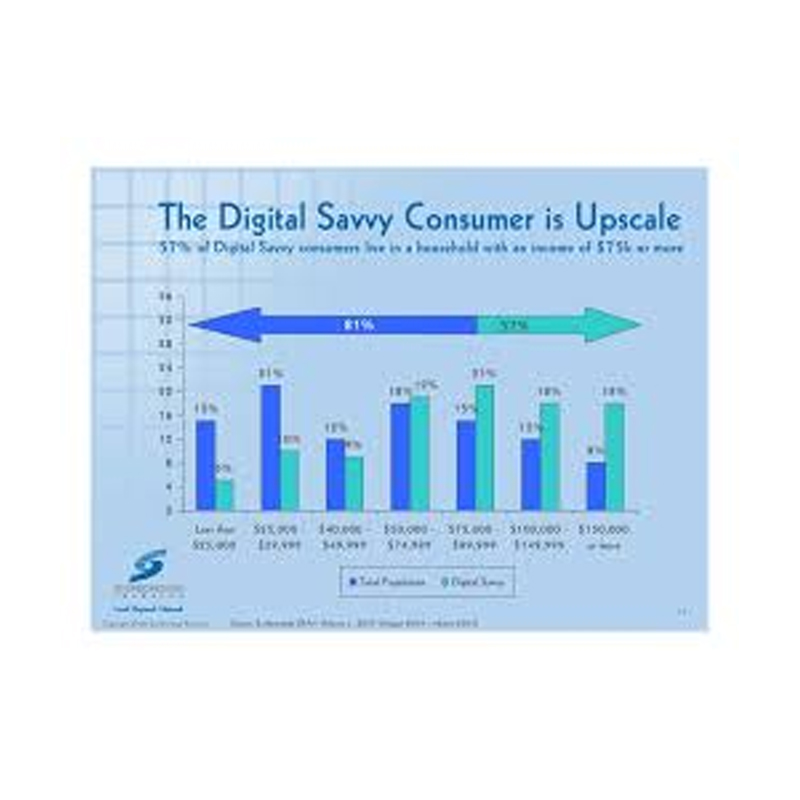
    MUMBAI: US adults whose households have a digital video recorder (DVR) are more upscale than those that do not and are more likely to be heavy readers of magazines and newspapers and are also heavy users of the Internet.according to the latest data from Mediamark Research Inc.,(MRI).

    According to the Fall 2005 MRI data release, 8.6 per cent of US adults reported having a DVR in their household. That percentage rose to 11.2 per cent of adult households in the Spring 2006 release. The survey period for this release was March 2005 to early May 2006.

    The spring 2006 data show that 36.8 per cent of adults with DVR’s have a college education and 17.1 per cent have average household income exceeding $150,000. Within the entire adult population, 25.2 per cent graduated college and 8% have an average income exceeding $150,000, states an official release issued by the research firm.

    Of adults with DVR’s in the household, 15.7 per cent have home values exceeding $500,000 compared with 9 per cent of the entire adult population.

    In terms of media usage, adults in DVR households are 43 per cent more likely to be heavy readers of magazines (defined as the top quintile of users, based on number of magazines read) than the general adult population. They are 40% more likely to be heavy readers of newspapers (defined as the top quintile of readers, based on number of newspapers read) than the general population.

    Adults in DVR households also tend to use the Internet more than households without DVR’s, as they are 81 per cent more likely to be heavy Internet users (the top quintile of users based on number of times used in a month) than the general population, the release adds.

    On the other hand, adults in DVR households tend to watch less TV than households without DVR’s; they are 23 per cent less likely to be heavy TV viewers (the top quintile of users based on number of one-half hours viewed per week) than is the general adult population.

  • CAS switchover modalities will hit broadcasters, MSOs hard; Trai to have final say

    CAS switchover modalities will hit broadcasters, MSOs hard; Trai to have final say

    MUMBAI: A day after the government issued a notification setting 31 December, 2006 as the deadline for the south zones of Delhi, Mumbai and Kolkata to be fully “CAS delivered”, it fired the real bombshell – the framework under which addressability would be introduced in the notified areas.

    The backdated (31 July) notification covers a whole range of conditions that impact all constituents of the cable service delivery chain – broadcasters, cable MSOs, last mile operators.

    It even delves into issues of advertising.

    Interestingly, embedded in the fine print of the notification is a clause that allows the government to extend the time frame for the CAS switchover.

    This could be done if the government believes that the arrangements made by MSOs are inadequate and, therefore, “likely to be against the interests of a substantial portion of the subscribers in any notified area.”

    Tasked with overseeing all this is the cable and broadcast regulator, which has been given extraordinary powers in regards to the switchover to addressability in the areas that fall under the CAS notification.

    The areas for CAS implementation are the Kolkata Metropolitan areas, the areas covered by the Municipal Council of Greater Mumbai and the National Capital Region of Delhi.

    The Telecom Regulatory Authority of India (Trai), will be the final word on not just pricing of pay channels, but also in the granting of permission to cable service providers to offer addressable services, among a host of other extremely restrictive conditions.

    Some of the key issues the notification covers are:

    Interconnect Agreements

    It is Trai that will determine the “standard interconnection agreement to be used for entering into commercial agreements for distribution in the notified areas, of pay or free-to-air channels among (i) broadcasters and multi-system operators; and (ii) MSOs and local cable operators.”

    (a) Trai will set the maximum limits of security deposit and monthly rental for supply, maintenance and servicing of set top boxes of prescribed specifications to the subscribers on rental basis by multi-system operators in the notified areas;

    (b) tariff for the basic service tier along with the minimum number of free-to-air channels to be provided by the multi-system operators or local cable operators to the subscribers in the notified areas;

    (c) regulations for quality of service to be provided by the multi- system operators or local cable operators to the subscribers in the notified areas.

    Channel Pricing

    (1) Every broadcaster will have to declare the nature of each of its channels as ‘pay’ or ‘free-to-air’ channel as well as the maximum retail price of each of its ‘pay’ channels to be charged by the multi-system operators or local cable operators from the subscribers in each of the notified areas.

    (2) Each broadcaster will have to file the declaration of the nature and prices of channels within 15 days of the date of notification by the government.

    (3) If Trai believes the price declared by the broadcaster for any of its pay channels is too high, it has the right to fix and declare the maximum retail price of such a pay channel or fix a general maximum retail price for all pay channels within which the broadcasters may declare their individual prices for each pay channel.

    (4)Any order issued in this regard by the regulator will be binding on the broadcasters and the multi-system operators and local cable operators.

    (5) If a broadcaster fails to declare the price of any of its pay channels within the prescribed time limit, or fails to comply with the direction or refuses or fails to enter into an interconnect agreement with a MSO permitted by the government within the prescribed time limit, the authority can take interim measures to ensure supply of
    signals.

    (6) If the broadcaster does not comply with the directives issued by Trai, the government may, if asked to do so by the regulator, suspend permission to broadcast the channel in the country.

    (7) Every declaration on pricing filed by the broadcaster will remain valid for one Year. If the broadcaster wants to revise the price of any channel or convert a pay channel to free-to-air or a free-to-air channel to a pay channel, it will have to give one month’s notice to the MSO and subscribers:

    Govt Permission For MSOs, Cable Ops To Operate

    (1) No multi-system operator can provide addressable cable services without permission from the government.

    (2) Every MSO has been given 30 days to apply to the I&B ministry for permission to operate, along with a processing fee of Rs 10,000.

    (3) After receiving the application, the I&B ministry has 30 days to either grant or refuse permission on the basis of information that will include existing operational area, actual number of subscribers and addresses of its local cable operators in each of the notified areas, commercial arrangements with the broadcasters and local cable operators, if any, financial strength, management capability, security clearance and preparedness to supply and maintain adequate number of set top boxes for its subscribers, installation of its subscriber management system and compliance with all other quality of service standards that may be specified by Trai.

    (4) In the event of an MSO failing or refusing to enter into interconnect agreements with a broadcaster of a pay channel or an adequate number of local cable operators in the notified areas or violates the terms and conditions laid down, Trai can take interim measures to ensure supply of signals. Though what these interim measures might involve is not spelt out, it would appear to indicate that the licence to operate would in that particular area would be given to some other MSO.

    (5) MSOs violating the terms and conditions laid down by Trai face revocation of their licence.

    Public Awareness Campaign About CAS

    (1) Every MSO will have to adequately publicise to its subscribers for a period of 30 days, either through advertisements in the print and electronic media or through other means (e.g. leaflets, printing on the reverse of the receipts, personal visits, group meetings with subscribers or consumer groups etc.) the salient features of the CAS scheme.

    These will include:-

    (a) A-la-carte subscription rates and the periodic intervals at which such subscriptions are payable for receiving the various pay channels;

    (b) The refundable security deposit and the daily or monthly rental payable for the set-top box and its detailed specifications such as make, model, technical specifications, user manuals and maintenance centres etc.;

    (c) The number and names of free-to-air channels that the multi-system operator will provide to the subscribers and specific placement of each channel in the prime or non-prime bands;

    (d) The prescribed monthly service charge to be paid by each subscriber for receiving the basic tier service and the number of additional free-to-air channels, if any, offered by the MSO.

    (e) The quality of service standards specified by Trai and the arrangements made by the MSO to comply with these standards;

    (f) The subscriber management system established by the MSO to demonstrate the functioning of the STBs and interacts with the subscribers to explain the various financial, logistic and technical aspects of the system for its smooth implementation;

    (g) The arrangements for resolution of disputes between the MSO, LCOs, and subscribers in respect of the quality of service standards, payments and refunds etc.

    (2) The Authority may also arrange public awareness activities in the notified areas either directly or through authorized officers or consumer organizations etc..

    Supply And Installation of STBs

    (1) Every subscriber who wants to receive one or more pay channels shall, during the public awareness campaign or within 15 days after its expiry, apply to any one of the MSOs granted permission either directly or through any of his linked LCOs, to supply and install one or more set top boxes in his premises as per the scheme approved by Trai and deliver the requisite channels through the same:

    Provided that every subscriber shall be free to buy an STB of approved quality from the open market, if available and technically compatible with the MSO’s system. No MSO or cable operator can force any subscriber to buy or to take on rent the STB from him only.

    (2) Every subscriber who wants to receive one or more pay channels can either buy an technically compatible STB from the open market or apply to anyone of the MSOs either
    directly or through any of his linked LCOs, to supply and install one or more STBs in his.

    (3) Every MSO will have to set up and operationalise its subscriber management system within the determined time frame.

    Dispute Resolution Mechanism

    Every multi-system operator shall be obliged to maintain the quality of service as per the standards, including the arrangements for handling complaints and redressal of grievances of the subscribers, as may be determined by regulation or order by the Authority.

    Trai may look into the efficacy of such arrangements and issue necessary directions to the concerned parties for compliance.

    Transition To Addressable Systems

    (1) Immediately on operationalisation of the SMS and the installation of STBs, every MSO will have to provide pay channels in encrypted as well as unencrypted form for a period of not less than 15 days to test out the quality of service, remove any technical or operational snags and enable the subscribers to become familiar with the operation of addressable systems at their end.

    (2) Before the start of the transition period Trai can call for progress or compliance reports from the service providers.

    (3) If Trai is of the opinion that the arrangements made by the MSOs are not adequate and the switchover to CAS is likely to be against the interests of a substantial portion of the subscribers in any notified area, it may recommend to the government an extension of the notified date by such period as in its opinion is the minimum required for the satisfactory completion of the necessary arrangements by the MSOs.

    Advertisements

    No programme shall carry advertisements exceeding 12 minutes per hour, which may include up to ten minutes per hour of commercial advertisements, and up to two minutes per hour of a channel’s self-promotional programmes.

    The Industry Reaction

    The industry, which is already reeling under government pressure, reacted cautiously as the impact of the fine print was still being studied.

    A cable industry representative, who did not want to be identified, blurted out, “The government seems to have tightened the screws well and proper. The norms are very restrictive.”

    Ashok Mansukhani, chief of MSO Alliance (as apex body of MSOs in India), which had waged a legal war against the government on introduction of addressability, was more liberal in approach.

    “The rules are tough, but fair. Still, it needs to be studied in detail to realize the full impact on the industry,” Mansukhani said.

    As the quick notification of the rules caught the industry napping, a sizeable number of stakeholders were taken by surprise.

    “We still haven’t seen the rules in full to study the impact,” NDTV director Narayan Rao said, but added, “We’d do everything to adhere to government norms.”

    A seemingly non-plussed joint MD of Global News Network (managers of CNN IBN and Channel7) Sameer Manchanda said, “Prima facie the rules seem to be stringent, but there should be a level playing field for everybody and all types of platform and importance should be given to self-regulation.”

    Jawahar Goel, vice chairman of Essel Group (the umbrella organization under which Subhash Chandra undertakes various media and entertainment-related businesses) was more circumspect.

    “Jeena yahan , marna yahan; uske siva jana kahan (we have to carry out our business in India, so have little other option),” Goel said taking off on an old Hindi film song from the film Mera Naam Joker (My Name is Joker).

    On a more serious note, Goel opined that the Zee Group has to conduct business in India and has no other option but to abide by government regulations.

    He, however, did not deny that in the short term, the business of all stakeholders are likely to get affected.

    Speaking to Indiantelevision.com over phone from the US, Star Group India CEO Peter Mukerjea felt that certain clauses in the rules would “create an amount of level playing field” as some TV channels go overboard with advertising.

    To a specific question on the government mandating the quantum of commercial airtime, Mukerjea said, “ Star channels do follow the global standard of 10 minutes of advertising per hour, which may not be true for all channels. In that sense a level playing field is created.”

    Making it clear that he hasn’t yet seen the full text of rules for a CAS regime at the time of filing this report, Mukerjea said that the government’s aim seems to be regulating an area that had been left totally unregulated.

    “The positive fallout of such a norm is that there is also a scope for advertising prices to go up if the demand (for airtime) is more and supply is less. And, all this depends on compelling content,” he said.

    However, a more forthcoming view came from a MSO, which said beyond the hype one should appreciate the fact that the government has tried to regulate the cable industry and recognized it by “bringing it under regulation and defining its services.”

    The MSO added that the industry should have “seen it coming” as the much touted self-regulation was almost absent in the Indian broadcast and cable industry.

    “At a time when self regulation is not there, the government is doing what it should do: specify the norms of various services,” the MSO said.


  • MIH Group forays into Indian internet and digital space

    MIH Group forays into Indian internet and digital space

    MUMBAI: MIH, part of the multinational media group Naspers Limited, is making a foray into the Indian internet and digital space.

    “MIH plans to develop internet and mobile applications for the growing online Indian market. India is an attractive market, which is forecast to show strong economic growth going forward. Internet penetration which is currently only at 4.5 per cent is expected to grow rapidly over the next five to ten years offering many opportunities in online communication. MIH seeks to capitalise on these opportunities in the long run by building strong online communication platforms. MIH Internet’s first office will be based in Gurgaon, Haryana,” said spokesperson for MIH Internet (India) Craig White.

    MIH operates pay television and internet subscriber platforms and related technologies in over 50 countries. Its significant operations are located in South Africa, elsewhere in Africa, Brazil, China, Thailand, The Netherlands, Greece and Cyprus. Given the huge growth in the internet and mobile VAS space in India, the group is now planning investments here.

    The group would be launching a range of innovative applications in the Indian internet and mobile space. Its aim is to create a personal reference world of entertainment and information, which can be accessed wherever you are, whenever you want.

    MIH creates media content, builds brand names around it, and manages the platforms distributing the content. The content is delivered in a variety of forms and through a variety of channels, including television platforms and internet services.

    With a view to expand offices across the nation, the group plans to set up its first office in Gurgaon and hire talent for various functions ranging from engineering, R&D, technology, creative, marketing, sales, support etc.

    The MIH group is exploring media opportunities in emerging markets where strong economic growth is expected. Within emerging markets the specific focus is on the BRICSA countries – Brazil, Russia, India, China and the rest of sub-Saharan Africa.

    In China, the group has an investment in the pioneer instant messaging platform, Tencent, which is a developer and operator of innovative real-time communication and online entertainment technologies and services. Tencent’s instant messaging product, QQ, processes more than three billion messages every day and is one of the top 10 portals globally.

  • HCL appoints Puri as SVP retail, media & entertainment in North America

    HCL appoints Puri as SVP retail, media & entertainment in North America

    MUMBAI: HCL Technologies Ltd has appointed Karan Puri to the position of senior vice president for North America, to manage the company’s retail, media, and entertainment groups.

    HCL Technologies provides integrated services in technology, business process operations (BPO) and infrastructure management, enabling customers to transform their businesses, in markets worldwide.

    “Today, these three market groups in North America are poised for transformation and HCL aims to lead their transformation initiatives, which requires a leader of Karan Puri’s caliber, expertise and vision. Karan brings over 20 years experience in IT, BPO and IP development, managing global clients In India, Europe and the US, thereby providing HCL’s North American businesses with a go-to leader who is skilled at solving some of the toughest IT Issues around. These are exciting times, and Karan’s Mission to drive these groups at an executive level, demonstrates HCL’s commitment to be a market leader In the coming quarters,” said HCL Technologies America president Shaml Khorana.

    In the quickly evolving digital media space, adoption of new generation technologies like digital asset management (DAM) and digital rights management (DRM) are leading the charge. With new distribution channels like broadband and wireless networks, licensed digital content, and content security, the industry is investing and consolidating their revenue models. This means leading investments in platform shifts, and managing new revenue models dynamically. Likewise, the gaming and entertainment industry, too, is morphing to meet the Internet-led explosion in consumer traffic.

    The company’s media and entertainment division has the privilege of very strong relationships with key industry players such as GTECH, Thomson Financial, Reed Elsevier, Wolters Kluwer, Lexis Nexls and others.

    In retail, in addition to the thought leadership provided through its joint ventures with the $5 billion dollar Jones Apparel Group; HCL, under Puri’s leadership, will build scale in specific micro-verticals, by investing in emerging initiatives like supply chain visibility, RFID and Master Data Management (MDM).

  • Adelphia closes asset sale to Time Warner Cable & Comcast

    Adelphia closes asset sale to Time Warner Cable & Comcast

    MUMBAI: US cable television company Adelphia Communications Corporation has completed the sale of all of its assets to Time Warner Cable and Comcast Corporation for the aggregate consideration of approximately $12.5 billion in cash and approximately 16 percent of the equity of Time Warner’s cable subsidiary.

    As a result of the sale, Adelphia will no longer operate as a U.S. cable company. Its approximately 4.8 million customers will be distributed between Time Warner Cable and Comcast.

    Teams from the buyers and Adelphia have worked together for months to ensure an orderly transition for customers, communities and the almost 13,000 Adelphia employees who will transfer to Time Warner Cable and Comcast, states an official release.

    Concurrent with the closing of the sale, Adelphia also consummated a plan of reorganization for the former joint ventures with Comcast (Century-TCI and Parnassos), resulting in the repayment in full of approximately $1.7 billion of indebtedness. Adelphia will hold the remaining sale proceeds for distribution to its creditors through a Plan of Reorganization as it seeks to resolve its Chapter 11 bankruptcy case in the US Bankruptcy Court for the Southern District of New York.

    On 24 July 2006 Adelphia announced an agreement on a framework for a Plan of Reorganization intended to result in a fourth quarter 2006 emergence from Chapter 11. The agreement enjoys widespread support among Adelphia’s major unsecured creditors, including the Official Committee of Unsecured Creditors, though several constituencies do not support it. Adelphia’s obligations under the agreement and the reorganization plan envisioned by it are subject to approval by the Bankruptcy Court.

    UBS Investment Bank and Allen & Company LLC served as Adelphia’s financial advisors for the sale transaction. Sullivan & Cromwell LLP served as Adelphia’s legal advisor for the sale. Willkie Farr & Gallagher LLP continues to serve as Adelphia’s legal counsel for the Chapter 11 bankruptcy process.

  • AOL to launch new video portal

    AOL to launch new video portal

    MUMBAI: AOL, live and on-demand entertainment video programming and video search provider, has announced that it will preview a beta version of its new AOL Video portal later this week.

    Available for free at http://www.aolvideo.com, the new AOL Video is an all-in-one, high-quality entertainment destination to find, watch and share millions of videos across the Web, informs an official release.

    New features on the AOL video portal include, over 45 new video-on-demand content channels with thousands of hours of video programming from entertainment brands, organised and accessible via video search, browse, or an interactive programming guide; free streaming content as well as the ability to purchase and download full-length content that can be viewed on multiple devices and PCs, online or offline; and access to millions of music videos, news clips, movie trailers, full length TV shows, and more, adds the release.

    It includes more than 45 new video channels with content from entertainment brands including A&E Television Networks, MTV Networks, Turner Networks, Warner Bros. Entertainment, among others.

    “AOL has long been a leader in online video and with the new AOL Video portal we have created the best and easiest place online for anyone on the Web to find, watch and share the videos they’re looking for,” said AOL executive VP Kevin Conroy.

    “From originally produced and licensed programming to branded online video-on-demand channels to user-created videos that people create, upload and share on the Web themselves, AOL Video is truly the first one-stop source that brings the best videos on the Web together in one place and gives consumers more choice. If a video is out there, you’ll find it here on AOL Video.com,” he adds.

    AOL Video also includes AOL Video Search, which is based on video search technology from Truveo and Singingfish, and a video player that can go full screen without losing picture quality and that supports AOL’s exclusive Hi-Q video format to watch DVD-quality videos online.

    In addition, the portal includes AOL’s new UnCut Video offering, which makes it easy to upload and share videos online by providing full device support, letting consumers upload and share videos directly from their camcorder, Webcam, video-enabled mobile phone, as well as their PC.

  • US adults with DVR’s belong to upscale and print-oriented group: Study

    US adults with DVR’s belong to upscale and print-oriented group: Study

    MUMBAI: US adults whose households have a digital video recorder (DVR) are more upscale than those that do not and are more likely to be heavy readers of magazines and newspapers and are also heavy users of the Internet.according to the latest data from Mediamark Research Inc.,(MRI).

    According to the Fall 2005 MRI data release, 8.6 per cent of US adults reported having a DVR in their household. That percentage rose to 11.2 per cent of adult households in the Spring 2006 release. The survey period for this release was March 2005 to early May 2006.

    The spring 2006 data show that 36.8 per cent of adults with DVR’s have a college education and 17.1 per cent have average household income exceeding $150,000. Within the entire adult population, 25.2 per cent graduated college and 8% have an average income exceeding $150,000, states an official release issued by the research firm.

    Of adults with DVR’s in the household, 15.7 per cent have home values exceeding $500,000 compared with 9 per cent of the entire adult population.

    In terms of media usage, adults in DVR households are 43 per cent more likely to be heavy readers of magazines (defined as the top quintile of users, based on number of magazines read) than the general adult population. They are 40% more likely to be heavy readers of newspapers (defined as the top quintile of readers, based on number of newspapers read) than the general population.

    Adults in DVR households also tend to use the Internet more than households without DVR’s, as they are 81 per cent more likely to be heavy Internet users (the top quintile of users based on number of times used in a month) than the general population, the release adds.

    On the other hand, adults in DVR households tend to watch less TV than households without DVR’s; they are 23 per cent less likely to be heavy TV viewers (the top quintile of users based on number of one-half hours viewed per week) than is the general adult population.