Category: News Headline

  • ITC Master Chef turns up the heat with new fries and kebab delights

    ITC Master Chef turns up the heat with new fries and kebab delights

    MUMBAI: The freezer aisle just got a little hotter and a whole lot tastier. ITC Master Chef is turning up the flavour dial with two bold new entries to its frozen food spread: Piri Piri French Fries and Chicken Malai Seekh Kebab.

    For those who like their snacking with a side of spice, the Piri Piri French Fries bring a fiery twist to a comfort classic. Made from quality potatoes and packed with two sachets of piri piri seasoning, they’re crisp, punchy, and addictive, perfect for air frying or deep frying when that craving hits.

    Balancing the heat with something mellow, the Chicken Malai Seekh Kebab steps in with creamy indulgence. Rich in protein and curated with subtle spices and dairy notes, it promises a melt-in-mouth, restaurant-style experience that can be ready in minutes whether on the tawa, in the oven, or microwave.

    “With consumers seeking both taste and convenience in their everyday snacking, we are delighted to launch two new products,” said ITC Limited vice president and business head for frozen and fresh foods Ashu Phakey. “The Chicken Malai Seekh Kebab is a treat for kebab lovers, while the Piri Piri Fries bring home the bold, zesty flavours consumers love.”

    True to ITC Master Chef’s culinary promise, both products are freshly frozen, crafted with hygiene and care, and backed by the brand’s hallmark of quality. They join recent launches like Sabudana Tikki, Hara Bhara Kebab, and Punjabi Samosa, strengthening the brand’s hold over India’s frozen snacking market.

    Now sizzling their way to leading retail and e-commerce shelves, ITC Master Chef’s new duo proves one thing whether you like it hot or mild, this brand has your cravings covered.

  • Spykar and Vidyut Jammwal stitch together stories in new podcast drop

    Spykar and Vidyut Jammwal stitch together stories in new podcast drop

    MUMBAI: Looks like Spykar is weaving more than denim, it’s stitching together stories worth listening to. The homegrown fashion brand has dropped the second episode of its podcast series, It’s in our jeans, featuring actor and martial artist Vidyut Jammwal in an unfiltered, heart-to-heart chat with Spykar co-founder and CEO Sanjay Vakharia.

    Following the success of its debut episode, the series continues to celebrate Indian grit, creativity, and ambition through candid conversations. In this latest instalment, Vidyut takes listeners on a journey through his modelling days, film career, and Hollywood debut: all while reflecting on failure, discipline, and the art of staying grounded.

    “It’s always a pleasure speaking with Vidyut, and sharing our camaraderie with the world through this podcast was truly special,” said Vakharia. “His discipline and energy are infectious. This episode offers a deep dive into his life and mindset that’s sure to inspire many.”

    Fittingly recorded at Spykar’s stylish corporate headquarters, the episode captures the brand’s authenticity and the actor’s raw honesty. Jammwal fondly recalls his first big modelling campaign for Spykar itself calling it a full-circle moment. “Imagine going from modelling for a brand to acting, and then endorsing it again. That’s an achievement,” he said.

    On failure, he offered a striking perspective: “The difference between a student and a master is that the student fails a few times, but a master fails a zillion times. I don’t see failures as failures. Nothing in my life has gone my way and thank god for that.”

    With new episodes dropping every fortnight, ‘It’s in our jeans’ continues to bring India’s finest voices to the forefront. The podcast is streaming on Spotify, Youtube, and Apple podcasts, making it easy to tune in wherever you are.

  • Spicejet lights up the skies with special diwali flights to Ayodhya

    Spicejet lights up the skies with special diwali flights to Ayodhya

    MUMBAI: Talk about taking Diwali celebrations to new heights! Spicejet is all set to spread festive cheer by launching special daily non-stop flights to Ayodhya, just in time for the festival of lights.

    Starting 8 October 2025, the airline will connect the holy city with Delhi, Bengaluru, Ahmedabad, and Hyderabad, making it easier than ever for devotees and travellers to visit the newly built Lord Ram temple and soak in Ayodhya’s spiritual glow.

    The flights will roll out in phases, ensuring smooth travel for those keen to celebrate Diwali in the most divine destination of all. Spicejet is also exploring services from Mumbai, further expanding access during the busy festive and winter season.

    “There could be no better occasion than Diwali to visit Ayodhya, the birthplace of Lord Ram,” said Spicejet chief business officer Debojo Maharshi. “Our new daily flights from key metros will ensure affordable and convenient travel, allowing passengers to celebrate the festival in its truest spirit.”

    With this move, Spicejet continues to strengthen its domestic network and reaffirm its commitment to making travel not just accessible, but also auspiciously affordable.

    So if you’ve been waiting for a sign to plan that spiritual getaway, consider this your boarding call from the gods themselves. 
     

  • Pantaloons stitches a new style story with Samantha Ruth Prabhu

    Pantaloons stitches a new style story with Samantha Ruth Prabhu

    MUMBAI: Pantaloons just got its perfect fit and it’s none other than Samantha Ruth Prabhu. The fashion icon and actor has joined as the brand’s first-ever ambassador, marking a stylish new chapter in Pantaloons’ journey towards trend-forward, self-expressive fashion. To celebrate the partnership, the brand has unveiled its festive campaign, ‘Spark Your Imagination’, which urges modern India to dream, create and flaunt their unique style. The campaign captures Pantaloons’ mission to move fashion beyond fabric making it about play, personality, and fearless creativity.

    “Spark Your Imagination is more than a festive campaign, it’s the start of a new chapter for Pantaloons,” said Pantaloons and Ownd! CEO Sangeeta Tanwani. “Samantha embodies exactly what fashion stands for today confidence, versatility, and experimentation.”

    Echoing the sentiment, Samantha Ruth Prabhu said, “Fashion to me is self-expression, and Pantaloons aligns perfectly with that belief. The campaign celebrates confidence and creativity values I deeply connect with.”

    Known for her bold fashion choices and effortless glamour, Samantha mirrors Pantaloons’ ethos of being chic yet comfortable, a style muse for the modern Indian shopper who isn’t afraid to stand out.

    The festive film for ‘Spark Your Imagination’ is a visual feast from shimmering lanterns to blooming flowers, it paints a world where every corner sparks a new idea for self-expression. Conceptualised by Teresa Sebastian and Dimple Parmar of Talented, the campaign celebrates individuality: “Style is one size fits one. Every piece of clothing is a spark, waiting to be made your own,” they said.

    Rolling out across television, digital, social media, and in-store experiences, the campaign brings Pantaloons’ new proposition to life that fashion isn’t just about what you wear, but what you create.

    Because this festive season, Pantaloons isn’t just setting trends, it’s sparking imaginations.

  • Rudy fires poll shot on Live Times’ Point Blank

    Rudy fires poll shot on Live Times’ Point Blank

    MUMBAI: It was no political tea break on Point Blank, it was all straight talk. Senior BJP leader and former union minister Rajiv Pratap Rudy declared that the people of Bihar have already made up their minds in favour of the NDA, as he joined journalist Deepak Chaurasia for an exclusive interview on Live Times’ flagship prime-time show Point Blank.

    Confident and composed, Rudy claimed the alliance was poised for a comfortable victory in the upcoming state polls, adding that “the mood on the ground is clear and consistent.”

    Live Times founder Dilip Singh, said the episode aims to bring a “fresh and factual perspective” to the political narrative ahead of the Bihar elections. “Point Blank isn’t about sensationalism; it’s about hearing the truth directly from the source,” he noted.

    Viewers can catch the full interview on 5 October at 8 PM exclusively on Live Times, India’s first global multicast news hub, available on DD Free Dish (100), Tata Play (539), Airtel Digital TV (385), Dish TV (665), Sikka Cable (519), and Jio TV (359).

    The show can also be streamed live on the Live Times website and social platforms including Youtube, Facebook, Instagram, and X.

    Because when it comes to Bihar’s ballot buzz, Live Times promises exactly what it stands for: complete truth, whatever it takes.

  • Lodha hires a design-minded property boss

    Lodha hires a design-minded property boss

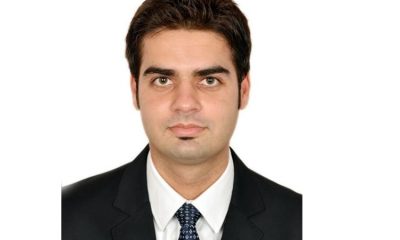
    MUMBAI: Lodha group has hired Anubhav Gupta as chief executive of its retail business. The appointment, which took effect in September, brings a property veteran with an unusual pedigree: Gupta is as comfortable talking sustainability metrics as he is flogging luxury flats.

    Gupta spent a decade at Godrej Properties, where he rose to run the Vikhroli project, the company’s flagship mixed-use development in Mumbai. At his peak, he was responsible for just under half of Godrej Properties’ profit after tax—a hefty chunk for one executive to carry. He also wore multiple hats as chief sustainability officer and founder of the company’s in-house design studio, which churned out award-winning products across 170m square feet of real estate in 12 cities.

    Before Lodha, Gupta spent 16 months as chief operating officer at DLF, heading the property giant’s ultra-luxury business. His earlier career reads like a global tour: he taught urban design at MIT and the Wentworth Institute of Technology in Boston, worked as an urban planner for the Chicago Transit Authority, and held senior roles at architectural practices RTKL and RMJM in London and Hong Kong.

    Gupta is a fellow of the Royal Institution of Chartered Surveyors and was named among Asia’s 40 leading designers under 40 by Perspective Global. His work at Godrej earned plaudits for blending design thinking with agile innovation, a buzzword-heavy approach that nonetheless delivered results.

    At Lodha, his brief is to oversee the developer’s retail operations—a natural extension for a man who built his reputation on mixed-use projects. Whether he can replicate his Godrej success in a new setting remains to be seen. But Lodha is clearly betting that a design-savvy executive with a track record in profitability is worth the gamble.

  • Max Fashion promotes insider as CEO

    Max Fashion promotes insider as CEO

    MUMBAI: Retail empires are not built by the faint-hearted. Sumit Chandna, freshly installed as chief executive of Max Fashion, knows this better than most. The 25-year veteran, promoted from deputy chief executive at Lifestyle International, has spent a career extracting profits from India’s cutthroat retail trenches.

    His record is formidable. At every stop—Shoppers Stop, Hypercity, Aditya Birla Retail, Bata India and Landmark Group—Chandna has delivered the same brutal formula: fatter margins, leaner costs, higher sales. It is a skill honed across hypermarkets, department stores and specialist retail, from high fashion to groceries.

    A graduate of the National Institute of Fashion Technology in Delhi, Chandna earned his stripes at Shoppers Stop, where he launched India’s first designer co-brand, Kasba, with Raghavendra Rathore. At Hypercity, he built merchandising systems from scratch and delivered results 70 per cent above plan with margins six percentage points higher than target. During an 11-year stint at Aditya Birla Retail, he rose to chief merchandising officer, pushing promotional sales from eight per cent to 23 per cent in four months and launching profitable private-label lines.

    Three years at Bata India saw him juggle retail operations and merchandising before Landmark Group poached him in 2022 to run Max as deputy chief executive. Now he has the corner office.

    Chandna is also a certified executive coach who has recruited talent from top business schools across India and Asia, lectured at management campuses and attended leadership programmes at Harvard and IMD in Lausanne. He won the Aditya Birla Group chairman’s award for exceptional contribution—no small feat in a conglomerate that size.

    His mandate at Max is simple: keep the juggernaut rolling. In announcing his promotion, Chandna promised to lead the brand into its “next phase of growth, innovation, and impact”. Strip away the corporate speak, and it means the same thing it always has: sell more, spend less, make more.

  • Cricket’s ruling body wants women to hack the future of sports technology

    Cricket’s ruling body wants women to hack the future of sports technology

    DUBAI: Cricket’s mandarins have never been mistaken for tech visionaries. But the International Cricket Council is taking a punt on innovation with Beyond Boundaries, a worldwide hackathon that demands every competing team include at least one woman—and promises cold, hard cash to the best all-female squad.

    The challenge, powered by Ignyte, a Dubai-based start-up accelerator, runs through 2025–2026 and invites students, start-ups and scale-ups to reimagine sport in the age of artificial intelligence. Though anchored in cricket, the hackathon welcomes ideas spanning any sport. The grand finale arrives in January 2026, when the most promising teams will pitch their wares on an international stage.

    Winners will pocket prize money, gain access to mentors and industry heavyweights, and—crucially—get pilot opportunities with the ICC and its partners to test their solutions in real sporting arenas. That is no small carrot for ambitious founders looking to crack a multi-billion-dollar industry.

    The competition zeroes in on three areas. First, boosting visibility and engagement for women’s sports through digital platforms and AI-driven fan models. Second, crafting next-generation experiences for younger audiences with interactive, personalised tech. Third, improving athlete health, performance and inclusivity using wearables, machine learning and smart analytics.

    Applications close on 19 December 2025. The ICC’s bet is simple: get more women into sports tech, and everyone wins. In a sector long dominated by blokes, that would count as boundary-breaking indeed.

  • What TRAI’s digital audio rollout recommendations mean for the radio folks?

    What TRAI’s digital audio rollout recommendations mean for the radio folks?

    NEW DELHI: India’s telecom regulator has thrown struggling FM broadcasters a lifeline, recommending a graduated payment structure for digital radio spectrum that defers most costs for a decade while the receiver ecosystem develops.

    The Telecom Regulatory Authority of India (TRAI) proposes auctioning two digital frequencies in each of 13 major cities—including Mumbai, Delhi, Chennai and Bengaluru—at reserve prices ranging from Rs 20.52 crore to Rs 194.08 crore. Crucially, successful bidders choosing instalment payments would pay nothing for digital spectrum components during the first five years, when device adoption will be negligible.

    The phased approach reflects harsh commercial realities. Private FM radio advertising revenues have flatlined at Rs 1,819 crore in 2024-25, barely recovering to 2015-16 levels despite more operational channels. The sector faces mounting competition from music streaming platforms and shifting listener habits.

    “The business model of radio broadcasters is primarily driven by advertising revenues, which is closely linked to listener reach,” TRAI notes in recommendations released on 3 October 2025. “Without affordable receivers, broadcasters may have little incentive to adopt digital radio.”

    Under the staggered payment plan, analogue spectrum costs would be recovered in equal instalments over 15 years. But digital spectrum fees—representing one-third of total valuation—would be waived entirely for five years, then recovered at one-third rates from years six to ten, and two-thirds rates from years 11 to 15. All payments would protect net present value using State Bank of India’s marginal cost of lending rate, currently 8.75 per cent.

    The delay acknowledges brutal adoption timelines. TRAI estimates two years for service rollout, three more for widespread device availability, and another five to reach break-even—consuming two-thirds of the 15-year authorisation period before meaningful returns materialise.

    Digital radio allows multiple channels on single frequencies through simulcast transmission—one analogue channel plus three digital channels and one data channel per frequency. But the technology requires new receivers. Mobile handset manufacturers have shown little interest in integration, despite government advisories. Vehicle infotainment systems may take 15 years to reach full penetration given replacement cycles.

    The regulator stops short of mandating a specific technology, recommending government choose between HD Radio and Digital Radio Mondiale (DRM) after consulting industry. “Selection of technology among the two technologies suitable in VHF Band-II for deployment in India…may be done in consultation with the industry, including radio broadcasters and radio receiver manufacturers,” TRAI states.

    Both technologies are recognised by the International Telecommunication Union. HD Radio, used in North America, requires 400 kHz bandwidth. DRM needs just 300 kHz and is open-source, avoiding royalty fees. The authority warns against allowing multiple standards, citing interoperability nightmares and market fragmentation.

    Existing FM broadcasters could voluntarily migrate to simulcast by paying the difference between auction prices and their proportionate remaining licence fees. A six-month window would follow auctions for migration decisions.

    The recommendations tackle infrastructure bottlenecks head-on. Common transmission infrastructure in existing cities cannot accommodate new digital channels. TRAI proposes either broadcaster consortiums or assignment to Broadcast Engineering Consultants India Ltd  should create new facilities within three months. Mandatory co-location with government infrastructure would be scrapped.

    Prasar Bharati, the public broadcaster, should offer land, tower and transmission infrastructure at concessional rates whilst recovering operational expenses, TRAI adds.

    Annual authorisation fees would be set at four per cent of adjusted gross revenue for most cities, dropping to two per cent for three years in northeastern states, Jammu and Kashmir and island territories. The regulator proposes a new category of radio broadcasting infrastructure providers authorised to build and lease facilities commercially.

    Controversially, TRAI recommends allowing terrestrial radio streaming without user controls like download or playback. This extends reach globally whilst the authority dismisses potential copyright concerns as beyond its remit, noting broadcasters “shall be subject to Copyright Act, 1957.”

    The measured rollout—just two frequencies per city initially—contrasts sharply with July 2025’s disastrous auction, where only 63 of 730 channels found buyers across 234 cities. That debacle underscores sector weakness and justifies cautious expansion.

    Whether broadcasters bite remains uncertain. The staggered payment plan reduces upfront barriers, but fundamental economics remain challenging. Streaming platforms offer unlimited choice and user control. Digital radio offers better audio quality and emergency alert capabilities, but competes for ears in an increasingly crowded audio landscape.

    TRAI’s recommendations now await government action. Implementation timelines are unclear, but the regulator urges swift technology selection before financial bidding begins. The decade-long journey to digital radio viability starts with that choice.

  • TRAI dials up the future with digital radio tune for 13 Indian cities

    TRAI dials up the future with digital radio tune for 13 Indian cities

    MUMBAI: Static is out, digital is in. The Telecom Regulatory Authority of India (TRAI) has turned up the volume on the country’s radio landscape with fresh recommendations to kick-start digital radio broadcasting in India’s biggest markets.

    The policy blueprint covers four A+ cities Delhi, Mumbai, Kolkata and Chennai and nine A cities including Bengaluru, Hyderabad, Pune, Ahmedabad and Jaipur. Reserve prices have been set for spectrum auctions, ranging from a hefty Rs 194.08 crore for Mumbai to Rs 20.52 crore for Kanpur.

    So what’s the buzz? Under TRAI’s plan, new broadcasters will launch in simulcast mode, meaning one frequency can now beam one analogue, three digital and one data channel. Existing FM players will be allowed to migrate voluntarily within six months of auctions, by paying a migration fee linked to auction prices and their earlier entry fees.

    The regulator is also pushing for a single digital radio technology standard for India, with the government tasked to finalise it either through consultations or embedding it into the spectrum auction process.

    Broadcasters opting in must get their simulcast services on air within two years, with licences lasting 15 years. A sunset date for analogue FM will come later, depending on digital adoption.

    The money matters are equally detailed: an annual authorisation fee of 4 per cent of Adjusted Gross Revenue for most cities, dropping to 2 per cent for the first three years in border, hilly and island territories. Flexible payment instalments, spread across 15 years, mirror telecom spectrum auctions protecting the government’s Net Present Value (NPV) while easing upfront pressure on broadcasters.

    In a move sure to please commuters and audiophiles, TRAI has urged the government to push manufacturers to ensure digital receivers are built into mobile phones and car infotainment systems. Meanwhile, Prasar Bharati may be asked to share its towers and infrastructure with private players at concessional rates.

    From opening auctions for two new spot frequencies per city to freeing broadcasters to choose their own genres, the roadmap aims to democratise India’s airwaves while adding sparkle to an industry often accused of playing the same old tune.

    For listeners, it means better sound quality, more choice and even value-added services riding on those data channels. For broadcasters, it’s a new stage to perform on and this time, the spotlight is firmly digital.