Category: News Headline

  • India’s news industry is eating itself, warns veteran publisher

    India’s news industry is eating itself, warns veteran publisher

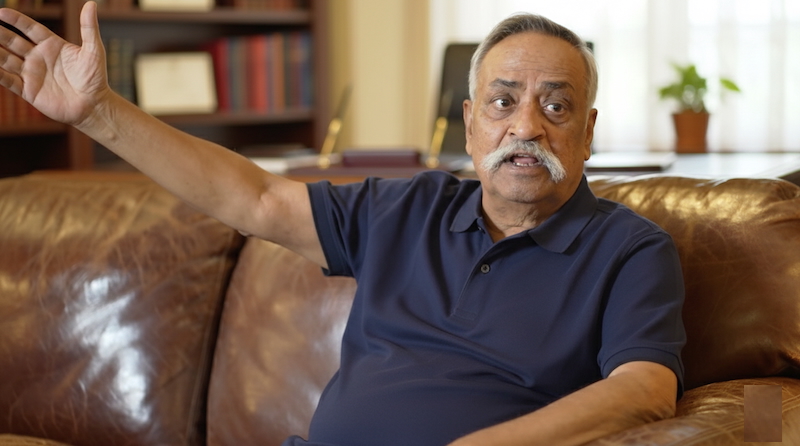
    MUMBAI: Fifty years in the media business buys you the right to speak bluntly. Aroon Purie exercised that right at Ficci Frames 2025 in Mumbai, delivering a blistering critique of India’s news industry—an ecosystem he says is simultaneously massive, unprofitable and increasingly compromised.

    The numbers are staggering. India has over 140,000 registered publications, 375 twenty-four-hour news channels (with more in the pipeline), and a broadcasting industry employing 1.7 million people. Delhi alone wakes up to dozens of English and regional newspapers daily. No other country comes close to this scale. Yet 99 per cent of news channels lose money.

    The problem, Purie argues, is structural. India’s news industry runs on what he calls “raddi economics”—newspapers priced so low that readers profit from selling them as scrap. Broadcasters pay cable operators carriage fees just to reach viewers, a practice that persisted even after digitisation. The Telecom Regulatory Authority of India’s price controls strangle market forces, treating cable television like wheat or rice. “The government has made a mess of the broadcasting industry due to lack of foresight and regressive policies,” Purie said.

    Worse still is the funding model. With consumers paying next to nothing, advertisers bankroll nearly the entire industry. “When journalism’s survival depends almost entirely on advertising from corporations and governments, its independence is under a constant threat of compromise,” Purie warned. The hand that gives can also take away.

    Enter what Purie calls “billionaire news channels”—industrial houses launching news operations not as businesses but as tools for influence and access. They have deep pockets and no profit motive, destroying economic models for legitimate players. “Their entrance makes the public believe that every channel is a mouthpiece for a vested interest,” he said. It’s the only business, Purie noted drily, where the industry loses money yet people queue to enter it.

    Digital promised salvation but delivered more of the same. Publishers chased scale and eyeballs, giving content away for free. Google, Facebook, YouTube and Twitter became the world’s “new editors-in-chief”, controlling distribution and monetisation whilst producing no journalism. They hoover up over 70 per cent of total media revenue—digital advertising now claims 55 per cent of all ad spending—leaving crumbs for actual newsrooms. The algorithm rewards outrage and virality, not depth or accuracy. “Newsrooms that once invested in reporters now have to invest in SEO specialists,” Purie said.

    Artificial intelligence poses the next existential threat. AI can scrape, synthesise and regurgitate news without credit or revenue, summarising five articles into one paragraph. “What happens to the original news organisations—the ones who pay reporters and fight court cases—when our content is scraped?” Purie asked. It’s a question the industry is only beginning to grapple with.

    Purie, whose India Today Group reaches 750 million viewers, readers and subscribers, doesn’t claim to have all the answers. But he’s clear about the solution’s shape: stop apologising for journalism’s value, innovate business models, and persuade audiences that credible news is a public good with a price. “A subscription is not just a transaction; it’s a vote for the kind of media you want to exist,” he said.

    After five decades navigating disruption—from print to television to digital to AI—Purie’s diagnosis is stark. The old models are broken, the new gatekeepers ruthless, and professionally generated content under siege. Yet he remains defiant. “Disruption is not the enemy, it’s the new normal,” he said. “The real question is, do we have the courage, imagination, innovation, resilience and integrity to seize it?”

    Whether India’s news industry can answer that question may determine the health of its democracy. No pressure, then.

  • Motorola powers up with moto g06 Power launch

    Motorola powers up with moto g06 Power launch

    MUMBAI: If endurance had a smartphone, it would be the moto g06 Power. Motorola has unveiled its latest entry-level powerhouse, packing a segment-leading 7000mAh battery that promises up to three days of continuous use, perfect for marathon calls, streaming sessions, or non-stop gaming.

    The device doesn’t just last long, it looks and plays the part. Boasting a massive 6.88” HD plus display with a 120Hz refresh rate, Water touch technology, and Dolby Atmos stereo speakers, the moto g06 Power delivers an immersive entertainment experience straight from your hand.

    Photography enthusiasts get a 50MP Quad pixel rear camera and an 8MP front shooter, capturing vivid, detailed shots in any lighting. Meanwhile, the Mediatek helio G81 extreme processor with up to 12GB RAM ensures smooth multitasking, while Android 15 and Moto’s UX features provide personalisation, security, and effortless usability.

    Wrapped in Pantone-curated vegan leather finishes: Tapestry, Laurel Oak, and India-exclusive Tendril, the phone combines style with durability, featuring IP64 water resistance and Corning Gorilla glass 3. Fast charging delivers up to seven hours of power in just 15 minutes, making downtime practically obsolete.

    Available from 11th October on Flipkart, Motorola.in, and leading stores across India for Rs 7,499, the moto g06 Power sets a new benchmark in the entry-level segment, proving big things come in sleek, long-lasting packages.

  • Sam Balsara warns marketers not to lose the plot in the age of digital frenzy

    Sam Balsara warns marketers not to lose the plot in the age of digital frenzy

    MUMBAI: When the world is scrolling, swiping, and snacking on content, Madison World chairman Sam Balsara reminded marketers at Ficci Frames 2025 that branding remains the heartbeat of advertising. Opening with his talk “A Marketer’s Losing Fame in Branding”, Balsara mixed wit with insight, calling out the obsession with short-term performance media and urging a return to storytelling that builds lasting emotional connections.

    Reflecting on a career spanning 8 years in marketing, 8 years in advertising, and 37 years running his own agency, Balsara quipped that in India, “everybody thinks they are an advertising expert.” Yet despite decades of experience, he painted a sobering picture of the current marketing landscape: urban consumption in India has been declining for five consecutive quarters, pushing marketers to channel increasing shares of their budgets into performance media such as search, e-commerce, activation, and sampling. While these tactics are effective for immediate sales, Balsara cautioned that over-reliance is eroding the long-term ROI of advertising investments.

    He reminded the audience that the global advertising industry, already worth 270 billion dollars in 1997, is projected to surpass 1 trillion dollars this year, with 70% of the spend now going digital. “Marketers are not wrong to follow consumers online, but we must understand the nature of digital consumption,” he noted. “Most online engagement is short, quick, and snackable. It’s easy to measure, but much harder to emotionally connect.”

    Balsara then revisited the fundamentals: “What is branding? It’s more than a logo, a tagline, or a design. It’s about shaping perception, building trust, differentiating from competitors, and establishing a lasting emotional bond.” He emphasised that emotional appeal is twice as effective as rational messaging and that storytelling remains the most powerful tool for brand building. Over 50 years of experience had taught him that ads with strong narratives and emotional content consistently outperform transactional messages.

    Supporting this, he cited multiple cross-media studies showing that TV ads excel at creating emotional connections. The rise of connected TV (CTV) in India with 60–65 million homes and counting offers advertisers the chance to combine digital agility with the immersive, story-driven impact traditionally associated with television. CTV delivers a “lean-back” viewing experience that enables 20–30 second emotional ads with a storyline, which are far more effective than brief digital clips for establishing memory and preference.

    A US study conducted by Comcast and Media Science reinforced this point. The study compared ad recall and purchase intent across mobile digital platforms versus TV/CTV environments. The findings were striking: new brands saw 3.4x better recall on TV versus mobile digital, while established brands saw 4.3x improvement. Purchase intent was roughly 30 per cent higher when ads ran on TV first, and combining TV with subsequent digital exposure further amplified results. Balsara underscored that these insights are directly applicable in India: launching campaigns on TV or CTV before digital platforms maximises emotional impact and ROI.

    He also offered practical guidance on budget allocation. Drawing on research by two contemporary scientists, Balsara advocated a 60-40 split, with 60 per cent of marketing budgets dedicated to branding to recruit new users and build markets, and 40 per cent for performance to drive conversions among consumers already in the market. He highlighted examples from IPL campaigns, where television exposure drives higher search volumes and e-commerce sales, often outperforming purely digital campaigns.

    Balsara’s insights weren’t limited to statistics. He emphasised that creative messaging must align with human attention patterns: the large screen, immersive environment, and minimal distractions of TV/CTV are what allow brands to tell stories effectively. Digital publishers, he warned, must evolve to offer advertisers TV-like environments in digital contexts, replicating emotional storytelling and ensuring brand-building outcomes.

    Performance media, he admitted, has its role especially for direct-to-consumer (D2C) brands in their early years but as brands scale, performance alone fails to sustain growth or build long-term equity. Branding, by contrast, delivers sustainable profit, loyalty, and market presence. “If you want a brand to last and scale,” he said, “you cannot ignore branding. The first exposure matters, the emotional appeal matters, and repetition matters.”

    He concluded by reminding marketers that despite the digital frenzy, brand building is not optional, it’s essential. A carefully calibrated mix of branding and performance, emotionally engaging storytelling, and strategic sequencing across TV, CTV, and digital ensures that marketing budgets deliver both immediate results and enduring brand equity.

    In a world dominated by clicks, short videos, and fleeting attention spans, Balsara’s message was clear: don’t lose the plot chasing short-term wins. Stay invested in stories, invest in emotion, and let branding drive both present performance and future growth. After all, in advertising as in life, the brands that tell stories that stick are the ones that endure.

  • Gini & Jony dresses up online with Unicommerce boost

    Gini & Jony dresses up online with Unicommerce boost

    MUMBAI: When it comes to kids’ fashion, Gini & Jony is dressing for the digital age. The homegrown kidswear brand has partnered with e-commerce enabler Unicommerce to streamline its online operations and scale its presence across India.

    Known for stylish, comfortable apparel for children, Gini & Jony is available in 50 exclusive outlets, 250 plus retail points, its brand website, and multiple online marketplaces. With Unicommerce’s multi-channel order and warehouse management systems, the brand can now process orders faster, track inventory in real time, and ensure seamless fulfilment across all sales channels.

    Kidswear, unlike adult fashion, demands quick turnarounds, seasonal drops, and age-specific sizing, making inventory management a tricky business. Unicommerce’s technology promises smarter inventory control, faster deliveries, and an improved shopping experience for parents on the lookout for trendy outfits for their little ones.

    India’s kids’ apparel market, valued at USD 24.56 billion in 2024, is projected to reach USD 29.35 billion by 2030, fueled by rising incomes, urbanisation, and growing brand consciousness among parents.

    “Our focus is to boost our online revenue and reach more customers efficiently,” said Gini & Jony CEO Harsh Agarwal. “Partnering with Unicommerce helps us enhance digital capabilities and streamline operations.”

    Unicommerce MD & CEO Kapil Makhija added, “Apparel is one of the most challenging segments in e-commerce, and we are excited to empower Gini & Jony to expand their digital footprint and serve India’s evolving kidswear market.”

    With this collaboration, Gini & Jony is all set to make online shopping a seamless, stylish experience for parents and kids alike.
     

  • TDI Infracorp bets on data-driven boss to crack Delhi’s property market

    TDI Infracorp bets on data-driven boss to crack Delhi’s property market

    NEW DELHI: New Delhi’s property developers love talking about transparency. Rajat Bokolia actually means it. On 7 October, TDI Infracorp appointed him group chief executive across its three entities—TDI Infracorp, TDI Infrastructure and Newstone—betting that his data-driven approach can navigate the national capital region’s (NCR’s) notoriously fickle real estate market.

    Bokolia brings 20 years of experience in NCR property, most recently as chief operating officer at Assotech Ltd. He’s also done stints at Raheja Developers, Unity Group’s Park Laureate Buildwell, and Jindal Realty, steering residential and commercial projects across the region. His reputation rests on an unusual skill in Indian real estate: reading market data and consumer trends, then acting on them.

    That matters in NCR, where developers often operate on gut instinct and buyer sentiment swings wildly between micro-markets. Bokolia’s pitch is different. He champions what he calls “educated buyers”—punters who make property decisions based on research, trends and long-term value rather than speculation or marketing fluff. It’s a philosophy that aligns neatly with TDI’s stated aim of customer-centricity, though execution will be the real test.

    Under Bokolia’s leadership, TDI plans to adopt a “data-first approach” using market research, predictive analytics and consumer insights to stay ahead of demand cycles. It’s the sort of corporate speak that sounds good on paper. Whether it translates into better projects and happier buyers depends on whether Bokolia can turn TDI’s sprawling residential, commercial and mixed-use portfolio into a more focused, responsive operation.

    “NCR is one of the most competitive and dynamic property markets in India, and success here depends on foresight, transparency, and execution backed by data,” Bokolia said. He’s not wrong. The question is whether TDI, like its peers, can resist the temptation to chase quick wins over sustainable growth. Bokolia’s track record suggests he might just pull it off.

  • AI meets news: India Today leads the way

    AI meets news: India Today leads the way

    MUMBAI: When it comes to news, India Today is taking a deeper dive. The media giant has become the first in the APAC region to launch Taboola’s Deeperdive, a Gen AI answer engine designed to bring instant, trustworthy answers straight to readers on its own sites.

    Deeperdive taps into decades of India Today’s rich editorial content, allowing readers to ask questions on anything from election analysis to trending stories, and get AI-powered answers sourced from trusted journalists. The engine even suggests related queries, keeping users engaged longer and exploring more of the site.

    “Pioneering journalism means being future-ready,” said India Today Group vice chairperson and executive editor-in-chief Kalli Purie. “With Deeperdive, we’re offering richer experiences, staying connected to our readers, and unlocking new AI-powered frontiers of engagement and monetisation.”

    Taboola CEO and founder Adam Singolda added, “India Today is a must-visit destination for news and analysis. Deeperdive lets them join the Gen AI revolution on their own terms, delivering trusted answers while opening search-like advertising opportunities.”

    Built to understand the “pulse of the internet,” Deeperdive analyses trends from over 600 million daily users across 9,000 publishers. Unlike traditional AI engines, it uses real-time data to deliver timely, contextual insights, ensuring readers get answers that matter, right when they need them.

    For publishers, this means longer reader engagement, more site exploration, and high-intent ad revenue within their own environments, all while maintaining a seamless, intuitive experience.

    With 50 years of journalistic excellence and a digital presence spanning Aaj Tak, Business Today, and The Lallantop, India Today is leveraging AI not just to keep pace with change, but to lead it, showing that when it comes to content, the future is very much now.

  • Be-Rite Sunflower Oil launches new Tamil Nadu campaign

    Be-Rite Sunflower Oil launches new Tamil Nadu campaign

    MUMBAI: Time to lighten up the kitchen. Be-Rite Sunflower Oil, in partnership with Dentsu Creative Webchutney, has rolled out its latest Tamil Nadu campaign, Rite’ah Yosinga, Be-Rite Vaangunga (think rite, buy Be-Rite), encouraging consumers to make thoughtful choices while cooking with less oil absorption.

    The campaign, featuring National Award-winning actor M.S. Bhaskar, blends humour and everyday family moments to show how Be-Rite keeps meals light, letting families enjoy second servings without guilt. Set in a Tamil household, the film captures the relatable struggle of resisting favourite dishes and positions Be-Rite as the perfect solution for mindful cooking.

    Commenting on the creative approach, Dentsu Creative Webchutney CEO Indrajeet Mookherjee said, “Our task was to go beyond functional benefits and create a campaign that positions Be-Rite within everyday conversations. By integrating the brand’s unique value proposition of lightness into the familiar family moments that every Tamil household can relate to, we believe we have constructed a narrative that is not only memorable but also emotionally resonant.”

    GEF India senior vice president sales & marketing Chandra Shekhara Reddy added, “With this campaign we wanted to enforce a simple and powerful truth – that at the end of the day, food is about joy. And choosing the right oil can let families enjoy more of what they love, without the guilt.”

    GEF India head of marketing Chetan Pimpalkhute said, “In every Tamil household, there’s always space for one more serving. But often, people hold back for fear of overeating. That’s the insight we tapped into for this film, where Be-Rite oil empowers our consumers to cook more with less oil, without worrying about extra calories. We were confident that this simple, yet powerful thought would strike a chord with our audience.”

    The campaign is live across television, digital, social media, newspapers, and radio, combining a high-impact festive burst with sustained engagement to strengthen Be-Rite’s presence and category share in Tamil Nadu.

  • India’s gaming industry gets its own showcase

    India’s gaming industry gets its own showcase

    MUMBAI: India’s gaming sector is finally getting the spotlight it craves. On 29-30 November, Mumbai will host GamingCon Bharat 2025, the country’s largest gaming festival and industry conference. The Indian Game Publishers and Developers Association (IGPDA), which represents the country’s only video-games-focused industry body, expects over 10,000 gamers, developers, publishers, investors and policymakers to descend on the Nesco Bombay Exhibition Centre.

    The event marks a coming-of-age moment for an industry that has long operated in the shadow of its western counterparts. GamingCon Bharat splits into two distinct experiences: a consumer festival showcasing Indian-made titles like Mukti, Age of Bhaarat and Ludo King, alongside esports tournaments featuring FAU-G: Domination and Indus Battle Royale; and the IGPDA India Gaming Conference, a business summit tackling AI, cloud gaming and policy frameworks.

    That last bit matters. Following India’s Promotion and Regulation of Online Gaming Act, senior government officials and politicians will engage directly with industry leaders. The timing is deliberate. India’s gaming market is booming, but lacks the infrastructure and policy support that turned Montreal and Poland into gaming powerhouses with franchises like Assassin’s Creed and The Witcher.

    Industry heavyweights are bullish. Nazara Technologies chief executive  and founding member of IGPDA Nitesh Mittersain calls it “the launchpad for India’s next-gaming success stories.” Ncore Game founder Vishal Gondal says it’s “where India’s gaming future begins.” Gametion founder & chief executive Vikash Jaiswal puts it bluntly: “The world has Gamescom, we have GamingCon.”

    The festival will feature 100-plus exhibitors across eight fan zones and stages, a cosplay competition, and a developer showcase spotlighting homegrown intellectual property. For an industry desperate to prove it can create culturally relevant games with global appeal, GamingCon Bharat represents both challenge and opportunity. Whether India can translate this ambition into the next breakout hit remains to be seen. But at least now it has a stage to try.

  • BMW drives engagement with interactive CTV ads

    BMW drives engagement with interactive CTV ads

    MUMBAI: BMW India is shifting gears in advertising. In partnership with Interactive Avenues and VDO.AI, the luxury carmaker has launched interactive connected TV (CTV) campaigns, bringing its flagship models: the BMW 2 Series Gran Coupé and BMW X3, to life in viewers’ living rooms.

    Moving beyond conventional video ads, the campaigns allowed audiences to engage directly through their TV remotes. The 2 Series Gran Coupé offered an interactive carousel experience, while the X3 campaign layered dynamic backdrops with clickable elements, creating an immersive storytelling journey.

    Powered by VDO.AI’s proprietary CTV technology, the campaigns reached high-intent, premium households and encouraged deeper exploration in high-attention environments. BMW’s marketing director Vitesh Barar said, “This collaboration with VDO.AI has redefined how we approach awareness campaigns. By making them more interactive and intuitive, we’ve been able to connect with audiences in meaningful new ways. As CTV cements its role in luxury content consumption, this platform enables BMW to continue leading the way.”

    VDO.AI co-founder and CTO Arjit Sachdeva added, “Partnering with a forward-thinking brand like BMW has been a truly rewarding experience. Together, we’ve redefined what CTV can deliver in India, elevating viewing into discovery and transforming campaigns into immersive, memorable brand journeys through our interactive technology.”

    Interactive Avenues associate vice president Anjani Sankhyan said, “With CTV rapidly establishing itself as the new prime-time for sophisticated audiences, this campaign successfully captured attention, fostered memorability, and elevated BMW’s digital presence.”

    Executed across select premium platforms, the campaigns have set a new benchmark in interactive automotive storytelling, combining luxury, design, and technology for a connected future.


  • Fadnavis and Akshay steal the show at Ficci Frames with wit and wisdom

    Fadnavis and Akshay steal the show at Ficci Frames with wit and wisdom

    MUMBAI: When politics met popcorn, the stage lit up brighter than any movie set. Maharashtra chief minister Devendra Fadnavis and actor-producer Akshay Kumar turned their fireside chat at Ficci Frames 2025 into an unmissable blockbuster of ideas, humour and social commentary complete with punchlines, promises, and plenty of applause.

    The lively session opened with Fadnavis reflecting on Maharashtra’s deep cultural roots, particularly the enduring power of Marathi theatre. “Even today, Marathi plays draw packed houses and have achieved world records of 10,000 shows,” he said with pride. “That same creativity and expression are now being carried forward into Marathi cinema.” He credited the state’s audience for keeping the art form alive, adding that even as big-budget films dominate the box office, Marathi films continue to thrive.

    “Two Marathi films now release on the same day and both become blockbusters,” he smiled, calling it a “remarkable phase” for the regional industry. He further shared that the state government has introduced multiple schemes to support Marathi filmmakers and production houses but admitted there was more work to do. “We’ve not yet made a specific effort to connect Gen Z with Marathi cinema,” he acknowledged, promising to focus on that new mantra going forward.

    The conversation soon turned cinematic when Akshay Kumar, ever the entertainer, asked the CM a tongue-in-cheek question: “Do you watch films? Tell me, are films copying crime, or is crime copying films?”

    Fadnavis’ reply was quick and disarmingly honest. “Crime is ahead of films,” he said, drawing laughter from the audience. He elaborated that while early criminals often modelled themselves on filmi gangsters, the real danger today lies in cybercrime. “These cybercriminals are advancing faster than technology itself. Crimes like phishing, sextortion, and digital frauds are becoming more complex,” he warned.

    Turning serious, the CM called for the film industry to highlight digital crimes as a tool for public awareness. “Our new heroes should be those who fight cyberwars. Films have immense power to communicate emotion and they can play a vital role in creating awareness about the threats of the digital world.”

    Akshay Kumar then lightened the mood again, sharing details of his upcoming film Haivaan, where he plays a negative character. “Should I do it, sir?” he asked with mock hesitation. Fadnavis was encouraging: “You should definitely do it! For a versatile actor like you, every role adds depth. Sometimes even a villain leaves a stronger impression than the hero.”

    The audience chuckled, and Akshay quipped, “Then I’ll do it! Usually, I’m always the hero.”

    Their repartee moved from reel life to real life when Akshay jokingly asked whether the end of Mumbai’s metro construction, a project currently dominating city roads could be marked by declaring a new public holiday. “Sir, once the metro work is over, can we call that day ‘Maharashtra Day’?” he laughed.

    Fadnavis took the jest in stride but offered an earnest apology to Mumbaikars for the traffic chaos. “It’s temporary pain for permanent gain,” he said. “We are building tunnels, underground roads, and metro lines on a massive scale. Our goal is simple, “Mumbai in 59 minutes.” You should be able to travel from any part of the city to another in under an hour.”

    He promised that once the projects were completed, the government would indeed celebrate the milestone with Mumbaikars. “As soon as the work is over, we’ll make it a celebration, a true Maharashtra Day.”

    Akshay, ever the quick wit, interjected, “Sir, that day’s already a holiday!” prompting another round of laughter.

    As the conversation wound down, Akshay switched gears to a more practical issue, the footwear of Maharashtra Police. Drawing from his background in fitness and action, he observed that police personnel, especially women, often wear formal shoes that could cause long-term back and spinal issues. “Those heels make it difficult to run or chase criminals,” he said earnestly. “If their shoes change, it’ll make a world of difference.”

    Fadnavis appeared genuinely intrigued. “No one has brought this up before,” he admitted. “If you can design something better, we’ll definitely adopt it.”

    Akshay, with a grin, promised, “I’ll make brown shoes and show them to you. Once that happens, Maharashtra Police will run faster than any criminal!”

    The crowd erupted into applause, a fitting end to a conversation that was equal parts meaningful and mischievous.

    Beyond the laughs and light-hearted banter, the exchange between Fadnavis and Akshay reflected a shared belief in creativity as a catalyst for change. From promoting Marathi cinema and addressing cyber threats to imagining a better Mumbai and healthier police force, the duo’s dialogue showcased how entertainment and governance can intersect in refreshing, relatable ways.

    And if Ficci Frames had a closing act, this one certainly deserved the standing ovation. After all, when the Chief Minister and Indian cinema’s ultimate Khiladi share the stage, Maharashtra gets both a vision and a sequel worth waiting for.