Category: News Headline

  • Oppo India sparks festive glow with Tum Jagmagao featuring Ranbir Kapoor, Jitendra Kumar

    Oppo India sparks festive glow with Tum Jagmagao featuring Ranbir Kapoor, Jitendra Kumar

    MUMBAI: Now here’s a campaign that truly rings in the light from within! Oppo India has unveiled its festive brand film ‘Tum Jagmagao’, featuring Ranbir Kapoor and Jitendra Kumar, in a celebration that goes beyond diyas and decorations, straight into the glow of self-discovery.

    Through cinematic storytelling, the film follows Ranbir as he returns to his childhood home for a rushed Diwali visit, only to rediscover himself through forgotten memories, friendships, and the warmth of family. What begins as a hurried holiday turns into a gentle reminder that the brightest light often comes from within.

    In true Oppo fashion, technology plays a starring role. The Oppo reno 14 5G Diwali edition and F31 pro plus 5G weave seamlessly into the story, helping capture those fleeting festive moments and keeping loved ones close through crystal-clear calls. With its heat-sensitive colour-changing technology, the reno 14 Diwali edition even reflects the festive hues of the season, inspired by mandala art and peacock motifs.

    “Tum Jagmagao reflects Oppo’s belief that technology should empower people to live fully and shine from within,” said Oppo India head of product and digital marketing Sushant Vashistha. “The Reno and F31 series are not just devices, but companions that help capture and relive life’s brightest moments.”

    For Ranbir Kapoor, the campaign strikes an emotional chord. “It captures the joy of rediscovering yourself in the little moments that truly matter,” he shared. Co-star Jitendra Kumar echoed the sentiment, calling it a reminder that Diwali’s real magic lies in reconnecting with oneself and those who light up our lives.


  • Libas lights up the festive season with festive campaign Roshni

    Libas lights up the festive season with festive campaign Roshni

    MUMBAI: Here’s a fashion story that truly shines from within! Libas, India’s leading ultra-fast fashion brand, has launched its 2025 festive campaign Roshni, a dazzling celebration of light, power, and the divine energy that every woman carries within.


    A post shared by Libas (@libasindia)


    Much like its name, Roshni (meaning light) glows with symbolism, honouring women as the embodiment of the Devi, balancing strength with grace. Drawing from Indian history and timeless tales, the campaign weaves mythology and modernity into one luminous narrative.

    The accompanying festive collection captures that same spirit: flowy silhouettes, intricate embroidery, and sequinned details that sparkle with understated glamour. Crafted in plush velvet and silk, the pieces radiate regal charm, with prices ranging from Rs 2,000 to Rs 7,000. Think florals, shimmer, and everything that lights up the festive mood.

    Speaking about the campaign, Libas head of marketing Nisha Khatr said, “With Roshni, we wanted to capture the true essence of the festive season: joy, strength, and light. India has always been a land of Devis, and this collection embodies that duality: gentle yet fierce.”

    Available across Libas’ app, website, leading e-commerce marketplaces, and offline stores, Roshni invites women to celebrate not just the sparkle around them, but also the glow within.

    Because this festive season, as Libas reminds us, light isn’t just something you see. It’s something you wear. 

  • Asian Paints turns ‘Mera wala blue’ into ‘Meri wali blue’ for women in blue

    Asian Paints turns ‘Mera wala blue’ into ‘Meri wali blue’ for women in blue

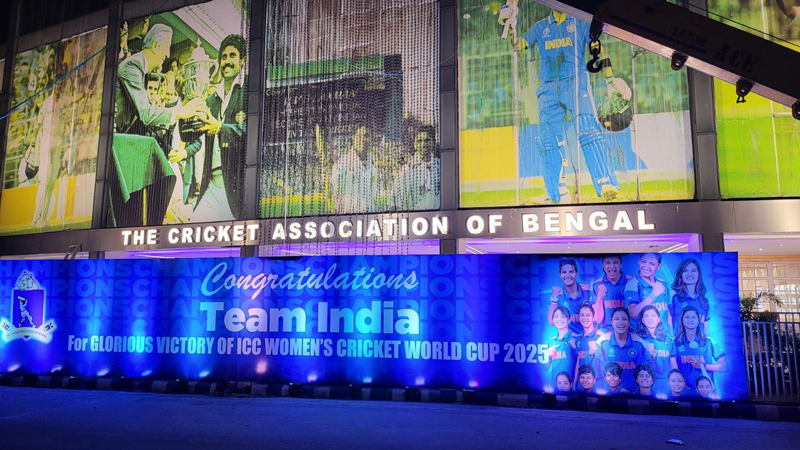
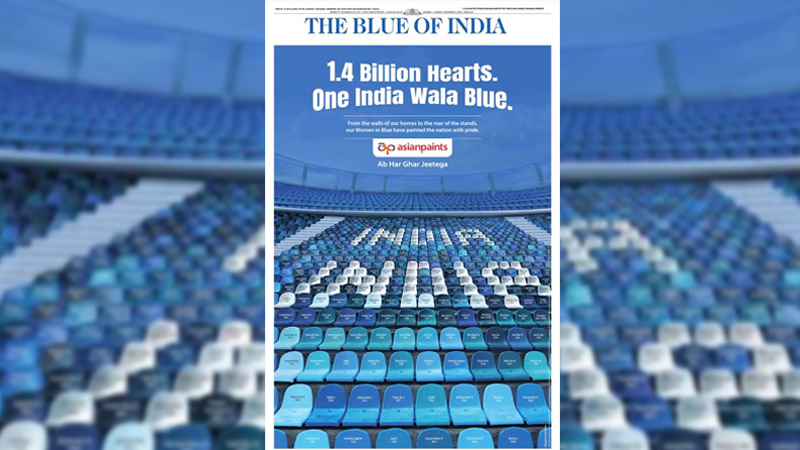
    MUMBAI: Talk about a fresh coat of inspiration! Asian Paints has added a vibrant twist to its iconic Mera wala blue with the launch of Meri wali blue, a heartfelt campaign celebrating India’s women cricketers and the fans who bring the game to life from their living rooms.

    Part of the brand’s ongoing Har ghar blue narrative, the new film beautifully captures how cricket, while played on the pitch, truly lives in Indian homes, in the cheers, emotions, and shared pride that colour every household blue.

    Conceptualised by FCB Kinnect and directed by Good Morning Films, the film traces the journey of a blue jersey, from a tailor’s careful stitching to a young girl’s gleeful cry of “Meri Wali Blue” as she spots her hero Harmanpreet Kaur’s number on it. The message is simple yet stirring: India cheers for India Wala Blue.

    The campaign extends Asian Paints’ deep association with cricket, following its smart integrations during the India vs England series and Asia Cup earlier this year. The brand has painted itself firmly into the nation’s sporting story. This time, by championing the rise of women’s cricket and the growing chorus of fans rallying behind it.

    Asian Paints Ltd MD & CEO Amit Syngle said, “Cricket brings families, friends, and neighbours together. With Meri Wali Blue, we’re proud to celebrate India’s women cricketers, whose grit and grace continue to inspire millions.”

    FCB Kinnect CEO Rohan Mehta added, “Building on an idea that’s shaped culture and giving it fresh relevance is powerful. With just one word, Meri Wali Blue carries hope and belief for generations of women athletes.”

    As group executive creative director Yogesh Mani Pradhan put it, “It’s not just an ad,  it’s a rallying cry for today, turning nostalgia into a new cultural moment.”

  • Stories from the heartland go global

    Stories from the heartland go global

    MUMBAI: Stories that stay rooted, yet take flight, that’s the new India calling. At FICCI Frames 2025, a star-studded panel on “Local Roots, Global Reach: Indian Storytelling from the Heartland” turned into a masterclass on why stories told with heart are now travelling the farthest.

    Moderated by broadcast journalist Anuradha Sengupta, the session featured The Viral Fever president Vijay Koshy, actors Neena Gupta, Pratik Gandhi, Faisal Malik, and Vineet Kumar Singh, voices that have lived and shaped India’s storytelling renaissance.

    “Anything that comes from the heart will touch the heart,” said Neena Gupta, drawing applause as she spoke of how authenticity, not algorithms, drives real connection.

    Pratik Gandhi reflected on his own journey after Scam 1992, “Stories can come from anywhere, but emotions are universal,” he added, noting how success opened creative doors rather than data dashboards.

    Vijay Koshy traced this evolution from Youtube freedom to OTT patronage. “We learnt the hard way in the digital world. Platforms are the new patrons, much like kings once funded artists,” he said, recalling how Panchayat, a show rejected by many, went on to become a cultural phenomenon precisely because “nothing was happening” in it.

    For Vineet Kumar Singh, heartland tales are India’s timeless truth. “Whether it’s Mother India or Panchayat, every story that mirrors real life finds its way to people’s hearts,” he said, reflecting on how viewers discover themselves in the stories of small towns and forgotten bylanes.

    Neena Gupta, ever candid, summed it up, “I think we should always try to go to the resources you have,” underlining how creators can draw on their own experiences and surroundings to tell authentic stories.

    The discussion also delved into the shifting sands of streaming. Sengupta reminded the panel that subscription models are giving way to ad-led formats. Koshy, however, remained optimistic. “We are not afraid. Authenticity will always survive,” he said with quiet conviction.

    As the session wrapped, Vineet shared a moving anecdote about Supermen of Malegaon, a small-town film that won hearts globally. “When it ended at the Toronto International Film Festival, the applause didn’t stop. That’s the power of stories from our soil,” he smiled.

    From villages to viral screens, India’s storytellers seem to have found their sweet spot: telling tales that are homegrown, heartfelt, and now, truly world-bound.

  • Wickets Widgets and Wow Moments Make India’s Sports Playbook a Big Hit

    Wickets Widgets and Wow Moments Make India’s Sports Playbook a Big Hit

    MUMBAI: It’s no longer just about cricket bats, it’s about data stats, fandom maps, and digital laps. At FICCI Frames 2025, Ishan Chatterjee, CEO for Sports, JioStar, set the ball rolling on how India’s sports and media ecosystem is stepping into its biggest growth spurt yet fuelled by inclusivity, innovation, and a nation hooked on both wickets and Wi-Fi.

    Chatterjee painted a picture of an industry at “an inflection point”, quoting a Deloitte study that pegs India’s sports economy to leap from 30 billion dollars in 2023 to 70 billion dollars by 2030. “To put that in perspective, Brazil stands at 6–8 billion dollars, and the UK, one of the most advanced markets, is at about 40 billion dollars,” he said, underscoring India’s ascent as a sporting superpower in the making.

    But even as men’s cricket continues to mint viewership gold, Chatterjee said the real growth story lies beyond the boundary. “The big trend we’re betting on is the rise of other sports in India whether established ones like tennis, football and kabaddi, or newer ones like e-sports. As soon as Indian athletes start delivering world-class results, fandom accelerates. Just look at what Neeraj Chopra did for the javelin,” he said, drawing cheers from the audience.

    If cricket remains the heartbeat, the pulse is diversifying fast. Chatterjee believes the next decade belongs to multi-sport India, where technology and storytelling will be as crucial as talent. “India’s young audience is discovering, following, and even betting emotionally on new sports. What used to be once-a-year cricket fever has become a 12-month sports calendar,” he noted.

    At the heart of this transition, he said, lies fandom, a force as unpredictable as it is powerful. “We’ve moved from viewership to ownership. Fans no longer just watch; they participate, react, and create. That’s why sports is no longer just an event, it’s an experience.”

    Chatterjee also touched upon what he called one of JioStar’s biggest responsibilities, inclusivity especially in women’s cricket. “Our role as broadcasters is to give women’s cricket visibility, prime-time slots, and the right storytelling so it inspires the next generation. The WPL is one of our biggest priorities,” he said.

    He emphasised that women’s cricket is not just a symbolic cause but a commercial and cultural imperative. “From a consumption standpoint, there’s a lot of headroom. From a business perspective, it makes sense to invest in it. But more importantly, for our sporting culture to become truly representative, women’s cricket has to grow,” he added.

    Naturally, the talk couldn’t skip India’s favourite sporting spectacle the IPL. “The great thing about the IPL is the scale it operates on. During the last season, we lit up over 1.1 billion screens across TV and digital,” Chatterjee said.

    But the magic, he added, lies in customising the experience. “To grow consumption whether it’s more viewers, more matches, or longer watch time, we have to appeal to different interests. For the core fan, it’s about depth and stats. For the casual viewer, it could be entertainment, creators, or even Motu Patlu engaging kids. That mix keeps the IPL ecosystem buzzing.”

    If fandom is the fuel, technology is the engine driving this new sports era. “India has always been at the cutting edge of tech adoption,” Chatterjee said. “At JioStar, we are led by consumer behaviour, and our vision for sports viewing is a completely personalised one-to-one feed. Two people can watch the same match, but the experience camera angles, commentary, interactive features will be entirely different for each.”

    From AI-driven smart highlights to multi-cam viewing and vertical formats, Chatterjee said technology is already reshaping how fans engage with sport. “This is just the beginning,” he smiled. “Imagine a future where your favourite player’s perspective, the commentator you like, or even the memes you enjoy all are woven into your viewing experience.”

    Chatterjee pointed out that India’s unique combination of youth demographics, mobile-first audiences, and insatiable appetite for entertainment positions it perfectly for sports innovation. “Our sports consumption is growing not because we’re copying Western models, but because we’re creating an Indian one built around community, interactivity, and scale,” he said.

    From e-sports tournaments drawing millions online to local leagues popping up in tier-two cities, the momentum is unmistakable. “The beauty of India’s sports journey,” he said, “is that every new fan adds to the market, not just shifts within it. Every new sport that takes off expands the universe.”

    As the fireside chat wrapped up, one thing was clear, India isn’t just playing more sports; it’s reimagining how sports are played, viewed, and loved.

    Chatterjee’s closing line summed up the sentiment perfectly: “For us, sports is not just entertainment, it’s identity. As long as our athletes keep pushing boundaries and our fans keep breaking the internet, India’s sporting story will only get bigger.”

    And with a wink to the future, he added, “We’re just in the warm-up. The real game begins now.”

  • TVS Capital Funds raises the bar with dual leadership elevations

    TVS Capital Funds raises the bar with dual leadership elevations

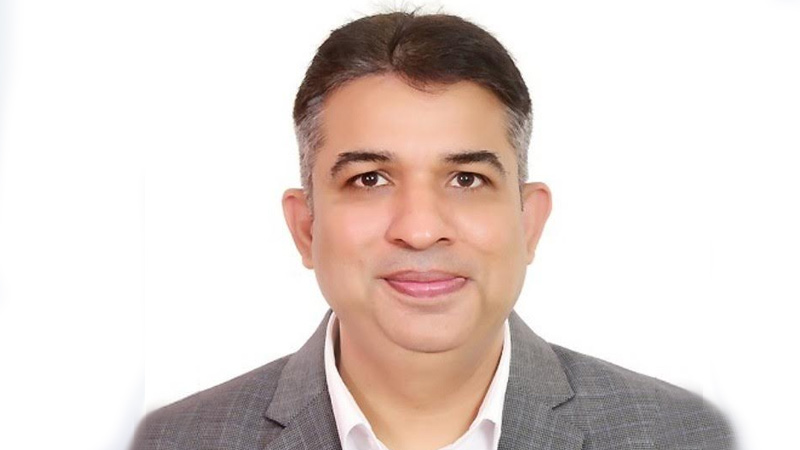
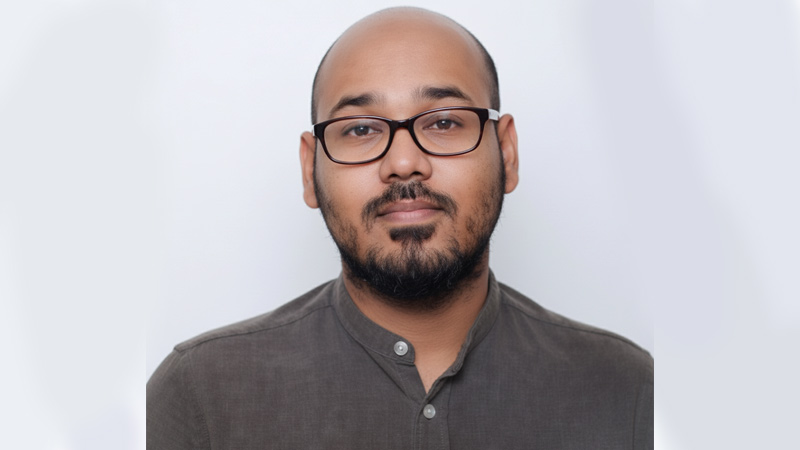
    MUMBAI: Talk about compound interest in talent! TVS Capital Funds has announced the elevation of Suraj Majee and Ravi Krishnan to the role of principal, recognising their long-standing contributions and leadership within the firm’s investment and finance divisions.

    For Suraj Majee, who joined the private equity firm in 2016, it’s been an impressive climb from analyst to principal. Now leading from the front in the Investments team, he has been instrumental in shaping TVS Capital’s strategy in the financial services sector. “It’s been a deeply fulfilling journey growing alongside the firm and partnering with inspiring next generation entrepreneurs,” he shared, adding that he looks forward to supporting the creation of enduring businesses in financial services.

    On the finance front, Ravi Krishnan S, now principal and deputy CFO, moves up from his previous role as vice president. Known for his sharp financial stewardship and commitment to governance, he has strengthened the firm’s operational and compliance frameworks. “It’s been a privilege to experience the strength of values and ethics in action while working with such a dynamic team,” Ravi noted.

    Commenting on the elevations, managing partner Krishna Ramachandran,  said, “At TVS Capital Funds, we are deeply committed to nurturing internal talent. Suraj’s entrepreneurial spirit and Ravi’s strategic clarity truly reflect our values and vision of building enduring businesses.”

    With over Rs 5,000 crore under management across its funds, Chennai-based TVS Capital Funds has built a 17-year legacy of backing India’s next generation entrepreneurs in financial services and technology. As the firm continues to invest in people as passionately as it does in businesses, these dual promotions signal that growth at TVS Capital isn’t just financial, it’s foundational.

  • Phoenix Marketcity Chennai ignites Diwali euphoria

    Phoenix Marketcity Chennai ignites Diwali euphoria

    MUMBAI: Talk about elemental energy! Phoenix Marketcity Chennai is turning up the festive heat with ‘Euphoria – A celebration of sorts,’ a Diwali bash that promises to set every sense alight this Sunday, 12 October.

    The city’s favourite lifestyle destination is embracing the theme of The Five Elements- Earth, water, fire, air and ether transforming its space into a living, breathing spectacle of lights, music and couture. Expect no less than a fashion-meets-fantasy showcase where glamour flows as freely as festive cheer.

    Headlining the evening is Dino Morea, who will blaze the runway as celebrity showstopper in a grand fashion presentation curated by Prasad Bidapa. Soulful singer Charu Semwal will lend her voice to the vibe, setting a perfect tone for the night’s visual symphony.

    Guests can also revel in theatrical performances, carnival dancers and immersive displays, ensuring that every corner of the venue hums with celebration. And what’s a festival without feasting? The event’s gourmet spread, inspired by the five elements, promises flavours as dynamic as its décor.

    With its mix of style, sound and sensory delight, Euphoria is poised to be Chennai’s showstopper event this Diwali, where fire meets fashion, air meets artistry, and celebration is truly in its element.

  • Sport and showbiz join forces to power India’s live entertainment boom

    Sport and showbiz join forces to power India’s live entertainment boom

    MUMBAI: There was once a time when cricket was just a sport, concerts were a luxury, and event organisers were the unsung heroes behind the scenes. Fast-forward to 2025 and the boundary lines between sports, entertainment and live events have blurred into one big, buzzing spectacle.

    At a recent industry discussion that brought together some of the biggest names in sports, media and live entertainment, the conversation spanned everything from job creation and infrastructure to AI, accessibility, and the rise of the “fake wedding” phenomenon. If there was ever a moment that captured how deeply India now lives, breathes and monetises experience, this was it.

    “Cricket is a great vehicle,” said one of the panellists, noting how the sport in India transcends language, geography and generations. “It’s not just entertainment, it’s an ecosystem.”

    And it truly is. From regional commentary to AI-assisted streaming and immersive experiences, cricket has evolved into a multimedia juggernaut. Broadcasters no longer deliver just a match, they curate a universe of emotions, languages, and second-screen stats. “We’ve gone from peering through neighbours’ windows in 1983 to watching replays from six angles in six languages,” quipped one speaker. “Each fan now has their own version of the match.”

    But the conversation wasn’t just about cricket’s cultural dominance, it was about its economic ripple effect. As panellist Sabas Joseph pointed out, the government has finally recognised the events and entertainment sector as a vital part of India’s economic engine.

    “The government of India has created a joint working group with ten ministries to develop greenfield venues and reform licensing norms,” he revealed. “Event management is now part of state policy and economic policy.”

    The statistics speak for themselves. The events industry now supports over 10 million jobs, with more than 150,000 companies across India 30 per cent of them women-owned. “We’ve gone from pleading for recognition to being written into policy,” Joseph said, to applause.

    And the vision ahead? Transforming India’s cricket stadiums into multi-purpose venues for concerts, festivals and even international shows. “Stadiums already have the best infrastructure, why not use them for entertainment too?”

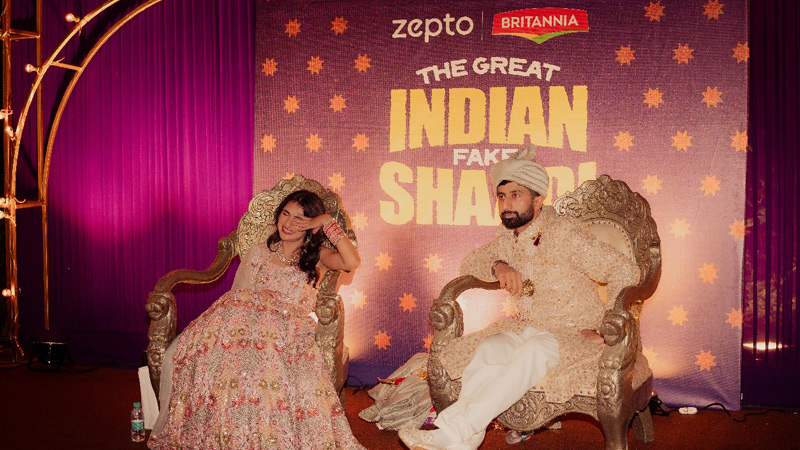
    Kunal, another panellist from the ticketing side of the business, spoke of India’s “culture of going out” something unthinkable two decades ago. “People are attending midnight runs, 5 a.m. DJ parties, even fake weddings complete with baraat, food and music, but no bride or groom,” he laughed.

    What’s powering this shift is trust and tech. “Our job now is to make live experiences predictable from clean bathrooms to clear directions,” Kunal said. Platforms like his are introducing digital-only, QR-based tickets that can’t be duplicated or resold, curbing black marketing and ensuring safety.

    He also highlighted growing accessibility efforts, including partnerships with disability rights advocates to make events more inclusive from wheelchair access to seat mapping. “We want every person to experience live entertainment comfortably and safely,” he added.

    If cricket built the blueprint, kabaddi proved the model works. “We Indians were sceptical at first,” said one broadcaster. “Could kabaddi, a sport we remembered from schoolyards, really become primetime entertainment?”

    The answer was a resounding yes. Smart packaging, slick graphics, and a 30-second raid format turned kabaddi into India’s second most-watched sport. “We created heroes, we gave it drama, and we respected its roots,” he said. “Now it airs on global networks like ESPN, Sky and Fox.”

    The takeaway: India’s homegrown sports can be global hits if nurtured right.

    As another panellist pointed out, India’s live entertainment story isn’t just about star power, it’s about audience power. “In 2008, we had barely 2,500 sports clubs. Today we have over 16,500,” he said. “And ticket sales, once a myth, now drive the bulk of the business. Indians pay premium prices for premium experiences.”

    From Coldplay to Lollapalooza, international acts are selling hundreds of thousands of tickets in India at global rates. “The audience is ready to spend,” said Kunal. “We just have to deliver the experience they expect.”

    Technology remains the ultimate gamechanger. AI, VR and personalised feeds are transforming how people watch and attend events. Fans can switch between camera angles, get player stats on their phone, or even experience concerts in virtual reality.

    And yet, the heart of it all remains human. “No government policy, no brand campaign, no festival happens without event managers,” Joseph reminded the audience. “Ours is an industry built by people from those who’ve never been to school to MBAs from the best universities.”

    From the sound of it, India’s entertainment future will be part stadium, part screen, and all heart.

    As one panellist summed up: “Events have become part of India’s economic and cultural DNA. We’re no longer just watching, we’re participating.”

  • Orange Alert as Media Chiefs Call Time on Sour Regulation

    Orange Alert as Media Chiefs Call Time on Sour Regulation

    MUMBAI: When your brightest industry minds start comparing creativity to citrus fruit, you know the discussion’s got some zest. At FICCI FRAMES 2025, the session titled “Regulating the Orange Economy: Past, Present, and Future” turned into a spirited masterclass on what’s holding back India’s most vibrant export creativity itself.

    Moderated by Koan Advisory’s Vivan Sharan, the panel brought together some of the sharpest voices in Indian broadcasting Avinash Pandey (CEO, Indian Broadcasting and Digital Foundation), Krishnan Kutty, head of cluster, Entertainment (South) – JioStar, Anil Malhotra (COO, Zee Media), and Yatin Gupta (COO, GTPL Hathway). Together, they dissected the bitter-sweet evolution of India’s media and entertainment (M&E) industry from its liberalisation glory days to today’s tangled web of red tape and regulation.

    Avinash Pandey kicked things off with a nostalgic rewind. “We were declared an industry in 1996, and for a brief while, we were actually treated like one,” he said dryly, drawing laughter from the crowd. He recounted how the early 2000s saw broadcasting boom as a sunrise sector driven by investment, private innovation, and minimal interference.

    “Then came a time when the government helped us grow,” he continued. “But today, every little aspect from pricing to packaging is regulated. We are living under a 2005 framework in a 2025 economy.”

    Pandey’s lament set the tone. The orange economy shorthand for industries fuelled by creativity and culture has turned ripe, but over-regulation, panelists warned, risks turning it sour.

    Krishnan Kutty of JioStar took the baton, calling for “a lighter hand and a smarter head” in policymaking. He drew a sharp comparison between legacy broadcasters and digital-first platforms. “Television is capped, controlled, and scrutinised. OTT platforms, meanwhile, stream what they want with almost no oversight,” he said.

    Kutty argued that the answer isn’t to regulate the new, but to liberate the old. “Over-prescription kills innovation. Consumers don’t need protection from choice they need access to more of it.” His words echoed across an audience that included broadcasters, policymakers, and streaming executives all trying to decode the new power balance between screens.

    Anil Malhotra from Zee Media added historical perspective and a dose of irony. “Cable TV arrived in India in 1985. It was regulated only in 1995. Broadcasting began in 2005, got regulated much later,” he said. “Regulation always comes late to the party and then overstays its welcome.”

    Malhotra argued that in a digital-first world, it makes no sense to hold traditional media hostage to older rulebooks. “If the government doesn’t regulate new tech like OTT and AI, it must deregulate the old. Otherwise, you’re penalising the legacy systems that built India’s media strength in the first place.”

    He also called for a “policy audit,” a comprehensive review of old broadcasting rules to identify those that have outlived their relevance. “We need regulation that enables, not restricts,” he stressed.

    GTPL Hathway’s Yatin Gupta brought the discussion closer to ground reality and homes still running on coaxial cables. “We’re the most regulated part of the media chain,” he said bluntly. “Every rate, every fee, every package is dictated. Yet, we’re expected to compete with digital platforms that face no such limits.”

    Gupta pointed out that India’s cable homes have dropped from 150 million a few years ago to around 100 million today, a staggering 30 per cent loss in a market still hungry for affordable entertainment. “We can’t evolve if we’re boxed in,” he added. “If the aim is to take India fully digital, we must support the legacy infrastructure that connects Bharat to the world.”

    He called for skill development, broadband integration, and hybrid models that let cable operators transform into full-fledged digital service providers. “If we don’t, we’ll end up with an uneven playing field and an excluded audience.”

    By the time Avinash Pandey took the mic again, his tone had sharpened. “Regulators talk about ‘orderly growth’,” he said with a knowing smile. “That’s a Soviet-era phrase. You can’t dictate how creativity grows, it defeats the very nature of innovation.”

    He urged policymakers to think of the media sector as a living organism, one that thrives on unpredictability. “Creativity doesn’t follow command-and-control models. It needs chaos, experimentation, and freedom to fail.”

    The audience broke into applause when he declared, “If you want free markets, let the market breathe.”

    Despite the fiery debate, the panel didn’t write television off. Far from it. “TV still delivers high-quality entertainment at the lowest cost per viewer,” Pandey noted. “There are over 100 million Indians yet to own a television. Growth is far from over but it will stall if innovation is strangled.”

    The panellists agreed that the future of India’s media sector lies in convergence television and digital not competing, but coexisting. With global streamers investing heavily in Indian stories and regional content booming across states, the creative economy stands at a crossroads.

    As the discussion wound down, what emerged was less of a gripe and more of a roadmap: deregulate the old, modernise the law, empower talent, and let creativity not bureaucracy set the tone.

    In a nation bursting with storytellers, artists, and innovators, the message was clear: the Orange Economy shouldn’t be juiced dry by rules made for an analogue age.

    If India truly wants to be a global creative powerhouse exporting not just IT services but imagination, it must give its creators the same freedom its coders enjoy. Or as one delegate quipped while leaving the hall, “You can’t make lemonade with red tape.”


  • Rivals unite to shape Mumbai’s creative future

    Rivals unite to shape Mumbai’s creative future

    MUMBAI: In an industry known for cutthroat competition, Mumbai’s ad world hit pause on rivalry for one night of pure creative synergy. Portfolio Night 2025, hosted by BBDO, DDB Mudra Group and TBWA India, wasn’t just about portfolios; it was about passion, purpose, and a pinch of personality.

    Organised by The One Club for Creativity, the global event gathered students, recent grads and young professionals for a high-energy evening of one-on-one portfolio reviews. In fast-paced 15-minute sessions, hopefuls met top creative directors, got real feedback, and maybe even their big break.

    DDB Mudra CCO Rahul Mathew, called it a necessity, not just a vision. “Our only real asset is talent. Events like this help us find, mentor and protect it, and that benefits everyone.

    Each participant faced multiple rounds of reviews, rated on ideas, execution, originality, variety, consistency, presentation, and yes, attitude. But it wasn’t all critique and scorecards; it was also about connection.

    FCB Group India digital creative partner Kartikeya Tiwari, said he looks beyond the basics, “I look for courage and personality. Most portfolios are skilful, but what stands out is soul.”

    For FCB Group India CCO Neville Shah, the future needs boldness, “Some portfolios were too perfect. We need work that surprises us, that makes us say, ‘What is this?’”

    Meanwhile, Leo Burnett national creative director Vikram Pandey (Spiky), found hope in the next generation’s openness to technology. “The ones embracing AI are the ones shaping the future. AI won’t take jobs, people who use AI well will.”

    Among the buzzing crowd was Shivani Unnikrishnan, a student at École Intuit Lab, who left the night inspired, “It was our first time, and we learned so much. Meeting creative directors gave us new perspectives and confidence.”

    At the close of the evening, Kareena and Sumit were crowned Mumbai’s All-Stars. They will now represent the city in the global All-Star programme, competing with winners from around the world. A final win could take them to New York City for a week-long, in-person workshop.

    In the end, though, every participant walked away richer, with sharper insights, stronger networks and a renewed sense of creative confidence. Because at Portfolio Night, even rivals agree on one thing: when creativity wins, everyone does.