Category: News Headline

  • Nearly 25 per cent of Prime Video’s Indian content viewership comes from abroad

    Nearly 25 per cent of Prime Video’s Indian content viewership comes from abroad

    MUMBAI: Indian stories are winning hearts worldwide. At Ficci Frames 2025, Prime Video India’s senior leadership showcased how Indian content is not only thriving domestically but also making waves internationally.

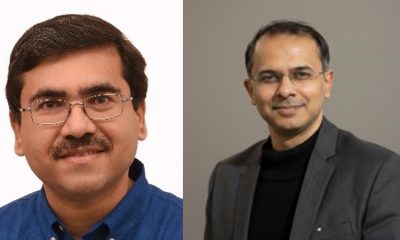
    Under the session titled “Made in India: I-Dramas — Are Our Stories Ready to Travel Across Borders?” SVOD director & head Shilangi Mukherji and Originals director & head Nikhil Madhok, shared insights with journalist Ajita Shashidhar about what makes Indian narratives resonate globally.

    The stats speak for themselves: Indian content has consistently trended in the top 10 on Prime Video worldwide in 2024, with nearly 25 per cent of viewership coming from outside India. According to Madhok, the key is authenticity. “Original, rooted stories travel beyond Indian shores. While production quality matters, it’s authenticity that connects with global audiences,” he explained.

    Mukherji highlighted Prime Video’s localisation strategy, ensuring content reaches multi-lingual audiences in India and internationally. “Through subtitles, dubbing, and culturally relevant storytelling, we surprise and delight viewers everywhere,” she said. About 60 per cent of Indian users stream content in four or more languages, reflecting the platform’s pan-Indian appeal.

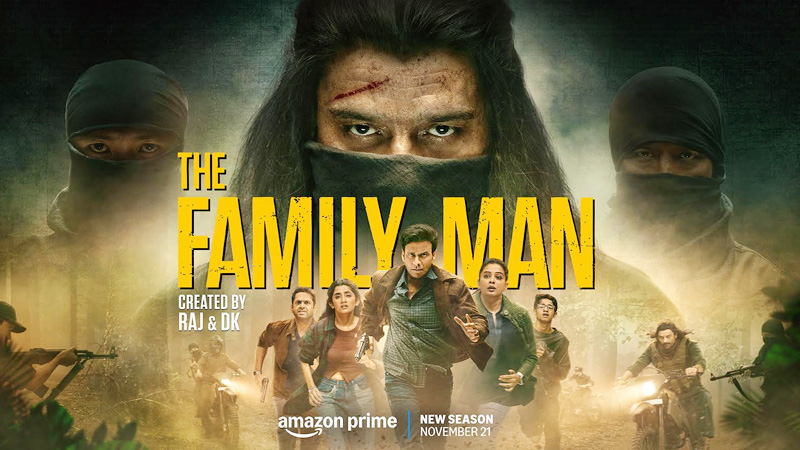
    Prime Video’s originals, from The Family Man and Mirzapur to Paatal Lok and Dupahiya, have become global favourites, with most franchises renewing for multiple seasons. Madhok emphasised the platform’s commitment to nurturing new talent alongside established creators, enabling first-time filmmakers to reach worldwide audiences.

    The platform’s growth in India is backed by innovation in access and pricing, including Prime Lite, mobile-first annual plans, and tiered subscriptions. Prime Video also combines theatrical releases with streaming, ensuring filmmakers can choose the best format for their stories. Starting 2026, three to four Indian films from Amazon MGM Studios will premiere in theatres annually.

    Mukherji concluded that global resonance requires intentional localisation and collaboration across the industry. Madhok added, “All it takes is one standout story to spark wider recognition. We’re seeing green shoots in all our Originals, and the future is bright for Indian storytelling.”

  • Xiaomi’s Diwali campaign ‘Deals, Drama & Diwali’ lights up the festive frenzy

    Xiaomi’s Diwali campaign ‘Deals, Drama & Diwali’ lights up the festive frenzy

    MUMBAI: When deals sparkle, so does drama. Xiaomi India has ushered in Diwali with a campaign that captures the chaos, colour, and joy of the season like never before. Titled “Deals, Drama & Diwali,” the festive initiative, created in collaboration with Wit & Chai, transforms the frenzy of big offers into a cinematic celebration of humour, emotion, and high-energy storytelling.

    Launching as part of Xiaomi’s Diwali big sale, the campaign brings to life the rollercoaster of emotions that sweep across households when irresistible deals hit the market. Rather than blending into the festive clutter of predictable offers, Xiaomi chose bold, kinetic storytelling rooted in everyday relatability, showing how a small, logical action can snowball into hilariously over-the-top mayhem, perfectly capturing the highs and lows of Diwali shopping.

    Wit & Chai chief creative head Saurabh Sankpal explained, “Festive offers can often feel repetitive, but Diwali itself is a festival of contrasts: chaos and calm, humour and heart, frenzy and family. Our films celebrate that duality, the mayhem of big deals and the magic of big emotions, creating narratives that entertain while driving engagement.”

    Xiaomi India associate director of brand marketing Ritij Khurana added, “Diwali is a time when chaos and joy coexist. Our films mirror that with witty, relatable, and heartwarming stories. They’re not just about announcing deals, they’re about homecoming, connection, and togetherness.”

    Featuring two blockbuster films, the campaign revels in the unpredictable energy of the festive season, with every frame designed to make audiences laugh, relate, and hit that ‘buy’ button. In a landscape oversaturated with sameness, Xiaomi’s campaign cuts through the clutter by embracing chaos instead of avoiding it. Disruptive, memorable, and unapologetically festive, it captures the true spirit of Diwali: bold, big, and deeply human.

    The campaign was executed for Xiaomi India by the brand team comprising Ritij Khurana, Chirag Vegad, and Antima Mishra, in collaboration with the creative agency Wit & Chai, led by chief creative head and writer Saurabh Sankpal. The production was handled by tmrw factory, with direction by Nachiket Pendse and producers Anish Joag and Prithviraj Mali. Cinematography was overseen by DOP Niteesh Jangeed, while Ranjit Gugle served as executive producer. The assistant directors were Gourav Shelke and Rashmi Navalkar, with music composed by Ankush Boradkar and lyrics by Saurabh Sankpal.  

  • Streaming Dreams and Story Schemes Mark Netflix’s Decade in India

    Streaming Dreams and Story Schemes Mark Netflix’s Decade in India

    MUMBAI: When Netflix arrived in India ten years ago, the streaming giant wasn’t just entering a new market, it was stepping into a nation obsessed with stories. From cricket to cinema, India has always lived in 16:9 emotion. A decade later, as Netflix celebrates its 10th anniversary here, it has become more than just a platform, it’s a pop-culture mood board, a social mirror, and occasionally, the nation’s favourite debate topic over dinner.

    At FICCI Frames 2025, Netflix India, vice president of content Monika Shergill revisited the platform’s decade-long journey not as a corporate milestone, but as a cultural chronicle. “It’s been ten years of discovering stories that surprise even us,” she said with a smile. “India has taught us that there’s no such thing as one audience.”

    Shergill’s words carried weight. In 2016, when Netflix launched in India, data plans were expensive, the idea of binge-watching was alien, and cable television ruled the roost. Yet, as she pointed out, “audiences were already hungry for something different, they just didn’t know where to find it.” That ‘something different’ soon arrived in the form of gritty, genre-bending originals like Sacred Games and Delhi Crime, titles that not only redefined Indian streaming but also caught the attention of global viewers.

    “Shows like Delhi Crime proved that our stories don’t have to be diluted for global audiences,” Shergill noted. “They resonate precisely because they are authentic, rooted, and unapologetically Indian.”

    Over the years, Netflix’s slate has stretched from the heartlands to the Himalayas, serving up thrillers, romcoms, docuseries, and biopics that mirror the country’s diversity. From Kota Factory’s monochrome melancholy to Khufiya’s cloak-and-dagger intrigue, every title seems to tap into a different emotion, language, and landscape proof that India doesn’t just contain multitudes, it streams them too.

    But as Shergill highlighted, the real game-changer has been regional storytelling. “Tamil, Telugu, Malayalam, and Bengali stories are not just finding local audiences, they’re travelling globally,” she said. “When you keep the essence local, you end up going global.” Indeed, viewership of Indian regional content on Netflix has shot up by more than 60 per cent in the past three years, while global viewing of Indian titles has doubled.

    Beyond the data, there’s a shift in creative dynamics. Netflix’s approach to nurturing over 200 Indian writers, directors, and creators has created what Shergill calls “a sandbox for fearless storytelling.” Unlike theatrical cinema, where success is often measured by box-office numbers, the streaming space has allowed creators to focus on experimentation, representation, and emotional truth.

    “Streaming has democratised creativity,” she said. “You could be a first-time director from Shillong or a veteran from Mumbai, your story gets the same chance to be discovered.”

    That discovery is also increasingly shaped by technology. Shergill spoke of how algorithms, AI tools, and personalisation engines have made every viewer’s journey unique. “We often joke that no two people have the same Netflix,” she said. “But the magic lies in how tech quietly helps stories find the right audience, not the other way around.”

    Of course, Netflix’s decade in India hasn’t been without its plot twists from the rise of fierce competition (DisneyPlus Hotstar, Prime Video, JioCinema, Zee5, SonyLiv, and more) to debates on pricing, censorship, and content localisation. Yet, as Shergill pointed out, these challenges have only sharpened the industry’s creative instincts. “Healthy competition means better stories,” she said. “It’s proof that the audience is winning.”

    As India becomes one of Netflix’s fastest-growing markets, the company is doubling down on localisation not just through language, but through themes that reflect real India. Small-town aspirations, gender fluidity, generational conflict, and cultural nostalgia are no longer niche; they’re mainstream. “The stories that come from the heartland are the ones making it to hearts worldwide,” Shergill quipped.

    The conversation also drifted to how streaming has blurred the lines between entertainment and experience. “Today, entertainment is no longer consumed,” she observed. “It’s lived, shared, and replayed. When people cry over a character or cheer for a show, they’re not just viewers, they’re participants.”

    As FICCI Frames explored the theme of India’s creative economy, Shergill’s reflections summed up a decade where the screen became both a stage and a storyteller. “Streaming is not just about algorithms and recommendations,” she said. “It’s about emotion, connection, and the thrill of seeing your story on a global map.”

    For Netflix, that map is only expanding. With new content partnerships, investments in regional studios, and a growing slate of originals, the next chapter seems poised for even more ambitious storytelling.

    Ten years on, the red N has gone from being an app icon to an emotional bookmark in India’s entertainment story. And as Shergill reminded the audience, “Our best stories are still buffering and that’s the most exciting part.”

  • Yash Raj Films to shoot three major films in UK from 2026, Starmer confirms

    Yash Raj Films to shoot three major films in UK from 2026, Starmer confirms

    MUMBAI: Bollywood is heading back to Britain. Yash Raj Films, India’s leading production and distribution house, has announced plans to shoot three major films across the UK from early 2026, creating over 3,000 jobs and injecting millions of pounds into the local economy, UK prime minister Keir Starmer revealed in Mumbai today.

    The announcement was made at Yash Raj Studios, which marks 20 years of operations in India on 12 October, where Starmer was joined by top UK film representatives, including the British Film Institute, British Film Commission, Pinewood Studios, Elstree Studios, and Civic Studios. The visit forms part of a two-day trade mission aimed at strengthening UK-India ties and boosting creative industry collaborations.

    The UK film sector contributes 12 billion pounds annually and supports 90,000 jobs, attracting international productions with its state-of-the-art studios and iconic landscapes. After an eight-year hiatus, Yash Raj’s return highlights the growing impact of the UK-India trade deal on cultural and creative partnerships.

    “Bollywood is back in Britain, and it’s bringing jobs, investment and opportunity, while showcasing the UK as a world-class filmmaking destination,” Starmer said. “This is exactly the kind of partnership our trade deal with India is designed to unlock.”

    Yash Raj Films CEO Akshaye Widhani added, “The UK has always held a special place in our hearts. Iconic films like Dilwale Dulhania Le Jayenge were shot here, and we are thrilled to reignite our ties with the country that has always supported our creative vision. With the 30th anniversary of ddlj and the stage adaptation Come Fall in Love underway in the UK, this partnership couldn’t be more timely.”

    UK culture secretary Lisa Nandy said, “Given the strength of our film industries and the deep cultural links between our nations, collaborations like this make perfect sense. Bollywood blockbusters filmed in Britain will drive growth, investment and creative exchange.”

    A supporting MoU between the British Film Institute and India’s National Film Development Corporation will further strengthen co-productions, enabling filmmakers from both countries to share resources, talent, and expertise. Past collaborations, such as Slumdog Millionaire, generated around 300 million pounds for the UK from a modest 12 million pounds budget, proving the immense potential of UK-India film ventures.

  • Hospitality PR veteran swaps solo consultancy for corporate suite

    Hospitality PR veteran swaps solo consultancy for corporate suite

    BENGALURU: After six years and eight months steering her own ship, Gayatri Dravid has docked at Rosetta Hospitality this September as group head for corporate communications and marketing—trading the freedoms of consultancy for the clout of a corporate corner office in Bengaluru.

    Dravid launched Gayatri Dravid PR in February 2019, carving out a niche in hospitality and travel communications after a decade-plus climbing the industry ladder. The move followed a near-two-year stint as associate vice president for communications at RMZ Corp, where she honed her skills in corporate messaging for one of India’s largest real estate developers.

    Before going solo, Dravid spent over three years as director of PR and strategy at Quo Global’s India operations, the Thai multinational specialising in hospitality branding. There she positioned India’s first Pullman hotel and North India’s first Novotel at New Delhi Airport, orchestrated launches for seven hotels across Asia in three years for Onyx Hospitality group, and developed the complete visual identity—logo, colour palette, tone—for Tiger Palace Resort and Casino’s Nepal debut.

    Her CV reads like a greatest-hits compilation of India’s luxury hotel landscape. She led pre-opening communications for the 523-room JW Marriott New Delhi Aerocity in 2012, JW’s first launch in the capital. Before that, nearly three years at The Leela Palaces saw her spearhead PR for the group’s flagship property in New Delhi, manage award-winning resorts in Goa, Kovalam and Udaipur, and launch ESPA spa and Warren Tricomi salon partnerships. She even copy-edited The Leela’s first coffee-table book.

    Earlier stops included Genesis Burson-Marsteller, where she handled Channel [v], Royal Bank of Scotland and Lakmé Fashion Week, and a year teaching business communications in Pune as guest faculty for the London Chamber of Commerce and Industry.

    Now Dravid returns to the mothership—not as consultant, but commander. Rosetta just hired someone who’s spent 17 years learning every trick in the hospitality playbook.

  • TV9 Network hosts News9 Global Summit 2025 Germany edition in Stuttgart

    TV9 Network hosts News9 Global Summit 2025 Germany edition in Stuttgart

    MUMBAI: TV9 Network is set to host the second News9 Global Summit – Germany Edition in Stuttgart on 9–10 October 2025, celebrating 25 years of India-Germany strategic partnership.

    The Summit, themed “Democracy | Demography | Development: The India-Germany Connect,” brings together policymakers, corporate leaders, and thought innovators from both nations to explore trade, technology, and collaborative opportunities.

    Presented by the Government of Maharashtra and MIDC, co-hosted by Vfb Stuttgart and supported by the State of Baden-Württemberg, the event promises high-level dialogue and actionable insights. Gold partners Fintiba and Barmer, Silver partners MHP – A Porsche Company and Tata Ace Pro, alongside other institutional and strategic partners, anchor the discussions.

    The Germany edition began in Berlin on 6 October at the Axica Convention Centre, adjacent to the Brandenburg Gate. Over 200 innovators, startups, and investors attended, with keynotes from India’s Ambassador to Germany HE Ajit Gupte, and spotlight sessions featuring Vijay Chauthaiwale, Anandi Iyer, Stefan Halusa, and Jörg Müller. The journey continues through Munich and Karlsruhe, culminating in Stuttgart for the main Summit dialogue.

    TV9 Network, MD & CEO Barun Das said, “The Summit is about more than dialogue; it’s about building trust in a multipolar world. Stuttgart, a hub of engineering, innovation, and diplomacy, is the perfect stage for India’s narrative as the world’s fastest-growing major economy.”

    Vfb Stuttgart chief marketing & sales officer Rouven Kasper added, “Sport and dialogue share a common language, teamwork, resilience, and innovation. Co-hosting the Summit reflects these shared values and celebrates the India-Germany connect beyond trade and technology.”

    The Summit’s lineup is a blend of policy, industry, and culture: From Germany and Europe Johann David Wadephul, Nina Warken, Maroš Šefčovič, and state leaders including Winfried Kretschmann and Frank Nopper; Industry voices Andreas Lapp, Joachim Erdle, Bernd-Otto Hörmann, alongside innovators like Honza Ngo and Jan-Frederik Dammenhain; Strategic experts Karl-Heinz Grossmann (Airbus Defence & Space), captain Michael Giss (Bundeswehr), cultural innovators Alexander Heinrich and Thomas Diehl.

    From India, the Summit includes Piyush Goyal and Devendra Fadnavis (virtual), with in-person participation from Anurag Singh Thakur, Uday Samant, and HE Ajit Gupte, supported by policy and economic thought leaders like Arvind Virmani and Sachin Kumar Sharma, as well as industry leaders including Vivek Lall, Pankaj Vyas, Anandi Iyer, and Ujjwal Jyoti.

    Cultural and creative perspectives feature chef Kunal Kapur, captain Zoya Agarwal, and new-generation innovators Siddharth Bhasin and Markus Besch.

    The News9 Global Summit 2025 – Germany Edition continues TV9 Network’s mission of placing India at the heart of global dialogue while redefining bilateral cooperation, innovation, and strategic partnerships for the next 25 years.

  • Truecaller launches AI-powered platform ‘advantage’ that boosts smarter ad targeting

    Truecaller launches AI-powered platform ‘advantage’ that boosts smarter ad targeting

    MUMBAI: When AI meets communication, magic happens. Truecaller, the global communications platform, has unveiled advantage, an AI-powered recommendation engine designed to revolutionise how businesses engage users in high-attention moments.

    Built on a central intelligence hub that continuously learns from user interactions, adVantage tailors messages across business messaging, contextual advertising, and enterprise solutions. By analysing anonymised, aggregated data in real time, the platform delivers highly personalised, privacy-safe experiences for consumers while helping businesses optimise engagement and drive growth.

    “Relevance is the new currency,” said Truecaller global CEO Rishit Jhunjhunwala. “advantage ensures businesses don’t just reach users, they understand them and provide value at every touchpoint. It’s central to our strategy of building scalable growth engines and redefining how businesses create impact.”

    The platform’s pilot phase showed impressive results: open rates jumped 400 per cent on Truecaller’s messaging platform, with up to a 50 per cent lift in click-through rates across high-intent sectors like automotive, fintech, edtech, and e-commerce. The framework reaches over 200 million users, transforming brand awareness into measurable outcomes.

    Advantage operates through three modules: Discover: Identifies new, relevant audience segments and expands visibility; engage: ee-targets users to boost mid-funnel performance and guide conversions; perform: optimises key business outcomes such as leads, app installs, and direct commerce automatically.

    “Truecaller advantage gives businesses a real edge,” said advantage lead  Liniker Seixas. “Multiple AI models continuously learn and optimise campaigns, ensuring every investment drives stronger results.”

    By harnessing Truecaller’s ecosystem, advantage empowers brands to reach the right audience, deepen engagement, and accelerate conversions, all while staying privacy compliant.


  • Rodim India strengthens leadership with Amresh Khar as SVP, Sales & Marketing

    Rodim India strengthens leadership with Amresh Khar as SVP, Sales & Marketing

    MUMBAI: Rodim India, a brand of Basf, has appointed Amresh Khar as senior vice president – sales & marketing (India), a move aimed at steering the company’s expansion strategy and strengthening its presence in both domestic and international automotive markets.

    With over 22 years in the automotive industry, Khar brings leadership experience from Mahindra First Choice Wheels, Volkswagen Group Sales, Honda Cars, Castrol India, and his own entrepreneurial venture, Mad About Wheels. An IIM Bangalore alumnus with an mba from UBI Brussels and a bachelor’s in engineering from Maharashtra, he has built one of India’s fastest-expanding automotive installation teams, managing a workforce of 200 plus skilled professionals.

    “I am delighted to join Rodim India at such a pivotal stage,” said Amresh Khar. “I look forward to leveraging my experience to scale our skilled workforce, drive expansion, build strong customer relationships, and establish Rodim as a leader in redefining automotive care in India and beyond.”

    Backed by Basf Germany, the one of the world’s leading paint companies since 1865, Rodim India is known for innovation, durability, and trust. The company offers German-engineered paint protection films (PPF), automotive paints, and care solutions designed to protect original car paint and set new standards in automotive excellence.


  • Rejected by Google in 2013, entrepreneur returns as boss of startup division

    Rejected by Google in 2013, entrepreneur returns as boss of startup division

    GURUGRAM: Life moves in circles, not straight lines. Ragini Das, who fumbled Google’s final interview round in 2013, has just been handed the keys to Google for Startups India this October—a delicious plot twist that took 12 years, two groundbreaking ventures and one failed final round to materialise.

    Back in 2013, Das had two shots on goal: Google and Zomato. Google said no. Zomato said yes. That rejection turned into a six-year masterclass in building consumer-tech brands. She went from selling ad space across Hyderabad, Bangalore and Delhi to spearheading Zomato Gold’s meteoric rise from zero to 2 million users, launching the subscription service across ten international markets from Australia to Lebanon. The company awarded her its first-ever “spark award” for spreading Zomato’s culture inside and outside the firm.

    In 2020, Das took the entrepreneurial plunge, co-founding leap.club—India’s largest social-professional network for women. Over five-and-a-half years, she scaled it to 25,000-plus paid members and $3 million-plus in revenue, creating an online app and India’s first women-only offline club. The  venture raised $2.2 million from venture capitalists and angel investors, with women comprising half the cap table. “If member love was an actual currency, leap.club would have been a unicorn,” Das wrote when announcing the pause in operations this June.

    After the shutdown, Das spent the summer recharging: creating art, chasing fitness goals, travelling and photographing Jimmy, her dog. Then August arrived with a role at Google that sat squarely at the intersection of everything she’d built—zero-to-ten ventures, founders, growth. Two months of conversations later, the job was hers.

    Now Das leads Google’s mission to connect Indian startups with the right people, products and practices to scale. She’s also taken on a voluntary role as chair of FICCI’s women in startups committee, championing visibility, capital access and policy influence for women-led ventures. A member of the 6 am club, she reserves weekends for mentoring young women in business and, naturally, Jimmy.

    Twelve years ago, Google’s rejection stung. Today, Das walks through the front door—as the boss. Full circle doesn’t begin to cover it.

  • Marathon runner trades super-app for banking sprint

    Marathon runner trades super-app for banking sprint

    MUMBAI: Sheran Mendiratta Mehra has laced up her running shoes for a new race. The marketing veteran who helped build Tata Digital’s super-app to 100m-plus users has joined IndusInd Bank as chief marketing officer this September, leaving behind a six-year stint that transformed India’s digital commerce landscape.

    At Tata Digital, Mehra wore multiple hats with characteristic stamina. As chief business officer since July 2024 and chief brand officer cum business head for hotels since April 2022, she orchestrated the brand strategy for one of India’s most ambitious digital ventures. Before that, she spent nearly three years as chief brand officer, shaping product design and brand identity from the ground up.

    Her CV reveals her wide exposure to financial services and hospitality marketing. Six years at DBS Bank as executive director for group strategic marketing and communications, where she also championed social entrepreneurship through the bank’s corporate social responsibility arm. Stints at Dhanlaxmi Bank, Barclays and HSBC showcased her knack for turnarounds—she pushed top-of-mind recall to 52 per cent during Barclays’ India launch and co-led the country’s first mobile banking service, Hello Money.

    Earlier pit stops included heading resort marketing at Mahindra Holidays, where she boosted wallet share by 25-30 per cent, and agency-side roles at Ogilvy & Mather and Lintas, where she cut her teeth relaunching Huggies with sales surging over 15 per cent.

    The 25-year marketing strategist brings more than spreadsheets and campaigns to IndusInd. A distance runner for over a decade, Mehra champions the notion that peak performance in the boardroom and on the trail aren’t mutually exclusive. She’s vocal about mentoring female leaders in tech whilst maintaining her daily running practice—a fitting metaphor for someone who sees finish lines as starting points.

    IndusInd just hired someone who runs towards challenges, not away from them.