Category: News Headline

  • Sanjay Dutt gives digital payments a Vega boost with Getepay launch

    Sanjay Dutt gives digital payments a Vega boost with Getepay launch

    MUMBAI: When Sanjay Dutt says something’s “solid,” you know it packs a punch. And this time, the star wasn’t talking about a movie but about Vega, the indigenously developed payment switch from Getepay that promises to change how India transacts.

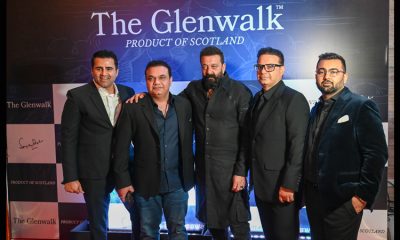
    At a glittering launch event at Taftoon Lounge, BKC, Mumbai, Dutt joined hands with Pravin Sharma, founder and managing director of Getepay, to unveil Vega, a homegrown, next-gen payment switch that’s as fast as it is secure. Headquartered in Jaipur, Getepay has steadily built its reputation as a digital payments enabler, and with Vega, it’s now aiming for the big league.

    “I’ve always believed in backing things that are real, solid, and made with heart and that’s exactly what Vega is,” Dutt said, cheering for a platform designed to empower India’s entrepreneurs, from local shopkeepers to small-town retailers. “This is about giving every entrepreneur the confidence to go digital. That’s the Bharat I want to cheer for.”

    Built on a microservices-based architecture, Vega delivers high-speed, high-volume transaction processing while ensuring real-time settlements and automated reconciliation. Think of it as the invisible engine powering India’s cashless ambitions routing transactions seamlessly even when networks are jammed.

    For Getepay’s Sharma, the launch marks a milestone moment. “Vega is not just a technological leap, it’s a bridge for millions of micro and small entrepreneurs powering India’s economy. With Vega, we aim to simplify digital payments for banks and merchants alike,” he explained. “Sanjay Dutt was the perfect fit, he represents strength, resilience, and relatability, just like our users across Bharat.”

    Under the hood, Vega connects banks and fintechs through a future-ready framework, ensuring compliance with Indian regulatory standards while maintaining top-notch reliability. Its modular design enables faster deployment, giving financial partners a smooth upgrade to modern infrastructure without business disruption.

    Beyond its tech prowess, Vega underscores Getepay’s commitment to Make in India, financial inclusion, and digital empowerment. The company envisions a future where even the smallest entrepreneur whether a tea stall owner or a kirana shop operator can accept digital payments with the same ease and confidence as a corporate giant.

    In a digital economy where speed, trust, and scalability are everything, Vega may well be the switch that powers Bharat’s next leap. And with Sanjay Dutt playing cheerleader, the digital revolution just found its blockbuster moment.


  • Google gets festive with smarter searches through new AI Mode

    Google gets festive with smarter searches through new AI Mode

    MUMBAI: Move over Khans and Kapoors, there’s a new star making its big-screen debut this festive season, and it answers to Hey Google. As India dives head-first into Diwali chaos and cinematic emotions, Google’s AI Mode on Search arrives like a filmy hero with perfect timing armed not with dance moves, but with data.

    Picture this: instead of scrolling through a dozen links, you toss Google a question that’s as layered as a family drama and out comes a full-blown, conversational answer that ties it all together. That’s AI Mode for you: your all-knowing, never-judging, eternally patient sidekick who remembers everything you say. Think of it as the Jeeves to your Kabhi Khushi Kabhie Gham moments.

    And because no Indian launch is complete without a dose of filmi flair, Google has rolled out a two-part digital film campaign conceptualised by the clever minds at Bare Bones Collective, the same team behind the viral GenZ Chudail and Gangoogly campaigns. This time, they’ve turned everyday dilemmas into high drama with a tongue-in-cheek tribute to the Bollywood tropes we love (and love to laugh at).

    The first film, released just as the country entered festive overdrive, follows a young man on a mission to win over his girlfriend’s father, every rom-com’s biggest villain-turned-softie. When his attempts at decorating the house flop harder than a box-office dud, he turns to AI Mode for step-by-step guidance. With its clever prompts, he transforms the chaos into a picture-perfect home, earning both the father’s nod and a new nickname: Festihul Tyohari.

    The second film flips the script with a “heroine ki entry” moment worthy of a Karan Johar production. Enter Riya, who lights up a festive party with a dazzling look all curated with help from AI Mode. From outfit inspo to accessory suggestions, Google plays stylist, ensuring her grand entrance is nothing short of a blockbuster reveal.

    Then comes the delightful cameo nobody saw coming: Farah Khan. In a hilariously meta moment, the choreographer-filmmaker trades banter with veteran actor Dilipji, only to have AI Mode jump in and “manage” the kitchen chaos better than any sous-chef. If only all family gatherings came with that feature.

    Launched right as India plunges into the most chaotic, colourful, and emotionally charged time of year, the campaign cleverly reimagines Google Search as the go-to problem-solver for the season helping users plan smarter, shop faster, decorate better, and celebrate calmer. From “how to impress an angry father” to “best last-minute Diwali gifts,” AI Mode doesn’t just give you answers, it gives you peace of mind (and a cinematic sense of timing).

    Bare Bones Collective nails the tone playful, self-aware, and oh-so-desi while giving Search the spotlight it deserves. The films blend humour with heart, showing how technology can keep up with India’s most dramatic, high-stakes, and glitter-coated time of year.

    Because when it comes to over-the-top emotions and even more over-the-top solutions, let’s be honest no one does drama quite like us. And this Diwali, Google’s AI Mode is ready for its hero shot.


  • IAS launches AI-driven brand safety for Meta Threads

    IAS launches AI-driven brand safety for Meta Threads

    MUMBAI: Integral Ad Science (IAS), the global ad verification powerhouse, has stitched together a new layer of protection for advertisers by launching AI-driven brand safety and suitability measurement on Meta’s fast-growing platform, Threads. The move marks the first time advertisers get third-party, independent brand safety checks on Threads, giving marketers peace of mind as they scroll through their media plans.

    Backed by its clever total media quality (TMQ) tech, IAS isn’t just skimming the surface. It’s digging deep into video, audio, images and text, frame by frame, to give advertisers crystal-clear content analysis at scale. So, whether a post has a cheeky meme, a trending video or a suspicious-sounding voiceover, IAS’s AI is watching (and listening).

    “IAS’s AI-driven content-level analysis enables advertisers to drive performance and confidently scale their investments with trusted, third-party, independent measurement,” said IAS CEO Lisa Utzschneider. “We continue to innovate and deepen our relationships with global partners like Meta to provide end-to-end campaign support for advertisers across every screen and channel.”

    Threads isn’t just another platform in the Meta empire, it’s a rising star, now boasting over 400 million monthly active users globally as of August 2025. With this new IAS integration, advertisers can finally breathe easy as their campaigns reach wider audiences. The new solution offers third-party validation to ensure ads appear next to safe and suitable content on Threads, with detailed content-level insights available through the IAS Signal dashboard. Advertisers can access industry-aligned classification across risk categories, customise suitability preferences, and assess the performance of Meta inventory filters. Uniquely, IAS’s multimedia tech analyses content at the frame-by-frame level, blending video, image, audio, and text signals, making its classification impressively precise. Even better, it works across 34 languages, giving brands truly global peace of mind.

    IAS and Meta have been on a bit of a roll lately. This Threads launch follows a string of brand safety milestones, including content block lists introduced in October 2024 and misinformation safeguards rolled out across Facebook and Instagram earlier this year.


  • Bite-sized dramas are about to swallow the streaming world whole

    Bite-sized dramas are about to swallow the streaming world whole

    CANNES: Forget your boxsets. Forget your hour-long dramas. Audiences are ditching long-form television for something far more intoxicating: episodes that fit in your pocket and demand your full attention in under ten minutes.

    Microdramas—those addictive mini-narratives designed for mobile consumption—are redefining entertainment. And the numbers are staggering. According to Omdia, the consultancy that presented its findings at Mipcom, Cannes, this genre will nearly double the revenue of Fast channels, which are projected to pull in just $5.8bn next year.

    “Viewers are willing to pay for content that captures them emotionally in seconds,” said María Rua Aguete, head of media and entertainment at Omdia. “Microdramas demonstrate that attention spans may be shorter, but engagement is deeper and more valuable.”

    The monetisation model is brutally simple: hook viewers with free episodes, then charge them through subscription or pay-per-episode channels. This approach accounts for more than 60 per cent of total revenue. The payoff is formidable. Average revenue per user can reach $20 per week—or up to $80 per month—making microdramas extraordinarily profitable.

    China dominates the space, generating 83 per cent of global revenue, fuelled by a colossal audience and a mobile-first culture. Beyond China, the US claims half of international revenue, with Japan, South Korea, the UK and Thailand emerging as hungry new markets.

    “Microdramas are redefining what it means to tell premium stories in the digital age,” Aguete said. “They combine the immediacy of social media with the emotional depth of dramatic television. They are short, addictive, and irresistible.”

    This isn’t a fad. As consumer habits shift inexorably towards mobile and short-form content, microdramas are poised to become the centrepiece of digital entertainment—a seismic fusion of social video and traditional storytelling that will reshape how the world consumes drama. The wave is here. And it’s only just begun to crest.

  • IPL’s  surging IPL valuation slides back as gambling ban and media merger collide

    IPL’s surging IPL valuation slides back as gambling ban and media merger collide

    MUMBAI: The Indian Premier League, the commercial behemoth that has redefined cricket economics, is experiencing something unprecedented: contraction. After years of relentless upward momentum, the IPL’s valuation has plummeted to Rs 76,100 crore in 2025—a staggering Rs 16,400 crore collapse over two years. The league that once seemed destined to become sport’s most valuable franchise now faces an altogether different reality: the era of exponential growth has ended.

    Two seismic forces have conspired to puncture cricket’s golden goose. First, India’s crackdown on real-money gaming has eviscerated the advertising market, stripping an estimated Rs 1,500–2,000 crore from annual sponsorship revenues. Second, the 2024 merger of Disney Star and Viacom18 into JioStar eliminated the competitive media rights bidding war that had inflated valuations for over a decade. Together, these shocks have shattered the financial architecture upon which the IPL’s boom was built.

    Fantasy and gaming platforms were the IPL’s most profligate sponsors, lavishing Rs 1,500–2,000 crore annually across league, franchise, and broadcaster deals. Dream11’s Rs 358 crore national jersey sponsorship exemplified this era: premium pricing underpinned by what amounted to speculative betting cash. Then the Promotion and Regulation of Online Gaming Act descended like a guillotine. The gaming sponsors evaporated overnight, leaving franchises scrambling to replace lost revenue with comparatively cheaper deals from fast-moving consumer goods, banking, and electric vehicle makers.

    The vacuum revealed an uncomfortable truth: gaming sponsorship wasn’t additional revenue flowing into cricket’s ecosystem. It was unsustainable froth, inflating numbers on spreadsheets rather than building durable commercial value. When it disappeared, so did the illusion of inexhaustible growth.

    For years, competing broadcasters—Star Sports, Sony, Amazon, others—bid ferociously for IPL rights, each convinced that exclusive access to India’s cricket audience justified premium prices. In 2023, with two strong bidders and whispers of global tech giants entering the fray, valuations soared to Rs 92,500 crore. But the promised tech invasion never materialised. Netflix, Amazon, and Apple pivoted away from sports streaming. Disney and Viacom18 merged, eliminating one bidder entirely. The competitive tension that had driven rights auctions simply evaporated.

    D&P Advisory managing partner Santosh N summarised the revised reality: media rights will no longer deliver the 40–50 per cent appreciation once confidently projected. The IPL’s “fundamentals remain strong,” he insisted, but “the pricing environment will remain under pressure.” Translation: viewers will watch, advertising inventory will sell, but sponsors will pay less.

    The Women’s Premier League, still in its formative years, has already buckled. Its ecosystem value fell 5.6 per cent to Rs 1,275 crore in a single year. Unlike the IPL’s entrenched commercial machinery, the WPL lacks pricing resilience. Dream11’s sponsorship withdrawal and the gaming ban have left the BCCI scrambling to secure title sponsors before the next season—a predicament that would have been unthinkable two years ago.

    Amidst the financial carnage, audience enthusiasm remains robust. The 2025 IPL season crossed a billion cumulative viewers, with digital viewership surpassing television for the first time. JioStar recorded 1.19 billion unique viewers and 514 billion minutes watched. Stadium attendance remained strong; travel searches spiked across Bengaluru, Mumbai, and Lucknow during matches. In short, Indians remain obsessed with cricket. They’re simply less willing—or able—to pay premium prices for the privilege.

    The road forward demands what the boom years never required: structural innovation. Subscription bundles, regional packages, commerce integrations, and renewed competitive tension from global streaming platforms must replace the twin engines of gaming sponsorship and auction-driven bidding wars. 

    If they don’t materialise, the IPL faces not terminal decline but permanent diminishment: a mature, cash-generative business rather than the exponential growth machine it once promised to be. For a league built on the premise that tomorrow would always dwarf today, that’s a bitter recalibration indeed.
     

  • Zee bets Rs 15 crore on startup incubation play

    Zee bets Rs 15 crore on startup incubation play

    MUMBAI: Zee Entertainment is doubling down on diversification. Fresh from reporting a 63 per cent collapse in quarterly profit, the company has approved a Rs 15 crore injection into Ideabaaz Tech Pvt Ltd, a fledgling startup incubator incorporated a mere ten weeks ago. The move grants Zee a 20 per cent stake in the venture—a modest bet, perhaps, but a revealing one.

    Ideabaaz operates across three verticals: show, platform, and exhibition. The pitch is seductive: empower entrepreneurs across India with a particular focus on tier two and tier three cities where capital and mentorship remain scarce. It’s the sort of feel-good mission that plays well in investor presentations and corporate social responsibility statements.

    The investment carries no related-party baggage and requires no regulatory approvals. 

    Ideabaaz may prove visionary. Tier two and tier three cities represent genuine opportunity, and media-plus-entrepreneurship could be a compelling cocktail.

  • Zee’s profit crumbles as advertisers flee the Hindi heartland

    Zee’s profit crumbles as advertisers flee the Hindi heartland

    MUMBAI:Zee Entertainment’s latest quarterly results lay bare the industrial-scale headwinds battering India’s media and entertainment industry. Profit after tax collapsed by 63 per cent year-on-year to just Rs 76.5 crore in the quarter ended September, whilst EBITDA—already anaemic—shrank by 54 per cent to Rs 146.4 crore. The numbers paint a picture of a company caught between the need to invest for tomorrow and the inability to generate returns today.

    Operating revenue edged up just eight per cent sequentially to Rs 1969.2 crore, but this masks a troubling underlying picture. Advertising revenue, the lifeblood of India’s television industry, fell 12 per cent year-on-year, ravaged by a pullback in fast-moving consumer goods spending. The company has been forced into the classic trap of fighting for market share through costly content investments and higher marketing spend, both of which hammered margins to just 7.4 per cent.

    The half-year performance is equally grim. H1 FY26 revenues fell eight per cent to Rs 3794 crore, whilst operating profit plunged 37 per cent to Rs 374.4 crore. Profit after tax declined 34 per cent to Rs 220.2 crore. Even subscription revenues—heralded as the growth engine—managed only modest growth (five per cent to Rs 1023 crore against Rs 969..9 crore a year ago)  in an increasingly crowded digital battleground, driven by OTT and domestic linear price increases.

    The company’s content strategy has become a costly bet on volume. Zee5 posted a headline-grabbing 32 per cent year-on-year revenue jump to Rs 310.8 crore, but this comes on the back of mounting losses being narrowed down from Rs 244 crore to Rs 31.2 crore. The trajectory is encouraging but the losses remain substantial. Zee Studios churned through 13 film releases during Q2 alone—a scatter-gun approach that signals desperation rather than precision.

    The domestic television network held firm on other parameters.. Zee’s market share rose 100 basis points quarter-on-quarter to 17.8 per cent, with weekly reach steady at 749 Mn viewers. Yet this stability masks stagnation. The company has been forced to launch two new general entertainment channels and ramp up non-fiction content, both expensive propositions that yield uncertain returns.

    On the cost front, operating expenditure surged nine per cent year-on-year to Rs 1822.8 crore, driven by higher programming costs and elevated marketing spend in Q2 FY26. The company’s attempts to trim fat appear half-hearted; personnel costs held steady but content acquisition and production spending ballooned.

    There are fragments of hope. Cash and equivalents stood robust at Rs 2110 crore, with the balance sheet broadly stable. Content inventory declined by Rs 60 crore  during the half-year, suggesting improved discipline in acquisition. Zee Music Co added 3.9 million YouTube subscribers during the quarter, now boasting 172 million followers—a rare bright spot in an otherwise darkening tableau.

    The company has positioned itself as an environmental and social responsibility leader, landing in the 93rd percentile for ESG scores globally. Whether this counts for much in an industry where the bottom line is bleeding red remains a moot question.

    Zee Entertainment faces a brutal choice. Content investment without advertising growth is simply loss-making at scale. The company’s hope rests on a festive-season ad bounce and the long-tail of digital revenue eventually hitting profitability. 

  • Zee One shines bright during Mipcom Cannes

    Zee One shines bright during Mipcom Cannes

    CANNES: As the global television industry gathered for Mipcom 2025, Zee made history as the first Indian broadcaster to take over one of the largest LED screens along the legendary Croisette. From sunrise to sunset and long after the massive display of Zee One lit up the promenade, stopping people in their tracks and sparking real excitement.

    With over 10,600 visitors and delegates expected during Mipcom, it was the perfect moment to put Zee One, the company’s French-language Fast channel in the spotlight. The channel, available on Samsung TV Plus, LG Channels, and Rakuten TV, has quickly built a following in France for its vibrant mix of Bollywood films, heartfelt dramas, and colourful family entertainment.

    For many passersbys, it was a surprise and a delight to see an Indian media brand taking over one of Cannes most visible spaces.

    Zee has built its global presence by constantly trying what others haven’t and this Cannes moment is a reflection of that same spirit.

    Standing tall among the biggest names in international entertainment, Zee One’s luminous display on the Croisette was more than just advertising, it was a statement of confidence, creativity, and cultural pride.

    And as the lights shimmer over the French Riviera, one thing is clear: Zee knows how to make the world stop and look up.

  • Hindustan Foods invests Rs 30 crore to enter ice cream cone business

    Hindustan Foods invests Rs 30 crore to enter ice cream cone business

    MUMBAI: Hindustan Foods Limited (HFL), a leading contract manufacturer in the FMCG and consumer goods sector, has approved a Rs 30 crore investment through its wholly owned subsidiary to acquire a business engaged in the manufacturing of ice cream cones and sleeves. The move marks HFL’s entry into cone manufacturing, with a production capacity of nearly 1 million cones per day. Current clients include India’s largest multinational ice cream company.

    HFL’s ice cream division president Manojkumar Patani said, “The recent changes in GST rates on ice creams have created structural tailwinds for this category, and we believe our ice cream division can be a significant growth driver. This acquisition complements nearly Rs 250 crore in planned investments this year to set up greenfield ice cream plants and expand our footprint in the Indian ice cream industry.”

    The acquired business is strategically located near HFL’s new ice cream plant, enabling potential operational synergies. Along with the commercialisation of the ice cream stick factory in Lucknow, this investment positions HFL to meet growing customer demand for the upcoming season.

    Patani added, “We look forward to leveraging the expertise of the acquired businesses to grow our cone manufacturing alongside our ice cream operations, ensuring we continue to deliver value to our customers and strengthen our market presence.”


  • Bright sparks this Diwali with dazzling 360° brand storytelling blitz

    Bright sparks this Diwali with dazzling 360° brand storytelling blitz

    MUMBAI: Looks like this Diwali, the skyline’s getting a glow-up and it’s not just the fireworks. Bright Outdoor Media limited, one of India’s oldest and most iconic OOH players, is gearing up to paint the city in pixels and posters, bringing brands closer to consumers with an all-out 360° marketing spectacle.

    With nearly five decades of advertising legacy, Bright’s creative arsenal is anything but dim. Its 360° Marketing Division is set to fuse tradition with technology, rolling out multi-platform storytelling that shines across streets, screens, and streams. The mission? To help brands cut through the festive clutter, engage audiences where they are, and amplify their message with flair.

    At the heart of Bright’s Diwali strategy lies a state-of-the-art digital network over 50 large-format LED screens lighting up Mumbai’s busiest junctions with motion-led, high-impact campaigns. Add to that special festive pricing designed to maximise reach, and you’ve got a bright spot for every brand eager to make an impression.

    But that’s not all. For brands chasing the good old billboard buzz, Bright’s premium static hoardings at high-traffic hotspots promise maximum visibility during the city’s shopping frenzy. Whether it’s commuters on their way home or families out for festive errands, these larger-than-life displays ensure your campaign gets the eyeballs it deserves.

    Meanwhile, the company’s transit media division is taking festive storytelling on the move. Think bus wraps, metro branding, cab ads, and local train panels, all tailored for Diwali’s bustling travel rush. After all, in Mumbai, where everyone’s always going somewhere, so should your brand message.

    Cinema too is rolling out the red carpet. With Diwali bringing blockbuster releases and packed theatres, Bright plans to leverage cinema screens across multiplexes and single screens for entertainment-led engagement. Nothing says brand recall like a 70mm message just before the hero makes his grand entry.

    And for those tuning in from home, Bright’s got the OTT crowd covered. Its digital and OTT campaigns will target audiences binge-watching festive specials, ensuring every click comes with a spark of brand recall. Complementing this is print advertising Bright’s sharp, industry-specific strategy to cut through the festive noise with tailored, clutter-free messaging in leading publications.

    But Bright isn’t just sticking to screens. The company’s also curating experiential events to take brand conversations offline. This festive season, it will make a mark at a real estate expo in Borivali and host a prestigious awards ceremony for the Gujarati and Marwari business communities, connecting advertisers directly with influential audiences. It will also continue its long-standing partnerships as official outdoor media partner for marquee events like Navratri festivals and cultural shows.

    Beyond these, Bright’s network of media professionals will power everything from store launches to film promotions, ensuring each campaign finds its spotlight. With a robust celebrity and influencer network, the company’s festive storytelling will blend glamour, relatability, and recall.

    Bright Outdoor Media chairman and managing director Yogesh Lakhani puts it best: “Diwali is more than a festival, it’s a time for connection, celebration and joy. Our 360° marketing framework combines traditional and digital platforms, backed by creativity and precision, to ensure campaigns not only reach but resonate with consumers wherever they may be.”

    This Diwali, Bright isn’t just illuminating hoardings, it’s illuminating ideas. With every LED flicker, billboard glow, and screen scroll, it’s setting the festive adscape ablaze, proving that when it comes to storytelling that shines, nobody does it brighter.