Category: News Headline

  • Marriott ties up with Oswal Group to bring wellness luxury to Punjab

    Marriott ties up with Oswal Group to bring wellness luxury to Punjab

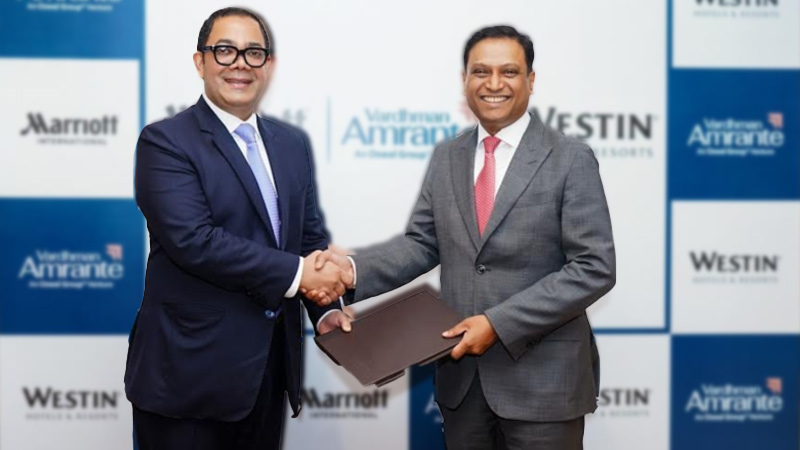
    MUMBAI: In a move that signals the rise of Ludhiana as a luxury hospitality hotspot, Marriott International and Vardhman Amrante, an Oswal Group venture, have signed a deal to bring the globally celebrated Westin Hotels & Resorts brand to Punjab.

    The 200-key property, to be developed at an estimated cost of Rs 260 crore, will be Ludhiana’s first Westin, a brand known for its wellness-first, rejuvenation-focused philosophy. The signing ceremony took place in Delhi, with senior representatives from both sides sealing the partnership.

    Ranju Alex, regional vice president – South Asia, Marriott International, said the Westin Ludhiana would “redefine excellence in guest service” while giving travellers a place to “be the best version of themselves, even on the move.”

    Adish Oswal, chairman, Oswal Group, called the project the “crown jewel” in their hospitality vision, aiming to make Ludhiana a luxury destination for both business and leisure travellers.

    Situated just 20 minutes from Ludhiana Railway Station, 1.5 hours from Chandigarh International Airport, and within striking distance of the upcoming Halwara Airport, the property is designed for maximum accessibility and upscale indulgence.

    Expected features include Westin’s signature Heavenly Spa, WestinWorkout Fitness Studio, a swimming pool, and multiple dining venues, along with a lavish executive club lounge. The hotel will also boast expansive banqueting facilities and a lush outdoor lawn for events.

    With Ludhiana’s growing clout in trade, logistics and manufacturing and increasing appetite for elevated experiences, this Westin opening underscores Marriott’s bullish stance on India’s tier-2 growth markets.

    Wellness, it seems, is boarding the Shatabdi and heading north.
  • Eight years of GST: India’s landmark tax reform turns a corner

    Eight years of GST: India’s landmark tax reform turns a corner

    MUMBAI: Eight years after its midnight launch, the Goods and Services Tax (GST) stands as a defining milestone in India’s economic reform journey. Introduced by the Modi 1.0 government on 1 July 2017, GST replaced 17 indirect taxes and 13 cesses, creating a unified tax system aimed at transforming revenue collection and compliance mechanisms.

    From its inception, GST has aimed to simplify the tax landscape and improve compliance—especially for small and medium enterprises (SMEs). Prime Minister Narendra Modi recently reiterated this in a social media post, calling GST a “powerful engine” of economic growth and an exemplar of cooperative federalism, where states act as equal partners in market integration.

    GST revenues have seen consistent growth—from Rs 7.19 lakh crore in 2017–18 to Rs 22.08 lakh crore in 2024–25. Registrations have more than doubled, rising from 60 lakh to 1.51 crore active taxpayers. The government credits this to technology-led compliance features such as e-invoicing, auto-populated returns, AI-driven analytics, and e-way bills, which together have helped reduce fraud and encourage voluntary adherence.

    The media and marketing industry has also undergone a structural shift under GST. Earlier fragmented under multiple state-level service taxes, the sector now operates under a more uniform 18 per cent GST slab, enabling centralised billing and improving cash flow predictability for agencies and broadcasters. For the television industry, in particular, GST eliminated disparities between content producers and distributors across states, streamlining operations and reducing cascading taxes. However, smaller agencies have flagged concerns about delayed input credit refunds and compliance costs, prompting calls for more sector-specific easing.

    Leaders across industry reflected on GST’s journey. Anand Mahindra, chairman of Mahindra Group, called it “India awakening as a common market for the first time.” Vijay Shekhar Sharma, founder of Paytm, termed GST “the dawn of a new India.” Kiran Mazumdar-Shaw, executive chairperson of Biocon, described it as “transformational,” while also calling for further simplification.

    Despite progress, key issues remain. Over two lakh disputes are pending due to the delayed establishment of GST appellate tribunals. The presence of multiple tax slabs and inverted duty structures—particularly in textiles and fertilisers—continues to create inconsistencies. Petroleum products and real estate remain outside GST’s ambit, limiting its scope as a truly comprehensive indirect tax.

    Tax experts from PwC India advocate for rationalising the rate structure to three tiers and gradually bringing petroleum products under GST to remove economic distortions. The GST Council has indicated that such reforms are under active consideration. Plans to operationalise 31 appellate tribunals by December aim to address the litigation backlog.
     

  • Hybe sets up India subsidiary, aims to localise K-pop in subcontinent

    Hybe sets up India subsidiary, aims to localise K-pop in subcontinent

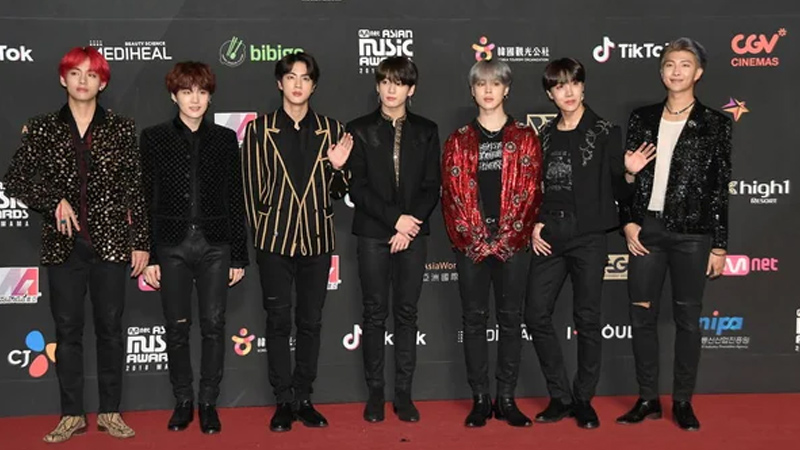
    MUMBAI: Hybe Corp, the entertainment powerhouse behind global K-pop acts including BTS, Seventeen and Txt, has announced the formation of Hybe India, a whollyowned subsidiary set to begin operations later this year.

    The company announced on 30 June that this initiative is part of chairman Bang Si-hyuk’s“multi-home, multi-genre” strategy, aiming to export Hybe’s artist development blueprint to non-Korean markets. HybeIndia is expected to launch between September and October,following market research and corporate set-up.

    With a population of 1.4 billion, a median age of around 28 years, and one of the world’s fastest growing entertainment markets (estimated to grow at 8.3 per cent annually to Rs 3.45 trillion by 2028), India presents a significant opportunity for Hybe global ambitions. The plan is to replicate the K-pop model—training, storytelling, fan engagement—in local contexts. This mirrors earlier expansions in Latin America and the US, where Hybe America’s Katseye entered the Billboard Hot 100 within a year of debut.

    Hybe has great ambitions for India’s young populace. It says that it will get into:

    Localised music production: Hybe India will blend Indian languages and aesthetics with the K-pop system.

    ● Talent discovery and development: Audition-based programmes, mentorships and training camps are expected, possibly in partnership with Indian broadcasters.

    ● Live events and fan engagement: The expansion may lead to concerts by acts such as BTS and Seventeen in India.

    ● Cultural adaptation: Hybe’s production model must adapt to India’s musical landscape—from Bollywood to indie. Bang Si-hyuk previously said K-pop should be seen as a methodology, not merely a genre.

    ● Market infrastructure: India’s growing event infrastructure, seen in shows like Coldplay Live positions it well for large-scale performances.

    Hybe’s India entry follows its expansion into Latin America and China, adding to earlier success in Japan and the United States. The company tailors its approach—from talent sourcing to IP management—based on local needs.

    With Hybe India set to launch in September or October, the road ahead could feature BTS/Seventeen concerts, homegrown idol groups and Indian-language K-pop acts. While details are still emerging, Hybe’s focus on immersive fan experiences and localisation may transform India’s music scene.

    In essence, this is more than corporate expansion. It’s a step toward co-creating a next- generation Indian pop identity, rooted in the precision of K-pop and coloured with local culture.
     

  • Santosh Krishnamoorthy logs into LinkedIn as head of global strategic accounts, India

    Santosh Krishnamoorthy logs into LinkedIn as head of global strategic accounts, India

    MUMBAI: LinkedIn has roped in Santosh Krishnamoorthy as the new head of global strategic accounts, India, as the professional networking giant sharpens its focus on enterprise engagement and premium partnerships in the region.

    Krishnamoorthy brings with him a rich and textured career spanning over 20 years, having held leadership roles at marquee names like Times Network, BBC Worldwide, and ESPN. His career has traverpsed the worlds of media, luxury, and hospitality – giving him a front-row seat to evolving consumer cultures and brand storytelling.

    Known for his ability to build category-defining narratives and forge high-impact partnerships, Krishnamoorthy is expected to spearhead LinkedIn India’s outreach to its most strategic B2B clients, as the platform continues to grow its clout beyond job listings – into content, commerce, and community.

    For a man who’s helped craft brand stories across continents, the next story he writes may just be LinkedIn’s most powerful one yet.

  • Delhi High Court blocks rogue sites from streaming India–England series

    Delhi High Court blocks rogue sites from streaming India–England series

    MUMBAI: In a significant win for content rights holders, the Delhi high court has restrained multiple rogue websites from illegally streaming the India tour of England 2025 (ITE 2025), following a copyright infringement plea filed by JioStar India Pvt Ltd (formerly Star India Pvt Ltd).

    Justice Saurabh Banerjee granted a ‘dynamic+’ injunction, enabling real-time blocking of infringing websites during live match broadcasts.

    The five-Test series between India and England is scheduled from June to August 2025 and JioStar holds exclusive digital media rights for ITE 2025 under a licensing agreement with Culver Max Entertainment Pvt Ltd (Sony).

    JioStar alleged various third party websites of streaming IPL 2025 illegally and were likely to do so again during the England tour.

    As per the court’s orders:

    . Immediate suspension of the four listed rogue domains by their respective registrars, including Namecheap Inc., Sav.com LLC, and Tucows Domains Inc.

    Direction to internet service providers — including Airtel, Jio, and Vodafone Idea — to block access to these websites within 72 hours.

    Permission for JioStar to notify additional infringing websites on affidavit during the series, without the need for separate court orders.

    Coordination mandated between the Department of Telecommunications (DoT) and the Ministry of Electronics and Information Technology (MeitY) to ensure ISP compliance.

    Inclusion of unnamed infringers as John Doe defendants to allow future enforcement.

    This comes after the court addressed the growing challenge posed by “hydra-headed” piracy websites, which routinely mask ownership and replicate via mirror domains.

    “The rights of an intellectual property holder cannot be rendered otiose in this world of rapidly developing technology,” the order observed.

    The judgement referenced recent rulings such as Universal City Studios v. Dotmovies.baby and Applause Entertainment v. Meta Platforms, reflecting evolving judicial strategies to curb digital piracy. The matter is scheduled for the next hearing on 13 October 2025. In the interim, JioStar has been directed to file regular affidavits identifying any new infringing domains during the India–England series.

  • Klook and Bharti Singh take the scenic route to self-love in new campaign ‘The Best You’

    Klook and Bharti Singh take the scenic route to self-love in new campaign ‘The Best You’

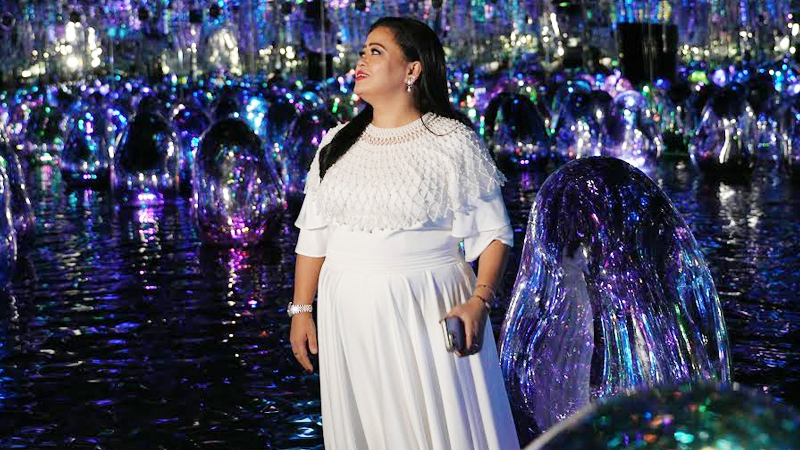
    MUMBAI : Travel platform Klook has dropped its newest India campaign ‘The Best You’, starring none other than Bharti Singh but this time, the queen of comedy isn’t chasing laughs. She’s chasing herself.

    Marking a major shift in travel storytelling, the digital-first campaign trades holiday clichés for heart. Through Bharti’s personal journey across the UAE, from meditative desert safaris to immersive art installations and the campaign frames travel not as escape, but as emotional restoration. And in doing so, it taps into a growing trend: travellers who aren’t just looking to explore the world, but to rediscover themselves.

    “Not many know the journey it took for me to find my place in this industry,” said Singh. “Over the years, I’ve heard countless opinions about how I should live my life. But now, I want to pause, breathe, and do something just for me. Travel gives me that space—to reconnect, to embrace the unknown, and to find joy in the little things that truly touch my heart.”

    Shot across soulful, high-sensory backdrops like ‘TeamLab Phenomena Abu Dhabi’, the three-part brand film traces her emotional arc through moments of vulnerability, wonder, and lightness. Each episode reframes Bharti as more than an entertainer – she becomes a stand-in for every Indian woman seeking stillness in a loud world.

    And the timing couldn’t be better. According to Klook’s Travel Pulse study, two in three millennial and Gen Z Indian travellers now seek transformation over tourist traps. “The Best You” hits that sweet spot of emotion and inspiration — and speaks to a generation that values feeling something over posting something.

    “The Best You is more than just a campaign – it’s Klook’s commitment to making travel feel personal, joyful, and emotionally resonant,” said Klook India and Middle East marketing lead, Shivam Tyagi. “Audiences today want travel that reflects who they are and where they are in life. Travel isn’t just about the places we visit, but the emotions we carry back with us: the laughter, the food, the people we meet, and the stories we create along the way. Bharti’s journey is a testament to what’s possible when you take a moment to choose yourself.”

    The India leg of the global campaign which debuted with Marie Kondo earlier this year is being amplified via a 500+ creator network across Instagram and YouTube, and is supported by a trailer, episodic rollouts, and behind-the-scenes content.

    Because in 2025, it’s not just about ticking off places, it’s about tuning into you.

  • Top marketer Somasree Bose Awasthi steps down from Marico amid shifting FMCG landscape

    Top marketer Somasree Bose Awasthi steps down from Marico amid shifting FMCG landscape

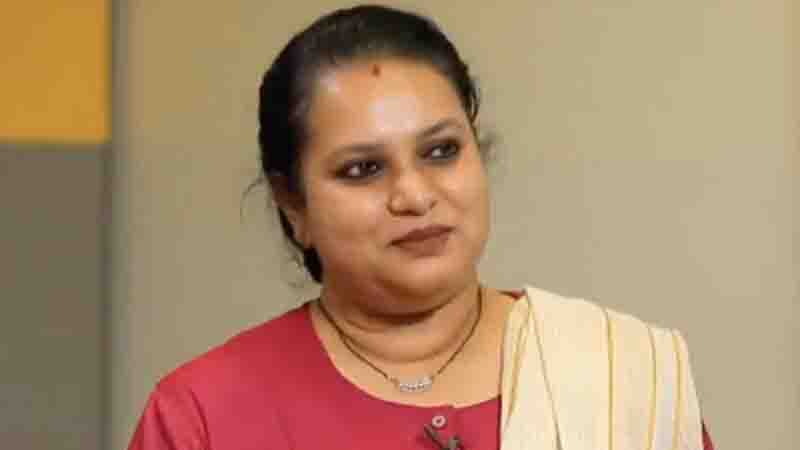
    MUMBAI: Somasree Bose Awasthi has stepped down as chief marketing officer at Marico Ltd, ending a nearly three-year stint at the helm of the company’s marketing function. The news was confirmed today by individuals familiar with the development.

    Somasree joined Marico in late 2022 after a distinguished 15-year career at Godrej Consumer Products, where she rose through the ranks and contributed significantly to brands such as Godrej Aer, HIT, Cinthol and Godrej No.1. At Marico, she focused on strengthening marketing capabilities, mentoring teams, and championing innovation across a wide portfolio.

    During her tenure, she was credited with bringing sharper consumer insight to the table and driving impactful brand work that resonated in an increasingly competitive FMCG landscape. Her approach combined strategic vision with deep empathy for the consumer—qualities that earned her recognition across the industry.

    Her departure comes at a time when Marico, like much of the sector, is navigating a complex retail environment shaped by evolving customer preferences and the convergence of digital and offline channels. The next marketing leader will inherit a strong brand foundation—and the challenge of building on it in a dynamic market.

    Somasree’s next move has not yet been announced, but industry observers and executive search firms will be watching closely.

  • India’s monuments get a colourful glow-up with Birla Opus campaign

    India’s monuments get a colourful glow-up with Birla Opus campaign

    MUMBAI: What do you get when a curious little boy meets an unclickable monument? A splash of imagination, a burst of colour and a nation reminded of its timeless beauty. Birla Opus Paints, under Grasim Industries of the Aditya Birla Group, has launched the next chapter of its “Duniya Ko Rang Do” story with a stunning new campaign titled Celebrating Colours of India.

    This time, the animated Opus Boy returns to brighten not just walls but history itself, beginning with the Gateway of India. In the film, a disheartened street photographer struggles to draw attention to the monument. That’s when our pint-sized hero steps in with a colourful transformation giving the colonial arch a vibrant makeover that captivates onlookers and rekindles national pride.

    The campaign showcases the power of paint to transform not only spaces but also perspectives. It builds on the emotional tone and animation style of the earlier brand launch, but dials it up to a national scale turning iconic monuments into canvases of creativity.

    “The film reinforces the influence of colours and our commitment to beautify spaces while contributing to the national spirit and pride,” said Birla Opus Paints CEO Rakshit Hargave.

    Taking the message a step further, Birla Opus Paints head of marketing Inderpreet Singh added, “By showcasing the potential of our paints with places of heritage and deep cultural significance, we aim to create a powerful story of hope reminding every Indian of the beauty around them.”

    Crafted by Leo India and brought to visual life by Brazil’s Zombie Studios, the film uses rich 3D animation to set an immersive mood. “The grandeur and timelessness of the Gateway make it a perfect canvas,” said Leo India chief creative officer Sachin Kamble. “It’s about inspiring viewers to see the familiar through a transformative lens.”

    The campaign is now live across TV, digital, print, radio, and OOH. And yes, the Gateway of India may be made of stone, but Opus shows us how it can still make hearts bloom.

  • Truecaller dials up the drama with ‘Play’

    Truecaller dials up the drama with ‘Play’

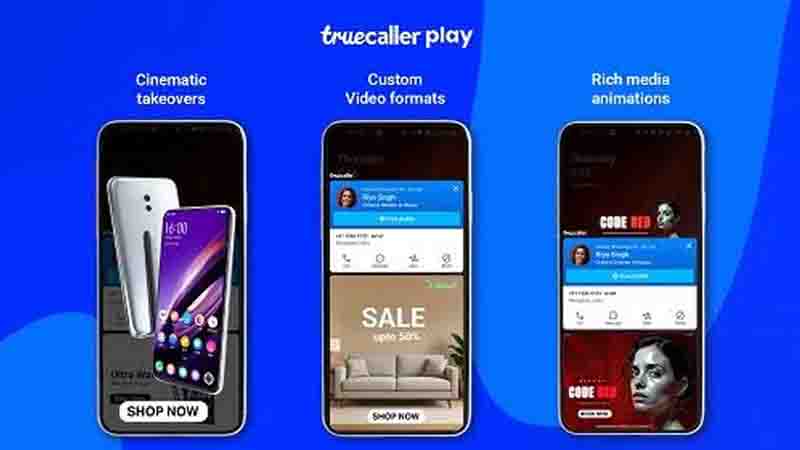
    MUMBAI: Truecaller Ads is turning up the volume on mobile advertising with the launch of Truecaller Play, a shiny new toolbox of rich media ad formats designed to captivate consumers in a mobile-first world. This isn’t your standard banner fare — it’s high-impact, high-recall, and built to feel native in a user’s everyday digital rhythm.

    Touted as the next evolution in brand storytelling, Truecaller Play lets advertisers serve video-first, interactive creatives right inside the app’s daily touchpoints. With users already engaged and distractions at bay, brands now have a golden opportunity to grab attention where it matters most — during moments of pure, undivided focus.

    The new offering compliments Truecaller’s existing heavy-hitters — the 3 billion daily Roadblock and the Truecaller Masthead — by offering an added layer of creative freedom, all powered by the platform’s enviable trove of first-party data. With over 10,000 advertisers on board and more than 5 billion daily brand impressions, the scale is nothing short of staggering.

    Truecaller VP, global ad sales business, Hemant Arora said, “At Truecaller ads, we’ve always believed that trust and utility are the cornerstones of meaningful engagement. With Truecaller Play, we’re not just introducing another ad product; we’re offering brands a rare opportunity to connect during moments of genuine user focus. It’s about placing your story exactly where attention is highest and distractions are lowest. That’s the power and promise of Truecaller Play.”

    What’s in the playbook?

    ●    Custom rich nedia formats: From snackable videos to cinematic ad experiences, tailored to drive everything from awareness to conversions.

    ●    Native integration: Ads that feel like part of the flow, not an interruption.

    ●    Creative in tow: Truecaller Ads’ in-house team helps brands craft thumb-stopping visuals.

    ●    Precision at scale: Target users with laser accuracy, thanks to proprietary user data.

    Whether it’s a D2C disruptor or a legacy FMCG giant, Truecaller Play gives brands the creative arsenal to move beyond static displays and into the age of mobile magic — all while keeping users, well, on the line.

  • Sun Pharma’s #SecondBirthDate returns with a shot of inspiration from Sumit Antil

    Sun Pharma’s #SecondBirthDate returns with a shot of inspiration from Sumit Antil

     MUMBAI: Sun Pharma is back with its acclaimed #SecondBirthDate campaign this National Doctors’ Day, and this time, it packs a javelin throw of inspiration. Fronting the initiative is para-athlete Sumit Antil— a five-time gold medallist, Padma Shri and Khel Ratna awardee — who credits his second shot at life to the doctors who pierced him back together after a devastating accident.

    Antil’s moving story begins in 2015 when a road accident at age 17 shattered his dream of joining the Indian Army or becoming a wrestler. “26 May 2015 is my #SecondBirthDate — the day I began chasing a new dream,” said Antil. “It was the doctors who helped me rise again.”

    The campaign, now in its third year, continues to honour doctors as life-givers, with Antil joining previous campaign faces like actor Sushmita Sen and cricketer Rishabh Pant, both of whom shared their stories of recovery and gratitude.

    Sun Pharma CEO – India business, Kirti Ganorkar said, “#SecondBirthDate is our tribute to doctors who give people a second chance at life. What began three years ago as a humble initiative to celebrate the life of healthcare professionals has grown into a national movement, powered by countless personal stories of hope, courage, and gratitude. We are truly honoured to have Sumit Antil join the initiative this year. His resilience and determination to make a meaningful impact reflects the same spirit that drives our doctors, a shared commitment to making a difference in society.”

    Also lending their voices this year are Indian Idol winner Pawandeep Rajan and digital creator Himani Guher, both sharing deeply personal accounts of resilience and recovery.

    Crafted by Ogilvy India, the campaign has gone live across print and digital, with past champions like Harmanpreet Kaur and Sushmita Sen once again backing the cause.

    Because some heroes wear white coats — and every saved life deserves a birthday party.