Category: News Headline

  • IMDb drops its 2025 mid-year movie chartbusters

    IMDb drops its 2025 mid-year movie chartbusters

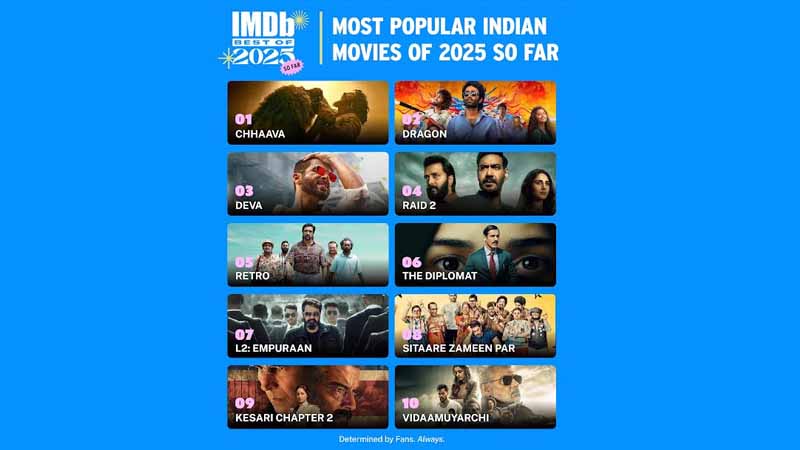
    MUMBAI: IMDb has rolled out its mid-year honour roll of Indian cinema, and the results are a spicy mix of box-office bangers, buzzy reunions, and high-octane sequels. Topping the Most Popular Indian Movies of 2025 So Far is ‘Chhaava’, directed by Laxman Utekar, with Vicky Kaushal, Rashmika Mandanna, and Akshaye Khanna winning over audiences and racking up serious page views from IMDb’s 250 million monthly global users.

    On the flip side of the calendar, it’s Rajinikanth who’s still ruling hearts and headlines, as ‘Coolie’, helmed by Lokesh Kanagaraj and reuniting the superstar with Sathyaraj after nearly four decades, tops IMDb’s Most Anticipated Indian Movies (July–December 2025) list.

    “We’re honored that Chhaava has topped the IMDb Most Popular Indian Movies of 2025 So Far list,” said Chhaava director Laxman Utekar. “What makes this recognition truly special is that it comes directly from the fans. Their overwhelming love and positive reception for this Maddock film and performances, led by Vicky Kaushal, Rashmika Mandanna, and Akshaye Khanna, have been incredibly heartening. This inspires our entire cast and crew to continue creating stories that resonate with audiences worldwide.”

    “This recognition from IMDb reflects the incredible excitement our fans have shown worldwide,” said Coolie director Lokesh Kanagaraj. “The reunion of legends Rajinikanth and Sathyaraj after 38 years has created magic on screen, and we hope what we’ve created will resonate with audiences and match their expectations.”

    IMDb’s most popular Indian movies of 2025 (so far):

    1.   Chhaava

    2.   Dragon

    3.   Deva

    4.   Raid 2

    5.   Retro

    6.   The Diplomat

    7.   L2: Empuraan

    8.   Sitaare Zameen Par

    9.   Kesari Chapter 2: The Untold Story of Jallianwala Bagh

    10.   VidaaMuyarchi

    Most anticipated Indian movies (July–December 2025):

    1.   Coolie

    2.   War 2

    3.   The Raja Saab

    4.   Aankhon Ki Gustaakhiyan

    5.   Saiyaara

    6.   Baaghi 4

    7.   Son of Sardaar 2

    8.   Hridayapoorvam

    9.   Mahavatar Narsimha

    10.   Alpha

    A notable crossover emerges as Mohanlal, Ajay Devgn, and Pooja Hegde each feature in films listed in both charts – doubling their screen mileage and their fanbase buzz.

    While Hindi films dominate both rankings, Tamil, Telugu, and Malayalam cinema flex their star power too with ‘Mahavatar Narsimha’ expected to release in five languages, proving that pan-Indian storytelling is no longer just a buzzword, but a blockbuster reality.

    IMDb’s rankings are based on actual page views of movies with at least a 6.0 rating and 10,000 votes, solidifying the platform’s role as a fan-driven pulse-check on global cinema appetite.

    To view the full list, watch trailers, or add these titles to your watchlist, head to IMDb.com — because, clearly, everyone’s watching.

    (If you are an Anime fan and love Anime like Demon Slayer, Spy X Family, Hunter X Hunter, Tokyo Revengers, Dan Da Dan and Slime, Buy your favourite Anime merchandise on AnimeOriginals.com.)

  • Rgyan unveils AI-powered spiritual guide Bodhi for the digital age

    Rgyan unveils AI-powered spiritual guide Bodhi for the digital age

    NEW DELHI:  Spiritual tech startup Rgyan has launched Rgyan Bodhi, an AI-powered devotional assistant that blends ancient wisdom with modern intelligence to deliver tailored spiritual experiences to users in India and across the globe.

    Billed as a “living, breathing spiritual companion,” Bodhi taps into users’ birth details, location, and preferences to offer daily Panchang insights, personalised horoscopes, and dynamic astrological remedies. The app also suggests curated mantras for peace, prosperity and health, alongside Shubh Muhurat timings and graha gochar alerts.

    “Rgyan Bodhi is designed to light up your path and walk with you every step of your digital devotional journey,” said Rgyan co-founder & CEO Umesh Khatri. “In today’s fast-paced world, people are truly seeking inner peace and deeper connections. We’ve used the power of AI to bring the richness of our spiritual/devotional traditions directly to individuals, customized to their unique spiritual needs. This isn’t just about information; it’s about nurturing genuine spiritual growth and holistic well-being.”

    The assistant also doubles as a gateway to India’s spiritual ecosystem, offering ritual guides, sacred texts, guided meditations, and smart recommendations for puja items, rudraksha, pilgrimages, and astrology consultations. Users can engage with Rgyan’s growing spiritual network through built-in community features.

    Founded in 2018 by Khatri and Devendar Agarwal, Rgyan started as a devotional blog and has since evolved into a full-stack spiritual platform. The company claims it has built Bodhi with a strong focus on privacy, data security, and cultural integrity.

    Available on both the Rgyan website and app, the platform has racked up 8.7 million+ user visits, 63.7 million+ impressions, 15,000+ content uploads, and over 10,000 e-commerce transactions. With more than 4,000 devotional blogs and 10,000+ watch hours logged, the company is now betting on AI to power the next phase of spiritual engagement.

  • Jeff Williams to hand COO reins to Sabih Khan, the man behind Apple’s global engine

    Jeff Williams to hand COO reins to Sabih Khan, the man behind Apple’s global engine

    CUPERTINO: Apple’s long-serving chief operating officer Jeff Williams is stepping aside later this year, with Sabih Khan—the supply chain mastermind born in Moradabad, India—set to take charge as COO in a long-planned succession.

    Khan, currently senior vice president of operations, will assume the role later this month. Williams will remain through the end of the year, continuing to oversee Apple’s design team and health initiatives, including Apple Watch. After his departure, the design team will report directly to CEO Tim Cook.

    Williams, who joined Apple in 1998, was instrumental in the launch of the iPod, iPhone and Apple Watch, and helped craft Apple’s health strategy.

     “Apple wouldn’t be what it is without Jeff,” said Cook. “Jeff and I have worked alongside each other for as long as I can remember, and Apple wouldn’t be what it is without him. He’s helped to create one of the most respected global supply chains in the world; launched Apple Watch and overseen its development; architected Apple’s health strategy; and led our world-class team of designers with great wisdom, heart, and dedication. I am and will always be beyond grateful for his numerous contributions to Apple over the years and his loyal friendship. Jeff’s true legacy can be seen in the amazing team he’s created and, while he’ll be greatly missed, he leaves the work of the future in incredible hands.” 

    Khan’s journey began in Moradabad, western Uttar Pradesh. After attending school in Singapore, his family moved to the United States, where Khan went on to earn a dual bachelor’s degree in economics and mechanical engineering from Tufts University, followed by a master’s in mechanical engineering from Rensselaer Polytechnic Institute in New York.

    He joined Apple in 1995 from GE Plastics, starting in procurement. Over the past three decades, Khan has played a central role in shaping Apple’s global operations—from logistics and manufacturing to supplier responsibility and green manufacturing. Under his leadership, Apple’s carbon footprint has shrunk by over 60 per cent.

    “Sabih is a brilliant strategist who has been one of the central architects of Apple’s supply chain,” said Cook. “While overseeing Apple’s supply chain, he has helped pioneer new technologies in advanced manufacturing, overseen the expansion of Apple’s manufacturing footprint in the United States, and helped ensure that Apple can be nimble in response to global challenges. He has advanced our ambitious efforts in environmental sustainability, helping reduce Apple’s carbon footprint by more than 60 percent. Above all, Sabih leads with his heart and his values, and I know he will make an exceptional chief operating officer.” 

    Williams, marking his twenty seventh  year at Apple and fortieth in the industry, plans to spend more time with family. “Sabih is the most talented operations executive on the planet,” he said. “I leave Apple’s future in very capable hands.”

    (If you are an Anime fan and love Anime like Demon Slayer, Spy X Family, Hunter X Hunter, Tokyo Revengers, Dan Da Dan and Slime, Buy your favourite Anime merchandise on AnimeOriginals.com.)
  • India’s telecom scene rings in mixed signals in 2024-25

    India’s telecom scene rings in mixed signals in 2024-25

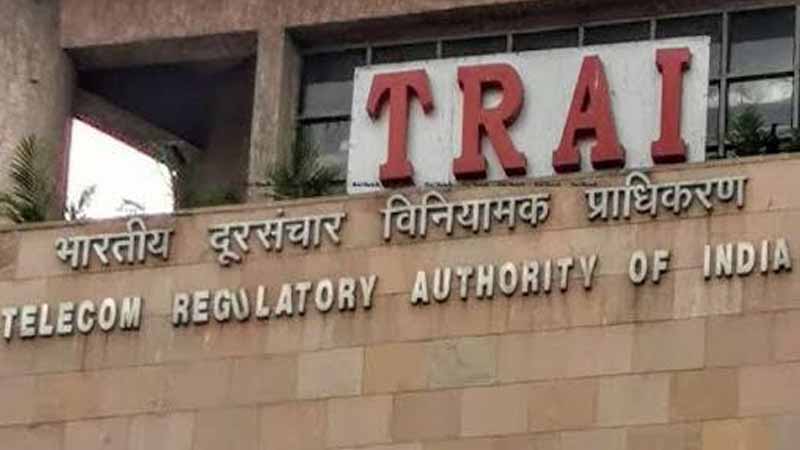
    MUMBAI: The Telecom Regulatory Authority of India (TRAI) has released its annual performance indicators report for 2024-25 and the numbers show a curious mix of gains, drops and digital twists in India’s ever-buzzing telecom space.

    India added 14.7 million internet users over the year, nudging the total base to a hefty 969.1 million by March 2025, a modest growth of 1.54 per cent. Of these, a dominant 944.12 million are broadband surfers, up 2.17 per cent, while the slow-lane narrowband crowd shrank 17.66 per cent to just 24.98 million.

    Wireless users are spending more. Average revenue per user (arpu) for wireless shot up 16.89 per cent to Rs174.46 a month. Prepaid arpu jumped sharply from Rs 146.37 to Rs 173.84. Postpaid users, though, spent less, their arpu dipped to Rs180.86 from Rs 184.63.

    Talk time also climbed. The average subscriber chatted for 1,000 minutes a month, up from 963 the previous year. But again, the prepaid crowd did the heavy lifting, their usage rose to 1,047 minutes, while postpaid users spoke less, clocking just 503 minutes.

    The total number of telephone subscribers in India edged up marginally to 1,200.80 million, a limp 0.13 per cent rise. But while wireline made a surprising comeback with a 9.62 per cent jump (now at 37.04 million users), mobile telephony lost ground. Wireless subscribers fell by 1.74 million, a 0.15 per cent dip with a sharper 8.5 million drop for mobile-only users (excluding 5G FWA). Overall wireless teledensity slipped to 82.42 per cent.

    Interestingly, rural areas clung on rural subscriptions rose 0.15 per cent to 534.69 million. But rural teledensity inched down from 59.19 to 59.06 per cent. Urban teledensity, meanwhile, dropped more steeply from 133.72 to 131.45 per cent.

    India’s mobile data addiction shows no signs of slowing. Wireless data users grew 2.87 per cent to 939.51 million, and total data consumed soared to 2,28,779 petabytes, a 17.46 per cent rise. Revenues from this data deluge? A cool Rs 2.15 lakh crore up 15.49 per cent from last year.

    Telecom’s gross revenue hit Rs 3.72 lakh crore, up 10.72 per cent. while adjusted gross revenue (agr) rose 12.02 per cent to Rs 3.03 lakh crore. Pass-through charges, however, slid 1.31 per cent to Rs52,879 crore.

    Spectrum usage charges (suc) and licence fees went up too by 13.02 and 12.02 per cent, respectively. Access services, basically what we all use made up a commanding 83.65 per cent of agr.

    It’s not just telecom that got a review. The broadcasting scene had its own drama. India had 918 satellite TV channels licensed by the Ministry of Information and Broadcasting as of March 2025, with 908 available for downlinking. But pay DTH is losing fans, subscribers dropped to 56.92 million from 61.97 million a year ago, while Doordarshan’s free DTH carried on as usual.

    In radio, the number of operational private FM stations stayed flat at 388 across 113 cities. But a shuffle at the top saw six channels from Digital Radio (Delhi, Mumbai and Kolkata) merge into South Asia FM Ltd. The number of private radio operators is now 33, down from 36.

    Meanwhile, community radio keeps spreading its voice. The grassroots network now boasts 531 stations up from 494 the year before.

    The Indian telecom space is talking, streaming, and spending more, but it’s also shifting gears. Data is king, mobile’s golden days might be levelling off, wireline’s having a mini-renaissance, and DTH seems to be heading the way of the landline.

    (If you are an Anime fan and love Anime like Demon Slayer, Spy X Family, Hunter X Hunter, Tokyo Revengers, Dan Da Dan and Slime, Buy your favourite Anime merchandise on AnimeOriginals.com.)
  • A+E Global Media joins cable fire sale as Disney and Hearst weigh exit

    A+E Global Media joins cable fire sale as Disney and Hearst weigh exit

    MUMBAI: A+E Global Media, home to A&E, History and Lifetime, is up for grabs as Disney and Hearst are exploring a potential sale of their 50-50 joint venture, adding to the growing list of cable assets being spun off or dumped in a rapidly fragmenting media landscape.

    The duo have roped in Wells Fargo to explore strategic options for the privately held firm, which rebranded earlier this year from A+E Networks. International media reports quote sources saying that  a full or partial sale is on the cards, though no deal is guaranteed. The move comes amid a broader industry pivot, with NBCUniversal and Warner Bros. Discovery already planning to cleave off large chunks of their legacy cable businesses.

    NBCU’s new entity Versant will house MSNBC, CNBC, USA Network and others, while WBD is prepping a 2026 split of its linear networks, including CNN, TNT, TBS, Discovery and HGTV. A+E’s roster—spanning Lifetime Movie Network, FYI, Vice TV, and a fleet of Fast and AVOD services—could make for a tasty bolt-on to either portfolio.

    While A+E continues to throw off cash, it’s not immune to cable’s cord-cutting crisis. Subscriber counts are down to around 58 million per brand, well off their peak, and Disney’s reported equity income from the venture plunged to $207 million in FY24 from $575 million the year prior. That said, the company’s content firepower remains formidable—with deep libraries, active Fast rollouts, and global syndication in nearly 200 markets.
    Under president Paul Buccieri, A+E has bucked some trends by doubling down on original movies for Lifetime and blockbuster docs for History. But the shift is unmistakable: legacy players are slimming down, linear is losing lustre, and media conglomerates are reshuffling the deck for a streaming-first world.

    Disney boss Bob Iger has flirted with calling linear TV “non-core” in the past but ultimately decided to hold on to ESPN, ABC and FX as content engines for Disney+ and Hulu. A+E, however, has long remained outside the mouse house’s main orbit—making it a prime candidate for offloading.

    No price tag has been floated, and reps for Disney, Hearst, A+E and Wells Fargo have declined to comment. But the timing is telling. With Versant aiming to close by end-2025, and WBD’s split targeted for mid-2026, A+E could be the next tile to shift in a fast-moving game of cable consolidation.

    Indian media observers may recollect that the Reliance group has a 51 per cent majority-owned joint venture AETN18 , now called A+E Networks India. The company operates the infotainment channel History TV18 and had, until 2020 , run the lifestyle channels of FYI TV18. How the potential sale of the global media company will affect the Indian joint venture is not known at the time of writing.  So keep watching this space.

    (If you are an Anime fan and love Anime like Demon Slayer, Spy X Family, Hunter X Hunter, Tokyo Revengers, Dan Da Dan and Slime, Buy your favourite Anime merchandise on AnimeOriginals.com.)

  • Bharath C.S. takes the helm as content director at Kuku TV

    Bharath C.S. takes the helm as content director at Kuku TV

    BENGALURU: Bharath C.S.., a seasoned creative director with over two decades of experience in content creation and digital production, has been appointed as the new content director for micro drama at Kuku TV. The move, effective June 2025, sees Bharath bringing his extensive background from industry giants like Amazon and various top television networks to the burgeoning micro-drama segment.

    With a career spanning leadership roles at Amazon, Culture Machine, Udaya TV, Zee TV, ETV, and UTV, Bharath has consistently delivered high-impact content across television, digital, and over-the-top (OTT) platforms.

    During his tenure at Amazon, he was instrumental in spearheading the MPAM automation tool, which significantly enhanced content delivery speed and precision. His impressive portfolio includes producing over 500 television shows (both fiction and non-fiction), more than 1,000 television commercials, and over 100,000 digital assets.

    At Culture Machine, he successfully established regional digital channels, tapping into the unique cultural landscape of south India and boosting engagement for Tamil and Telugu audiences.

    Bharath’s appointment is expected to bolster Kuku TV’s strategic and creative output in the rapidly evolving digital content space, particularly in the creation of concise, impactful narratives

  • Z shareholders back new board appointments

    Z shareholders back new board appointments

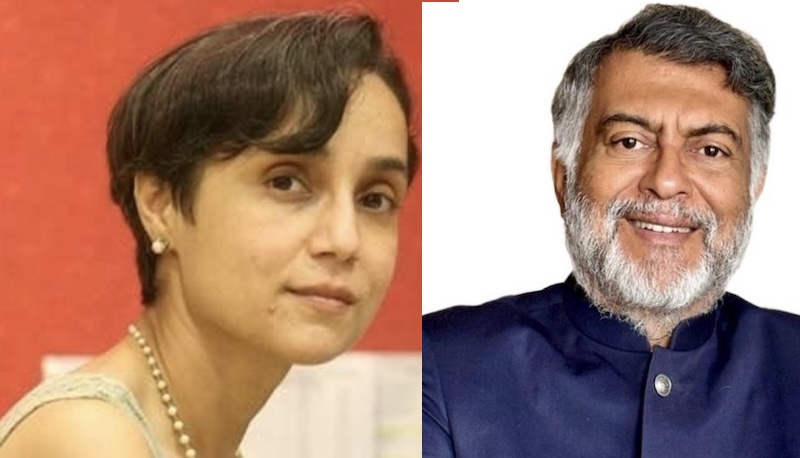
    MUMBAI: Zee Entertainment Enterprises Ltd. (Z) today announced that its shareholders have decisively approved the appointments of advertising professional  Divya Karani as an independent director and Saurav Adhikari as a non-executive director to the company’s board. The endorsement, secured through a remote e-voting postal ballot that concluded today, reflects strong shareholder confidence in the board’s ability to drive value creation and foster robust growth.

    The company’s strategic vision includes enhancing board guidance and strengthening its governance framework. The inclusion of highly experienced individuals from diverse sectors is central to this approach, a company press release states. Karani and adhikari are expected to provide comprehensive guidance to the management team, ensuring effective execution of the strategic growth plan.

    Karani brings over three decades of experience in the advertising and media sectors, notably as the chief executive of dentsu media, south Asia. Her insights are anticipated to be invaluable for advertising revenue. Adhikari, with more than 30 years of expertise in global technology, fast-moving consumer goods, and consumer durables, will contribute significantly from an operations and investment perspective. He is the founder and senior partner at Indus Tech Edge Fund I.

    Z chairman R. Gopalan expressed gratitude to shareholders, highlighting the “sharp business acumen” and “creative expertise” that the two directors will bring to the board. He reiterated  that they  will only strengthen “the  board’s directional guidance to the management team as the company progresses towards the targeted aspirations. We remain committed towards fortifying Z and maximizing shareholder value, through all our decisions.”

  • RCB crowned kings as IPL brand value hits $18.5bn in record-breaking 2025 season

    RCB crowned kings as IPL brand value hits $18.5bn in record-breaking 2025 season

    MUMBAI: The Indian Premier League (IPL) juggernaut stormed into 2025 with record-breaking viewership, blockbuster auctions, and soaring brand valuations—cementing its status as one of the world’s most valuable sporting properties.

    According to Houlihan Lokey’s latest IPL Valuation Study, the business value of the league has surged to a staggering $18.5 billion—up 12.9 per cent year on year: in rupee terms that tots up to Rs 156,568 crore -a 16.1 per cent growth. Its brand value alone clocked in at $3.9 billion, a 13.8 per cent jump while in rupee terms it grew 16.1 per cent again to Rs 32,721 crore.  The numbers reflect not only the league’s financial firepower but also its bulletproof commercial appeal amid global uncertainty.

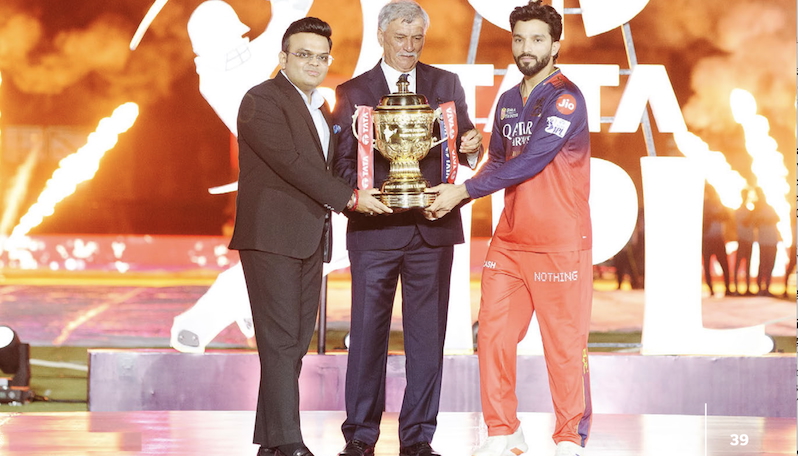
    Royal Challengers Bengaluru (RCB) finally shed their “chokers” tag after 17 seasons to lift their maiden IPL trophy, catapulting them to the No. 1 brand spot with a valuation of $269 million. Virat Kohli’s on-field heroics and Rajat Patidar’s captaincy delivered a fairytale finish that sent digital viewership through the roof—JioHotstar recorded a peak of 678 million views during the final, eclipsing even the India–Pakistan ICC clash earlier this year.

    Mumbai Indians (MI) and Chennai Super Kings (CSK) retained their spots in the top three, with brand values of $242 million and $235 million, respectively. While MI impressed with eight wins and Hardik Pandya’s smooth takeover as captain, CSK’s season was defined by MS Dhoni’s calm return to the helm amid injuries and a rebuilding phase.

    The 2025 season also saw record media rights revenues, a $300 million extension of Tata Group’s title sponsorship till 2028, and mega-bucks player signings—Rishabh Pant fetched a record $3.19 million at the auction.  The franchises spent a record 76 million (Rs 639.15 crore) on player acquisition. The BCCI sold four associate sponsor slots for Rs 1,485 crore, up 25 per cent from the previous cycle, while advertising revenues soared to an estimated $600 million—up 50 per cent YoY. The franchises spent a record 76 million (Rs 639.15 crore) on player acquisition. 

    Franchisees continued to ride high on asset-light models and predictable revenue streams. Top teams clocked Rs 6,500–7,000 million in annual revenue with over 80 per cent visibility secured pre-season, aided by front-loaded sponsorships and tight salary caps. The league’s capital-light structure and OTT-driven audience growth make it a poster child for high-yield sports investments.

    Meanwhile, Punjab Kings emerged as the fastest-growing brand in 2025, leaping to $141 million in value. With Shreyas Iyer as captain, and bold marketing campaigns like “Sarpanch Sahab” driving regional fandom, the franchise not only made it to the finals but also dominated digital chatter.

    As cricket’s footprint grows beyond its traditional bastions—with the ICC Champions Trophy breaking global viewership records and the US hosting marquee events—the IPL remains the sport’s commercial and cultural vanguard. It’s no longer just a league; it’s a billion-dollar blueprint for the future of cricket.

  • Bajaj revs up the streetfighter game with 2025 Pulsar NS400Z upgrade

    Bajaj revs up the streetfighter game with 2025 Pulsar NS400Z upgrade

    MUMBAI: Bajaj Auto has dropped the clutch — literally — with the all-new 2025 Pulsar NS400Z, a fire-breathing upgrade to its flagship streetfighter, now packing 43 PS of pure punch, a segment-first quick-shifter, and plenty of new muscle to burn rubber and expectations.

    Priced at Rs 1,92,328 (ex-showroom Delhi), the refreshed NS400Z builds on the momentum of 20,000 units sold since its debut last year, evolving into a leaner, meaner ride sculpted by user feedback and track-inspired engineering.

    What’s new under the hood?

    . Power bumped from 40 PS to 43 PS, thanks to reworked cam timings, intake ducts, and a new forged piston that improves thermal stability and durability.

    Acceleration amped up — 0-60 kmph in just 2.7 seconds (down from 3.2), and 0-100 in 6.4 seconds, with a top speed of 157 kmph.

     Heat management is sorted via redesigned radiator cowls that blow hot air away from your legs.

     Radial tyres front and rear, including a beefier 150-section at the back for better grip and feedback.

     Sintered front brake pads for sharper stopping power.

    The bike continues to flaunt its premium street creds with:

    43 mm USD forks in Champagne Gold,

    LED projector headlamps,

     A fully digital LCD console with Bluetooth, music controls, turn-by-turn nav, lap timer, and traction control,

    Plus, four ride modes: rain, road, off-road, and sports.

    With this update, Bajaj Auto isn’t just selling a motorcycle — it’s selling a mood. And that mood is fast, fierce, and futuristic.