Category: News Headline

  • WPP partners with IICT to boost creative and digital talent in India

    WPP partners with IICT to boost creative and digital talent in India

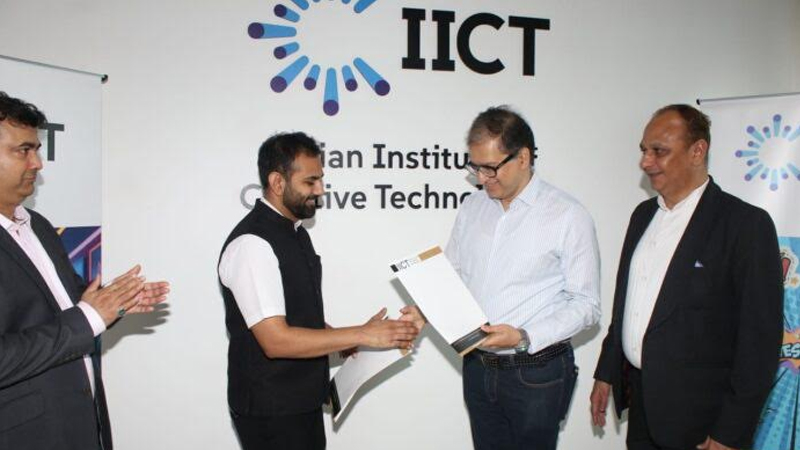
    MUMBAI: When ad world muscle meets academic hustle, you get a creative spark like no other. In a move that blends Madison Avenue with Mumbai’s media dreams, WPP, the global giant in marketing services has signed a landmark Memorandum of Understanding (MoU) with the Indian Institute of Creative Technologies (IICT), a Ministry of I&B-supported initiative that aims to revolutionise creative and digital skilling in India.

    This partnership positions WPP as the first agency group to formalise such a comprehensive engagement with IICT, joining the league of global tech titans like Google, Meta, Microsoft, JioStar, Nvidia, and Adobe all of whom have pledged support to build India’s creator economy.

    India, WPP’s fifth largest and fastest-growing market, now becomes the testing ground for a powerful alliance between academic rigour and industry firepower.

    Under the collaboration, WPP will Co-develop IICT’s curriculum to reflect real-world creative, media, and tech skills, Provide mentorship for IICT’s startup incubator, Engage faculty on live projects and joint research, Support technology planning for the IICT campus, Assist with promotional and outreach strategies.

    “This collaboration is a testament to WPP’s deep commitment to nurturing talent and driving innovation in India’s dynamic media and entertainment sector,” said WPP country manager for India CVL Srinivas. “By combining IICT’s academic rigour with WPP’s global industry leadership, we aim to equip the next generation of creative professionals with the skills and insights needed to thrive in a rapidly evolving technological landscape.”

    The alliance comes close on the heels of IICT’s inauguration at the newly established IICT–NFDC campus in Mumbai, a high-profile event attended by Ashwini Vaishnaw, union minister for railways, information & broadcasting, and electronics & IT, and Devendra Fadnavis, chief minister of Maharashtra.

    IICT board member Ashish Kulkarni added, “With WPP, we are bringing together the best in creative, technology, and media. This partnership will help make IICT a world-class institution on par with IITs and IIMs, preparing market-ready talent for tomorrow’s India.”

    With India inching closer to becoming a global creative powerhouse home to over 75 crore internet users and a booming content economy, the timing couldn’t be more apt. If the next big idea is born at the crossroads of commerce and creativity, WPP and IICT might just be laying the road.

  • RuPay enters strategic year-long partnership with BookMyShow

    RuPay enters strategic year-long partnership with BookMyShow

    MUMBAI: BookMyShow, one of India’s leading entertainment destinations and its parent company Bigtree Entertainment Pvt. Ltd. have entered into a strategic, year-long partnership with RuPay, a global card payment network from National Payments Corporation of India (NPCI). The collaboration spans both digital and on-ground channels, bringing a unified entertainment and payment experience to millions of consumers across India. As the live entertainment ecosystem continues to flourish, this partnership aims to strengthen the intersection of entertainment, access and seamless payment experiences for scores of young, digitally savvy consumers seeking leisure offerings made affordable and seamless.

    Through this alliance, RuPay card holders will enjoy special access to some of the most anticipated properties from the house of BookMyShow – Sunburn 2025, Lollapalooza India 2026, Bandland 2026 as well as a curated calendar of live event concerts featuring top Indian and international artists. These benefits include early pre-sale access, exclusive ticketing zones, curated food and beverage offerings, merchandise perks, fast-lane entry for top-ups and access to dedicated lounge areas at select venues. RuPay will also activate experiential spaces on-ground designed to elevate brand-consumer engagement in memorable, high-impact ways.

    Digitally, BookMyShow will integrate RuPay across key touchpoints including its homepage and post-transaction journey, directing users to discover exclusive RuPay-led benefits and access. This partnership not only unlocks tangible perks for users but also showcases how modern financial services can embed themselves within high-interest cultural moments through immersive offerings, deepening relevance among next-gen consumers looking for not only enriching experiences but also an ease in accessing and paying for them.

    NPCI spokesperson said, “Entertainment and cultural experiences are a growing area of interest, especially for younger, digital-first users. We are building deeper engagement with our users by connecting with what resonates to them. Through this partnership, we aim to offer meaningful value combining access, ease, and exclusive benefits to position RuPay not just as a payment option, but as an enabler to rewarding and relevant experiences.”

    A BookMyShow spokesperson commented on the partnership stating, “Live entertainment in India is undergoing a remarkable transformation as audiences increasingly seek experiences that are not only entertaining but also personalised, immersive and value-driven. At BookMyShow, we remain committed to innovating at the intersection of technology, culture and consumer expectations to meet this evolving demand for our partner brands. Our partnership with RuPay marks a significant step in re-imagining access and engagement for today’s culture-forward consumer ensuring that the joy of entertainment goes beyond mere attendance to becoming something truly experiential, memorable and valued.”

  • Indian broadcasters push for separate commercial TV rates as streaming bites

    Indian broadcasters push for separate commercial TV rates as streaming bites

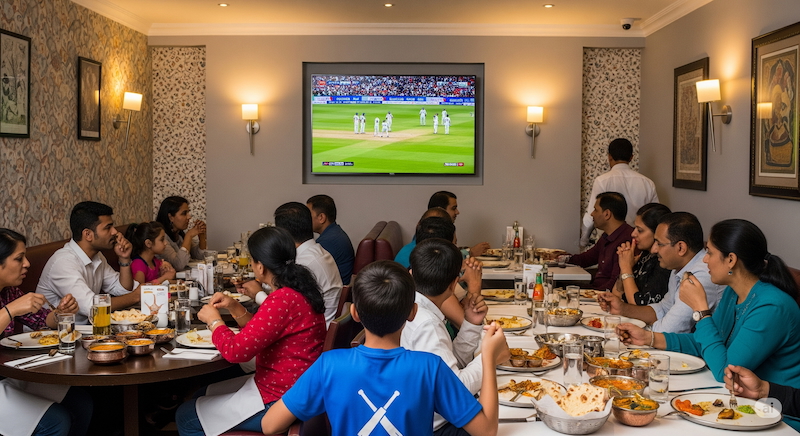
    MUMBAI: Indian television broadcasters are mounting a fierce campaign to restore separate pricing for commercial and household subscribers, arguing that forcing hotels and restaurants to pay the same rates as ordinary homes is killing their business. 

    The Indian Broadcasting and Digital Foundation (IBDF), which represents the country’s main TV networks, has petitioned the Telecom Regulatory Authority of India (TRAI) to scrap uniform pricing rules introduced in 2015. The lobby group contends that charging a Mumbai hotel chain the same rates as a middle-class family is not just outdated—it is commercial suicide. 

    “Like every other industry, TV services should recognise the higher value and different use cases in commercial environments,” the IBDF argued in its submission to TRAI. Before 2015, broadcasters enjoyed the freedom to charge premium rates to businesses and negotiate terms directly with commercial customers. That changed when TRAI imposed a one-size-fits-all pricing regime, stripping away broadcasters’ ability to set distinct commercial tariffs. Now, as television viewership plummets in favour of digital streaming platforms like Netflix,  Amazon Prime Video, JioHotstar, Z5 and SonyLiv,  broadcasters are fighting for their financial lives. 

    They argue that restoring separate, higher tariffs for commercial users could help the traditional TV industry weather the streaming storm. 

    TRAI has launched a review of the pricing structure and is consulting stakeholders—including broadcasters, direct-to-home providers, and cable operators—on whether uniform rates should continue. The regulator has not indicated when it might reach a decision. 

    The IBDF has branded the current rules as “too restrictive” and wants a return to flexible, market-driven negotiations with commercial subscribers. For an industry grappling with declining reach and stagnant subscription revenues, every rupee counts.

     The outcome of TRAI’s review could reshape India’s television landscape, determining whether broadcasters can extract more value from their dwindling commercial customer base or remain trapped in a uniform pricing straitjacket as viewers continue their exodus to streaming services.  

  • 70 per cent of consumers tune out repetitive ads: Trade Desk report

    70 per cent of consumers tune out repetitive ads: Trade Desk report

    MUMBAI: A new study by global advertising technology leader, The Trade Desk (Nasdaq: TTD) titled, “The Untapped Opportunity of Omnichannel,” reveals that an overwhelming 70 per cent of Indian consumers are tired of seeing the same ads repeatedly on a single channel. The findings underscore the urgent need for brands to adopt omnichannel strategies to combat the escalating ad fatigue in India.

    According to the report, India now ranks third globally in ad fatigue, trailing only the United States and Australia, surpassing the global average of 68 percent. With users in India spending about nine hours a day across an average of 5.4 media channels– including OTT/CTV, streaming music,news and websites, gaming and more, fragmentation has become a key hurdle for modern marketers.

    “While media fragmentation poses a real challenge, our research shows that brands that embrace it through an omnichannel approach can better manage frequency across channels, publishers, and platforms,” said The Trade Desk managing director, Tejinder Gill. “By placing the audience at the center and aligning with how they actually consume media, omnichannel campaigns not only improve the ad experience but also drive stronger brand outcomes.”

    The study draws a distinction between omnichannel and multichannel advertising strategies and their impact on consumer engagement. While both approaches use multiple channels, the distinction lies in execution. Multichannel campaigns often operate in siloswithseparate strategies across different platforms. In contrast, omnichannel campaigns unify three or more digital channels (such as mobile, display, native, video, audio, DOOH, or OTT/CTV) into a connected experience that optimizes message sequencing and frequency based on how users consume media.

    Recent studiesreveal that omnichannel approaches significantly outperform disconnected media strategies, reducing ad fatigue by 2.2 times and boosting persuasive impact by 1.5 times. Additionally, advertisers leveraging The Trade Desk’s platform for omnichannel campaigns saw a 1.7 times increase in purchase intent whenthree channels are connected holistically. The impact of strategic alignment across channels on the open internet is further validated by findings showing a 77 per cent uplift in return on investment when five channels are integrated.

    The report also highlights the unique strengths of each channel, providing a roadmap for brands and agencies seeking to build effective omnichannel plans:

    CTV/OTT: With 73 per cent of Indian viewers discovering new brands while streaming, significantly above the global average of 51 per cent, CTV/OTT stands out as a leading channel for brand discovery. Two-thirds (66 per cent) of consumers trust the ads they see on these channels, with a similar share (69 per cent) recalling the brands featured. This powerful combination of discovery, credibility, and emotional storytelling positions CTV/OTT as a cornerstone of any omnichannel strategy.

    ·  Streaming Audio: Provides a unique opportunity to reach audiences in moments few other media can, whether they’re starting their day or seeking background companionship. It is quickly emerging as a high-impact channel for both brand discovery (71 per cent) and recall (66 per cent), rapidly closing the gap with CTV/OTT. The rising popularity of podcasts, especially among Gen Z and Millennials, further expands the advertising potential for brands.

    ·  Digital Out-of-Home (DOOH): As a high-frequency, low-intrusion format, DOOH plays a key role in upper funnel brand-building.Nearly half (47 percent) of Indian consumers notice DOOH formats such as billboards and posters on a daily basis. This makes DOOH a vital complement to digital campaigns, driving mass awareness at scale.

    ·  Gaming: No longer a niche, gaming is now a mainstream channel across age groups. Over 80 percent of Millennials and Gen Zers playgames weekly, higher than the country average of 74 per cent. Most gamers are receptive to ads in exchange for in-game rewards, with Millennials being most receptive. As part of an omnichannel mix, gaming offers immersive, value-driven ad experiences that foster deeper brand engagement.

    ·  Display &Online Video: Display advertising excels at mid-funnel reinforcement, particularly among Millennials, 71 per cent of whom recall display ads. Online video, by contrast, thrives in laid-back, passive moments like casual browsing and proves especially effective with Gen Z, with 72 per cent recalling brands seen in this format. Together, these channels allow brands to strategically tailor campaigns by generation and funnel stage, balancing reach and relevance in a holistic omnichannel approach.

    The full report is available for download here

  • IAMAI announces new leadership for Digital Gaming Committee

    IAMAI announces new leadership for Digital Gaming Committee

    MUMBAI: The Internet and Mobile Association of India [IAMAI] announced the appointment of Bhavit Sheth, co-founder & COO of Dream Sports (Dream11), as the new chairman of its Digital Gaming Committee. Nikhil Bansal, Industry Head – Gaming & eServices at Google has been appointed as the co-chairman of the Committee.

    Sheth and Bansal takes over the leadership from Bhavin Pandya, co-founder, Games 24X7, who served as a chairman of the committee and Dilsher Malhi, founder and CEO, Zupee, and Ankush Gera, co-founder & CEO, Junglee Games, as co-chairs of the committee.

    The IAMAI Digital Gaming Committee represents the interest of India’s rapidly growing digital gaming ecosystem, which includes game developers, platforms, technology providers, and service partners. The committee plays a pivotal role in driving dialogue with policymakers, advocating for responsible gaming, and supporting the sustainable growth of the sector.

    Bhavit Sheth, with his deep experience in building one of India’s largest sports technology companies, brings valuable insights into entrepreneurship, user engagement, and industry advocacy. Nikhil Bansal, through his role at Google, brings a global perspective on digital gaming trends, monetization strategies, and regulatory best practices.

    On his appointment, Sheth said: “It’s an honour to take on the role of Chairman of IAMAI’s Digital Gaming Committee. The sector has immense potential to drive innovation, create jobs, and contribute to the vision of Digital India. I look forward to working closely with industry peers and policymakers to promote responsible gaming and build a sustainable ecosystem that benefits players, creators, and the broader community.”

    Bansal said, “I’m excited to join as co-chairman of IAMAI’s Digital Gaming Committee and collaborate with stakeholders to unlock new opportunities for growth. India’s gaming landscape is evolving rapidly, and by fostering dialogue, best practices, and innovation, we can help shape an inclusive and thriving industry that delivers great experiences for millions of gamers.”

  • McDonald’s India launches ‘It’s a McD Thing’ campaign – redefining ‘Adda’ culture

    McDonald’s India launches ‘It’s a McD Thing’ campaign – redefining ‘Adda’ culture

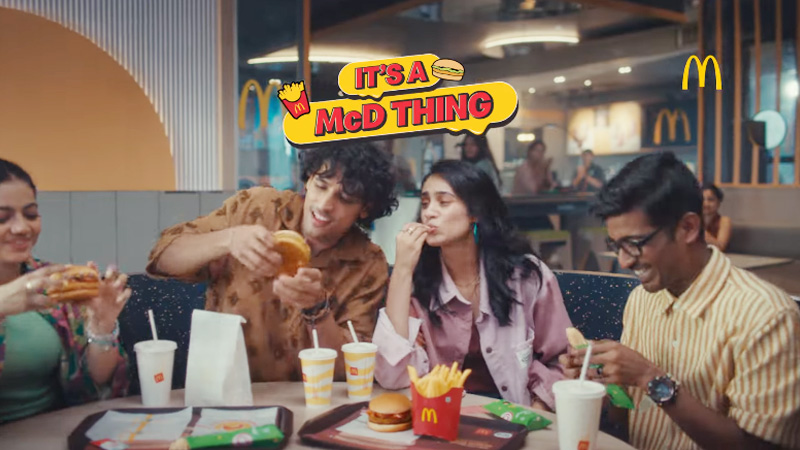
    MUMBAI – Celebrating the magic of togetherness and spontaneous moments that have defined the McDonald’s experience for generations, McDonald’s India (West & South) has launched its latest brand campaign – ‘It’s a McD Thing’. This new campaign conceptualised by DDB Mudra is all about the strategic narrative that elevates McDonald’s restaurants into a cultural canvas where life’s unscripted moments create lasting connections and memories.

    The campaign launches with two distinctive films that capture unique ‘McD moments’ in different contexts. The first film beautifully leverages behavioural insights about Gen Z’s relationship with physical spaces in an increasingly digital world. The narrative centers on a quintessential ‘McD moment’ where a group of concert-bound friends are enjoying their time at McDonald’s before heading out to the event. Instead of getting disheartened the group spontaneously orchestrated a jam session using McDonald’s food, packaging, beverages, and table-tapping beats, transforming disappointment into a moment of joy and connection.

    The second film highlights McDonald’s as a destination for professionals working late at night. Set in a quiet office during late hours, it follows a programmer who is startled by mysterious growling sounds. The tension builds until he discovers it’s simply his colleague’s hungry stomach. The scene transitions to both of them enjoying a meal at McDonald’s, reinforcing the brand’s commitment to being there whenever hunger strikes. The tagline ‘Your night shift, our night shift’ emphasizes McDonald’s presence during unconventional hours and showcases the brand’s regional connection.

    McDonald’s India (W&S) CMO Arvind R.P. said, “McDonald’s has been that special place where friends gather, celebrations happen, and everyday moments become memories. With ‘It’s a McD Thing,’ we are celebrating those authentic connections and spontaneous moments that can only happen at McDonald’s where our food becomes the backdrop for life’s meaningful experiences.”

    DDB Mudra executive creative directors, Harshada Menon & Siddhesh Khatavkar said, “McDonald’s has its own unwritten rules when it comes to the way fans order, eat, share and hang out. With ‘It’s a McD Thing’, we wanted to spotlight those quirks and rituals that are so familiar, iconic, and happen only at McDonald’s. In other words, it’s not just a place to eat; it’s where stories begin. A cultural space where everyday moments turn into lasting memories. That’s what makes McDonald’s unique.”

    The campaign taps into the memories of those who grew up with McDonald’s as their go-to meetup spot, from first dates and post-exam celebrations to late-night study sessions and weekend hangouts. It acknowledges the restaurant’s unique position in India’s cultural fabric as an ‘adda’ or communal gathering space that crosses generations.

    The films are also created with a distinctly local flavour and the tagline ‘Our food, your mood’. This campaign has been rolled out across television, digital platforms, and in-restaurant promotions designed to encourage user-generated content.

    The brand films were created to resonate with both Gen Z customers who are creating new memories at McDonald’s and older customers who carry fond recollections of their own McDonald’s moments from years past.

    Every Indian has a McDonald’s story, whether it’s celebrating a birthday, catching up with old friends, or just grabbing a quick bite during college breaks. This campaign is an invitation to remember those special McDonald’s moments and create new ones. That’s what makes it ‘a McD thing’. Those shared experiences happen naturally when good food and good company come together.

  • Shakti in the City as Sheshakti Mumbai puts women at the wheel of change

    Shakti in the City as Sheshakti Mumbai puts women at the wheel of change

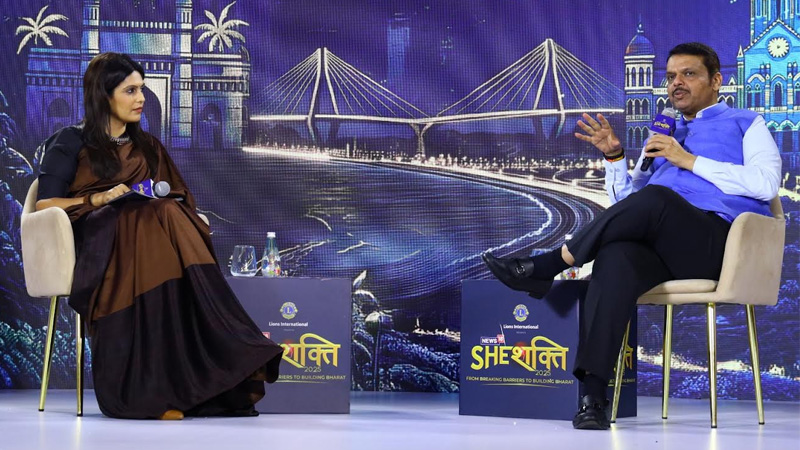
    MUMBAI: Mumbai got a power surge and this time, it wasn’t from the grid. News18’s Sheshakti returned with its third and most dynamic edition yet, lighting up Mumbai with stories of women who are not just breaking barriers but blueprinting Bharat’s future. Organised in partnership with Lions International, the 2025 edition marked a first the regional debut of the flagship women’s leadership platform turning the spotlight on Maharashtra’s changemakers.

    Titled “From Breaking Barriers to Building Bharat”, the theme underscored a pivotal shift: from metro corridors to grassroots campaigns, from boardrooms to classrooms, the narrative of power is now as plural as it is personal. With over two impactful editions behind it, Sheshakti has evolved into more than a platform, it’s a movement.

    The Mumbai edition celebrated a formidable lineup of trailblazers from bureaucrats and bankers to  actors and entrepreneurs. Each speaker brought to the stage her truth, grit, and roadmap for India 2.0.

    Ashwini Bhide, principal secretary to the Maharashtra chief minister and the woman behind Mumbai’s mega metro projects, reflected on the complexity and scale of city infrastructure: “Working on mega projects in Mumbai is a challenge and an opportunity. Unless we create global-standard public transport, Mumbaikars will continue to struggle,” she said, reinforcing the urgent need for inclusive urban solutions.

    Actor Shriya Pilgaonkar gave the inside track on evolving female roles in Indian cinema: “You’ve got to be stubborn about your dreams and flexible about your plan. The industry is quick to box you. Stay in your power and don’t hand it over to others.”

    Bajaj Finserv group president designate (investments) Lakshmi Iyer brought finance into focus: “Financial freedom should feel like oxygen for women unseen, constant, and essential.” Her session, titled ‘The ROI of Being She’, highlighted the non-negotiable value of economic independence.

    Aditya Birla Education Trust founder Neerja Birla spoke candidly about India’s silent mental health crisis: “We’re conditioned to put ourselves last. But if your own cup is half full, how can you pour into others’ lives?” Her message was clear self-care is the starting point of leadership.

    Closing the edition was Maharashtra chief minister Devendra Fadnavis, who made a compelling economic argument for gender parity: “Globally, the nations that recognised the value of women accelerated their growth. If Maharashtra wants to move ahead, we must put women in the front seat.”

    Fadnavis reflected on the era of “sarpanch-patis” and “corporator-patis”, when men unofficially held the power behind elected women leaders in local bodies. “That began to change in 1997,” he noted, “and by 2029, when it becomes compulsory to allocate tickets to women, we won’t stop at 33 per cent, we’ll reach 50 per cent.”

    From mental health to metro lines, movie roles to money goals, Sheshakti’s Mumbai edition was a full-spectrum showcase of women who aren’t just participating, they’re pioneering.

    Because when women lead from every postcode and every profession, the question is no longer if Bharat will change. It’s how soon.

  • ‘Hoopr Smash partners with Turnkey Music

    ‘Hoopr Smash partners with Turnkey Music

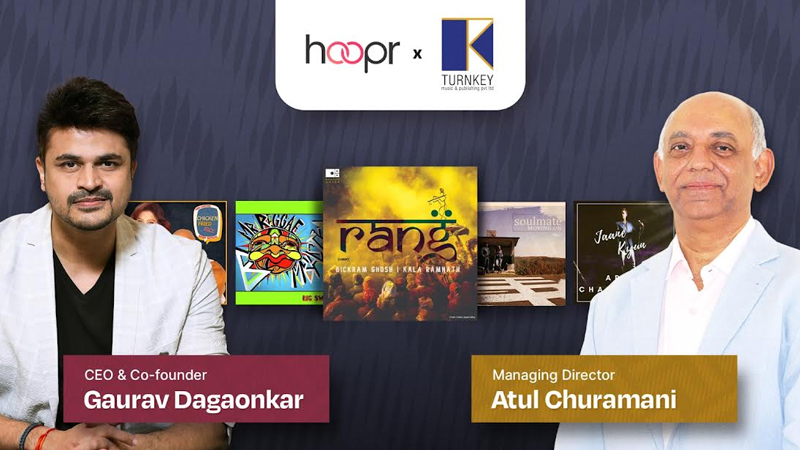
    MUMBAI: Hoopr Smash announced its strategic partnership with Turnkey Music & Publishing Pvt. Ltd., an independent music publisher, founded and headed by seasoned music industry veteran, Atul Churamani. Through this partnership, more than 1250 tracks, largely English, from Turnkey’s catalogue, will now be available for licensing through the Hoopr Smash platform. This addition expands Hoopr Smash’s rapidly growing library to 20,000+ tracks, marking a significant milestone in making high-quality, international-standard English tracks more accessible and legally licensable for creators and brands across India.

    With a legacy rooted in artist development and publishing innovation, Turnkey Music & Publishing has worked with international catalogues, domestic copyright owners, and independent singer-songwriters. Led by industry expert, Atul Churamani – who has played a key role in shaping Indian pop, music publishing and digital music in India – Turnkey focuses on curating high-quality English music across genres like soul, blues, indie rock, and pop. The label has built a strong identity through sharp A&R, a culture-first approach, and acclaimed initiatives like Paddy Fields, India’s first folk fusion festival. This partnership brings Turnkey’s globally-relevant English music catalogue to Hoopr Smash’s self-serve platform, enabling creators and brands to license world-class tracks legally and effortlessly; while ensuring fair monetization for artists and rights holders alike.

    Churamani said, “Hoopr Smash is doing a great service to musicians and brands alike. With the amount of music being released every day, it has become challenging for brands to find new and appropriate music that is a fit for them. So we are extremely excited about partnering with Hoopr, especially as Gaurav Dagaonkar and his team have worked hard to get the Hoopr platform to where it is today, ensuring that musicians are compensated fairly for their work. In addition, Gaurav has been particular about engaging with the Indian Performing Rights Society as well, so that composers and lyricists also receive their share of royalties. Micro licensing is the new mantra for musicians and creators and we could not have asked for a better partner to help build a sustainable business for them.”

    Hoopr co-founder & CEO Gaurav Dagaonkar said, “India’s content ecosystem is booming, but the independent music space has long lacked accessible, legal licensing options. With Turnkey’s diverse and globally-relevant catalogue now on Hoopr Smash, we’re addressing this critical gap while expanding our offerings meaningfully. Atul Churamani’s legacy in artist development and the music publishing space adds immeasurable value to this collaboration. Together we hope to create a future ready and transparent ecosystem where brands and creators license music in a responsible manner and artists receive fair compensation.”

    Hoopr Co-Founder & CRO, Meghna Mittal added, “As the demand for English music grows across branded digital content, campaigns, and creator communities, it’s crucial that the music licensing infrastructure evolves to match the growing demand. Our partnership with Turnkey brings not just a rich catalogue of English tracks, but also decades of publishing expertise to the platform. Hoopr Smash’s real-time licensing, automated compliance, and intuitive discovery tools ensure that creators can access world-class music legally and instantly—while rights holders benefit from full transparency and control. This is exactly where tech, creativity, and fair monetization meet.”

    With over 80,000 brands producing digital content in India daily, nearly 87 per cent of whom operate without proper licensing, the need for a transparent, ethical music licensing solution is more urgent than ever. This collaboration between Hoopr Smash and Turnkey directly addresses India’s ₹10,000 crore annual loss due to unlicensed music usage, by offering a legally compliant, scalable framework that benefits both artists and content creators.

  • Applause gives Archer novels the reel deal with big screen plans

    Applause gives Archer novels the reel deal with big screen plans

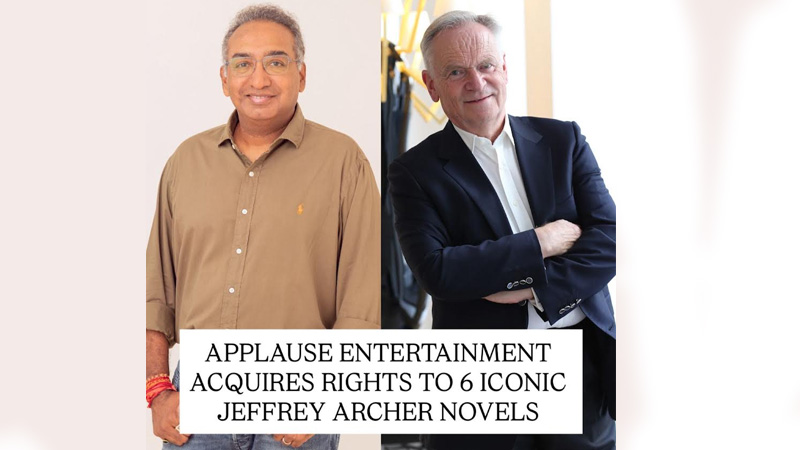
    MUMBAI: India is flipping the page on adaptation history Jeffrey Archer’s bestsellers are finally getting their official real life adaptation close-up. Move over pirated plots and ‘inspired’ scripts Jeffrey Archer is getting a legitimate Indian makeover. In a landmark announcement, Applause Entertainment has acquired exclusive screen rights to six of the legendary author’s most iconic novels. And unlike decades of uncredited rip-offs, this one’s all above board legal, global, and ready to stream in style.

    The acquisition includes The Clifton Chronicles, First Among Equals, Fourth Estate, Sons of Fortune, Heads You Win, and The Eleventh Commandment. Applause, known for high-impact Indian originals like Scam 1992 and Criminal Justice, is making its first foray into international fiction adaptations and they’re going big. Expect a slate of premium drama series and feature films spanning languages, formats, and platforms.

    At a live conversation in Mumbai, author Jeffrey Archer and Applause MD Sameer Nair shared their vision and plenty of mutual admiration. “There isn’t a Cain, but there’s certainly an Abel in every Indian,” joked Archer, reflecting on how his stories of ambition, love, betrayal and revenge have found deep resonance here. The 85-year-old best-selling author, whose books have sold over 300 million copies across 115 countries and 49 languages, called the collaboration “a privilege,” but added with trademark candour, “I shall be watching and waiting for results!”

    Sameer Nair was clear that this partnership signals a bold new direction. “This isn’t just a rights deal, it’s a creative call-out to India’s best storytellers,” he said. “We’re inviting screenwriters, directors, and regional creators to reimagine Archer’s worlds in contemporary Indian settings while staying true to the original narrative arc.” Nair cited First Among Equals as an example, saying its political premise translates beautifully into India’s high-stakes electoral landscape. “Just replace Westminster with the Vidhan Sabha, and you’ve got a blockbuster.”

    Applause plans to adapt some novels as long-form series and others as films, possibly in multiple Indian languages. The idea, said Nair, is to retell global IP through a local lens and take it back to the world via global streaming platforms. “These are timeless stories, and the new generation deserves to hear them in a voice and context they understand.”

    For Archer, the faith in adaptation lies in one word: screenwriting. “If the screenplay’s right, the show works. If it isn’t, nothing can save it,” he quipped, citing The West Wing as an example of sublime screenwriting. And he’s no stranger to the perils of poor adaptation either. “The BBC did Cain and Abel brilliantly. But Not a Penny More, Not a Penny Less? Terrible. It’s not easy but when it works, it’s magic.”

    In an industry where copyright infringement once passed for creativity, this deal is also a statement. “Indians are done with jugaad. We want to do it the right way,” said Nair. “It’s time Indian content gets a global reputation for originality and excellence.”

    So what’s next? The creative process has begun, with teams now deciding which titles will go where, in what language, and on which platform. Archer’s only golden rule to filmmakers? “Stick to the story. Don’t think you can write your own half of Kane and Abel. Just don’t.”

    From the pirated paperbacks sold at Indian traffic signals to a sprawling screen universe led by some of the country’s sharpest creators Archer’s tales are finally getting the adaptation they deserve. With Applause calling the shots, this is one literary remix that promises to be worth the wait.

  • Fabelle crafts personalised Rakhi chocolates using AI for siblings

    Fabelle crafts personalised Rakhi chocolates using AI for siblings

    MUMBAI: Why gift socks or a last-minute card, when you can gift nostalgia, inside jokes, and a sprinkle of AI wrapped in chocolate? This Raksha Bandhan, Fabelle Exquisite Chocolates, the luxury brand from ITC Ltd., is out to rescue brothers from the tyranny of generic gifting. Enter #WorthTheOne, a personalised chocolate experience that blends tech, taste, and tender sibling chaos into one deliciously curated box.

    Every year, brothers scramble for something anything that says “I care” without screaming “I forgot.” But Fabelle’s new offering changes the game by transforming the bond between siblings into an edible, handcrafted, AI-curated keepsake.

    Here’s how it works: head to the worththeone.com website and take a fun, slightly nosey sibling compatibility test. Based on your answers covering everything from who’s the overachiever to who hogs the remote, an AI engine analyses your emotional dynamics, quirks, rivalries, and affections. This data is then used to customise a box of luxury truffles that reflect your sibling equation.

    And this isn’t your average Rakhi chocolate box. Each #WorthTheOne box features 20 bespoke truffles in five unique flavours, all handcrafted by ITC’s Master Chocolatiers using cocoa sourced from across the globe. From the nostalgia-drenched Saffron Rasmalai Truffle to the exotic Ruby Hazelnut Gianduja, every flavour represents a different layer of the sibling bond sweet, spicy, dramatic, and heartwarming.

    “No two boxes are the same,” says ITC Foods vice president and head of marketing for chocolates, coffee and confectionary Anuj Bansal. “This is not just a gift; it’s an experience. We’re using AI to convert memories, quirks, and emotional textures into something luxurious, handcrafted, and deeply personal.”

    Even the packaging gets the personalised treatment. Every box comes tailored with the sibling’s names and relationship traits subtly worked into the design. The result? A gift that doesn’t just sit on a shelf, it tells a story.

    Fabelle has consistently positioned itself at the intersection of craft, luxury, and emotion. With #WorthTheOne, it’s doubling down on its philosophy by bringing storytelling and technology into the confectionary fold.

    From the moment the AI curates the flavours to the time the first bite takes you back to a shared childhood prank, #WorthTheOne is built to make your sibling say, “Okay, fine, you’re my favourite this year.”

    As Rakhi traditions get a gourmet upgrade, Fabelle proves once again that chocolate isn’t just sweet, it’s smart, stylish, and deeply sentimental.