Category: News Headline

  • Mumbai gets a slice of heaven as La Chérie’s ‘Dancing Cloud’ lands

    Mumbai gets a slice of heaven as La Chérie’s ‘Dancing Cloud’ lands

    MUMBAI: Desserts don’t usually make the city stop and stare, but this one jiggles its way into the spotlight. La Chérie, Pune’s cult-favourite cheesecake label, has floated into Mumbai with its now-iconic “Dancing Cloud” Japanese cheesecake, a dessert so airy it’s redefining indulgence.

    Unlike the dense, sugar-heavy cheesecakes most Mumbaikars know, La Chérie’s version is souffle-light, made in small daily batches, and entirely preservative-free. The texture is the star delicate, cloud-soft, and melt-in-the-mouth with no gelatin, agar, compound chocolate, or artificial stabilisers sneaking in. A quiet rebellion against hyper-processed sweets, it focuses on freshness, technique, and purity.

    The range caters to every mood: a Mini Dancing Cloud at Rs 299, a Chocolate variant at Rs 359 for solo indulgence, or the Big Dancing Cloud Whole Cheesecake at Rs 899 for celebrations. Available via Swiggy and Zomato, the cakes are crafted to be enjoyed warm or chilled, depending on preference.

    The timing couldn’t be more perfect. With Japanese flavours gaining ground in Mumbai from matcha menus to omakase dining La Chérie taps straight into the city’s evolving palate. What started as a quiet cult in Pune is now shaping Mumbai’s premium dessert scene, proving that sometimes the lightest creations leave the heaviest mark.
     

  • Smart Bazaar, gives retail therapy a makeover with Mccann’s new campaign

    Smart Bazaar, gives retail therapy a makeover with Mccann’s new campaign

    MUMBAI: When life upgrades from jugaad to joy, retail must follow suit. Smart Bazaar has roped in Mccann Worldgroup India for its latest campaign, a creative push that mirrors the country’s shift from “making do” to “living well”. Based on insights into evolving Indian households, the campaign spotlights how homes today are being redesigned with purpose organised kitchens, thoughtful bathrooms, and living spaces that blend function with flair. The message? Families no longer just seek affordability; they aspire to elevate everyday living with quality and comfort at the core.

    “Smart Bazaar isn’t just another retail chain; we are emerging as the value-first catalyst for everyday aspiration,” said Reliance Retail CMO Surabhi Sen noting how the brand aims to bridge necessity with desire. Mccann Worldgroup India CEO & CCO Prasoon Joshi added, “India is at a cultural inflection point. Families are realising that living well isn’t about luxury, it’s about dignity, joy, and shared values. With Smart Bazaar, we tapped into that truth and gave it an authentic yet aspirational voice.”

    With this collaboration, Smart Bazaar positions itself as more than just a marketplace, it’s pitching itself as a partner in everyday upgrades, making better living accessible to households across India.


  • Flipkart strikes the right chord with 10-minute Ganesh Chaturthi delivery

    Flipkart strikes the right chord with 10-minute Ganesh Chaturthi delivery

    MUMBAI: When devotion meets delivery, even an Aarti can arrive in ten minutes. Flipkart Minutes, the quick commerce arm of Flipkart, struck a festive note this Ganesh Chaturthi with a digital-first campaign that blended tradition, rhythm, and rapid service. The centrepiece was a film created with FCB Kinnect, where the Ganesh Aarti was reimagined without lyrics replaced instead by the everyday symphony of claps, utensil taps, and beats. The creative twist showed how simple, familiar sounds can evoke connection and devotion, even outside a temple setting.

    But Flipkart didn’t just stop at the screen. Between 27 August and 6 September, the platform offered 10-minute prasad delivery from Siddhivinayak temple in Mumbai and Shrimant Dagdusheth temple in Pune, available at a nominal cost alongside regular orders. Devotees also found rapid mobile charging stations set up in high-footfall areas to keep the celebrations powered through long processions and pandal visits.

    Adding a playful touch, complimentary manjiras traditional percussion instruments were tucked into select orders in Mumbai on the festival’s first day, echoing the campaign’s musical theme. By weaving together prasad, percussion, and practical convenience, Flipkart Minutes positioned itself as more than just a service, it became a seamless part of the celebration.
     

  • Vidya Balan and Welspun spin a ghostly yarn to show quality makes a difference

    Vidya Balan and Welspun spin a ghostly yarn to show quality makes a difference

    MUMBAI: When towels turn terrifying and bedsheets get a supernatural twist, you know Vidya Balan is up to something spooky but stylish. Welspun Living Limited (WLL), the global home textile giant, has roped in the National Award-winning actor for its new campaign Kyunki Farq Padta Hai, proving that when it comes to linen, quality really can be a matter of life and afterlife.

    Conceptualised by Atom network, the campaign rolls out with two witty short films, one showcasing Welspun’s Quikdry Towels, the other its Purekot Bedsheets. Both films play with horror-comedy tropes, where ghostly nudges push clueless characters towards smarter choices. Think jump-scares, but with punchlines, as the campaign flips the familiar “kya farq padta hai” on its head to remind us, yes, it does matter.

    Welspun Living MD & CEO Dipali Goenka summed it up: “Every homemaker knows that what we bring into our homes is about trust, care, and durability. Kyunki Farq Padta Hai is our way of showing how small differences in quality can transform everyday life.” Balan, meanwhile, brings her signature blend of gravitas and humour, saying: “There’s a difference between ordinary and better, random and reliable and that’s the story we’re telling with drama, comedy, and truth.”

    Rolling out across TV, digital, print, outdoor and social platforms, the campaign is targeting millions of urban and semi-urban households. With cultural quirks, a dash of nostalgia, and Vidya’s star power, Welspun’s latest isn’t just another product push, it’s a playful reminder that in home linen, the right fabric doesn’t just cover you, it comforts you.

  • Dentsu weighs retreat from global stage after $5 billion gamble falters

    Dentsu weighs retreat from global stage after $5 billion gamble falters

    TOKYO: It was once viewed as a cheetah making a smooth and speedy dash to the finish  tape as it went about muscling itself with acquisitions. But, hardly a decade later,  in 2025, Dentsu, Japan’s largest advertising group and one of the industry’s oldest names, is considering pulling the plug on its international ambitions after more than a decade of struggle abroad. The Tokyo-listed company has hired Mitsubishi UFJ Morgan Stanley and Nomura Securities to approach potential buyers for its overseas creative and media arm — a sprawling business that includes the former Aegis Group, US consultancy Merkle and digital production house Tag — according to a report in the Financial Times on Thursday.

    The move could culminate in a deal worth several billion dollars, insiders told the paper, and would mark a dramatic retreat for a group that only a decade ago sought to rival WPP, Publicis and Omnicom on the global stage. Options on the table range from the sale of a minority stake to an outright divestment of the entire overseas division, which generated $4.5bn in revenues last year but remains chronically underperforming.
    The potential sale underscores the failure of Dentsu’s boldest bet — the £3.2bn ($5bn) purchase of Aegis Group in 2012, then one of Britain’s largest media-buying companies. The deal was meant to be Dentsu’s passport to the global top tier. With Aegis, the Japanese powerhouse — already near-hegemonic at home — vaulted into the ranks of the world’s top five ad holding groups.

    But integration proved difficult. Dentsu’s Japanese arm remained culturally and operationally distinct from its international business. The London- and New York-led operations frequently clashed with Tokyo headquarters, leaving the business fragmented. Over time, larger rivals poached key clients, while the promise of scale failed to materialise.

    Even subsequent purchases, such as the $1.5 billion acquisition of US-based Merkle in 2016, could not reverse the trend. Instead, the group accumulated goodwill impairments and rising restructuring costs. Earlier this year Dentsu wrote down $1.38 billion on its American and EMEA units and earmarked $327 million for further restructuring, including IT upgrades and headcount cuts.

    The pressure has intensified this year. In February, Dentsu unveiled weak 2024 results and suspended dividends. In August, it reported a 0.2 per cent drop in organic revenues in the first half, cut 3,400 jobs — about 8 per cent of its global workforce — and downgraded full-year guidance from 1 per cent growth to flat. It now expects an operating loss of ¥3.5bn ($24 million) for the year, compared with a previous forecast of ¥66 billion profit.

    Hiroshi Igarashi, the group’s president and global chief executive, offered a rare public apology: “I deeply regret this situation and offer my sincere apologies on behalf of the company.” In a call with analysts, he admitted that the international unit “continues to face negative growth across all regions”. Japan, by contrast, delivered record revenues and profits.

    Industry analysts say the bifurcation of Dentsu’s fortunes reflects a deeper problem: a business structurally divided between a dominant home base and underperforming overseas assets.

    “Dentsu’s ownership of the international business was somewhat unusual because of the complete separation between it and the domestic business,” said a media observer. “Japan’s idiosyncratic isolation within the global agency industry meant the leadership in Tokyo was not plugged in to the rest of the world.”

    That disconnect became even clearer after Wendy Clark, then global CEO, quit in 2022, triggering an internal restructuring aimed at closer integration. Yet the changes failed to stem the tide.

    According to people close to the discussions, potential suitors include Accenture Song, large independent networks, and private equity funds that have circled the sector in recent years.

    IPG and Omnicom, however, are seen as unlikely contenders. The two American giants are preoccupied with completing their own merger — a blockbuster deal set to close by year-end, creating a North American behemoth. Meanwhile, Havas has been spun out of Vivendi into a standalone public company, and WPP has fended off repeated speculation about being a takeover target itself.

    That leaves Accenture — which has aggressively expanded into creative services — as perhaps the most credible buyer. Private equity funds could also be tempted by the chance to carve up the business, but the declining revenue outlook, heavy job cuts and uncertain future of traditional agency models may weigh on valuations.

    Any sale would also take place against the backdrop of an industry in flux. Artificial intelligence, once seen as a tool to aid campaign targeting, is now automating functions from media planning to creative production. Rivals such as WPP and Publicis are pouring hundreds of millions into AI platforms that promise cheaper, faster and more personalised ads.

    “Revenues are already shrinking,” one person familiar with the sale process told the FT. “It’s been bad and could get worse as no one knows what AI will do to the industry.” For Dentsu’s global unit, which has struggled even in the best of times, the disruption could prove 

    For Dentsu, a sale would be nothing short of a reset. At home, the company remains unrivalled, commanding more than 25 per cent of Japan’s advertising market. Its domestic operations continue to churn out record profits and steady growth. By contrast, its international adventure has been a costly distraction.

    Back in 2023, Igarashi insisted that selling was “totally not part of my mindset”. Today, facing mounting losses and a fragmenting industry, he has softened his stance, saying only that “strategic alternatives” are under review.

    A sale of the international arm — once Dentsu’s vehicle for global expansion — would symbolise a retreat from ambition to pragmatism. It would also leave the advertising world reshaped yet again, in a year already marked by consolidation, divestments and upheaval.

    Whether buyers emerge — and at what price — may be the truest test of how investors now value traditional ad agencies in an AI age.

  • NFDC signs landmark film tie-ups with Australia for global collaborations

    NFDC signs landmark film tie-ups with Australia for global collaborations

    MUMBAI: Lights, camera, collaboration! India and Australia are ready for a cinematic crossover as the National Film Development Corporation of India (NFDC) has inked two landmark Letters of Intent (LOIs) with Screen Producers Australia (SPA) and the National Film and Sound Archive of Australia (NFSA). Together, they’re rolling out a red carpet for co-productions, preservation and partnerships.

    With Screen Producers Australia, the spotlight is on India Connect, a marquee initiative that will see a delegation of Indian producers fly to the Gold Coast in 2026 for Screen Forever, the country’s biggest screen conference. Think project-matching forums, structured networking, and fresh avenues for cultural exchange, a power-packed script designed to spark creative and commercial collaborations across borders.

    The second LOI with NFSA is all about safeguarding cinema’s soul. The partnership will focus on film restoration, digitisation, and archival expertise, ensuring that the legacies of both nations remain intact for future generations of cinephiles. Knowledge-sharing and joint preservation practices will form the spine of this alliance, giving old reels a new lease of life.

    The curtain rises on these collaborations in late 2025, with timelines rolling into Screen Forever 2026 and beyond. The partnerships will also extend to Waves Bazaar, NFDC’s flagship content and co-production market, hosted alongside IFFI in November. With Australian participation bolstering the line-up, Waves Bazaar promises to be a buzzing hub where stories, ideas and partnerships take centre stage.

    As I&B Secretary Sanjay Jaju put it, the moves “reaffirm NFDC’s commitment to building global bridges for Indian cinema.” From the Gold Coast to Goa, the script is set for a blockbuster partnership that brings filmmakers, audiences, and archives together in one global reel.
     

  • Easy Trip Planners makes changes at the top

    Easy Trip Planners makes changes at the top

    MUMBAI: Ease My Trip has announced a sweeping boardroom reshuffle. The online travel agency’s board, meeting on 29 August, cleared the elevation of Nishant Pitti from whole time director to chairman-cum-managing director for a five-year term, subject to shareholder approval. Nishant, who co-founded the company, will now steer the business with expanded authority as it eyes growth in a competitive market.

    Alongside, the board appointed Vikas Bansal as whole time director, also for five years, signalling a fresh push to strengthen management bandwidth. Bansal’s induction marks a key addition to the leadership bench as the company looks to broaden its strategic play beyond flight and hotel bookings.

    The shuffle also saw a notable exit. Prashant Pitti, another co-founder, resigned as managing director with immediate effect. His departure trims the Pitti family’s active leadership presence, leaving Nishant firmly at the helm.

    The moves, cleared under SEBI’s listing norms, underline a generational shift in Ease My Trip’s governance and a sharper delineation of roles at a time when India’s online travel sector is recovering momentum post-pandemic and intensifying its battle for market share.

  • Bengaluru gets a smashing serve with Pickleball Now Grand Prix debut

    Bengaluru gets a smashing serve with Pickleball Now Grand Prix debut

    MUMBAI: Game, set… and smash! Bengaluru is all set to witness a sporting spectacle with a twist as Times Network serves up the Pickleball Now Grand Prix on 30 August 2025 at Gorally, Whitefield. Billed as India’s first premium lifestyle pickleball showcase, the daylong event promises a fiery mix of sport, community, and high-energy fun. Over 250 registered players will battle it out across 7 dedicated courts, cheered on by more than 500 attendees. With a Rs 2 lakh prize pool, 14 winners and 14 runners-up will take home medals, trophies, and bragging rights, all backed by official Pickleball World Rankings (PWR) points to up their global standing.

    The format caters to both seasoned pros and rising enthusiasts, with Men’s, Women’s, and Mixed Doubles in Intermediate and Open categories, plus a cheeky Mystery Partner draw where teammates are paired at random ensuring unpredictable rallies and plenty of laughs.

    Backing the Grand Prix is a power-packed sponsor roster, led by Hell Energy Drink (presenting partner) and MG Motors (driving partner), with big names like Skechers, Just In Time, Aris Perfumes, River Bikes, Amity University, Coindcx, Radico, Zoho, Acerpure, Assetz Builders, Airavat, and Stayvista all jumping on board.

    With booming brand power, rising player numbers, and a sport that’s fast becoming India’s newest obsession, the Pickleball Now Grand Prix looks set to ace its debut not just as a tournament, but as a lifestyle statement that Bengaluru won’t stop talking about.

  • Reliance AGM: Mukesh Ambani unveils JioHotstar’s new AI-led features

    Reliance AGM: Mukesh Ambani unveils JioHotstar’s new AI-led features

    MUMBAI: Reliance Industries chairman Mukesh Ambani  declared at the firm’s annual general meeting held today that JioStar has reshaped India’s media landscape within months of launch. The media and entertainment arm now boasts over 3.2 lakh hours of programming—six times more than its nearest rivals—with 30,000 hours added annually.

    The JioHotstar app has surged to 600m users in just three months, including 75m connected TVs. With 300m paying subscribers, Ambani claimed it has become the world’s second-largest streaming platform, achieved entirely in India. Reliance also commands a 34 per cent share of India’s TV market, equal to the next three networks combined.

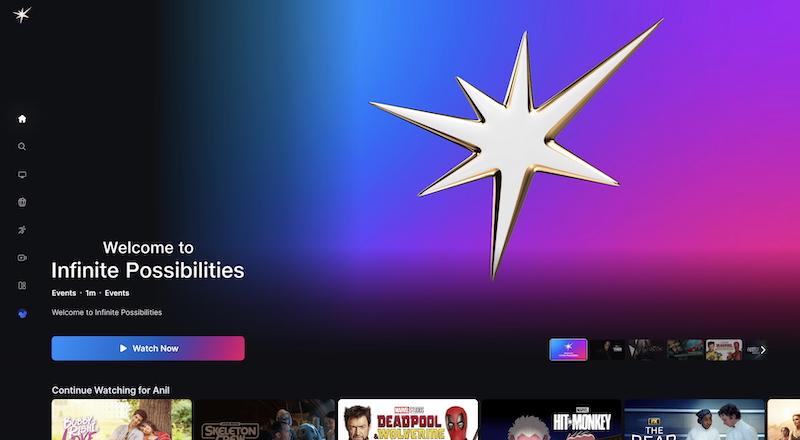
    To cement its lead, Ambani unveiled a trio of AI-driven features. Riya, a voice-enabled assistant, promises effortless content discovery across shows, films and sports. Voice Print uses AI voice cloning and lip-sync to let stars “speak” in viewers’ own languages without losing authenticity. And JioLenZ offers multiple, personalised viewing options at the click of a button.

    “We have created an experience that combines the best of content, software and AI,” said Ambani. “JioStar will continue to expand across platforms and geographies as we serve a billion screens.”

  • ICC teams up with Google to turbocharge women’s cricket

    ICC teams up with Google to turbocharge women’s cricket

    LONDON: The International Cricket Council (ICC) has inked a landmark global partnership with Google to accelerate the growth of women’s cricket, betting that technology can turbocharge fan engagement at a moment when the sport is reaching critical mass.

    The tie-up, unveiled on Friday, comes just as the women’s game prepares for its two biggest stages: the ICC Women’s Cricket World Cup 2025, to be split between India and Sri Lanka, and the ICC Women’s T20 World Cup 2026 in England and Wales.

    For the ICC, the partnership signals a decisive push to make women’s cricket more visible, accessible and lucrative. Earlier this year, Unilever became the ICC’s first global partner for the women’s game. Now, Google’s entry adds the sheen of Silicon Valley to cricket’s most ambitious attempt yet at elevating women’s sport to parity with the men’s version.

    ICC chairman Jay Shah called the deal “a landmark moment” that would help take women’s cricket “to even greater heights” by inspiring new generations and strengthening the sport’s global reach. “Together with Google, we aim to make women’s cricket a truly global force, resonating with fans in both established and emerging markets,” he said.

    Google’s arsenal of consumer products—Android, Google Pay, Gemini AI, and Pixel smartphones—will form the backbone of this strategy. The idea is to create an integrated ecosystem that enhances every stage of the fan journey: discovering match schedules, watching highlights, engaging with players’ stories, making seamless payments for tickets or merchandise, and celebrating wins online.

    “This alliance is not just about a single tournament; it’s about building deeper engagement,” said Google India vice-president of marketing Shekar Khosla. “We want to make the sport more accessible and enable fans to feel a stronger connection with what they care about.”

    The ICC hopes this “always-on” digital presence will not only expand the fan base but also attract new advertisers eager to reach younger, more digital-native audiences.

    Women’s cricket has been growing rapidly, buoyed by marquee tournaments like the Women’s Premier League (WPL) in India, the Big Bash in Australia, and increasing broadcast commitments. Audience numbers are rising, sponsorship is flowing in, and players such as Smriti Mandhana, Alyssa Healy, and Nat Sciver-Brunt are becoming household names.

    But the economics still lag far behind the men’s game. Rights packages, sponsorship valuations and player salaries remain a fraction of men’s cricket. By hitching the sport to Google’s technology stack, the ICC is signalling it wants to fast-track the commercialisation curve, making women’s cricket a product that broadcasters, advertisers and fans cannot ignore.

    The deal also reflects the growing entanglement of global tech platforms with sport. From Amazon streaming tennis to Apple bankrolling Major League Soccer, Silicon Valley is embedding itself in the sporting ecosystem. For Google, cricket is a natural fit: it is India’s most-followed sport and one of the most powerful cultural exports across the commonwealth. By associating with women’s cricket, Google also gets to position itself as a champion of inclusion and representation—values that resonate with global consumers.

    For the ICC, this is as much about geopolitics as sport. The women’s World Cup in 2025 will be staged in India and Sri Lanka, markets where Google dominates digital infrastructure but where competition from local players like Paytm, PhonePe and Jio is fierce. Embedding its brand through cricket is a way to reinforce dominance at a cultural level.

    For women’s cricket, the timing could not be better. With two World Cups in less than a year, unprecedented visibility is guaranteed. The challenge will be to convert eyeballs into habit, passion into loyalty, and novelty into permanence.

    Cricket’s men’s World Cups have long been billion-dollar properties. The women’s version has so far lived in their shadow, but that is changing. The 2022 Women’s World Cup drew record viewership globally, and the inaugural WPL auction stunned observers with player valuations that rivalled established men’s leagues. The ICC now wants to seize this momentum and institutionalise women’s cricket as a commercially viable product on its own terms.

    The Google alliance, then, is more than a sponsorship. It is an attempt to rewire how women’s cricket is consumed, blending sport with technology to create experiences that transcend stadiums and television screens. If successful, it could turn the women’s game into a global sporting phenomenon, not just a promising sideshow.

    If it fails, critics will dismiss it as another flashy announcement without structural change. But for now, women’s cricket has the wind at its back, the ICC has its boldest partner yet, and Google has found a new pitch to play on.