Category: News Headline

  • RED FM & Bengaluru police helm road safety with Ganesha

    RED FM & Bengaluru police helm road safety with Ganesha

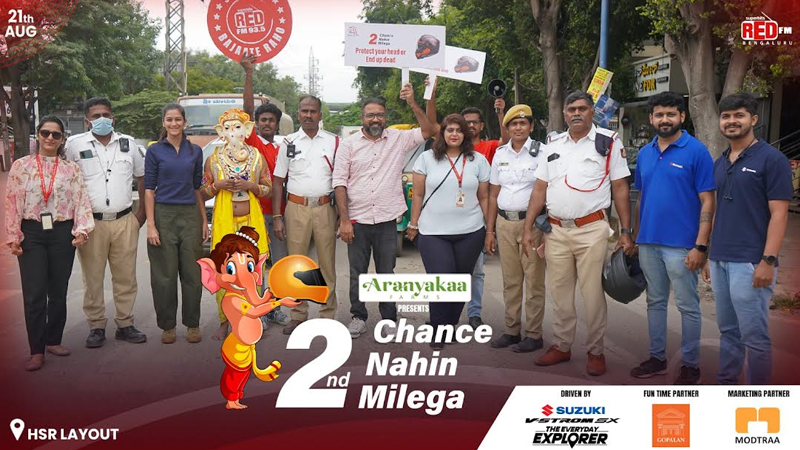
    MUMBAI: Lord Ganesha may have been blessed with a second head, but Bengaluru’s riders won’t be as lucky. That’s the message 93.5 Red FM and the Bengaluru Traffic Police hammered home this Ganesh Chaturthi with their cheeky yet sobering campaign, ‘Second chance nahi milega’.

    Running from 18–29 August, the initiative took a mythological twist on road safety, reminding riders that while Ganesha was revived after his beheading, mortals don’t get divine do-overs. The only shield between life and tragedy? A helmet.

    And Red FM made sure that message wasn’t just lip service. Rjs hit the city’s busiest junctions such as Indiranagar, Silk Board, MG Road, Rajajinagar, Koramangala, and more, alongside the traffic police, stopping bare-headed bikers in their tracks. Instead of just a fine or lecture, riders got a free, ISI-marked helmet and a much-needed reality check.

    The campaign went beyond the roads, too. On-air banter, live bytes, and social media snippets carried commuters’ stories and witty safety reminders to thousands more, weaving road sense into festive celebrations.

    “Through ‘Second Chance Nahi Milega’, we transformed festive celebration into civic action,” said Red FM, general manager – Karnataka, Suresh Ganesan. “By linking mythology with modern road safety, we gave people a reason they could never forget.”

    Bengaluru’s traffic police were just as upbeat. “A helmet is not for the fear of law, it is for your own safety,” stressed joint commissioner of police, traffic, Karthik Reddy. “We are happy Red FM took up this initiative and gave free helmets to riders.”


  • BGMS levels up with Rs 1.5 crore prize and biggest format shake-up yet

    BGMS levels up with Rs 1.5 crore prize and biggest format shake-up yet

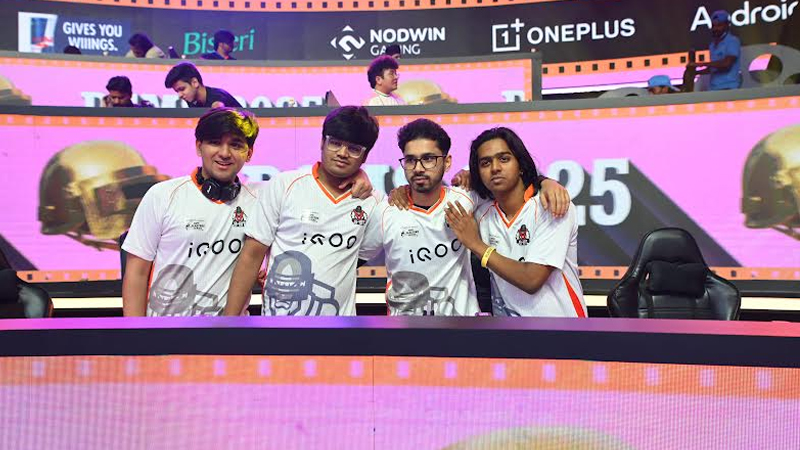
    MUMBAI: Drop in, squad up, and watch the leaderboard go wild Battlegrounds Mobile India Masters Series (BGMS) is back with a bang. Nodwin Gaming’s flagship tournament, co-powered by Oneplus and Android, returns for Season 4 from 18 August to 14 September, with matches airing live daily on Star Sports Khel and JioStar between 5:00 pm and 8:00 pm. With a prize pool of Rs 1.5 crore and a bold new dual-tier structure, this year’s edition promises to be the most inclusive yet.

    For the first time, viewers will get a multi-cam broadcast, one main stream, a dedicated map cam, plus four top-team cams that spotlight key players. From next week, player cams will zoom in on rising stars, giving fans an intimate look at gameplay. On the competition front, 24 pro teams will slug it out in the BGMS Masters Series, while another 24 squads including four all-women line-ups battle in the Challenger Series. The top four Challenger squads will advance to the playoffs, joining the lower-ranked Masters teams in a fight to secure one of 16 coveted semifinal slots.

    “BGMS has always been more than a tournament; it’s a cultural phenomenon… From grassroots to greatness, from campus halls to national TV. This is BGMS like you’ve never seen before,” said Nodwin Gaming co-founder & MD, Akshat Rathee welcoming partners OnePlus, Android, TVS and Bisleri onboard.  

    Adding to the thrill are returning mechanics like the Powerplay (double finish points in the first zone), Impact Player (weekend finish points doubled for one chosen star), and the Bounty System (10 bonus points for eliminating the daily target team from 21 August to 7 September). These features, paired with back-to-back LAN events running from noon to 8:00 PM, ensure fans get wall-to-wall action both on ground and on screen.

    “BGMS continues to break new ground in Indian esports, and we at JioStar are proud to bring this cultural movement to screens across the country,” added JioStar head of audience engagement and viewership and monetization initiatives Siddharth Sharma. “The expanded format, diverse participation and high-quality gameplay are exactly the kind of dynamic, youth-driven content we aim to champion.”  

    Season 3 of BGMS pulled in 145.5 million views across platforms, making it India’s most-watched esports tournament. With Season 4 airing on both television and JioStar for the first time, and inclusivity at its heart, BGMS is no longer just an esports league, it’s a cultural festival where campus hopefuls, pro gamers, and even all-women squads share the same battleground.

  • TPL serves up Season 7 in Ahmedabad with global stars and local passion

    TPL serves up Season 7 in Ahmedabad with global stars and local passion

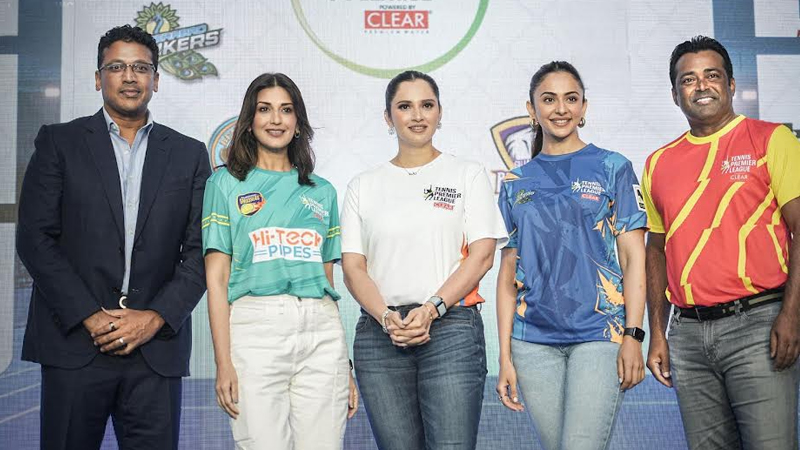
    MUMBAI: Game, set, Ahmedabad, India’s only professional tennis league is ready to smash new ground. The Tennis Premier League (TPL), under the aegis of the All India Tennis Association (AITA), will stage its 7th season from 9–14 December at the Gujarat University Tennis Stadium, marking its first-ever move outside Maharashtra.

    In hitting this milestone, TPL becomes only the fourth Indian sporting league to enter a 7th season, joining the ranks of IPL, Pro Kabaddi, and ISL. The eight-franchise tournament has heavyweight backers, from Leander Paes, Sania Mirza, and Mahesh Bhupathi to Rakul Preet Singh and Sonali Bendre. On court, fans can expect fireworks as international players ranked between 30 and 50 in the ATP rub shoulders with India’s finest, including two-time Grand Slam champion Rohan Bopanna.

    What sets TPL apart is its trademark 25-point format quick, high-octane matches designed to keep crowds hooked. Over 400 tournaments across 20 plus cities in a single year and its Race to Gold Scholarships have made TPL a genuine grassroots-to-glory pipeline. Gujarat has already felt its impact, with age-group tournaments and scholarships energising the local tennis scene.

    “This will be a real shot in the arm for tennis in Gujarat,” said Gujarat state Tennis Association secretary Shrimal Bhatt highlighting the historic arrival of top-ranked ATP stars. For co-founders Kunal Thakkur and Mrunal Jain, the shift to Ahmedabad is about scale and spirit bringing world-class tennis to a city fast emerging as a sporting capital.

    With 250 plus matches played across seasons, international stars, and the promise of electrifying rallies, Season 7 is primed to be TPL’s most exciting chapter yet. Ahmedabad, brace yourself, tennis fever is about to hit full throttle.

  • Love at first sight unseen in Zee5 rom-com Aankhon Ki Gustaakhiyan

    Love at first sight unseen in Zee5 rom-com Aankhon Ki Gustaakhiyan

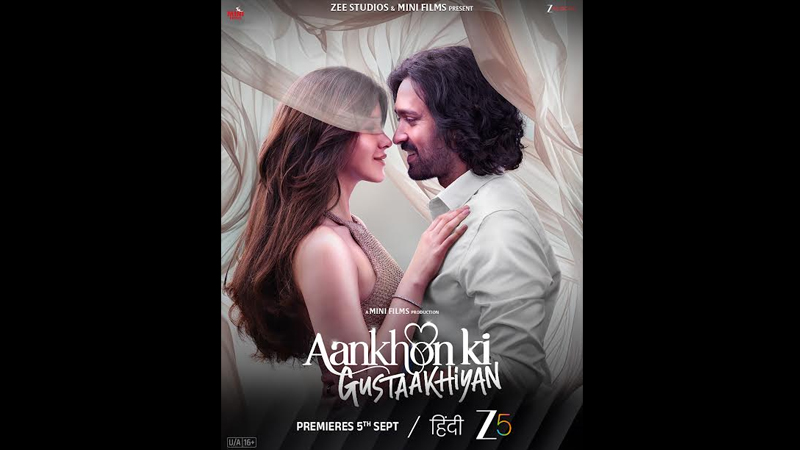
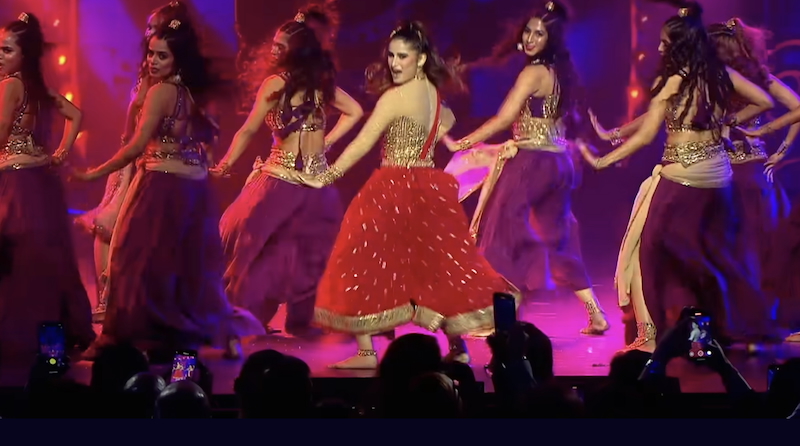
    MUMBAI: Who says love needs eyes to see? Sometimes, it only takes a train ride, a song, and a spark to light up a story. That’s the heart of Aankhon Ki Gustaakhiyan, a tender rom-com inspired by Ruskin Bond’s The Eyes Have It, premiering on Zee5 on 5th September.

    Produced by Mini Films and directed by Santosh Singh, the film follows Jahaan (Vikrant Massey), a blind musician with a gift for melody, and Saba (Shanaya Kapoor, in her debut), an aspiring actress with fire in her heart. Their chance meeting on a train sets off a connection not bound by sight but built on shared dreams, witty banter, and moments that toe the line between humour and heartache. Adding depth to the journey is Zain Khan Durrani in a supporting role.

    The soundtrack, composed by Vishal Mishra and featuring vocals by Jubin Nautiyal, Asees Kaur, and Mishra himself, adds another emotional layer to this story of love beyond appearances. Zee5’s Kaveri Das calls it a “refreshingly unconventional rom-com that speaks to both heart and humour.”

    For Massey, playing Jahaan was “an enriching experience that revealed strength in vulnerability,” while Shanaya Kapoor describes her role as “the perfect story to begin my journey with.” Their chemistry promises both light-hearted fun and stirring emotion.

    With its playful warmth and soulful undercurrents, Aankhon Ki Gustaakhiyan invites audiences to “dil se dekho” see with the heart. On 5th September, when it streams exclusively on Zee5, viewers might just find themselves falling for a love story that proves sometimes the most powerful connections are the ones you don’t see coming.

  • TukTuki takes a vertical leap with micro-drama app for India

    TukTuki takes a vertical leap with micro-drama app for India

    MUMBAI: Move over reels, there’s a new drama queen in town and she goes by the name TukTuki. Officially launched today, TukTuki is one of India’s first vertical-only micro-drama apps, serving up tightly packed 1–3 minute episodes that together build into an hour-long film. Designed for mobile-first audiences, it’s storytelling reimagined for shrinking attention spans.

    With India’s short-form video boom showing no signs of slowing, TukTuki taps directly into the trend by blending bite-sized consumption with big-hearted tales. Each show is crafted for vertical viewing, making dramas as scrollable as memes but with the emotional punch of traditional storytelling. Founder Anshita Kulshrestha summed it up best: “TukTuki is a celebration of India’s cultural diversity and storytelling spirit.”

    At launch, the app debuts original dramas in Hindi, with rollouts planned in Bengali, Marathi, Gujarati and more languages. The focus is hyperlocal, family-friendly, and refreshingly clean, a deliberate counter to cluttered feeds. Future updates promise new genres from sports to mythology. Crucially, TukTuki lowers entry barriers for smaller towns by allowing streaming without mandatory logins, making drama accessible even for first-time app users.

    With micro-dramas stitched into snackable episodes, TukTuki might just turn the mundane metro ride or chai break into a cinematic binge. It’s a pocket-sized stage, but the ambition is all heart.

    Would you like me to also craft an alternate headline with a wordplay on “bite-sized drama”, to lean more on the snackable-entertainment angle?

  • Lauritz Knudsen flips the switch with cricket stars for nonstop India

    Lauritz Knudsen flips the switch with cricket stars for nonstop India

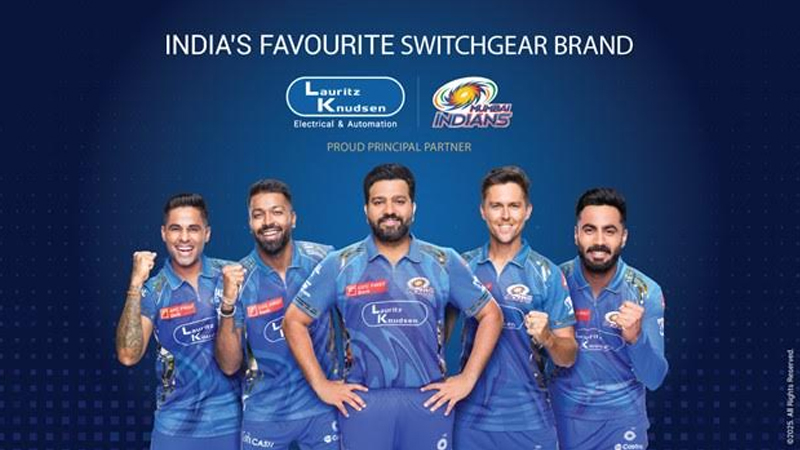
    MUMBAI: When the lights stay on and the game never stops, you know someone’s powering the innings behind the scenes. Lauritz Knudsen Electrical and Automation, a leader in India’s electrical and automation space, has rolled out its latest campaign Powering a Non-Stop India with the star power of Mumbai Indians’ trio, captain Hardik Pandya, Rohit Sharma and Suryakumar Yadav.

    As the Principal Partner of Mumbai Indians, the brand isn’t just about logo placement on jerseys. The campaign spotlights how Lauritz Knudsen keeps India moving from hospitals running 24/7 and factories working round the clock, to homes that never miss a beat. The film runs seamlessly through these everyday scenarios, reflecting the company’s promise of reliability and resilience.

    Backed by creative muscle from Saatchi & Saatchi India, the campaign goes beyond advertising bravado. “Empowering bold and future-ready operations is at the heart of what we do,” said Schneider Electric vice president of marketing for Greater India Rajat Abbi emphasising Lauritz Knudsen’s role in driving a relentless India forward. Saatchi’s Chief Creative Officer Rohit Malkani added, “When you have three cricketing giants and a brand that never stops, the film itself had to move nonstop.”

    With India’s love for cricket as its amplifier and a message rooted in everyday resilience, the campaign blends entertainment with utility. Live across multiple platforms, it plugs Lauritz Knudsen’s story straight into households, reminding viewers that while the stars may play on the field, it’s reliable power that keeps the country’s innings going.

    Would you like me to also suggest a crisper alternate headline option without the cricket pun, in case you want to emphasise the “non-stop India” theme more strongly?

  • Big FM tunes into the power of sun with record-breaking solar campaign

    Big FM tunes into the power of sun with record-breaking solar campaign

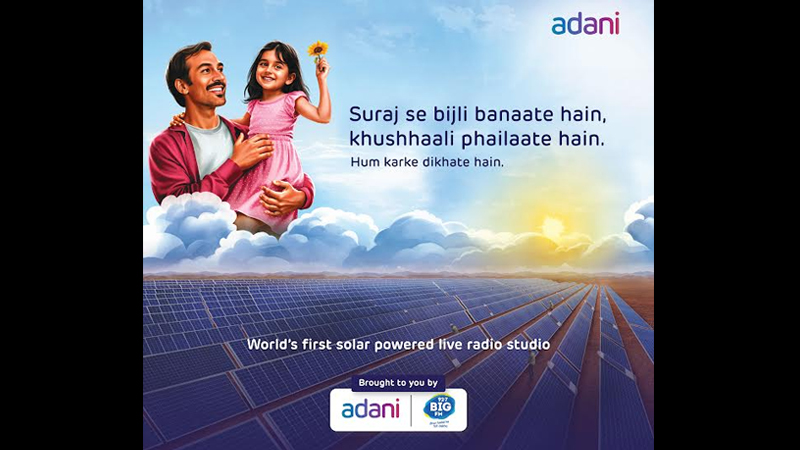
    MUMBAI: When the sun comes up, Big FM doesn’t just play music, it powers it. The radio giant, in partnership with the Adani Group, rolled out its ambitious ‘Story of Suraj’ campaign, turning solar energy into a cultural talking point across India. The 360-degree initiative spanned 39 cities, blending radio, digital, and on-ground activations. Its opening act? A nationwide content roadblock introducing every listener to Suraj Bhaiya’s story. With 80 RJs creating over 250 content pieces, the campaign reached an impressive 2.91 crore listeners on-air. Online, it struck another chord, clocking 21 million plus digital impressions across Big Live and RJ social handles.

    But the real showstopper came when Big FM set a world record with the first-ever dual-city solar-powered live broadcast, running studios in Delhi and Pune entirely on solar energy no grid, no diesel. The feat earned spots in both the Asia Book of Records and the India Book of Records, putting sustainability firmly in the spotlight.

    The campaign didn’t stop at the airwaves. Listeners tuned into stories of solar-powered villages, practical tips, and pledge walls across Delhi, Pune, Modhera, Indore and Lucknow, while the Solar Rooftop Studio Shift showcased the lives of real solar beneficiaries. The crescendo came from Modhera Gram Panchayat, India’s first fully solar-powered village, where Big FM went live to give audiences a glimpse of a cleaner, greener future.

    As Big FM’s CEO Sunil Kumaran summed up: “When purpose meets innovation, the impact can extend far beyond the airwaves.” And with ‘Story of Suraj’, the network proved that sustainability can be as powerful as any song on the charts.

  • Government to launch centralised digital music licensing registry within two months

    Government to launch centralised digital music licensing registry within two months

    NEW DELHI:  India’s information and broadcasting ministry will roll out a centralised digital music licensing registry by October 2025, in partnership with rights societies, as part of a wider push to unlock the country’s live entertainment sector.

    The decision was sealed at the inaugural meeting of the joint working group (JWG) on promoting live events, chaired on 26 August at the National Media Centre by Sanjay Jaju, secretary in the information and broadcasting ministry.

    Officials from the ministries of culture, youth affairs and sports, skill development, finance and DPIIT joined, alongside the Sports Authority of India and state governments from Maharashtra, Delhi, Uttar Pradesh, Telangana and Karnataka. Industry bodies Ficci, CII, Eema and Ilea sat across the table from companies including BookMyShow, Wizcraft, Saregama, District by Zomato and Touchwood Entertainment. Rights societies IPRS, PPL, RMPL and IMI Trust were also present.

    Key outcomes included integrating live-event approvals into the India Cine Hub portal to cut red tape, drafting a model policy for multi-use of stadiums and public spaces, and embedding live-entertainment skills in the national skills framework. Financial incentives—from GST rebates and blended finance to subsidies and MSME recognition—were also discussed.

    Prime minister Narendra Modi has recently described live entertainment as an engine for jobs, tourism and cultural influence. The sector was worth Rs 20,861 crore in 2024 and is growing at 15 per cent annually, buoyed by demand in tier-one and tier-two cities and a rising appetite for music tourism.

    Jaju said the government’s target is to place India among the world’s top five live-entertainment destinations by 2030, with potential to create 15–20m jobs. “The JWG will work to harness the concert economy as a driver of infrastructure growth, employment, tourism and soft power,” he said.

    The JWG was formed in July on the orders of union I&B minister Ashwini Vaishnaw. It will meet regularly to review progress and feed policy recommendations, building on the white paper India’s Live Events Economy: A Strategic Growth Imperative unveiled at the Waves 2025 summit.

  • Ganesh Chaturthi 2025: Brands pull out all stops for the festive season

    Ganesh Chaturthi 2025: Brands pull out all stops for the festive season

    MUMBAI: Ganesh Chaturthi, the festival that brings Mumbai to a standstill and fills Indian homes with chants, modaks and the heady sound of dhols, has long been more than just a religious celebration. For brands, it is a marketing carnival. The ten-day festival celebrates Lord Ganesha, remover of obstacles and patron of new beginnings. It also signals a consumer mood of optimism and indulgence.

    Companies from FMCG giants to real estate firms time campaigns to coincide with this wave of sentiment. Families repaint homes, stock up on groceries, splurge on new clothes, buy sweets in bulk, and even consider big-ticket purchases such as cars and property. This year, marketers approached the festival with unusual zeal. The result was a crop of campaigns that combined technology, nostalgia and product innovation—some deft, some daring, but all designed to link brands to the emotional core of Ganesh Chaturthi.

    Instamart: Groceries become art
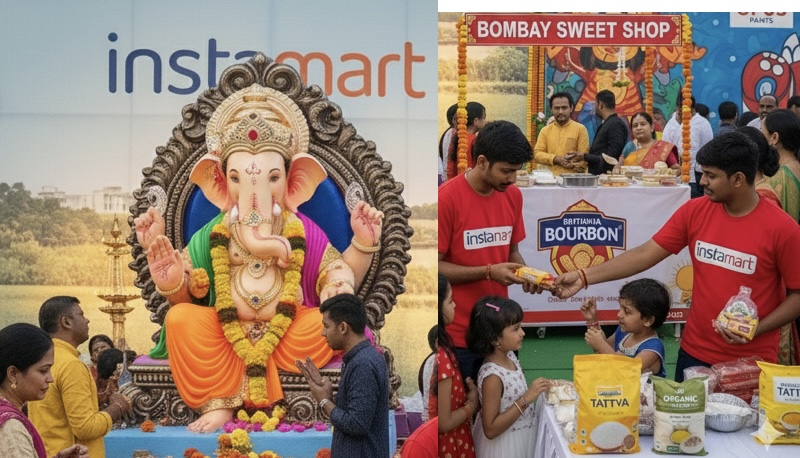
    Quick-commerce platforms usually shout about speed: delivery in ten minutes, essentials at the tap of an app. But Instamart chose subtlety. Teaming up with Arthat Studio, it erected a striking installation in Mumbai’s Inorbit Mall. At first glance it appeared to be nothing more than a chaotic heap of coconuts, diyas, flowers and puja thalis. But scan it through a smartphone, and the pieces aligned into a three-dimensional idol of Ganesha.
    The symbolism was neat. Just as the scattered objects formed a whole only when viewed through the right lens, Instamart promises to assemble the seemingly random pieces of a festive shopping list into one convenient order. Beyond the art, the campaign also functioned as a product catalogue: eco-friendly idols, temple prasad, modaks, decorations, and other essentials featured prominently on the platform. For Instamart, the festival was not only about spectacle but also about asserting itself as the indispensable partner for India’s season of plenty.

    Britannia Bourbon X Bombay Sweet Shop: Tradition with a twist
    If Ganesh Chaturthi has one culinary icon, it is the modak. Sweet shops across Maharashtra line their shelves with hundreds of varieties, from the classic steamed ukadiche modak to innovative chocolate and mango-flavoured versions. Into this crowded space stepped Britannia Bourbon, a mass-market biscuit brand, in collaboration with the boutique Bombay Sweet Shop.
    Their creation—the Bourbon chocolate modak—was a clever cultural remix: a peda made of crushed Bourbon biscuits and choco crème, topped with edible gold leaf. It hit stores and delivery platforms across Mumbai just in time for the festive rush. For Britannia, this was not merely a seasonal gimmick but a signal that even humble biscuits can aspire to festive luxury. For Bombay Sweet Shop, it was another instance of blending old traditions with urban tastebuds. The tie-up underscored a wider marketing trend: heritage foods reinvented for Instagram and the urban millennial palate.

    Organic Tattva: Purity as positioning
    Amidst the sugary excess, one brand chose restraint. Organic Tattva’s campaign was centred on “authenticity”, linking pure, chemical-free food to the sanctity of religious rituals. In a short film featuring Reshma More, a modak specialist, the brand emphasised that offerings made with organic jaggery and flour are more than just healthy—they are spiritually appropriate.
    The move taps into a growing consumer anxiety: are today’s foods safe? By associating itself with puja rituals, Organic Tattva positioned its products as the morally correct choice, not just the nutritious one. In a world of fusion modaks and instant mixes, the brand argued for a return to roots. It was less about modaks themselves than about staking ownership of the values underpinning festivals—purity, health, and continuity of tradition.

    Ganpati babaBirla Opus Paints: The colour of devotion
    For paint companies, the festival season is peak season. Homeowners rushing to refresh walls ahead of Diwali and Ganesh Chaturthi make for a lucrative market. Birla Opus Paints approached the festival with a story rather than a sales pitch. Its digital film showed a boy yearning to bring Ganesha home for the first time. His parents, hesitant because repainting seemed a hassle, eventually relented, understanding that devotion outweighs logistics.
    The metaphor was simple: painting is not just about colour, but about emotional renewal. The act of giving one’s home a fresh coat becomes part of the ritual of inviting joy in. The campaign, closing with the line “Rangon Ko Khushiyan Phailane Do, Duniya Ko Rang Do”, elevated paint from commodity to symbol. By focusing on the child’s perspective, Birla Opus sidestepped the hard sell and instead wrapped its product in emotional resonance.

    Sunny Cooking Oil: A journey home
    Cooking oil is hardly the stuff of cinematic storytelling. Yet Sunny Cooking Oil’s “Letter to Bappa” managed to turn it into one. The film followed a young girl travelling from her city home back to her ancestral village. Along the way she witnessed varied forms of celebration: modest pujas in small homes, elaborate pandals in city streets, and community feasts.
    Her reflections coalesced in a letter to Lord Ganesha, reminding viewers that while rituals differ, the essence—devotion, family, and food—remains constant. Sunny’s long-standing tagline, “Life Aapki, Recipe Aapki”, slotted neatly into this narrative. The implicit message: whether frying festive snacks or preparing a simple family meal, Sunny is a quiet enabler of togetherness. It was an attempt to take an everyday staple and imbue it with festival emotion.

    JSW MG Motor India: Practicality with panache
    In the crowded car market, features such as touchscreen displays, panoramic sunroofs and safety ratings usually dominate. MG Motor took a different tack. Its digital film set in a showroom depicted a family shopping for a car, with a son oddly obsessed with inspecting the boot. Only in the final scene did the reason emerge: he was making sure their new car could carry Lord Ganesha home.
    The reveal was both heartwarming and slyly strategic. For Indian families, festivals are a prime moment to justify big-ticket purchases. By linking boot space—a mundane but practical feature—to a cultural ritual, MG embedded itself into the festive decision-making process. The campaign exemplified how even a rational purchase can be reframed through the lens of emotion.

    Homesfy: A roof for Bappa, a dream fulfilled
    If Ganesh Chaturthi is about beginnings, then few beginnings are as momentous as owning a home. Homesfy, a digital-first real estate brokerage, tapped into this with an ad film tracing a boyhood memory. A group of children marvelled at Ganesha idols in a workshop. One remarked wistfully: “To bring Bappa home, you need a home of your own.” Decades later, the same boy, now a man, finally achieved that dream—with help from his Homesfy advisor.
    The film struck at a deep cultural truth: festivals, especially Ganesh Chaturthi, are intertwined with aspirations of stability and progress. By aligning itself with the emotional climax of home ownership, Homesfy elevated its service from transaction to life milestone.

    The wider lesson
    What unites these disparate campaigns is the way brands sought to move beyond surface-level festivity. Some relied on spectacle and technology (Instamart), others on culinary innovation (Britannia Bourbon), while still others leaned on emotion and memory (Birla Opus, Homesfy). All tried to embed themselves in the rituals, values and aspirations that define Ganesh Chaturthi.
    There is always a risk of over-commercialisation—of sacred traditions reduced to product placements. But when handled deftly, as many of these examples show, brands can do more than sell: they can become part of the collective experience of celebration. In a festival devoted to the remover of obstacles, perhaps it is only fitting that marketers too find creative ways to enter Indian homes, hearts—and shopping baskets.

  • Revolving doors keep spinning in television as executives flee for calmer pastures

    Revolving doors keep spinning in television as executives flee for calmer pastures

    MUMBAI: The Indian media and entertainment business is experiencing something of a convulsion. At the heart of the storm sits television, a medium once considered impregnable, now rattled by both economic pressures and shifting consumption patterns. Senior and mid-level executives are walking out of plush offices at an unprecedented rate, turning resignation letters into the industry’s hottest commodity. The revolving doors at general entertainment channels, factual broadcasters and news networks have scarcely stopped spinning.

    Take the case of Rahul Kanwal, who after more than 16 years of high-profile editorial leadership quit India Today TV to join NDTV, in a move that shocked newsroom insiders. Or Ajit Varghese, the revenue chief at JioStar, who traded the corporate heft of a giant for partnership status at Madison, Sam Balsara’s three-and-a-half-decade-old agency. Meanwhile, Ashish Sehgal, a towering presence at Zee Entertainment for two decades and long seen as a confidant of Subhash Chandra and Punit Goenka bowed out just last week, a departure many in the industry still consider unimaginable.

    The Indian entertainment industry has been undergoing a leadership shake-up, particularly at Sony Pictures Networks India (SPNI). Veteran executive Neeraj Vyas exited after decades with the broadcaster to pursue entrepreneurial ambitions, signalling a personal pivot. Leena Lele Dutta, who oversaw the Kids and Animation business, is also stepping down, with Ambesh Tiwari set to replace her—a move that reflects SPNI’s portfolio restructuring. At the same time, the network bolstered its programming muscle by onboarding Nimisha Pandey as Programming Head at Sony SAB, underlining a renewed focus on fresh content creation.

    At Zee Media, a similar churn has unfolded. Manish Kalra and Archana Anand departed from Zee5 amid the platform’s ongoing strategy reset, while Mona Jain, Chief Revenue Officer, stepped down in August, citing industry-wide advertising pressures. Leadership realignment continued with Karan Abhishek Singh taking over as CEO, succeeding Abhay Ojha. These shifts highlight both the turbulence caused by stalled merger talks and the urgent need for sharper digital and ad revenue strategies.

    The news broadcasting sector has also witnessed high-profile exits. Avinash Pandey, CEO of ABP Network, resigned after more than two decades, stating personal reasons and the desire for a new professional chapter, with Sumanta Datta stepping in as his successor. MK Anand, CEO of Times Network, retired after leading the group through market headwinds, paving the way for Varun Kohli, who joined as COO to drive growth. Meanwhile, industry veteran Bobby Pawar shifted gears by joining News18 Studio as a creative consultant, reflecting the increasing importance of branded storytelling and creative content partnerships in newsrooms.

    The exits stretch beyond individual cases. Varun Kohli, who lasted barely a year as chief executive of Times Now, is gone. Aditya Raj Kaul, a stalwart of TV9, has crossed over to NDTV. At Warner Bros Discovery, Uttam Pal Singh, who spearheaded kids’ programming, resigned suddenly earlier this year, followed by Azmat Jagmat, another senior name. And in a particularly symbolic shift, Sanjog Gupta, head of sports at JioStar, has left to take up what one insider calls “a less bruising role” at the International Cricket Conference.

    What explains this exodus? A cocktail of pressures, say industry watchers. “Some of the folks are being let go on account of job redundancies,” observes one long-time media consultant. The wave of mergers and acquisitions JioStar’s consolidation, Zee’s attempted tie-ups, and the global reorganisations at Warner Bros Discovery has created overlapping functions. Where there are two people for one chair, one has to go.

    But redundancies only partly explain the malaise. The sharper truth, argue observers, lies in economics. Television revenues are under siege. Ad growth has slowed dramatically, with TAM Media data showing a 10 per cent decline in the first half of the year. Broadcasters, desperate to offset the slide, are demanding steeper targets from revenue heads and programming chiefs. “The expectations are unreasonable,” says another insider. “Advertisers are spoiled for choice, streaming platforms are eating into budgets, and yet top managements are chasing revenue hikes that are simply not possible. The stress is unbearable.”

    Increments, too, have dried up. Senior executives accustomed to annual rises and bonuses now find themselves fighting merely to hold ground. Worse still, broadcasters have been launching streaming services of their own almost all advertising-driven which has only spread resources thinner and pushed teams into even more brutal competition for a shrinking pool of ad dollars.

    Not all departures are sackings; some are voluntary retreats. As one industry observer puts it: “Executives are not just quitting jobs, they’re choosing health over hypertension. The rat race is too costly.” Indeed, several departures from Sanjog Gupta’s exit to ICC, to executives slipping into agencies or advisory roles bear the hallmark of a search for relative calm.

    Macro forces are compounding the gloom. With Russia’s war in Ukraine dragging on, Israel and Palestine locked in fresh conflict, and US president Donald Trump slapping stiff tariffs on Indian goods, global instability is feeding into local advertising budgets. Brands, particularly multinationals, are cautious, trimming campaigns and deferring big spends. “Belt-tightening will only intensify in the second half of the year,” warns a veteran media planner. “Blood baths are going to continue. Expect more resignations, more forced exits. The churn is far from over.”

    For now, television in India is still a business of scale: hundreds of millions watch every day, advertising still contributes the lion’s share of broadcaster revenues, and regional channels continue to proliferate. But for the men and women running the show, the glamour has dimmed. The executive suite, once the ultimate perch, has become a revolving door. And the more it spins, the less likely it seems to stop anytime soon.