Category: Movies

  • Drishyam’s Dhanak is ‘Best Children’s Film’, new ‘Kadvi Hawa’ gets special mention

    MUMBAI: Drishyam Films’ much loved film Dhanak has won the 64th National Film Award for Best Children’s Film and their upcoming film, Kadvi Hawa has received a ‘Special Mention’ by the National Awards jury.

    Drishyam Films’ next, Kadvi Hawa is directed by acclaimed filmmaker Nila Madhab Panda (of I am Kalam fame) and is a powerful and heartrending take on climate change. It stars Ranvir Shorey as a young bank loan recovery agent and Sanjay Mishra as a blind old farmer, two ordinary people fighting for survival in two extreme weather conditions not of their making. The film is slated for a nationwide theatrical release later this year and the producers have just released a first look poster of the film (attached below).

    Directed by Nagesh Kukunoor, Dhanak stars Krrish Chhabria and Hetal Gada as the loveable siblings who set out on a magical, life-altering journey across Rajasthan. The film made its world premiere at the Berlin International Film Festival 2015 where it won two prestigious awards. It was released to critical and commercial acclaim on June 17, 2016.

    Drishyam Films founder and producer of Dhanak and Kadvi Hawa Manish Mundra: “Even though all of our films have premiered and won awards at various prestigious international film festivals, the National Awards are the biggest honour for us. For me, as an Indian producer, there is no greater joy than being recognised by the government for our efforts to produce quality content-driven cinema. We are very excited to bring our films Rukh, Newton and Kadvi Hawa to the Indian audiences later this year.”

    Kadvi Hawa: Once famous for farming, the people of Mahua in Rajasthan have forgotten the scent of rainfall on their soil. Lack of rainfall has led many farmers into debt traps set out as bank loans. Unable to grow food grain anymore and to escape repayments, many farmers have committed suicides. Hedu, the blind father of a farmer finds his son’s life threatened by the same pressure. Gunu Baba, a ruthless bank agent arrives with a growing list of suicides in his wake. But frequent cyclones threaten his family in a coastal village in Odisha. Each wanting to save their own family, they end up helping one another.

  • Mirza Juuliet….Poor rehash

    MUMBAI: Mirza Juuliet is one more spin-off on the legendary Punjabi folk tale of Mirza Sahiban, the love story of Mirza and Sahiban. A film was made on the same story in 2016 in a modern context as Mirzya. Mirza Juuliet is just another feebler attempt.

    The character of Sudarshan Kumar comes back to his maternal uncle’s home where he was brought after he was orphaned. But, he runs away. His father and mother were killed by the gun wielding goons in UP. He was restless to seek revenge. Having run away from his uncle’s care, Kumar seeks a job at a dhaba where, one day, he spots the killers responsible for his parents’ death. He kills them with their own gun.

    Sent to a juvenile home, one wonders how Kumar did emerges a grown up man when he is released! The film then goes on to chart a script of will.

    Kumar ran away even while his uncle was bringing him home to care for him as he was an orphan and he has been in some sort of custody ever since. But, after being released, he already has a backstory about his childhood love with the character of Piaa Bajpai, his uncle’s neighbour! It seems she was his companion in school as well as life around the mohalla.

    This Mirzya Sahibaan story is based in UP and, as if mandatory, involves political background. Piaa’s three brothers are gun totting bahubalis, her fiancé is the son of a politician with plans to become the next chief minister. There are family intrigues and killings.

    What irks Piaa is her fiancé’s sexual advances even before marriage. In one such attempts by him, she realises that what her fiancé wants to do with her, she would rather she did it with Kumar. She realises she loves him.
    Having finished with its UP style friendships, relationships, enmities and intrigues, the film now resorts to the legend of Mirza Saahiban. If you watched Mirzya, you are watching a rehash, albeit more convoluted, in this film.

    The film looks dated, has a poor script, poorer execution and nothing working for it. Viewer does not care for regional politics or bahubali stories, especially the UP, Bihar kind.

    Producers: Neeraj Kumar Burman, Ketan Maru, Amit Singh.

    Director: Rajesh Ram Singh.

    Cast: Piaa Bajpai, Darshan Kummar, Priyanshu Chatterjee and Chandan Roy Sanyal.

  • Blue Mountain….Lost cause

    MUMBAI: Blue Mountain is a film about the ambitions and aspirations of the young, the teenagers. The youth at that age have a new aim and ambition about what they wants to do with life and with each passing day. While, often, parents’ unfulfilled desires are forced on children, like wanting the child to accomplish what a parent could not, at other times a child is expected to follow a family tradition.

    Blue Mountain is about a young lad accidentally discovering his hidden talent which, it turns out, is in his genes.

    A group of four school friends, played by Yatharth Ratnum, Simran Sharma, Vaibhav Hanshu and Rishabh Sharma (the mandatory fat character fond of food and always munching in this kind of groups), spend their spare time riding their cycles around the picturesque hills of Shimla. They aim high and race to the tallest peak, the blue mountain.

    All four have different ambitions but one, Vaibhav, aims to become a musician/ singer and, to this end, he has entered his name for the auditions of a famous reality show on TV, Ragarocks. When the auditions are on and his turn comes, Vaibhav develops cold feet. He asks Yatharth to take his place.

    At the auditions, Yatharth decides to croon a classical number he always heard his mother, played by Gracy Singh, hum around house. He qualifies. As it turns out, the number he sang has many fans. It was originally sung by his mother, Gracy, who was a renowned singer but gave up her career after marrying the character of Ranvir Shorey.

    As Yatharth proceeds to Mumbai to participate in the reality show with Gracy, a wedge opens in the family since Ranvir is against Gracy forcing her ambitions on their son. He has bigger ideas for their son.

    The film then proceeds to take a cursory look at the behind-the-scene happenings of a reality show while Yatharth goes on winning round after round till, for no apparent reason, he croaks while singing in concluding the round and is disqualified.

    The outcome is that Yatharth is broken, suicidal, snaps at everybody and sulks to the world. While he sulks endlessly, which consists of almost the entire second part, the film sinks to its lowest, never to recover. The makers then decide to force in a happy ending but the cause is lost by this time.

    Blue Mountain is an amateurish enterprise which comes across as neither a children’s film nor for mature viewer. The reality show set up is patchy. Music is little help though the intentions are to promote Indian classical music.

    Except for the snow-clad Shimla, there is little else to watch here.

    Producers: Rajesh Kumar Jain.

    Director: Suman Ganguli.

    Cast: Gracy Singh, Ranvir Shorey, Rajpal Yadav, Arif Zakaria, Mahesh Thakur, Amit Behl, Vinod Nagpal, Yatharth Ratnum, Simran Sharma, Vaibhav Hanshu, Rishabh Sharma, Mehul Kapadia, Madhvi Shrivastava, Lisa-Marie Rettenbacher, Lamira Faro.

  • Mukti Bhawan (Hindi) Hotel Salvation (English)…Engrossing watch

    MUMBAI: Mukti Bhawan is a film about that aspect of Hindu philosophy with which few from generation now would be familiar, especially the metro born and bred.

    The city of Varanasi, considered to be the spiritual capital of India, draws millions of Hindus who come for a dip in the holy river Ganga to wash their sins as well as to pay obeisance at some of the legendary temples. Some also will that their last rites be performed on the banks of Ganga.

    Mukti Bhawan traces the story of a hostel in Varanasi where old people check in awaiting death because it is believed that to die in Varanasi is to attain ‘moksha’. Dying in Varanasi is said to end the circle of life and frees one from rebirth. It is a means to attain salvation. Death here is a celebration, not something to brood about or feel sad.

    The character of Adil Hussain’s father, played by Lalit Behl, keeps getting these dreams about his final day being near. He decides to spend rest of his remaining days in Varanasi and die there. Adil has no alternative but to take father to Varanasi. They check into this dingy hostel with 12 rooms. The place is managed by a worldly-wise man, the character of Anil Rastogi. While the rooms are let out for 15 days max, Rastogi extends the stay of some he knows will take longer but die in Varanasi eventually.

    Once there, it is each to his own. Nothing is on the house or served on a platter. Adil cooks, fills water and generally tends to Lalit who, at best times, is grumpy and stubborn. Adil is pulled between his duties to his father and his office targets; his office boss is almost always calling up and reminding him of his targets.

    Lalit then meets a companion in another occupant of the hostel, played by Navnindra Behl. She came to the place with her husband 18 years back, he passed away and she has stayed back awaiting her turn. While Lalit has found a soul mate, there is another chemistry taking place. That is between father and son. They both start feeling a bond between them, they rediscover each other.

    Lalit falls ill while at the hostel and everybody has given up hopes. Adil even asks his wife, played by Geetanjali Kulkarni, and daughter, played by Palomi Ghosh, to come for the last visit.

    What is best about Mukti Bhawan is that it packs subtle humour all the way, even during serious moments. Despite dealing with religious philosophy, it does not preach. In fact, that is only the backbone around which this film about relations and emotions is built. While it tracks the holy city of Varanasi, it does not try to glamourize it. The film is more about relations than Varanasi so much that even the Ganga aarti gets only limited footage.

    The background music is soothing and does not intrude. Cinematography is of high order.

    Cleverly scripted and directed with a purpose, the film keeps you engrossed for all its 102 minutes. The film has excellent performances by Aadil Hussain, Lalit Behl, Navnindra Behl, Palomi Ghosh, Geetanjali Kulkarni and Anil Rastogi; all of them are restrained and natural. The background score and cinematography are of high order.

    Producers: Sanjay Bhutiani, Sajida Sharma.
    Direction: Shubhashish Bhutiani.
    Cast: Adil Hussain, Lalit Behl, Geetanjali Kulkarni, Palomi Ghosh Navnindra Behl, Anil K. Rastogi.

  • ‘Kasaav’ best film, UP most movie-friendly state in National Film Awards

    NEW DELHI: While the Marathi film ‘Kasaav’ by Sumitra Bhave & Sunil Sukthankar has been named the best feature film in the 64th National Film awards, actor Akshay Kumar for ‘the Hindi film ‘Rustom’ and Surabhi C M for the Malayalam film ‘Minnaminungu–the Firefly’ have won the top awards for acting.

    Rajesh Mapuskar for the Marathi film ‘Ventilator’ has been named best director in the Awards for 2016 announced at a press meet today. The state of Uttar Pradesh has been named as the Most Film Friendly state and Jharkhand gets a special mention in this category which was announced for the first time last year.

    ‘Fireflies in the Abyss’ by Chandrashekhar Roy got the best non-feature film award, while G. Dhananjayan was named best film critic and ‘Lata: Sur Gatha’ by Yatindra Mishra was given best book on cinema award.

    The Nargis Dutt Award for Best Feature Film on National Integration has gone to the Assamese ‘Dikchow Banat Palaax’ by Sanjib Sabha Panditm while the Indira Gandhi Award for Best Debut Film of a Director goes to the Bengali ‘Alifa’ by Deep Choudhury.

    ‘Dhanak; in Hindi by the renowned Nagesh Kukunoor gets the best Children’s film award while the Hindi ‘Mahayodha Rama’ by Rohit Vaid has been named the best Animation film.

    ‘Loktak Lairembee; in Manipuri by Haoban Paban Kumar is the best Environment Conservation / Preservation film; and the Hindi film ‘Pink’ starring megastar Amitabh Bachchan and directed by Anniruddha Roy Chowdhury is the best film on social issues.

    Before the announcement of the awards, the Feature Film Central panel Chairperson and eminent filmmaker Priyadarshan, Non–Feature Film Jury Chairperson Raju Mishra and best Writing on cinema jury head Bhawana Somaaya along with Most Film Friendly State award chairman and Telugu director Radha Krishna Jagarlamudi presented their awards to Minister of State for Information and Broadcasting Rajyavardhan Rathore. They had presented the awards to Minister M Venkaiah Naidu yesterday.

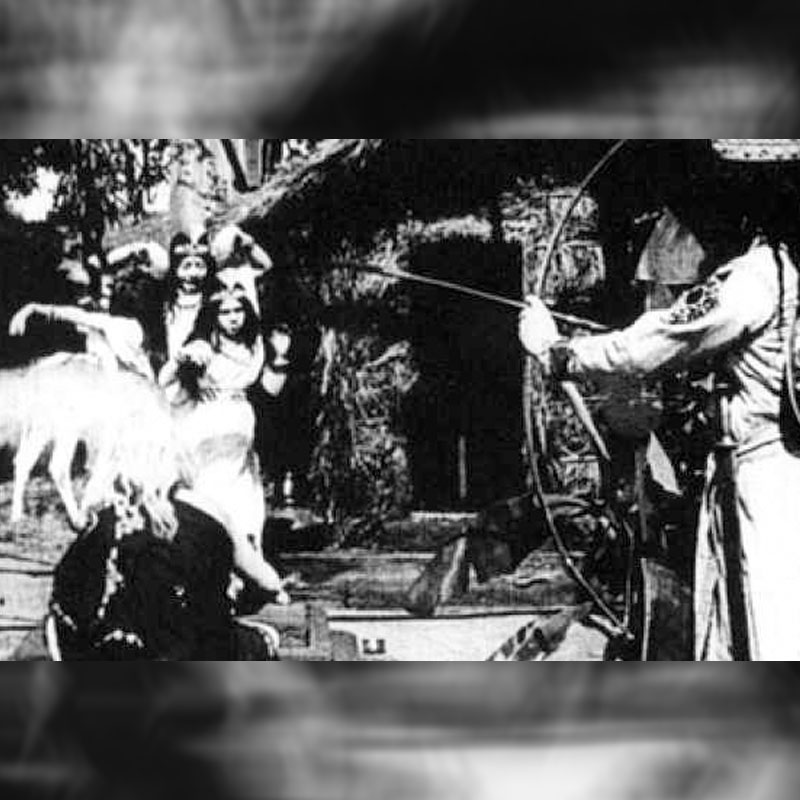
    The National Film Awards would be presented by President Pranab Mukherjee on 3 May which is the day on which the first-ever indigenous feature ‘Raja Harishchandra’ by D G Phalke was released in 1913.

    In feature films, the highest number of awards went to Hindi (11) followed by Marathi (9); Malayalam (7); Tamil (5); Telugu, Bengali and Kannada (4 each); Assamese (3), and one each to Gujarati, Konkani and Manipuri. One award each also went to two languages not in Schedule VIII of the Constitution: Moran and Tulu.

    The Best Female Playback Singer award went to Iman Chakraborty for the Bengali film ‘Praktan’ for the song ‘Tumi Jaake Bhalo Basho; and Sundharayyar was named best Male Playback Singer in the Tamil film ‘Joker’ for the song ‘Jasmine E’.

    The best music direction award went to Bapu Padmanabha for the Kannada film ‘Allamma’. The best lyrics awards went to Vairamuthu and Anupama Roy for the song Entha Pakkam in ‘Dharma Durai’ (Tamil) and ‘Tumi Jaake Bhalo Basho’ in ‘Praktan’ (Bengali) respectively.

    The best supporting female and male actor awards went to Zaira Wasim for the Hindi film ‘Dangal’ and Manoj Joshi for the Marathi film ‘Dashakriya’.

    The special mentions went to Sonam Kapoor for her hijack drama film ‘Neerja’ (Hindi), ‘Kadvi Hawa’ (Hindi) to producer Eleeanora Images Private Ltd and director Nila Madhab Panda, ‘Mukti Bhawan’ (Hindi) for producer Red Carper Moving Pictures and director Shubhashish Bhutiani; and actor Adil Hussain for two films: ‘Mukti Bhawan’ and ‘Maj Rati Keteki’.

    The best child artist award was shared by Adish Praveen, Nur Islam and Samiul Alam; and K Manohara for the films ‘Kunju Daivam’ (Malayalam); ‘Sahaj Pather Gappo; (Bengali); and ‘Railway Children’ (Kannada) respectively.

  • Sequels sans conviction, ploys abound

    MUMBAI: Somehow, the makers of sequels, prequels kind of films seem be doing so without conviction and, mainly paying no heed to content. Unlike most others, Naam Shabana did all except naming the film Baby 2 or some such to promote and market the film. All possible connections were made to identify it with the earlier film, Baby, otherwise.

    It is supposed to be a prequel telling the story of how Tapsee Pannu happened to become a spy!

    Akshay Kumar, the force behind the production house of Naam Shabana, even made an unnecessary and forced appearance in the film. His presence in the film was poorly scripted and no efforts made to justify it. In fact, he ended up trivializing the character created for the film’s protagonist, Tapsee Pannu.

    Akshay Kumar’s presence was probably fitted in to carry forward the brand equity of Baby and to also make viewers think they were not short changed.

    Ploys don’t draw the audience which also happened with Naam Shabana as the opening response remained tepid. The film took its patron for granted with its content as well which limited its growth over the weekend.

    *Having opened at about four crore on Friday, Naam Shabana collected approx. Rs 14 crore for its opening weekend. The going will be tough during rest of the week for the film.

    *Phillauri remained below average with its best figures coming from North compared to other circuits but not good enough on the whole. The film collected Rs 20.6 crore in its first week as it went on dropping each day of the week.

    *Anaarkali Of Aarah could not convert the appreciation it received from certain pockets into box office gains. The film fell short of one crore mark in its first week.

    *Badrinath Ki Dulhania continued to make the most of poor oppositions as well as its status as the only entertainer available. The film added an impressive Rs 10.65 crore in its third week to take its three week tally to Rs 109.85 crore.

  • Naam Shabana……Halfhearted!

    MUMBAI: You realise that whatever Naam Shabana had to show has already been shown in the film’s promos. The strategy may draw the initial audience to an extent but, since they are not going back being a very happy lot that is about all.

    Akashy Kumar did Baby with Tapsee Pannu (2015) playing a brief role. Akshay, being a star of over 25 years of standing, is accepted readily playing an action hero. But, when you are letting loose a female protagonist who you expect to carry a film through in place of Akshay, you need a build-up for her. So Tapsee who featured in Baby is given a backstory here. Her past, which makes up for the first part of the film and, when she is assigned a mission, that makes for the latter part of the film.

    If you look at the film that way, it is what is referred in the West as a double bill: two films at the price of one.

    Tapsee, playing Shabana Khan, is one stern person drained of all emotions. Brought up in predominantly Muslim locality of Mumbai in a small flat, she and her mother have suffered heavily from her drunkard father. Both women, Tapsee and her mother, have been at the receiving end of nonstop violence. Not to be a victim of any kind of violence again, Tapsee is training for martial art.

    Relentlessly wooed by her college mate, played by Taher Mithaiwala, Tapsee is not ready for any sort of commitment. Her idea about men is not positive thanks to her father’s behaviour. The only person Tapsee trusts and confides into is her mother.

    Taher finally manages to win Tapsee’s love and, after spending a cosy evening with him but before she could say she also loves him, Tahir becomes the victim of a group of spoilt boys from Delhi making merry in Mumbai. While that saves Tapsee from being molested, the experience also leaves her devastated as well full of rage.

    Tapsee now wants revenge, nothing sort of kill the perpetrators. The police is no help. That is when she starts getting help from anonymous source. Tapsee is trained to be a lethal weapon by her benevolent caller. Her offenders are located for her and all the arrangements are made for her to get to her enemies and kill them. Also shadowing her is her guardian angel played by Akshay Kumar.

    Having sought her revenge, Tapsee is now ready for the purpose her helpers had in mind for her. It seems, a national agency was tracking her moves and aggression all along and intended to enrol her as a spy to work for the country. Her handler so far keeping tabs on her is the character of Manoj Bajpayee.

    Having agreed to join the agency, Tapsee’s assignment is to liquidate an international arms supplier played by Prithviraj Sukumaran. Many agents have earlier lost their lives trying to tackle Prithviraj and, he also keeps getting his looks changed through plastic surgery.

    Finally, Prithviraj is tracked to Malaysia and it is time to move the narration out of congested Mumbai streets and to a more picturesque locations in Kuala Lumpur. Here, after some more trackers losing their lives to Prithviraj, it is left to Tapsee to tackle him singlehandedly.

    Naam Shabana, in an effort to give a back story to Tapsee, fails to connect the two parts. The way other characters are etched out make Indian spies look like fools and their parts look like they are playing a game of spies. Then, to send a novice agent to a villain who has been painted huge is not convincing. And, making Akshay her shadow and a guardian angel seems more an attempt to keep Akshay on the screen so the viewer does not feel cheated.

    Direction fails to detect or solve these and other glitches. While the first half story has been seen in few films earlier, it is still watchable due to Tapsee’s efforts. The second half sags. Music though out of place comes in three songs. Dialogue is good in parts. Editing needed to be sharper.

    Tapsee Pannu performs very well carrying her angry young girl image through with conviction. Akshay Kumar has really nothing to do and he does nothing to alleviate the situation. Prithviraj Sukumaran makes a mark. Manoj Bajpayee is okay.

    Danny and Anupam Kher make fleeting appearances to no avail. Taher Mithaiwal is fair. Naam Shabana is a halfhearted effort, the only comfort being in its seemingly low making costs.

    Producers: Neeraj Pandey, Shital Bhatia.

    Director: Shivam Nair.

    Cast: Taapsee Pannu, Akshay Kumar,. Manoj Bajpayee, Anupam Kher, Danny Denzongpa, Prithviraj Sukumaran.

  • Spielberg-Reliance’s global hit ‘A Dog’s Purpose’ comes to India

    Spielberg-Reliance’s global hit ‘A Dog’s Purpose’ comes to India

    MUMBAI: Anil D. Ambani-led studio Reliance Entertainment, and Steven Spielberg’s partnership venture, Amblin Partners’ film “A Dog’sPurpose”, is set to release in India today. The movie is an American comedy-drama film directed by Lasse Hallström, based on the best selling 2010 novel of the same name by W. Bruce Cameron.

    The film is about a dog that looks to discover his purpose in life over the course of several lifetimes and owners. It turns out that human beings are not the only ones that have existential thoughts such as the meaning of life. Man’s best friend is also looking for purpose, hence the title A Dog’s Purpose. The caveat here is that these beloved canines are able to reincarnate into new bodies, sometimes switching breeds and genders.

    A Dog’s Purpose, which released earlier this year in the US and China, has been a runaway success globally. The film has already crossed US$ 175 million (Rs. 1,100 crore) at the global box office, with China alone already contributing over US$ 75 million (Rs. 500 crore).

    The movie is yet to release in several major international markets, such as UK, France, Spain, Portugal, Australia, Japan, Russia, etc.

    Speaking about the film, Dennis Quaid, the actor, said, “Its such a fantastic story; I just had to do it. For me, it reminded of my first pet, Gertrude — that classic boy-dog experience,” he shared, his voice breaking a bit. “I’m getting welled up again.”

    A Dog’s Purpose, besides being the first Hollywood film to release in India at the start of the summer, is a film for families and all ages, and will be enjoyed by parents and children alike.

  • New films fail to attract viewers

    *The poor run of films at the box office continues unabated save for an odd Dangal or a reasonable entertainer in Badrinath Ki Dulhania. Not that any of these films can sustain a multiscreen cinema complex for more than a few weeks

    The week saw two new releases, Phillauri and Anaarkali of Aarah, both female-oriented and also off the beaten track. Phillauri saw actor Anushka Sharma turn producer launching her production banner, Clean Slate Films. The sustainability of such a films is grossly limited and they draw footfalls, albeit in limited numbers, barely for a weekend.

    A lot of actors are turning to production activities. But, Anushka, rather than take cue from her peers such as Salman Khan, Shah Rukh Khan and Aamir Khan, and make a commercially viable film, chose an abstract theme, that of superstition and supernatural. The intent seems to be awards rather than rewards; probably for the protagonist, Anushka herself, as well as for some technical aspects like special effects. What good is an award if the people have not taken to your film?

    What raises a question, besides the choice of subject, is that what was the logic of making a film almost entirely in Punjabi?

    *Phillauri, counting on only Anushka Sharma to draw the crowds could not quite manage that. The film’s opening was not encouraging, with Punjab where the film’s lead actor, Diljit Dusanjh is a big star, faring little better. The film colledted Rs 13.9 crore for its opening weekend

    *Anaarkali Of Aarah, though a local story of Bihar, and with rural background, found some appreciation as the film offered some great performances by its main actors, Swara Bhaskar, Sanjai Mishra and Pankaj Tripathi. However, these factors did not reflect on the film’s box office collections as the film remained in the range of a few lakh.

    *Director duo Abbas Mustan, who gave many successful films with various actors in their career as directors, failed badly when it came to launching their family scion, Mustafa. A totally outdated story idea and patchy script were not the right recipe to launch an actor. The film managed to collect Rs 3.25 crore in its first week.

    *Trapped collected Rs 2.1 crore in its first week.

    *Aa Gaya Hero proves to be the swan song for Govinda’s career. Must hurt more because this also happened to be his home production. The film struggled to cross the one crore mark to end its first and last week with the figures of a little over one crore.

    *Badrinath Ki Dulhania, made the most of poor crop of new releases. The film collected Rs 26.6 crore in its second week and is still holding steady in its third week. The film has taken its two week total to Rs 99.2 crore.

    *Commando 2 added Rs 35 lakh in its third week to take its three week total to Rs 23.95 crore.

    *The Ghazi Attack has added Rs 40 lakh in its fifth week taking its five week tally to Rs 19.3 crore.

  • Rs 125 million incurred on Film Heritage Mission this year

    NEW DELHI: A total of about 1,32,000 film reels have been acquired and the work of assessment, preventive conservation and restoration started under a mission mode project under the National Film Heritage Mission (NFHM).

    The scheme is to be implemented between 2014-15 and 2020-21 with total outlay of Rs 5.9741 billion to restore, digitize and archive films and filmic material through the National Film Archives of India.

    Of the outlay, Rs 126.6 million has been incurred till date during 2016-17. The expenditure incurred in 2015-16 was Rs 108 million and Rs 162 million in 2014-15.

    The minister of state for information and broadcasting Rajyavardhan Rathore said the NFAI has temperature and humidity controlled vaults for storage and preservation of film reels.

    The non-filmic ancillary material, such as photographs, song booklets, posters, films magazines, etc. are stored under temperature controlled environment.

    Some of the objectives of the NFHM include:

    i. To undertake film conservation assessment.
    ii. Preventive conservation of film reels.
    iii. Picture and sound restoration of landmark feature films and short films.
    iv. Digitization of feature films and short films.
    v. Construction of archival and preservation facilities for material restored under NFHM.
    vi. Conducting training workshops and courses in field of conservation, preservation and archiving.