Category: Movies

  • Eros reports higher profit margin despite fewer releases

    Eros reports higher profit margin despite fewer releases

    BENGALURU: Sunil Lulla-led Eros International Media Limited (Eros) reported 21 per cent margin (on operating income) for consolidated profit after tax (PAT) for the quarter ended 30 September 2017 (Q2 FY 2017-18) as compared with 12.8 per cent margin for the corresponding quarter a last ago. The company’s revenue shrunk by 44 per cent during the quarter under review as against Q2 FY 2016-17. Eros released just seven films (two medium and five small-budget films) in Q2 FY 2017-18 as compared with 17 (including two high-budget films) in the quarter ago quarter. Earnings before interest and taxes (EBIT) margin on total income for the quarter under review was 31.7 per cent as compared with 19.9 per cent in Q2 FY 2016-17. Though the profit margin was higher in this year’s quarter, overall actual profit was lower than the profit reported for Q2 FY 2016-17 because revenue during the period last year was much higher.

    Company speak

    Eros vice chairman and managing director Sunil Lulla said, “We have reported healthy performance during the quarter on the back of strong releases, satellite sales, and higher contribution from library monetisation. During Q2-18, we released films such as the hit comedy Shubh Mangal Savdhan, the much-celebrated Newton starring Rajkumar Rao, the Tiger Shroff‐starrerMunna Michael, Trinity’s first release Sniff, and Projapati Biskut(Bengali).”

    “It is a matter of pride for us thatNewton was chosen as India’s official entry for the Best Foreign Language Film category at the Oscars 2018. This underscores our strategy of focussing on content-driven films rather than high-budget, big-star formula films. During the period, the company also continued to focus towards investing in a Hindi and regional film language slate and Trinity Pictures, India’s first franchise‐driven studio,” revealed Lulla.

    “Looking forward, we have a host of highly anticipated releases coming up, which include Mukkabaaz in January,Happy Bhaag Jayegi Returns,Chandamama Door Ke, the India‐China co‐productions, Panda by Kabir Khan, Trinity Pictures’ Elephant Man by national-award-winning director Prabhu Solomon, and the Colour Yellow Productions film starring Shah Rukh Khan,” he said.

    The reported numbers

    Eros reported operating revenue of Rs 2,682.6 million for Q2 FY 2017-18 as compared with Rs 4,787.9 million in Q2 FY 2016-17. Total income, including other income, for the quarter under review declined by 44 per cent year-on-year to Rs 2,739.3 million from Rs 4,887.3 million. The company has given the breakup of revenue in its investor presentation for the quarter as follows: 36.7 per cent for theatrical; 13.3 per cent for overseas revenue; and 50. Per cent for television & others.

    Profit after tax in Q2 FY 2017-18 declined by 8 per cent y-o-y to Rs 575.1 million from Rs 625.2 million. EBIT was 10.7 per cent lower y-o-y in the quarter under review at Rs 867.5 million as compared with Rs 971.5 million. Operating profit (EBIDTA) for the quarter declined by 6.4 per cent y-o-y to Rs 835.2 million (31.1 per cent margin) from Rs 892.2 million (18.6 per cent margin).

    Total expenditure declined by 48.2 per cent y-o-y to Rs 2,085.4 million during the quarter from Rs 4,022.4 million. Film rights costs, including amortisation costs, are a major cost head for Eros. These costs declined to less than half y-o-y to Rs 1,189.5 million in Q2 FY 2017-18 from Rs 2,762.9 million Q2 FY 2016-17.

    Employee benefits expense declined by 9.4 per cent y-o-y to Rs 150.4 million from Rs 166.0 million. Finance costs doubled to 100.4 per cent in the quarter under review to Rs 213.6 million from Rs 106.6 million. Other expenses decreased 21.9 per cent y-o-y in Q2 FY 2017-18 to Rs 507.1 million from Rs 649.7 million.


  • Inox reports increase in revenue, profits for second quarter

    Inox reports increase in revenue, profits for second quarter

    BENGALURU: Indian cinema chain Inox Leisure Limited (Inox) has reported improved revenue and net profit after tax (PAT) for the quarter ended 30 September 2017 (Q2-18, current quarter) as compared to the corresponding quarter of the previous year (Q2-17, year ago quarter). Inox revenue from operations for Q2-18 increased 4.7 percent to Rs 3,112.6 million from Rs 2,973.8 million for Q2-17 (y-o-y). Profit after tax for the current period increased more than sevenfold (7.49 times) y-o-y to Rs 116.8 millon from Rs 15.6 million.

    Total income increased 4.9 percent y-o-y in Q2-18 to Rs 3,141.5 million from Rs 2,995.1 million. Operating profit (EBIDTA) for the current quarter increased 63.4 percent y-o-y to Rs 444.2 million from Rs 271.9 million.

    Inox says in its investor presentation that net box office collection (NBOC) increased in the current quarter to Rs 1,856 million from Rs 1,794 million. Advertisement revenue increased to Rs 321 million from Rs 23.8 million. Other operating revenues increased to Rs 264 million from Rs 240 million. Net food and beverages (F&B) revenue in the current quarter reduced to Rs 671 million from Rs 702 million in Q2-17.

    Though overall footfalls in Q2-18 increased to 12.75 million from 12.7 million in Q2-17, occupancy declined by 1 percent to 25 percent in Q2-18 from 26 percent in Q2-17. Overall average ticket price increased to Rs 186 in the current quarter from Rs 183 in the corresponding year ago quarter.

    The company says that the top five grossing movies in Q2-18 were Toilet-Ek Prem Katha (1.244 million footfalls, Gross Box Office Collection or GBOC of Rs 247.5 million; Spiderman Homecoming (0.623 million footfalls, GBOC Rs 131.1 million; Jab Harry Met Sejal (0.539 million footfall, GBOC Rs 119.6 million); Jagga Jasoos (0.605 million footfalls, GBOC Rs 113.9 million) and Mubarakan (0.561 million footfalls, GBOC Rs 103.3 million).

    Let us look at the other numbers reported by the company

    Total expenditure declined 13.1 percent y-o-y to Rs 2,963.1 million in Q2-18 from Rs 2,968 million. Exhibition costs increased 2.1 percent y-o-y in the current quarter to Rs 884.6 million from Rs 866.3 million. F&B costs declined 8.5 percent y-o-y to Rs 167.6 million y-o-y from Rs 183.1 million. Employee benefits expense increased 6.8 percent y-o-y to Rs 233 million from Rs 218.1 million. Finance costs in the current quarter increased 25.3 percent y-o-y to Rs 73.2 million from Rs 58.4 million. Other expenses reduced 3.6 percent y-o-y to Rs 1,383.2 million in Q2-18 from Rs 1,434.4 million.

  • 1700 films received on ending violence against women film contest

    1700 films received on ending violence against women film contest

    NEW DELHI: Around 1700 entries from over 600 colleges have come in response to a campaign launchged earlier this year for two-minute films on generating debate and promote positive change in cultural and social norms around the value of women in India.

    The campaign ‘#BasAbBahutHogaya – Enough is enough’ was launched by actor Farhan Akhtar along with Population Foundation of India, Farhan Akhtar’s MARD and noted director Feroz Abbas Khan with a pledge to end violence against women and girls.

    The shortlisted films will be judged by a high profile jury comprising Padma Shree Dr. Kiran Karnik, director Shekhar Kapur, actor Shabana Azmi and Feroz Abbas Khan.

    “When we announced the film-making contest, we feared that the students will speak only of the issues which are covered by the mainline media. However, there are many more aspects to the issue of violence against women and girls. The students surprised us with their take on even the minutest and not-spoken-of issues. The varied topics covered by all the participants are a proof of the fact that they realize what is happening around them and are willing to change it for the better”, said Population Foundation of India ED Poonam Muttreja.

    Noted director Feroz Abbas Khan said, “We have received an overwhelming response from students across the country. With almost 1700 entries and an unending zeal, the younger generation just proves that they are ready to turn the patriarchal system of India upside down with their new-age take on this issue.”

    The film-making contest is a part of Bas Ab Bahut Ho Gaya- Enough is Enough, a campaign that aims at generating debate and promote positive change in cultural and social norms around the value of women in India.

    National celebrities have joined this campaign to relay messages that motivate young girls to stand up against violence, and show boys that masculinity is not connected with violence. Apart from the films, there will be several activities including panel discussions and a series of films about violence against women. The campaign will culminate in a concert in Mumbai.

  • Reduce GST on film industry, IMPPA pleads to FM Jaitley

    Reduce GST on film industry, IMPPA pleads to FM Jaitley

    NEW DELHI: The Indian Motion Pictures Producers Association (IMPPA) has urged the government to fix 5 per cent as the maximum GST rate that should be charged on all goods and services connected with the entertainment industry including entertainment tax.

    In a letter to finance minister Arun Jaitley, IMPPA President T P Aggarwal said, “This will provide life to an industry which is being crushed under the heavy burden of tax and which needs immediate help and support of the government to survive”.

    Pointing out that IMPPA was the oldest body of filmmakers having been set up in 1937, Aggarwal said the film industry has been burdened with the extreme end of high GST.

    “In all other products, tax is levied after recovery of cost of production as well as input credit where all taxes and GST paid are adjusted in the GST payable,” he added. But in the film industry, GST has to be paid on goods and services as well as on sale of tickets irrespective of the fact whether the expenses incurred on making the film along with taxes paid thereon have been recovered or not.

    GST in the form of entertainment tax has to be paid on the sale of tickets from the first ticket onwards where it has been fixed at the highly unreasonable level of 18 per cent for tickets up to Rs 100 and 28 per cent for tickets more than Rs 100.

    The letter said that the imposition of uniform 18 per cent GST on majority of goods and services is also largely responsible for the miserable state of the film industry because very few films are profitable propositions and majority of films are disasters leading to the annihilation of the producers.

    Aggarwal wrote that the government should be “providing free entertainment to the people who pay so many taxes.” Instead, it levies heavy entertainment tax which has to be paid by the poor citizen on films. Producers deserve to get the full money since the films are self-financed without any government aid.

    He said that very few hit films make money while the rest are reeling in losses. Meanwhile, both the central and state governments cash in by imposing GST at every level. He demands that the practice of state governments choosing their own amount of entertainment tax must be abolished.

  • PVR reports lower numbers for second quarter

    PVR reports lower numbers for second quarter

    BENGALURU: Indian entertainment and exhibition company PVR Limited (PVR) reported a slight decline in total revenue for the quarter ended 30 September 2017 (Q2-18, current quarter) as compared to the corresponding year ago quarter (y-o-y). Operating profit (EBIDTA), net profit after tax (PAT) and total comprehensible income attributable to equity shareholders (TCI) of the parent company for current quarter were also lower as compared to Q2-17.

    PVR’s operating revenue declined 1.1 percent y-o-y in the current quarter to Rs 5,553.6 million from Rs 5,613 million. Total Income (TI) in Q2-18 declined 3.3 percent y-o-y to Rs 5,595.2 million from Rs 5,613 million. EBIDTA including other income for Q2-18 declined 18 percent y-o-y to Rs 946.7 million (16.9 percent of TI) from Rs 1,154.6 million (19.9 percent of TI). PAT for the current quarter declined 13.6 percent y-o-y to Rs 251.7 million (4.5 percent of TI) from Rs 291.3 million (5 percent of TI). TCI declined in Q2-18 by 14.4 percent y-o-y to Rs 246.5 million (4.4 percent of TI) from Rs 288.1 million (5 percent of TI).

    PVR reports revenue from two segments – movie exhibition and others. The movie exhibition segment saw a 3 percent y-o-y increase in operating revenue to Rs 5,321.9 million from Rs 5,164.6 million. The segment had 4.4 percent y-o-y decline in operating results at Rs 381.7 million from Rs 399.4 million. Others segment revenue saw 42.3 percent y-o-y to Rs 331.8 million from Rs 575.2 million. Others segment had an operating loss of Rs 8.9 million as compared to an operating profit of Rs 40.5 million as compared to the corresponding year ago quarter.

    PVR’s total expenditure for the current quarter was almost flat (up by 0.6 percent) y-o-y at Rs 5,202.3 million from Rs 5,173 million. Finance cost was up 6.9 percent y-o-y to Rs 207.1 million in Q2-18 from Rs 193.7 million.

    Movie exhibition cost in Q2-18 increased 16.4 percent y-o-y to Rs 1,334.5 million from Rs 1,146.4 million. Cost of food and beverages in the current quarter increased 8 percent y-o-y to Rs 384.7 million from Rs 356.5 million.

    Employee benefits expense in Q2-18 increased 7.8 percent y-o-y to Rs 586.6 million from Rs 544 million. Rent expenses in the current quarter were almost flat (declined 0.2 percent) y-o-y to Rs 971.6 million from Rs 973.4 million. Other expenses in Q2-18 declined 15 percent y-o-y to Rs 1,371.1 million from Rs 1,613.6 million.

  • Baahubali 2 catapults Sony Max across genres and in Hindi movies genre

    Baahubali 2 catapults Sony Max across genres and in Hindi movies genre

    BENGALURU: Baahubali 2 raked in viewership for Sony Max as the channel topped Broadcast Audience Research Council’s (BARC) weekly ratings for Top 5 Hindi Movie channels – HSM (U+R) : NCCS All : 2+ Individuals for week 41 of 2017 (Saturday, 7 October 2017 to Friday, 13 October 2017). Sony Max was ranked fourth in BARC’s weekly list of top 10 channels across genres (NCCS: All India (U+R): 2+ Individuals). Two other channels from the Sony Pictures Network (SPN) also were amongst BARC’s weekly list of top 10 channels across genres list for week 41 of 2017.

    Like week 40 of 2017 (Saturday, 30 September 2017 to Friday, 6 October 2017), three channels each from Star India and SPN, two channels from Zee Entertainment Enterprises Limited (Zeel) and one channel each from The Sun Network and Network 18 comprised BARC’s top 10 channels across genres weekly list for week 41 of 2017. From the genres perspective, seven Hindi GEC channels, and one channel each from the Hindi GEC, Tamil GEC and Telugu GEC made it to the top 10 channels list across genres.

    As is the norm (except during IPL cricket weeks) the top 10 channels across genre list was led by The Sun Network’s flagship Tamil GEC with 1,100.367 million impressions in week 41 of 2017. Sun TV was followed by Zeel’s FTA channel Zee Anmol with 759.094 million weekly impressions. Zee Anmol also led BARC’s top 10 Hindi GEC channels HSM (U+R): NCCS All: 2+ Individuals and top 10 Hindi GEC channels HSM (R): NCCS All : 2+ Individuals for the week. In the rural markets, Kaala Teeka on Zee Anmol was placed third among the top 5 Hindi GEC (R) programmes and helped the channel to its lead position in the rural markets.

    Zeel’s flagship GEC Zee TV was third in BARC’s across genres list for week 41 with 708.222 million weekly impressions. Zee TV was also ranked second in the Hindi GEC (U+R) markets. Balaji Telefilms productions- Kumkum Bhagya and its spinoff Kundali Bhagya helped Zee TV retain its position in the Hindi GEC and the across genres markets.

    As mentioned above, Sony Max was ranked fourth in the across genres list for week 41 of 2017 with 679.637 million weekly impressions followed by Viacom18’s flagship Hindi GEC Colors at fifth place with 644.187 million weekly impressions. Indian Hindi family drama Shakti – Astitva Ke Ehsaas Ki helped Colors, especially in the Hindi GEC urban markets in garnering viewership.

    At sixth place in BARC’s top 10 channels across genres list for week 41 of 2017 was Star India’s FTA and recently renamed channel Star Bharat with 643.035 million weekly impressions. Star Bharat was ranked third in BARC’s top 10 Hindi GEC (U+R) list for week 41. Star Bharat was followed by SPN’s flagship Hindi GEC channel Sony Entertainment Television with 602.697 million weekly impressions at seventh place. The Amitabh Bachchan hosted Kaun Banega Crorepati (KBC) helped SET in garnering viewership.

    Star India’s flagship Telugu GEC Star Maa was eighth in the top 10 channels across genres list for week 41 of 2017 with 581.897 million weekly impressions followed by SPN’s women focused Hindi GEC Star Pal with 530.962 million weekly impressions at ninth place. Star India’s flagship Hindi GEC Star Plus completed the top 10 channels across genres list for week 41 of 2017 with 527.26 million weekly impressions.

  • Women filmmakers’ northeast works to be highlighted at India fest in NY

    Women filmmakers’ northeast works to be highlighted at India fest in NY

    NEW DELHI: Three films from northeast India and a special focus on films made by women filmmakers will be the highlights of the second edition of the India Kaleidoscope Film Festival (IKFF) to be held in New York next month. The festival is being presented by the Museum of the Moving Image (MOMI) and The India Centre Foundation (ICF) from 9 to 12 November 2017.

    Drishyam Films’ Kadvi Hawa directed by Nila Madhab Panda will open the festival and it will close with Director Prakash Kunte’s Cycle. Actor-turned-produced Priyanka Chopra’s Pahuna and Anurag Kashyap’s Mukkabaaz will also feature at the festival.

    The films to be screened will explore the most relevant and pressing topics facing the subcontinent, are being made by today’s most progressive filmmakers working in regional languages. This year, India Kaleidoscope will span seven different regional Indian languages and include new programming initiatives that bring independent regional Indian cinema to an even wider audience.

    The India Centre Foundation Founding Director Priya Giri Desai said “It is an honour to offer these cinematic works to the film-going community and to give exposure to new sights, sounds and languages from across the Indian subcontinent.”

    Museum of the Moving Image Chief Curator David Schwartz said, “India Kaleidoscope, in just its second year, is already making a great impact as a showcase for the incredible diversity of Indian cinema, with its focus on artistic and independent films from the many regions of this sprawling, culturally rich country.”

    “Indian cinema today is independent and regional language cinema, and these films represent the best and most exciting work from the country. We are thrilled to present this eclectic and wholly original selection of films and filmmakers to the New York and US audience,” said Sudeep Sharma, Festival Programmer.

    India Kaleidoscope Film Festival 2017 will screen eight feature films, seven of which will be US or North American premieres. Most of the films will feature directors in person, and a major chunk of the programming lineup feature films directed by women filmmakers.

    In an effort to expand IKFF to wider audiences, this year’s closing night screening will be held at the SAG-AFTRA Foundation Theatre in Manhattan. All films will be screened with English subtitles.

    The IKFF 2017 programming committee includes Priya Giri Desai (The India Center Foundation), Ashok Sinha (The India Center Foundation), Priyadarshini Shanker (NYU Cinema Studies), Anupama Kapse (Loyola Marymount), Tristine Skyler (Writer and Producer), Ritesh Mehta (Film Independent) and Sudeep Sharma (Film Programmer); with additional programming support from Uma da Cunha and Christina Marouda (Museum of the Moving Image, IFFLA).

    The films are: Kadvi Hawa in Hindi stars Sanjay Mishra, Ranvir Shorey, and Tillotama Shome;  Mukkabaaz in Hindi has Vineet Kumar Singh, Zoya Hussain, and Jimmy Shergill; Sonar Baran Pakhi by director Bobby Sarma Baruah in Rajbangshi stars Pranami Borah, Arati Barua, and Pranjal Saikia; Prakasan by Director Bash Mohammed stars Dinesh Prabhakar, and Laya Krishna; Pahuna by director Paakhi Tyrewala in Sikkimese stars Ishika Gurung, Anmoul Limboo, and Manju KC Nanu; and Cycle by director: Prakash Kunte in Marathi stars Hrishikesh Joshi, Priyadarshan Jadhav, and Bhalachandra Kadam.

    The documentaries are Up Down And Sideways (Kho ki pa lü) by directors Anushka Meenakshi and Iswar Srikumar in Chokri on rice cultivators, and Last Days. Last Shot by director Sumira Roy in Hindi/Bengali/Bhojpuri on how Life and death co-exist every day on the banks of the Ganges in Varanasi.

    ALSO READ :

    Maiden Indian film fest in Poland honours Koirala, Mittra

    Two internationally renowned Indian films get country premiere at MAMI

    NY Indian Filmfest: ‘Mukti Bhawan’ is best feature, short on  Kejriwal is best docu

    L’Oreal Paris ambassadors brighten red carpet at Cannes Film Festival


  • Secret Superstar: Patchy underdog movie riding on Aamir’s fame

    Secret Superstar: Patchy underdog movie riding on Aamir’s fame

    There have been numerous films on a protagonist going against the tide to fulfil his ambition and childhood dream. Usually, in films, such aspirants come from second rung cities, small towns or mofussil India. That adds to the sympathy or the underdog quotient as the script’s requirement.

    Just about every actor would have played at least one if not more such roles of an underdog hitting the pinnacle of success. Be it in the field of entertainment, industry or underworld. In fact, there have been some films made on real life heroes too who made it big from humble beginnings; some acknowledged some unofficial. The prominent among these include films on Neerja, MS Dhoni, Dhirubhai Ambani, Sachin Tendulkar, Milkha Singh, Silk Smitha, Capt Nanavati, Azharuddin, Phoolan Devi, Phogat sisters, Mary Kom and just about every pre-independence political leader and freedom fighter.

    But, unless dramatised, these biopics don’t work. Compare with, for example, M S Dhoni: The Untold Story and Sachin: A Billion Dreams. While Dhoni worked with the viewers, Sachin was rejected. The reason was that Dhoni was scripted to appeal while Sachin went on the lines of a documentary.

    Secret Superstar is not a biopic but goes on the same lines of one and one wishes it had taken cue from films like Dhoni or Mary Kom where fighting the odds includes a lot of hurdles and not just one impractical father’s illogical angry outbursts.

    Secret Superstar is the story of a teenaged Vadodara girl from a Muslim family though the film makes no reference to her community throughout the film. The character of Zaira goes to a co-ed school, which the makers don’t care if it comes across as English, Gujarati or Hindi medium.

    Zaira aspires to be a singer. Her mother, a supressed wife, had bought her a guitar when she was six. Zaira strums on the guitar when her father, played by Raj Arjun, is not around for he lives with the ghosts of Aurangzeb. Zaira can go to a co-ed school, mingle with boys, burkha is never forced on women of the house, it is just that she can’t cultivate her hobby.

    Since Raj Arjun works in Saudi Arabia, to the relief of Zaira and her mother, played Meher Vij, he is away 11 months a year and they can live normal lives. Zaira has to give an outlet to her talent without letting her father know about her exploits. Meher Vij, always by her side, sells an ornament to buy Zaira a laptop.

    Secret Superstar is also a teenage love story on the side. He classmate, played by Tirth Sharma, loves her and is always ready to go out of his way to help her. Zaira’s journey starts with Meher Vij and Tirth by her side. She decides to sing and post her videos on Youtube hidden behind a burkha hoping for her songs to work and be noticed. Her identity on Youtube is Secret Superstar.

    Youtube plays one of the characters in this film as it may have been a part of many others stories too since its inception in 2006. Zaira is an overnight sensation on the social media and is also praised by film stars and others but, mainly, by a cranky music director played by Aamir Khan.

    Zaira, the social media sensation, and Aamir Khan, on the last lap of his creativity, join forces and Aamir manages to create a new singing superstar out of Zaira in the process reviving his own career.

    Secret Superstar has a predictable story that has been turned and twisted at whim. Glitches are left to pass throughout. The producer’s reputation for minor details is missing here. The first half is designed to be negative where one man is cast out of a 1960 family social film in Raj Arjun.

    With fair dialogue, average production values, the film has decent cinematography. For the kind of theme and script the film handles, its 150-minute duration is telling on the viewer. For a musical about launching a new singing talent, the film’s musical score is lacking.

    While Zaira carries the film on her shoulders, she is well supported by Vij and Sharma. Arjun is effectively terrorising. Aamir has made a caricature out of the music composer that he plays wearing gaudy T shirts tucked in jeans, the kind of costume tapori hero used to wear in 1970s films to cater to the what was described as ‘frontbenchers’. His execution of the role borders on buffoonery.

    Secret Superstar comes across as a patchy film riding on the name of Aamir but hoping for the Diwali weekend to salvage it.

    Producers: Aamir Khan, Kiran Rao.

    Director: Advait Chandan.

    Cast: Aamir Khan, Zaira Wasim, Meher Vij, Tirth Sharma, Raj Arjun, Kabir Sajid.

  • Golmaal Again: Entertaining suspense thriller

    Golmaal Again: Entertaining suspense thriller

    The most successful franchise in Hindi films, Golmaal, strikes again. And, aptly, the title is Golmaal Again. The main faces of the franchise — Ajay Devgn, Arshad Warsi, Tusshar Kapoor, ShreyasTalpade and Kunal Khemu are very much there so are the other regulars, Sanjay Mishra, Mukesh Tiwari, Johny Lever, Murli Sharma and Vrajesh Hirjee.

    However, what has changed is the film’s regular location, Goa, its sun, sea and sand. Golmaal Again is based in Ooty. That is because, the film needs something like British countryside with an old mansion as the backdrop.

    The film deals with the supernatural, ghosts, deception and revenge. For a change, the climax here is not a farce as it usually is with this franchise.

    The characters of Ajay, Arshad, Tusshar, Kunal and Shreyash are being tended in an orphanage in Ooty started by a millionaire, played by Uday Tikekar, who forsakes all his businesses to look after orphans. The five are divided into two groups: Ajay and Shreyas on one side while Arshad, Tusshar and Kunal are on the other. Both sides are always at loggerheads. One fine day, Ajay and Shreyas walk out of the orphanage after a scolding from Tikekar; Arshad, Tusshar and Kunal follow suit soon.

    Both groups are now grown up and are into the same business: that of grabbing land and property for money on behalf of others. While Ajay does it for Sanjay Mishra, Arshad does it for Prakash Raj.

    The five of them learn that the father figure of the orphanage, Tikekar, who cared for them has passed away, and they decide to visit the orphanage to take part in the rituals. But, the reason is more: both the groups are assigned to grab the land belonging to the orphanage along with the piece belonging to a blind ex-army man, played by Sachin Khedekar, Tikekar’s friend.

    Tabu, a librarian in Ooty who looks after the affairs of the mansion, assigns rooms to the five to stay till the rituals are over. Tabu has a special gift in that she can see ghosts as well as communicate with them. At the mansion, the five also meet Parineeti Chopra who is introduced to them as the maid of the house.

    After the usual gimmicks and the gags that the divided five go through like in other Golmaal instalments, it is time to lend some purpose to Golmaal Again. It turns out that Tikekar did not die by falling off the terrace. And that Parineeti is not really who she was introduced as. Only Tabu knew who she was.

    It is time for the five to join forces along with Tabu and Parineeti to sort out things and bring culprits to book. The change of background in Golmaal Again takes a while for the viewer to get adjusted to. As this one moves from Goa to Ooty, and is a suspense thriller instead of being an all fun film. But, once into the film, it does not fail to entertain.

    The best part, of course, is the dialogue and one-liners that keep the pace going. Shot on scenic, lush green background, the cinematography is soothing to the eye.

    The usual Golmaal gang of Ajay, Arshad, Tushaar, Kunal and Shreyas have nothing new to do beyond what they have done earlier.The casting of Parineeti and Tabu brings a fresh look to the film.

    The film has a proper villain in Prakash Raj this time and springs a surprise with Neil Nitin Mukesh joining the action in the latter half. The actors mimicking Nana Patekar followed by his sudden cameo make for pleasant viewing.

    Lever, Mishra, Tiwari and Hirjee provide relief from time to time.

    Golmaal Again is the right kind entertainer for the festive period. Keeps you happy while you are watching it. The opening day response has been encouraging, and the weekend is expected to help maintain the momentum.

    Producer, director: Rohit Shetty.

    Cast: Ajay Devgn, Tabu, Parineeti Chopra, Arshad Warsi, Tusshar Kapoor, Kunal Khemu, ShreyasTalpade, Sanjay Mishra, Johny Liver, Mukesh Tiwari, VrajeshHirjee,Murli Sharma, Prakash Raj, Neil Nitin Mukesh and Nana Patekar (cameo).

  • Pre-Diwali period sees some flops

    Pre-Diwali period sees some flops

    The pre-Diwali period saw a few flops.

    Judwaa2 saved the situation to some extent for the exhibition section providing relief with a considerable number of footfalls for a couple of weeks. Besides this, Newton was in news, a small film which got some favourable box office but more media hype as it was chosen as India’s entry to the Oscars the same day it released.

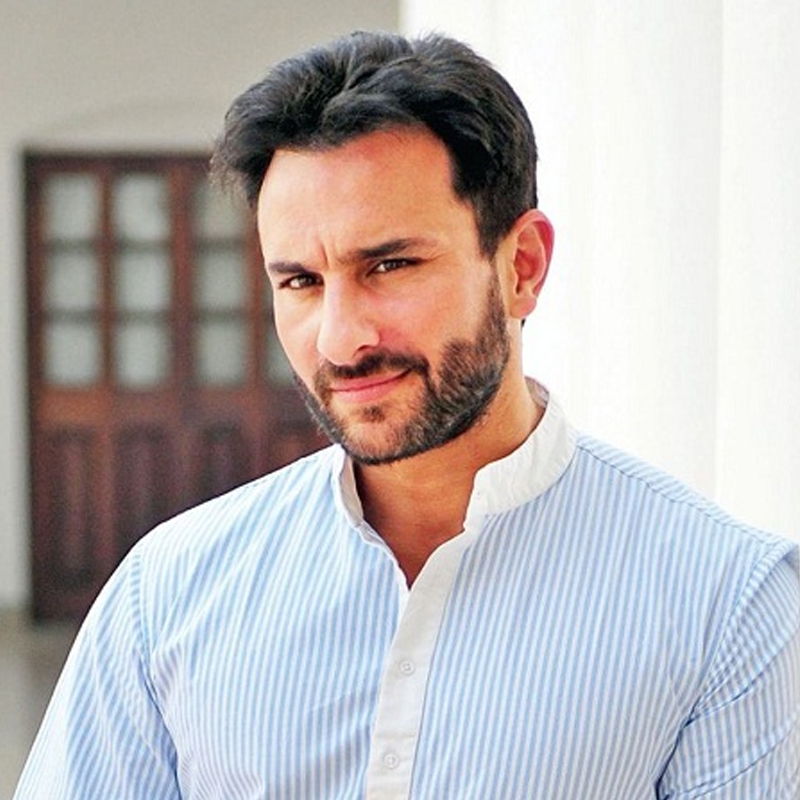
    Sadly, among other failures, the wrong release plan made a yesteryear star out of Saif Ali Khan in a single Friday as his latest release, Chef, went grossly unnoticed.

    Besides this, a lot of small films get playtime at the multiplexes during such dull periods and we had films like Daddy, Lucknow Central, Patel Ki Punjabi Shaadi, Bhoomi, Haseena Parkar, Tu Hai Mera Sunday, Ranchi Diaries and such.

    Though there is no hyped film releasing this Diwali, the exhibitors can take some comfort in the fact that the small film due for release during the Diwali this year is Aamir Khan’s Secret Superstar which should balance things with the other release, Golmaal Returns. The advantage with Golmaal Returns is that, it is the fourth instalment of the Golmaal series and earlier, two out of three have worked well.

    What is also good about Golmaal Returns is its genre is that, it is just the film one would hope to watch during the festive period of Diwali this being a feel good comedy entertainer.

    This week: The latest release, Ranchi Diaries, does not amount to anything. The films shows are either cancelled or passed on to Judwaa 2. This is not good enough for the multiplexes, a sort of a compromise, yet, better than screening Ranchi Dairies. This was the last disaster of the wrong period, wrong release.

    In the last week release, Saif Ali Khan starrer, Chef is a disaster. Surprised that T Series, having invested more than Rs 250 million in the film, agree to such a compromised release strategy! Rather suicidal.

    * Ranchi Diaries finds no audience. Goes unnoticed.

    * Chef, the last week’s release, emerges very poor. The film collects just about Rs 51.5 million in its first week.

    * Judwaa2 sets a kind of record for the second week as it collects Rs 264 million for its second week to take its two week total to Rs 1.23 million.

    * Newton is still holding well in its third week having collected Rs 16 million in its third week and taking its three week total to Rs 175.5 million.