Category: Movies

  • Foovies on the menu as Cinépolis serves cinema with a side of flavour

    Foovies on the menu as Cinépolis serves cinema with a side of flavour

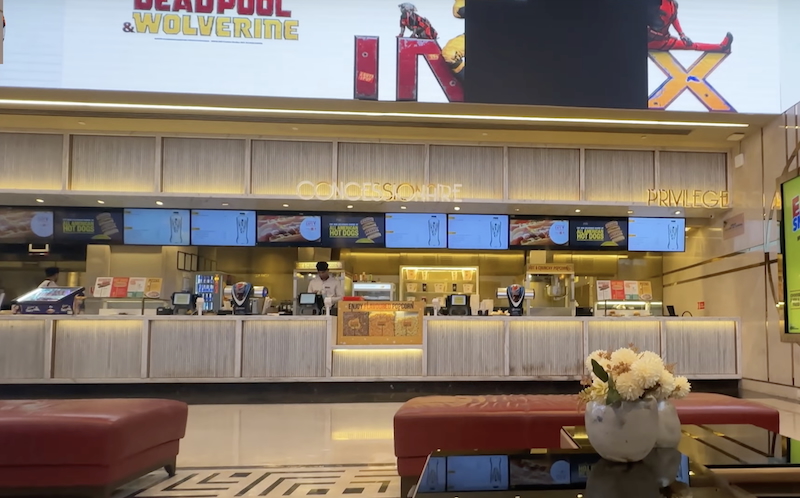
    MUMBAI: Dinner and a movie? Cinépolis just scrapped the “and” and turned it into one irresistible package. With the launch of Foovies, India’s first international cinema exhibitor has spiced up the big screen by serving freshly prepared, indulgent meals right inside the theatre. Gone are the days when cinema food meant just popcorn and cola. Foovies flips the script with a vibrant menu ranging from pizzas, wraps, fries, nachos, and samosas to decadent in-house desserts. Every dish is crafted with the same flair that fuels the stories on screen, repositioning Cinépolis as not just a multiplex but a bona fide foodie destination.

    To mark the debut, the chain has rolled out Foovies25, offering 25 per cent off on food and tickets, alongside Club Cinépolis loyalty perks that let patrons earn and redeem points on meals. The move is aimed squarely at India’s two great passions, food and film blending them into a seamless lifestyle experience whether it’s a date night, family outing, or weekend catch-up with friends.

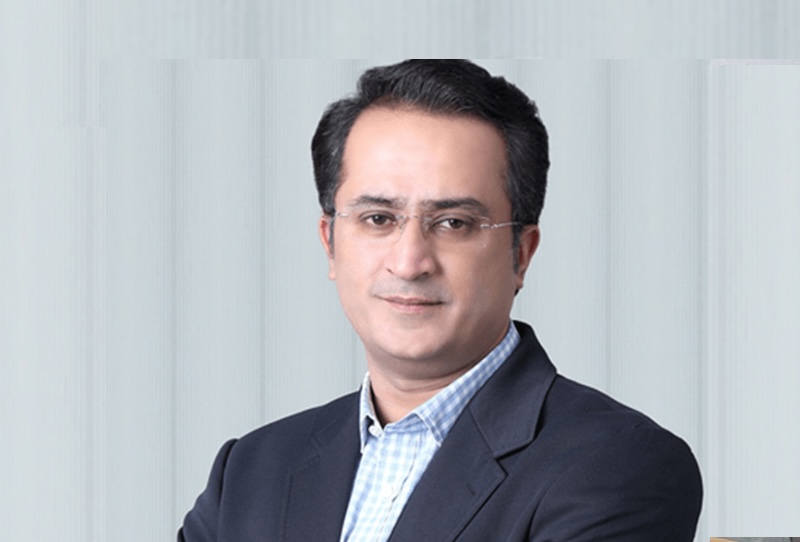
    “At Cinépolis, we don’t just showcase films, we craft experiences,” said Cinépolis India managing director Devang Sampat. “Foovies is our bold step to make every movie visit an immersive lifestyle indulgence, blending the joy of cinema with the comfort of world-class food.”

    Since its India entry in 2009, Cinépolis has set benchmarks with luxury recliners, Dolby surround sound, cutting-edge projection, and its globally famed popcorn. With Foovies, the brand has now raised the stakes again transforming theatres into dining destinations and reshaping the very way India consumes entertainment.

    Because sometimes, the best plot twist isn’t on the screen, but on your plate.
     

  • Indian cinema turns to artificial intelligence for epic Hanuman film

    Indian cinema turns to artificial intelligence for epic Hanuman film

    MUMBAI: Indian cinema is preparing to push the boundaries of filmmaking with what producers claim will be India’s first theatrically released motion picture created entirely using artificial intelligence (AI), centred on the Hindu deity Hanuman.

    Chiranjeevi Hanuman – The Eternal, scheduled for worldwide release on Hanuman Jayanti in 2026, represents an ambitious fusion of ancient mythology and cutting-edge technology that could reshape how religious epics are brought to the screen.

    Abundantia Entertainment, the production house behind hits including Airlift and Ram Setu, is partnering with Collective Media Network’s Historyverse division on the project, which draws from the Ramayana and Puranic texts to create what they describe as a “visual odyssey.”

    The film is being developed by more than 50 engineers from Galleri5, the technology arm of Collective Artists Network, working alongside cultural scholars and literary experts to ensure narrative authenticity. Even the soundtrack will break new ground, composed by Trilok, billed as the world’s first AI-powered band that blends Indian spiritual traditions with contemporary sound.

    “We constantly push boundaries of storytelling possibilities, and I am delighted that we are partnering with Vijay and his amazing team at Collective to harness cutting-edge tech and tools to tell one of India’s most iconic stories,” said Abundantia Entertainment founder & CEO Vikram Malhotra.

    The project reflects growing confidence in AI’s creative potential within India’s entertainment industry, which has traditionally relied on star power and elaborate song-and-dance sequences to draw audiences. By choosing Hanuman—revered by hundreds of millions as a symbol of devotion, strength and faith—the producers are making a bold statement about technology’s role in preserving and reinterpreting cultural heritage.

    Collective Artists Network founder & chief executive Vijay Subramaniam emphasised the company’s commitment to “authenticity and cultural stewardship”, promising “complete transparency about the role of AI in the creative process.” This approach addresses potential concerns from religious groups about technological interpretation of sacred stories.

    The timing is significant, as India’s film industry grapples with rising production costs and increasing competition from streaming platforms. AI-generated content could potentially reduce expenses while enabling more spectacular visual effects than traditional methods allow.

    Abundantia, founded in 2013 by former Viacom18 Motion Pictures chief operating officer Malhotra, has built its reputation on “uniquely Indian stories”, from the patriotic thriller Airlift to the biographical drama Shakuntala Devi. The company’s upcoming slate includes Subedaar starring Anil Kapoor and collaborations with acclaimed directors including Hansal Mehta.

    Collective Artists Network has expanded rapidly through acquisitions including Under 25 Universe and Terribly Tiny Tales, positioning itself at what Subramaniam calls the convergence of “culture, creators, and technology”. The company operates Big Bang Social, a platform for brand-creator collaborations, and has launched Collective Media Network to broaden its content reach.

    The Hanuman project represents more than technological experimentation—it’s a test of whether Indian audiences will embrace AI-generated storytelling for their most cherished cultural narratives. Success could open the floodgates for similar projects, while failure might reinforce traditional approaches to mythological cinema.

    The 2026 release date on Hanuman Jayanti, the festival celebrating the deity’s birth, suggests producers are confident in their ability to create something worthy of such a significant cultural moment. Whether audiences agree will determine if this marks the beginning of a new era in Indian filmmaking or merely an expensive experiment.

  • Indian film producer loses copyright battle over Lootere title

    Indian film producer loses copyright battle over Lootere title

    MUMBAI: A Hindi film producer who made a 1993 film starring Sunny Deol has lost his bid to stop Disney+ Hotstar from streaming a digital series with the same title, after a Bombay high court judge ruled that film titles cannot be copyrighted.

    Sunil Darshan Saberwal, who produced the Hindi feature film Lootere three decades ago, sued Star India (now JioStar India) and others in March 2024, seeking to prevent them from using what he claimed was his registered title for their piracy-themed web series.

    But justice Sandeep Marne dismissed Saberwal’s application for a temporary injunction on 18 August, delivering a comprehensive rejection of his copyright claims and dealing a significant blow to long-standing industry practices around title registration.

    The judge ruled that “there cannot be a copyright in mere title of a film”, citing Supreme Court precedent that titles are “incomplete in themselves” and do not qualify as literary works under India’s Copyright Act of 1957. The ruling follows the apex court’s 2016 decision in Krishika Lulla v Shyam Vithalrao Devkatta, which established that commonplace words like Desi Boys lack the originality required for copyright protection.

    Saberwal’s 1993 romantic drama bears no resemblance to Star India’s eight-episode series about Somalian pirates hijacking an Indian vessel. The court noted that “except similarity in the title, plaintiff’s cinematograph film Lootere admittedly does not have any similarity in terms of story with the series.”

    The producer had registered the title Lootere with film industry associations including the Western India Film Producers Association, arguing this gave him exclusive rights. But the court dismissed such registrations as “purely private arrangements having no sanctity in law,” enforceable only between association members through contract.

    “The associations formed by film producers and registrations granted by such associations are nothing but an internal contractual arrangement between the members,” justice Marne stated. Since Star India was not a member of the relevant association, it could not be bound by Saberwal’s registration.

    The judgment highlighted how Bollywood routinely produces multiple films with identical titles—citing examples including Hera Pheri, Aankhen and Dilwale —without legal challenge, provided the underlying stories differ.

    The court also criticised Saberwal’s lengthy delay in pursuing legal action. Though he first noticed the series trailer in September 2022, he waited until March 2024 to file suit—by which time the series had already been streaming on Disney+ Hotstar for months.

    “Plaintiff has whiled away substantial time of about two years despite acquiring knowledge of plans,” the judge observed, noting this delay was “fatal” to claims for emergency relief.

    The decision undermines the film industry’s practice of treating title registrations as conferring legal rights, potentially opening the door to more disputes over popular names. Industry associations have historically operated these registration systems to prevent conflicts between producers, but the ruling clarifies they carry no statutory weight against non-members.

    Saberwal’s legal team had argued that Star India’s own attempts to secure clearance for the title from producer Boney Kapoor proved the industry recognises such rights. But the court found this irrelevant since it was undertaken by a production services company, not Star India itself.

    The series Lootere continues streaming on Disney+ Hotstar, having premiered in March 2024. Saberwal retains the option to pursue damages rather than injunctive relief, though his suit contains no such claim.

    The ruling reinforces that while films and their underlying literary works enjoy copyright protection, titles remain in the public domain unless they achieve trademark status or generate sufficient goodwill for passing-off claims—a much higher bar than simple registration with industry bodies.

  • PVR Inox marks Independence Day with 18 new screens in Mumbai and Bengaluru

    PVR Inox marks Independence Day with 18 new screens in Mumbai and Bengaluru

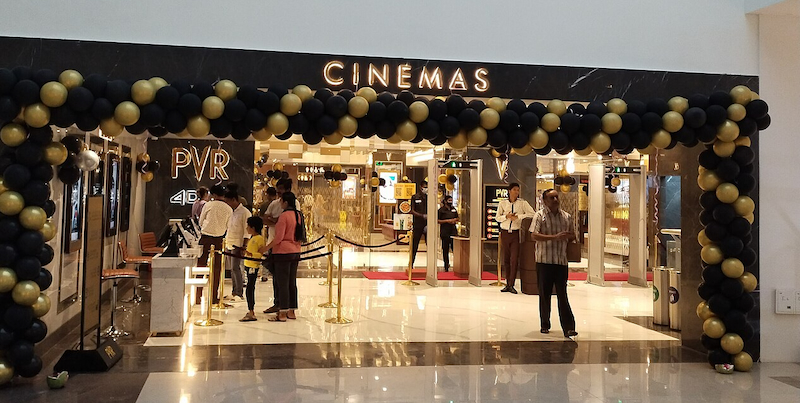
    MUMBAI: PVR Inox has turned Independence Day into a box office bonanza with the launch of 18 state-of-the-art screens across Mumbai and Bengaluru. The country’s largest cinema exhibitor unveiled a 10-screen megaplex at Sky City Mall in Borivali East, Mumbai, and an eight-screen flagship at Mahindra Millennium Mall in Bengaluru.

    Timed to coincide with the releases of Coolie and War 2, the two properties showcase the exhibitor’s boldest push yet into experience-driven entertainment. The Borivali megaplex spans multiple levels and features premium formats including Insignia, Imax with Laser and 4DX, with Instagram-ready foyers and lounge spaces pitched squarely at younger audiences.

    Bengaluru’s new multiplex promises even more experimentation: India’s first dine-in auditorium restaurant, an upgraded “Kiddles 2.0” cinema for children, Club Sapphire recliner halls, and VR/AR gaming zones. AI-enabled crowd-flow systems add a tech edge to the glitzy design.

    INOX Bengaluru

    PVR Inox managing director Ajay Bijli said the new cinemas celebrate “the freedom to experience stories in spaces that inspire, energise, and connect.”

    Executive director Sanjeev Kumar Bijli called the simultaneous 18-screen launch the firm’s “boldest step yet” in reimagining cinema as a multi-sensory destination.

    With 1,763 screens across 355 properties in 111 cities, PVR Inox continues to dominate Indian film exhibition. By positioning its latest properties as lifestyle hubs as much as theatres, it is betting that movie-going can be turned into a festival every weekend.

  • Game of Change: A New Cinematic Blueprint for Education, Leadership & Social Impact

    Game of Change: A New Cinematic Blueprint for Education, Leadership & Social Impact

    In a media landscape dominated by fiction and celebrity, Game of Change is flipping the script. Premiered across Mumbai, Hyderabad, and Chennai, this new-age docufilm series brings real stories, real people, and real transformation to the big screen. But this isn’t just a movie — it’s the beginning of a movement.

    Helmed by Siddharth Rajsekar, digital coach and founder of the Internet Lifestyle Hub, Game of Change blends documentary realism with cinematic storytelling to deliver what mainstream cinema rarely attempts: authenticity. The first installment, featuring eight powerful stories of personal and community-based transformation, is already being hailed as a genre-defining moment in Indian content creation.

    “We’re not here to entertain alone,” said Siddharth Rajsekar at his annual online event Reboot 2025, where he unveiled a video with his long-term vision for Game of Change. “We’re here to remind India how to learn — by returning to purpose, community, and inner alignment.”

    Rewriting the Script of Education

    At the heart of Game of Change lies a critique — and a call to action. The current education system, digital reformer Siddharth Rajsekar argues, is a colonial relic that trains compliance, not creativity. In contrast, the film series draws on India’s ancient learning heritage — from Nalanda, Takshashila, Kanchipuram, Madurai, Nabadwip to Udupi — where knowledge was passed down through community interaction, mentorship, and lived experience.

    The docufilm envisions a modern-day gurukul for the digital age: a hybrid model that fuses storytelling with technology, personal growth with AI-powered scalability.

    From Documentary to Docu-Movement

    The cinematic format of Game of Change is deliberately unconventional. It features real-life individuals — not actors — who’ve risen above circumstances to lead, serve, and inspire. These are stories of educators, entrepreneurs, and community leaders who’ve become modern role models in an age of celebrity saturation.

    “Gen Z and Gen Alpha don’t just want to be entertained. They want to see themselves in the story,” said Siddharth Rajsekar. “They’re not looking for fantasy. They’re looking for alignment.”

    Strategic Rollout, Cultural Relevance
    The decision to premiere the film in three major metros wasn’t just for visibility — it was part of a place-based strategy to ignite community-led action. Each screening was followed by emotional applause and discussions, underscoring the film’s power to spark real dialogue and introspection.

    With versions already dubbed in Hindi, Tamil, Telugu, and English — and others like Kannada underway — the creators are preparing for a nationwide theatrical rollout and a subsequent OTT release.

    Cinema Meets Community

    Perhaps the most striking aspect of Game of Change is how it turns viewers into participants. Through its growing online ecosystem — including webinars, learning journeys, and coaching communities — the film invites its audience to move beyond passive consumption.

    “We’re not building fans,” Siddharth noted. “We’re building a family of change-makers.”

    This model aligns with current trends in participatory media, where communities around content become more valuable than the content itself. It also reflects a shift in youth media engagement — from binge-watching to belonging.

    What’s Next: Scaling the Movement

    Building on the momentum, the team announced plans for the next installment of Game of Change — a full-length feature film currently in production. While the current version serves as a pilot with a modest budget of 1.5 CR, the upcoming film will expand on its core themes in a 90–120 minute cinematic journey.

    Looking ahead, Game of Change plans to integrate AI and emerging tech into future installments — not for spectacle, but to explore how technology and ancient wisdom can co-exist. This narrative isn’t about resisting innovation; it’s about humanizing it.

    With this vision, Game of Change enters the rare space where storytelling becomes system-building — offering not just inspiration but infrastructure for social transformation.

  • Indian startup claims to solve Bollywood’s dubbing dilemma with AI lip-syncing

    Indian startup claims to solve Bollywood’s dubbing dilemma with AI lip-syncing

    MUMBAI: An Indian artificial intelligence startup reckons it has cracked one of cinema’s most vexing problems: making dubbed films look authentic. NeuralGarage’s VisualDub technology has been deployed on War 2, releasing on 14 August, to create what the company claims is the world’s first film visually transformed from one language to another whilst maintaining the illusion of native production.

    The Bollywood sequel, originally shot in Hindi, has secured a straight film certificate for Telugu distribution—not as a dubbed version but as an ostensibly original Telugu production. Neural Garage co-founder & chief executive Mandar Natekar describes this as a “fundamental shift” in content production and distribution.

    The technology addresses a chronic irritant in global film distribution: poorly synchronised dubbing that breaks audience immersion. Traditional dubbing overlays foreign-language audio whilst retaining the original actor’s mouth movements, creating a jarring disconnect that many viewers find off-putting.

    VisualDub purports to solve this by digitally altering actors’ facial movements to match the target language’s phonetic patterns, creating the visual impression that performers originally spoke in the dubbed tongue. The result, Natekar claims, allows producers to sell multilingual versions as distinct original films rather than mere translations.

    The commercial implications could be substantial. Indian cinema’s linguistic fragmentation has long constrained box office potential, with Hindi films struggling in southern states where Telugu, Tamil and other regional languages dominate. Conversely, southern blockbusters rarely achieve pan-Indian success without extensive dubbing campaigns.

    If VisualDub delivers on its promises, producers could command premium pricing for what appears to be multiple “native” productions whilst incurring costs for just one shoot. Natekar suggests this could double or treble pre-release distribution revenues.

    The startup, which has garnered backing from Google’s GenAI Accelerator and AWS’s Global GenAI programme, also won TechCrunch’s Battlefield competition in 2024 and this year’s SXSW innovation award. Such endorsements suggest the technology has impressed seasoned investors and technologists.

    Yet scepticism is warranted. Previous attempts to digitally manipulate actor performances—from CGI de-aging to deepfake technology—have often fallen into the “uncanny valley”, where near-human animations feel disturbingly artificial. Moreover, the cultural nuances embedded in regional cinema extend far beyond language, encompassing gestures, expressions and performance styles that may prove difficult to algorithmically adjust.

    The broader implications stretch beyond Bollywood. Hollywood studios spend millions dubbing blockbusters for international markets, whilst streaming platforms like Netflix invest heavily in local-language content production. A reliable visual dubbing solution could dramatically reduce these costs whilst expanding addressable audiences.

    Natekar envisions actors transcending linguistic boundaries entirely: “Hrithik Roshan can now be a Telugu, Tamil, or even a Spanish actor. Tom Cruise in Bhojpuri? Now possible.”

    Such grandiose claims invite scrutiny. The proof will lie not in technical demonstrations but in audience acceptance. If War 2 performs strongly in Telugu markets without viewers detecting artificial manipulation, VisualDub may indeed herald a new era in global content distribution.

    For now, the technology represents another front in artificial intelligence’s assault on creative industries. Whether it liberates content from linguistic constraints or merely creates more sophisticated fakery remains to be seen. What’s certain is that traditional dubbing studios should be paying attention.

  • Surat gets the big picture as Rajhans rolls out city’s first Imax screen

    Surat gets the big picture as Rajhans rolls out city’s first Imax screen

    MUMBAI: Surat’s moviegoers no longer need to pack a bag for a big-screen pilgrimage to Mumbai or Ahmedabad, the Imax revolution has finally arrived at home. Rajhans Cinemas has unveiled Gujarat’s latest cinematic crown jewel: an Imax auditorium inside Rajhans Cinemas Precia, one of India’s largest multiplexes.

    The numbers are as grand as the screen itself. Precia houses 14 screens, more than 3,000 seats, and now a 400-seat Imax hall boasting a massive curved display, ultra-crisp laser projection, and immersive Imax 3D. The upgrade is designed to pull audiences into the action with eye-popping visuals and seat-rumbling sound, a far cry from the flat fare of regular screens.

    Imax has long been the preserve of India’s metros, with installations in Mumbai, Delhi, Bangalore and Ahmedabad. For Surat cinephiles, it often meant long trips just to catch a blockbuster in its biggest form. That’s changing fast since launch, Rajhans’ Imax shows have been sold out, fuelled by repeat visits and glowing word-of-mouth.

    Rajhans Cinemas isn’t stopping there. With 160 screens already operating nationwide, the chain has 65 more under development across 15 cities, from Noida and Gurgaon to Vizag and Hyderabad, all set to open by mid-2026.

    “This isn’t just a new screen, it’s a landmark in Surat’s cinematic journey,” says Rajhans Group chairman Jayesh Desai. “We’re not just elevating the movie experience; we’re introducing a new era of storytelling that engages all the senses.”

    For India’s fast-growing regional cities, the message is clear: the days of settling for “good enough” entertainment are over. With premium formats like IMAX moving beyond metros, the blockbuster experience is becoming a hometown affair.

  • JFF 2025 returns with its 13th Edition, beginning 4 September in Delhi

    JFF 2025 returns with its 13th Edition, beginning 4 September in Delhi

    MUMBAI: The Jagran Film Festival (JFF), celebrated as the world’s largest traveling film festival, returns with its 13th edition, carrying forward its philosophy of Good Cinema for Everyone. Presented by Rajnigandha, the festival will kickstart on 4 September in Delhi, travel across 14 cities, and culminate in Mumbai on 16 November, making it India’s largest and most far-reaching cinematic celebration.

    Since its inception, the Jagran Film Festival (JFF) has become a landmark celebration of storytelling, cultural exchange, and cinematic excellence. This year, JFF pays tribute to cinematic legends with special celebrations including the centenary of Guru Dutt, 50 years of Shabana Azmi in cinema, 50 years of the iconic film  Sholay, and more. It also honours industry stalwarts Shyam Benegal, Manoj Kumar, Shaji N. Karun, and Pritish Nandy for their lasting contributions to Indian cinema.

    Guided by mentors like Subhash Ghai, Khusboo Sundar, Adil Hussain, and A. Sreekar Prasad, and curated by Srinivasa Santhanam, Anupama Bose, and Premendra Mazumdar, JFF 2025 will feature engaging conversations with some of the industry’s finest, including, Shabana Azmi, Shilpa Shetty, R. Balki, Jaideep Ahlawat, Shruti Mahajan, Amit Sadh, Vineet Kumar Singh, among others.

    As it journeys through 14 cities — Delhi, Kanpur, Lucknow, Varanasi, Prayagraj, Meerut, Agra, Ranchi, Patna, Hisar, Ludhiana, Gorakhpur, Dehradun, and Mumbai — each location will host exclusive premieres, retrospectives, masterclasses, and in-conversation sessions with acclaimed filmmakers, actors, and storytellers.

    Speaking about the festival, Jagran Prakashan Ltd. Sr. VP – strategy and brand development, Basant Rathore shared, “Jagran Film Festival has grown into one of India’s most inclusive and far-reaching cultural movements, celebrating the legacy of Indian cinema while embracing bold, global narratives. With every edition, we reaffirm our belief in the power of cinema to provoke thought, inspire change, and build cultural bridges. The 2025 festival continues this legacy—amplifying bold voices, timeless stories, and emerging perspectives from across the globe. At Dainik Jagran, our purpose has always been to awaken and unite, and through JFF, we champion stories that speak across generations, geographies, and genres.”
     

  • Travelxp wins National Film Award for ‘Timeless Tamil Nadu’ at the 71st National Film  Awards

    Travelxp wins National Film Award for ‘Timeless Tamil Nadu’ at the 71st National Film Awards

    MUMBAI : Travelxp has announced that its original travel documentary Timeless Tamil Nadu has been awarded  Best Arts/Culture Film in the Non-Feature Films category at the prestigious 71st  National Film Awards for the year 2023.

    Directed by Kamakhya Narayan Singh, Timeless Tamil Nadu is a powerful and poetic  tribute to the cultural soul of India’s southernmost state. The film is narrated through the  lens of celebrated travel host Alex Outhwaite, who finally fulfills her long-standing dream  of visiting Tamil Nadu. The film captures the grandeur of ancient temples, the serenity of  landscapes, and the warmth of people who speak a language she doesn’t understand — yet whose stories she deeply connects with.

    “It’s a wonderful feeling to receive this honor,” said Kamakhya Narayan Singh, director of  Timeless Tamil Nadu. “After 17 years of creating travel stories with Travelxp, this award  feels incredibly special. With this documentary, we wanted to go beyond destinations, to  explore the essence of Tamil Nadu’s culture and people. “

    Nisha Chothani, Producer of Timeless Tamil Nadu, added: “Winning the National Award is  incredibly humbling, and it reinforces our belief that travel storytelling, when done with  authenticity and heart, can create lasting emotional connections. We would like to thank  the Government of India, Government of Tamil Nadu and the esteemed jury members for  this recognition, it means the world to our entire team.”

    With this honour, Travelxp cements its reputation as a storyteller that doesn’t just show  the world, but deeply feels it. Timeless Tamil Nadu is a celebration of a place that has  stood the test of time, and a reminder of the enduring power of cultural narratives told with  heart, sensitivity, and cinematic soul.

    Timeless Tamil Nadu is available to stream globally on the Travelxp app and TV channel,  reaching over 200 million homes across 119 countries in 25+ languages.

  • Akash Cinema returns as Miraj opens luxe 3-screen multiplex in Delhi

    Akash Cinema returns as Miraj opens luxe 3-screen multiplex in Delhi

    DELHI: From 1987 to 2016, Akash Cinema lit up North Delhi’s weekends with whistles, popcorn, and paisa-vasool drama. Now, the beloved single-screen theatre has found its second act and it’s dressed to impress. Miraj Cinemas, India’s third-largest multiplex chain, has launched a plush new property at the historic Akash Cinema Complex in Azadpur, reviving an icon while upgrading it with modern flair.

    The newly unveiled three-screen multiplex is a tribute to the venue’s glorious past and a leap into cinema’s luxe future. With a total of 427 seats across three screens (Audi 1 – 239 seats, Audi 2 – 94, Audi 3 – 94), the Azadpur location is fitted with 2K digital projection, Dolby surround sound, and immersive 3D tech. Say goodbye to neck strain and cramped knees hello to wide-cushioned seats, plush legroom, and unblocked views.

    “This isn’t just a multiplex, it’s a tribute to a venue where countless film memories were made,” said Miraj Entertainment Ltd managing director Bhuvanesh Mendiratta. “We’re incredibly proud to give the iconic Akash Cinema a new lease of life. Azadpur now has a destination that’s deeply nostalgic yet boldly future-ready.”

    Indeed, stepping into the new Miraj Cinemas Azadpur is like walking onto a movie set. Art Deco patterns, ambient lighting, and marble flooring set the tone, while stylish wall textures and a glowy ceiling elevate the experience. Even the restrooms are a design statement sleek, spotless, and modern. The cosy lobby lounge doubles up as a photo-op zone, perfect for pre-show selfies and starry-eyed anticipation.

    And for those who judge a cinema by its snacks (as they should), the revamped Akash delivers blockbuster bites. The venue features two curated F&B zones, Chef’s Corner and Pop Corner.

    At Chef’s Corner, it’s all about flavour-forward street bites and gourmet plates: think paneer tikka wraps, loaded cheese fries, dim sums, and grilled delights, all cooked fresh in a live kitchen setup. Meanwhile, Pop Corner brings the classics buttery popcorn, crispy nachos, chilled sodas, and Miraj combo deals. All food is prepared in-house by a team of chefs, maintaining the high standard Miraj is now known for.

    This marks Miraj’s fourth multiplex in Delhi, expanding its footprint in the capital while staying rooted in cinematic heritage.

    “We’ve taken great care to preserve the legacy while crafting a space that delivers on luxury, technology, and hospitality,” added Mendiratta.

    Whether you’re headed for a weekend blockbuster, a late-night binge, or a romantic movie date, this cinema has you covered technically, visually, and gastronomically.

    Bookings are open on Miraj Cinemas’ website and mobile app, but if you’re thinking of walking in expect more than just a film. Expect a revival. Expect a cinematic escape. Expect Akash 2.0.

    Because at Miraj Azadpur, nostalgia has had a glow-up and it’s ready for its close-up.