Category: Movies

  • Writers of ‘Game of Thrones’ decide on next film project

    Writers of ‘Game of Thrones’ decide on next film project

    MUMBAI: Writers of the HBO Original series Game of Thrones, which yet again surpassed its viewership and garnered record ratings, have taken on their first feature project since becoming the architects of the HBO series adaptation of George R.R. Martin’s bestselling fantasy series, which will open its fourth season this Sunday on HBO Defined.


    According to Deadline, David Benioff and D.B. Weiss have made a deal with Fox to write, direct and produce Dirty White Boys, the 1995 novel, written by Stephen Hunter, who also wrote Point Of Impact, the novel that was turned into the Mark Wahlberg film Shooter.


    Benioff and Weiss have had to dedicate their entire attention to the series because of the creative demands that came with writing and producing the ambitious signature HBO series Game of Thrones (GoT). This is the first project that they will helm together and the first since they began the GoT journey. They said it all started while they were shooting the breeze with a bunch of writer pals.


    Dirty White Boys follows Lamar Pye, who has escaped from Oklahoma State Penitentiary, accompanied by his idiot cousin and a vicious but cowardly artist. To have stayed in prison was certain death, but his chances on the outside are not much greater: his excesses know no bounds – one killing follows another.


    Benioff and Weiss are currently in postproduction on the remainder of Season 4 of GoT.

  • Shaadi.com ties knot for ‘2 States’

    Shaadi.com ties knot for ‘2 States’

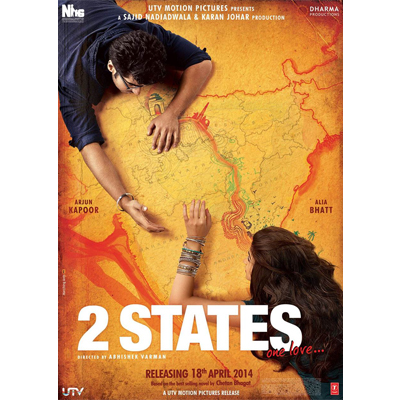
    MUMBAI: Shaadi.com is all set to be associated with 2 States, the forthcoming movie co-produced by Dharma Productions and Sajid Nadiadwala. The matrimonial site has become the official matrimonial partner for the movie. The movie is based on the book ‘2 States’ authored by Chetan Bhagat.


    Commenting on the association, Shaadi.com COO Gourav Rakshit said, “For over 17 years, we at Shaadi.com have been helping people create their own love story, so it is only natural for us to be associated with a beautiful love story like 2 States. We are delighted about this relationship with Dharma Productions and we wish them great success with this movie.”


    The film revolves around a Punjabi boy (Arjun Kapoor), who falls in love with a Tamil girl (Alia Bhatt) and all the hardships they go through because of the cultural differences between the two families. The film is distributed by UTV Motion Pictures and scheduled to release on 18 April 2014.


    “We are glad to be associated with Shaadi.com. The movie is a love story which revolves around two people and their families who are from two different states. So this relationship with Shaadi.com is a perfect fit,” added Dharma Productions CEO Apoorva Mehta.

  • Our aim is to roll up all the taxes under one GST: Uday Singh

    Our aim is to roll up all the taxes under one GST: Uday Singh

    The word piracy sends shivers down the spines of all content owners, but there is one man who has made it his mission to eradicate piracy from the media and entertainment space. That man is none other than Motion Picture Distribution Association (India) managing director Uday Singh.


    With over 28 years of sales, marketing and general management experience in scaling up operations and building business from start up for MNCs in India and attaining a leadership position in the market and business with significant turnaround and change management; Singh has done it all.


    He has key experience in media entertainment, consumer electronics, domestic appliances and multimedia industries. He has had stints at Philips, Sony Pictures Entertainment (India) and PVR Pictures earlier.


    Being a creative and result driven executive with expertise in setting up new markets developing and delivering strong results; Singh has been ensuring in getting the various industry stakeholders together to fight against piracy.


    Speaking to indiantelevision.com’s Sidharth Iyer, Singh dwells on various perennial issues like piracy, high taxation, specific copyright laws and the difficulties that MPDA faces in propagating anti-piracy in the country.     


    It’s been five years since MPDA India has been present in the industry, how has the journey been? Highlight your roles and responsibilities.


    There are three aspects: first there is the legislative side where we look into getting a specific legal framework into place which can protect copyright. Next we take care of the enforcement, which is basically keeping a check on people who steal content and monetise from the same by redistributing it across the globe and finally the outreach, how do we best reach out to our first line of defense – which is the cinema staff and theatre owners – educating them on piracy and how it works, so that they can recognise it and nip it at the bud.


    On the legislative side we have carried out a lot of initiatives. 90 per cent of all pirated copies are camcorded in cinema halls, and an Ernst & Young 2008 report claims that as much as Rs 16,000 crore is lost every year due to piracy and as many as 577,000 direct jobs are also lost as a result of theft and piracy, afflicting India’s entertainment industry.

    We have been working with local bodies and try and implement the global best practices out here. We have also observed that many jurisdictions like in US, Philippines and other regions in the Asia Pacific as well, specific camcording legislations have made a big difference in getting piracy down and we intend to bring that practice to India as well.


    Is there a set guideline for understanding the copyright laws in the country? Have you managed to reduce the taxation on films?


    We have been lobbying with the government to have provisions made for the same, and the cinematography bill does carry some provisions because only very specific provisions can make a difference, as our copyright laws tend to be very broad and its only best to have specifics in place to better understand and implement the copyright law in the country.


    The other major hurdle for films is the taxation levied on them, and being one of the highest taxed industries it does take a toll on the budget and revenue scale. We have been working with other industries and the government to rationalise those taxes and eliminate some of them if possible and hopefully roll them all into a single goods and services tax (GST).


    However there is a service tax on the input side, so some of the studios that are producing the movie domestically have to face it by increasing its production costs. Currently there are three levels of taxes; the service tax, the entertainment tax and the local body tax. Thus, our recommendation and appeal to the government and the authorities is to roll it all into one single GST to avoid any duplication.


    What are the challenges faced by MPDA and how do you overcome the same?


    There have been issues in the television side of things, where we have been talking to the government and making our submissions on issues such as, liberating the pricing, the must provide and must carry provisions, among others.


    It was also heartening to see that the foreign direct investment (FDI) in the television and broadcast sector also witnessed a hike. So, we look at very generic issues and how the government can better regulate the media and entertainment sector, primarily focused on where our studios feel where we should get involved on the legislative side.


    We also have the Los Angles Film Council, where we have been lobbying for the ease of shooting and working with the government for getting to a single window clearance, there are 70 clearances otherwise required before even shooting a single frame.


    Our efforts and initiatives will be again presented in an E&Y report, which talks about how to simplify, incentivize and further how to promote film tourism. The plan is to promote film tourism in a big way and we have some great examples of how it has been done in other places like Canada and Thailand. Keeping in mind that we have some great technicians and production crews here, India can become an important destination for films as well in the near future.


    On the enforcement side, we are no longer chasing the guys on the streets as it has all moved online and it’s now gotten into camcording. We have managed to eliminate quite a few significant release groups, who have been copying and redistributing a lot of the films. 


    MPDA has played a big role in ensuring that piracy is looked at as a serious offence, how do you intend to put an end to this evil?


    Our intention is not to catch a kid who’s taking a trophy shot in front of the screen, but the people who actually steal the content and make a living out of it. After 2012, there have been almost 67 incidents where we have apprehended pirates who used to capture the video and slap on a different audio and export it to other neighbouring countries.


    We also work with cinema staff and have educated nearly 1,400 of them on what are the best practices to propagate anti-piracy, by putting up signs in the surroundings of the theatre. They have also been educated on how best to deal with incidents of camcording. We have also tried to sensitise various law enforcement authorities on the various issues and problems due to piracy and how they can help in preventing such occurrences.


    I believe, unlike ever before, we have been able to work hand-in-hand with the local film industry and really come together as stakeholders of the industry and really put an end to this evil.


    In the recent past you have associated with the Anti-Video Piracy Cell of Andhra Pradesh, and also carried out various initiatives on the ground, your thoughts on the same…


    The Anti-Video Piracy Cell (AVPC) of Andhra Pradesh has been one of our brightest spots in the fight against piracy. It’s been a very proactive cell and very aware of the changing trends in the space of piracy. They have an in-house team for the mapping of sights, and we found a great ally in them for our fight against piracy.


    With AVPC, we only thought that the need is to contemporize the way we catch hold of the pirates and with the ‘Indian Movie Cop’ and other such applications we have tried to keep a check on digital piracy.


    The app really helps in educating everyone on piracy and the laws of the land, and to keep it interactive we also put up trailers of upcoming releases just to give the user that extra bit to help serve a larger cause among other reward schemes.


    It is a known fact that there have been leakages on the cable TV front, how do you plan to overcome the issue?


    Digitisation has really helped on this front and it has certainly not been an easy process, but a large step by the government to clearly make this decisive move to get to know who the subscribers are and get to know where they are.


    Over a period of time, the broadcast industry has taken interest to resolve the problems relating to cable leakages. It used to be very robust in the analogue world, and still continues to happen, but like the film industry, the broadcast industry too needs to come together to address this perennial issue.


    With a lot of Hollywood studios currently operating in the country, does it help in better promotion of their interests among local production houses?


    Largely, these are decisions taken by the individual studios and it’s for them to be able to decide with whom they want to tie-up. There have been instances in the past three to four years where a lot of studios have taken an active part in the local productions.


    But, again it’s their own strategy on how they best want to enter the market. And once we address larger issues like taxation, ease of operation or piracy, we would be able to provide a substantially better climate for them to come in here.


    Is the regulation in India strong enough to support your initiatives? If not, what is lacking?


    There is a combination of issues; the laws are very generic in nature – while they may have served their purpose – increasingly we have seen that when there are specific laws for specific issues there are better results.


    When we talk about the copyright amendment, we are talking about the technological protection measures. There is an access control and a copy control and barring of hacker tools. In our current legislature, we are talking about copy protection and not about the access; so with the evolving technology, it took almost 10 years to pass that bill.


    So legislation is always going to be a long time consuming process and what we have to do is ensure in bringing to the government’s notice how other jurisdictions have handled these issues and what have been some of the best practices.


    The second aspect of it is enforcement; in terms of the police force they are certainly overburdened and we all recongnise that, with copyright figuring in the lower priority offences. But wherever we have gone and educated them about the issues relating to piracy, they have responded well.


    There are cases where we find the judiciary more proactive in a particular area like Delhi, but in recent history we have had judgments from Mumbai, Chennai and Kolkata as well.  So almost all the high courts are getting up to speed on all the copyright issues.


    And with the piracy now moving online, there is a need for a lot of hand holding to make content distributers and owners aware of how rapidly the landscape is changing. And we can’t ignore the fact that a lot of these offenders are linked to other organised crimes too, thus becoming difficult to track them down.


    Can there be a stop to piracy globally? What preventive measures can be taken?


    There can’t be a total bullet proof plan for this; it’s very similar to other crimes. But, what we can clearly do is to create a favourable environment where if not eradicate then at least we can apprehend the criminals.


    Eventually you will find that there are only a few people who are causing most of the damage and they are part of much more organised syndicates. There also needs to be an updation of the loss due to piracy report as there has been a huge increase in the number of internet connections since 2008.


    The need of the hour is to also educate the film industry on how things work, with most films being made available online just hours after its release. There have been attempts made to resolve this issue, but to no avail.


    There are two ways by which this has been kept under check internationally, one to have an administrative relief and the other a judicial relief. We have noticed that these work in blocking content from getting leaked outside the authorised personals’ hands.    


    Recently there has been a rampant emergence of rogue sites like Torrentz, what is MPDA’s take on them? Also, your thoughts on user generated content sites like YouTube.


    These rogue sites are primarily designed to steal content and monetise by making it available online. Mostly they make money through advertising and in certain cases even through subscriptions. It’s surprising to find that a lot of advertisers who are associating their brands with these rogue sites are only creating a bad impression of themselves on people who then associate them with supporting piracy. They may be having subscriptions, because they may have a camcorded print and they put it up very quickly and start building a premium subscription revenue model.


    To counter these sites, what we have done is listed out the legitimate and licensed sites from where movies can either be streamed or downloaded with a cost attached to give the people the option of viewing legitimate content and also getting the content owner his rightful due.


    Coming to the user generated content sites commonly known as UGCs have brought in a lot of mechanisms to deal with piracy among other issues, but still it’s not been enough. Lot of them have their filters and they have been trying to work with the industry on how best it can work. But in many cases we find that without the permission of the user, any site that puts up that content is something that we are not comfortable about.


    Eventually what I believe is, with more and more filters coming in and more and more legitimate sites coming up the whole content distribution and exhibition will undergo an evolution.


    In the past, physical copies of pirated VCDs and DVDs were available on streets. You don’t find many of these pirates nowadays, what has MPDA done to eradicate this problem?


    Actually in the past few years, we have not really focused much on that front. In the 1990s we were really going after each and every pirate on sight and almost 5,000 to 6,000 cases were being registered, but without a single conviction.


    We realised that the source was through camcording and three major areas where it was taking place was Ahmedabad, Indore and Ghaziabad. As we started making inroads and worked with the police and the theatre owners to eradicate these rogues from the streets, they went deeper into the heartlands.  


    The DVD is practically dead… so what is the way forward for moviemakers to monetise their content?


    The consumption of movies has not gone down, but the way the movie is being consumed has evolved. And technology is allowing us to give legitimate content. For example with Apple TV the user can simply just click on the movie that he wants to watch and buy it or rent it.


    So the consumer is looking at all kind of content, for the big screen, mobile screen, content on the go, and something wherever he can watch. Thus, to cater to the user’s interests we too are changing our business models to accommodate the demands and supplement those demands with supplies.


    In India the video market never really took off like in other parts of the globe. The time when we were looking at buying VCDs, DVDs came into play and now Blu-Rays are in the market, so with constant evolution taking place, the best thing is to move along with the choice of the user and it also helps as we can directly skip to the digital era.


    What is MPDA’s plan for the year 2014?


    In FICCI Frames 2014 we launched a report with Deloitte on the economic contribution of the motion pictures business in India. We have seen that the media and entertainment sector contributed substantially, almost Rs 50,000 crore in 2013 and generates almost 1.8 million jobs.


    It is very important that when we talk to the government they realise the potential of this sector and given the right inputs, it has the potential of proving more employment and also contribute handsomely to the GDP growth of the country.


    Currently, it’s at a growth rate of 12 per cent, which is almost two and a half times our GDP growth and it can grow at a faster rate if given the proper impetus.


    During the year we will continue to simplify the process for films by getting in the single window clearance. So our next step will be to closely look at it and incentivising and finally promoting the initiative. And we would help the industry flourish and get to its optimum potential.

  • IIFA to engage fans through social media

    IIFA to engage fans through social media

    MUMBAI: The 15th IIFA celebrations will see the biggest and best of Indian cinema show up not only in Tampa Bay, Florida, but also on #IIFA’s assets across Facebook, Instagram, Twitter, Youtube and multiple other innovative platforms in a live environment.


    Millions of fans would have a chance to steal a first-look of the IIFA events and green carpets as they unfold at the Videocon d2h IIFA weekend and the Tata Motors IIFA Awards powered by LAVA mobile. The behind the scenes excitement will take centre stage and provide cinema fans voyeuristic pleasure like never before.


    Powered by Lava Mobile, IIFA has lined up a host of exciting interactive social media activities, teaming up with Twitter, reinitiating the very successful Twitter Mirror experience that made its debut at the IIFAs in Macau in 2013 and introducing for the first time ever, the Twitter Vine Booth @ IIFA, Facebook and Instagram (Booth and Stop), giving online IIFAns an All-Access-Pass across the four days of the weekend.


    The Twitter Mirror placed strategically at the green carpet, backstage and green rooms will bring fans candid celeb moments and selfies showcasing many a mood of their much-loved Bollywood stars tweeting with the handle @IIFA. Having proven to be a hit last year among celebrities and audiences alike, the Twitter Mirror makes a comeback and promises to be even more fun and exciting with the possibility of a photo-bomb or two. 


    Another green-carpet entrant in Tampa Bay will see Twitter debut its coolest photo booth yet – The Twitter Vine capturing the Bollywood brigade in a way never seen before. 


    IIFA will lead the pack as it did last year with the Twitter Mirror, and be the first-ever film award ceremony to witness Twitter Vine create magic, after it did the same at the American Music Awards (AMAs). The camera will circle 360 degrees around celebrities to capture a six-second video giving a full view of who wore what and spoke to who. This first-time-ever photo booth promises to arrest the best fashion moments and candid expressions straight from the carpet.


    The Instagram booth is an interesting variant to keep Instagram followers engaged with the candid selfies. Instagram booth and stop will also be present at the green carpets, waiting to capture all the glamour, fashion, sudden, and dramatic moments that the carpet usually witnesses. The official Instagram handle is @IIFAAwards.


    Instagram stop is another social media activity in the line-up, connecting admirers from all over the world to their desired celebrity, the 15 second Q & A platform will enable the fan to shoot questions at the star and receive replies to their query. IIFA’s Facebook page will soon launch a campaign that would collect and screen questions for celebs. Running parallel to the telecast of IIFA’s main Awards ceremony will be a tight second screen engagement via Twitter Amplify. This extremely thrilling social media activity will reveal the highlights of the event in 15 second capsules during the broadcast for online consumption. The second screen engagement will enable online consumers to watch exclusive backstage footage to complement their TV viewing experience.


    As we draw closer to the weekend, IIFA gives its fans a centre seat on the front row to the craziest, star-studded weekend from 23 – 26 April.

  • Scrubs actor crowed funded film trailer released

    Scrubs actor crowed funded film trailer released

    MUMBAI: On Wednesday, 9 April, Focus Features released the first official trailer for the new Zach Braff’s crowd-funded independent film, Wish I Was Here.


    It was in April, last year, that director Braff launched the campaign for his upcoming comedy film to make $2 million to boost his project. The movie is based on his own script co-written with his brother Adam J. Braff. By 24 May, the campaign generated a total of $3,105,473 funded by 46,520 people.


    Wish I Was Here is Braff’s follow-up to his indie breakout hit Garden State. Wish I Was Here stars Zach Braff (Scrubs) along with Kate Hudson (How to Lose a Guy in 10 Days), Mandy Patinkin (Homeland), Josh Gad (Frozen), Ashley Greene (Twilight films), Joey King (The Conjuring) and Jim Parsons (The Big Bang Theory). The movie is produced by Stacey Sher, Michael Shamberg, and Zach and Adam Braff.


    The movie is a story of a thirty-something man who finds himself at a major crossroads, which forces him to examine his life, his career, and his family. Aidan Bloom (Braff), a struggling actor, father, and husband is trying to find the purpose of his life at the age of 35.

  • Amy Poehler to join Tina Fey for new comedy The Nest

    Amy Poehler to join Tina Fey for new comedy The Nest

    MUMBAI: According to The Hollywood Reporter (THR), Amy Poehler is in final negotiations to team up once again with Tina Fey, again for a comedy called The Nest. Director Jason Moore (Pitch Perfect) will helm the film.


    The plot revolves around two adult sisters (Fey and Poehler) who decide to throw one last massive party in their parents’ house before it’s sold, and in the process they start to mature. Fey will produce the film alongside Jay Roach, which is based on an original idea by Paula Pell, who wrote the screenplay.


    Emmy award, Golden Globe Award and Screen Actors’ Guild Award winner Tina Fey is best known for her work on the Lindsay Lohan starrer Mean Girls and the Emmy award winning television comedy, 30 Rock.


    Likewise, Golden Globe Award and Critics’ Choice Award winner Amy Poehler is best known for writing, producing and starring in her workplace comedy, Parks & Recreation.


    Fey and Poehler are long-time friends and colleagues. They worked together on Saturday Night Live, where they were co-anchors of Weekend Update. They also hosted the 71st annual Golden Globe Awards.


    The Nest will be the pair’s second movie together after the 2008 comedy Baby Mama.

  • I am scared of not living up to the audiences’ expectations: Amitabh Bachchan

    I am scared of not living up to the audiences’ expectations: Amitabh Bachchan

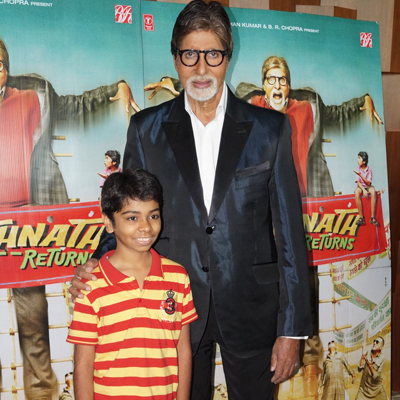
    NEW DELHI: Megastar Amitabh Bachchan has one fear: “I am still scared of not living up to the expectations of the people,” he says.


    Now in his early seventies, the star says box office figures do not affect him so much as what people say about a film in which he has enacted a role since the expectations from him have grown over the years.


    Bachchan also denied that he overawes other stars on a film set and he has confidence in his fellow stars. However, he admitted that he does help them feel comfortable, even as he denied ever giving tips to directors or interfering with their vision of a film. He said he liked working with children as he found them very ‘uninhibited’. “It is a wrong premise that I direct other directors or stars,” he reiterated.


    The star was speaking at a press meet about his latest film, ‘Bhootnath Returns’ directed by Nitesh Tiwari and produced by Bhushan Kumar and Krishan Kumar of T-Series and Abhay Chopra, Kapil Chopra, and Renu Ravi Chopra of BR Films.


    Being released on 11 April, the film has been presented in the name of the late B R Chopra and the late Gulshan Kumar. Others in the film are Boman Irani, child actor Parth Bhalerao, and Usha Jadhav, though there are guest appearances by Ranbir Kapoor and Shah Rukh Khan.


    Although the story to a large extent deals with elections, Bachchan denied that it was in any way made to capitalize on the poll season, adding that the story had been related to him more than eighteen months earlier. He also said the same actors could not be taken as it was a completely new story.


    Tiwari said he had taken up the film as a sequel to the first film as ‘Bhootnath’ had captivated the audiences even as it left a strong message-oriented impact. “I cannot give any assurance about a sequel of ‘Bhoothnath Returns.’ There was a lot of pressure working with Amitabh Bachchan, and two big production banners but they really made me feel comfortable with them.”


    Bachchan particularly praised Yo Yo Honey Singh who had sung a song in the film. “You do not need to put a lot of efforts working with him,” Bachchan added.


    Bachchan said the film takes off from where the first film ended, when Bhootnath lands in heaven but is a butt of humour as he could not frighten even a child (Banku in the earlier film) so he is sent to earth again in the slum colony Dharavi where he meets Akhrot who is the only human who can see him. The film then goes on to comment on elections and Khan and Kapoor make appearances to encourage people to exercise their franchise.


    While reiterating that he had retreated from politics as that was not his arena, Bachchan said “every vote makes a difference, and it is in any case the democratic right of citizens.”


    Bachchan said in answer to a question that AB Corp was still in the business of making films, but did so in collaboration with other filmmakers. Insisting that he was doing films that could be seen by the family, he was also doing a series with Sony which is being overlooked by Anurag Kashyap, apart from coming for another season of ‘Kaun Banega Crorepati’.  


    Bhushan Kumar said he had been very excited when he heard the story and had immediately agreed to come on board as producer as it had been his dream to do a film with Bachchan.


    Parth, who is a child star from Marathi cinema, said he had been frightened at first when told he would have to act with Amitabh Bachchan. But later he enjoyed working as he had a lot of fun with him.

  • ‘World War Z’ director to helm ‘The Amazing Spiderman’ spin-off ‘Sinister Six’

    ‘World War Z’ director to helm ‘The Amazing Spiderman’ spin-off ‘Sinister Six’

    MUMBAI: Back In December, Sony hired Drew Goddard to pen the script for the spin-off of the blockbuster film franchise, which will focus on the villains in Spider-Man’s world. Also hired in December were Alex Kurtzman, Roberto Orci, and Ed Solomon to work on another spinoff, titled Venom, centred on the black-costumed villain that already made his big-screen debut in the third Spider-Man movie of the Sam Raimi trilogy.


    When Goddard was tapped to write the script for Sinister Six, there was the possibility that he also could direct. Those plans seem to be falling into place, according to The Hollywood Reporter (THR).


    The Sinister Six has had several permutations in the comics but originally featured Doctor Octopus, Electro, Sandman, Mysterio, Vulture and Kraven the Hunter. Octopus already appeared in Raimi’s Spider-Man 2, while Sandman was the villain (along with Venom) in Spider-Man 3. Electro (Jamie Foxx), the Rhino (Paul Giamatti) and the Green Goblin (Dane DeHaan) are the villains in Amazing Spider-Man 2.


    The Amazing Spider-Man 2, starring Andrew Garfield will hit Indian theatres 1 May, before its US release a day later. Kurtzman and Orci, who did rewrites for Spider-Man 2, are already working on a third instalment of Amazing Spider-Man.


    Goddard, wrote and made his directorial debut with the 2012 horror film The Cabin in the Woods, and will write and executive producer Netflix’s Daredevil.

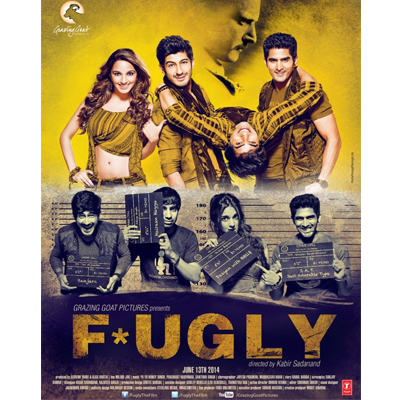
  • Akshay Kumar, Ashvini Yardi unveil lead stars and trailer for ‘Fugly’

    Akshay Kumar, Ashvini Yardi unveil lead stars and trailer for ‘Fugly’

    MUMBAI: Actor Akshay Kumar and partner Ashvini Yardi have together launched the trailer for their forthcoming film Fugly, the latest big-screen initiative from their production company Grazing Goat Pictures. The event took place at Reliance Digital Express store in Prabhadevi.  


    The launch was special made special for the media as they were encouraged to take a fugly ‘selfie’ (fuglies) with the props as well as be a part of the poster.


    During the event, Akshay gave a quick insight into the plot of the film to the media and showcased the film’s stylish poster. 


     The trailer has already received a roaring applause from various Bollywood celebrities and veteran media. Bollywood star Abhishek Bachchan, tweeted his comments on the trailer saying “Loved the trailer of @FuglyTheFilm well done @Kabirsadanand and @AshviniYardi and all the best.” 


    Speaking about the event, Akshay Kumar said, “I am so thrilled to have been here today. It is a great moment for Ashvini and I and all those involved in the Fugly project.”


     Ashvini Yardi added, “Fugly is a film that is very close to all of our hearts. It is a vibrant, youth centric entertainer. It is funny and witty and packs a major punch. Akshay and I are delighted to introduce such a talented cast in this film, and feel that they have done a fantastic job in the film. We are all very proud of Fugly, and we hope audiences will love it as much as we do.”


    “Fugly is a script which has been very close to me and my team of writers. It’s an awesome feeling and we are glad that Akshay Kumar came on board as he brings the edge and with Ashvini came the focus to target good content. Fugly represents today’s independent youth who are ready to take a stand and challenge the status quo. We have had a phenomenal time making this film and the response we have received on the trailer and poster has been overwhelming. This is just the beginning of our journey called Fugly!” announced director Kabir Sadanand.


    There is already tremendous buzz in the industry around Mohit, Kiara, Arfi and Vijender’s film debut.


    Speaking about their debuts, they jointly said, We are delighted to have had the opportunity to be part of Fugly and are thrilled with the response we have had on the trailer and poster – it’s really encouraging. Kabir is an excellent director and no one else could have done better justice to the script. We had a superb time working with each other and learnt so much from Jimmy. Akshay and Ashvini have been extremely inspiring for all of us and we have learnt a lot from them. We are fortunate to be launched by them.” 


     Fugly releases on 13 June 2014. 

  • The Dhawan’s strong run at the box office

    The Dhawan’s strong run at the box office

    MUMBAI: Father-son combination of director David and actor Varun Dhavan has given a fair entertainer in Main Tera Hero, a movie worth watching after a gap since Queen. Also, the opposition in the form of Jal lacked commercial approach. While Main Tera Hero did not get a great opening but the word of mouth has gone in its favour. The film collected Rs 21.5 crore over the weekend, getting better each day. The collections could have been better still, were it not for the T20 World Cup matches on Friday and Sunday involving India.


     Jal started off badly with ‘No audience No show tags’ at the cinemas. Youngistaan has struggled to collect Rs 5.3 crore in its first week.


    While, O Teri has been poor all the way with Rs 3.2 crore to show for its first week, Dishkiyaon has collected Rs 5.25 crore in its first week.


    Sunny Leone starrer Ragini MMS2 has held on well in its second week to collect Rs 8.75 crore to take its two week collections to Rs 45.85 crore.


    Queen continues its strong hold on the box office by adding Rs 5.6 crore in its fourth week thus taking its four week tally to Rs 54.1 crore.