Category: Movies

  • Ghotul film revives tribal wisdom to spark talks on girls’ rights and choice

    Ghotul film revives tribal wisdom to spark talks on girls’ rights and choice

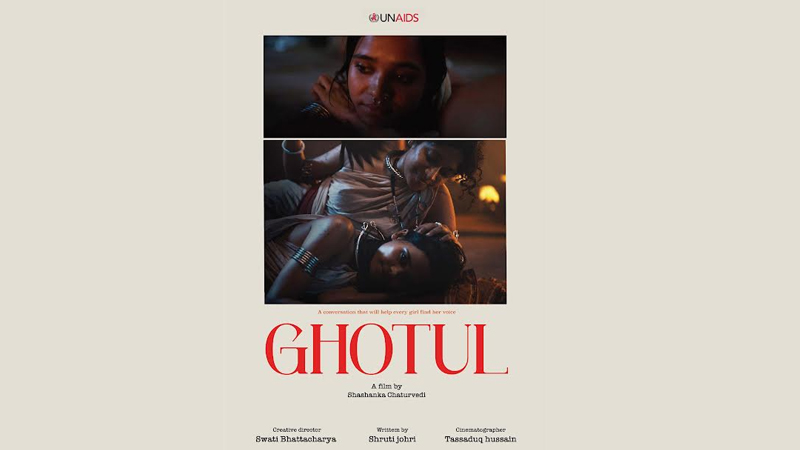
    MUMBAI: Silence may be golden, but sometimes it’s deafening. On the International Day of the Girl Child, UNAIDS has dropped Ghotul, a short film that whispers ancient wisdom and shouts modern truth. Drawing from the Gond Muria tribe’s age-old “Ghotul” tradition, the film reimagines how young people can talk openly about love, consent, and the right to make choices, topics often hushed in contemporary India.

    Every year, 21 million girls across the globe become pregnant over 11 million of them in India. And each week, 4,000 adolescent girls are newly infected with HIV. The numbers are staggering, but the silence surrounding sex, desire, and bodily autonomy is even louder. Ghotul seeks to break this silence, spotlighting the urgent need for safe spaces where adolescents can speak, listen, and learn without shame.

    In Gond culture, the Ghotul was no taboo corner, it was a communal space where elders guided youth through lessons of love and responsibility. The film revives this lost wisdom, using it as a lens to challenge the modern discomfort around sexuality and gender dialogue.

    Penned by author and gender inclusion expert Shruti Johri, the 12-minute film is directed by Shashanka “Bob” Chaturvedi of Good Morning Films. The concept comes from advertising veteran and feminist Swati Bhattacharya, with cinematography by award-winning DoP Tassaduq Hussain, of Omkara and Kaminey fame. The cast includes Indira Tiwari, known for Serious Men and Gangubai Kathiawadi, alongside rising actor Puja Kulay.

    “This film is about breaking that silence,” says Johri. “It’s an invitation to reimagine a world where our daughters are not guarded like clay pots but guided like rivers, free to choose, to love, and to live without shame.”

    For Swati Bhattacharya, the project is about reclaiming lost intimacy in conversations: “In tribal wisdom, elders spoke freely with adolescents about love and growing bodies not to shame them, but to guide them. Today, when the internet fills that void, Ghotul reminds us to bring honest conversations back home.”

    UNAIDS executive director Winnie Byanyima puts it plainly: “By knowing the facts and educating young people about their sexual health, we can help them feel safe and stay safe.”

    The film has already found fans among some of India’s most influential voices. Producer Guneet Monga praised its “courage, compassion, and cultural depth”, while Apoorva Bakshi, Emmy-winning producer of Delhi Crime, hailed it as “a feminist reframing of indigenous wisdom”. Filmmaker Ashwiny Iyer Tiwari called it “a courageous and tender revival of the spaces our youth desperately need today”.

    Journalist Barkha Dutt added a sharp reminder: “Only one in 10 Indian men use a condom. The burden of birth control continues to fall on women. Ghotul opens space for honest conversations about reproductive autonomy. We say ‘our body, our choice’ but is that really the case?”

    In reviving a tribal tradition, Ghotul sparks a very contemporary revolution, a reminder that true modernity might lie in rediscovering old wisdom. Because sometimes, to move forward, all we need to do is listen to the voices that spoke first.

  • Kicking Up Change as Rajasthan’s Girls Score Big in Pocket FM Story

    Kicking Up Change as Rajasthan’s Girls Score Big in Pocket FM Story

    MUMBAI: They didn’t wait for the world to hand them a playground, they built their own field of dreams. As the world gears up to celebrate the International Day of the Girl Child, audio series platform Pocket FM is shining the spotlight on Rajasthan’s young footballers who are rewriting the rules of courage, one goal at a time.

    The latest chapter of Pocket FM’s acclaimed brand series, Sound of Courage, tells the stirring story of girls from rural Rajasthan who quite literally kicked their way through patriarchy. Created in collaboration with the Mahila Jan Adhikar Samiti (MJAS), the short film captures how a few determined girls turned a barren patch of land into their football ground and in doing so, reclaimed their right to freedom, expression, and dreams.

    For generations, their mothers and grandmothers had known a world limited by early marriage, household chores, and little to no education. Football, for them, wasn’t just a game, it was rebellion dressed in cleats. What began as a handful of girls dribbling against social constraints soon evolved into a local movement that got the entire community cheering.

    “Football gave us permission to dream,” says 17-year-old Maina Choudhary, one of the young players featured in the film. “When we play, nobody tells us who we can or cannot be.”

    The results of this small revolution have been nothing short of extraordinary. There’s been a visible drop in child marriages, more girls continuing their education, and parents who once disapproved now cheering from the sidelines. A few players have even gone on to represent their district at the state level proof that empowerment can start with something as simple as a football.

    “In today’s world, it’s easy to get lost in the noise,” said Pocket Entertainment SVP for brands Vineet Singh. “With Sound of Courage, we want to bring forward unique and unheard stories across the world that lift our spirits and remind us what courage truly looks like. The story of these Rajasthan girls reminds us that real change begins quietly when people are given a voice, a chance, and the space to dream.”

    This Rajasthan chapter follows Sound of Courage’s earlier feature on India’s Women’s Ice Hockey Team, expanding the campaign’s narrative from national-level heroes to grassroots changemakers. Both stories stand as testament to Pocket FM’s belief that courage doesn’t always roar sometimes, it takes the shape of a quiet kick on dusty ground.

    Conceptualised by Pocket Entertainment’s in-house creative team and produced with Colonial Films, the film is as visually stirring as it is emotionally grounded. It paints courage not as a grand declaration but as a daily act of girls who refused to be told what they couldn’t do, and in the process, taught an entire community what they could.

    From a rough patch of land to a field of hope, Rajasthan’s football girls have shown that dreams don’t just need wings sometimes, all they need is a good pair of boots.

  • Only Distrib Steals the Show with a Bold and Diverse MIPCOM Line-Up

    Only Distrib Steals the Show with a Bold and Diverse MIPCOM Line-Up

    MUMBAI: MIPCOM 2025 just got a little more daring and a lot more diverse. Only Distrib is heading to Cannes armed with over 100 hours of brand-new programming that promises to both provoke thought and spark conversation across genres like documentary, factual entertainment, and lifestyle.

    The distributor’s slate features stories that range from the spine-chilling to the socially daring. Among the biggest head-turners is Vanished: Victoria Charlton Investigates (12×21’), a gripping true-crime series led by the popular Youtuber and investigator Victoria Charlton, who reopens cold cases of mysterious disappearances.

    Wildlife enthusiasts can look forward to Animals Inside Out: Attack & Defense (2×52’), a visually stunning exploration of nature’s most ingenious survival tactics. Meanwhile, Hope (6×52’) steps into climate storytelling with a dose of optimism, examining tangible ways humanity can fight climate change.

    And then there’s the show that’s sure to get people talking Hey, Check Out My Penis (1×45’). Bold, unflinching, and unashamedly topical, the documentary dissects the modern-day phenomenon of unsolicited explicit images with honesty and nuance, promising an intelligent take on a taboo subject.

    Beyond its ready-to-air slate, Only Distrib is also inviting co-production and pre-sale partners to join in on projects still in development and production. One such title, Fletcher Street produced for France Télévisions’ 25 Nuances de Doc tells the moving story of an 18-year-old African American man who finds purpose and peace among Philadelphia’s community of Black cowboys, bonding with his first horse as he reclaims his sense of belonging.

    Only Distrib head of sales and acquisitions Laurène Voilliot summed up the ambition behind the line-up: “Our goal is to bring compelling, original voices and high-quality productions to the international market. This year’s MIPCOM marks a major step forward in both the volume and diversity of our catalogue.”

    With a line-up that ranges from gripping investigations to cultural reckonings, Only Distrib seems poised to make more than just a splash at MIPCOM, it’s bringing waves of originality to global storytelling.

    Would you like me to make the headline a bit more playful (for instance, “Only Distrib Goes All In at MIPCOM with a Reel Bold Slate”)?

  • Theatre’s role in cinema, where stage meets screen

    Theatre’s role in cinema, where stage meets screen

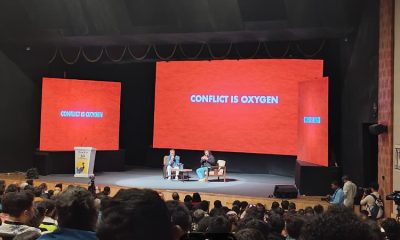
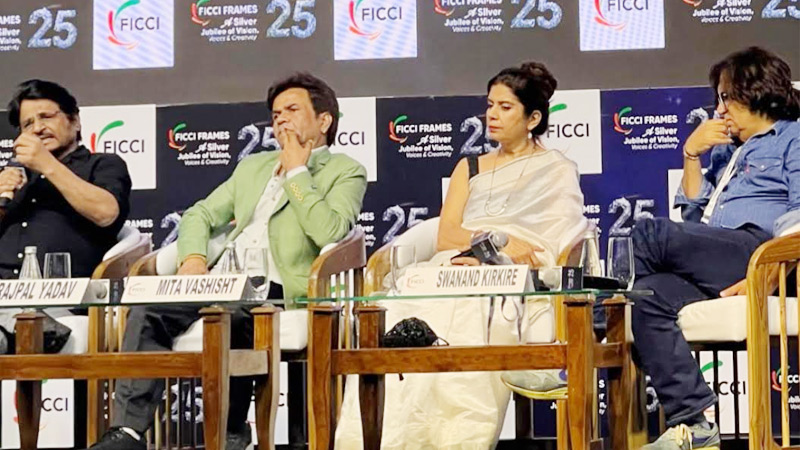
    MUMBAI: Curtains up, lights on, and action, but the roots of cinema lie on the stage. At a lively session on “The Power of Theatre in Cinema’s DNA,” celebrated actors and creators revealed how the world of theatre continues to shape the Indian screen.

    Moderated by National School of Drama director Chittaranjan Tripathy, the panel featured Swanand Kirkire, Raghubir Yadav, Rajpal Yadav, and Mita Vashisht. The discussion explored how theatrical training provides actors with depth, discipline, and authenticity that resonate on screen.

    Swanand Kirkire, a multi-talented lyricist, actor, and singer, called cinema an extension of theatre. “Drama happens in one space and one time on stage. Cinema takes the same drama and expands it across spaces and moments,” he said. He highlighted that every great film begins with understanding drama, the conflict between forces, and the forward motion of storytelling.

    Raghubir Yadav stressed theatre’s irreplaceable role in building a performer. “You can do a play without cinema, but you cannot do a film without a play. Theatre gives you everything: emotion, nuance, life. Cinema may teach dialogue memorisation, but theatre teaches you living on stage,” he explained.

    Rajpal Yadav reflected on theatre as a teacher of life itself. “The collaborative essence of stagecraft and how understanding every role, from actors to carpenters, enriches cinema. Theatre teaches zero, cinema teaches hero. When theatre and cinema come together, every element of performance becomes alive,” he said.

    Mita Vashisht discussed the technical interplay between theatre and film. While theatre delivers a live connection with audiences, cinema requires technology to capture and convey the same energy. She also pointed out that concepts like framing, positioning of actors, and set design in cinema are borrowed directly from theatre, referencing techniques like Mise en Scène.

    The session celebrated theatre as the backbone of cinema, emphasising that even with all the technology in modern filmmaking, the foundational lessons of stagecraft: discipline, collaboration, and emotional truth, remain essential. As Kirkire summarised, “Theatre gives cinema its DNA. Without it, the soul of performance is incomplete.”

    From the intricacies of acting to the careful orchestration of a set, the discussion made it clear, the spotlight may have shifted from stage to screen, but the heart of storytelling continues to beat in the theatre.

  • Punjab’s cinema makes waves worldwide

    Punjab’s cinema makes waves worldwide

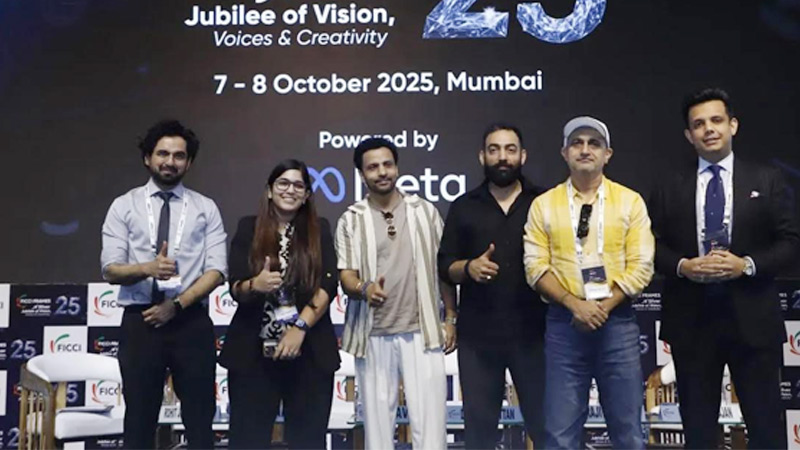
    MUMBAI: Punjab is not just about bhangra and beats anymore. At the FICCI Frames 2025, a lively panel explored how Punjabi cinema is evolving beyond comedy and song-and-dance routines into micro-dramas, socially rooted stories, and web series that resonate both at home and with the global diaspora.

    Moderated by filmmaker Rohit Jugraj Chauhan, the session featured actors and creators like Manav Vij, Rajiv Thakur, Dheeraj Ratan, Rhea Arora, and Ujjwal Mahajan of Chaupal OTT. The panel delved into how streaming platforms and social media are giving Punjabi stories unprecedented reach.

    Chaupal OTT co-founder Ujjwal Mahajan explained the digital revolution behind Punjabi storytelling. “Chaupal is not just a platform; it’s a digital chowpal. Wherever Punjabis are, they can reconnect with home through our content. Every three days we add a new movie, and the momentum is only increasing.” He emphasised the distinction between “Punjab-based content” and true “Punjabi content,” pointing to titles like Satpanchi that resonate with cultural roots.

    Comedian-turned-actor Rajiv Thakur reflected on the diaspora’s influence and talent in Bollywood. “Punjabis have always contributed massively, whether in comedy, music, or film. Our language, our stories, our culture matter. There’s power in Punjabiyat,” he said, noting the balancing act actors face between Mumbai and Punjab audiences.

    Screenwriter and director Dheeraj Ratan traced the evolution of Punjabi cinema. “There was a time when you had to go to Bombay to make films. Now high-standard storytelling has returned to Punjab. Our films are visually strong and culturally rooted, and the market is responding,” he explained. He urged creators to establish local infrastructure to unleash the region’s vast talent and tell stories the world can watch.

    Manav Vij described how Punjabi cinema is reshaping itself for a global audience. “Cinema has its own language of empathy. We need pathways to run freely, to make films the way we want. Punjabi culture has a value that deserves to be seen and heard globally.”

    Rhea Arora, who has been pivotal in developing Punjab’s AVGC and animation ecosystem, highlighted how local talent is being nurtured. “We’ve brought art from Punjab to Mumbai and back. Creative talents are thriving, and the industry is evolving thanks to associations and government support.”

    The panel concluded with a clear takeaway: Punjabi cinema is no longer just regional flair. From micro-dramas to mainstream hits, the state is staking a claim on global storytelling, powered by culture, community, and creativity.
     

  • Madhya Pradesh, from heartland to global screens

    Madhya Pradesh, from heartland to global screens

    MUMBAI: Lights, camera, action, and Madhya Pradesh is ready for its close-up. The heartland of India is fast emerging as a vibrant hub for filmmaking, blending local authenticity with stories that resonate across the globe.

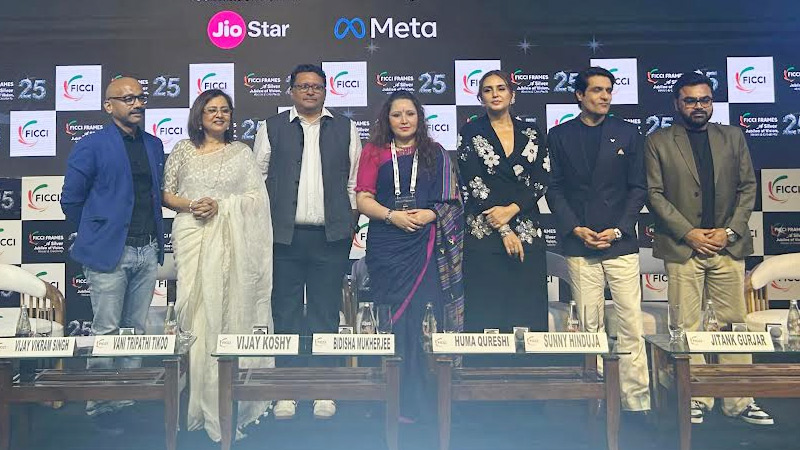
    At the recent session From Heartland to International Screens: MP in Focus, celebrated filmmakers, actors, and state leaders came together to explore how Madhya Pradesh is shaping narratives that travel far beyond borders. The panel was moderated by actor and voice artist Vijay Vikram Singh, who set the tone by highlighting the state’s unique blend of culture, heritage, and cinematic potential.

    Madhya Pradesh tourism board additional managing director Bidisha Mukherjee, credited the state’s success to its film-friendly policies, ease of doing business, and exotic locations. “From heritage cities like Mandu and Orchha to rural landscapes such as Chambal, MP offers a range of locations that can fit any story,” she said. The state also incentivises women-led and environmentally conscious projects, providing additional support for filmmakers.

    Speaking from personal experience, Sunny Hinduja, actor and producer from Indore, praised the warm hospitality and the homely feel of shooting in MP. “The people, the food, the culture, it all makes the filmmaking experience so welcoming,” he said. Hinduja also revealed plans to produce more content in the state, highlighting MP’s potential as a creative springboard.

    The Viral Fever president Vijay Koshy underlined the professionalism and dedication of local crews, pointing out that the availability of trained technicians reduces the logistical burden for production houses. Filmmakers also noted that MP’s bureaucracy is unusually proactive, with shooting permissions granted quickly and processes made fully online.

    Director Jitank Gurjar, hailing from Gwalior, reflected on the cultural diversity across the state. “Every 50 kilometres, the dialect, the culture, even the way people express emotions changes. Yet human emotions are universal, and MP captures that beautifully,” he said.

    Actor Huma Qureshi added her perspective on MP’s growing film landscape, “The state doesn’t just provide locations; it becomes part of the story. There is a warmth and openness here that instantly connects with everyone on set, making creativity flow effortlessly.”

    The session underscored Madhya Pradesh’s growing role in India’s creative economy. With a combination of government support, diverse locations, skilled talent, and a welcoming culture, the state is positioning itself as a preferred destination for filmmakers looking to tell stories that resonate both locally and globally.
     

  • Pvr Inox serves up India’s first luxury dine-in cinema in Bengaluru

    Pvr Inox serves up India’s first luxury dine-in cinema in Bengaluru

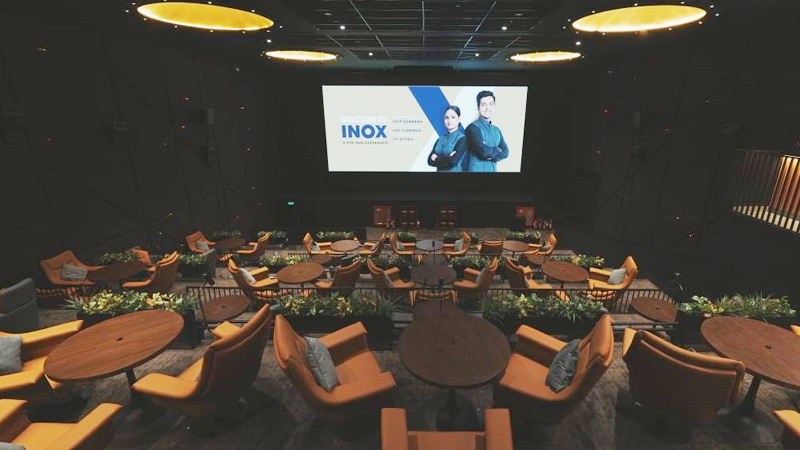
    MUMBAI: Lights, camera… appetiser! PVR Inox is giving Bengaluru’s cinema-goers a taste of something extraordinary with the launch of India’s first-ever luxury dine-in cinema at M5 Ecity Mall, where silver screens meet silver service.

    Fresh off opening its new eight screen multiplex at the mall, Pvr Inox is now transforming the movie experience into a full-fledged culinary and lifestyle destination. The new dine-in format lets guests enjoy gourmet, chef-curated meals in the comfort of their cinema seats, no stepping out, and remarkably, no movie ticket required to dine.

    The concept redefines what a night at the movies means. From Crosta’s artisanal pizzas and Wokstar’s sizzling Asian comfort food to Dogfather’s inventive hot dogs and Local Street’s regional delicacies, every dish is designed to elevate the cinematic journey. Add to that café corners, indulgent desserts, and lounge-style foyers and the venue doubles as a social space for foodies and film buffs alike.

    At the heart of this venture lies “youthification”, Pvr Inox’s futuristic approach to entertainment. The space integrates gaming zones, kids-first formats, and digital lounges, alongside its luxury auditoriums, appealing to young, experience-hungry audiences. “This is not just about watching films, it’s about spending time well,” said Pvr Inox lead specialist – innovation, film marketing & digital programming Aamer Bijli.

    Echoing the sentiment, Pvr Inox Limited  managing director Ajay Bijli added, “With M5 Ecity Mall, we’re inviting audiences to experience cinema in an entirely new way. From India’s first dine-in auditorium to immersive technology and curated food, it’s a celebration of films, lifestyle, and shared moments.”

    The tech is as grand as the gastronomy. Every auditorium boasts Dolby Atmos, Dts:x, and 4k Laser projection, with the Big Pix theatre offering Reald 3D visuals, and the Samsung Onyx Led screen taking in-seat dining to dazzling new heights.

  • Moscow rolls out the red carpet for Indian filmmakers

    Moscow rolls out the red carpet for Indian filmmakers

    MUMBAI: Lights, camera, Moscow! Indian filmmakers now have a blockbuster reason to pack their cameras and head to Russia’s capital. At FICCI Frames 2025, Moskino unveiled the Moscow Film Cluster, offering a fully integrated ecosystem and up to a 45 per cent international rebate for productions.

    Designed as a one-stop shop, the Film Cluster streamlines the filmmaking process with sound stages, backlots, post-production facilities, and a central operational platform. From pre-production to premiere, Moskino ensures producers can focus on creativity, not logistics.

    The incentives are compelling: 30 per cent cash rebate on expenses, plus an additional 15 per cent value in services, visas, and accommodation discounts. And with the Moscow Film Commission providing free services: location scouting, permits, street closures, and dynamic filming support, shooting in Moscow has never been easier.

    Legendary Gorky Film Studio, the sprawling Film Park, and the futuristic Film Factory (home to Russia’s largest LED virtual production pavilion) ensure filmmakers have every tool at their fingertips. Moskino even operates 13 cinemas, offering built-in exhibition potential for completed films.

    From the Kremlin’s iconic spires to Moscow City’s sleek skyline and sprawling parks, the city doubles as multiple European or Asian capitals while retaining its own cinematic grandeur. With world-class crews and infrastructure, Moscow is positioning itself as Asia’s next major production hub for Indian cinema.

    Producers attending FICCI Frames 2025 can visit the Moscow Film Cluster booth to explore collaborations and discover how Moscow can turn their next project into an international success story.
     

  • Ajay Devgn rebrands NY Cinemas as Devgn Cinex in metro push

    Ajay Devgn rebrands NY Cinemas as Devgn Cinex in metro push

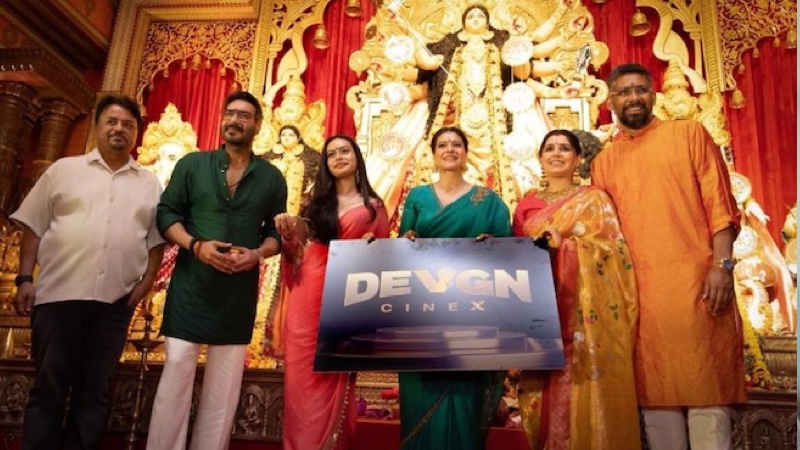
    MUMBAI: Ajay Devgn is putting his name on cinema screens—literally. The actor launched Devgn Cinex on Maha Navami, rebranding the NY Cinemas chain at North Bombay’s Durga Puja celebrations alongside his wife, actor Kajol. The move signals an aggressive expansion play across Indian metros and the south, backed by Vishwa Samudra Holdings.

    Vishwa Samudra group managing director Shivdutt Das hailed the rebrand as more than cosmetic. The company promises to turn multiplexes into “spaces of innovation, comfort, and culture”, deploying premium formats and what it calls “immersive experiences”. Whether that means reclining seats, better sound systems or something more ambitious remains unclear—cinema chains have long promised whilst delivering incremental upgrades.

    NY Cinemas has operated quietly for years, but the Devgn tie-up suggests plans to compete with PVR Inox, which dominates India’s multiplex market with over 1,700 screens, and Cinépolis, which runs around 450.

    Devgn, one of Indian cinema’s bankable stars and a producer through his Devgn Films banner, brings celebrity firepower to a sector recovering from pandemic losses and grappling with streaming competition.

    The emphasis on south India is telling. Regional-language films have outperformed Hindi movies at the box office in recent years, with Tamil and Telugu blockbusters like Pushpa and RRR drawing massive crowds. Metros in Chennai, Bengaluru and Hyderabad have become battlegrounds for cinema chains chasing affluent audiences willing to pay premium ticket prices.

    Vishwa Samudra Holdings operates across real estate, hospitality and entertainment. Its bet on Devgn Cinex suggests it sees room for another national player, despite consolidation that saw PVR and Inox merge last year.
     
    Says a media observer: “There’s a shortage of cinema screens in India compared to its massive 1.5 billion or so population. The population is underserved, which has stunted the growth of Indian cinema. The more the screens, the better can be the box office collections for good productions.”

    But whether Indian audiences need yet another multiplex brand—celebrity-backed or not—to fill that gap is another question entirely.

  • Sajid Nadiadwala passes the baton after 13 years at Indian film producers’ association’s helm

    Sajid Nadiadwala passes the baton after 13 years at Indian film producers’ association’s helm

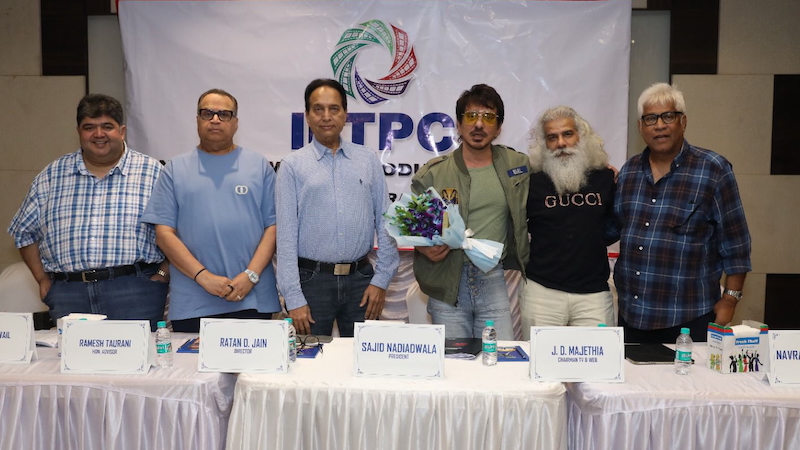
    MUMBAI: After 13 years steering India’s film and television producers’ council, Sajid Nadiadwala has stepped aside. His successor? Ratan Jain, a three-decade veteran of Bollywood who previously ran the organisation from 2010 to 2012.

    The handover came at the Indian Film & TV Producers Council’s 34th annual general meeting yesterday. Nadiadwala, in his farewell address, spoke of the need for fresh leadership and proposed Jain as his replacement—a nomination the members backed unanimously.

    The outgoing president received the usual tributes: a bouquet from NR Pachisia and a memento from Jamnadas Majethia. Members applauded his tenure, though the council offered few specifics about his achievements.

    Jain brings serious credentials. As head of Venus Group, he has produced box-office successes including Khiladi, Baazigar, Dhadkan, Humraaz and Garam Masala. His return marks a homecoming of sorts after his earlier stint at the top.

    The newly elected board for 2025-26 includes Majethia as chairman (TV & web), alongside directors NR Pachisia, Madhu Mantenna, Kumar Mangat Pathak, Rajat Rawail, Shyamashis Bhattacharya, Nitin Vaidya and Abhimanyu Singh. Ramesh Taurani will serve as honorary adviser.

    The council now awaits Jain’s vision for an industry navigating streaming disruption and changing audience habits.