Category: Movies

  • ‘Piku’ & ‘Dum Laga Ke Haisha’ win at Indian Film Fest in Russia

    ‘Piku’ & ‘Dum Laga Ke Haisha’ win at Indian Film Fest in Russia

    MUMBAI: Yash Raj Films’ production Dum Laga Ke Haisha as well the Amitabh Bachchan and Deepika Padukone starrerPiku, which was distributed by YRF, won accolades at the recently concluded Indian Film Festival in Russia (IFFR).


    The festival saw Dum Laga Ke Haisha’s lead actor Ayushmann Khurrana, with industry personalities Ronnie Lahiri and Sheel Kumar in attendance along with IFFR president and festival director Sarfaraz Alam and Indian Council For Cultural Relations director, Indian Embassy Ashish Sharma.


    Khurrana won the best actor award for Dum Laga Ke Haisha, whereas Piku was awarded the best film (Ronnie Lahiri) and best director (Shoojit Sircar) at the festival, which took place at Formula Kino Horizont.

  • Mukesh Bhatt re-elected as Guild president

    Mukesh Bhatt re-elected as Guild president

    NEW DELHI: Eminent filmmaker Mukesh Bhatt has been unanimously re-elected as president of the Film and Television Producers Guild of India., while Dheeraj Kumar, Siddharth Roy Kapur, Manish Goswami and Vijay Singh have been named vice presidents.


    At the first meeting of its newly constituted Guild Council of Management, which was held immediately after the 61st Annual General Meeting in Mumbai, the other office bearers re-elected as part of the Guild Management Team are Ashim Samanta and Srishti Arya as treasurers.


    Kulmeet Makkar will continue to manage the affairs of the Guild as its CEO.


    In his opening speech, Bhatt said, “Throughout the past three years, our management team has embarked on the path of my illustrious predecessors and worked with dedication, determination and intensity on embellishing and brightening the image and reputation of the Guild.”


    He said Makkar had reinvigorated and revitalised the approach and modus operandi of the Guild. “We continue to engage with State and Central Governments over several issues concerning the film and television industry. There have been many fresh initiatives undertaken by Guild such as waiver of all the charges pertaining to Publicity clearance and Titles registration to make the system more transparent and provide enhanced value to the members, release of first edition of the Film incentive Guide which provides processes and incentives in detail to benefit Indian producers for shooting in 12 countries apart from other reports such as Make in Maharashtra, Film tourism, GST way forward,” Bhatt added.


    The other members of the newly elected Council of Management of Guild are Ramesh Sippy, Manmohan Shetty, Ashutosh Gowariker, Rakesh Roshan, Karan Johar, Farhan Akhtar, Ekta Kapoor, Vishal Bhardwaj, Sushilkumar Agrawal, Ratan Jain, N P Singh, Madhu Mantena, Hiren Gada, Sabbas Joseph, Kiran Shantaram, Randhir Kapoor, Amit Khanna, Kamalkumar Barjatya (member emeritus) and Rajkumar Kohli (co-opted member).


    In addition to these, Subhash Ghai, Ritesh Sidhwani and Guneet Monga along with eight more Guild members and representatives namely Prem Sagar, Asitkumarr Modi, Sneha Rajani, Ajit Andhare, Sameer Nair, Apoorva Mehta, Aashish Singh and Vipul D. Shah were nominated as special invitees.


  • Prakash Jha’s ‘Jai Gangaajal’ to release on 4 March, 2016

    Prakash Jha’s ‘Jai Gangaajal’ to release on 4 March, 2016

    MUMBAI: Prakash Jha’s next film Jai Gangaajal, starring Priyanka Chopra in the lead is all set to release worldwide on 4 March, 2016.


    Jai Gangaajal is the sequel to Gangaajal, which featured Ajay Devgn as the police officer with a conscience. The movie told the story of how a society gets the police it deserves.


    Thirteen years later, with Jai Gangaajal, Jha revisits the dusty heartland of North India, and examines again the society-police relationship to tell us a new story.


    This time, Chopra will be playing Abha Mathur, the new SP in town, who will raise wrestle with her conscience. Mathur is posted in the district, because as a woman she will perhaps be pliable, easily manipulated and thus not disturb the entrenched nexus of the town.


    “Much has changed in the last 13 years. When I made Gangaajal 13 years ago, the dictum was that every society gets police that it deserves. But the scenario has changed since then. Today the cops follow the dictum of inaction is virtue and efficiency is crime,” said Jha.


    The movie also stars Manav Kaul, Rahul Bhat, Murli Sharma and Ninand Kamath.


    Written and directed by Jha, Jai Gangaajal has been produced by Prakash Jha Productions and Play Entertainment.

  • YRF to release Kanu Behl’s directorial debut ‘Titli’ on 30 October

    YRF to release Kanu Behl’s directorial debut ‘Titli’ on 30 October

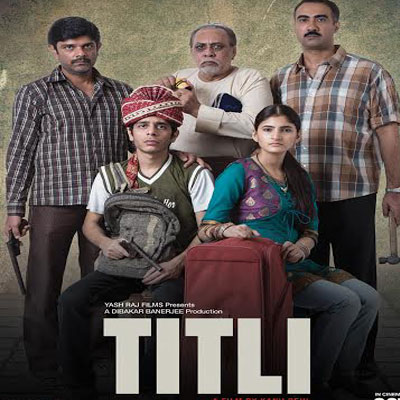
    MUMBAI: Yash Raj Films and Dibakar Banerjee Productions’ co-production titled Titli, which is the debut directorial vehicle of Kanu Behl, will release across India on 30 October, 2015.


    The film’s tagline ‘har family, family nahi hoti’ (every family is not a family) has been given by YRF head honcho Aditya Chopra.


    Banerjee said, “We were all struggling to find a befitting tagline for the poster but nothing good was coming out. I was feeling a bit stuck when Adi very casually came up with this line and I realised that he just gave me the tagline. It came out very naturally from him.”


    “This came from a man who has a deep, gut level understanding of the Indian audience. Moreover, I felt that this tag line translated in any language anywhere in the world would be as kickass. Any person who has a family and has understood the pain and the pleasure of the complex dynamics of a family will get this,” he added.


    Director Kanu Behl’s father – Lalit Behl plays Titli’s father, whereas Shivani Raghuvanshi plays Titli’s wife, Neelu in the movie.


    Titli is a tale of a dysfunctional family and a young boy’s struggle to escape his oppressive family. It also stars Shashank Arora, Ranvir Shorey and Amit Sial.

  • Youku Tudou licenses Paramount’s movie titles for TVOD

    Youku Tudou licenses Paramount’s movie titles for TVOD

    MUMBAI: China’s Youku Tudou, Inc has entered into a content licensing agreement with Paramount Pictures that will bring more than a hundred film titles from Paramount Picture’s library to Youku Tudou.


    Popular franchises and titles such as Transformers, Shrek, Star Trek, Mission: Impossible and Forrest Gump will be viewable through Youku Tudou’s subscription service and select future Paramount releases will be available through TVOD.


    Youku Tudou’s subscription service currently offers a wide selection of content from both foreign and domestic studios. More licensed content as well as Youku Tudou web-native content will be added on an ongoing basis.


    “The consumer-driven demand for premium online services in China is growing rapidly. With top branded content such as Paramount Picture’s array of films, our commitment to enhancing our subscription services to create a premium experience and drive consumer-based revenue continues in earnest,” said Youku Tudou chairman and CEO Victor Koo.


    With this agreement, Youku Tudou now has a library of over 4,000 movie titles that encompass domestic, foreign and original productions.

  • You’re Hired: ‘The Celebrity Apprentice’ tells Arnold Schwarzenegger

    You’re Hired: ‘The Celebrity Apprentice’ tells Arnold Schwarzenegger

    MUMBAI: Twice-elected California governor and international movie star Arnold Schwarzenegger has been named the new host of NBC’s The Celebrity Apprentice, which will return to the network for the 2016-17 season.


    Schwarzenegger steps into the shoes of erstwhile host Donald Trump, who, in his role as host of the seven seasons ofThe Celebrity Apprentice, helped raise more than $15 million for charity.


    Schwarzenegger served two terms as governor of California, managing more than 300,000 state employees and a state budget in the hundreds of billions. He has successfully invested in both real estate and sports franchises, and is known to millions globally for his starring role in the Terminator film franchise. His films, over a six-decade career, have grossed billions of dollars in worldwide box office.


    The Apprentice franchise is one of the most successful reality formats in television history. In The Celebrity Apprentice, business-savvy celebrity contestants work in teams and are asked to perform various tasks and win challenges, all the while employing a business model that promotes teamwork and, hopefully, ends with a financially successful outcome – all for a worthy charity. Contestants are subjected to long hours, grueling deadlines, intellectual challenges, personality clashes and intense scrutiny. Each task will end in the Boardroom, where contestants must account for their actions or risk being “fired” by the host until one remains.


    Previous Celebrity Apprentice winners include Joan Rivers, Piers Morgan, Bret Michaels, Trace Adkins, Arsenio Hall, John Rich and Leeza Gibbons.


    The Celebrity Apprentice is produced by United Artists Media Group. Mark Burnett, Schwarzenegger, Page Feldman and Eric Van Wagenen are executive producers.

  • Venezuela-Mexican film gets Golden Lion at Venice International Film Fest

    Venezuela-Mexican film gets Golden Lion at Venice International Film Fest

    NEW DELHI: The Venezuela-Mexican coproduction From Afar by Lorenzo Vigas has won the Golden Lion for Best Film at the 72nd Venice International Film Festival, which is one of the oldest film festivals in the world.


    The Jury chaired by Alfonso Cuarón and comprising Elizabeth Banks, Emmanuel Carr?re, Nuri Bilge Ceylan, Hou Hsiao-hsien, Diane Kruger, Francesco Munzi, Pawel Pawlikowski and Lynne Ramsey viewed all 21 films in competition.


    The Festival, which was held from 2 – 12 September, had Alberto Barbera as its director and was organised by the Biennale chaired by Paolo Baratta.


    Golden Lion for Lifetime Achievement went to Bertrand Tavernier. The Jaeger-LeCoultre Glory went to Brian De Palma; Persol Tribute Visionary Talent Award to Jonathan Demme and L’oréal Paris per il Cinema Award to Valentina Corti.


    The Silver Lion for Best Director went to Pablo Trapero for the film El Clan (Argentina, Spain). The Grand Jury Prize was given to Anomalisa by Charlie Kaufman and Duke Johnson (US). 


    The Best Actress award went to Valeria Golino in the film Per Amor Vostro by Giuseppe Gaudino (Italy) and best actor to Fabrice Luchini in the film L’Hermine by Christian Vincent (France) 


    The Marcello Mastroianni Award for Best Young Actor went to Abraham Attah in the film Beasts Of No Nation by Cary Joji Fukunaga (US)  and Best Screenplay was won by Christian Vincent for the film L’Hermine by Christian Vincent  (France) 


    The Special Jury Prize was given to Frenzy by Emin Alper (Turkey, France, Qatar), while the Lion Of The Future award went to the debut film The Childhood Of A Leader by Brady Corbet (United Kingdom, Hungary). It also got a prize of $100,000 donated by Filmauro di Aurelio e Luigi De Laurentiis to be divided equally between director and producer.  


    The Orizzonti Jury of the Festival went to Free In Deed by Jake Mahaffy (US, New Zealand) for best film, for Best Director to Brady Corbet for The Childhood Of A Leader  (United Kingdom, Hungary), the Special Orizzonti Jury Prize was given to Neon Bull by Gabriel Mascaro (Brazil, Uruguay, The Netherlands), the Special Orizzonti Award for Best Actor was given to Dominique Lebornein the film Temp?te by Samuel Collardey and the Orizzonti Award for Best Short Film to Belladonna by Dubravka Turic (Croatia).


    The Venice Short Film Nomination for the European Film Awards 2015 was given to E.T.E.R.N.I.T. by Giovanni Aloi (France).


    The Venice Classic Awards went for best Documentary on Cinema to The 1000 Eyes Of Dr. Maddin by Yves Montmayeur (France); for Best Restored Film to Sal? O Le 120 Giornate Di Sodoma by Pier Paolo Pasolini (1975, Italy, France).

  • Adoor Gopalakirshnan gets retrospective & first Masterclass at Osianama

    Adoor Gopalakirshnan gets retrospective & first Masterclass at Osianama

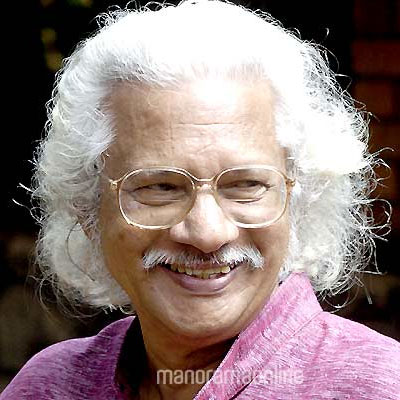
    NEW DELHI: The first-ever retrospective in Mumbai of the films of famed filmmaker Adoor Gopalakrishnan and his first-ever Masterclass will be held this month as part of Jashn Osianama.


    The Gopalakrishnan retrospective will be from 14 – 18 September at the Liberty theatre in Mumbai with his Masterclass on 19 September.


    The event includes a World Cinema Context of some of Gopalakrishnan’s favourite cinematic masterpieces so as to contextualise his cinema a bit more meaningfully.


    Two important exhibitions (along with guided tours) from the Osian’s Archive Collection on the “South Indian Contribution to the Hindi Cinematic History” and “Glimpses of Genius: Kurosawa & Ray” accompany these events from 19 to 24 September.


    The first Indian Cultural Renaissance Panel Discussion with Gopalakrishnan, Girish Kasaravalli, Dr. Kanak Rele, Gieve Patel, Sen Kapadia & Neville Tuli will take place on 18 September.


    Gopalakrishnan’s films being screened include Mukhamukham, Kodiyettam, Kalamandalam Gopi, The Dance of the Enchantress, Ellipathayam, Kathapurshan, Vidheyan and Mathilukal.


    In addition, there will be a screening of Pather Panchali by the master craftsman of cinema Satyajit Ray, and Bhoomiyil Chuvadurachu by Vipin Vijay.


    Global cinema screenings include Rashomon by Akira Kursosawa, Tokyo Story by Yasujiro Ozu, Andrei Rublev by Andrei Tarkovsky, The 400 Blows by François Truffaut, and Pick Pocket by Robert Bresson.

  • Box Office: ‘Hero’ collects Rs 20 crore in its opening weekend

    Box Office: ‘Hero’ collects Rs 20 crore in its opening weekend

    MUMBAI: The Sooraj Pancholi – Athiya Shetty starrer Hero does not work despite high promotion and solo release status. A botched up job, the film suffers from poor scripting followed by equally poor direction and lacking support from its musical score.


    The film opened with below average response and managed low collections on day one. While the collections failed to improve on Saturday, it managed to marginally pick up on Sunday. The film collected Rs 20.15 crore in its opening weekend and will find it tough to sustain through the week.


    Welcome Back does well in its first week thanks to its good opening weekend. The weekdays thereafter showed a marked decline. However, the film collects Rs 73.1 crore in its first week. The film stands to gain from poor opposition in its second week but may still have to struggle to make it to the Rs 100 crore mark.


    Phantom drops to about 10 per cent of its first week collection and adds just Rs 4.1 crore in its second week, which takes its two week tally to Rs 49.9 crore.


    Manji: The Mountain Man collects Rs 45 lakh in its third week taking its three week total to Rs 12.7 crore. The film’s box office run has practically come to an end.


    Bajrangi Bhaijaan collected Rs 25 lakh in its eighth week taking its total box office collections to Rs 318.1 crore. 


    Bahubali: The Beginning (Hindi-Dubbed) collected Rs 30 lakh in its ninth week taking its nine week total to Rs 109.6 crore.

  • Status Check: Indian cinema in FY-2015

    Status Check: Indian cinema in FY-2015

    BENGALURU: Calendar year 2014 can be considered to some extent the start of an inflection point for Indian cinema vis-?-vis the discerning and rapidly maturing movie audiences in India. 2015 and 2016, will tell if the change will be tectonic or not. As compared to 2013, there were fewer movies with ‘good content’ in 2014. The revenues generated by the top ten grossing films in 2014 grew just 2.4 per cent over 2013 and 11.3 per cent over 2012. Movie consumption patterns in India have been changing over time.


    The Indian film industry is heavily dependent on theatrical releases, which contribute the lion’s share of revenue to the film industry, which was 74 per cent in 2014 and 73.3 per cent projected for 2015 by the FICCI-KPMG Media and Entertainment Industry Report 2015 (FICCI 2015 Report). In 2019, theatrical releases are projected to contribute 71.1 per cent to the revenue as per the report.


    Even small budget movies are now being released across more screens than ever before, more prints are distributed digitally, which enable simultaneous release in 3000 to 4500 screens at one go in a blitzkrieg of sorts. This in turn has resulted in shortening of the box office window. The once rare phenomenon of movies grossing Rs 200 crore within the first week of release is now being witnessed.


    Also, 2014 could well be termed as the year of introspection and reality check for the Indian film industry. During the year, the gap between box office collection of the top ten films and the contributions from the rest of industry widened further according to the FICCI-2015 Report. While the category ‘A’ films with top league actors continued to perform well at the box office, the same was not true for films, which lacked both strong content and a big actor to attract audiences to the theatres. With rising average ticket prices (ATP) and availability of alternate entertainment platforms, the audience today seems to have become more discerning when it comes to watching films in theatres.


    Domestic theatrical revenue was stagnant in 2014 as compared to 2013. In 2014, domestic theatrical revenue grew 9.9 per cent as compared to two years ago in 2012. Cable and Satellite (C&S) rights contributed about 11.7 per cent to the overall revenues mentioned in the FICCI 2015 Report, in 2013, C&S rights contribution was 12.1 per cent. The FICCI 2015 report projects C&S rights revenue will contribute 11.4 per cent in 2015, and 15.5 per cent by 2019 to overall revenue generated by the Indian film industry.


    The revenue generated by C&S rights fell 3.3 per cent in 2014 as compared to 2013, as compared to the growth of 20.6 per cent that 2013 witnessed as compared to 2012. C&S revenue in 2014 grew 16.7 per cent when compared to 2012.


    Movie content consumption including music (in a theatre and any kind of screen) will probably change for ever, and, probably for the betterment of the ecosystem. The lacklustre performance of two revenue generating segments in 2014 – theatrical and television or cable and satellite rights says it all.


    Another barometer would be the performance of the some major exhibitors. Exhibitors have been expanding their footprint across the country either via mergers and acquisitions (M&A) or opening new properties. Entities such as Carnival Cinemas expanded with acquisitions of Reliance’s Big Cinemas, HDIL’s Kulraj Broadway and Star Gaze’s Glitz Cinemas. PVR has opened nine new properties with 50 screens in FY-2015 (year starting 1 April, 2014 and ending 31 March, 2015) and currently operates a network of 467 screens spread over 105 properties in 43 cities across the country. What’s more, PVR plans to continue its aggressive expansion plans and intends to add approximately 60-70 screens in FY-2016. On the other hand, Inox added 38 screens to its existing kitty with the acquisition of Satyam Cinemas.


    PVR touts itself as being amongst the top 10 cinema companies in the world with respect to admissions per screen. During the year ended 31 March, 2015, the multiplex chain entertained 5.92 crore patrons in its cinemas, down by one per cent as compared to the previous year owing to disappointing box office performance of the movie content released during the year.


    In PVR’s case, the adverse impact of poor content quality to an extent was mitigated by improvement in non-box office revenues.


    In the case of Inox Leisure, footfalls in FY-2015 increased 6.5 per cent to 4.11 crore from 3.86 crore in FY-2014. Footfalls increased by 2.4 per cent to 0.84 crore in Q4-2015 from 0.82 crore in Q4-2014, but declined 15.2 per cent as compared to the 0.99 crore in the previous quarter. Occupancy in FY-2015 declined to 25 per cent from 28 per cent in the previous year and declined from 23 per cent in Q4-2014 to 20 per cent in Q4-2015. In FY-2015, Inox gross box office (GBO) increased 12.4 per cent to Rs 670.38 crore (66.1 per cent of TR) as compared to the Rs 596.56 crore (68 per cent of TR) in FY-2014.


    However, the first and second quarters of 2016 have seen tremendous results from some movies, with blockbusters that have had box office collections of Rs 300 crore plus. Multiplex houses such as PVR and Inox saw a manifold increase in their profit after tax (PAT) in Q1-2016 as compared to the corresponding year ago quarter or the loss reported by some in the Q4-2015.


    So are Indians movie mad?


    Considering the 1000+ movies that the Hindi film industry along with its regional counterparts like Telugu, Tamil, Bengali etc churn out, and the way many deify film stars, most people seem to think so. It is also fair to assume that this would be construed as a fact if one were to consider the super successes of movies in the recent past that have grossed between Rs 100 – 300 crore plus at the box office in India.


    In addition, also vital to consider are revenues from other streams like international box office, music, television, digital etc. What’s more, companies like Eros International and Yash Raj Films have also begun to explore and exploit the long revenue generating tail.


    One must also consider India’s population numbers along with its cultural and language diversity. While many Indians do consume cinema on the big screen, but considering the long revenue tail that smart Indian production houses have begun to exploit, it should come as no surprise that more cinema is consumed on the small screens like the idiot box, mobile or other digital devices rather than theatrically.


    A digression – two languages namely Tamil and Telugu movies, along with Bollywood, churn out about two thirds of the movies produced every year. How the splitting of Andhra Pradesh into two separate states affects the fortunes of the Telugu M&E industry remains to be seen.


    It is a fact that celebrities from the celluloid screen as well as the cricket field make a huge impact on the average Indian. One has to just look at the mega deals that many actors sign for brand endorsements. For example, Bollywood A lister Aamir Khan charges an eye-popping Rs 5 crore a day as per a report in the Economic Times. He, however, doesn’t sign up for every brand that knocks on his door.


    At the same time, there are regions in the country where actors are worshipped, especially in the south Deccan and coastal areas. Many actors have been raised to the level of gods, with temples that deify them. Actors such as the late Dr Rajkumar in Karnataka have iconic status, and even a perceived slight to them or their memory can result in violence, chaos and mayhem. No one has the kind of pull that a person like him or an NTR or an MGR had. Maybe Rajnikanth is the only exception to the rule today, but that superstar is so down to earth and humble that most Indians would love to have many more like him.


    MG Ramchandran, NT Rama Rao, Nara Chandra Babu Naidu and Jayalalitha Jayaram have been elected as Chief Ministers of their states on the back of fame earned on the celluloid screen. Bengali filmdom’s young superstar Dev is a member of the Indian Parliament, while Tamil leading actor Vijaykanth has formed his own political party.


    However, it must be noted that elevating the actor to the level of ultimate power (in terms of politics) has been limited to the four southern states, and, except for J Jayalalitha, and Chandra Babu Naidu, all the other superstars that attained the mantle of Chief Minister have demised. Yes, a lot of actors from the film and television world have been and will probably continue to get elected to various levels of power at the national, state or local level, but that trend seems to be dying with the deaths of the doyens. The only one that has bucked the trend in the recent past is Smriti Irani, who is currently the Minister of Human Resources Development in the Government of India.


    To some extent, a small portion of Indians can be considered more than just movie buffs, but certainly not crazy.


    Conclusion


    The Indian craze for cinema isn’t any different than that of its oriental brethren. Jackie Chan is an example. For a movie to be a hit in India, say gross Rs 300 crore (super hit) assuming that the ticket price of Rs 100 each, it has to be watched by just three crore pair of eyes, which is just 2.4 per cent of the country’s population (125.2 crore as per 2013 estimates). This hypothesis begs the questions as to how many super hits do we churn out in a year? 10, 20? How many are just ‘average’? And how many flops?


    Despite the 1000 or so films that are churned out every year, just about 10-20 per cent of the population watch movies in a theatre. Today, movies have to compete with other modes of entertainment such as cricket and other major sports that are slowly eroding the number of cinema theatrical eyeballs. The FICCI 2015 Report says that only two of the twenty movies that were released during the Indian Premier League (IPL) 2014 performed well at the box office. Release windows have to be tweaked to festival and long school holidays. This results in a number of releases planned for during the second and third quarter (July – December), with Q3 generally being the most prosperous one for the theatrical movie industry players.


    Many of the top performing movies have done well on television, as the attached TAM data for the years 2010, 2011, 2012, 2013, 2014 as week 1-27 of 2015 indicates.


    Maybe it is the Indian movie makers that are mad, considering the hopeless, poor or timid story lines, the sad efforts at attempting slapstick and other types of comedy, of wildly aping the west with sequels of movies that were non-starters in the first place.


    Even today, theatrical revenue is the largest contributor to the revenue from a movie. Many of the major chains are looking at tier I and II cities for organic expansion, besides takeover of the smaller and regional players. The FICCI 2015 Report brings out some startling differences between the US and India. India has just seven screens per ten lakh population as compared to the 125 screens per ten lakh people that the US has, with the geographical distribution of screens more skewed in favour of urban India.


    It now remains to be seen how the movies released in the last four months of 2015 fare at the box office. Diwali and Christmas being favourite release windows for filmmakers, some fireworks at the box office are likely to be in store. 


    Disclaimer: Many of the ideas and opinions expressed expressed in this report are personal views of the author with which Indiantelevision.com does not agree or disagree in part or full.


    Click here to see TAM analysis