Category: Movies

  • Box Office: ‘Ghayal Once Again’ opens to tepid response; ‘Airlift’ collects Rs 111.3 crore

    Box Office: ‘Ghayal Once Again’ opens to tepid response; ‘Airlift’ collects Rs 111.3 crore

    MUMBAI: Sunny Deol’s home production and directorial venture Ghayal Once Again tries to cash in on his 1990’s success, Ghayal and has opened to a tepid response at the box office. The film failed to catch momentum on Saturday, showing only a slight improvement on Sunday. Ghayal Once Again ended its opening weekend with Rs 21.2 crore.

    On the other hand, the Akshay Kumar starrer Airlift made the most of its perfect release period around 26 January, the Indian Republic Day, which helped its theme of patriotism. Despite being a dry theme with a documentary like feel through its first half, the film scored in its latter parts to pick up through the weekend and also thereafter. The film added a respectable Rs 28.5 crore in its second week to take its two week total to Rs 111.3 crore.

    Sanam Teri Kasam, an old-fashioned mishmash of previous love stories with cancer as the theme, suffers on many counts including being slow, depressing, clichéd lack of face value and so on. The film did not even make it to the one crore mark on its opening day. It improved a bit on Saturday and Sunday, both on the lower side and not enough to salvage the enterprise. The film collected Rs 3.8 crore in its opening weekend.

    Saala Khadoos pays the price for two reasons, being a sports film and being a very predictable one at that about an underdog, out of nowhere girl winning the boxing world championship. Except love stories, selling dreams is no more wise. Even Mary Kom, based on a real life champ, catered to a limited audience. The R Madhavan starrer Saala Khadoos managed to collect Rs 8.2 crore in its first week.

    Mastizaade shows that senseless vulgarity in the name of sex comedy does not work. With dud performers, the film tried to attract audience only on the anatomy of Sunny Leone and this is not her first film! The film got a low weekend and failed to add much in the rest of the days, ending its first week with Rs 17.65 crore at the box office.

    Kyaa Kool Hain Hum, a senseless sex comedy comes a cropper and fails badly. The film added about Rs 50 lakh in its second week to take its two week as well as lifetime business to a mere Rs 26.8 crore.


  • Disney’s ‘Star Wars: The Force Awakens’ crosses $2 billion global box office mark

    Disney’s ‘Star Wars: The Force Awakens’ crosses $2 billion global box office mark

    MUMBAI: Star Wars: The Force Awakens has crossed the $2 billion mark worldwide on 6 February, which was its 53rd day of release, thus becoming only the third film ever to do so and just the second to do it in original release. 

    Additionally, the movie also crossed the $900 million mark at the North American box office and is the only film in history to reach this milestone.

    “This is a historic moment for Star Wars, for Lucasfilm, and for Disney, and all of us here are extremely gratified to be a part of this journey with fans around the world who have made Star Wars: The Force Awakens such an extraordinary success. The film’s achievements are truly astounding, and it’s our great honor to relaunch this cinematic galaxy not only for all the devoted decades-long fans but for a new generation who will keep the Star Wars legacy alive for many years to come,” said The Walt Disney Studios chairman Alan Horn.

    Through 4 February, Star Wars: The Force Awakens earned an estimated $899.1 million in North America and $1,095.6 million internationally for a global total of $1,994.7 million. Opening internationally 16 December and in the US on 18 December, Star Wars: The Force Awakens posted the all-time biggest global and domestic debuts with $528.9 million and $247.9 million respectively.

    Over the course of its eight-week run, it has set numerous other records, including:
    – Biggest domestic preview gross ($57 million)
    – Biggest opening day domestically ($119.1 million)
    – Biggest domestic second weekend ($149.2 million)
    – Biggest domestic third weekend ($90.2 million)
    – Biggest opening week domestically ($390.8 million)
    – Biggest opening weekend in 18 territories: UK (4-day), Australia, Russia, Germany, Sweden, Norway, Finland, Austria, Poland (3-day), Denmark (5-day), Romania, Hungary, Bulgaria, Croatia, Ukraine, Iceland, Serbia, New Zealand
    – Fastest film to $1 billion globally (12 days)
    – Biggest film of all time in the US and the UK

    Directed by J.J. Abrams, written by Lawrence Kasdan & Abrams and Michael Arndt, and produced by Kathleen Kennedy, Abrams and Bryan Burk, Star Wars: The Force Awakens was named one of AFI’s top ten films of 2015 and has received five Academy Award nominations, for film editing, visual effects, sound editing, sound mixing, and for series composer John Williams’ original score.

    The Star Wars Saga continues 15 December, 2017, in Star Wars: Episode VIII, picking up in the wake of Star Wars: The Force Awakens. Later this year, Rogue One, a new adventure detailing events prior to Star Wars: A New Hope, will take flight on 16 December, 2016.

  • Disney’s ‘Star Wars: The Force Awakens’ crosses $2 billion global box office mark

    Disney’s ‘Star Wars: The Force Awakens’ crosses $2 billion global box office mark

    MUMBAI: Star Wars: The Force Awakens has crossed the $2 billion mark worldwide on 6 February, which was its 53rd day of release, thus becoming only the third film ever to do so and just the second to do it in original release. 

    Additionally, the movie also crossed the $900 million mark at the North American box office and is the only film in history to reach this milestone.

    “This is a historic moment for Star Wars, for Lucasfilm, and for Disney, and all of us here are extremely gratified to be a part of this journey with fans around the world who have made Star Wars: The Force Awakens such an extraordinary success. The film’s achievements are truly astounding, and it’s our great honor to relaunch this cinematic galaxy not only for all the devoted decades-long fans but for a new generation who will keep the Star Wars legacy alive for many years to come,” said The Walt Disney Studios chairman Alan Horn.

    Through 4 February, Star Wars: The Force Awakens earned an estimated $899.1 million in North America and $1,095.6 million internationally for a global total of $1,994.7 million. Opening internationally 16 December and in the US on 18 December, Star Wars: The Force Awakens posted the all-time biggest global and domestic debuts with $528.9 million and $247.9 million respectively.

    Over the course of its eight-week run, it has set numerous other records, including:
    – Biggest domestic preview gross ($57 million)
    – Biggest opening day domestically ($119.1 million)
    – Biggest domestic second weekend ($149.2 million)
    – Biggest domestic third weekend ($90.2 million)
    – Biggest opening week domestically ($390.8 million)
    – Biggest opening weekend in 18 territories: UK (4-day), Australia, Russia, Germany, Sweden, Norway, Finland, Austria, Poland (3-day), Denmark (5-day), Romania, Hungary, Bulgaria, Croatia, Ukraine, Iceland, Serbia, New Zealand
    – Fastest film to $1 billion globally (12 days)
    – Biggest film of all time in the US and the UK

    Directed by J.J. Abrams, written by Lawrence Kasdan & Abrams and Michael Arndt, and produced by Kathleen Kennedy, Abrams and Bryan Burk, Star Wars: The Force Awakens was named one of AFI’s top ten films of 2015 and has received five Academy Award nominations, for film editing, visual effects, sound editing, sound mixing, and for series composer John Williams’ original score.

    The Star Wars Saga continues 15 December, 2017, in Star Wars: Episode VIII, picking up in the wake of Star Wars: The Force Awakens. Later this year, Rogue One, a new adventure detailing events prior to Star Wars: A New Hope, will take flight on 16 December, 2016.

  • MN+ to honour Brad Pitt’s work on ‘Walk of Fame’

    MN+ to honour Brad Pitt’s work on ‘Walk of Fame’

    MUMBAI: Times Network’s HD English movie channel MN+ is all geared up to air movies starring Brad Pitt in its official weekend property ‘Walk of Fame.’ The next new edition will start from 6 February and air every Saturday at 9 pm.

    The movies that are lined up on the channel are: Fury, Fight Club, Seven and The Curious Case of Benjamin Button.

    Fury, the American-British war film in which Pitt is seen playing the role of Don Wardaddy Collier along with a five-man crew, embarks on a mission that puts their lives in danger as they attack the Nazi army. The film got the actor a nomination in Broadcast Film Critics Association Awards.

    The other American film Fight Club is about an office worker who is tired of his dull existence and his new friend helps him discover an exciting and dangerous sense of purpose. The movie is based on a novel with the same name.

    Seven, a psychological thriller, rotates around a serial killer who begins murdering people according to the seven deadly sins and two detectives tasked to apprehend the criminal.

  • MN+ to honour Brad Pitt’s work on ‘Walk of Fame’

    MN+ to honour Brad Pitt’s work on ‘Walk of Fame’

    MUMBAI: Times Network’s HD English movie channel MN+ is all geared up to air movies starring Brad Pitt in its official weekend property ‘Walk of Fame.’ The next new edition will start from 6 February and air every Saturday at 9 pm.

    The movies that are lined up on the channel are: Fury, Fight Club, Seven and The Curious Case of Benjamin Button.

    Fury, the American-British war film in which Pitt is seen playing the role of Don Wardaddy Collier along with a five-man crew, embarks on a mission that puts their lives in danger as they attack the Nazi army. The film got the actor a nomination in Broadcast Film Critics Association Awards.

    The other American film Fight Club is about an office worker who is tired of his dull existence and his new friend helps him discover an exciting and dangerous sense of purpose. The movie is based on a novel with the same name.

    Seven, a psychological thriller, rotates around a serial killer who begins murdering people according to the seven deadly sins and two detectives tasked to apprehend the criminal.

  • ‘Ghayal Once Again:’ Much mellowed

    ‘Ghayal Once Again:’ Much mellowed

    Ghayal Once Again can be termed as a true sequel as the film connects with Sunny Deol starrer Ghayalreleased in 1990. In that era, a suppressed common man’s outburst against a mighty criminal (Amrish Puri inGhayal) who has the politicians and the system at his command was palatable.

    Sunny is back after serving 14 years in prison. He gets flashbacks of past which Soha Ali Khan, a doctor keeps in control with instant medication. Sunny has now turned a vigilante, runs a newspaper called Satyakam, which publishes real news sans sensationalism. He has a loyal team around him, which shares his spirit and purpose. Sunny is now a much admired person with a great following among youth.

    Om Puri is now a retired cop who has become an RTI activist. Puri has come across some material, which can virtually destroy the tycoon, Narendra Jha, who accumulates wealth through illegal means. Jha has the local home minister and, through him, the entire police force in his pocket. Puri is called for a meeting where an argument ensues and Jha’s drug addict and violent son, Abhilash Kumar, shoots down Puri. This is made to look like a road accident. 

    Unknown to Jha and company the whole shooting incident has been shot on a cell phone of a bunch of students out to take pictures and videos of some rare birds. But, the guardians of the kids know how powerful Jha is and handover the video to him.

    However, one of the girls from this group of four, thought it prudent to make a copy of the video, which they plan to handover to Sunny. But, it seems Jha has the entire city under video surveillance as well as the phones taped of anybody who can harm him. As Sunny and the students decide to meet up, Jha lets loose his foreign mercenaries, no less, on the kids. There is a long chase through the city roads in cars and later through a shopping mall. All beamed live in Jha’s room. But, Sunny reaches in time and saves kid. 

    A lot follows, the students are now kidnapped and kept under vigil at Jha’s fortress like mansion surrounded by Jha’s own army as well as the entire police force of the city. Now it is for Sunny to get them out. And, as Sunny is wont to do, he becomes a one man army, as usual, preferring hand to hand fight against multiple guns.

    The problem with Ghayal Once Again is that it follows the same theme that worked in 1990 when a lot of anti-establish feelings prevailed. Also, Sunny was the leading action hero around as his contemporaries, Anil Kapoor and Jackie Shroff, did varied roles. Now, just about everybody does action films thanks to technology. The story is old-fashioned about one powerful man calling shots in a major metropolis like Mumbai; it does not convince anymore. 

    From the moment film begins till the chase sequence the film holds only to become predictable thereafter. The action scenes become repetitive. Cinematography by veteran Ravi Yadav is competent. Editing wise, the film needed some sharp trimming. Music, having no scope, does not quite work. Performance wise, the Sunny – Soha pair is odd despite their love being silent. Sunny is his usual self doing Ghayal again while Soha has little scope. While the students all do well, Ramesh Deo, Manoj Joshi, Tisca Chopra, and Sachin Khedekar are okay. The villain duo, Jha and Abhilash, is effective. 

    Ghayal Once Again hasn’t had an encouraging opening. It caters to single screen masses mainly of which not many are left.

    Producer: Dharmendra
    Director: Sunny Deol
    Cast: Sunny Deol, Soha Ali Khan, Om Puri, narednra Jha, Manoj Joshi, Tisca Chopra, Sachin Khedekar, Nadira Babbar, Abhilash Kumar

    ‘Sanam Teri Kasam:’ Of unseen villain

    An early cancer as a part of a love story was Dil Ek Mandir, a Meena Kumari, Rajendra Kumar, Rajkumar film. There it was a love triangle. However, the Hollywood hit, Love Story (1970), based on Erich Segal’s novel of the same name, set a trend for star-crossed romances where one of the protagonists is afflicted by cancer. Immediately thereafter in 1971, there followed a film with cancer as the main theme in Hrishikesh Mukherjee’sAnand, though this was not a love story or a triangle. Love Story finally inspired Rajshri’s musical hit, Ankhiyon Ke Jharokhon Se in 1978.

    Hrishikesh Mukherjee’s other foray in this theme, Mili, failed despite a memorable musical score and the reigning stars of the day, Amitabh Bachchan and Jaya Bachchan, in the cast. There may have been a few more films on the theme but none made a mark. 

    In Sanam Teri Kasam, Harshwardhan Rane inherits a flat from one Julie aunty in a building society occupied by creatures from era gone by. No explanation is offered for the deceased aunt’s largesse. Rane is projected as some sort of a stud for he has a new woman in his bed each night and they are Page 3 girls. How, why? 

    Rane is like a 1950s romantic hero. He is never seen making a living. All he does is guzzle alcohol, chase romance and is busy suppressing his past tragedies. He has spent eight years in jail for being accused of a murder at the age of 14. Cinematic liberty allows you to consign a 14 year old to eight years in prison. 

    Luckily for him, there lives a Tamil-Brahmin family in his society, the head of which also lives in 1950 or probably before that. The family has two daughters of which the older one, Mawra Hocane (Mawra Hussain originally) looks like what we call a geek today. She is bespectacled, with a figure like a walking stick, and her father adds to the unpalatable look by rubbing incense stick ash on her forehead. She works as a librarian. 

    To cut a story short, Mawra’s younger sister can’t marry till Mawra does, but there are no takers for her. She promises her sister that she will clear her way and visits Rane at 4 am in the morning to seek his help to get her a makeover from one of his girls who figures as a top rated makeover artist. What follows is a scandal. Mawra is branded for being in a debauch’s house at an unearthly hour. She is disowned by her family! 

    Rane now becomes her caretaker.

    The rest of the film is like a silent movie since none of the characters say what they want to say but say everything else. It is hackneyed to say the list. Mawra is supposed to be a very intelligent girl, well read, but can’t read Rane’s feelings for her. Rane has been with numerous girls but can’t express his love for Hocane. He even works on getting her married to an IIT-IIM guy because that was what her family wanted! 

    Finally, when they realize they are in love, cancer plays the villain. Mawra has limited time to live. Hence, in what has become traditional now, Rane marries her before she dies.

    The script of the film is like a remix thing as is done with music albums. It borrows from a number of films from the past. This is not limited to just the script; direction also follows the beaten path, hugely clichéd. For this film with newcomers with little of known supporting cast, its 155 minute run is not justified and, what is more, makes it feel like never-ending. Dialogue is mundane except on two occasions. With limited locations, the cinematography is average. The one positive with the film is the musical score by Himesh Reshammiya if it can help at all. Editing is non-existent. 

    While Mawra is a perpetual wronged crybaby in the film, Rane refuses to either cry or laugh; he prefers to carry one single expression throughout. Rest in the cast are incidental.

    Sanam Teri Kasam is an insipid movie with scant appeal.

    Producer: Deepak Mukut
    Directors: Radhika Rao, Vinay Sapru
    Cast: Harshvardhan Rane, Mawra Hocane, Murli Sharma, Vijay Raaz, Sudesh Berry

  • ‘Ghayal Once Again:’ Much mellowed

    ‘Ghayal Once Again:’ Much mellowed

    Ghayal Once Again can be termed as a true sequel as the film connects with Sunny Deol starrer Ghayalreleased in 1990. In that era, a suppressed common man’s outburst against a mighty criminal (Amrish Puri inGhayal) who has the politicians and the system at his command was palatable.

    Sunny is back after serving 14 years in prison. He gets flashbacks of past which Soha Ali Khan, a doctor keeps in control with instant medication. Sunny has now turned a vigilante, runs a newspaper called Satyakam, which publishes real news sans sensationalism. He has a loyal team around him, which shares his spirit and purpose. Sunny is now a much admired person with a great following among youth.

    Om Puri is now a retired cop who has become an RTI activist. Puri has come across some material, which can virtually destroy the tycoon, Narendra Jha, who accumulates wealth through illegal means. Jha has the local home minister and, through him, the entire police force in his pocket. Puri is called for a meeting where an argument ensues and Jha’s drug addict and violent son, Abhilash Kumar, shoots down Puri. This is made to look like a road accident. 

    Unknown to Jha and company the whole shooting incident has been shot on a cell phone of a bunch of students out to take pictures and videos of some rare birds. But, the guardians of the kids know how powerful Jha is and handover the video to him.

    However, one of the girls from this group of four, thought it prudent to make a copy of the video, which they plan to handover to Sunny. But, it seems Jha has the entire city under video surveillance as well as the phones taped of anybody who can harm him. As Sunny and the students decide to meet up, Jha lets loose his foreign mercenaries, no less, on the kids. There is a long chase through the city roads in cars and later through a shopping mall. All beamed live in Jha’s room. But, Sunny reaches in time and saves kid. 

    A lot follows, the students are now kidnapped and kept under vigil at Jha’s fortress like mansion surrounded by Jha’s own army as well as the entire police force of the city. Now it is for Sunny to get them out. And, as Sunny is wont to do, he becomes a one man army, as usual, preferring hand to hand fight against multiple guns.

    The problem with Ghayal Once Again is that it follows the same theme that worked in 1990 when a lot of anti-establish feelings prevailed. Also, Sunny was the leading action hero around as his contemporaries, Anil Kapoor and Jackie Shroff, did varied roles. Now, just about everybody does action films thanks to technology. The story is old-fashioned about one powerful man calling shots in a major metropolis like Mumbai; it does not convince anymore. 

    From the moment film begins till the chase sequence the film holds only to become predictable thereafter. The action scenes become repetitive. Cinematography by veteran Ravi Yadav is competent. Editing wise, the film needed some sharp trimming. Music, having no scope, does not quite work. Performance wise, the Sunny – Soha pair is odd despite their love being silent. Sunny is his usual self doing Ghayal again while Soha has little scope. While the students all do well, Ramesh Deo, Manoj Joshi, Tisca Chopra, and Sachin Khedekar are okay. The villain duo, Jha and Abhilash, is effective. 

    Ghayal Once Again hasn’t had an encouraging opening. It caters to single screen masses mainly of which not many are left.

    Producer: Dharmendra
    Director: Sunny Deol
    Cast: Sunny Deol, Soha Ali Khan, Om Puri, narednra Jha, Manoj Joshi, Tisca Chopra, Sachin Khedekar, Nadira Babbar, Abhilash Kumar

    ‘Sanam Teri Kasam:’ Of unseen villain

    An early cancer as a part of a love story was Dil Ek Mandir, a Meena Kumari, Rajendra Kumar, Rajkumar film. There it was a love triangle. However, the Hollywood hit, Love Story (1970), based on Erich Segal’s novel of the same name, set a trend for star-crossed romances where one of the protagonists is afflicted by cancer. Immediately thereafter in 1971, there followed a film with cancer as the main theme in Hrishikesh Mukherjee’sAnand, though this was not a love story or a triangle. Love Story finally inspired Rajshri’s musical hit, Ankhiyon Ke Jharokhon Se in 1978.

    Hrishikesh Mukherjee’s other foray in this theme, Mili, failed despite a memorable musical score and the reigning stars of the day, Amitabh Bachchan and Jaya Bachchan, in the cast. There may have been a few more films on the theme but none made a mark. 

    In Sanam Teri Kasam, Harshwardhan Rane inherits a flat from one Julie aunty in a building society occupied by creatures from era gone by. No explanation is offered for the deceased aunt’s largesse. Rane is projected as some sort of a stud for he has a new woman in his bed each night and they are Page 3 girls. How, why? 

    Rane is like a 1950s romantic hero. He is never seen making a living. All he does is guzzle alcohol, chase romance and is busy suppressing his past tragedies. He has spent eight years in jail for being accused of a murder at the age of 14. Cinematic liberty allows you to consign a 14 year old to eight years in prison. 

    Luckily for him, there lives a Tamil-Brahmin family in his society, the head of which also lives in 1950 or probably before that. The family has two daughters of which the older one, Mawra Hocane (Mawra Hussain originally) looks like what we call a geek today. She is bespectacled, with a figure like a walking stick, and her father adds to the unpalatable look by rubbing incense stick ash on her forehead. She works as a librarian. 

    To cut a story short, Mawra’s younger sister can’t marry till Mawra does, but there are no takers for her. She promises her sister that she will clear her way and visits Rane at 4 am in the morning to seek his help to get her a makeover from one of his girls who figures as a top rated makeover artist. What follows is a scandal. Mawra is branded for being in a debauch’s house at an unearthly hour. She is disowned by her family! 

    Rane now becomes her caretaker.

    The rest of the film is like a silent movie since none of the characters say what they want to say but say everything else. It is hackneyed to say the list. Mawra is supposed to be a very intelligent girl, well read, but can’t read Rane’s feelings for her. Rane has been with numerous girls but can’t express his love for Hocane. He even works on getting her married to an IIT-IIM guy because that was what her family wanted! 

    Finally, when they realize they are in love, cancer plays the villain. Mawra has limited time to live. Hence, in what has become traditional now, Rane marries her before she dies.

    The script of the film is like a remix thing as is done with music albums. It borrows from a number of films from the past. This is not limited to just the script; direction also follows the beaten path, hugely clichéd. For this film with newcomers with little of known supporting cast, its 155 minute run is not justified and, what is more, makes it feel like never-ending. Dialogue is mundane except on two occasions. With limited locations, the cinematography is average. The one positive with the film is the musical score by Himesh Reshammiya if it can help at all. Editing is non-existent. 

    While Mawra is a perpetual wronged crybaby in the film, Rane refuses to either cry or laugh; he prefers to carry one single expression throughout. Rest in the cast are incidental.

    Sanam Teri Kasam is an insipid movie with scant appeal.

    Producer: Deepak Mukut
    Directors: Radhika Rao, Vinay Sapru
    Cast: Harshvardhan Rane, Mawra Hocane, Murli Sharma, Vijay Raaz, Sudesh Berry

  • Zee Cine Awards hops on to Zee Cinema & Zee Anmol; regional categories introduced

    Zee Cine Awards hops on to Zee Cinema & Zee Anmol; regional categories introduced

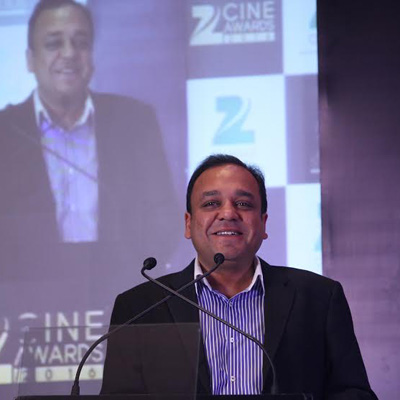
    MUMBAI: In its 16th year, Zee Entertainment Enterprises Ltd’s (ZEEL) awards property – Zee Cine Awards 2016 has made several changes and introduced new elements.

    Zee Cine Awards 2016 will be held on 20 February in Mumbai and will be simulcast on 5 March across the Zee Network channels like Zee Cinema, Zee Cinema HD and its free-to-air channel Zee Anmol. Pertinent to note here is that previously, the awards were aired on the network’s flagship Hindi GEC Zee TV. However, this time round it has been put on its Hindi movie channel – Zee Cinema as well as its FTA channel Zee Anmol, which has been doing well on ratings front ever since the BARC rural inclusive data was released last year.

    “The reason why we shifted Zee Cine Awards from Zee TV to Zee Cinema is because initially it started from Zee Cinema itself. As it’s an award of cinema, it should belong to its home on Zee Cinema and now onwards we will be airing it on Zee Cinema,” ZEEL MD and CEO Punit Goenka tells Indiantelevision.com.

    ZEEL chief business officer Sunil Buch added, “ZEEL comes alive in a synergistic way to deliver Zee Cine Awards 2016. Zee Music Company continues to be our music touch point in the fraternity. This year’s Zee Cine Awards has been conceptualised, created and produced by Zee Studios, our state-of-the-art film and TV production arm. And there is a goodness of fit to a film awards show being premiered on Zee Cinema rather than on a GEC. Zee Cinema with an average weekly base of 184 million viewers is higher than any other channel across Hindi Speaking Markets (Source: BARC-Urban + Rural India, Average of Week 41’15-Week 3’16, NCCS 4+). The simulcast of the awards on India’s leading FTA GEC channel, Zee Anmol also adds to its reach in rural India.”

    Moreover, for the first time ever, the awards, which until now lauded the best of Hindi cinema, will also award Marathi, Bangla, Telugu cinema this year. ZEEL will also showcase the regional awards content on its regional channels namely Zee Bangla, Zee Marathi and Zee Telugu.

    Goenka added, “Keeping the Zee’s ethos, Vasudhaiva Kutumbakam – The World Is My Family, into consideration we have introduced a few new elements this year in Zee Cine Awards 2016. For the first time on the national award stage, regional content will be presented awards this year. Renowned personalities from Telugu, Marathi and Bengali cinema will perform on stage and that exclusive content will be telecast on Zee Bangla, Zee Marathi and Zee Telugu respectively, so that people can see the talent that regional cinema has.”

    Apart from that ZEEL has also introduced the Jury Awards this year, which will be adjudged by a panel comprising Rakesh Roshan, Resul Pookutty, Ravi K Chandran, Anurag Basu, Leena Yadav, Prasoon Joshi and Shantanu Moitra.

    The 15th edition of Zee Cine Awards was telecast on Zee TV in 2014 and a no show in 2015. Talking about the same, Goenka said, “We missed the awards last year because we were in the process of launching new brands from our network. However, we will ensure that it doesn’t happen in the future.” 

    To authenticate the voting mechanism of both, the Jury Awards and the Viewer’s Choice Awards, Zee has appointed the Ernst & Young.  

    This year the award ceremony will be hosted by Shahid Kapoor and Karan Johar.

  • Zee Cine Awards hops on to Zee Cinema & Zee Anmol; regional categories introduced

    Zee Cine Awards hops on to Zee Cinema & Zee Anmol; regional categories introduced

    MUMBAI: In its 16th year, Zee Entertainment Enterprises Ltd’s (ZEEL) awards property – Zee Cine Awards 2016 has made several changes and introduced new elements.

    Zee Cine Awards 2016 will be held on 20 February in Mumbai and will be simulcast on 5 March across the Zee Network channels like Zee Cinema, Zee Cinema HD and its free-to-air channel Zee Anmol. Pertinent to note here is that previously, the awards were aired on the network’s flagship Hindi GEC Zee TV. However, this time round it has been put on its Hindi movie channel – Zee Cinema as well as its FTA channel Zee Anmol, which has been doing well on ratings front ever since the BARC rural inclusive data was released last year.

    “The reason why we shifted Zee Cine Awards from Zee TV to Zee Cinema is because initially it started from Zee Cinema itself. As it’s an award of cinema, it should belong to its home on Zee Cinema and now onwards we will be airing it on Zee Cinema,” ZEEL MD and CEO Punit Goenka tells Indiantelevision.com.

    ZEEL chief business officer Sunil Buch added, “ZEEL comes alive in a synergistic way to deliver Zee Cine Awards 2016. Zee Music Company continues to be our music touch point in the fraternity. This year’s Zee Cine Awards has been conceptualised, created and produced by Zee Studios, our state-of-the-art film and TV production arm. And there is a goodness of fit to a film awards show being premiered on Zee Cinema rather than on a GEC. Zee Cinema with an average weekly base of 184 million viewers is higher than any other channel across Hindi Speaking Markets (Source: BARC-Urban + Rural India, Average of Week 41’15-Week 3’16, NCCS 4+). The simulcast of the awards on India’s leading FTA GEC channel, Zee Anmol also adds to its reach in rural India.”

    Moreover, for the first time ever, the awards, which until now lauded the best of Hindi cinema, will also award Marathi, Bangla, Telugu cinema this year. ZEEL will also showcase the regional awards content on its regional channels namely Zee Bangla, Zee Marathi and Zee Telugu.

    Goenka added, “Keeping the Zee’s ethos, Vasudhaiva Kutumbakam – The World Is My Family, into consideration we have introduced a few new elements this year in Zee Cine Awards 2016. For the first time on the national award stage, regional content will be presented awards this year. Renowned personalities from Telugu, Marathi and Bengali cinema will perform on stage and that exclusive content will be telecast on Zee Bangla, Zee Marathi and Zee Telugu respectively, so that people can see the talent that regional cinema has.”

    Apart from that ZEEL has also introduced the Jury Awards this year, which will be adjudged by a panel comprising Rakesh Roshan, Resul Pookutty, Ravi K Chandran, Anurag Basu, Leena Yadav, Prasoon Joshi and Shantanu Moitra.

    The 15th edition of Zee Cine Awards was telecast on Zee TV in 2014 and a no show in 2015. Talking about the same, Goenka said, “We missed the awards last year because we were in the process of launching new brands from our network. However, we will ensure that it doesn’t happen in the future.” 

    To authenticate the voting mechanism of both, the Jury Awards and the Viewer’s Choice Awards, Zee has appointed the Ernst & Young.  

    This year the award ceremony will be hosted by Shahid Kapoor and Karan Johar.

  • Manipuri film bags top award at Mumbai International Film Festival

    Manipuri film bags top award at Mumbai International Film Festival

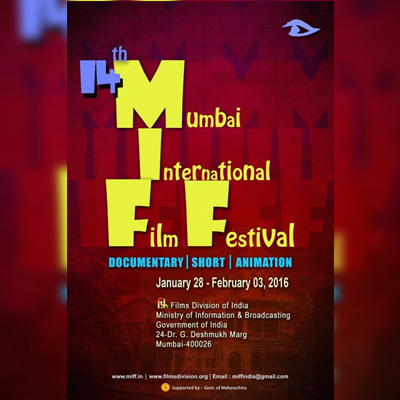
    MUMBAI: The Manipuri documentary film Phum Shang has won the Golden Conch Award for the Best Documentary Film (upto 60 minutes) at the 14th Mumbai International Film Festival for Documentary, Animation and Short Films, which concluded here today.

    The Swiss film My Name is Salt and Indian entry Placebo shared the Gold Conch award for the Best Feature length Documentary Film.

    Debanjan Nandy’s animation film Chhaya bagged the first prize in the Animation Category of International Competition. Mumbai filmmaker Devashish Makhija’s Agli Baar  shared the Best Short Fiction Film honours with the UK entry Solo Finale by Ingo Putze.

    The Dadasaheb Phalke Award for the Best Debut Film of a Director went to Far From Home by Copenhagen, Denmark based film maker Nitesh Anjan.

    The Festival organised by the Films Division every second year in collaboration with the Government of Maharashtra and the Indian Documentary Producers Association had commenced on 28 January.

    The main awards were given away by Maharashtra Governor Vidyasagar Rao in the presence of Maharashtra Culture Minister Vinod Shreedhar Tawde, filmmaker Ramesh Sippy, brand ambassador Jackie Shroff and Festival director Mukesh Sharma.

    Speaking on the occasion, Rao said that he would like documentaries to transform themselves from those for a young India since the average age of the Indian today was 29, which was far below that of the United States or China.

    He also wanted the Films Division to explore new talent from remote parts of the country and even economically weaker sections. Rao urged the Division to work with universities and schools in the state to ensure that films are made by students and also shown there.

    “The documentary format is important as these films help to understand the complexities of the situation in all parts of the world,” he said.

    He wanted Doordarshan to reserve a one-hour slot every week for documentary, short and animation films.

    Rao also rooted for more women filmmakers to emerge and said MIFF should encourage innovation and new ideas.

    Tawde said that documentaries provoked governments to action when they exposed ills in society and thereby played an important role. “MIFF should be held every year, and the state government can host it in the intervening year in case the Information and Broadcasting Ministry at the centre is not inclined to do so,” he added.

    Sippy said that commercial cinema was glamorous but the real challenge lay in making documentary or short films. “This should be encouraged,” he said.

    Shroff said he had come into the Festival as the brand ambassador but was leaving as a student who had learnt so much about documentaries and shorts. He also wanted the Festival to be made an annual affair. Answering a question by presenter Sameera Gujjar, he said that commercial films were dreams whereas the documentary were facts. Asked about national and international cinema, he said feelings were the same everywhere.

    Biju Dhanapalan who had been a member of the national jury said that special awards should be instituted for investigative documentaries, and those which have archival value, apart from making a strong appeal for restoring the Silver Conch award for the second best film. He also wanted the event to made into an annual feature. He said the national jury saw 27 films.

    Ashish Kulkarni, who headed the Animation and New Media Jury, said that films by professionals and students could not be clubbed together and there had to be separate awards for these. He also wanted more awards for new media category. He said that the jury saw 21 animation and 32 new media films and was impressed with the way the filmmakers combined various mediums.

    A total of 385 documentaries, shorts and animation films were shown at the Festival from around 20 countries out of the 850 received.

    The 52 minute documentary Phum Shang directed by Hao Bam Pabankumar who is an alumnus of the Satyajit Ray Film & Television Institute, Kolkata, critically examines the serious environmental problems faced at the Loktak lake. The largest fresh water lake in North East India characterised by its unique floating biomass, known as ‘Phumdi,’ is today considered a dying lake due to unchecked human activity. Pabankumar won the Golden Conch Award and a cash prize of Rs 3 lakhs.

    My Name is Salt directed by Mumbai born and Zurich based Farida Pacha is a film about the journey of thousands of families to the Rann of Kutch to extract whitest salt in the world. Chandigarh based film maker Abhay Kumar’s 96 minutes film Placebo explores the stress and pressure faced by medical students.

    My Name Is Salt also won the Best Cinematographer award for Lutz Konermann, while Placebo, which won the Award for Best Editor, was also declared the Most Innovative Film in the competition section.