Category: Movies

  • Cinépolis targets having 400 screens in India by 2017

    Cinépolis targets having 400 screens in India by 2017

    NEW DELHI: In a bid to provide the best-in-cinema experience coupled with state-of-the-art technology, Cinépolis India, today announced the launch of its first International multiplex in Rohini in the NCR region. The chain commenced its journey in India in 2007 and launched its first multiplex in Amritsar in 2009. The multiplex chain is targeting 400 screens by 2017

    Cinepolis India managing director Javier Sotomayor said, “Committed to our brand promise and focus to offer unique cinema viewing experience to the Delhi audience, we are delighted to introduce our first property replete with international Cinépolis state of the art technology. We aim to provide a superlative cinema viewing experience to the entire gamut of our discerning Delhi patrons. With this launch we get a step closer to our targets in India and have 240 screens running now, with a promise to open another 160 screens, by 2017.”

    Sotomayor claimed that Cinepolis was now the fourth largest multiplex chain in the world with 335 theatres and 3,187 screens in 13 countries. The chain employed 35,999 employees. It had the third largest footfall in India and sold 262.3 million (26.23 crore) tickets in 2015. Cinépolis, which acquired Fun Cinemas in 2014, has its largest theatre in Pune.   

    Asked about the chain’s future plans, Sotomayor said Cinepolis liked to go slowly but the group was looking at opportunities. It was also examining some cases where old single screen theatres could be converted to multiplexes.

    Sotomayor opined that Indian cinema audiences were more passionate than anywhere else in the world. One could hear them clap, cheer or jeer, or even shed a tear while watching a film. He said audiences overseas just sat quietly in a cinema hall and watched a film and preferred to express their views later outside the theatre.  

    Cinepolis director for expansion Ashish Shukla said, “Cinépolis @ Unity One, is the first of our Ebony design concepts. Its premium, it’s luxurious and brings the best in cinema experience. This will expand our NCR circuit from current 13 screens to 17 screens. The current 13 was part of our Fun Cinemas circuit, which we amalgamated last year. The capital of India, reflects the movie loving country, we are making it a prime market for the entertainment industry. We have 75 plus screen planned to be open in the NCR region in couple of years helping in increasing our presence in the country.”

    Shukla said the seats and rows were designed in such a way that even a four-year child could see the screen clearly when a tall person was sitting in the seat ahead of him or her.  It was the first multiplex in India to have the ‘Real 3D’ technology which was less straining on the eyes. He said viewers of normal 3D often complained of headaches etc.

    Shukla revealed Cinépolis had also pioneered nine Cinepolis Junior projects in some countries. This had screens where parents and children could sit together to see films in a theatre customized for kids. This would be brought to Delhi shortly, he added.

    Cinepolis business head for strategy Devang Sampat said, “Cinépolis is launching Club Cinépolis, the company’s flagship loyalty program that would further enhance customer experience. Our food offering also include freshly prepared gourmet food at our signature outlet, Coffee Tree.”

    Sampat revealed that advertising about the theatre is done mostly on the print media or social media and said there was no advertising so far on television.

    Cinépolis spent three per cent of its annual expense budget on promoting its own product – the cinema houses – since distributors and producers whose films are being exhibited there also contribute in increasing awareness and footfalls.

    Sampat said when people come to the theatre to see a film of their choice, ‘the product advertises itself, while adding that some marketing was also done by way of partnerships with a lot of new initiatives. Sampat informed that tickets would cost between Rs 130 and Rs 300, the latter for the VIP seats. Club Cinepolis was being launched to reward loyalty points for those frequented the theatre regularly. 

    Unity One director Harsh Bansal said, “We are delighted to launch the first Cinépolis in the NCR and get associated with them, being one of the leading player in the cinema exhibition space in the world. Cinépolis has a global legacy which delivers a phenomenal movie experience. We would be building more projects with the group in future too.”

    Unity Group director Naresh Aggarwal said, “We are expecting a heavy footfall at this multiplex and everyone will be amazed by the experience of Cinépolis”.
  • GRB Entertainment ties-up with DR Danish Broadcasting

    GRB Entertainment ties-up with DR Danish Broadcasting

    MUMBAI:  DR Danish Broadcasting acquired Meet The Hitlers, directed by Emmy nominated filmmaker Matt Ogens and presented by Oscar and Emmy nominated documentary filmmaker Morgan Spurlock, from GRB Entertainment.

    Meet the Hitlers explores the question: what if you had the most notorious surname name in the world? The film examines the relationship between a person’s name and their identity by exploring the lives of people named Hitler. Reactions to the infamous name span the spectrum of human experience – from tragedy to comedy, and heartbreak to hope. “You’ll never love your own name more than after watching this film,” said Morgan Spurlock, Executive Producer.

    “GRB Entertainment delivers the best in factual series as well as intriguing docs to our global broadcast partners. We are fortunate to represent some of the world’s greatest documentaries such as Meet The Hitlers, Presented by Morgan Spurlock, the Oscar and Emmy-nominated filmmaker behind Super Size Me. GRB is also distributing Confessions of a Superhero, also directed by Matt Ogens and Presented by Mr. Spurlock,” said GRB Entertainment SVP International distribution Mike Lolato..

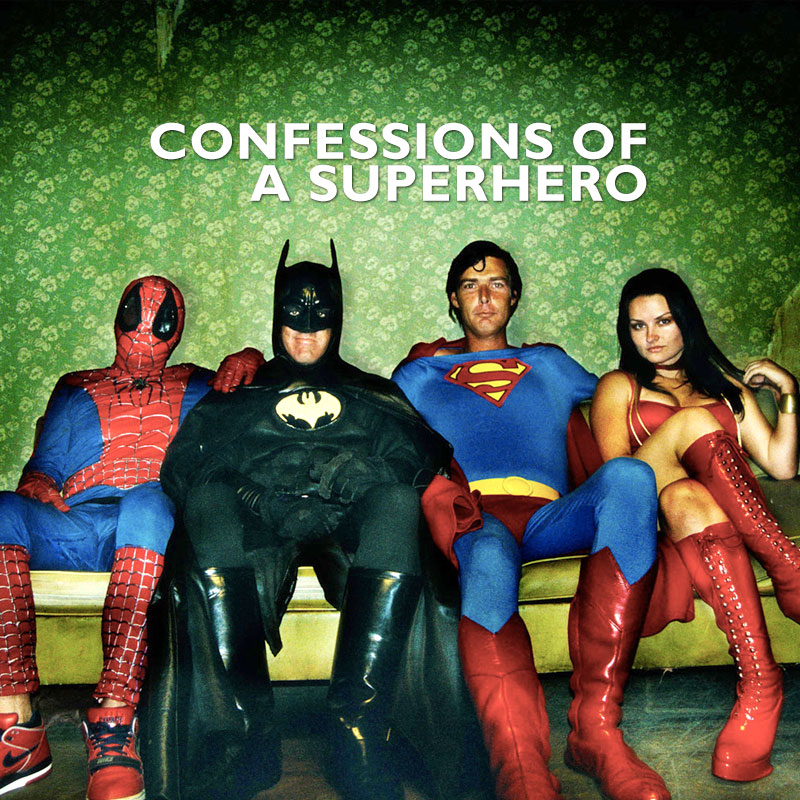
    Confessions of a Superhero follows the lives of three mortal men and one woman who make their living working as superhero characters on the sidewalks of Hollywood Boulevard. This deeply personal view into the daily routines of these characters reveals their hardships, and triumphs, as they pursue and achieve their own kind of fame.

  • GRB Entertainment ties-up with DR Danish Broadcasting

    GRB Entertainment ties-up with DR Danish Broadcasting

    MUMBAI:  DR Danish Broadcasting acquired Meet The Hitlers, directed by Emmy nominated filmmaker Matt Ogens and presented by Oscar and Emmy nominated documentary filmmaker Morgan Spurlock, from GRB Entertainment.

    Meet the Hitlers explores the question: what if you had the most notorious surname name in the world? The film examines the relationship between a person’s name and their identity by exploring the lives of people named Hitler. Reactions to the infamous name span the spectrum of human experience – from tragedy to comedy, and heartbreak to hope. “You’ll never love your own name more than after watching this film,” said Morgan Spurlock, Executive Producer.

    “GRB Entertainment delivers the best in factual series as well as intriguing docs to our global broadcast partners. We are fortunate to represent some of the world’s greatest documentaries such as Meet The Hitlers, Presented by Morgan Spurlock, the Oscar and Emmy-nominated filmmaker behind Super Size Me. GRB is also distributing Confessions of a Superhero, also directed by Matt Ogens and Presented by Mr. Spurlock,” said GRB Entertainment SVP International distribution Mike Lolato..

    Confessions of a Superhero follows the lives of three mortal men and one woman who make their living working as superhero characters on the sidewalks of Hollywood Boulevard. This deeply personal view into the daily routines of these characters reveals their hardships, and triumphs, as they pursue and achieve their own kind of fame.

  • Box Office: Baaghi and The Jungle Book – great run

    Box Office: Baaghi and The Jungle Book – great run

    Sarbjit, with its choice of subject and casting, was not expected to carry much appeal and it did not. With its lacklustre treatment, length and lack of soul, it failed to touch the audience. The film had a poor opening day with a marginal increase on Saturday and Sunday. It ended its opening weekend with collections of Rs 12.1 crore. The film has dropped further from today.

    Azhar, a biopic on Indian cricketer Azharuddin, which claims to be based on the cricketer’s life, took the help of a disclaimer at the very start of the movie to twist and turn the events that happened during this cricketer’s tenure as a player as well as captain of the Indian team, to make a victim out of him. Not expected to strike a chord with the audience, it failed badly. The film managed to put together just Rs 28.95 crore for its first week.

    Dear Dad had a poor run in its first week.

    Buddha In Traffic Jam made a symbolic presence at the box office by collecting about Rs 30 lakh for its first week.

    1920 London has collected Rs 2.1 crore in its second week to take its two week tally to Rs 4.2 crore.

    Traffic added Rs 30 lakh in its second week taking its two week tally to 3.5 crore.

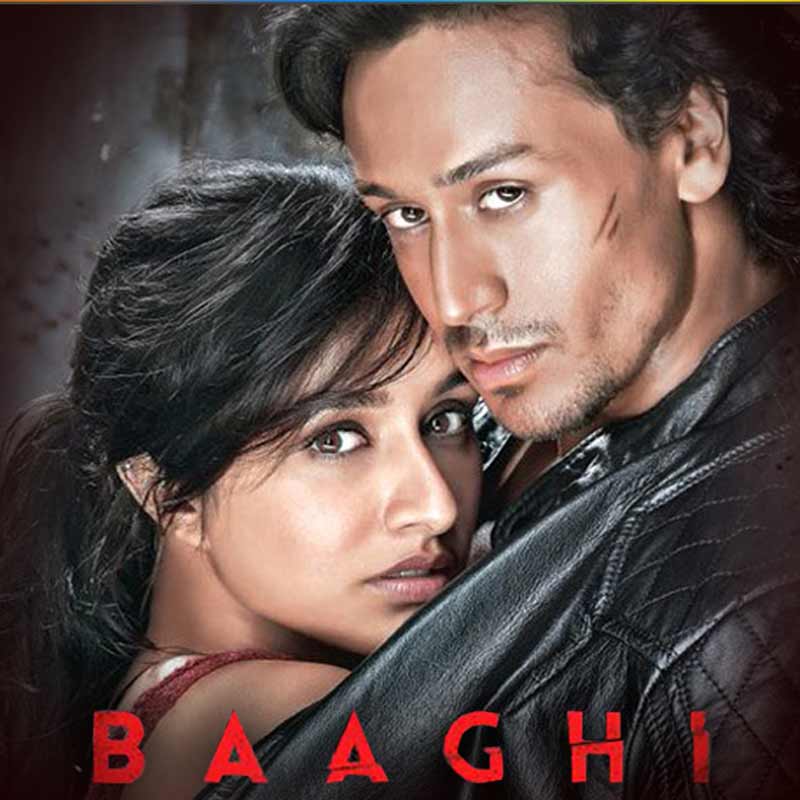
    Baaghi has had a great run at the box office as it collected Rs 3.1 crore in its third week taking its three eek total to Rs 77.6 crore.

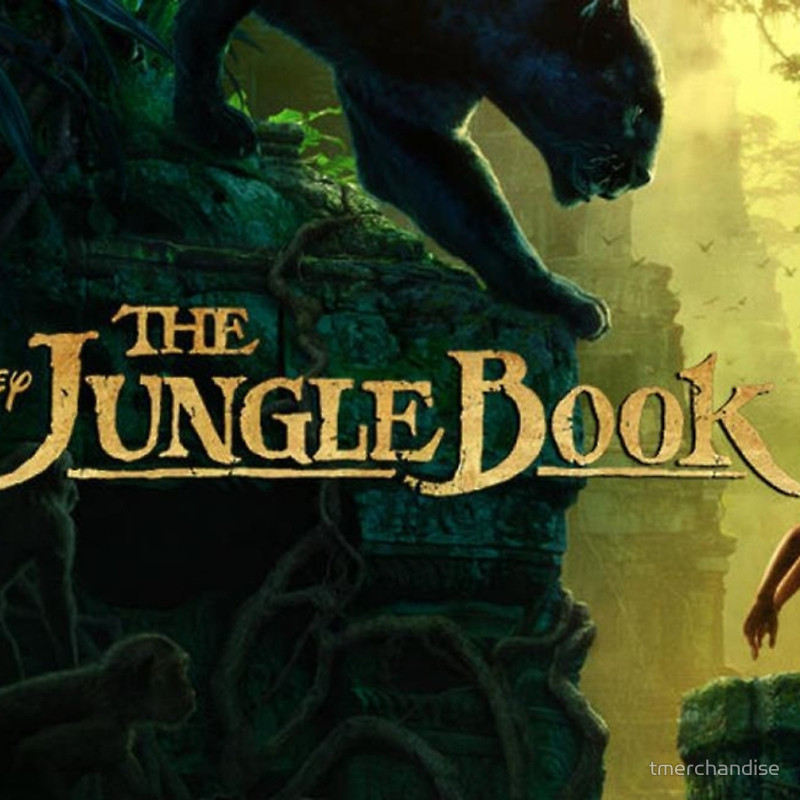
    The Jungle Book has had an excellent run at the box office even during its sixth week as the film went on to collect Rs 4.3 crore to take its six week total to Rs 179.45 crore.

  • Box Office: Baaghi and The Jungle Book – great run

    Box Office: Baaghi and The Jungle Book – great run

    Sarbjit, with its choice of subject and casting, was not expected to carry much appeal and it did not. With its lacklustre treatment, length and lack of soul, it failed to touch the audience. The film had a poor opening day with a marginal increase on Saturday and Sunday. It ended its opening weekend with collections of Rs 12.1 crore. The film has dropped further from today.

    Azhar, a biopic on Indian cricketer Azharuddin, which claims to be based on the cricketer’s life, took the help of a disclaimer at the very start of the movie to twist and turn the events that happened during this cricketer’s tenure as a player as well as captain of the Indian team, to make a victim out of him. Not expected to strike a chord with the audience, it failed badly. The film managed to put together just Rs 28.95 crore for its first week.

    Dear Dad had a poor run in its first week.

    Buddha In Traffic Jam made a symbolic presence at the box office by collecting about Rs 30 lakh for its first week.

    1920 London has collected Rs 2.1 crore in its second week to take its two week tally to Rs 4.2 crore.

    Traffic added Rs 30 lakh in its second week taking its two week tally to 3.5 crore.

    Baaghi has had a great run at the box office as it collected Rs 3.1 crore in its third week taking its three eek total to Rs 77.6 crore.

    The Jungle Book has had an excellent run at the box office even during its sixth week as the film went on to collect Rs 4.3 crore to take its six week total to Rs 179.45 crore.

  • Sarbjit…Insufferable

    Sarbjit…Insufferable

    Wanting an easy way out, the run for biopics continues. The fact that biopics rarely work in India; an odd one which works to an extent, needs to be fictionalized in parts or more. If such films on Gandhi (which had just scrapped through in English original version but failed in its Hindi version) as well as films on Bose, Patel, Nehru, Savarkar, Ambedkar have all passed unnoticed, to think that Sarbjit was the least of a real life story to be adapted for a film! 
    Sarbjit Singh, played by Randeep Hooda, is a farm hand in the village of Bhikhi wind in Punjab near the India Pakistan border. His upbringing has mostly been under the aegis of his older sister, Dalbir Kaur, played by Aishwarya Rai. As he comes of age, he falls for the village belle, Richa Chaddha, and soon becomes the father of two daughters. 

    Fond of wrestling, Hooda is engrossed in the sport one day when Rai watches him from a passing street bus. For whatever reason, she is angry with him. The film or the script does not bother to tell you why for, in a small village, youth do indulge in such harmless sport for pastime. However, Rai decides to punish Hooda, married and father of two, for his indulgence as if he was a school kid. He is banished from house even as he keeps bantering from outside the main door. The scene has been prolonged unnecessarily and makes little sense.

    This is when a friend of Hooda enters the scene and flashes a quarter of alcohol (180ml) at Hooda and both vanish in to nearby fields to share the drinks. And, in no time, both are beyond themselves totally inebriated. Imagine, 90 ml of alcohol each doing that to two Punjabis! Leaving his two-wheeler for his friend to tend to, Hooda decides to amble home. Instead, he ambles into Pakistani territory where the rangers are ready to pounce on him and consign him to a jail. He is branded as an Indian terrorist, Ranjeet Singh, who bombed various locations in Pakistan killing many.

    The treatment meted out to Hooda in a Pakistani jail is inhuman to say the least. On the Indian side, Rai is desperately looking for her brother to no avail. She soon learns that he has landed in a Pakistani jail. There on starts her ordeal and, that of the viewer of this film, as she bangs on every possible door to come to help her get her brother released. She sits on fasts, leads numerous candle light marches (which have become popular in our films more than they happen in life) and these things get repetitive all through the film.

    Rai yells at people all around, may it be in Indian officialdom or in Pakistan jails as if her brother was the only Indian languishing in Pakistani jail and, as if, India did not have any Pakistanis in its prisons. Her approach as shown in the film, lacks logic or normalcy. 
    The film is titled after the so called victim, Sarbjit, but it is all about Rai. She is in each frame as a crusader on a mission to get her brother freed. Neither does she convince the authorities nor the audience with her tirades nor her overacting. 

    To think in its perspective, Sarbjit was not a subject to turn into a film; it is a local story with no identification with all India audiences. It is an inconclusive story where nothing positive comes out in the end. The other mistake was to cast the glamorous Ms Rai as the protagonist who neither looks nor convinces as Sarbjit’s sister, Dalbir Kaur would expected to be. She also lacks the native Punjabi twang as most of the time she mouths Hindi. In fact, Rai, expected to be the star and draw for this film, is its major drawback.

    In this film about Sarbjit, Hooda playing Sarbjit is sidelined as isRicha Chadha, playing his wife. The script is wonky and, at 131 minutes, intolerable. Direction is below par. Editing is poor. Cinematography is fair. Music had no place in this film except for one song in the beginning when Hooda and Chadha romance; the rest of the numbers are forced in. The film’s dialogue lacks spark. Richa, despite a much curtailed secondary role, stands her ground. Hoodagives into poor substance.

    Sarbjit is insufferable. Tax Free tag in a couple of states notwithstanding. 
    Producer: Vshu Bhagnani, Jackey Bhagnanai, Sandeep Singh, Deepshikha Deshmukh, Omung Kumar, KrIshan Kumar, Bhushan Kumar. 

    Director: Omung Kumar.

    Cast: Randeep Hooda, Richa Chadha, Darshan Chadha, Ankita Shrivastav, Shiwani  Saini. 

  • Sarbjit…Insufferable

    Sarbjit…Insufferable

    Wanting an easy way out, the run for biopics continues. The fact that biopics rarely work in India; an odd one which works to an extent, needs to be fictionalized in parts or more. If such films on Gandhi (which had just scrapped through in English original version but failed in its Hindi version) as well as films on Bose, Patel, Nehru, Savarkar, Ambedkar have all passed unnoticed, to think that Sarbjit was the least of a real life story to be adapted for a film! 
    Sarbjit Singh, played by Randeep Hooda, is a farm hand in the village of Bhikhi wind in Punjab near the India Pakistan border. His upbringing has mostly been under the aegis of his older sister, Dalbir Kaur, played by Aishwarya Rai. As he comes of age, he falls for the village belle, Richa Chaddha, and soon becomes the father of two daughters. 

    Fond of wrestling, Hooda is engrossed in the sport one day when Rai watches him from a passing street bus. For whatever reason, she is angry with him. The film or the script does not bother to tell you why for, in a small village, youth do indulge in such harmless sport for pastime. However, Rai decides to punish Hooda, married and father of two, for his indulgence as if he was a school kid. He is banished from house even as he keeps bantering from outside the main door. The scene has been prolonged unnecessarily and makes little sense.

    This is when a friend of Hooda enters the scene and flashes a quarter of alcohol (180ml) at Hooda and both vanish in to nearby fields to share the drinks. And, in no time, both are beyond themselves totally inebriated. Imagine, 90 ml of alcohol each doing that to two Punjabis! Leaving his two-wheeler for his friend to tend to, Hooda decides to amble home. Instead, he ambles into Pakistani territory where the rangers are ready to pounce on him and consign him to a jail. He is branded as an Indian terrorist, Ranjeet Singh, who bombed various locations in Pakistan killing many.

    The treatment meted out to Hooda in a Pakistani jail is inhuman to say the least. On the Indian side, Rai is desperately looking for her brother to no avail. She soon learns that he has landed in a Pakistani jail. There on starts her ordeal and, that of the viewer of this film, as she bangs on every possible door to come to help her get her brother released. She sits on fasts, leads numerous candle light marches (which have become popular in our films more than they happen in life) and these things get repetitive all through the film.

    Rai yells at people all around, may it be in Indian officialdom or in Pakistan jails as if her brother was the only Indian languishing in Pakistani jail and, as if, India did not have any Pakistanis in its prisons. Her approach as shown in the film, lacks logic or normalcy. 
    The film is titled after the so called victim, Sarbjit, but it is all about Rai. She is in each frame as a crusader on a mission to get her brother freed. Neither does she convince the authorities nor the audience with her tirades nor her overacting. 

    To think in its perspective, Sarbjit was not a subject to turn into a film; it is a local story with no identification with all India audiences. It is an inconclusive story where nothing positive comes out in the end. The other mistake was to cast the glamorous Ms Rai as the protagonist who neither looks nor convinces as Sarbjit’s sister, Dalbir Kaur would expected to be. She also lacks the native Punjabi twang as most of the time she mouths Hindi. In fact, Rai, expected to be the star and draw for this film, is its major drawback.

    In this film about Sarbjit, Hooda playing Sarbjit is sidelined as isRicha Chadha, playing his wife. The script is wonky and, at 131 minutes, intolerable. Direction is below par. Editing is poor. Cinematography is fair. Music had no place in this film except for one song in the beginning when Hooda and Chadha romance; the rest of the numbers are forced in. The film’s dialogue lacks spark. Richa, despite a much curtailed secondary role, stands her ground. Hoodagives into poor substance.

    Sarbjit is insufferable. Tax Free tag in a couple of states notwithstanding. 
    Producer: Vshu Bhagnani, Jackey Bhagnanai, Sandeep Singh, Deepshikha Deshmukh, Omung Kumar, KrIshan Kumar, Bhushan Kumar. 

    Director: Omung Kumar.

    Cast: Randeep Hooda, Richa Chadha, Darshan Chadha, Ankita Shrivastav, Shiwani  Saini. 

  • Azhar disappoints, Baaghi and Jungle Book going strong

    Azhar disappoints, Baaghi and Jungle Book going strong

    Azhar, the major release of the week, much touted to be a controversial saga of a great cricketer fallen on bad days, found indifferent response from the viewers. Memories are short, and with nothing positive to remind one of Azhar in the era of Kohli, Raina, Rohit , etc and, there was no inclination to make an aggrieved hero out of an alleged suspect.

    The film opened to a mediocre response on Friday, remained stagnant even on Saturday and did little on Sunday to show positive signs. The film had an opening weekend of Rs 20.6 crore. The drop from today onwards is inevitable looking at lack of appreciation.

    Dear Dad, a father son story, about a father wanting his on the verge of teens to accept his gay status, has failed to find its audience. Kids can’t see the film, elders would not want to watch it and that left little else. The film faced no audience, no show status at many cinemas.

    Buddha In A Traffic Jam released after last minute hassles went generally unnoticed. The theme of the film has no relevance in the scheme of things when it comes to cinema.

    Traffic, a film about a celebrity father buying a heart for transplant into his ailing daughter, is not accepted by Hindi audiences despite its success in the original Malayalam and other versions. More than a humane tale, it emerged as the depiction of money, might and clout. The film failed to touch the chord and collected barely Rs 3.2 crore in its first week.

    1920 London is the only film from the films released last week which made a mark, though to a limited extent. This horror drama with the credibility of Sharman Joshi riding on it, did decent business at the box office and collected Rs 12.1 crore.

    Sunny Leone and her sex appeal are at a stage of negative returns. One Night Stand, despite a suggestive title and Sunny Leone in the lead, failed to arouse curiosity. The film remained poor in its first week managing to garner together a bare Rs 3.15 crore.

    Baaghi was excellent in its second week as this mass appeal film went on to collect Rs 11.8 crore in its second week taking its two week total to Rs 71.4 crore.

    Jungle Book collected Rs 6.25 crore in its fifth week with its five week being Rs 175.15 crore. 

  • Azhar disappoints, Baaghi and Jungle Book going strong

    Azhar disappoints, Baaghi and Jungle Book going strong

    Azhar, the major release of the week, much touted to be a controversial saga of a great cricketer fallen on bad days, found indifferent response from the viewers. Memories are short, and with nothing positive to remind one of Azhar in the era of Kohli, Raina, Rohit , etc and, there was no inclination to make an aggrieved hero out of an alleged suspect.

    The film opened to a mediocre response on Friday, remained stagnant even on Saturday and did little on Sunday to show positive signs. The film had an opening weekend of Rs 20.6 crore. The drop from today onwards is inevitable looking at lack of appreciation.

    Dear Dad, a father son story, about a father wanting his on the verge of teens to accept his gay status, has failed to find its audience. Kids can’t see the film, elders would not want to watch it and that left little else. The film faced no audience, no show status at many cinemas.

    Buddha In A Traffic Jam released after last minute hassles went generally unnoticed. The theme of the film has no relevance in the scheme of things when it comes to cinema.

    Traffic, a film about a celebrity father buying a heart for transplant into his ailing daughter, is not accepted by Hindi audiences despite its success in the original Malayalam and other versions. More than a humane tale, it emerged as the depiction of money, might and clout. The film failed to touch the chord and collected barely Rs 3.2 crore in its first week.

    1920 London is the only film from the films released last week which made a mark, though to a limited extent. This horror drama with the credibility of Sharman Joshi riding on it, did decent business at the box office and collected Rs 12.1 crore.

    Sunny Leone and her sex appeal are at a stage of negative returns. One Night Stand, despite a suggestive title and Sunny Leone in the lead, failed to arouse curiosity. The film remained poor in its first week managing to garner together a bare Rs 3.15 crore.

    Baaghi was excellent in its second week as this mass appeal film went on to collect Rs 11.8 crore in its second week taking its two week total to Rs 71.4 crore.

    Jungle Book collected Rs 6.25 crore in its fifth week with its five week being Rs 175.15 crore. 

  • Azhar…Of a fallen idol!..Dear Dad…Its Complicated!

    Azhar…Of a fallen idol!..Dear Dad…Its Complicated!

    MUMBAI: Biographical or sports films are being mademore often in recent times than they ever were. With a dearth of script ideas as well as the writers to deliver, this is an easy way out to keep production lineup running for a studios like Balaji Motion Pictures. This genre facilitates mid-range star cast films at affordable budgets.

    Azhar is one such film from the Balaji stable which mixes the themes of sport as well as a biography and, as a bonus, promises a potential tale to tell which would complete the makers’ requirements.

    The film is said to be based on the life of the mercurial cricketer Mohammad Azharuddin; his cricketing career, his marriage followed by a romance with a film star and the controversy that followed implicating him in a match fixing scandal. However, a disclaimer in the titles belies all such claims as well as denies resemblance to any cricketer dead or alive.It is an account of the rise and fall of a celebrated Indian cricketer on his way to becoming a legend.

    There a great feeling of joy and celebrations in this Muslim household of Hyderabad as the scion to the family is born. The maternal grandfather, Kulbhushan Kharbanda, names the boyAzharuddin, an Arabic word meaning, brilliant, luminous and such. Kharbanda expects Azhar to shine, stand out and to this end, he hands over a cricket bat in the hands of the child. He has taught Emraan some mantras for success in life and also predicted that not only will he play for India but will play 100 test matches.

    Emraan Hashmi playing the protagonist is now grown up having championed the game of cricket at various levels starting from streets. Soon enough, he is selected for the state Ranji Trophy team. Before you realize the scene has changed and jumped several years into future, you seeAzhar playing test cricket for India.

    Azhar makes his debut with a ton and follows it up with two more hundreds in next two tests. He is an overnight sensation so much so that the past masters give him various complementary epitaphs. The next step is inevitable; Azhar is offered the captaincy of the Indian team. This is in a very dramatic filmy manner where, instead of the cricket board calling him to the office to convey the decision, it is done by an official of the board doing it in the middle of an empty stadium making it look morelike a conspiracy than anhonour.

    The rest of the team consists of senior players and the resentment at Azhar’s appointment to lead them is evident. Leading from the front, Azhar is soon in command and is now playing his 99th test match. That is when the bubble bursts as he is accused of match fixing. He is suspended and also found guilty by the CBI. What follows is an 11 year long court battle to clear his name. The board’s lawyer is Lara Dutta, imported from London. Lara has been an ardent Azhar fan all along, but feels betrayed now and fights the case vigorously.

    Azhar, the film, tries to change the deeply embedded perception of people who once idolized the star cricketer. It is not easy to erase their hurt. The script takes recourse to a haphazard narration with past and present overlapping ad nauseam. The direction lets many glitches pass. To claim to have made a film on Azharuddin with a disclaimer does not let one change the facts of the case which dominated the media for long. The only catchy song is the remix of the old time mass hit, Oyeoye…. from Tridev. Even at 131 minutes, the film needs further clipping.

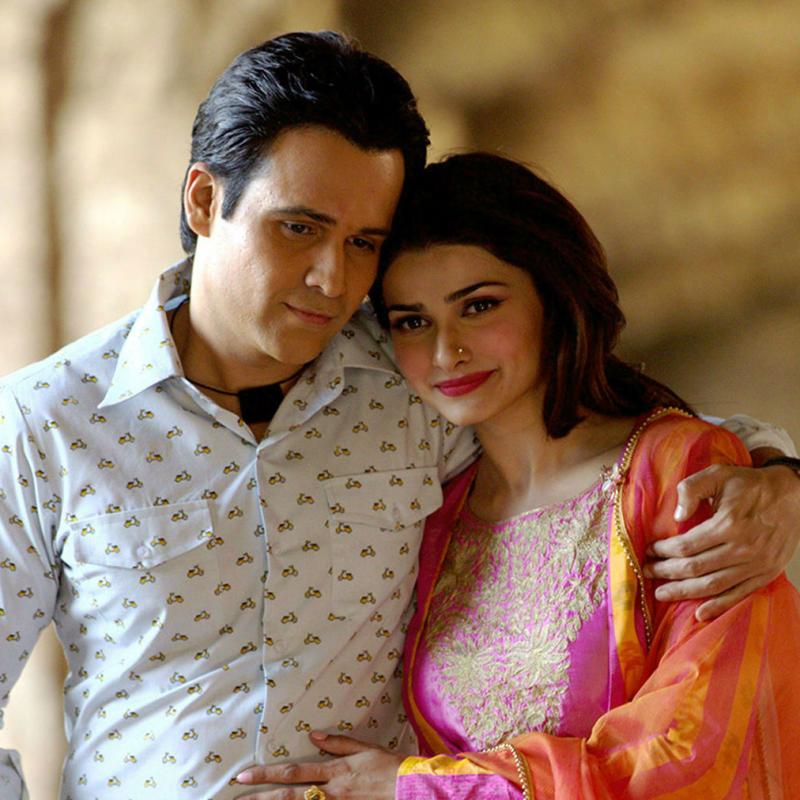
    As for performances, Emraan does his best but, Azhar’s persona is too big to live up to even in a disgraced state. While Prachi Desai is impressive, NargisFakri, playing the second wife, is passable. Lara is okay.  The casting of other cricketers, especially Kapil is laughable. Kunal Roy Kapur saves quite a few scenes as an idiosyncratic defense lawyer.

    Azhar is about a disgraced hero: there may be a few who would watch his tale out of sympathy not as an idol, which is not enough to sustain at the box office.

    Producers: Shobha Kapoor, Ekta Kapoor, Sony Pictures Network.

    Director: Tony D’Souza.

    Cast: Emraan Hashmi, NargisFakhri, Lara Dutta, Gautam Gulati, Manjot Singh, Kunaal Roy Kapur, Rajesh Sharma.

    Dear Dad

    Dear Dad is a father son bonding story. That would not have been fine thinking of a film like Masoom (1983). But, here, the already perfectly bonded family of two children and their loving parents is shattered as the father comes out the closet to declare his homosexual leanings.

    Himanshu Sharma is a 14 year old lad in Delhi living with his father, Arvind Swamy, mother and younger sister. He is ready to go back to hostel in the hill station of Mussorie. The plan is to travel with his friends. But, the father, Arvind, carries a load on his mind and offers to drop Himanshu to Mussorie. It is the coming of age for Himanshu and Swamy wants to first get through to his son’s teen mind presently fed on nude pictures, playing games on his mobile and generally enjoying the stage of life he is in along with his friends. On the drive to Mussorie, while Swamy tries to strike a conversation, the son is immersed in his cell phone.

    On the way to Mussorie, Swamy decides to stop at his parental home. Done with dotting momma, Swamy proceeds to see his father who has lost his speech. For, some reason, Swamy decides to tell his father that he was never interested in women. While his father has lost his speech (also, for no explicable reason, also his expressions!) and cant reply, the son overhears Swamy’s confession.

    The son, Himanshu, is devastated and feels betrayed. He withdraws from his father and all his affection and is in a rebel mode. The son also suspects his father of wanting to spend the night with a TV reality show celebrity, Aman Uppal, who they have given a lift on the way.

    Himanshu has confided in his closest buddy (all closest buddies in films are fat and seem to be jovial; this one fits the stereotypical, too). The friend takes him to a Bengali baba who can turn a homosexual in to a mard again!

    While Himanshu wanted a normal happy family of father, mother and sister living happily, his dream is shattered.

    Quite a few films seem to open the closet midway through the film lately; the recent examples being Kapoor & Sons while another one, Aligarh, was all about same sex attraction.

    Dear Dad is the maker’s film; the audience is less likely to participate. The film follows a script of convenience as things happen because they happen. While the theme is serious, the treatment is casual. The father son patch up is as hurried as the fallout was for after all, a Debonair collecting son should know both sides of a coin!

    What works for the film are the beautiful locales of Uttarkhand as the duo travel from Delhi by road, the scenic beauty has been beautifully captured.  As for the performances, Swamy underplays his being gay and the son, Himanshu, complements this with aggression. Uppal does very well. The rest are incidental.

    Dear Dad will find it tough fit into a slot when it comes to identifying its audience.

    Producers: Shaan Vyas, Ratnakar M.

    Director: TanujBhramar.

    Cast: Arvind Swamy, Himanshu Sharma, Ekavali Khanna, Aman Uppal, BhavikaBhasin.