Category: Movies

  • Gul Panag opens Bollywood innings with ‘Dhoop’

    MUMBAI: Gul Panag, the former Femina Miss India Universe recently seen in Star Plus’ Kashmeer, has commenced her Bollywood innings with an Om Puri starrer called DhoopDhoop is supposed to be a post-Kargil drama – the true-life story of the parents of a young captain who lays down his life for his country.

    Panag’s co-stars include bigwigs Om Puri, south-based star Revathy and the handsome Sanjay Suri ofFilhaal fame. To be released in July 2003,Dhoop is being directed by Ashwini Chaudhary who has worked with Prakash Jha.

    When queried about her TV stint, Panag informs indiantelevision.com: “Kashmeer cannot be branded as a TV serial. It is a 26-episode series with the look and scale of a feature film. The overall treatment and impact is unlike anything else seen on TV. However, I must say that the phenomenal response which I got from acting in Kashmeer must be four times that of what I got after bagging the Femina title.”

    Panag bagged the film Dhoop when art director Chokas Bharadwaj (who is also doing Kashmeer) and producer Saket Bahal referred her name to director Chaudhary.

    It is suprising to note that Panag is not making her debut in an out-and-out commercial film with lots of romance. ‘Well, I have had my share of glamour due to the Femina title and my modelling stint. I wish to concentrate on quality performances. Working with seasoned actors such as Farooque Shaikh and Suresh Oberoi in Kashmeer has given me a different perspective. There is always this urge to try one’s best in their presence,” says Panag.

    The shooting for Dhoop commences on 19 February 2003. Well, Panag had better remember the above-mentioned words as she will be rubbing shoulders with two accomplished players – Om Puri and Revathy – who have won National awards.

    Dhoop is inspired by a real life story of professor of Economics from Delhi University. It is not a typical war-film but narrates the story of the trials of a martyr’s father who fights the system. Along with his grieving wife, the main protagonist wages a battle against callous bureaucrats and government officials. Om Puri, Revathy play the main characters with Panag and Suri as the young couple.

    Revathy, the south Indian star, has chosen a Hindi film after a long time. Currently, she has another Tamil film on the floors and is pretty selective about scripts.

    The name of the film, Dhoop, signifies the aftermath of war once the guns have been silenced. It studies the impact of war on human beings who live and constantly struggle against the inflexible system.

  • “The recent success of Aap Beeti has given a fillip to DD’s declining viewership and set new standards”: Ravi Chopra BR Films managing director

    “The recent success of Aap Beeti has given a fillip to DD’s declining viewership and set new standards”: Ravi Chopra BR Films managing director

    A second generation scion belonging to a family of successful film makers has adapted to the small screen with ease! Ravi Chopra's drive, passion and talent helped him to emerge from the shadows of his illustrious father Dr BR Chopra and famous uncle Yash Chopra. BR Chopra, one of most celebrated movie mavericks of the Indian celluloid scene has been the architect of a golden era of the Indian film industry which created immortal classic like Waqt, Naya Daur, etc. Ravi Chopra started as an assistant to Yash Chopra and his father in films such as Aadmi & Insaan, Ittefaq, Dastaan and Dhund.

    With the advent of television and satellite revolution BR Group's forey into television serial production started in 1985. Today BR TV is one of India's leading television software production houses, having produced a bouquet of popular serials like Bahadur Shah Zafar, Chunni, Mahabharat, Sauda, Kanoon, Ek Se Badkar Ek, Crown Old Melodies, Jhansi Ki Rani, Rangoli, Mahabharat – Katha, Aurat, Main Dilli Hoon, Teri Meri Kahani (telefilm), Dharti – Aakash, Beta, Ghazal.

    Ravi Chopra himself has a masters degree in English literature from Mumbai University. He is a voracious reader and is passionate about fast cars. For TV shoots, he starts as early as 7 am and works till 8 pm. He loves to play badminton every night for at least an hour. In spite of being busy with the hectic production schedules of multi-starrer Baghban and three new serials for DD and C&S channels, Chopra spoke to indiantelevision.com's Ashwin Kotian. Excerpts:

    How has BR Films managed to be successful on the big screen as well as the small screen?
    BR Chopra formed BR. Films in 1955 with a vision which culminated into a trailblazing celluloid odyssey. His life-long commitment to social themes and family values is reflected through his classic films.

    BR TV has been an extension of the above mentioned philosophy. Our content combines entertainment with a social message that is apt for the existing social framework. Our serials have something different to say irrespective of the genre they belong to. My father dreamt of capturing the magnificence, the grandeur and the drama of the greatest epic of all times. Rated as the most popular TV programme on India's national network DoordarshanMahabharat had a viewership of 96 per cent – a record in the Guinness Book.

    The recent success of Aap Beeti has also actually given a fillip to DD's declining viewership. The ratings were languishing at lower levels with TVRs touching a low of seven. Currently, Aap Beeti had seven slots in the Top 10 list of DD's programmes in week 1-46 of 2002. The programme has themes pertaining to supernatural powers, spirits and souls peppered with social awareness messages. Our characters have something different to say. The "spirits" within the stories are either fighting some injustice or tacking a social evil.

    None of the characters are frivolous and we refrain from the avoidable pitfalls such as garish make-ups or weird costumes. There is no attempt to frighten the wits out of the viewers.

    "Mythos have succeeded in all the possible slots and will continue to do well. They will make a big comeback!"

    Do you think that mythos succeed in today's context?
    I feel that the mythological genre has been squeezed dry by the multitude of serials that have been aired on DD and the C&S channels. Even today, there is a market for repeats and new extensions of age-old themes. However, they don't create the same frenzy that they used to create in the earlier days. Mythos have succeeded in all the possible slots and will continue to do well. I firmly believe that mythological serials will make a big comeback.

    As a producer, why do you prefer DD to the satellite channels?
    There is no preference for either. We have worked with both DD and satellite channels in the past. We have some projects with satellite channels in the near future – Sahara TV and Zee TV. In the past we have had some bad experiences with C&S channels because they tend to interfere with the creative aspects. We didn't have any problems with others such as Star TV. But, we would like to own the rights of our programmes and will not compromise on the same. Therefore, we are comfortable working with DD as we can capitalise on the repeat value of our programmes. We have got a very good response from the US and UK markets. We shall not be tied down to any particular group.

    Has DD changed its unflinching stance in recent times?
    DD officials have realised the market realities and are positioning themselves to increase revenues and assert their leadership position on the terrestrial front. After all, statistics show that DD has an edge over the C&S channels. The huge number of players have succeeded in offering a wide spectrum of choices for the viewers. DD is open to new ideas and never inteferes with creativity. It also gives producers a chance to experiment with different themes. Reviews happen at regular intervals and extensions are granted on the basis of the reponse.

    Will you produce more television serials and thereby reduce the focus on films?
    We shall continue producing serials as well as films. We are launching four new serials as well as our multi-starrerBaghban starring Amitabh Bachchan. The entertainment aspect is common to both mediums – home entertainment or big screen. Ultimately it is the quality of content that determines success. In both the mediums, we would like to be on top of all the production aspects.

    What are your latest offerings? Is BR Films departing from its tested routines such as the mythos and sitcom themes?
    BR Films is producing four new serials: Dhristi and Kaamna on Doordarshan; Asha Nai Asha on Sahara TV andShrimad Bhagwad to be aired on a C&S channel.

    The serials provide entertainment and simultaneously highlight a social issue. Drishti questions the gender bias prevailing in the Indian society and puts forth the view that woman should have equal rights as men. Kaamnaprobes whether people still listen to their inner conscience. The slots for the telecast have not yet been finalised.

    BR Films is also creating content for several C&S channels. Shrimad Bhagwad, a mythological which presents teachings from the Gita, will be telecast on a C&S channel. We are talking to several C&S channels for airing the serial. Asha Nai Asha on Sahara TV is a departure from the routine as it is built around the theme of scouting for talent. There are many talented people in different parts of the country. I had conceived the theme long back and presented it to Sahara TV. I feel as if my dream has come true.

    Do you benefit from simultaneously producing serials and films?
    BR Films is a complete production house that encompasses all the aspects of TV-film production. We like to control all the production aspects of whatever we produce – nothing should suffer due to non-availablity of cranes or cameras. Our equipment division was set up in such a way that it would assist the production department. There are synergies in everything that we do at any point for time.

    "I don't differentiate between TV stars and film stars – both of them are equally talented and evolve with experience. TV stars evolve faster."

    Do you see any kind of difference between the TV stars and the filmstars?
    I don't differentiate between TV stars and filmstars – both of them are talented and evolve with experience. TV stars evolve faster as they portray different characters everyday on a regular basis. They also learn and mature faster. We had given Aman Verma (the current host of Star TV's game show Khulja Sim-Sim) a break in our serial Aurat. We have also taken him in our feature film Baghban. He has evolved as an actor over the last five years. Amitji has also evolved with his TV stint and KBC (Kaun Banega Crorepati) has added another dimension to his wide repertoire.

    Do you make a lot of money from re-runs of your properties?
    Good content is always remunerative – it generates money in the present as well as in the future. Sony TV had bought the domestic rights of our feature films and the lease is due to expire soon. We shall renegotiate the terms and conditions and find another buyer. Various foreign channels have expressed interest in our properties and regularly buy the rights for a specified period of time. We always negotiate on a case-to-case basis. The expatriate Indian market is a huge opportunity for content manufacturers and distributors.

    "The media buying phenomenon has affected our margins and threatened the quality of production"

    How are DD producers affected by the phenomenon of media buying and aggressive negotiations by advertisers and agencies?
    The media buying phenomenon has affected the margins and also threatened the quality of production. The advertisers and the ad agencies conduct aggressive negotiations and bargain as if there was no tomorrow. Well, the cost of production and DD dues work out to Rs 5,00,000 per 30-minute episode. This puts a severe pressure on our margins. Some producers compromise on quality but we don't do so. We recover our investments from extending the revenue streams to earnings from overseas rights. The advertisers must realise that they are investing in creating quality content. If these advertisers give us leeway, the production values would definitely become better and better. C&S producers such as Balaji Telefilms can create an ambience of glamour and grandeur because they know that they will get compensated for the same. DD producers need to do a balancing act. I suppose, one cannot get everything.

    Do you have separate teams for TV serials and film production and direction?
    At BR Films, we encourage creativity. We have a full-fledged team of writers, researchers, directors and production executives who are well-versed with various aspects of film and TV production. My team of assistant directors, who work with me on films, are involved with TV serials. I am familiar with their work and they understand my requirements and deliver the same. The creative team also understands what is needed of them – for instance in the case of mythos they have to relate everything to contemporary times in terms of learnings rather than blindly project the the aspects such as miracles and mere philosophy.

  • Film ‘Gadar’ gives Zee entry in Top 20

    MUMBAI: The film smashed all before it last year and was one of the stellar achievements for Subhash Chandra’s Zee Group in 2001. And the airing of Gadar Ek Prem Katha, gave Zee TV a Top 20 performance on the ratings charts after a long while.

    The jingoistic Bollywood blockbuster that had he-man Sunny Deol playing the lead aired on Zee on 14 August (the eve of Independence Day) and has made two entries into the ratings charts. The second half of the movie (post 10 pm) registered 17 (5.05 TVRs) on the ratings scale while the first half (8 pm onwards) was 21 (4.5 TVRs) on the TAM ratings for 4+ TG across all markets for the week from 11 August to 17 August.

    There was another movie in the Top 20 and that was the critically acclaimed Aamir Khan starrer Dil Chaata Hai that aired on Star Plus on Saturday night, 17 August, and came in at 19 notching up TVRs of 4.65.

    Zee’s Playwin Lucky 3 lottery was the only other show that made its mark on the Top 100 at 28 with ratings of 4.08.

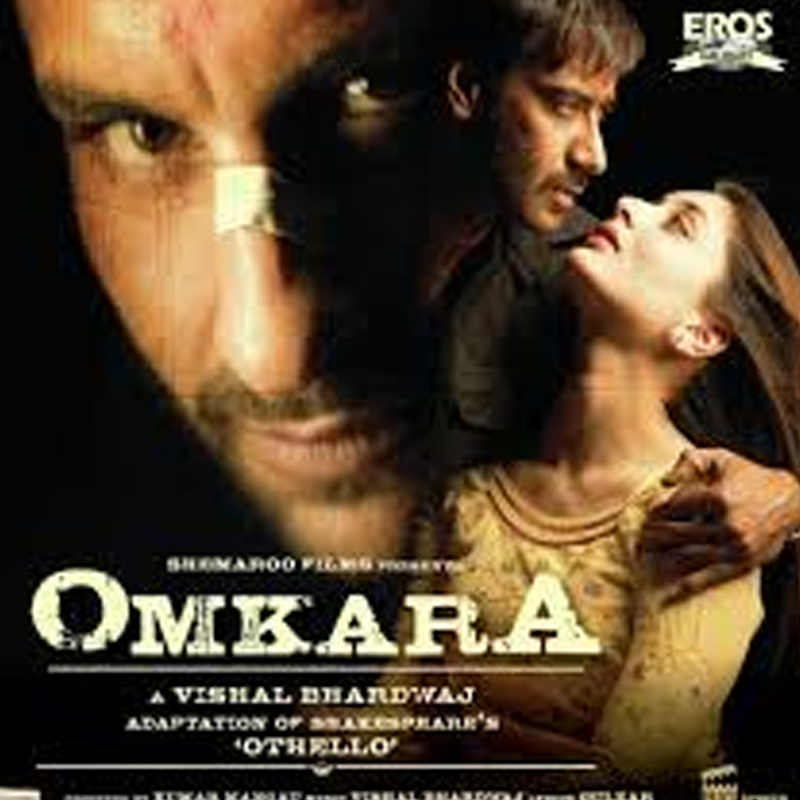
  • Stars of ‘Omkara’ on Filmy’s Aaj Ki Filmy Khabar

    Stars of ‘Omkara’ on Filmy’s Aaj Ki Filmy Khabar

    Omkara is Vishal Bharadwaj’s own ‘Wild West’ adaption of the Shakespeare masterpiece “Othello” where the action is set around a gangland operating in the Indian badlands of Uttar Pradesh. This is Vishal’s successive Shakespeare effort after the Macbeth inspired ‘Maqbool’ wowed critics and audiences alike with its gritty and precise storytelling.

    Vishal has given an unusual twist to the film by humanizing Shakespeare’s characters with the necessary folklore and ethnic charm that is unique to an Indian setting. All in all Omkara is a gripping modern day adaptation that makes it one of those rare instances of Shakespearean cinema that anyone can tune into and enjoy.

    In an exclusive appearance on Filmy’s Aaj Ki Filmy Khabar (AKFK) India’s first authentic filmi news program, with the hard-hitting Sameer Kochhar, the stars of Omkara Bipasha Basu, Ajay Devgan, Kareena Kapoor, Vivek Oberoi, Saif Ali Khan and Vishal Bharadwaj give insights on their preparation for the eagerly awaited movie ‘Omkara’. These actors had not read the original play prior to accepting the role and here are some bytes from these Stars.

    Q. Did these stars read the original play?

    Bytes

    -Bipasha Basu

    ek baar padi thi bachpan mein kuch yaad nahin

    Ajay Devgan

    meine bahut zyaada nahin padi hai meine synopsis pade huen hain

    Vivek

    yeh hum school mein padte hain..Othello meine pada tha school mein

    Kareena Kapoor

    I have read Othello in school

    Saif Ali Khan

    I did do a lot of research and I read it coz I wanted to see what diago is about and what are the other interpretations of him

    Vishal Bharadwaj

    film shuru karne se pehle film shuru karne ke baad bhi script likhne ke baad bhi kain baar usse consult karta raha mein

    Q. What was the preparation done by these stars for the film?

    Bytes:

    Vivek oberoi
    mujhe guitar bajana seekhna pada and its very difficult to play the guitar and sing at the same time especially if im singing becoz im a bad singer and im a non singer to mujhhe kaafi coach kiya vishal ne kaafi protsahan diya inspiration diya

    Bipasha Basu
    vishal ne mere liye he had recorded the dialogues aur unhone kaha tha ki humesha sunti rehna tum usse to mein sunti rehti thi aur uske peeche repeat karti thi aur kabhi lagta tha ki oh my god what am I doing par jab set apr gayi to thoda mein dari but it just happened beautifully

    Ajay Devgan
    language thodi mushkil thi iske liye kaafi rehearsals kin gayin mera jo look tha sirf mujhe daadi moonch badani thi bas

    Saif Ali Khan:
    it was idea to cut my hair bt it seems a bit foolish now to sit around now and say that oh I cut my hair that’s all I did jst got a haircut its no big deal what required more preparation for was learning the lines almost to the pint where u can sing them

    Kareena Kapoor:
    vishal had taken this film 10 steps ahead to vishal ji ka jo script tha voh itna badiya tha ki I didn’t need to do research for anything

    Watch the entire episode, which airs this Saturday, 29th July 2006 at 7:30 pm on Filmy.

  • “Dialogues, not visuals hold the TV  audience rapt” : Akash Khurana

    “Dialogues, not visuals hold the TV audience rapt” : Akash Khurana

    He may be a familiar face as an actor, but Akash Khurana is a multi-faceted personality.

    He has a doctorate from the Tata Institute for Social Sciences under his belt, and divides his time teaching Organizational Behaviour and Business Environment at TISS and shouldering responsibilities as the chief creative officer at Nimbus Communications.

    His foray into the field of scriptwriting was quite accidental. It was while working on a Mahesh Bhatt film, Swayam, that he chipped in when the script was being reworked. There has been no looking back since. After writing the scripts for feature films like Aashiqui, Baazigar and Daag -The Fire, he ventured into TV territory with Kuch Ret Kuch Pani, a soap that aired on Channel Nine Gold. While he wrote and directed Kuch Ret Kuch Pani himself, he also wrote Plus Channel's Kabhie Kabhie, directed by Mahesh Bhatt.

    If his other virtues appear rather disparate from his writing avatar, they also add in making him a more thinking and intellectual writer. Excerpts of an interview with indiantelevision.com correspondent,Amar.

    How did your writing career take off?
    I was acting in a movie called Swayam with Waheeda Rehman in 1988. This was a small budget movie that had to be wrapped up in an intense 18-day schedule. However, the script had some lacunae and we had to re-work it while shooting. I re-worked the script along with Mahesh Bhatt and both of us shared the writing credits. That's how my writing career started. I later wrote the hit movies – Aashiqui andBaazigar, besides writing a lot of TV software.

    What do you think is essentially required of an effective writer?
    Your instinct, by itself is the most necessary factor. Besides, understanding the craft of TV and film writing, experiences, sensitivity to different situations, empathy towards unknown characters are some of the instincts required of an effective writer.

    Which subjects appeal most to you?
    As far as commissioned programmes go, one really doesn't have much choice as far as subjects are concerned. In fact, I have learnt to operate in a way that I'm fairly comfortable working on disparate subjects.

    What is the starting point of your writing – an idea, a concept, the complete story?
    It could be anything- a thought, a conversation, an incident from real life or it could be autobiographical stuff.

    "India is perhaps the only country where we have such a sharp distinction between screenplay and dialogues"
    __________

    Do you agree with the adage that TV is a writer's medium?
    I agree with it. The effort required in writing five episodes is equivalent to the effort required in writing one movie. Besides, TV has its limitations. Because it can't be shot with the lavishness with which a movie is shot, the dependence on dialogues is that much more. So, writing really is the most crucial aspect in making a serial tick.

    Why is TV so verbose? Is it because of budgetary constraints that are a hindrance to expensive outdoor shoots?
    More than the budgetary factor, I believe it's because the audience is too impatient to stay glued to a programme when there is a gap between dialogues. On TV, more than the visuals it is the dialogues that hold the audience rapt and the moment there is a gap between dialogues they tend to move to another channel.

    How important is effective narration in selling a story?
    It is indispensable. In India, the concept of a bound script is non-existent. At the same time, people lack the practice of extensively reading the scripts. In this situation, effective narration is what matters most.

    "While a bad piece of work draws flak very easily, writers seldom get due recognition for good work. "
    __________

    Mir Muneer has said that story telling is virtually non-existent today and serials are simply a conglomeration of some very dramatic scenes. Do you feel the same?
    I wouldn't agree with him entirely. There are some serials that have very good stories while others don't. So, it's really a matter of personal opinion.

    You have been quoted as saying that there is no sincerity and passion in TV writing, and no absorbing screenplays nowadays. Could you elaborate?
    Actually, I had said that these factors have diminished today. And it is quite obvious too. From less than 100 hours of entertainment programming in 1985, today we have some 5000 hours of entertainment programming. Obviously the ratio of skilled writers has not grown in the same proportion, hence the diminishing sincerity and passion seen in TV writing and the resultant lack of absorbing screenplays. But having said that, let me also add that I have a lot of admiration and respect for people who have sustained themselves and consistently done well as TV writers. I personally have found TV to be an extremely taxing medium where I reached a burn out situation rather quickly.

    Why do most veteran writers shy away from writing dialogues?
    Because they are not qualified. Their level of knowledge and usage of Hindi is rather pathetic. India is perhaps the only country where we have such a sharp distinction between screenplay and dialogues.

    Does TV writing pay well?
    This is a difficult question. Let's say it does pay better than what a well educated and qualified person would earn in a regular job. But if we speak in relative terms, yes, it should pay more considering that TV is acknowledged as a writer's medium. But, frankly, writing is one of the most unenviable professions. While a bad piece of work draws flak very easily, writers seldom get due recognition for good work.


    "My generation of writers is far more literate and well read than the generation that is coming up and there can be no substitute to reading."
    __________

    What is your writing schedule like?
    It's pretty erratic and that is because I am into so many activities – writing, teaching and then I have a whole lot of responsibilities to shoulder as the Chief Creative Officer at Nimbus. So, I really can't plan a definite writing schedule.

    Do you find channels' interference in the creative process overbearing?
    No, certainly not. Channels are more concerned about their product nowadays than they ever were. This has made them more collaborative and involved. But yes, I do feel that the time taken by them to respond on any issue is far too long. If they can improve on this front, it would help do away with a lot of the producer's uncertainties.

    Does writing require isolation from people in order to concentrate?
    Ideally, yes. But it is seldom completely possible. I have seen people writing on the sets also. It's not that one cannot write when not alone, but isolation is certainly preferred.

    What according to you are the major failings in new writers?
    Well, my generation of writers is far more literate and well read than the generation that is coming up and there can be no substitute to reading. But then I also feel that the new generation has grown up watching soaps and thus is that much better versed in its writing unlike my generation which hardly had an access to the electronic medium. But all said, I do feel that the new writers who are just coming up should be better read.

    Which has been the happiest moment of your career?
    My taking to writing was a happy moment. That I'm still writing today makes another happy moment (laughs). Actually, cracking a difficult scene makes an immensely happy moment. The feeling is akin to one of having struck a cover drive from the meat of the bat.
  • ‘Lagaan’ to air on US cable television homes through STARZ! next week

    ‘Lagaan’ to air on US cable television homes through STARZ! next week

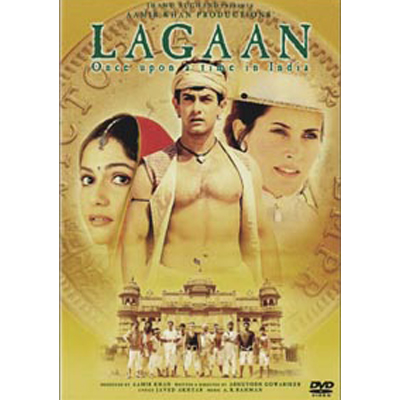
    MUMBAI: STARZ! which claims to be the largest provider of cable and satellite-delivered premium movie channels in the US, has announced that it will present the American television premiere of Aamir Khan’s Lagaan on 12 August at 11:45 pm (ET/PT). The Oscar nominated film was distributed theatrically in the US by Sony Pictures Classics in May and is coming to STARZ! subscribers’ television screens just three months later. In India Sony Entertainment Television holds the exclusive c&s rights.

    The film is being shown on STARZ! under the programme band Cinematheque. The band offers the best of highly acclaimed movies that break the Hollywood mould.

    The Starz Encore Group owns 15 domestic channels with approximately 121 million pay units. Starz Encore offers the Starz Super Pak, with up to 12 digital movie channels, and Starz On Demand the first premium subscription video-on-demand service.

    Starz Encore is a wholly owned subsidiary of Liberty Media Corporation.

  • Nina Gupta on NFDC’s Film Bazaar at IFFI 2007

    Nina Gupta on NFDC’s Film Bazaar at IFFI 2007

    The buzz around the annual international film festival of India (IFFI) is getting louder. NFDC brings in Film Bazaar 2007, a platform to promote Indian films through a Business Lounge and a Co-production Market. This year the Film Bazaar segment of IFFI will be conducted by NFDC from 24th to 26th November at Goa Marriott Resort.

    In an interview with indiantelevision.com’s Jaahnavi P Paal, NFDC MD Nina Lath Gupta talks on the relevance of the Film Bazaar.

    What is the key thrust of the Film Bazaar?
    The Film Bazaar is being designed to create a facilitative environment for the Indian film industry via three key
    thrusts:

    • Export of Indian content.
       
    • Establishing and positioning India as a location for global
      content creation.
       
    • Creating a platform for new digital entertainment streams for Indian films.


    What are the new initiatives taken this year?
    Film Bazaar has three new initiatives, namely (i) a Co-production Market which is proposed to be modelled on the lines of CineMart, Rotterdam. 15 pre-selected projects (at any stage of production from pre-production to rough cut stage) drawn from all over India will be presented to all Film Bazaar participants, both from India and abroad, with a view to explore co-production and/or sales opportunities;

    (ii) Film Conclave (comprising keynote address, seminars, and panel discussions) and Business Lounge (to provide an interactive platform between prospective buyers and sellers of film and other content rights from India and abroad);

    and (iii) Script Workshop (18th – 23rd November) with an aim to develop Indian scripts. The workshop will provide a platform for six to eight Indian scriptwriters to work out and finalise already developed screenplays through active interaction with a team of six renowned mentors, Indian and International, and then a series of master classes. The workshop will culminate with the announcement of the eight scripts selected for the Film Bazaar on 24 November.

    Who are your partners at this event?
    NFDC is making all efforts to maximise participation in this event, both from within India and abroad. To enable greater visibility for Indian cinema, NFDC has also partnered with Screen International in this endeavour. Our other media partner is Indiantelevision.com.

    Who until now have confirmed their participation?
    Amongst the confirmed participants from other countries are representatives of Fortissimo Films, Back Up Films, Global Film Initiative (USA), Wide Management (France), Pandora Films (Germany), Onoma International, Rezo Films, Arclight Films.
    The European Producers Club is a partnering organisation in the Film Bazaar.

     
  • Mukta denies deal reached on sale of film library rights

    Mukta denies deal reached on sale of film library rights

    Filmmaker Subhash Ghai’s Mukta Arts Ltd has clarified before the Bombay Stock Exchange that it has not yet entered into any agreement with any of the channels regarding the sale of television rights for its movie library.

    Mukta said it has been in discussions for over a year with Zee Telefilms, Sony Entertainment Television and the Star TV Network but was still to reach a deal. It made the clarification in response to an article in a leading financial daily titled “Library selloff buzz steps up Mukta Arts”.

  • ‘Jurassic Park’ – monster movie rakes in mammoth ratings

    ‘Jurassic Park’ – monster movie rakes in mammoth ratings

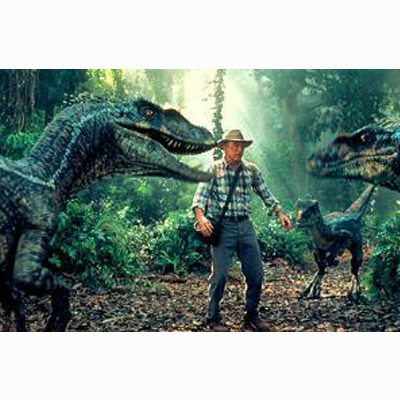
    Jurassic Park, the 1994 record busting Spielberg epic that aired on Star Movies in the last week of March, has notched ratings that would make a Kyunkii… green with envy.

    According to figures put out by AC Nielsen’s TAM ratings, a small city like Cochin has garnered TVRs of 8.18 ( C&S 15-44 yrs), beating Chennai (6.03), Bangalore (3.88), Delhi (2.75) and Mumbai (3.76).

    The figures have beaten the record set by Mummy, that aired on HBO in January this year. Mummy had drawn a TVR of 2.6 (Intam) and 2.88 (TAM). The film had made it to the top 100 shows of the week, setting a record of sorts. With a TVR of 2.98 according to Intam, Jurassic Park has managed to sneak ahead. The data collected is for all C&S homes in all 24 panels. The six metros and nine markets monitored by TAM have thrown up TVRs of over 3.4 for the C&S 4+ category. 

    It still rules viewers’ imagination – Jurassic Park continues to appeal to audiences across the country

    Figures put out by Intam are equally gushy. According to the agency, Chennai drew the highest viewership, with TVRs of 6.17 (TG C&S 4+), while Mumbai managed TVRs of 4.57. Bangalore with 4.51 and Delhi with 4.52 followed. One million plus towns in Maharashtra too had a combined TVR of 4.35 while those in Kerala had a figure of 5.63. Even small towns in Andhra Pradesh (1,00,000 to 5,00,000 population) have notched up TVRs of 0.59, the lowest managed by the movie. 

    Mummy was touted as HBO’s first big movie of the year and was surrounded by a lot of on and off air promotional activity. Star too had spared no efforts in promoting the telecast of Jurassic Park, which had a successful run in theatres nearly eight years ago. Crouching Tiger, Hidden Dragon that premiered on AXN in December 2001 earned a rating of 1.2 among Indian cable AB viewers in the top five metros, making it the top programme on international channels between 1 and 29 December, according to AXN Asia MD Todd Miller. None of these movies has however been able to break Titanic’s record score of 8.2 (TAM data for nine main cities 4+) when the movie premiered on Star Movies on 31 December 1999.

  • Celebrate Bollywood’s strengths: Mahesh Bhatt

    Focus on the strengths of India’s film industry rather than aping the west. 

    That was the main theme of the session – The New Aesthetics of Popular Cinema – on the second and final day of Frames 2002. 

    Mahesh Bhatt chaired the session devoted to film making that included big names from showbiz including critically acclaimed director, Govind Nihalani, who presented a number of ideas, insights and inferences. 

    The afternoon saw the highly opinionated Bhatt lash out at Bollywood’s incessant fixation with lts Californian counterpart. The noted movie maker stressed that Bollywood needed to be proud of its Indian roots, including colourful song-dance routines and stop endorsing the West blindly.

    Replying to an audience member’s query, Bhatt dismissed the Oscars as “just another marketing event” and asserted that the Indian film industry had enough power to take on the world. Though he added that Indian cinema was in its “infancy” and would really come of age when the movie making tools became easily available to creatively inclined youngsters with fresh ideas and scripts.

    Nihalani echoed this sentiment, pointing out the evil of plagiarising from Hollywood and deeming it ridiculous. He urged that bettering script writing and getting newer story ideas was the need of the hour with Bhatt suggesting that Bollywood suffered from a lack of talent spotters rather than original talent.

    He advised interested youngsters to think ‘reverse’ of our normal film financing formula, which raises about 75 per cent of the required monies from local markets and expects the other 25 per cent from the overseas markets, while planning to make an off beat movie. He further suggested that strong ideas be sold to venture capitalists for funding.

    The session also examined other areas briefly. These included Jabbar Patel touching upon the dismal condition of Marathi cinema and Bhatt’s insights on cable TV and the menace of video piracy.