Category: Movies

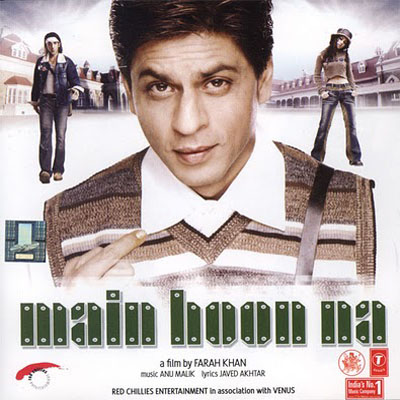
  • ‘Main Hoon Na’ perks up Star Plus’ share to 20.3 %

    ‘Main Hoon Na’ perks up Star Plus’ share to 20.3 %

    MUMBAI: There is no beating the biggest blockbuster movie of the year on the small screen. Main Hoon Na, which aired on Star Plus on 18 December, raked up a record TVR of 10.76 across all Hindi speaking markets C&S 4+ according to TAM data.

    The film also made it to the highest rated movie on television for the year across Hindi speaking markets.

    Looking at specific markets, the film scored a 14.33 TVR in Delhi, 9.9 TVR in Mumbai and 6.31 TVR in Kolkata. But the highest rating came from Gujarat (in the 0.1 to one million population) where the film garnered a whopping 19.13 TVR.

    The movie also managed to take Plus’ channel share from 20 to 20.03 per cent for Week 51.

    According to Star India’s senior vice president marketing and communication Ajay Vidyasagar, the reasons for the film’s successes are many. “It is the biggest film of the year. That in itself brings in a certain threshold of audience. Secondly, we promoted the film three weeks before it aired. We also focussed on the film by driving a lot of PR stating that the number one movie of the year was on the number one channel of Indian Television.”

    The promotional buzz also added to this whole eye-ball jackpot. In the heartland market, Shahrukh Khan sweaters were created to trademark the movie as well as a Star Plus contest was run asking the audience the number of times SRK said Main Hoon Na in the movie.

    Another strategic move was tie-ups with over 2000 cable operators to promote the contest as well as the property. Says Vidyasagar, “Any product has to be activated well. Just having a big movie cannot be the only premise for the film and advertising fraternity to bank on. It is only when you combine a big flick with a big platform does one see such an outcome.”

    Star, according to industry sources, acquired exclusive telecast rights for Main Hoon Na for Rs 60-70 million. However, company officials declined to comment on the acquisition cost.

    Star Plus has sporadically premiered blockbuster movies that have worked well for the channel.

  • Censorship or self-regulation?

    Censorship or self-regulation?

    The “S” (as in sleaze) word seems to be all over the airwaves these days. And it‘s not all linked to the latest technology driven monster – that little camera-enabled cell phone that seems to be capturing everything from school kids in the act to Hindi movies stars caught in the lip-locked act.

    This and sundry other incidents has again brought the whole issue of censorship and content regulation upfront and on camera. It had receded into the background a bit after the unceremonious ouster two months ago of previous censor board chief Anupam Kher on “ideological” grounds.

    That the issue is one that needs addressing goes without saying. With more than 130 channels, reaching out to about 85 million homes and with more than 200 million homes still remain to be tapped, India is touted as one of the largest growing TV audience in the world. Which is why analysts feel the time has finally come to take stock of the situation.

    The headline news of course has been the vicarious glee with which news channels went to town repeatedly playing of the full video sequence of the infamous Kareena Kapoor-Shahid Kapoor lip-lock. Under the garb of covering the news, many feel that the news channels have crossed the limits. As an outraged viewer put it in a communication to indiantelevision.com, “It‘s increasingly becoming difficult to watch news with children around. It was perhaps the worst experience to watch current news about Kareena and Shahid Kapoor. I felt shy when I was watching the News with my daughter sitting next to me. It looks like news channels have now converted to ‘masala‘ where you may see all the sex and violence without any prejudice in the name of news. Media should be informative but at present, it looks like it‘s only looking at entertaining people.”

    Another point of contention being the crime shows being churned out by all the news channels. There is a sentiment gaining ground that in the name of covering crime many channels are just portraying sex and violence with most of the hidden cameras only chasing pimps and prostitutes. A few months ago one also saw the sensationalisation of the Dhananjay Chatterjee death row case With some of the leading news channels going overboard with pictures of how a `hanging‘ takes place (a noose is tied around the neck, and how at what angle the hangman pulls the rope etc; two cases of such attempts to imitate such a hanging by young children were reported in the suburbs of Mumbai.

    As a media analyst puts it, “We have to remember that TV can have a direct impact on our lives. A film is out there, and TV is in your home, and it can influence our behaviour in subtle ways, and more so for children. And in the current environment kids need to be prevented from seeing excessive violence or sexual content.”

    Though TV channels continue to swear by self-censorship, even those who are principally opposed to moral policing now feel there is a need for a regulatory body. This brings us to certain very tricky questions, answers to which are perhaps two-sided. Do we, as mature adults really need censorship or content regulation? Who is really capable of deciding what we should watch or what we should not watch? Will government interference in regulating TV content become a highly bureaucratic process, open to corruption and other malpractices?

    As the debate continues, the moral brigade continues to cry hoarse for a regulatory body for the TV industry. A look at some of the incidents of the past few weeks show that the debate is hotting up again.

    * The controversial Hindi film ‘Girlfriend‘ depicting lesbianism was stopped from being telecast at 11 pm on Zee Cinema about two weeks ago. While the channel had publicised the screening several days in advance, the cops cracked the whip at the 11th hour. The police sent a notice to officials from Zee Cinema directing them not to show the film. The logic being that it is an adult film and cannot be shown on TV (to preclude any possibility of children getting to see unsuitable fare?). Sources reveal that the police had acted on complaints received from citizens who protested the telecast of the film.

    * Recently Sony TV also had to withhold the screening of Murder (a thriller that had adultery as its bedrock premise) after a women‘s organization from the Gujarati Jain community protested.

    * There were howls of protest, though no formal complaint was lodged with the I&B Ministry, after a rape scene was shown in the Hindi entertainment‘s most popular serial ‘Kyunki Saas Bhi Kabhi Bahu Thi‘ on Star Plus. Though the channel claimed that it was shown to sensitise viewers about crimes committed against women, the morality squads believe that it was just part of the TRP game.

    * Recently, voicing concern over “objectionable” serials and programmes projecting women in bad light, a women‘s group in the south, the Andhra Pradesh Mahila Samakhya, demanded a censor board for TV channels. The Samakhya leaders also demanded constitution of “anti-obscenity squads” on the lines of the anti-goonda squads.

    What all these incidents highlight is this. Though there is a formal regulatory body on the censorship of films, the Central Board of Film Certification (CBFC), there is no such content regulatory authority overlooking the television sector. Admittedly, the information and broadcasting ministry has a special cell to monitor programmes on channels and raise objections on shows which hurt public sentiments, obscene and vulgar. These cases if filed are registered under the Cable Television Network Act. But market watchers say that there are hardly any such cases registered by the ministry.

    Commenting on the current scenario, columnist and TV tracker, Kaveree Bamzai opines that there is definitely a need for a regulatory mechanism in place. Says Bamzai, “The issue has long been debated; it was even first proposed in 1997 when Mr Jaipal Reddy was the I&B Minister. But then, as usual, other issues come up. Like with channels uplinking from other countries how do we regulate, will the onus really be on the cable operator or on broadcasters. But the fact of the matter is, we are not living in an ideal world, and parents are not always in a position to control viewing for children, and self-regulation for channels has not really worked. So, if you find a particular programme objectionable, whom do you approach? Whom do you confront and who will take the broadcaster to task. These things have to be made clear.”

    But, then many in the industry feel that self censorship has worked. Refuting facts that the channels certain programmes like Hot & Wild, have often faced pressure from the moral brigade, SET‘s VP Marketing, Rohit Bhandhari says ” we‘ve never faced any such problem with AXN. The channel has strict internal guidelines and if there is anything that we find objectionable we avoid screening it or we edit it.”

    Many feel the viewer can exercise control by just changing the channel. Says documentary filmmaker Anand Patwardhan , ” Self regulation does work and is working in the country; or else wouldn‘t you see soft porn on your TV sets, though children definitely need to be kept away fro showing excessive violence. As far as films are concerned, w are trying to do away with censorship and regulation. Afterall, if you find something objectionable you can always change the channel.”

    If self-censorship has worked, then why do we have cops coming into the picture. When queried about the screening of the film Girlfriend at 11 pm the Zee officials maintained that the film was to be screened at 11.30 pm and not 11 pm. On condition of anonymity, the official said, “I don‘t know why we‘re talking about there being no regulation; we have the Cable Television Act which has clear guidelines in it. As a viewer, I am free to watch whatever and criticize or object to whatever that is being shown on TV. And even when we have the Censor board for films we face problems, because there will always be two different perspectives of looking at a particular scene.”

    Yet, as the debate continues, the Union Information and Broadcasting Minister Jaipal Reddy has recently made a statement that a new committee would be set up to examine the censorship laws in its entirety. The Minister has said, “though not in favour of moral policing with regard to censorship of films or music television videos, but we cannot do without some kind of a law. A committee headed by the joint Secretary will look at the law in its entirety.”

    Though, it remains to be seen what the Ministry panel finally comes out with, there are many who feel that the whole business of regulating will be a very difficult area. For e.g. if a channel is being beamed from Singapore and is showing adult content in the afternoon, whom do you approach. How do you go about regulating fiction and news content where over 1,000 hours of programming are being churned out every day.

    But then there are others who feel if it has worked in other countries, it can be implemented in India too. Says former Censor board chief Anupam Kher, “I don‘t know what Jaipal Reddy has said, but I strongly feel that the government is not working towards it. Often it is blamed on some technical matter or the other. You might talk about channels not been uplinked from India, but the revenues are coming in from this country.”

    He further adds, “One has to remember that the majority is still in the villages, and women are subjected to more sexual harassment there. So, we cannot have vulgar music videos and all kinds of movies being screened anytime of the day. In the game of TRP‘s you can‘t expect the channels or independent producers to exercise self-censorship. And parents do not have time for children. Abroad, parents exercise the ‘parental lock‘. Here what should we do? Since the channels, producers are also in the business of TRPs we cannot always expect them to act objectively, so we need some form of parental guidance from the government.”

    Adds Kaveree, “The government has been talking about it for years now, but nothing has been done. We could probably frame the committee based on the UK model, where independent experts from all facets of society represent it.”

    Well, if that can be done, it would be a major milestone for the industry. But will it be done? Going by past precedence, that‘s a mighty big IF!

  • TV movie will examine Disney feud

    TV movie will examine Disney feud

    MUMBAI: Two Blind Mikes. See how they run! Cable broadcaster Showtime in the US will make a television movie Two Blind Mikes. It examines the controversial and turbulent relationship between Disney CEO Michael Eisner and Mike Ovitz.

    A report in Variety states that the film will examine the friendship that went sour from the time Ovitz was at Disney to the current courtroom battle.

    Disney shareholders filed suit against the board of directors in 1997, alleging that they had hired and fired Ovitz without sufficient consideration of the financial impact. Trial proceedings are expected to conclude in the next couple of weeks although it could take months before the judge announces his decision.

    Ovitz was hired as Disney president several years ago. He only managed to last a little over a year due to differences with Eisner. Ovitz walked off into the sunset with a cool $140 million no fault package settlement. Shareholders argue that Ovitz should have simply been fired.

    Last month when the trial commenced, Eisner said that he was amused by Ovitz. One line of questioning in the shareholders litigation focusses on Ovitz’s expenses. The litigation suggests Ovitz’s tendency to spend was a problem from the start.

    Talking about his relationship with Eisner at a court deposition last month Ovitz said, “I had a 25-year relationship with Michael Eisner. We spent an enormous amount of time together socially and professionally, I trusted him 1,000 per cent. I was this guy’s friend. But it all went downhill. I don’t understand how a guy could be with me so much and then write in a memo that he never sent to me that said I’m a liar, that I have a veracity issue, that I’m a psychopath. I can’t figure it out. I can’t figure it out.”

  • Two steps forward, one step backward

    Two steps forward, one step backward

    Three weeks ago, a multi-starrer Tamil feature film, Bose was released in the South. The film, originally slated for release on 9 October, faced some last-minute release issues and as a result, the producer could release the prints only by 10 October at 5 am.

    The `Madurai-Ramnad‘ distributor had to wait till 3 pm to start the first show of the movie in his theater centres on 10 October. At 10:30 am of the same morning, Bose was running houseful in five theaters in C class towns situated almost 600 kms away from Chennai.

    How did those five theaters manage to release the film as per schedule while some of the city distributors could lay their hands on the print only after a good 10 hours‘ wait?

    The answer lies in a technology-driven business initiative called distribution of movies using digital technology. The above-mentioned five theaters are equipped with the digital technology by which films in digitised format can be delivered and screened. In this case, the delivery of analogue prints, or the conventional 35 mm prints of the movie, was overtaken by the digital delivery.

    The story so far

    In 2003, Manmohan Shetty‘s Rs. One billion Adlabs introduced digital theatres in India. After doing a trial run on Devdas, Adlabs effected India‘s first digital film screening in April 2003 releasing the digital prints of, The Hero – The Love Story of a Spy.

    Trying to hit the target: ‘The Hero‘, India‘s 1st digitally distributed movie

    In September 2003, Adlabs joined hands with Subhash Ghai‘s Mukta Arts to form Mukta Adlabs Digital Exhibition. The firm, which has now 74 digital screens in Maharashtra, Delhi, Uttar Pradesh, Gujarat, Madhya Pradesh and West Bengal has invested Rs.100 million in the project. In June 2004, Mukta Adlabs Digital Exhibition joined hands with the Chennai-based Kalasa Entertainment Media Private Limited (KEMPL) for digital delivery of movies in the southern states of India.

    Another key player in digital distribution Blockbuster Cinemas was born when a group of film distributors, exhibitors and music companies lead by Time Group‘s Dhiraj Shah got together to explore the possibilities of digital cinema. Tips, Venus, Bharat Shah-owned Mega Bollywood, Time, Baba, Tilak and Prachar hold equal stake in the firm. The group, which has invested Rs. 50 million in the digitisation project, claims to have installed approximately 100 digital screens across India. Reportedly, the Rs. 35-crore Ultra Group has also gone the digital way and has set up 11 digital screens in India.

    The technology and the business model

    The digital server-projector system

    The digital distribution process starts with the digitisation of the 35 mm film. Then the digitised film is compressed using the open Motion Picture Experts Group (MPEG) format or proprietary compression. The compressed, digitised file is then delivered to the theater. Delivery-wise, the technology offers two alternatives; delivery via data-formatted DVDs and hard-drives or through electronic transmission methods like satellite delivery. In the theater, the digitised content is loaded onto a server and is uploaded into the digital projector for screening.

    Mukta Adlabs tried the satellite delivery method once in the early stages of the initiative, but didn‘t go further sighting the feasibility reasons. “It is not making economical sense,” offers Adlabs Films CEO Dr. Sunil Patil.

    Blockbuster Cinemas, which is yet to take the satellite route, seems to have learnt a lesson from its rival‘s experience. Says, Blockbuster Cinemas partner and Time Group of Companies director Dhiraj Shah, “Satellite delivery is not viable in the present scenario and our company has no plans to go for that at the moment.”

    Mukta Adlabs and Blockbuster Cinemas have been outsourcing the technology from abroad. Mukta Adlabs has associated with a Singapore-based company GDC technology for purchasing the servers. Its DLP projectors use the Digital Micro-mirror Device (DMD) from Texas Instruments. Aditech Digital USA is providing servers for Blockbuster Cinemas.

    Adlabs Films CEO Dr. Sunil Patil

    Mukta Adlabs has now slowed down its retrofitting of theatres since it is replacing its existing digital projectors with new Panasonic projectors. According to Mukta Adlab‘s Patil, the company has earmarked Rs. 40 million, in addition to its original investment of Rs. 100 million, for the replacement. Patil said the first phase of the alteration process would with 38 theaters in Maharashtra.

    To buy the Mukta Adlabs digital cinema package, a theater-owner needs to shell out approximately Rs. 1 million. But most of the digital installations the company has done till now is on lease basis where the cost ranges from Rs. 7000 to Rs. 8000 per week.

    As per available information, the Blockbuster Cinemas‘ projector cost is between Rs. 2,50,000 and Rs. 4,10,000. The air conditioner and the UPS system cost approximately Rs. 50,000. Blockbuster Cinema ‘s rental scheme has the server rent fixed at Rs. 3,000 a week per theatre and the rate is reduced to Rs. 1,500 if the movie manages to have a two-week run in the theatre.

    Where digital distribution scores…

    While speaking on digital cinema in a seminar organised by Cinema Systems India in April 2004, Senthil Kumar of Real Image Media Technologies said, “We spend about Rs. three billion approximately in India on film prints every year. With three billion you can convert about 1,500 cinemas each year. So in about 5 years we can convert all of India‘s cinemas into digital just with the saving on film prints, forget about the 40 per cent or 50 per cent, or how much ever India looses on piracy. So economically this is a very viable thing.”

    What the fast delivery and simultaneous release advantages have brought to the exhibitors is a significant increase in theatre occupancy. Digital delivery gives a body blow to film piracy as end-to-end encryption, digital finger printing and the competence to release a large number of prints uproot the vice.

    Talking about the advantages of digital delivery of movies, Patil has more to offer, “The biggest advantage is that while an analogue print costs about Rs. 65,000 to Rs. 95,000 depending on the length of the film; the digital print costs just Rs. 2,700. So, you can have more number of copies at a lesser cost.. Due to the high cost of analogue prints, the number of prints being made is limited. By the time the print reaches smaller towns, the pirated copies of the movie are already in circulation and that cuts down the theater occupancy to a great extent.”

    “The charm lies in simultaneous release,” agrees Shah.

    “Digital delivery has given a new lease of life to the rural box office”

    Patil makes an amusing observation when he says, “The films are available on the first-day-first-show basis. As a result, even a ‘potential‘ flop can do well in the box office since it reaches out to all sections of the audience before the word-of-mouth spreads.”

    Patil is happy that, with digitisation the money that belongs to the industry is coming back to the industry in a shorter period. “Otherwise it takes six months,” he points out.

    Patil says the advent of digital distribution has also brought a significant improvement in theater occupancy in the B and C class theatres. “Earlier the occupancy was eight to ten per cent, now it is as high as 40 per cent. Some good weeks even bring 60 to 65 per cent.”

    An employee of one of the Mumbai-based digital cinemas we spoke confirms Patil‘s claims. “After installing the digital systems, our theater occupancy has increased from 20 per cent to 50 per cent,” he says.

    The reality check

    “No profits at all,” is Dhiraj Shah‘s outright response when queried on the returns from digital distribution. Obviously it is shocking since we have been raving at the beauty of digital distribution. But that is the truth coming from a seasoned entrepreneur.

    “At present there is no return. Even you can say that we are doing a service to the industry at the moment by grooming the digital distribution system. But definitely, we have a long-term goal in mind,” offers Shah.

    According to Shah, the number of digital screens across India at present is in the range of 180 and one can‘t expect the business to be profitable at this stage with such a dismal figure. He puts the magical number that can make the business viable as 500 to 1000. “There is no other option,” Shah asserts. He says his effort is to reach 500 in a couple of years from now.

    Shah identifies the main hindrance to the growth of digital distribution as the conflict between distributors and exhibitors.

    “With the advent of digitisation, distributors feel that they are losing out on the revenue-sharing front as the system has put exhibitors in an advantageous position. Distributors want easy money, the full cake.”

    Will these smiles last?

    Senthil Kumar threw light on the other side of the coin when he said, “The question here is that the guy in the theater has to pay for the equipment so far (unless there are other business models) and the benefit really goes to the distributor. So the question is, how to distribute this money so that the whole thing works.”

    From the distributor‘s side, an official from Mumbai-based Neptune Films feels that chalking out a perfect revenue-sharing strategy in digital distribution would be difficult.

    “Revenue sharing system is never going to be a static one. It varies depending on factors like the time of the release and the production cost. Movie to movie, it differs,” he points out.

    Pune-based Global Institute of Convergence Studies director Prof Ujjwal K Chowdhury feels that apart from this conflict between distributors and exhibitors on revenue sharing, what stagnates the growth is vested interests of the established producers of mainstream cinema to keep the entry-level barriers in film-making higher and out of the reach of the independent filmmakers and small-budget producers.

    In this context, all the producers we spoke to were all for the potential of digital delivery. But they made it a point to express their dissatisfaction towards the technical quality of the present system. Producer Narendra Goel of Goel Films, while agreeing that digital distribution holds the future for the film industry, opines the technology needs to be fine-tuned.

    “The quality ratio between analogue prints and digital prints is 8:2 at present. That means the analogue prints are six times better in quality than the digital prints.”

    Goel still believes that it won‘t be a problem for smaller centres since the audience out there is not quality conscious. “Producers with smaller budget will hug the innovation while big producers will wait for some time,” comments Goel.

    Global Institute of Convergence Studies director Prof Ujjwal K Chowdhury

    Chowdhury agrees to Goel‘s comments on the technology-front. “The digital medium needs more R&D before being launched full hog. Clarity and resolution need to be improved. Digital projection costs also have to reduce drastically with bulk purchases being done in near future,” he says.

    How to script a happy ending?

    Shah believes that revenue-wise or technology-wise, the scenario is not going to change immediately as the progress is very slow. Declaring that the word ‘investments‘ holds the key, Shah reveals Blockbuster Cinema‘s strategy for the future:

    “We invite investors to associate with us in this venture. We are inviting all exhibitors to invest four lakhs to seven lakhs per theater. Also, independent investors should come forward and replace traditional distributors. One day we will have to make the distributors out of the picture.”

    According to Shah, the team of producer, exhibitor and the investor will have to play a vital role in popularising the technology and making it a success.

    Talking about investments, we have the players even eyeing foreign investments. Reportedly, Blockbuster Cinemas‘ has been targeting foreign investors though Shah says nothing has been materialized in this regard so far. Kalasa Entertainment Media Private Limited (KEMPL), which launched its digital cinema initiative in June, has received $ 0.5 million from Sat Pal Khattar, a founding partner of Singapore-based law firm Khattar Wong and Partners.

    KEMPL CEO Ramesh Subramaniam


    “We are expecting another $ 2.5 million from foreign investors in the next two months,” says KEMPL CEO Ramesh V Subramaniam. “Indian venture capitalists from Mumbai and Bangalore have also showed interest in investing in digital cinema,” he adds.

    The company plans to double its digital cinema installations to 10 in Tamil Nadu within a month.

    Is there a chance that multiplexes also will be included in the game plan? The basic theory is that digital distribution won‘t work in multiplexes because of the difference in revenue models.

    “Multiplexes will start taking the technology a bit later, because right now they are making good revenues. So for them the cost doesn‘t really matter, but still I think by the end of this year there will be some multiplexes armed with digital screens,” opines Patil.

    Chowdhury observes that every multiplex is either making or contemplating to have a digital projection facility alongside.

    An aspiring player in digital distribution, Shringar Cinemas director Shravan Shroff is reportedly pondering on taking digital cinema to Pakistan and Bangladesh markets. The Chennai-based Real Image Technologies is planning to introduce its digital theatre system `QCinema‘ worldwide, starting with India, in the near future.

    Stating, digital distribution of films is revolutionising the Indian film industry will be an over-estimation in the present circumstances. Still, it can be said that the technology has the potential to do so and it has made its humble beginning. The way the industry handles the innovation will decide its fate.
     

  • BBC Worldwide’s ‘Deep Blue’ documentary grosses $25 million

    BBC Worldwide’s ‘Deep Blue’ documentary grosses $25 million

    MUMBAI: Deep Blue, the documentary feature film produced by BBC Worldwide and Greenlight Media has grossed over $ 25 million at the box office since its release this summer.

    Deep Blue developed from a popular series The Blue Planet a co-production by BBC/Discovery Channel broke record in Japan’s single theatre, overtaking the record set three months earlier by the Academy Award winning film Lost In Translation and has taken 1 billion Yen and knocking Spiderman 2, Harry Potter and The Prisoner of Azkaban.
     

    Deep Blue collected around $5.8 million in its first 12 weeks of release in France and collected appromximately $5.3 million in 13 weeks, becoming Germany’s best selling documentary feature film, informs an offical release.

    The producer of Deep Blue Alix Tidmarsh said: “Audiences around the world have reacted incredibly well to the movie. Its box office success to date demonstrates that we have hit exactly the right note with Deep Blue. It’s a powerful and emotional event that contains wonderful entertainment for a family audience.”
     

    Greenlight Media VP and producer of Deep Blue Sophokles Tasioulis adds, “The response to the movie from around the globe by audiences and critics has been phenomenal. The box office success of Deep Blue reflects the growing importance of theatrical documentary features.”
     

    Deep Blue, explores life above, below and far beneath the ocean’s surface. It was inspired by the international series, The Blue Planet.
     

    The documetary film features a score from composer George Fenton, performed by the Berlin Philharmonic Orchestra (its first-ever recording of a movie score), and is narrated by actor Michael Gambon.

    The film was made in more than 200 locations around the world with camera crews descending as far as 5,000 metres in the most powerful submersible craft available, Deep Blue was directed by Alastair Fothergill and Andy Byatt.

  • Reality bites!

    The reality bug bites Indian television big-time. Zee News, for long languishing behind its aggressive and upfront rival Aaj Tak finally got a grip on the glamour behind the culture of emotional strip-and-search that constitutes a successful TRP search.


    Prisoner of woe!: Gudiya with her first husband POW Arif


    So here was the scenario. A missing soldier, a pregnant war widow and the man who remarried her…. Remember Carlo Ponti’s film Sunflower? Except that this was no movie, and the visibly shaken girl who sat between the two men, as a well-groomed female co-ordinator went about the brusque business of lifting the veil—so to speak—was no Sophia Loren.


    Damn, we had no way of knowing what she looked like Gudiya’s face was covered. The men flanking her made up for her lack of emotive faculties. They gave every expression, from anger and grief to acceptance and martyrdom. Everyone from a priest to a legal expert was called on the set to make the picture look complete, if not entirely convincing.


    The real action: Reality television reminds me of Lalu Yadav on India TV. Last week they captured his daughter wacking an unsuspecting photographer in Tirupati. Then came the caustic correspondent who said, “It runs in the family.” The camera cut to Mr Yadav running after his supporters and will-wishers to wack them with the bouquets they had just given him.


    Do we get the leaders we deserve? Or do the leaders get the kind of television coverage they deserve?


    ****


    Let the good times roll…: Raveena Tandon spreading the cheer


    Sweet reality: There was also a touch of realism about a visibly pregnant Raveena Tandon walking in on Sab TV’s Movers & Shakers with her co-star Jackie Shroff and director Shashi Ranjan for the promotion of her new film Dobara. Just last week she was seen whooping it up with her host on the large screen in Ek Se Badhkar Ek. I wish the tete-a-tete with Shekhar Suman was half as funny.


    Suman tried hard. When Raveena cutely hid her growing tummy with a cushion he quipped, “So when is the release?”


    Cross connections: Which was a loaded and ironical statement in the light of the fact that Gurinder Chadha told me after her press interviews that she though the press was very unfair to Aishwarya Rai by repeatedly asking her personal questions which had no bearing on the film Bride & Prejudice that she was meant to promote.


    Of giggles and gags!: Gurinder with Aishwarya


    I agree. In fact the interview Ash Balle Balle on Aaj Tak was unfair not so much to Ms Rai as Gurinder Chadha. First of all, the title of the interview itself left out the director when she was very integral to the interview. We can get Rai any day. But Chadha’s presence in India was certainly an occasion. How could we miss spunky Gurinder, dressed as she was in a pink salwar-kameez, which contrasted tellingly with Ms Rai’s subtle cream silk sari.


    Very colour co-ordinated and also very heavily loaded towards the actress rather than the director. The visibly besotted interviewer kept repeatedly asking Ms Rai if she intended to migrate to Hollywood. Ms Chadha frequently intervened on her leading lady’s behalf. Not that Ash couldn’t look after herself. But the questions got progressively abrasive, until we got this gem: “It’s said you laugh more and talk less”


    That’s when Ms Rai almost lost her cool.


    ****


    Originality sells too!: By aping western models of paparazzi journalism we cannot hope to bring Indian television out of its infancy. Most of the reportage on air is of a pitiable quality. Last week on Sahara Samay’s Yeh Sham Mastani, there were two rather interesting stories which were just not carried to their logical conclusion. First, there was a report on a festival of women directors organized by Sahara India where a woman director suddenly came on to say, “I made this film because I liked the novel.”


    Hello? Which film and which novel? Then there were two Pakistani male models at a fashion show in Delhi, who seemed delighted by Indian clothes and India. “How does it feel to switch from Sherwani to Dhoti?” the chatty correspondent asked. The do-you-like-our-country questions was answered by both the boys with selfconscious political correctness.


    They knew at the end of the day they had to return to their sherwanis. Chalk up an outright winner for NDTV’s Mumbai Live on Thursday, which chose to give us Mumbai at election time as seen through the eyes of four authors. I loved Kiran Nagarkar’s comments on how all the sewage had been swept out of sight. Then there was Suketu Mehta who walked down the seaside with that excellent journalist Sreenivas Jain to tell us why Mumbai always lives up to the reputation of being a city of dreams.


    Very surreal…. and yet dropped down to earth with a thud when the two female writers walked in front of a closed-down Mill in Mumbai with Jain expressing worry over how the children of the unemployed mill workers either became bar dancers or gangsters.


    “And these over there are their children?” Shreenivas pointed to stray little gawkers on the pavement. “Well, no… they are not,” the lady author cleared her throat.


    Mill gayee manzil mujhe?


    ****


    Scorching emotions: The Saathiya trio


    Whats with Sahara: I’ve been trying to follow Sahara’s Saathiya. But I can’t figure out what they’re up to. Last week Aryan took off his shirt and tried to lunge for poor Gayatri. But she immediately forgive him. Maybe she likes skin, as long as it isn’t her own? In the meanwhile Aryan’s best friend Kshitij, who carries a torch in his heart for Gayatri tripped and fell over her sister while fixing the electrical fuse. Maybe he should carry that torch where it can be more useful?


    They both froze awkwardly in the floor while the lights suddenly went on as though at a secret birthday party.


    Only the candles were missing. Saathiya gives so many close-ups to its star attraction Amarr Upadhyay that the other actors end up looking shadowy. Upadhyay rustles up expressions as though he was auditioning for a part in some exotic film on agony and ecstacy.


    He needn’t fear he’s over-doing it. If you’ve seen Sangeeta Ghosh on Des Mein Niklla Hoga Chand expressing everey shade of emotion multiplied 20 times over you’d know what exaggeration is. But her former co-star Varun Bandola is doing rather well for himself on Zee’s Astitva, where last week he had a very subdued emotional sequence with a visibly distressed Alok Nath.


    Subtlety is still rare on the soaps.

  • Solid, Moriah forge distribution deal for WWII films

    Solid, Moriah forge distribution deal for WWII films

    MUMBAI: Solid Entertainment, a leading distributor of factual programming, today announced that it has signed an exclusive two-year distribution deal with two-time Academy Award winning production company Moriah Films for five of their landmark documentaries.

    Negotiated by Solid Entertainment founder and CEO Richard Propper and Moriah Films head Rick Trank, the deal includes worldwide broadcast, home video, and DVD rights and comes on the eve of the 60th anniversary (2005) of the end of World War II (WWII).

    Solid Entertainments first time offering of such films as Genocide, the first Holocaust documentary to win an Academy Award, The Long Way Home, a second Academy Award winning documentary, In Search Of Peace, Liberation, and the recently completed Unlikely Heroes, comes at the right time to present relevant programming for this monumental anniversary.

    The titles included in this deal are: Genocide, which is narrated by Elizabeth Taylor and Orson Welles is the story of the millions of men, women and children who fell victim to Hitler’s Final Solution. A unique multi-image documentary, this programme combines historical narrative with actual stories of ordinary people caught up in the Nazi’s reign of terror.

    The Long Way Home is narrated by award-winning actor Morgan Freeman and is a riveting documentary which tells the story of Holocaust survivors in the years 1945-1948 engaged in the battle to rebuild their shattered lives and to recapture human dignity.

    In Search of Peace has been narrated by Michael Douglas and chronicles the first two decades of Israel’s existence, offering new insights on the origins of the Middle East conflict. Combining rare archival film and photos, In Search of Peace not only examines events in Israel, but their impact on other places as well – the Arab refugee camps, the General Assembly of the United Nations, Moscow, Paris, London, Buenos Aires, Cairo and Washington DC.

    Liberation is narrated by Ben Kingsley and Whoopi Goldberg, and is a programme which focuses on the end of WWII as Hitler continued to persist on two fronts: fighting the allies attempting to liberate Europe and continuing the genocidal war against the Jews. This WWII documentary uses film footage, radio broadcasts, and period music gathered from archives around the world.

    Unlikely Heroes, which is Moriah Films’ latest release, is narrated by Kingsley and chronicles the untold stories of Jewish resistance and individual heroism throughout the Nazi Holocaust. Utilising never-before-seen film and photos discovered in European archives, this documentary shatters the myth that the Jewish people did not stand up to the Nazis.

  • Karnataka film crisis: Non-Kannada film exhibitors bear the brunt

    Karnataka film crisis: Non-Kannada film exhibitors bear the brunt

    BANGALORE: The on-going crisis in the Kannada film industry, following the Karnataka Film Producers Association’s (KFPA) decision to block all non-Kannada films has put film exhibitors in Karnataka, especially those who rely on non-Kannada films, in a tough spot.

    A section of the film exhibitors who met State chief minister to seek support had to return empty handed with CM only remarking that he’d look into the matter. 

    According to reports, the Kannada Rakshana Vedike and Sasmara Sena Vedike pelted stones, damaged equipment and tables, a TV set in the offices of The Karnataka Film Chamber of Commerce, damaged the front portion of the Movieland theater. They then attacked the offices of Sandesh Enterprises a film production and distribution office of Pal and Basha, protesting against the screening of non-Kannada films in the State. The theatre was screening Telugu film Ghashana.

    As reported earlier, KFPA has requested all non-Kannada film distributors to refrain from releasing non-Kannada films starting 13 August following the agitation by film producers and directors who had been demanding an increase in the present entertainment tax levied on non-Kannada films.

    The Kannada film fraternity has also been demanding assurance that all Kannada films be shown in all theatres in Karnataka for at least 12 weeks a year, abolition of show tax and turnover tax on exhibition of Kannada films, a seven to 12-day delay in release of non-Kannada films from the day on which they are first screened in other states and a single-window-system for permission for filming.

    A rally had been called by the KFPA and the Karnataka Film Directors Association (KFDA) last week in which prominent personalities from the Kannada Film Industry participated. Release of non-Kannada films such as Vasool Raja MBBS (Tamil), Andaroo Dongale Dorikithe (Telugu) and the Kyon Ho Gaya Na (Hindi) in the State were effected.

    Today’s stalemate follows the fate of yesterday’s meeting held at the residence of the Karnataka Film Chamber of Commerce (KFCC) president S Ramesh, which had met to decide to form a 27-member committee including exhibitors, producers and distributors, failed to yield results. Some exhibitors and distributors met Parvatamma Rajkumar, wife of Karnataka film icon Rajkumar, on Monday evening to seek her approval for release of non-Kannada films this Friday but failed to get a positive response as per media reports that add that the exhibitors and distributors could expect some support from minister and producer HD Kumaraswamy.

    Meanwhile, a meeting has been called tomorrow between exhibitors and theater owners to discuss the issue. “We really don’t expect the theatre owners exhibiting Kannada films to come tomorrow. They don’t stand to loose anything, it is only the theatres that exhibit only non-Kannada films that will be affected by the delay in release of non-Kannada films. Earlier we had not responded to their protest call against show tax, why should they support us now?” asks a theater owner.

    As many as 95 per cent of the theatres in Karnataka screen either Kannada films or non-Kannada films. Only 5 per cent theaters show both Kannada and non-Kannada films. A number of owners of theaters, which exhibit non-Kannada films, are considering shutting shop permanently.

  • ‘Bollywood on Demand’ on US cable

    ‘Bollywood on Demand’ on US cable

    MUMBAI: Cashing in on the rising demand for South Asian films, two New York-based US entertainment companies, 212 Media and Schramm Sports & Entertainment, have entered into a joint venture to provide Indian-Americans an access to popular Bollywood movies on cable television.

    These two entertainment companies have tied up with Comcast Corp and Time-Warner Cable to add Bollywood movies to their video-on-demand channels. The venture makes it possible for over six million digital cable subscribers of Comcast and Time-Warner to have direct access to “Bollywood-On-Demand/Video-on-Demand” (BOD-VOD).BOD-VOD will amalgamate an array of movies, series and music videos from India’s Bollywood community.

    212 media was responsible for content and programming of the new service and Schramm would provide marketing and strategic distribution support, said president Joe Schramm.

    BOD, according to Warner Cable, is part of a diversity initiative. The company rolled out a Bollywood service from July in all 31 of its markets nationwide.

  • Karnataka film producers association plans protest rally

    BANGALORE: Karnataka Film Producers Association (KFPA) has called for a rally on 9 August, protesting the government’s decision to reduce entertainment tax from 70 per cent to 40 per cent for non-Kannada films.
    The association had also been demanding that the government should extend subsidy to all the Kannada films produced in the state, with the exception of remakes and sex and violence-dominated films.

    Though KFPA has asked prominent Kannada actors to participate in the rally, their confirmation is still awaited. Hence, till the time of filing of this report, industry sources were unsure whether the rally would be held or not.

    Fresh Kannada films have a benefit of no entertainment tax at all being levied on them, while remakes are taxed at a reduced rate of 30 per cent. A section of the producers would like this 30 per cent entertainment tax also to be waived, while some others would like it to continue.

    On an average, Karanataka film industry has been producing 80 to 90 movies annually. But for Karnataka, which has the maximum number of cinema halls in the South, this is not at all a sufficient figure. Also, some producers are often reluctant to release their movies in certain theaters in the state. In such a scenario, theater owners cannot do away with non-Kannada films.

    The Karnataka Theater Owners Association (KTOA) has approved the deputy chief minister’s decision to bring down the entertainment tax. They would also like the government to re-introduce the service tax of Rs1.50 per ticket, which could be utilised for improving the theatre conditions.

    Some industry sources feel that reduction of entertainment tax would improve compliance and the tax collections and make more exhibitors to come forward and declare correct ticket sales figures. But another section feels that lower tax declarations and collections would force the government to reverse its decision to bring down entertainment tax.