Category: Movies On Mutiple Platforms

  • India opens Waves Bazaar pavilion at Busan film market

    India opens Waves Bazaar pavilion at Busan film market

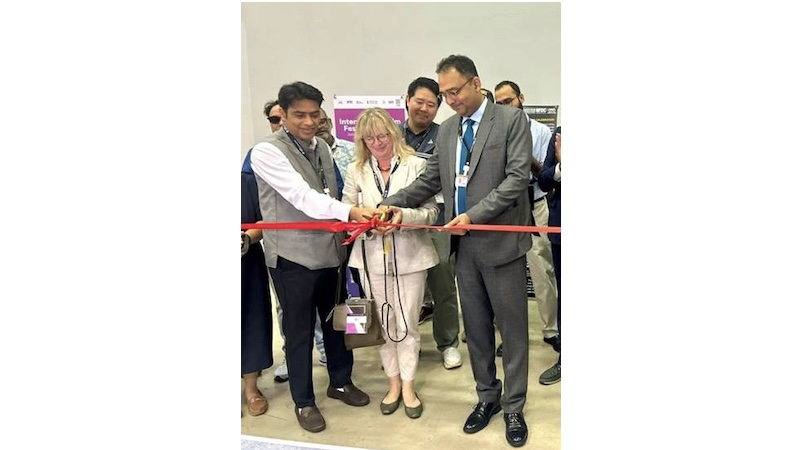
    BUSAN:  India unveiled the Waves Bazaar – Bharat Pavilion at the Asian Contents & Film Market, held alongside the Busan International Film Festival, to pitch its fast-growing media and entertainment sector to global buyers and partners.

    Set up by the ministry of information and broadcasting with the Indian embassy in Seoul, the pavilion will run until 23 September, promoting co-productions and partnerships across film, television, gaming and emerging creative technologies.

    The launch drew industry figures including Kang Sungkyu of the Busan Film Commission, Agnieszka Moody of the British Film Institute and Ferdinando Gueli of the Italian Trade Agency. Indian filmmakers Arfi Lamba, Pradip Kurbah and Tannishtha Chatterjee joined officials Prithul Kumar, joint secretary at the ministry, and Nishi Kant Singh, chargé d’affaires at the embassy.

    Speakers highlighted India’s rising weight in the global content economy and the pavilion’s role as a bridge for collaboration. The space hosts screenings, B2B meetings and showcases in animation, VFX, gaming and immersive storytelling, underscoring New Delhi’s ambition to position India as a global content hub.

  • Indian cinema turns to artificial intelligence for epic Hanuman film

    Indian cinema turns to artificial intelligence for epic Hanuman film

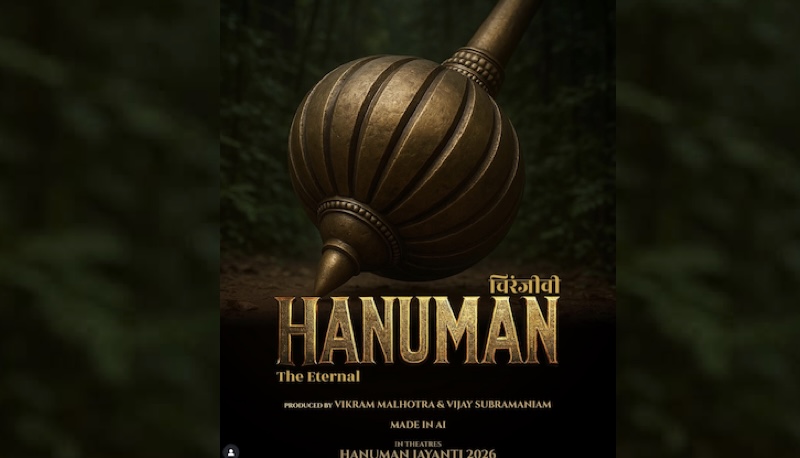
    MUMBAI: Indian cinema is preparing to push the boundaries of filmmaking with what producers claim will be India’s first theatrically released motion picture created entirely using artificial intelligence (AI), centred on the Hindu deity Hanuman.

    Chiranjeevi Hanuman – The Eternal, scheduled for worldwide release on Hanuman Jayanti in 2026, represents an ambitious fusion of ancient mythology and cutting-edge technology that could reshape how religious epics are brought to the screen.

    Abundantia Entertainment, the production house behind hits including Airlift and Ram Setu, is partnering with Collective Media Network’s Historyverse division on the project, which draws from the Ramayana and Puranic texts to create what they describe as a “visual odyssey.”

    The film is being developed by more than 50 engineers from Galleri5, the technology arm of Collective Artists Network, working alongside cultural scholars and literary experts to ensure narrative authenticity. Even the soundtrack will break new ground, composed by Trilok, billed as the world’s first AI-powered band that blends Indian spiritual traditions with contemporary sound.

    “We constantly push boundaries of storytelling possibilities, and I am delighted that we are partnering with Vijay and his amazing team at Collective to harness cutting-edge tech and tools to tell one of India’s most iconic stories,” said Abundantia Entertainment founder & CEO Vikram Malhotra.

    The project reflects growing confidence in AI’s creative potential within India’s entertainment industry, which has traditionally relied on star power and elaborate song-and-dance sequences to draw audiences. By choosing Hanuman—revered by hundreds of millions as a symbol of devotion, strength and faith—the producers are making a bold statement about technology’s role in preserving and reinterpreting cultural heritage.

    Collective Artists Network founder & chief executive Vijay Subramaniam emphasised the company’s commitment to “authenticity and cultural stewardship”, promising “complete transparency about the role of AI in the creative process.” This approach addresses potential concerns from religious groups about technological interpretation of sacred stories.

    The timing is significant, as India’s film industry grapples with rising production costs and increasing competition from streaming platforms. AI-generated content could potentially reduce expenses while enabling more spectacular visual effects than traditional methods allow.

    Abundantia, founded in 2013 by former Viacom18 Motion Pictures chief operating officer Malhotra, has built its reputation on “uniquely Indian stories”, from the patriotic thriller Airlift to the biographical drama Shakuntala Devi. The company’s upcoming slate includes Subedaar starring Anil Kapoor and collaborations with acclaimed directors including Hansal Mehta.

    Collective Artists Network has expanded rapidly through acquisitions including Under 25 Universe and Terribly Tiny Tales, positioning itself at what Subramaniam calls the convergence of “culture, creators, and technology”. The company operates Big Bang Social, a platform for brand-creator collaborations, and has launched Collective Media Network to broaden its content reach.

    The Hanuman project represents more than technological experimentation—it’s a test of whether Indian audiences will embrace AI-generated storytelling for their most cherished cultural narratives. Success could open the floodgates for similar projects, while failure might reinforce traditional approaches to mythological cinema.

    The 2026 release date on Hanuman Jayanti, the festival celebrating the deity’s birth, suggests producers are confident in their ability to create something worthy of such a significant cultural moment. Whether audiences agree will determine if this marks the beginning of a new era in Indian filmmaking or merely an expensive experiment.

  • Indian film producer loses copyright battle over Lootere title

    Indian film producer loses copyright battle over Lootere title

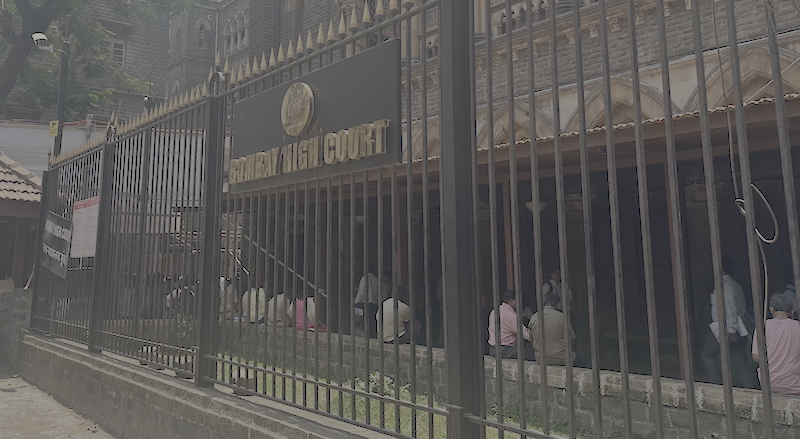
    MUMBAI: A Hindi film producer who made a 1993 film starring Sunny Deol has lost his bid to stop Disney+ Hotstar from streaming a digital series with the same title, after a Bombay high court judge ruled that film titles cannot be copyrighted.

    Sunil Darshan Saberwal, who produced the Hindi feature film Lootere three decades ago, sued Star India (now JioStar India) and others in March 2024, seeking to prevent them from using what he claimed was his registered title for their piracy-themed web series.

    But justice Sandeep Marne dismissed Saberwal’s application for a temporary injunction on 18 August, delivering a comprehensive rejection of his copyright claims and dealing a significant blow to long-standing industry practices around title registration.

    The judge ruled that “there cannot be a copyright in mere title of a film”, citing Supreme Court precedent that titles are “incomplete in themselves” and do not qualify as literary works under India’s Copyright Act of 1957. The ruling follows the apex court’s 2016 decision in Krishika Lulla v Shyam Vithalrao Devkatta, which established that commonplace words like Desi Boys lack the originality required for copyright protection.

    Saberwal’s 1993 romantic drama bears no resemblance to Star India’s eight-episode series about Somalian pirates hijacking an Indian vessel. The court noted that “except similarity in the title, plaintiff’s cinematograph film Lootere admittedly does not have any similarity in terms of story with the series.”

    The producer had registered the title Lootere with film industry associations including the Western India Film Producers Association, arguing this gave him exclusive rights. But the court dismissed such registrations as “purely private arrangements having no sanctity in law,” enforceable only between association members through contract.

    “The associations formed by film producers and registrations granted by such associations are nothing but an internal contractual arrangement between the members,” justice Marne stated. Since Star India was not a member of the relevant association, it could not be bound by Saberwal’s registration.

    The judgment highlighted how Bollywood routinely produces multiple films with identical titles—citing examples including Hera Pheri, Aankhen and Dilwale —without legal challenge, provided the underlying stories differ.

    The court also criticised Saberwal’s lengthy delay in pursuing legal action. Though he first noticed the series trailer in September 2022, he waited until March 2024 to file suit—by which time the series had already been streaming on Disney+ Hotstar for months.

    “Plaintiff has whiled away substantial time of about two years despite acquiring knowledge of plans,” the judge observed, noting this delay was “fatal” to claims for emergency relief.

    The decision undermines the film industry’s practice of treating title registrations as conferring legal rights, potentially opening the door to more disputes over popular names. Industry associations have historically operated these registration systems to prevent conflicts between producers, but the ruling clarifies they carry no statutory weight against non-members.

    Saberwal’s legal team had argued that Star India’s own attempts to secure clearance for the title from producer Boney Kapoor proved the industry recognises such rights. But the court found this irrelevant since it was undertaken by a production services company, not Star India itself.

    The series Lootere continues streaming on Disney+ Hotstar, having premiered in March 2024. Saberwal retains the option to pursue damages rather than injunctive relief, though his suit contains no such claim.

    The ruling reinforces that while films and their underlying literary works enjoy copyright protection, titles remain in the public domain unless they achieve trademark status or generate sufficient goodwill for passing-off claims—a much higher bar than simple registration with industry bodies.

  • PVR Inox marks Independence Day with 18 new screens in Mumbai and Bengaluru

    PVR Inox marks Independence Day with 18 new screens in Mumbai and Bengaluru

    MUMBAI: PVR Inox has turned Independence Day into a box office bonanza with the launch of 18 state-of-the-art screens across Mumbai and Bengaluru. The country’s largest cinema exhibitor unveiled a 10-screen megaplex at Sky City Mall in Borivali East, Mumbai, and an eight-screen flagship at Mahindra Millennium Mall in Bengaluru.

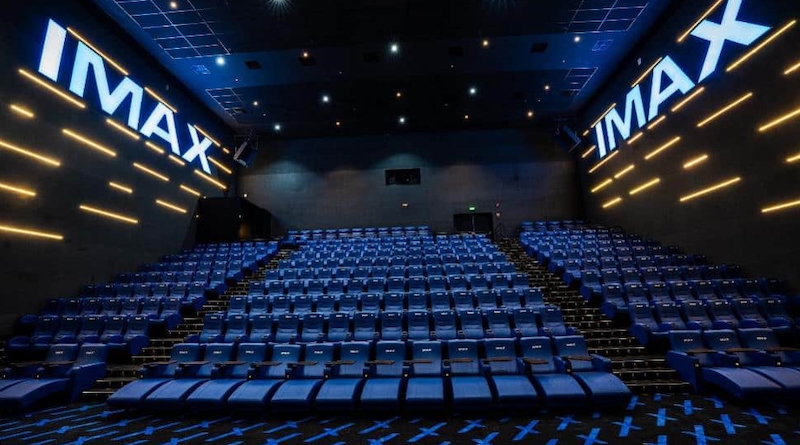
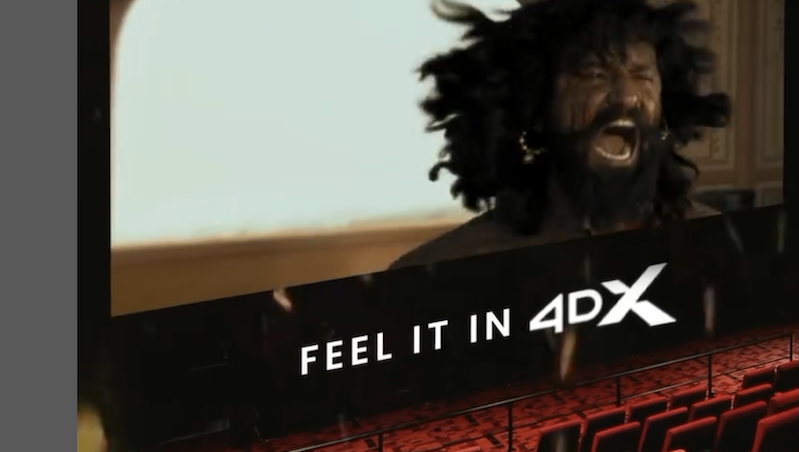
    Timed to coincide with the releases of Coolie and War 2, the two properties showcase the exhibitor’s boldest push yet into experience-driven entertainment. The Borivali megaplex spans multiple levels and features premium formats including Insignia, Imax with Laser and 4DX, with Instagram-ready foyers and lounge spaces pitched squarely at younger audiences.

    Bengaluru’s new multiplex promises even more experimentation: India’s first dine-in auditorium restaurant, an upgraded “Kiddles 2.0” cinema for children, Club Sapphire recliner halls, and VR/AR gaming zones. AI-enabled crowd-flow systems add a tech edge to the glitzy design.

    INOX Bengaluru

    PVR Inox managing director Ajay Bijli said the new cinemas celebrate “the freedom to experience stories in spaces that inspire, energise, and connect.”

    Executive director Sanjeev Kumar Bijli called the simultaneous 18-screen launch the firm’s “boldest step yet” in reimagining cinema as a multi-sensory destination.

    With 1,763 screens across 355 properties in 111 cities, PVR Inox continues to dominate Indian film exhibition. By positioning its latest properties as lifestyle hubs as much as theatres, it is betting that movie-going can be turned into a festival every weekend.

  • Indian startup claims to solve Bollywood’s dubbing dilemma with AI lip-syncing

    Indian startup claims to solve Bollywood’s dubbing dilemma with AI lip-syncing

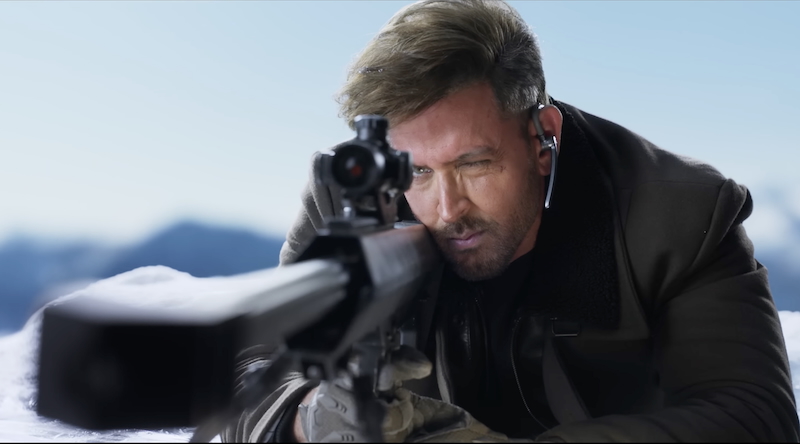
    MUMBAI: An Indian artificial intelligence startup reckons it has cracked one of cinema’s most vexing problems: making dubbed films look authentic. NeuralGarage’s VisualDub technology has been deployed on War 2, releasing on 14 August, to create what the company claims is the world’s first film visually transformed from one language to another whilst maintaining the illusion of native production.

    The Bollywood sequel, originally shot in Hindi, has secured a straight film certificate for Telugu distribution—not as a dubbed version but as an ostensibly original Telugu production. Neural Garage co-founder & chief executive Mandar Natekar describes this as a “fundamental shift” in content production and distribution.

    The technology addresses a chronic irritant in global film distribution: poorly synchronised dubbing that breaks audience immersion. Traditional dubbing overlays foreign-language audio whilst retaining the original actor’s mouth movements, creating a jarring disconnect that many viewers find off-putting.

    VisualDub purports to solve this by digitally altering actors’ facial movements to match the target language’s phonetic patterns, creating the visual impression that performers originally spoke in the dubbed tongue. The result, Natekar claims, allows producers to sell multilingual versions as distinct original films rather than mere translations.

    The commercial implications could be substantial. Indian cinema’s linguistic fragmentation has long constrained box office potential, with Hindi films struggling in southern states where Telugu, Tamil and other regional languages dominate. Conversely, southern blockbusters rarely achieve pan-Indian success without extensive dubbing campaigns.

    If VisualDub delivers on its promises, producers could command premium pricing for what appears to be multiple “native” productions whilst incurring costs for just one shoot. Natekar suggests this could double or treble pre-release distribution revenues.

    The startup, which has garnered backing from Google’s GenAI Accelerator and AWS’s Global GenAI programme, also won TechCrunch’s Battlefield competition in 2024 and this year’s SXSW innovation award. Such endorsements suggest the technology has impressed seasoned investors and technologists.

    Yet scepticism is warranted. Previous attempts to digitally manipulate actor performances—from CGI de-aging to deepfake technology—have often fallen into the “uncanny valley”, where near-human animations feel disturbingly artificial. Moreover, the cultural nuances embedded in regional cinema extend far beyond language, encompassing gestures, expressions and performance styles that may prove difficult to algorithmically adjust.

    The broader implications stretch beyond Bollywood. Hollywood studios spend millions dubbing blockbusters for international markets, whilst streaming platforms like Netflix invest heavily in local-language content production. A reliable visual dubbing solution could dramatically reduce these costs whilst expanding addressable audiences.

    Natekar envisions actors transcending linguistic boundaries entirely: “Hrithik Roshan can now be a Telugu, Tamil, or even a Spanish actor. Tom Cruise in Bhojpuri? Now possible.”

    Such grandiose claims invite scrutiny. The proof will lie not in technical demonstrations but in audience acceptance. If War 2 performs strongly in Telugu markets without viewers detecting artificial manipulation, VisualDub may indeed herald a new era in global content distribution.

    For now, the technology represents another front in artificial intelligence’s assault on creative industries. Whether it liberates content from linguistic constraints or merely creates more sophisticated fakery remains to be seen. What’s certain is that traditional dubbing studios should be paying attention.

  • MovieVerse Studios and Beacon Media partner to put Global South storytelling on the world stage

    MovieVerse Studios and Beacon Media partner to put Global South storytelling on the world stage

    MUMBAI: MovieVerse Studios, the mainstream content arm of IN10 Media Network, has struck a global alliance with Beacon Media to amplify voices from the Global South. The partnership seeks to create a borderless content ecosystem spanning Hollywood, India, the Middle East, Africa and Latin America—reaching more than three billion viewers.

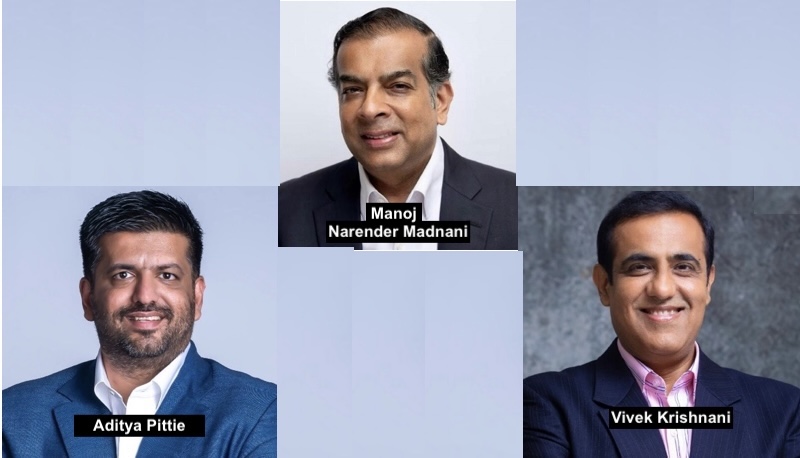
    In10 Media Network managing director Aditya Pittie called the tie-up a “meaningful collaboration” blending creativity, technology and scale. Manoj Narender Madnani, chairman of Beacon Media, framed it as “1+1=11 in action,” a shift from competition to collaboration backed by Indian industrialist Anand Mahindra and Pittie.

    The alliance will roll out a slate spanning feature films, premium series and micro-series designed for digital-first platforms such as Instagram Reels, TikTok and YouTube Shorts. Vivek Krishnani, chief executive of MovieVerse Studios, said the Global South was “home to some of the most dynamic and culturally rich stories waiting to be told”.

    Tapping into the deep cultural and financial ties between India, Saudi Arabia and the UAE, the partnership will kick off with a Malayalam-language feature film and a slate of new movies. It will also adapt bestselling fiction by Dr Deepak Chopra for global screens, while investing in micro-series aimed squarely at next-generation audiences.

    Beacon Media has appointed Manini Priyan, an author and screenwriter with cross-market credentials, as head of content. It is also allied with veteran Arab drama executive Fadi Ismail to deliver Arabic programming for digital-first audiences.

    With Hollywood in flux and demand for diverse stories peaking, the venture positions itself as a bridge between emerging regions and global distribution. As Madnani put it: “This is not just about content. It’s about reshaping the global entertainment landscape.”

  • Stuttgart’s animation festival rolls out the red carpet — and the puppets

    Stuttgart’s animation festival rolls out the red carpet — and the puppets

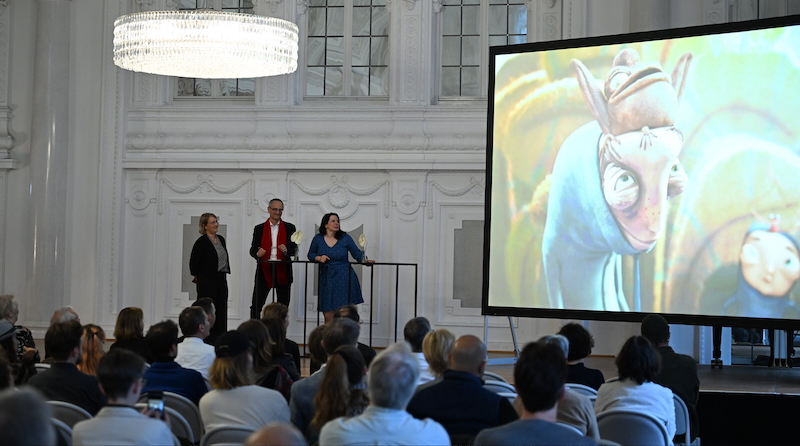
    MUMBAI: Germany’s biggest animation celebration just hit play. On 6 May, the 32nd edition of the Stuttgart International Festival of Animated Film (ITFS) opened to a packed house at Gloria 1 cinema, with directors Heike Mozer and Annegret Richter welcoming audiences alongside cultural top brass and civic cheerleaders.

    “I believe the creative industries have a key role to play in shaping the future of our region. This is where new ways of thinking are born, where creatives constantly bring forth fresh ideas — and where new jobs are created. This is especially true for the field of animated media,” said state secretary of culture Arne Braun. “The Stuttgart Animated Week — with the International Festival of Animated Film, the FMX Conference, and the Animation Production Days — is our showcase to the world. And at the same time, a magnet for talent, visionaries, and international decision-makers. Animation, VFX, and games are no longer just about entertainment.”

    He underscored animation’s rising influence in shaping both jobs and geopolitics. The Baden-Württemberg region, he noted, has seen its animation and VFX industries treble in number and multiply turnover eightfold since 2010.

    The evening capped off the launch of Stuttgart Animated Week, a triple-bill celebration spanning ITFS, Animation Production Days, and the FMX Conference. The result: a one-stop shop where art meets commerce, and craft meets code.

    New in 2025: an earlier awards ceremony on 10 May, giving the public a chance to see winning films before heading home. 

     “With the big awards ceremony moving to Saturday night, we’re creating a fresh dynamic for the festival — which benefits all our guests, as we’re able to screen the winning films the next day. With a colourful family programme, we’re turning the festival Sunday into a dedicated audience day,” said ITFS managing director Heike Mozer.

    This year’s AniMovie competition features six global heavyweights, including Memory Hotel by Germany’s Heinrich Sabl — a labour of love 25 years in the making. The €3,000 prize is sponsored by broadcaster SWR.

    “The AniMovie competition highlights the rich variety and artistic ambition of today’s animated features. We’re excited to have a German entry in the running, and we are thankful to SWR for recognising the genre — it’s an important and encouraging signal for the industry,” said ITFS artistic director Annegret Richter.

    With Switzerland in focus, a robust delegation of Swiss creators arrived with a showcase of films and a free exhibition from the tactile triumph Sauvages. The festival’s broader spotlight on stop motion strikes a nostalgic chord in a world awash with CGI and AI.

    “This year, we’re seeing a noticeable increase in stop-motion and puppet animation, both in competitions and across other festival formats. There’s something compelling about this tactile approach to animation — the attention to craftsmanship, the patience it demands. In today’s fast-paced, digital, and AI-driven world, it offers a welcome contrast and a sense of calm,” Richter noted.

    Among the early highlights: Richard Reeves’s experimental short Fusion (Canada), drawn directly onto celluloid with no camera involved, and The Wild-Tempered Clavier by Anna Samo (Germany), a toilet-paper canvas commentary on war, plague, and politics.

    With 500+ films, hands-on workshops at Schlossplatz, and a new “Professional Afternoon” for insiders, ITFS 2025 is pulling no punches. 

    Animation’s not just having a moment — it’s building a movement.

  • Saregama hands public performance licensing rights to Novex

    Saregama hands public performance licensing rights to Novex

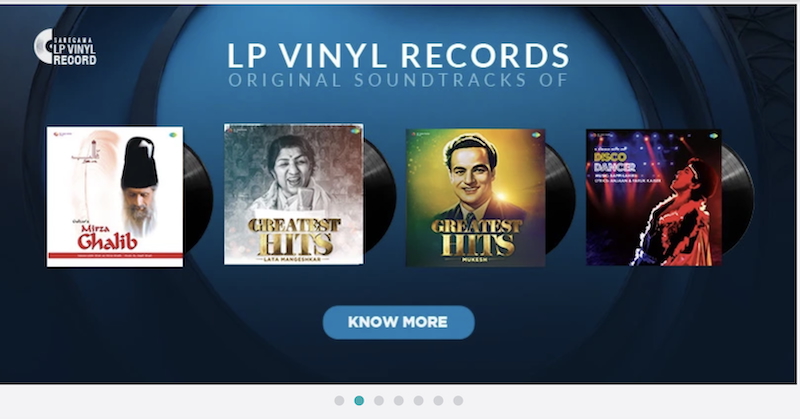
    MUMBAI: Entertainment and music catalogue giant Saregama – custodian of over 140,000 musical gems – has signed on the Ketan Kanakia founded Novex Communications for its music catalogue.

    The latter will now collect  public performance licence fees from organisers, if Saregama’s music is being played during on-ground events.

    Recognising Novex’s established presence in the music rights landscape, encompassing labels like Zee Music and YRF, Saregama aims to leverage its expertise to maximise the monetisation of its iconic tracks.

    The partnership, announced via LinkedIn, highlights a shared commitment to “preserving musical legacies” while delivering dynamic live experiences.

  • Film marketer sets up own production house

    Film marketer sets up own production house

    MUMBAI: Khyati Madaan, a  film marketing professional with over a decade of experience at some of India’s most prestigious entertainment companies, has announced the official launch of  her own production house, Not Out Entertainment on Linkedin.

    The IIM and NIFT alumna brings  industry pedigree to her new venture, having previously served as head of marketing at Maddock Films and held marketing positions at Red Chillies Entertainment, Kolkata Knight Riders and Disney.

    At Red Chillies, Ms Madaan was part of the team behind innovative digital campaigns for Zero, starring Shah Rukh Khan. The film became the first Bollywood production to utilise Amazon’s Alexa, develop a Snapchat filter and create a WhatsApp sticker pack as part of its promotional strategy.

    Before her tenure at major film houses, Madaan worked at Everymedia Technologies, where she rose to become vice president of marketing and director of analytics. During her time there, the company won awards for digital marketing campaigns, including recognition for the blockbuster Heropanti.

    Madaan’s career path has been diverse, including earlier roles at Trent Ltd, JJ Valaya, and Landmark group in Dubai, where she worked as head of retail and as an assistant buyer respectively.

    With Not Out Entertainment, Madaan aims to transition from marketing films to producing them. Her cricket-inspired company name suggests she believes there are many more innings to come in her professional journey—or as the famous Bollywood tagline goes, picture abhi baaki hai.

  • Pushpa 2 storms TV: Blockbuster to hit living rooms on JioStar network

    Pushpa 2 storms TV: Blockbuster to hit living rooms on JioStar network

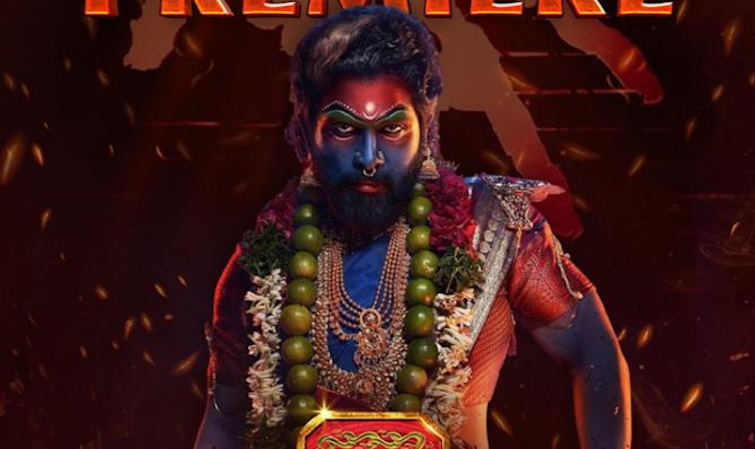
    MUMBAI: After smashing box office records with over Rs 1,800 crore in global earnings, Pushpa 2: The Rule is ready to rule the airwaves. The Allu Arjun starrer makes its grand television debut on JioStar network on 13 and 14 April, airing across Star Maa, Asianet, Colors Kannada and Star Vijay.

    To build up to the mega premiere, JioStar has unleashed The Pushpa 2 Experience—a full-throttle promotional blitz designed to grip audiences until 13 April. Expect an avalanche of behind-the-scenes action, star-studded chats and interactive fan-frenzy events. Plus, a weeklong marathon of Allu Arjun’s greatest hits to keep the adrenaline pumping.

    “We are committed to delivering the biggest and best entertainment experiences to our audiences and look forward to bringing the excitement of Pushpa 2: The Rule to our viewers’ living rooms. The television premiere of Pushpa 2: The Rule is more than just an event—it’s a nationwide celebration of a film that has redefined Indian cinema. Our extensive promotional campaign is an opportunity for viewers to not only watch the film but truly immerse themselves in the world of Pushpa,” said JioStar cluster head entertainment (south) Krishnan Kutty.

    JioStar is pulling out all stops. Prime-time favourites like Kiraak Boys Khiladi Girls, Aadivaaram with Star Maa Parivaaram, Maja Talkies and Star Singer will be infused with Pushpa 2 special segments, ensuring the film’s fever grips living rooms across the country.

    Produced by Mythri Movie Makers, Pushpa 2: The Rule has redefined Indian cinema with its scale, swagger and sheer box office muscle. Now, it’s coming home—bigger, bolder and louder than ever.

    Brace for the ultimate TV spectacle. Tune in to JioStar network and witness Pushpa 2 in all its glory.