Category: Hindi

  • US Motion Picture Association files suits against retail pirates in China

    US Motion Picture Association files suits against retail pirates in China

    MUMBAI: The Motion Picture Association (MPA) in the US has announced that its member companies had filed civil suits against the operators of two pirate retail outlets in Beijing, China.

    They are seeking damages of RMB 60,000 per infringed title, as well as legal costs and a pledge to cease and desist from all illegal sales of pirated movies.

    The actions against the companies operating the Feng He Ri Li and Yu Hao Qing retail outlets, both located in Beijing’s central business district, are being heard by the Beijing 1st Intermediate People’s Court and Beijing 2nd Intermediate People’s Court respectively.

    Both Feng He Ri Li and Yu Hao Qing have in the past been raided by the Beijing Copyright Bureau and Beijing and Chaoyang District Police. In May Chaoyang District Police seized 13,000 pirated DVDs from Feng He Ri Li. The MPA and its member companies maintain active litigation programmes in many countries aimed at defending member companies’ copyrights against unauthorised and illegal infringement. During 2002 and 2003 MPA initiated 10 civil cases against manufacturing and retail sales operations in China. Those cases were all settled or judged in favor of the member company plaintiffs.

    MPA senior VP and regional director Mike Ellis, says, “These actions demonstrate that copyright holders can and will vigorously defend their property, and that there is a price to pay for copyright infringement.

    “In China, the MPA is active in the support of government enforcement and education efforts. However, unquestionably one of the foundations of China’s piracy problems – and the piracy rate for motion pictures in China is estimated at 93 per cent – is the lack of market access accorded to foreign films.

    “The maintenance of the theatrical exhibition quota, combined with the frequent imposition of blackouts on the theatrical release of foreign films, and the restrictions on home video distributors compared with pirate retailers, give movie pirates a tremendous market advantage. Market access, i.e. a more open market, is a prerequisite for reducing piracy, and piracy affects foreign and domestic movie producers alike.”

    In China, and many countries around the world, the MPA works closely with governments to support enforcement and education efforts, and conducts its own education and enforcement initiatives in many markets.

  • Percept Picture Company unveils anti-piracy documentary

    Percept Picture Company unveils anti-piracy documentary

    MUMBAI: Piracy is chewing into Indian movie profits! This has been a long lingering whine amongst stakeholders of the Indian movie business.

    In a bid to combat the menace, Percept Picture Company (PPC) has unveiled a documentary campaign. PVR Cinema has joined hands with PPC to convey the social message in an entertaining manner aimed at educating movie-goers.

    The two-minute documentary on anti-piracy will be aired across the PVR cinema chain. This is not the first time that PVR Cinemas has extended its hands towards such efforts. The multiplex major had also teamed up with BBC World Service Trust’s initiative Haath se Haath Mila to screen the music video in all its screens.

    The theme of the campaign Stop Piracy, showcases a woman on the delivery table giving birth to a child. On seeing the baby, the women utters, “Have you ever seen something so beautiful.” The husband reacts by saying that he has a copy. In agreement, the doctor says that he too has a copy. While the overwhelmed nursed informs that she has the ninth version from Bangkok and suggests that the couple can get multiple copies of it from Ahmed bhai.

    The husband points out that henceforth he would opt for copies. Listening to this, the poor mother is left weeping…

    “Every movie or song you copy is someone’s baby. Stop Piracy.” This subtle message has been conceptualised and directed by O&M senior creative director Rensil D’Silva and senior creative director Anup Chitnis.

    The scourge that is gnawing at the industry’s innards affects everyone in the film food-chain, points out PPC MD Shailendra Singh, who has joined hands with the Excel Home Video for this initiative and is in talks with other fraternity members to come together on this project. “Though the fraternity, judiciary and the government are all working to curb piracy, the epidemic has just been growing,” says Singh.

    Interestingly, the PPC also has a movie project in the pipeline with the theme of ‘piracy’ as the backdrop.

    For the industry, which churns out at least a 1,000 films per year, piracy of content is happening at the theatre level (camera prints), on cable networks and through distribution of illegal VCDs / DVDs. According to Sony BMG MD Shridhar Subramaniam, 90 per cent of all hit movies are hit by the scourge. Conversely, flop movies are barely scathed.

    Music revenues are affected to the extent of 50 per cent, while with DVDs it is to the tune of 80 per cent. As for theatrical receipts, it is affected by up to 50 per cent, Subramaniam points out.

    Pirated content copying and distribution costs the industry an estimated Rs 4.3 billion annually, which is as much as 42 per cent of the industry’s total revenues. The Indian audio-video market is estimated to be growing at an explosive pace of almost 300 per cent. However, this growth has not been reflected in a corresponding growth in the legitimate sale of CDs, VCDs and DVDs. The volume or pirated units has been rising consistently despite the falling prices of legitimate music, concludes Subramaniam.

  • Adlabs Films finds Synergy in equity deal

    Adlabs Films finds Synergy in equity deal

    MUMBAI: The Anil Dhirubhai Ambani Group (ADAG)-backed Adlabs Films is set to formally make a foray into the television business.

    According to capital market sources, Adlabs Films is poised to pick up a sizeable equity stake in Siddharth and Anita Basu’s production house Synergy Communications Pvt Ltd.

    Sources close to the development, however, said that it is still not clear whether the stake being picked up is 51 per cent or higher.

    While Adlabs expressed ignorance of the deal when contacted by Indiantelevision.com, Synergy Communications refused to entertain any query on the issue.

    However, market sources said that a valuation of Synergy Communications has been pegged between Rs 470 million to Rs 500 million.

    The scrip of Adlabs Films Ltd closed on 6 September at Rs 332.10 after opening at Rs 332 on Bombay Stock Exchange (BSE). The scrip reached an intra-day high of Rs 337.50, probably riding on the information of its radio division slated to roll-out FM operations in about four to six weeks time.

    It must be reiterated here that Adlabs Films CMD Manmohan Shetty had earlier confirmed to Indiantelevision.com that the company was looking at taking a controlling equity stake in a production house.

    Though Shetty had refused to divulge any names at that time, he had admitted, “All that I can say is that it (the targeted production house) is not a listed company and produces three to four shows with a good balance sheet.”

    Adlabs has been funding a few TV production companies and has chalked out eight projects with various producers who will be making programmes for TV channels.

    Synergy Communications, producers of Kaun Banega Crorepati or KBC (an Indian version of the popular western game show Who Wants To Be A Millionaire), is presently working on Jhalak Dikhla Jaa (a local adaption of Dancing With The Stars) for Sony.

    KBC, hosted by Bollywood legend Amitabh Bachchan, first started airing in 2000 on Star Plus and created such a national hysteria that it changed the fortunes of Star India and put it in a leadership position that’s still being maintained.

    Synergy was started by ace quizmaster Basu and his wife after the gentleman became a household name in India by hosting the very popular Quiz Time on Doordarshan in the pre-cable television days.

  • Paheli becomes the top rated premiere of 2006 on Hindi movie channels

    Paheli becomes the top rated premiere of 2006 on Hindi movie channels

    Mumbai, … Star Gold has begun the year with a Bang. Paheli which premiered on the channel on 29th January, has become the Highest Rated Premiere of 2006, with a TVR of 2.6 (CS4+, HSM). What’s more, this makes it the third biggest premiere in the last six months, right behind Swades (TVR of 3 on premiere) and Hulchul (TVR of 2.7 on premiere), which were also on Star Gold. During the airing of Paheli, Star Gold reached out to 6.9 million viewers and had a commanding channel share of 58% in the category, dwarfing, Zee Cinema with 25% and Max at 17%


    With Paheli, it has been proved once again movies get bigger on Star Gold. Swades and Paheli which were considered commercial disappointments on their theatrical release rated much higher than movies like Waqt (TVR of 1.5 on premiere) and Lucky (1.6 TVR on premiere) which were considerable box office successes. Even more interestingly, Hum Tum the smash theatrical hit, rated lower (2.5) on its premiere on SET than Swades, Hulchul & Paheli did on their premiere on Star Gold.


    In the last six months, Star Gold has clearly walked away with the laurels. Six Star Gold premieres: Swades, Hulchul, Viruddh, Khullam Khula Pyar Karenge, Black and Paheli, made it to the list of top ten movie premieres in the Hindi movie genre with the top three going to Star Gold. Not only this, Star Gold has been uniquely successful in attracting the cream of the audiences with 6 of the top 10 movies among SEC A viewers being aired on Star Gold – with Swades and Paheli delivering whopping 4.5 and 3.8 TVR’s respectively in this SEC. And if that were not enough, Star Gold also delivered the most top rated premieres in the last one year with eight out of top fifteen premieres in the Hindi Movie Genre airing on the channel.


    Ever since the revamp in July 2005, the channel has consistently kept its promise to the viewers of getting them closer to Bollywood than anyone else. Not just the premieres of the big movies but properties like Jabardast Janamdin and Uncut Premiere have got viewers up close and personal with the world of Hindi movies. Not to mention the annual Sabsey Favourite Kaun, the nation’s only barometer to recognize the absolute popularity of stars; and exclusive tie-ups with the most acclaimed hits, from Black at the start of the year, to Bluffmaster at the end, and many more in between


    Said, Puneet Johar, Sr. Vice President Marketing & Communication, “ The ratings for Paheli prove once again that movies get bigger on Star Gold. Premieres of fresh titles, backed by promotional blitz have delivered rich rewards for us, and for the brands on Star Gold. With the Pure Gold Triple Premiere of the blockbuster Maine Pyar Kyun Kiya coming up this month, we are confident that Star Gold will continue the winning trend”


    And with Schwarzkopf Palette Sabsey Favourite Kaun to hit the airwaves soon, there is no doubt that Star Gold will continue to delight audiences throughout the year in 2006

    ABOUT STAR

    STAR is a leading media and entertainment company in Asia. STAR broadcasts over 50 television services in nine languages to more than 300 million viewers across 53 Asian countries. STAR channels cover all genres including general entertainment (Star Plus, Xing Kong, Star Chinese Channel, Star One, Star Utsav, Star World, Vijay, Phoenix Chinese), sports (ESPN, Star Sports), movies (Star Chinese Movies, Star Gold, Star Movies), music (Channel [V]), and news and current affairs (Star News, Star Ananda, Phoenix InfoNews Channel). STAR controls over 20,000 hours of Indian and Chinese programming and also owns the world’s largest contemporary Chinese film library, with more than 600 titles, featuring superstars including Jackie Chan, Chow Yun Fat and Bruce Lee. In partnership with leading companies in Asia, STAR businesses extend to filmed entertainment, television production, cable systems, direct-to-home services, terrestrial TV broadcasting, wireless and digital services. STAR is a wholly owned subsidiary of News Corporation. www.startv.com

  • Premier party, interviews of ‘Shaadi Se Pehle’ on ETC ‘Bada Parda’

    Mumbai April 5, 2006: Its Premier time again. ETC, Bollywood Ka Apna favorite channel is presenting premier of Subash Ghai’s film ‘Shaadi Ke Pehle’ at Cinemax. This star studded Premier will be held on Wednesday April 5, 2006 at Cinemax. Stars will walk the red carpet from entry to red lounge.

    ‘Shaadi Se Pehle’ is a story of man called Ashish Kapoor (Akshaye Khanna) who is deeply in love with his Rani (Ayesha Takai). But problem is with Ashish who deals with the ordeals of his life in weird manner. At the smallest of the problems Ashish believes in running to the nearest medical store and popping pills to calm his jangled nerves. In short the man is raving hypocondriac. This creates unintended in incidents, a love triangle with Malika Sherawat, angry frustrated set of parents, Sunil Shetty and friends. In short it is chaotic comedy that is creating the laugh riot ‘Shaadi Se Pehle’ something that the doctor has prescribed for true blue entertainment.

    Exclusive interviews with stars anchored by ETC Veejay Suresh Menon and Aanchal, other celebrity guests, footage of the activities and special scenes from the film will be shown only on ETC Bada Parda on Tuesday April 11, 2006 from 8.00 PM. Show is sponsored by Frank Finn.

    Bada Parda is dedicated one hour programme that showcases exclusive scenes from the film, interviews of the stars and peep into the glamour of Film Premier only on ETC.

    ETC has successfully conducted, hosted and telecast exclusive premiers and special events of films like Kyonki…….Its Fate, No Entry, Garam Masaala, Deewane Hue Paagal, Zinda, Wah Life Ho To Aisi, Neal N Nikki, Bunty Aur Bubli, Fight Club and many more. As a window to Bollywood, ETC is committed to give viewers that Little eXtra of film industry and Hindi music. In fact, ETC has become the must have platform for this industry. Association with the premieres of the films is just an extension to this relationship. Films are an integral part of ETC Culture and programming mix. Bada Parda on ETC always associates with films of mega stars and mega directors with power packed performance.

    ETC is a music based entertainment channel with music dominating more than 98% of the programming content. In all India markets, ETC enjoys the largest reach amongst all the music channels. ETC is watched by more then 30 million households.

    For Media Information:
    Neelam Gupta
    ETC Networks Ltd.
    022- 2673 2033-7

  • ‘Krrish’ strikes digital gold with UFO Moviez digital cinema screens

    ‘Krrish’ strikes digital gold with UFO Moviez digital cinema screens

    MUMBAI: UFO Moviez, the digital cinema network launched by Valuable Media Pvt Ltd. (an Apollo International subsidiary), announced the release of Krrish, the latest blockbuster starring Hrithik Roshan, directed and produced by Filmkraft Productions (India) Pvt. Ltd.

    Krrish went out on 87 UFO screens in the first week and 90 UFO screens in week two. These UFO screens account for 15 per cent of the total number of screens that the film opened with and also marks the biggest ever digital release of a Bollywood blockbuster on a single digital network platform.

    The movie has received one of the biggest openings in the history of Indian cinema – grossing close to Rs 700 million in its first week alone. Krrish opened at theatres across the world with 790 prints, 250 of them in overseas screens alone.

    Also, Krrish was released for global digital screening with 925 cinema screens exhibiting the film worldwide. Thus, the network has made its presence felt by accounting for 10 per cent of the total digital film screens in the world to exhibit Krrish since its release two weeks ago.

    UFO Moviez, spearheaded by founder directors Raaja Kanwar, Sanjay Gaikwad and Usman Fayaz, plans to create the largest chain of digital cinemas houses worldwide by 2007 in India. It is part of Group Apollo’s Media Initiative and was launched by the company’s chairman and managing director O S Kanwar and Yash Chopra in November 2005.

    Having initially set up 500 digital movie halls by August 2006 at an investment of Rs 800 million, UFO plans to scale it up progressively to 2000 cinema halls across the country at a total investment of Rs 3 billion.

    UFO International CEO Aditya Shastri said, “It is has been our privilege to be part of this success and bringing the latest in digital projection technology has surely been an advantage. We are proud of our association with Krrish and remain committed to ensuring pristine quality images with perpetual life with no compromise in quality. With Krrish’s trouble free shows under our belt, we can definitely stake our claim to a stable and rugged technology of digital viewing. The overall response towards digital cinema has been extremely positive and will be a constant source of motivation for us.”

  • Inox to acquire Calcutta Cine Pvt Ltd

    Inox to acquire Calcutta Cine Pvt Ltd

    MUMBAI: Leading multiplex operator Inox Leisure Limited is acquiring Calcutta Cinema Private Limited (CCPL) in an all-share-swap deal. This will allow Inox to get a firm foothold in West Bengal, adding up to its presence in Kolkata.

    CCPL, which runs its business under the brand 89 Cinemas, plans to commence its second three-screen multiplex at Durgapur in West Bengal within 15 days. The company also runs a four-screen multiplex at Swabhumi in Kolkata.

    The two companies are in the process of appointing an independent valuer. “We have agreed that the valuation will be on the basis of a discounted cash flow model over five years. CCPL is merging its operations with Inox,” says Inox Leisure Limited director Deepak Asher.

    CCPL will have 8-10 properties over the next two years. “We will be able to enhance our pan-India presence in movie exhibition by gaining a strong foothold in West Bengal,” says Asher. Inox presently operates two multiplexes in Kolkatta (Elgin Road and Salt Lake) and one in Darjeeling (Laden La Road).

    Inox also plans to open new multiplexes in Diamond City, Jessore Road with five screens and at Kharagpur with four screens. The agreement with CCPL will take Inox’s tally of multiplexes in West Bengal and Assam up to 13.In addition, CCPL has tied up properties for building and operating six other multiplexes in West Bengal and Assam. CCPL also has an understanding with Bengal Ambuja Housing Development Limited (Bengal Ambuja) – a leading real estate developer in East India – which gives CCPL preferential access as the preferred multiplex operator to all properties being developed by Bengal Ambuja.

    According to the press release, Inox also plans to expand its network with new multiplexes in Hyderabad, Chennai, Jodhpur, Lucknow, Raipur, Kolkata and Bangalore. In addition, Inox also has a strategic alliance with the Pantaloon Group of Companies which provides it with preferential access, as a multiplex operator, to all real estate developments which the Pantaloon Group of Companies and funds managed by it, are developing or otherwise associated with.

    “89 Cinemas is an emerging multiplex chain with a strong regional focus in Eastern India. The proposed merger will enable Inox to build a very strong presence in the region and the inorganic growth opportunity will create great value for Inox shareholders,” Asher says.

    CCPL CEO Debashis Ghosal commented, “We believe that the proposed merger with Inox – India’s most profitable multiplex chain – will create tremendous value for CCPL shareholders, enabling them to partake in the value creation by Inox, as well as enable Inox to build a formidable presence in Eastern India”.

    The proposed merger is subject to due diligence, final approval by Shareholders, Creditors and the High Court. Enam Financial Consultants Pvt. Ltd. is acting as Advisor to this Transaction., “We are delighted to have acted as Advisors to this transaction. We think the proposed merger is a great fit with Inox’s national footprint and 89 Cinemas strength in the eastern region. The proposed merger perhaps marks the beginning of the consolidation phase in the multiplex industry,” says Salil Pitale of Enam

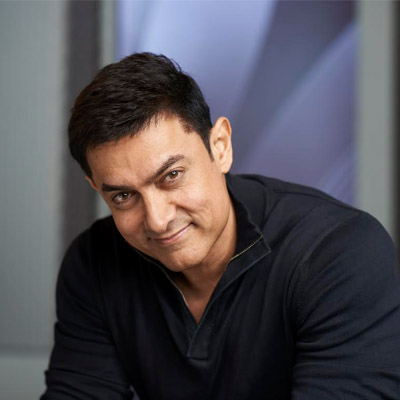
  • Aamir Vs Aamir

    Aamir Vs Aamir

    Let me begin with a disclaimer. This is not a piece about how celebrities should conduct themselves in public or in media. It is not about whether or not they should get involved with or voice their opinions on politically or socially sensitive matters. It is not about whether they should do research on a controversial subject, acquaint themselves with ‘facts’ from both sides, and only then form an opinion instead of forming lazy opinions.

    Enough and more has been written or spoken on these subjects. We have heard Aamir and his supporters from the ‘industry’ and elsewhere. We have seen other celebrities such as Arundhati Roy and Rahul Bose share their opinion with us on several news TV stations. In fact, only recently, I read a beautifully written piece by Rahul Bose on intentblog, one of the best open blogs I have seen.

    It’s Aamir the actor who acts for a living versus Aamir the brand whose equity must be protected, grown and leveraged
    _____****_____

    My goal here is a little different. A little less selfless and more commercial, if you may. As a practitioner of marketing and communication, I am intrigued by the issues the Aamir-Narmada-Fanaa episode raises, even after the episode itself seems to have blown over.

    If you try to simplify an otherwise multi-textural issue, it’s Aamir the celebrity that endorses half a dozen high profile brands versus Aamir the concerned citizen who is compelled to raise his voice against seeming injustice. In fact, even more importantly, it’s Aamir the actor who acts for a living versus Aamir the brand whose equity must be protected, grown and leveraged.

    Now look at what the brand did. It [doesn’t sound right to refer to Aamir, as ‘it’, does it?] jumped out of its popularly accepted, rather linear domain of acting-to-entertain, into uncharted territory. Out of the larger-than-life fantasy world of the big screen, Dolby sound, and carefully directed retakes, into the grimy and sweaty world that millions live in every day. It could not have been an easy choice. Particularly when a brand extension [Fanaa] was weeks away from its launch. I know there are people out there who believe Aamir’s Narmada outburst and rather ‘suddenly’ found social conscience were part of a carefully orchestrated bridge strategy between Rang De Basanti and Fanaa. If that is true, I wonder how many product or service marketing managers would take such a risk before a launch. In fact, whether Aamir’s Narmada voice was a marketing tactic is not the real issue here.

    To me, the issue is whether brands need to learn a new lesson on how to communicate with their customers. Ever since brand management started as a discipline, most brands have tried to create and maintain a squeaky clean image, polished regularly by advertising. They have lived in a fantasy world where problems always disappear at the end of 30 seconds, ‘ordinary’ names always fail, rivals draw blood on an imaginary street. They have stood on pedestals and delivered sermons about the good and the evil, while obedient disciples listened with patience. Not unlike how Aamir and others in his profession talk to us in a theatre, if you think about it.

    But the truth is, brands live in our minds and hearts and we live in a society. The society isn’t a fantasy world; it’s where we return when the three hours of fantasy are over. It’s where parents take interviews, so that kids can get admission into a school, where neighbors fight over relatively trivial issues, where corruption is something we practice in day time and watch on TV at night.

    Do brands live in our society? With us? Should they?

    If we want to move from an era where consumers move from just knowing our brand to liking it, a thought that is finding increasing acceptance amongst seasoned brand marketers, we should perhaps think of brands as social beings.

    Should brands take a social stance? Or should they avoid any kind of controversy and stay sanitized and clean?
    _____****_____

    Not everyone in our society is our friend. Some people whose ideas and opinions are similar to ours, who have interests and hobbies common to ours, who help us face a challenge or leverage an opportunity, become our friends. Others become someone else’s friends. People fight normal fights, but we are most often loyal to our friends regardless of who is fighting against them. And while we might have many types of friends and sometimes we lose touch with some of them, we don’t change with friends very frequently.

    Do we see our brand as a friend like this?

    Here comes the provocation. In a world where people [consumers?] are getting increasingly cynical of marketing, advertising and brands, should we start breaking down some of the practices that built our powerful brands yesterday? Should we attempt to make the simple principles of friendship and social relationship work to create a relationship between our brand and attention challenged consumers?

    Should our brands step down from the hallowed pedestal and mingle with the masses? Should they take stances on issues of social importance and urgency, even if some of them might be controversial and ‘politically’ sensitive?

    Net, should brands take a social stance? Or should they avoid any kind of controversy and stay sanitized and clean?

    How come Aamir thought of doing something that Shah Rukh, Amitabh, Aishwarya, Lataji and Hritik haven’t done? Is Aamir the only one? How about Shabana? How about Gere?

    How come we regard Benetton, Bullet, MTV, Diesel, Harley, Zippo, Apple, Red Bull differently from countless others?

    If we think of brands broadly as mainstream and leading-edge, how they have built themselves, what chances they have taken, who owns them and how they behave, we might find some directions and explanations. But, then, that’s a broader subject, isn’t it?

    Do you have an opinion on brands taking a social stance. Help Ravi Kiran write the next chapter. Post your thoughts to editor@indiantelevision.com

    (The author is South Asia CEO Starcom MediaVest Group)