Category: Hindi

  • Dear Maya….Meandering malady!

    There is an interminable line-up of experimental films being made by aspiring new makers.

    This happens because many people want to make a mark with their first film so that they can gate-crash the Who is Who of the film industry. That is not easy as innumerable small films are made, of which some find an outlet, some never do and, from among those which make it to the silver screen, just one turns out to be something good like Hindi Medium, last week’s release with Irrfan playing the lead.

    If Hindi Medium worked, it was because it tackled a contemporary issue that wrecks the life of many a parent when it comes to the education of their child. And what makes it watchable is the way it has been scripted and executed in an entertaining way while also conveying the message. (This mention of another film while reviewing Dear Maya is inevitable because such a film also carries a message for other filmmakers; make a relevant film.)

    Dear Maya is one such film which tries to be different but the idea is totally alien for the Hindi film viewer. It is loosely based on PS: I Love You and, probably, has some more sources of inspiration. It also attempts to bring to the fore a forgotten yesteryear actor, Manisha Koirala.

    Manisha, playing Maya, is a victim of her uncle’s greedy tortures who wanted to take over her inheritance by hook or by crook. She lives in a palatial but dilapidated mansion in Shimla. She is a recluse at times seen peeping through her windows. For company, she has a maid and two ferocious dogs besides a sanctuary full of birds.

    Two teenage school-going girls, played by Madeha Imam and Shreya Chaudhary, are always up to mischief, watch her in her window on their way back from school. Curious, Madeha learns of the past misfortunes of Manisha in which she is still wallowing.

    Maheda and Shreya decide to play a prank on Manisha if only to bring her out of her sorrowful life. They send her a chain of love letters posing as one of her suitors who fell in love with her on first sight and was rejected by her evil uncle but who still loves and thinks of her.

    Following this chain of love letters, Maya brings herself back to life. She opens up to the world. And, one fine day, she decides to sell all her possessions along with her palatial house to go search of the one who wrote those letters to her.

    Madeha and Shreya realize that their prank has backfired and that shatters them besides destroying their friendship.

    There was one woman wallowing in self-pity in Manisha, now we have three with Madeha and Shreya added to the list, all living the life of self-inflicted torture and, soon, it’s the viewer’s turn to join the club!

    Manisha has willingly left Shimla for Delhi after announcing it to whole the town but, for convenience sake, the script dubs her as a missing person. And, Madeha and Shreya embark on her search. They carry the burden of some unnecessary side tracks which takes the film to an intolerable duration of 131 minutes.

    The script and direction are weak. The one good thing about the film is its scenic location of Shimla though that also has limited exploitation. Manisha Koirala fails to get her manners right of a 20 year recluse closeted from the world, mentally destroyed. Shreya and Madeha are pleasing though the latter needs a few variations in her expressions.

    Producers: Shobhna Yadav, Sandeep Leyzell.

    Director: Sunaina Bhatnagar.

    Cast: Manisha Koirala, Madeha Imam, Shreya Chaudhary, Irawati Hershe, Rohit Saraf, Reuben Israel, Rakyesh Omprakash Mehra.

  • A Death In The Gunj (English- mixed): Still born

    A Death In The Gunj is one of those films which reminds one of the mystery novels and movies from the British black-and-white era. A bunch of people, usually friends, family and extended family gather at a lonely — as in far from a civilisation — place for a vacation. Seemingly, there is laughter and bonhomie yet, the vibes are not good.

    For such a story to be told, a film’s roster needs to be talented. And, on that count, the film is well equipped. The writer director being Konkona Sensharma, an industry person herself, her goodwill counts to this end to put together a good cast.

    The characters of Om Puri and Tanuja live in a remote place called McCluskieganj, in Bihar (now Jharkhand). During the winter of late 70s, the couple’s family comes to visit. It includes Gulshan Devaiah, Tillotoma Shome, Arya Sharma, Vikrant Massey and Kalki Koechlin. Ranvir Shorey, Jim Sarbh, their local friends also join in.

    The makers dont deem it necessary to enlighten you as to how they are related or what their connections are. They know each other from before but we, the viewers, don’t and that does not seem to matter! So one assumes, Om Puri and Tanuja are a retired old couple living a life of seclusion but peace in this far off place in a huge cottage surrounded by jungles. The character of Gulshan is their son and Tillotoma the daughter in law with Arya being the granddaughter. Vikrant is Tanuja’s nephew from her sister’s side. There is no way of placing Ranvir, Jim and Kalki except as family friends.

    Among those gathered, Vikrant comes out as the odd man out. All pranks are made at his cost.
    The place has no TV and the only transistor radio is monopolised by Om Puri for cricket updates. It is an open house and there is no taboo on alcohol or smoking. The crowd gets around to play old-fashioned games. Being of Bengali origin, the first try is planchette, a board game (?) about calling the souls of dead folks who are asked to reveal family secrets.

    But, they are not really playing a game, they are all together in targeting Vikrant for no rhyme or reason and making him the butt of a practical joke. Next, they play kabaddi and, again, Vikrant is almost throttled when he seems to be winning.

    Vikrant, who has had a bad time in college, is avoiding his widowed mother and is a total wreck mentally, comes to terms with the fact that not only is he not welcome here but also nobody cares if he lives or dies.

    The script of the film expects the viewer to understand a lot without being told. What is happening and why stops mattering because if you ask your companion next to you, he/she is as much at loss as you are. By the time the film reaches its conclusion, which lacks logic, it makes the whole lot out on a vacation look like a bunch of sadists who derive more fun out of teasing and torturing an innocent young man looking for a shoulder to lean on than their planchette and kabaddi. Direction is average as in what could have been a 75 minute narration is stretched to 110 minutes and yet failing to establish connections as well as the purpose of torturing a down and out youth! There is no comic relief, music or visuals for distraction. Only sadism.

    The casting is good as mentioned earlier, but the characters lack background. Om Puri and Tanuja, the two stalwarts, have nothing to do and they do it ably. Rest act well but to no avail. Vikrant Massey is the one excels.

    Producers: Honey Trehan, Abhishek Chaubey, Raagi Bhatnagar, Ashish Bhatnagar, Vijay Kumar R Swami.

    Director: Konkona Sensharma.

    Cast: Tanuja, Om Puri, Gulshan Devaiyah, Tillotoma Shome, Vikrant Massey, Kalki Koechlin, Ranvir Shorey, Jim Sarbh, Arya Sharma, Promila Pradhan, Ashok Pathak, Saraswati Devi. 

  • Indian director Ramana’s short film ‘Living Idle’ wins international acclaim

    MUMBAI: Prolific filmmaker Ramana’s short film ‘Living Idle’ has received accolades by winning 26 international awards at various Film Festivals across the globe. Five Continents International Film Festival (FICOCC) is the latest win, in May 2017.

    The film revolves around the basic idea of unconditional love and how a woman loves her husband and family and goes to any extent to fulfilher duty of love without any expectations or biases towards her oppressors. It runs for duration of seven minutes.

    Ramana is, at present, the Art Director at Assemblage – a leading feature film focused CGI production animation studio based out of Mumbai. At Assemblage, Ramana closely works with its Hollywood clients in areas related to visual development, visual scripting and design.

    Throughout his career, he has worked on many great films like Puss in Boots, Madagascar, Elizabeth 2 & 3, and Prince of Persia, etc. Ramana has been working in the movie business for over 20 years and has been a part of renowned studios including the likes of DreamWorks and mentored by great film-makers such as Shekhar Kapur. He has always been an inspiration the artists in the Indian animation and creative industry.

    Ramana is the latest addition to the award-winning team at Assemblage Entertainment, that consists of technocrats, artists and production managers with several years of experience in creating world-class animation productions in collaboration with major Hollywood studios and independent production companies globally.

    On his film receivingworldwide appreciation, Ramana said, “The most important thing for a creative person to excel at his work is when he is allowed the freedom of expression. This automatically translated into one’s body of work. Working here at Assemblage, I have been given the kind of freedom that a film maker can only dream of!”

    Congratulating Ramana on his recent success, ArjunMadhavan, Head of Strategy and New Business at Assemblage adds, “Ramana’s ability to translate his creative visualisation into celluloid, over a weekend’s worth of a shoot has been very impressive. Kudos to him, the brilliant actors and execution team for pulling this off!”

    Living Idle is a symbolic short film that reflects actions have consequences. This is the story of an artist, a creative sculptor of idols,that puts life and colour into clusters of mud and clay. Ironically, he fails to add colour to his own creation- his world, his family, his child. The narrative revolves around how a creation of the sculptor- an idol of Ma Durga punishes him (by rendering him indisposed and idle), when he crosses all limits of abuse and shows him a life of yearning. The film concludes with a deep dawn of realisation – of how a single action- takes away from him his ability to be a prolific sculptor- that of clay and stone and that of his child’s future. The film is embedded with contrasting symbolism, as aptly reflected in its title, most strongly that of the strength of a woman, of a mother, which is – representative in Ma Durga’s rendition of ‘Good over Evil’.

    The hunger for food, the hunger for physical fulfilment and the hunger for creativity are natural, necessary, and common human instincts. However, an unbalanced, excessive, and uncontrolled desire to fulfil one’s hunger leads to dire consequences, which is the story of ‘Living Idle’.

  • B. A. G. Films reports improved top and bottom lines

    BENGALURU: The Anurradha Prasad led B. A. G. Films and Media Limited (BAG Films) reported improved revenue and profit after tax (PAT) for the year ended 31 March 2017 (FY-17, current year or fiscal) as compared to fiscal 2016.

    Two of the company’s four segments – Television broadcasting and FM Radio reported increase in operating revenues and operating profits in the current year as compared to the previous year. Its Audio Visual production segment reported lower operating revenue and operating profits, while operating revenue and operating losses of its Leasing segment declined in fiscal 2017 as compared to fiscal 2016.

    The company’s income from operations or operating revenue increased 16.6 percent to Rs1,366.84 million in FY-17 to Rs 1,17241 million in the previous year. BAG Films reported PAT of Rs 8.43 million in FY-17 as compared to a loss of Rs 28.94 million in the previous year. Simple EBIDTA excluding other income increased 12.9 percent to Rs 319.34 million (23.4 percent of Operating Revnue) in FY-17 from Rs 282.76 million (24.1 percent of Operating Revenue).

    The company’s Total Expenses increased 13.1 percent to Rs 1,177.42 million (86.1 percent of Operating Revenue) in FY-17 from Rs 1,041.15 million (88.8 percent of Operating Revenue). Employee costs increased 4.3 percent in fiscal 2017 to Rs 209.90 million (15.3 percent of Operating Revenue) from Rs 200.35 million (17.1 percent of Operating Revenue) in the previous year. Other expenses increased 14.5 percent in FY-17 to Rs 814.64 million (59.6 percent of Operating Revenue) from Rs 711.52 million (60.7 percent of Operating Revenue) in FY-16. Finance costs increased 7.5 percent to Rs 163.5 million (12 percent of Operating Revenue) in the current year from Rs 152.16 million (13 percent of Operating Revenue) in the previous year.

    Segment Numbers

    BAG Films Television segment has three channels News 24, E24 and Darshan 24, while its Radio segment, Radio Dhamaal 24 operates 10 FM radio stations in the country.

    BAG Films biggest segment is its Television Broadcasting (TV) segment. TV segment’s operating revenue increased 22.9 percent in FY-17 to Rs1,126.05 million from Rs 916.56 million in FY-16. TV segment’s operating profit increased 33.2 percent in FY-17 to Rs 315.34 million from Rs 236.7 million in the previous fiscal.

    Audio Visual Production segment revenue for fiscal 2017 declined 20.3 percent to Rs 137.54 million from Rs 172.67 million in the previous fiscal. The segment’s operating revenue declined 42 percent to Rs 52.16 million from Rs 89.88 million in the previous year.

    FM Radio segment’s operating revenue increased 25.5 percent to Rs 100.75 million from Rs 80.26 million in the previous year. The segment’s operating profit more than doubled (increased by 2.5 times) to Rs 33.93 million from Rs 13.51 million.

    BAG Films Leasing segment revenue declined 14.1 percent in FY-17 to Rs 2.50 million from Rs 2.92 million in FY-16. Leasing segment operating loss reduced in FY-17 to Rs 31.97 million from a loss of Rs 38.38 million in the previous year.

    Also Read:

    Saluting India’s TV women


  • US$ 20m Drishyam fund for 10 Indian films in two years, releases showreel

    MUMBAI: Mumbai-based Drishyam Films is set to launch a $20m Production Fund to facilitate the growth of independent Indian cinema and to escalate it to a global reach.

    The fund will be spent in developing and producing cutting edge original content that will be true to the Drishyam vision of cinema, i.e. local in its setting but global in its appeal. It will be put to use for producing 10 independent Indian films over the next two years.

    Manish Mundra, founder of Drishyam Films, expects to announce the first projects under the fund in the early 2018. In addition to the production of the films, the fund will also be used to develop Drishyam Films’ VFX Studio in Mumbai.

    The production fund, which is raised independently by Manish Mundra, will help Drishyam Films towards accomplishing their goals of building a platform for unique voices of Indian independent cinema and create global content with rich Indian flavours. 

    Mundra says: “This fund has been set up with the objective of taking Indian cinema to the next level internationally. We plan to take our focus on content driven cinema and merge it with high technical finesse to make films that will travel across the world.”

    The studio which has produced some of the most acclaimed and globally feted Indian films recently such as Ankhon Dekhi, Masaan, Dhanak, Umrika and Waiting also released a special showreel that celebrates their impressive body of work, and also gives audiences a sneak preview of their forthcoming releases.

    Apart from the fund, Mundra has two new features going into production over the summer – Mohamed Gani’s Cycle, about the importance of the humble bicycle in small-town India, and Ganesh Shetty’s Anonymous, about a woman and her relationship with society as she undergoes an abortion. Both films are being readied for festival submission by the end of the year.

    Drishyam Films has already had a great start to 2017, with their next release Newton starring Rajkummar Rao winning the CICAE Award at the Berlin International Film Festival 2017 and the Jury Prize for Best Film at the 41st Hong Kong Film Festival, 2017. More recently, their films won big at the 64th National Film Awards where Dhanak won Best Children’s Film, while Kadvi Hawa bagged a Special Mention.

  • Real life-based, fiction & sequel to hit — hardly get average biz

    “Sachin: A Billion Dreams” opened with fairly decent collections. It could be because of the fact that he is an icon and that the cricket fever is in the air with the IPL just having got over even as the Champions Trophy is slated to commence come 1 June.

    The film has not been dramatised and that limits its appeal to those who are not cricket buffs. For example, the added spice of the two romance stories in Dhoni’s life added to the humane side of the protagonist’s character in M S Dhoni: The Untold Story. Here, though you are told that Sachin and Anjali’s romance lasted four years before they decided to tie the knot, there is no romance depicted on screen.

    As the film proceeds, it is as much about the rise of the Indian cricket in the last 20 or so years, as it is about the ups and downs in Sachin’s cricketing career.

    The film collected a little over seven crore on day one while the rise on Saturday was negligible. The film did its best on Sunday by collecting around nine crore to end its first weekend with Rs 23.4 crore.

    * “Hindi Medium,” following much appreciation and a positive word of mouth, has gone on to become a hit even as it entered its second week. This small budget film kept improving its collections as the week progressed and even managed to collect better figures on its eighth day compared to first.

    The film collected more in the rest of the week than it did in its opening weekend which is a rare feat nowadays. The film collected Rs 23.5 crore for the opening week and is reported to be holding well through its second weekend.

    * “Half Girlfriend” failed to appeal to the youth which it was expected to draw. The rich girl poor boy old-fashioned angle of the story, indifferently treated, had little to hold the interest of the viewer. The film dropped during the week day to end its first week with a total of Rs 44. 8 crore. The price the film’s domestic rights have been acquired at, will lead to a shortfall in the recovery of over Rs 10 crore.

    * “Meri Pyaari Bindu” emerged as an average film. Being a YRF film sans a price tag but enjoying YRF brand equity, it stands to earn little something for the company and all of that from the domestic theatrical exploitation. The film’s collection hovers around Rs 10 crore mark.

    * “Sarkar” failed miserably. Failing to provide any variety or novelty from its earlier two versions nor any continuity or link to the previous stories, it takes the viewer for granted and pays for it. The film collected around Rs 50 lakh in its second week to take its two week total to Rs 6.7 crore.

    * “Bahubali 2: The Conclusion” (Hindi-Dubbed) continues with its winning run, setting records in the process. The film collected Rs 29.4 crore in its fourth week to take its four week total to Rs 478.9 crore.

  • Three aspiring filmmakers win Moviebuff’s theatrically showcased ‘First Clap’ contest

    MUMBAI: Five filmmakers from Tamil Nadu were the shortlisted finalists in the Moviebuff First Clap film contest, India’s first theatrically showcased talent hunt for aspiring filmmakers, challenging them to tell a compelling story in three minutes on any subject of their interest. Three winners from these five were announced at an awards presentation at Sathyam Cinemas on 22 May.

    Prizes include cash rewards as well as a coveted internship opportunity with Suriya’s production company 2D Entertainment.

    The winners were:
    1st prize – Ival Azhagu – Directed by Vijay Ganapathy
    2nd prize – App(a) Lock – Directed by Pradeep Ranganathan
    3rd prize – Yennaga Sir Unga Sattam – Directed by Prabhu Jeyaram
    4th prize – Intha Naal Iniya Naal – Directed by Magesh Balasubramaniam
    5th prize – Think & Ink – Directed by Nattu Dev

    “FirstClap was conceived to identify new talent who have it in them to attract audiences to the cinema halls and benefit our industry. This is just the beginning of many more innovative initiatives keeping the interest of cinema in mind,” says Director Jayendra Panchapakesan, co-founder of Qube Cinema Technologies.

    Chief guests at the event included Cinematographer and Director PC Sreeram, Director Ezhil, Director Vetrimaran, Cinematographer Magesh Muthuswamy, Director Arun Kumar S.U., CEO of 2D Entertainment Rajsekar Karpoorasundarapandian, Film Critic Sreedhar Pillai, Film Editor KL Praveen, Audiographer Udayakumar, Director Hari Viswanath, Chennai International Short Film Festival Director Srinivasa Santhanam and Film Critic, Trade Analyst, CEO of Common Man Media Sathish Kumar. They were also part of the jury that judged the final round of entries in the contest.

    “I am extremely happy for the finalists and the winners that they got to realise their dream of watching live audience reactions to their content at the theatres…invaluable feedback for them for their future efforts in filmmaking. This whole endeavour would not have been possible without the active support and encouragement of the esteemed theatre owners of Qube Cinema Network. All the finalists, who visited various theatres across Tamil Nadu, were thrilled and extremely thankful for this encouragement from the theatre community. The next phase of internship with 2D Entertainment will no doubt be a period of intense learning that will hone their thinking and skills. With the success of this initiative, the next edition of First Clap will be an all-India initiative by Moviebuff and we hope to enhance the scope of assistance that Moviebuff will offer to budding filmmakers in the days to come,” says Arvind Ranganathan, CEO of Qube Cinema Technologies.

    Beginning 16 December, 2016, more than 250 entries were received for Moviebuff’s First Clap contest. Of these, 17 were shortlisted by judges from Moviebuff and Littleshows. The final five films were selected from public voting via screenings at local theatres supporting the contest as well as scores awarded by the panel of judges associated with the Tamil film industry. Finally, the top three were selected by public voting from cinemas, with audiences participating by choosing the next filmmaker via a unique SMS code. A total of 170 screens showed the movies, accounting for around 23,800 shows (170 screens x 5 weeks x 28 shows) across Tamil Nadu from 10 March 2017 to 13 April 2017.

  • Sachin: A Billion Dreams….For Staunch Sachin fans.

    Films on sports did not work with the Indian audience for a long time. If at all some producers dared make a film, it would be mainly on cricket. Of the dozens of films made on sports, less than half a dozen have worked while a couple of others, like Iqbal and Budhia Singh: Born To Run, earned critical appreciation but no moolah.

    The reason was very simple. India had not learnt to win games, be it cricket or the game at which we once excelled, hockey. Things changed as the tide turned and Indian sportspersons started coming back with cups and medals in the new century.

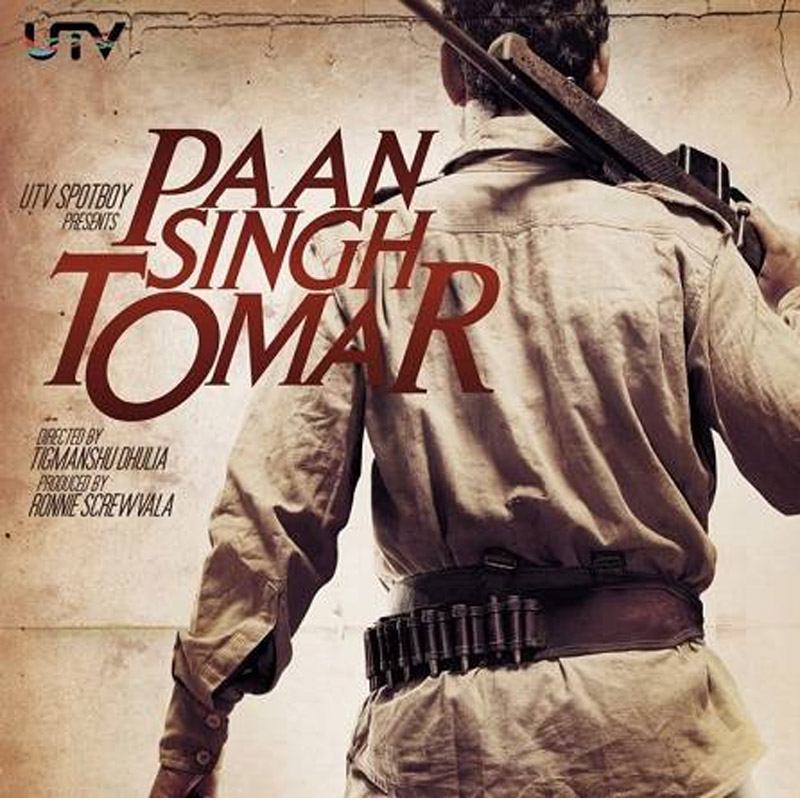
    Yet, the trend has been on making biopics on sports for the obvious reason that with success a sportsman is elevated to a cult status. The recent hits in this genre are Bhaag Milkha Bhaag, Paan Singh Tomar, Mary Kom, MS Dhoni: The Untold Story and Dangal.

    Sachin: A Billion Dreams is not dramatized as it is done with other films. It is a linear biographical documentary on the rise, temporary fall and rise again of Sachin Tendulkar, culminating in the very dream that drew him to cricket: The 1983 World Cup victory of India and KapilDev, the then Captain, holding the World Cup ODI trophy aloft. To hold a world cup in his hands was Sachin’s dream and the Indian team realized it for him in 2011.

    Sachin announced his retirement soon thereafter in stages.

    As for the film, most of it is retrieved footage from television. While the film tells about Sachin, it is also the journey of the Indian cricket over about the last quarter century. From the days when BCCI (Board Of Control for Cricket in India) had to pay 5.5 lakh to the national TV channel, Doordarshan, to telecast cricket matches to how the post-1991 economic reforms led to the first time that a TV channel, ESPN, paid $5.5 million to BCCI for the telecast rights Indian cricket matches.

    It is about how Ajit Tendulkar sees the potential in his kid brother, Sachin, and takes him to the best cricket coach in town, RamakantAchrekar, to hone his talent. How Sachin then went on to set an interschool league match record with his schoolmate, VinodKambli, with anunbroken partnership of 664 in 1988.
    The rest is about Sachin’s selection to Mumbai Ranji Trophy team and, soon after, to the Indian team as the youngest player ever to make the cut; he was 16 years and 205 days.

    The early parts of the film deal with Sachin’s middle-class Bandra East family, his love for his family, especially his father, Ramesh, which bordered on devotion, and their support for his cricket, including how brother Ajit took him to Mumbai’s legendary cricket ground, ShivajiPark for practise sessions every day.

    So far the film is very engrossing with the proceedings having a human interest angle. Also interesting are the parts about his romance and marriage to Anjali Mehta, a qualified doctor a few years older to him.

    As the film moves in to the second half, it seems to be in a hurry to wrap it up. A montage of various matches and tournaments follow without timelines or who is playing whom. Even the World Cup that India won which fulfilled Sachin’s life ambition is shoddily projected. Who is India playing with, what is the target? No such details on screen! This despite all the records available all over the net as well as the archives. AR Rahman’s background score adds some zing to the proceedings.

    Sachin, used to facing the cameras thanks to his numerous endorsements, is comfortable telling his story.
    Sachin: A Billion Dreams is a documentary, pure and simple, sans drama. The film will find favour with his fans with its best prospects in Western India.

    Producers: Ravi Bhagchandka, Carnival Motion Pictures.

    Director: James Erskine.

    Cast: Sachin Tendulkar, Anjali Tendulkar, Sara Tendulkar, Arjun Tendulkar along with many brief appearances by celebrities.

  • Om Puri Foundation unveiled in Cannes to help arts, farmers

    NEW DELHI: The Om Puri Foundation has been unveiled today at the 70th Cannes Film Festival to carry forward his legacy and the high standards set by him as an actor on films, television and the theater.

    Ms Nandita Puri and his son Ishaan were present as the Foundation was unveiled yesterday first at the British Pavilion and later at the Indian Pavilion.

    This was followed by a discussion with veteran critic Derek Malcolm, actor-director Nandita Das and actor Nawazuddin Siddiqui along with the Puris, moderated by eminent critic and wrier Uma Da Cunha.

    The Foundation aims to take forward Om Puri’s legacy, philosophy and values that he cherished.

    Initially, the Foundation will initiate the Om Puri Scholar for the most deserving student from the Film and Television Institute of India in Pune, the Om Puri Fellow for the most deserving student from the National School of Drama in Delhi where the actor had his initial training before joining FTII; and the Om Puri Grant for promising and deserving filmmakers to go to international film festivals to broaden their understanding of world cinema.

    Ishaan told indiantelevision.com from Cannes that the Foundation intends to take the actors films and work in television to schools, colleges and universities worldwide to keep alive the rich body of his work.

    It will also work to take forward a social cause that saddened Om Puri very much – the state of Indian farmers. The Foundation will offer scholarships to deserving children of farmers to pursue their higher studies and thus help farmers to make ends meet.

    Recipient of the OBE (Order of the British Empire) and the Padma Shree, Om passed away on 6 January 2017, leaving behind a large body of work that included theatre, television (one of the best being Shyam Benegal’s ‘The Discovery of India), and around 150 films in Hollywood and the United Kingdom apart from India.

    Best known for his author-backed roles in early years, he also excelled in comedy as well as action films and was known as the angry young man of art cinema in his early years. His powerful voice has been used to advantage by Shyam Benegal in ‘The Discovery of India” as the narrator apart from his appearance in more than ten different roles in that series, and by many makers of animation films.

    He made a mark overseas with ‘East is East’ apart from Richard Attemborough’s ‘Gandhi’ where he had a short but impactful role and then went on to act in more than a dozen films overseas.

  • Bahubali continues to rule the box office as it pushes aside others in third week

    The fact that films and cricket remain its dominant entertainers on television was evident when the Zee TV premiere of Dangal on 21 May and the final of the IPL T20 on Sony Max took the toll at the box office.

    Last Friday saw the release of two totally different genre films – Hindi Medium and Half Girlfriend.

    Hindi Medium is an entertaining family fare that also tackles a social issue relating to the education system in India; showing how every educational institution brands itself as ‘international’ and,while even the poor want their children to get English education, it is gradually going out of their reach. This is a small budget film with not much wasted on artistes while the limited locations help curtail the budget.

    Half Girlfriend, on the other hand, is youth oriented romance. It used all the traditional stuff that a love story has been using through the history of storytelling: taming of the shrew, rich vs poor, chamcha friends around and, as a side attraction, it also touches on the Swachh Bharat issue stressing on the need for toilets in mofussil area schools so girl students do not shy away from enrol!ing. Sadly, all these elements were badly and predictably strewn together handled with inept direction.

    Of the films released last week, Ram Gopal Varma’s idea of The Godfather, Sarkar 3, backfired yet again. Why is RPG trying to sell the same idea again if it was not accepted the first time? In filmmaking, you can’t be third time lucky with the same stuff!

    Of the already running films, only Bahubali (Dubbed-Hindi) is sustaining. It is no secret that no dubbed film has ever done this kind of business while, it is also no secret that no Hindi films has reached such box office height either, be is a Salman Khan or an Aamir Khan starrer despite their being known to break barriers.

    Box Office status wise:

    *Half Girlfriend opened reasonably well but the word of mouth was mostly against its content. The film collected 29.1 crore over the weekend and may fall short of its target. The price at which its Indian theatrical rights have been sold, the film will need to reach a target of little short of 100 crore.

    *Hindi Medium opened to an indifferent response on Friday, a good word of mouth helped the film as it gained on Saturday and Sunday to end its opening weekend with Rs 109 million. It should sail safe.

    *Sarkar 3 has been very poor managing to collect barely Rs 82 million in its first week and is a loser.

    *Meri Pyaari Bindu, with lesser number of screens compared to Sarkar 3, has been a slow starter but, being a mini budget enterprise, should not offset the producers’ balance sheet. The film collected Rs 86 million.

    *Bahubali 2: The Conclusion (Hindi-Dubbed) maintains strong trends as the film collects a whopping Rs 676 million in its third week taking its three week total to Rs 4.495 billion – the highest box office collections ever for a film in the Hindi belt.