Category: Hindi

  • Kal Ho Na Ho completes nine years in circulation

    Kal Ho Na Ho completes nine years in circulation

    MUMBAI: Yesterday was a noteworthy day for Dharma Productions as its film Kal Ho Naa Ho, completed nine years of circulation. It was on 28 November, 2003 that the film had initially released.

    Kal Ho Naa Ho is very close to Karan Johar‘s heart as this was the last film in which he worked with his father Yash Johar. The film also holds immense value in the careers of all the lead actors as they are still remembered for their characters in the film.

    All the three stars; Shah Rukh Khan, Saif Ali Khan and Preity Zinta shared a great chemistry and slipped into their characters with ease.

    Reminiscing the days, Johar said, "Nine years to Kal Ho Naa Ho….the last film my father helmed at Dharma Productions…an ironic title which is special to me…always…."

  • PVR to buy 69.29% Cinemax promoter stake for Rs 3.95 bn; plex biz in consolidation phase

    PVR to buy 69.29% Cinemax promoter stake for Rs 3.95 bn; plex biz in consolidation phase

    MUMBAI: Ajay Bijli-promoted PVR Ltd. has agreed to buy the entire 69.27 per cent promoter stake in competing multiplex operator Cinemax India for Rs 3.95 billion, which will make it the biggest multiplex operator in the country.

    The deal values Cinemax at Rs 5.7 billion, making it an expensive purchase. Since Cinemax has 138 screens, PVR has paid a higher premium to fortify its presence in Western India, including Mumbai.

    For exiting the business, the Kanakias are being paid at Rs 203.65 per share. Cinemax‘s stock jumped 4.99 per cent on Thursday to close at a new high of Rs 184.25.

    PVR is making the acquisition through Cine Hospitality, its wholly-owned subsidiary.

    Of the 69.29 per cent promoters stake in Cinemax India, Himanshi and Rasesh Kanakia hold 33.46 per cent each while Rupal and Hiral Kanakia own 1.17 per cent each. The remaining 0.03 per cent stake is held by Kanakia Gruhnirman and Kanakia Finance and Investments.

    PVR Promoter Ajay Bijli said, “In order to achieve market leadership in Indian Exhibition business, PVR has been on a rapid expansion mode both through organic as well as inorganic routes. Today, with the proposed acquisition of Cinemax, we hope to create the largest movie exhibition chain in India."

    Cinemax Promoter Rasesh Kanakia said, “We believe that the Exhibition business benefits from consolidation as large scale strengthens competitive advantage as well as significantly enhances operational efficiencies. This transaction enables realization of such benefits and would create significant value for all the shareholders of Cinemax. The deal will enable us to ensure greater focus on our real estate and hospitality businesses.”

    PVR with the backing of private equity investors will also make an open offer to public shareholders of Cinemax, which would eventually culminate in the delisting of the company’s shares.

    As part of the open offer, Cine Hospitality will acquire up to 7.2 million fully paid-up equity shares of face value of Rs 5 each representing 26 per cent of the fully diluted voting equity share capital of Cinemax at a price of Rs 203.65 per share.

    PVR has also got the board approval to issue 10.62 million fully paid equity shares on a preferential basis to Ajay Bijli, Sanjeev Kumar, L Capital, Multiples Private Equity Fund I Limited, and Multiples Private Equity Fund at Rs 245 per share to raise Rs 2.6 billion.

    Under the preferential issue of equity shares in PVR Limited, Multiples will invest an amount of approximately Rs 1.53 billion, L Capital would invest approximately Rs 823 million and Promoters would invest approximately Rs 250 million into PVR.

    Post the above dilution, both Multiples Private Equity and L Capital would own approximately 15.8 per cent stake each in the company and the Promoters will hold 32 per cent stake in the Company.

    The owners of Cinemax had demerged their multiplex business from the core real estate business, which was housed in Cinemax Property. Earlier this year, international private equity fund L Capital Eco had agreed to invest a total of Rs 1.07 billion in PVR.

    In the last fiscal, Cinemax had posted a profit of Rs 77.9 million on revenues of Rs 2.7 billion. While, PVR‘s net profit stood at Rs 281.1 million on revenues of Rs 4.7 billion.

    Expensive deal but PVR gets location advantage

    The deal values the per screen price at Rs 45 million, more than double the cost if PVR were to have build on its own. PVR has valued Cinemax, which has a net debt of Rs 850 million, at Rs 5.7 billion.

    "While PVR becomes the largest multiplex operator, the premium paid for the acquisition is definitely too high. If PVR had decided to build it itself, the capex requirement would have been Rs 20 million per screen. But PVR gets location advantage and makes up for its weakness in western India," says an analyst at a broking firm.

    PVR currently has 46 operational properties, with 213 screens and a seating capacity of 50,655 seats. Cinemax has 39 operational properties, with 138 screens and a seating capacity of 33,535 seats.

    Theis acquisition would create the largest movie exhibition chain in India with a combined strength of 351 screens at 85 locations with a total capacity of 84,190 seats.

    This will also give PVR a leadership position in 10 key markets across the country. It will also help PVR to strengthen its position in Mumbai where Cinemax owns 45 screens and where average ticket prices are higher.

    The acquisition will also help PVR scale up its multiplex business. "For multiplex operators in India, the biggest challenge is to scale up through the organic route. And there are few good multiplexes available to buy. So the premium paid is justifiable," says a media analyst.

    Consolidation in the multiplex business

    The multiplex industry is entering a consolidation phase. Earlier, Inox Leisure Ltd had bought out the promoter‘s stake of 43.3 per cent in Fame India Ltd for Rs 664.8 million. Later this June, Fame was merged with Inox to become India’s largest multiplex chain with 257 screens.

    "There will be pressure on other multiplexes to acquire or sell. The business requires huge amount of cash to expand," says a media analyst.


  • Paul Cox feels anyone can get Oscars by spending money

    Paul Cox feels anyone can get Oscars by spending money

    PANAJI: His love for India has not diminished despite his not having come here for some years. And his energy does not appear to have diminished even when he is in his seventies.

    But there is one thing that Australian filmmaker Paul Cox is very troubled about. He is unable to understand the fascination that everyone including Indian filmmakers have with the Academy awards (Oscars). He says anyone with money can get these awards, and therefore has no respect for them.

    Talking about Indian cinema at press meet at the ongoing International Film Festival of India, he said he did not feel India has had a bigger filmmaker than Satyajit Ray. Ray was fantastic, a splendid human being, Paul added.

    And he was very clear that he prefers Bollywood to Hollywood. He wondered why Indians are always comparing Bollywood with Hollywood. He said Indian cinema should not try to find similarities with films from America.

    "We should be ashamed most films are pathetic. I would rather read a book than see a bad film", says this award-winning Dutch born director who did not have any film here but has stopped over on his way to the International Film Festival of Kerala in Thiruvananthapuram where he is in the Jury.

    Referring to the abysmal content of some films, Paul deplored cinema‘s exploitation of sex and violence, “If incest occurs in society, should that be an excuse to show it in graphic detail? Must filmmakers pander to base desires? Everyone is making commercial films to please others."

    "I love India, it is a home away from home for me and when I nearly died from cancer, I longed for India. Kindness matters above all else in life. But today, I feel some Indians have lost their capacity for kindness.”

    Krzysztof Kies‘lowski, the Polish film director and screenwriter best known internationally for The Decalogue (1989), was the last great filmmaker who touched the true potential of cinema. "But today, we (filmmakers) have lost their humanity,” he added.

    He prefaced his critique by a humorous anecdote of how a print of his film had been stolen from the projection box at a Delhi filmfest and the next day copies flooded the grey market.

    His other great loves are the Italian composer Vivaldi, the 17th century Dutch painter Vermeer and his (Cox‘s) wife Cathy, whom he met while both were being treated for liver cancer in hospital where he even wrote a book. Needless to add, signature traits of Cox’s work are a deep humanism and an affinity with the arts, as evinced in Vincent: The Life and Death of Vincent van Gogh and The Diaries of Vaslav Nijinsky.

  • India lags behind in co-productions

    India lags behind in co-productions

    PANAJI: Co-productions in making films is the norm all over the world but India appears to be lagging behind because of lack of knowledge of how such projects can be executed.

    This was the general consensus at an Open Forum on ‘Exploring New Horizons: International Co-productions” organised by the IDPA and the FFSI in association with the IFFI Secretariat and the ESG.

    Introducing the subject, film entrepreneur Bhuvan Lall who moderated said there had been no Indian film in the competition at Cannes since 1997. He also said co-productions was becoming the norm and a large number of films at most festivals were co-produced by persons from different countries.

    Suneera Nerissa Madhok who is an advocate specialising in film and entertainment stressed the need to know the laws of the countries with which one co-produced a film. She said a single-page agreement was generally no use and one had to study the media law in India and the country of co-production. She also advised that in case of disputes, it was cheaper to go in for arbitration than protracted court cases.

    She stressed the need for a unified platform to help co-productions. She said many countries gave subsidies and it was important to know about them. Issues about intellectual property should also be in place before any project is launched.

    She announced that lawyers like her had set up a new organisation – EMILA – to help those in film and entertainment draw up their contracts.

    Renowned filmmaker Shaji N Karun said he had made his film ‘Vanaprastham’ with finance from France, and this had helped him show it in Cannes. He was once again making a co-production, this time with France and Poland, on a film about music known as ‘Gatha’. But he stressed that all his co-productions had been with independent producers and not government or other financial institutions. He claimed that it was the first film to be shot in Panasonic and Dolby Digital.

    He stressed that he had made some mistakes during his first co-production and learnt the lesson that one has to understand the conditions in the country of co-production.

    Referring to overseas filmmakers coming to India to shoot, he said things had changed and India had both trained manpower and the latest technology to help those who came. But he regretted that as India did not have a Film Policy, problems like single-window clearance were not coming through.

    Marian Klotz of Memento Films in France said her company was into co-productions , though its main work was to market independent films and create a new cinema. She said people with good subjects often approached her company. She said it was possible to get financing from France without having a French element. However, she said it was necessary for the subject to be good and interesting and for the project to have a strong producer.

    Ravi Khamboj of Sevenseas Films of Australia said he was on the lookout for good co-production ventures with Indian filmmakers. At present he was doing a television series called ‘Namastey Good Day’ with India’s Mike Pandey in which the aim was to take Indian celebrities to Australia’s lesser known tourist spots and bring Australian celebrities to Indian tourism spots. He claimed that the film delegation from Australia to the Film Bazaar was the largest with 18 persons. There is 40 per cent subsidy for shooting in Australia. He stressed the need for India to have good line producers who could take care of filmmakers from overseas coming to India to shoot their films.

    Bikash Mishra of DearCinema.com said India had signed co-productions with nine countries but this had not led to any co-productions. Most co-productions happened on a person to person level. He said the co-production section of the Film Bazaar organised at IFFI every year was a great beginning. As far Europe was concerned, co-productions were very common.

  • Digital technology facilitates filmmaking

    Digital technology facilitates filmmaking

    NEW DELHI: Students of different film schools feel digital technology has made their work easier but agree that the main challenge still remains: finding good content that will move the viewers.

    Some of the students who interacted at the Open Forum organised by IDPA and FFSI were also nostalgic about the celluloid and said they would always want to keep at least one print of their film since digital technology.

    The students belonged to the Film and Television Institute of India, the Satyajit Ray Film and Television Institute, The AJK Mass Communication Research Centre of Jamia Millia Islimia, and the MGR Government Film School whose films are being screened in a separate section of Student Films and a section of Fifty Years of FTII.

    Ashim Paul whose film ‘Birds of Passage’ is in the non-features of the Indian Panorama said that digital technology did not pose a problem as young people were familiar with it, but celluloid held its own charm. He said one like to feel the product. In any case, it was important to preserve it in celluloid for archival purpose as digital technology could only save a film as a file. A film is tangible material, he said. He said while answering a question that content would not be affected by going digital,

    He said cinema was an art form and not a technology driven form and celluloid is a pious form.

    Kaushal Oza whose ‘Afterglow’ is also in the Indian Panorama said technology is an enabler and not the be-all and the end-all. The final product will still be in the hands of the creator. He did not agree with the view that digital will drive film out of the theatres, and said it could be viewed in all mediums.

    Prince George who was involved as music director of ‘Allah is Great’ which is also in the Panorama said technology was king for him as it had made his job very easy. He said digital technology had given him another advantage – he had been able to compose music for a film made by a filmmaker in Oman without that person coming to India or him having to go there.

    Govind Raju whose film ‘Golden Mango’ figures in the FTII package said the shift to digital was not too easy initially and took some time, but it has a lot of advantages. However, it would erroneous to say digital films are easier to make as they take the same effort. He also did not agree that films would disappear from theatres with digitisation.

    Kabil Dev M whose film ‘Rajini’ is in the Students Package said he felt very comfortable using digital technology for his films. But he felt that theatrical exhibition may be affected with so many other mediums.

    Arun said the movement from celluloid to digital was still in a transitional phase and it may take time for all to accept this new technology. Digital technology he said was pocket friendly but may affect theatrical exhibitions. He was also of the view that a film made on a small camera is fit for the small screen.

    Vandana said new media has brought forward a new way for promoting films, and said it was not true that the new media like YouTube did not pay for the content. But she agreed there was a romance in celluloid as one could keep and feel the product one produced.

    Suparna said digital technology also required discipline and so the filmmaker was important. She also wondered about problems faced by filmmakers for finance.

  • Copyright challenges with globalisation of the Indian film industry

    Copyright challenges with globalisation of the Indian film industry

    NEW DELHI: Media lawyers Jamshed Mistry and Suneera Madhok have said categorically that copyright belongs to the filmmaker by right, simply because he or she has created a piece of art – film – and the right was inviolate.

    It is when these rights are transferred that copyright issues come to the fore. Unless sold outright (not advisable under any circumstances) all transfer of rights are temporary and applicable to the media/format, the geographical territory and for a given period.

    If these issues are taken care of through a contract, then issues of insurance come up to cover not-budgeted for legal expenses on cases thrust on the production/producer by some mischievous litigants, asserted insurance expert Maneck Dastur.

    These experts were taking part in a panel discussion on challenges following globalisation of the film industry in India. The discussion was moderated by writer and filmmaker Ramesh Tekwani. Filmmaker Brahmanand Singh also spoke at the discussion jointly organised by Entertainment Society of Goa and the Film Federation of India.

    Filmmaker and distributor Vincent Corda confirmed that no international co-production or distribution deal could be finalised unless the project is adequately insured. He went on to explain that besides the various development funds that existed to initiate and sustain project development, there was also a risk fund to cover such exigencies.

    Straying from films yet staying with entertainment, Entertainment Society of Goa CEO Manoj Srivastava wanted to know just how IPR applied to events; the system of collection of fees seemed to be in place but he was not quite sure how the IPR owners got their dues from the collections. As this flummoxed all, the Film Federation of India had been asked to tackle it at the industry level with a condition that it must take up the copyright issue as a full-fledged, daylong seminar and thrash out the issue in detail.

  • Anusha Rizvi’s next is titled Opium

    Anusha Rizvi’s next is titled Opium

    MUMBAI: Anusha Rizvi known for her film Peepli Live, has teamed up with husband Mahmood Farooqui to direct her second film titled Opium.

    Confirming the same, Anusha said, "I am busy scripting my next film which is titled Opium. It‘s based on Amitav Ghosh‘s novel. The film will be directed by me and Mahmood Farooqui. The film will go on the floors in 2013."

    Anusha is looking at a bigger canvas for her second film and said, "I, as a director, want my film to do commercially well and at the same time it should be accepted by the audiences and get critical acclaim."

    "The film will be widely shot in Bihar, UP (Uttar Pradesh) and Calcutta (in West Bengal),"she added.

    On the casting, she maintains, "Right now, I am not looking at the cast of the film. I am only concentrating on the script. Once the script is ready, I will think about the cast."

  • Third Eye Film Fest from 6 to 13 December

    Third Eye Film Fest from 6 to 13 December

    MUMBAI: The 11th edition of the Third Eye Asian Film Festival organised by the Asian Film Foundation will be held from 6 to 13 December in Mumbai.

    For the first time, the festival screenings will also be held in Thane city also.

    The opening film of Mumbai Festival is Venice Award winner ‘Pieta‘, directed by Korean director Kim Ki Duk.

    The festival will be held simultaneously in Ravindra Natya Mandir (Mumbai) and Malhaar Theater (Thane).

    The Thane part of festival will open with Ganjendra Ahire‘s Marathi film Anumati (Consent) at Gadkari Rangayatan on 6 December.

  • Actor Anupam Kher honoured with Kalidas Samman 2012

    Actor Anupam Kher honoured with Kalidas Samman 2012

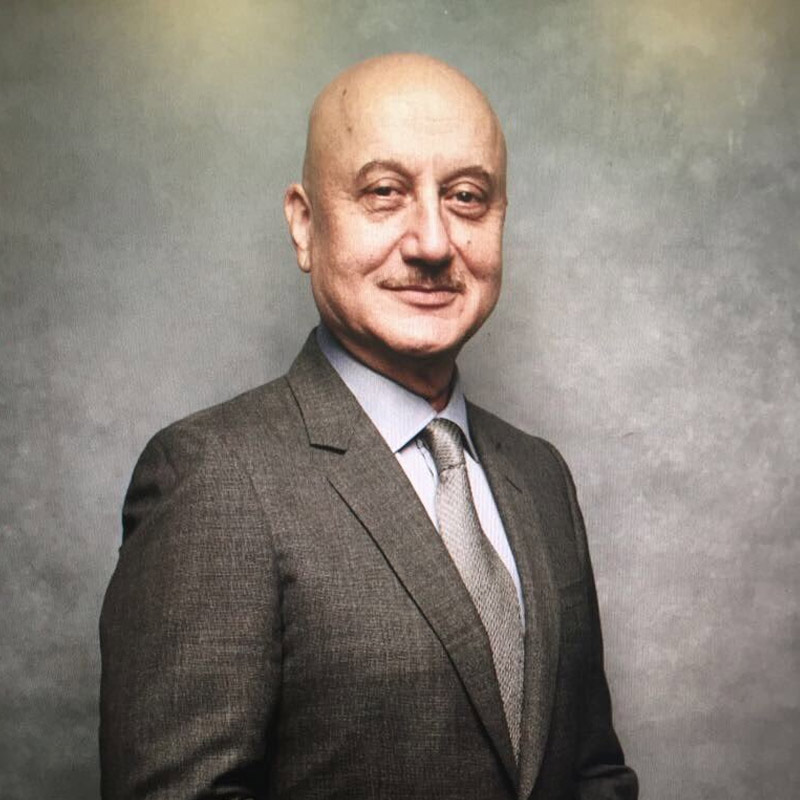
    NEW DELHI: Veteran actor Anupam Kher has been honoured with the Kalidas Samman 2012 for his contribution to theatre.

    Kalidas Samman is a prestigious arts award presented annually by the government of Madhya Pradesh. It was first awarded in 1980 and was initially conferred every alternate year in the fields of classical music, classical dance, theatre and plastic arts. From 1986-87 onwards, the awards were presented in all four fields every year.

    Kher said he was delighted as this award adds yet another feather in his cap after completion of his Hollywood venture, Silver Linings playbook this year. He said film and theatre are two most important platforms for any act and both have their equal contribution in shaping the persona of an actor.

    He added, "Being awarded the highest form of appreciation in theatre just reaffirms my faith in theatre, while empowering me with the right attitude to perform on an international level such asc alongside world famous professionals in the same field."

  • Balaji to scale up film biz with Rs 1.5 bn investment

    Balaji to scale up film biz with Rs 1.5 bn investment

    MUMBAI: For movie production houses, the bet has to be on bigger budgets. Balaji Motion Pictures Limited (BMPL), the film production arm of Balaji Telefilms, is investing Rs 1.5 billion in six movie projects as it attempts to scale up the business after a string of box office successes from small-to-medium budget films.

    This marks a significant shift in strategy and signals the company‘s appetite to take bigger risks in a game that is being increasingly dominated by studios who work on a wider slate of productions and releases.

    BMPL has lined up a slate of six films for the upcoming year which includes co-production with filmmakers like Vishal Bhardwaj, Anurag Kashyap and Sanjay Gupta, alongside sequels to Balaji’s own successful properties such as Once Upon a Time in Mumbaai and Ragini MMS.

    The company led by its promoter Ekta Kapoor will release five films in the next fiscal. It had released only one film namely Kya Super Kool Hain Hum in the current fiscal which had net box office collections of approximately Rs 220 million over the first weekend.

    Its most recent success at the box office was in the form of biographical drama The Dirty Picture that breached the Rs 1 billion mark. The film that was inspired by the life of Silk Smitha was made on a budget of Rs 180 million.

    Similarly, Ragini MMS, built on a meagre budget of Rs 10.3 million, went on to collect Rs 70 million at the box office. Once Upon A Time In Mumbaai and Love Sex Aur Dhokha also had successful runs at the box office.

    BMPL had posted a net profit of Rs 35.99 million on revenues of Rs 241.2 million during the second quarter of the current fiscal.

    BMPL CEO Tanuj Garg said, “We have put together a strong line-up with a lot of variety. The significant ramp-up in our slate demonstrates the seriousness and passion with which we are growing the movie business. We believe that an equal focus on co-productions and acquired properties is not only a financially prudent approach for us but should also accelerate our growth momentum. We’re pleased to be the only entity with market dominance in television and films alike.”

    Garg said that all the movies except Ragini MMS is in advanced stage of productions. However, it is yet to close any satellite rights for its films.

    The first to release on 18 April is Ek Thi Daayan, a co-production with Vishal Bhardwaj and directed by debutant Kannan Iyer. The super-natural thriller is top-lined by Emraan Hashmi, Huma Qureshi, Kalki Koechlin and Konkona Sen Sharma, and marks the coming together of Vishal Bhardwaj and Emraan Hashmi for the first time.

    Releasing on 1 May is the multi-starrer Shootout at Wadala, a co-production with Sanjay Gupta. The industry’s first prequel (to Shootout At Lokhandwala) stars Anil Kapoor, John Abraham, Kangana Ranaut, Tusshar, Manoj Bajpai, Sonu Sood, Ronit Roy, and many other big names, to be announced shortly.

    To release on 7 June is Kuku Mathur Ki Jhand Ho Gayi, a co-production with Bejoy Nambiar. The quirky Delhi-based comedy launching young talents is directed by noted ad film-maker Aman Sachdeva making his film directorial debut.

    On 5 July is Lootera, directed by Vikramaditya Motwane of the critically acclaimed Udaan fame. The epic period love story marks the first-time pairing of Ranveer Singh and Sonakshi Sinha. Lootera is a co-production with Anurag Kashyap, Vikramaditya Motwane and Vikas Bahl of Phantom Films.

    The Milan Luthria-directed Once Upon A Time In Mumbai-2 is the banner’s tentpole Eid release scheduled for 8 August. Starring Akshay Kumar, Imran Khan, Sonakshi Sinha and Sonali Bendre, the romantic drama is among the most keenly awaited cinematic features of 2013.

    Closing the slate for the year, will be the youth date film, Ragini MMS-2, top-lined by Sunny Leone. Directed by Bhushan Patel, the sequel to the biggest sleeper hit of 2011, Ragini MMS, will be a heady combination of thrill, horror and sensuousness. It releases on 11 October.