Category: Hindi

  • Kaushik Ghatak to direct Samrat And Co for Rajshri Productions

    Kaushik Ghatak to direct Samrat And Co for Rajshri Productions

    MUMBAI: Rajshri Productions‘ Kavita Barjatya is all set to produce Hindi cinema‘s first detective saga filled with suspense and adventure. Titled Samrat And Co, the movie will be directed by Kaushik Ghatak.

    What‘s more, the movie may also see Rajshri Productions branching off a new wing under which the movie will be produced. Rajshri is looking at making Samrat And Co a dedicated detective franchisee in Bollywood.

    Specially targeting India‘s young audiences, Barjatya has embarked on bringing to Bollywood, the first of its kind detective franchisee, wherein the very nuances of crime solving, human nature and the world of standalone private investigators will be presented on the big screen.

    Barjatya said, "Today is a wonderful time for cinema… People are ready to accept different stories, different genres, different characters and a different treatment. Today we can tell the story which we wish too and not be caught up in boundaries of formulas… We have also seen that the uniqueness of the concept is the driving force in today‘s films. When Kaushikji narrated me a couple of subjects, this one really excited me. I have known and worked with Kaushik ji since 2004. He has directed most of my TV shows and they were all landmarks. Hope to create the magic on big screen now. It‘s going to be a challenge to cater to the typical Rajshri‘s family audiences as well as today‘s youth".

    Ghatak added, "Sherlock Holmes, Hercule Poirot, Feluda, Byomkesh Bokshi, etc were my best friends since childhood, of course through their books… I have grown up with this genre. Their adventures always fascinated me… For a very long time I wanted to create a detective in our very own Bollywood cinema…but in our own style which is apt for our entertainment – loving hindi movie goers. Thanks to Kavitaji, with whom I have shared a long and wonderful working relationship, for understanding this new kind of cinema and making it happen".
  • Shootout at Wadala packs a punch at the BO

    Shootout at Wadala packs a punch at the BO

    MUMBAI: Shootout At Wadala has had regional appeal doing its best in Mumbai, CP and Nizam circuits which include parts of Maharashtra. It did generally better in single screens. The film has collected about Rs 230 million in its first weekend. The film‘s screening in East Punjab Circuit has been stalled since Sunday due to a protest by a certain section of the society because of some dialogue in the film they find objectionable.

    Aashiqui2 has gone on to become a hit all over. The film has gone down well with the youth at multiplexes. Having collected Rs 177.5 million, the film added just about as much for the remaining four days of its week one (which is rare in the present day release strategy) to end its first week with Rs 345.5 million and holding strong through its second weekend to collect another Rs 89 million.

    Ek Thi Daayan collected Rs 26 million in its second week and took its two week total to Rs 257 million.

    Nautanki Saala collected Rs 14 million in its third week to take its three week total to Rs 219.5 million.

    Commando – The One Man Army collected Rs six million in its third week to take its three week total to Rs 214.5 million.

    Chashme Baddoor has added Rs 12.5 million for its fourth week taking its four week tally to Rs 422 million.

  • Sadda Haq to be dubbed in English and Hindi

    Sadda Haq to be dubbed in English and Hindi

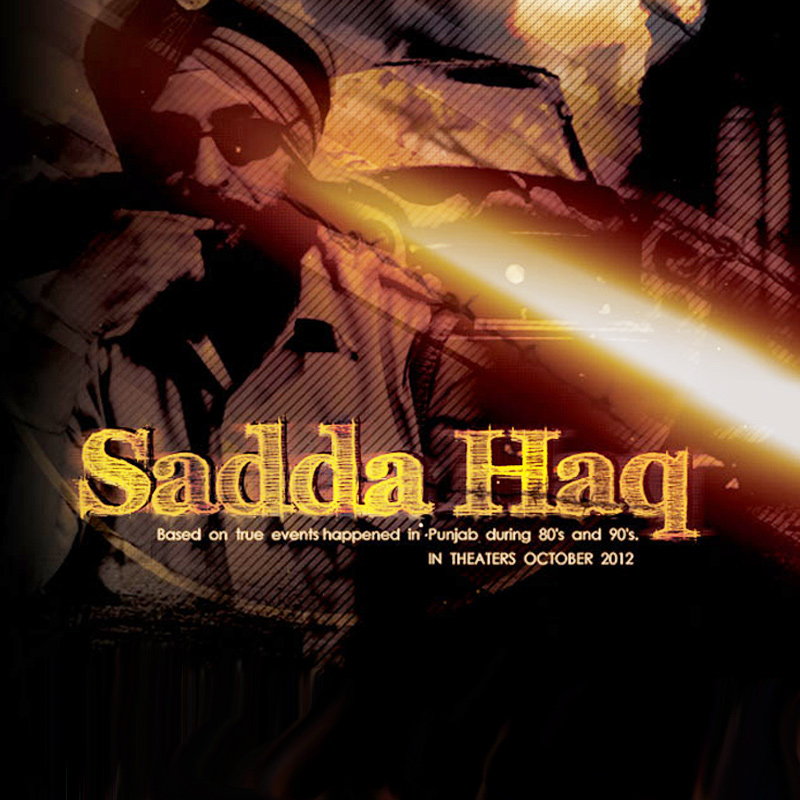
    MUMBAI: Sadda Haq is a Punjabi historical drama movie based in the late 1980‘s and early 1990‘s which was a period of extreme turmoil in Punjab. Directed by Mandeep Benipal and produced by Kuljinder Singh Sidhu, the makers of the film are in the process of getting it dubbed in English and Hindi.

    The reason behind dubbing the movie in other two languages was as they got lot of demand from overseas as well as different parts of India. The dubbing of the movie has already started and is likely to be completed in a month, after recently getting a clearance from the supreme court. The translated edition may also be screened in a few cinema halls.

    Since the film was based on the Khalistan militancy period in Punjab, it involved a lot of controversy following the ban on its screening by the governments of Punjab, Delhi and the union territory Chandigarh.

    In this case, the controversy came to the highlight since the film was objected to two-three times by the censor board and once by the state governments.

    As per the media reports, the film has been successfully screened for the past three weeks in Mumbai and was the biggest Punjabi film in terms of gross collections in UK and US where it has been screened for almost one month now.

    The movie will hit theatres across the country on 10 May.

  • Cinema must help build the moral compass of the nation and portray positive societal values; Pranab Mukherjee

    Cinema must help build the moral compass of the nation and portray positive societal values; Pranab Mukherjee

    NEW DELHI: President Pranab Mukherjee has said that cinema must be used to portray positive societal values for building a tolerant and harmonious India.

    Referring to recent criminal events involving women and children, he said the role of the film industry was very crucial in building the moral compass of the nation. He said the film industry ought to take steps to ensure that cinema was morally energising.

    Mukherjee was speaking after he conferred the National Film awards for the year 2012 in various categories at the 60th National Film Awards Function held at the Vigyan Bhawan. The award ceremony coincided with the release of the first Indian feature ‘Raja Harishchandra‘ by the father of Indian cinema D G Phalke on 3 May.

    He lauded the initiatives taken by the information and broadcasting ministry including single window clearance for shooting the films in India.

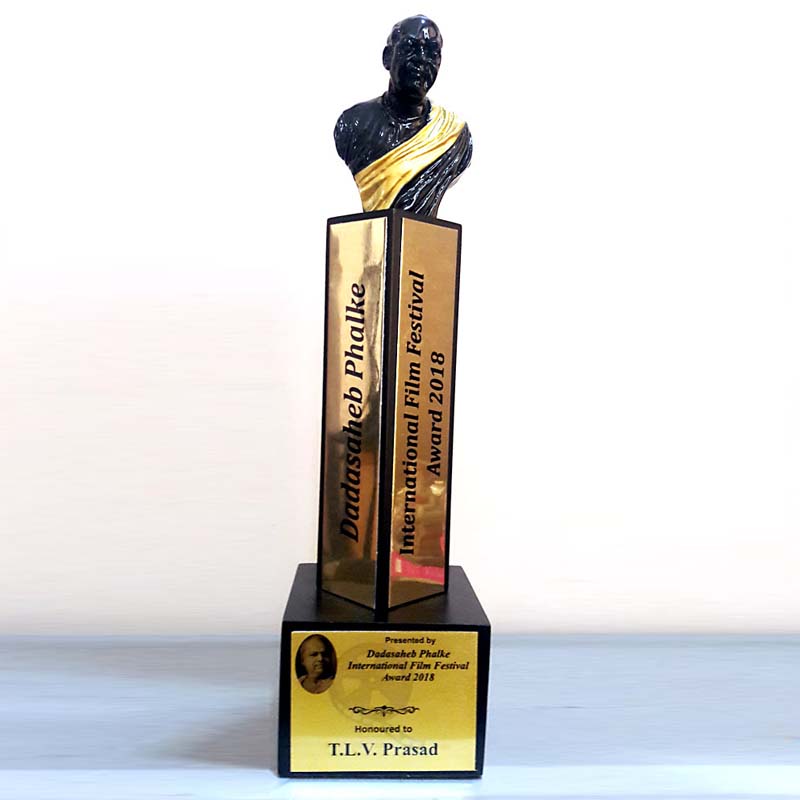
    Lauding the recipient of the highest award in cinema, the Dadasaheb Phalke award, he said actor Pran had commenced in films as a hero in 1940 but then moved on to become the ‘quintessential gentleman villain‘.

    There was standing ovation as the name of the 93-year old Pran Sikand, who could not attend because of illness, was announced.

    I&B minister Manish Tewari said the presence of films with innovative themes at the 60th NFA had proved that the Indian film industry was playing a proactive role in articulating issues and prejudices that had been historically embedded in our society.

    Indian cinema, Tewari added, had been the mirror of the nation‘s milieu and had an incisive influence on the evaluation of society. Internationally, Indian cinema had evolved to cater to the taste of international audiences. A unifying synthesis, Indian films had been able to institutionalise and project India‘s soft power outside the country. The film industry, he said, had grown despite and in spite of the government.

    He announced that the government had decided to institute an annual centenary award from this year to be given to a personality or institution recognising a paradigm transformation in film making and honouring individuals or films that had profoundly influenced contemporary, socio cultural evolution.

    He also announced that the Films Division Auditorium in Delhi was being re-furbished to convert it into a hub for alternate cinema. The Auditorium which was being used for screenings only on special occasions would be modelled along the lines of Prithvi Theatre in Mumbai to not just screen documentaries, small budget films but also provide a forum for film makers and connoisseurs to discuss the film making.

    He referred to the justice Mudgal Committee which was taking a fresh look of the Cinematographic Act 1952, and the Committee would aim to find a golden mean between creative essence and aesthetic sensitivity.

    The highlight of the evening was the release of postal stamps of 50 iconic personalities of Indian cinema by the President to commemorate the century long journey of Indian cinema. The film personalities depicted in stamps include Ashok Kumar, Bhalji Pendharkar, Durga Khote, Dev Annad, Yash Chopra, Smita Patil, Rajesh Khanna, Shammi Kapoor, Suraiya, Geeta Dutt, Sohrab Modi, Tapan Sinha, C.V. Sridhar and Bhanumathi.

    Speaking on the occasion, communication and information technology minister Kapil Sibal said the Department of Posts had given a fitting tribute to the powerful medium by issuing 50 new stamps.

  • Hansal Mehta is best director, Vikram repeats feat to become best actor in NYIFF

    Hansal Mehta is best director, Vikram repeats feat to become best actor in NYIFF

    NEW DELHI: Hansal Mehta has won the best director award for Shahid at the 13th annual New York Indian Film Festival (NYIFF) while Anumati by Gajendra Ahire was declared the Best Film.

    The veteran Vikram Gokhale received the best actor award for Anumati, the film which got him the same award at the National Film Awards earlier this month.

    The veteran Deepti Naval was declared the Best Actress for Listen Amaya while Suraj Negi won the Best Child Actor for Hansa.

    Dr. Biju won the Best Screenplay for Color of Sky.

    The Only Real Game by Mirra Bank was declared the Best Documentary while Khaana by Cary Sawhney won the Best Short film.

    Shahid is based on the life of slain human rights activist and lawyer Shahid Azmi. Anumati revolves around a retired teacher‘s attempt to save his dying wife.

    Filmistaan by Nitin Kakkar, which had won the best Hindi film award at the National Film Awards on 3 May, was the closing film of the New York Festival. It stars Sharib Hashmi, Kumud Mishra, Gopal Datt, and Inaamulhaq. Dekh Tamasha Dekh which was also a winner at the National Film Awards opened the Festival. It is directed by Feroz Abbas Khan.and stars Satish Kaushik, Tanvi Azmi, Sudhir Pandey, Vinay Jain, Sharad Ponkshe, Ganesh Yadav, Apoorva Arora, and Alok Rajwade.

    The Festival screened Uday Shankar‘s Kalpana made in 1948 to mark a centenary of Indian cinema, while the restored version of Garam Hawa by M S Sathyu was also screened.

    The Festival had a section on mobile phone cinema, Human Rights cinema. There were separate sections of Bengali and Marathi films.

    Presented by the Indo-American Arts Council, the annual festival was held from 30 April to 4 May. Other films included ‘Midnight‘s Children‘ and ‘The Reluctant Fundamentalist‘ by Mira Nair.

  • Bombay Talkies : A montage of cinema

    Bombay Talkies : A montage of cinema

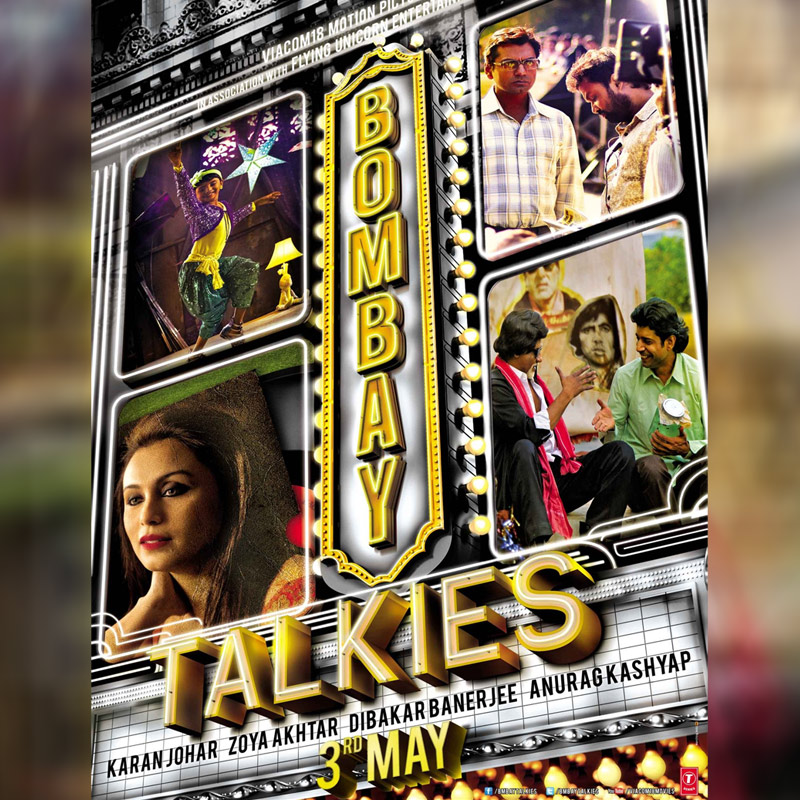
    MUMBAI: Bombay Talkies is a 128-minute film made to pay tribute to the Indian film industry on its completing 100 years. The film tells four stories directed by four filmmakers: Karan Johar, Dibakar Banerjee, Zoya Akhtar and Anurag Kashyap. These are followed at the end by the use of a montage created with the participation by all the top artistes from past and present through a song.

    Producers:Viacom 18 Motion Pictures, Ashi Dua.
    Director: Karan Johar, Dibakar Banerjee, Zoya Akhtar, Anurag Basu.
    Cast: Rani Mukerji, Randeep Hooda, Saqib Saleem, Nawazuddin Siddiqui, Vineet Kumar Singh, Sadashiv Amrapurkar, Ranvir Shorey, Naman Jain, Sudhir Pandey, Khushi Dubey, Amitabh Bachchan and Katrina Kaif incameo

    The first feature by Johar (27 minutes) is about a long-married couple, both professionals in the media, Rani Mukerji and Randeep Hoooda, and co-starring Saqib Saleem. Saleem is a fresh intern at the newspaper where Mukerji is the associate editor. She prefers to sit among her colleagues rather than boxed in a cabin and is an amiable kind. Saleem befriends her instantly and informs her that he is gay. He has a way with words and is full of wit. He is invited over for dinner at Mukerji‘s for his birthday where Hooda is first indifferent to him but later feels that there is more to Saleem than his wisecracks. The story of a happily married couple and their lives changes after that day.

    This is an interesting story thanks to its humour and with restrained performances by Mukerji and Hooda and a sparkling one by Saleem.

    The feature by Banerjee (26 minutes) is about a failed Marathi stage actor, Nawazuddin Siddiqui, whose only connection now with acting is telling his daughter film stories while enacting parts of them. This one is based on a short story, Patol Babu, Film Star, by Satyajit Ray. One day, Siddiqui is on his way for a job of a building security man. He is late and the job has been taken. On his way back, he

    watches a film being shot on the streets. As he penetrates the crowd of onlookers to come ahead for a better view, he is offered a passing shot in the film. He has to pass the star and bang into him and then react with ‘Aeeeeeeee‘. While imagining his dialogue to be all the powerful ones from past films he has mouthed a hundred times he has an encounter with the soul of his father, Sadashiv Amrapurkar, and gets into a debate. He comes out enlightened, suggests to the crew that it made no sense him walking straight and banging into the star. Instead, it would make more sense if he was reading a paper as he walked and banged. His suggestion is welcomed. Shot is okay in one go. Excited that finally he has a new story to tell his daughter that of his own success, he does not even wait to collect his remuneration for that one shot and rushes home.

    This one is a showcase of Nawazuddin‘s versatility as he shows his comfort with the Marathi language as well as character.

    In the feature directed by Akhtar (24 minutes), 12-year-old Naman Jain is out watching a movie with his parents and sister, Khushu Dubey. There comes a song performed by Katina Kaif, ‘Sheila ki jawaani‘, and the boy is absorbed as he watches all the moves made by Kaif. Back home, he gets into his sister‘s clothes and starts to mimic the steps only to be caught by his father, Ranvir Shorey. Shorey wants his son to play football and be athletic, not dance in girls‘ clothes. Then Kaif is on TV telling her viewers to be determined and keep one‘s desires to oneself. Shorey shows a clear gender bias as he would rather pay Rs 3000 for his son‘s football coaching which he hates than spend Rs 2000 on his daughter‘s school picnic. Since Jain has shared his passion for dancing with his sister, he decides to do something about her school trip. After opening piggy banks, they are still Rs 250 short. A show of Naman‘s dances is organised in the building backyard. ‘Shiela ki jawaani‘ saves the day.

    An eternal debate about parents forcing own aspirations on children and their bias towards boy child.

    The last feature, directed by Kashyap (30 minutes) stars Sudhir Pande and is about a dying man‘s last wish to have Amitabh Bachchan taste a piece of murabba from his jar and return the rest so that he may taste a bit everyday and have a longer life. The man‘s father had desired Dilip Kumar to do the same with a jar of honey which Pande was made to carry from Allahabad to Mumbai to meet Dilip Kumar and ask him to do the needful. Pande‘s emotional and obedient son, Vineet Kumar Singh, proceeds to Mumbai to meet Bachchan. After days of trying, he finally meets Bachchan who obliges, no questions asked.

    This purposeless story seems more about a tribute to Bachchan and his popularity.

    The montage tribute song that marks the end of the film is the most watchable.


    Shootout At Wadala: A gory encounter

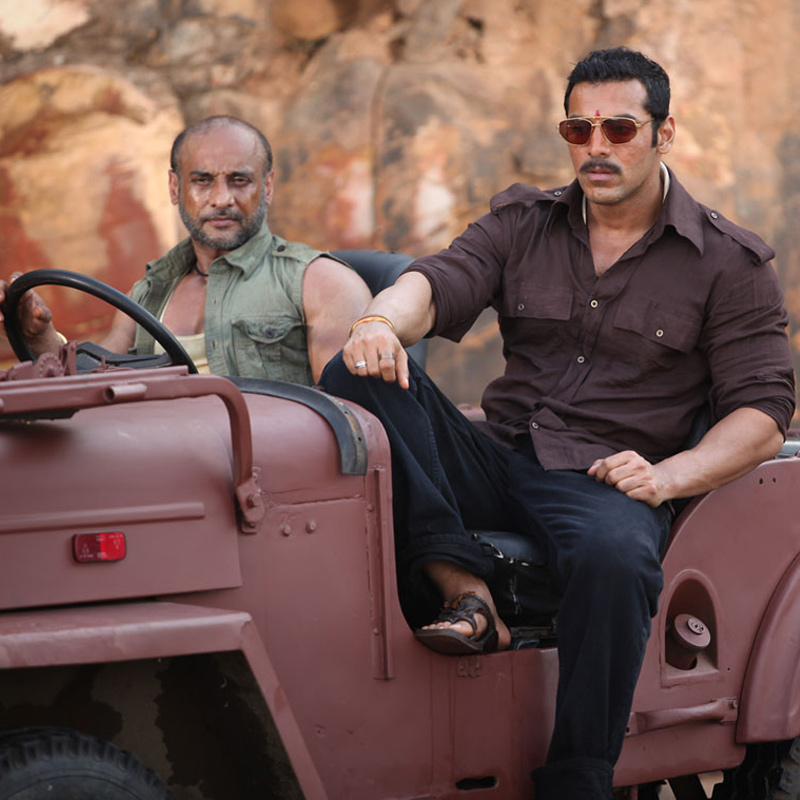
    MUMBAI: Shootout At Wadala is a chapter chronicled in S Husain Zaidi‘s book on Mumbai underworld about the rise of Dawood Ibrahim Kaskar. However, the film is not really about Dawood Ibrahim as the book is. Not only did Dawood neutralise many reigning dons like Haji Mastan and Karim Lala on his way up, he also created some and met some on the way. Two such people were Manohar Surve aka Manya Surve. This film aspires to make a Deewaar out of Shootout At Wadala using Manya Surve‘s story. But Manya Surve is just a chapter in Dawood story and remains just that. Deewaar was a dramatised version of the rise of Haji Mastan, who was a living mystery for many at the time. He was linked to film stars as well as other city elite and hence had his own glamour. In comparison, to today‘s generation, Manya Surve comes out of the blue.

    Producers: Sanjay Gupta, Anuradha Gupta, Shobha Kapoor, Ekta Kapoor.
    Director: Sanjay Gupta.
    Cast: John Abraham, Anil Kapoor, Tusshar Kapoor, Kangna Ranaut, Manoj Bajpai, Sonu Sood, Ronit Roy, Mahesh Manjrekar, Ranjeet with cameos by Jackie Shroff, Akbar Khan and item numbers by Sunny Leone, Priyanka Chopra and Sophie Choudhary

    John Abraham (Manya Surve), a Mumbai youth and diligent student, is honest to the core and with only one aim: to graduate and bring his mother, Soni Razdan, out of the misery his stepfather has put her through all her life. He has a steady girlfriend, Kangna Ranaut, whom he refuses to help during exams as he does not want to get caught doing any wrong which may derail his plan. Abraham‘s step-brother, though debarred from the city, lands up at home. His enemies soon follow him and are about to kill him. Abraham, a simple, non-violent lad, intervenes on the goading of Ranaut and during that time his brother grabs the opportunity and stabs the last of his enemies attacking him.

    It is the day of the result and Abraham is on the way to check how he did via his mandatory visit to the temple when the police too reach his college. After being beaten in front of the entire college crowd, he is taken in custody for the murder his brother committed. That there is a conspiracy to frame Abraham is revealed only much later. Abraham‘s life does a cartwheel. His future plans of a secure job, marriage and happy life for his mother all end as he is sentenced to life imprisonment along with his brother. The brothers are attacked in jail and while his brother is killed, Abraham is saved by Tusshar Kapoor. Abraham knows there is no turning back now but to rise on the path he has been forced on, that of crime.

    A bond is formed between Abraham and Kapoor and both escape from jail. It has been nine years and that time has taught the duo all the tricks of the crime world and of survival. They need to join some group and decide on Kaskar brothers, Manoj Bajpai and Sonu Sood, though here they are referred to as different names instead of Sabir and Dawood. But instead of joining them, they come back as enemies of these brothers who lead the most dreaded gang in South Bombay at the time because of which no other gang will accept them anymore.

    Abraham decides to form his own gang with the ultimate aim of ruling Bombay, becoming ‘Bambai ka Baap‘. Soon a gang is formed, adding some expert criminals on its roster, like Siddhant Kapoor, a sharpshooter etc. Meanwhile, Ranaut has also returned to his life, duly widowed. As the Surve saga unfolds and meets its inevitable end, there is gore, violence, bullets flying, use of foul words, some sex and item numbers. There are also known faces for cameos like Akbar Khan playing Haji Mastan, Ranjeet as a dada whose conspiracy it was to frame Abraham and Jackie Shroff playing the commissioner of police. His gang members are either killed by the Kaskars or taken in by the police. Left alone, Abraham is holed up at a safe location. But he is bored and wants to break out and leave the city with Ranaut. Ranaut is deceived into believing that police wanted to save Abraham‘s life from the Kaskar gang. Anil Kapoor, the cop chasing Abraham learns about his plan to meet her at Wadala College the next day. A posse of policemen led by Anil Kapoor, Ronit Roy and Mahesh Manjrekar rains bullets on Abraham to carry out the first acknowledged encounter by Mumbai police.

    The narration of Shootout At Wadala is in flashbacks. Abraham is shot fatally and in the pretext of taking him to hospital, Anil Kapoor whiles away time as he dies while listening to the story of Manya Surve. Thus the story proceeds in a number of flashbacks, often confusing the viewer about the time factor. Also, though it may be the first encounter, it is not the first gang world film and hence no novelty including the deception of Ranaut which is similar to a recent film. This also makes the flow of the film suffer. Sanjay Gupta shows some enterprise in shot taking. While the Sunny Leone item number is good, the one on Priyanka Chopra has no appeal and Ala re ala…. is good for front bench masses. Attempts at creating claptrap dialogue have worked a few times but often the result is a blunt nothing. Photography is good. Despite a crowded screen, it is John Abraham‘s show all the way and he does justice to the character of Manya Surve. Tusshar Kapoor is an excellent foil to the protagonist. Ranaut is incidental to the story. Anil Kapoor, Manoj Bajpai, Sonu Sood, Ronit Roy, Mahesh Manjrekar are good in support.

    Shootout At Wadala has its best prospects in the Bombay circuit, especially the Maharashtra belt and its single screens are expected to do better than multiplexes.

  • Mahesh Manjrekar forays into Marathi TV with Tuza Maza Jamena

    Mahesh Manjrekar forays into Marathi TV with Tuza Maza Jamena

    MUMBAI: After giving many successful Marathi films and plays, Mahesh Manjrekar has now forayed into Marathi television with his new production Tuza Maza Jamena (TMJ), which will be aired on Zee Marathi.

    The lead cast of TMJ is Reema, Manva Naik, Vaibhav Tattvavadi, Vidyadhar Joshi, Suhas Joshi, Bhau Kadam, Poornima Manohar, Shreedhar Bhave, Abhijeet Kelkar and Savita Malpekar amongst others.

    The show will be aired from 13 May from Monday to Saturday at 9 pm.

    "I‘ve always believed that TV is a very challenging medium, simply because keeping the audience hooked for days on end is not the easiest thing in the world. In fact, I think doing something for TV is the most tiring job. But, it‘s also a challenge that I wanted to take up. Also, TV is too huge a market to ignore," Manjrekar said.

    He added, "People are asking me why only Saas Bahu story? In fact, it‘s an everlasting subject. Every day some person or the other has an incident to tell about in-laws, bahus and husbands. The reason my serial is not going to be like other shows are because I have kept my script contemporary. Tuza Maza Jamena is a new age story and will portray the dilemma in every household where there is a gap in generation, egos, beliefs, understanding and expectations. Everybody will identify with the characters. And yes, there will be emotions and lots of humour too."

  • Unique Tent theatre gives feel of early silent cinema halls

    Unique Tent theatre gives feel of early silent cinema halls

    NEW DELHI: A unique aspect of the Centenary of Indian cinema held in the capital was a make-shift mini-theatre named ‘Thambu Cinema‘ and housed in a tent-shaped Gulshan Mahal in the lobby of the Siri Fort Auditorium. The Thambu Cinema saw houseful screenings everyday even though the films screened were all from the silent era. Gulshan Mahal is the name of the building in Mumbai in which the Museum of Cinematic Arts is coming up.

    Film Division Zone‘s Picture Palace called Gulshan Mahal had a seating capacity of twenty five (on durries and benches) in a specially erected tent within the ambiance of the larger exhibition evoking an experience of the silent cinema. When the first moving pictures arrived, the world was not ready with cinema houses to show them, so tents were erected in open areas for the public at large. The tents were grandly called Picture Palaces, according to film historian Amrit Gangar who curated this section.
     
    Jamshetji Framji Madan, a Parsi entrepreneur was fascinated by the new invention and he ordered projectors from Pathe. With the projectors he set up regular ‘bioscope‘ shows in tents at key points in Calcutta, including the Maidan. In Bombay‘s Azad Maidan also such tents were set up. While tents, cinemas in the cities were becoming fairly common, small towns and villages where most of Indian population lived, were untouched by the ‘new wonder‘. But soon tents reached there with travelling theatre companies. And so did the moving picture, the cinema.

    One of the earliest itinerant showmen was Abdulally Essoofally, who in 1901, travelled from one Asian country to another. His travelling outfit included a projector, some cans of films, a folding screen and a tent. Sometime his tent was large enough to accommodate1000 people. Between 1908 and 1914, Abdulally‘s touring cinemas had covered most parts of India.

    Some of the films shown were Shri Krishna Janma (1918), Lanka Dahan (1917), Kaliya Mardan; and Raja Harishchandra by the father of Indian cinema, D G Phalke; Gulami nu Patan (Fall of Slavery) (1931) by Shyam Sundar Agarwal; Banga Darshan, Diler Jigar (Gallant Hearts) (1931) by G P Pawar; The Light of Asia (1925) by Franz Osten; and two quickies Watan ki Abru and Hum Ek Hain.

  • Kamal Swaroop’s Tracing Phalke celebrates 100 years of Indian Cinema

    Kamal Swaroop’s Tracing Phalke celebrates 100 years of Indian Cinema

    NEW DELHI: Celebrating the completion of an action packed cinematic century of Indian Cinema and the genius of Dadasaheb Phalke, the National Film Development Corporation (NFDC) today released a limited edition of ‘Tracing Phalke‘, a coffee table volume researched, written and compiled by Kamal Swaroop, a film, television and radio director and screenwriter, more popularly known for his masterwork Om-Dar-B-Dar (1988).

    A text-based visual treat that lends a magnified view into Dadasaheb‘s life, the iconic book is an eponymous compilation tracing the life span of the Father of Indian Cinema, with rare details right through his schooling, places he visited, people he met and experiences that lent value to his innate genius and imagination that eventually lead to the birth of Indian Cinema.

    Speaking on this occasion, director Swaroop said, "I am happy that Tracing Phalke is being re-released this year just around the date of Indian Cinema completing a glorious century. And considering that NFDC is a harbinger in fostering and promoting Indian Cinema, associating with them could not have been more apt for this initiative.‘

    "Tracing Phalke is a very insightful compilation of Dadasaheb‘s life by Swaroop and we are delighted to present this visual treat for film aficionados and the fraternity in this centenary year of Indian Cinema‘, said NFDC general manager Vikramjit Roy.

  • Sony Music reunites with Viacom 18 Motion Pictures and Rakeysh Ompraksash Mehra for the music of Bhaag Milkha Bhaag

    Sony Music reunites with Viacom 18 Motion Pictures and Rakeysh Ompraksash Mehra for the music of Bhaag Milkha Bhaag

    MUMBAI: Sony music has teamed up with Rakeysh Omprakash Mehra and Viacom18 for the music rights of the biopic – Bhaag Milkha Bhaag.

    After ‘Rang De Basanti‘s musical success, this is the second project with Rakeysh Omprakash Mehra that adds another feather to Sony music‘s list. Co-produced by Viacom 18 Motion Pictures and Rakeysh Omprakash Mehra, Bhaag Milkha Bhaag is based on the life of athlete, Milkha Singh. The title character is which is played by actor Farhan Akhtar.

    The music is composed by the musical trio Shankar – Ehsaan – Loy with lyrics by Prasoon Joshi.

    Sony Music Entertainment president India and middle east Shridhar Subramaniam said, "Our journey with Rakeysh began in the year 2005 with Rang De Basanti wherein we worked very closely with his team and created a huge success. Today while we work with him on Bhaag Milkha Bhaag we are all geared up to put in the same passion and energy. We are extremely confident of the subject and the music as it‘s an integral part of the film."

    He further adds, "Prasoon Joshi‘s lyrics in Rang De Basanti elevated the musical experience and we are sure it will be the same this time too while Shankar Ehsaan and Loy always bring a fresh new angle to the music. At Sony Music, it‘s always a pleasure to work with Viacom 18 and we together will ensure a great musical journey for the listeners."

    Mehra adds, "Bhaag Milkha Bhaag has been the most challenging experience. I have felt growth within myself as a film maker. The songs of the film is what a soul is to a body, we are lucky that Shridhar and his passionate team at Sony Music have joined hands and have become an integral part of the BMB family".

    The music will roll out in May and the movie is slated for release in theatres on 12 July.