Category: Hindi

  • Sajid Nadiadwala passes the baton after 13 years at Indian film producers’ association’s helm

    Sajid Nadiadwala passes the baton after 13 years at Indian film producers’ association’s helm

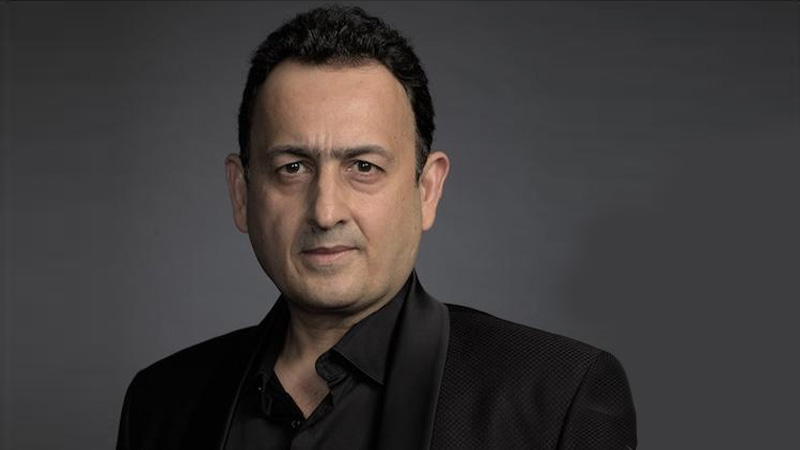
    MUMBAI: After 13 years steering India’s film and television producers’ council, Sajid Nadiadwala has stepped aside. His successor? Ratan Jain, a three-decade veteran of Bollywood who previously ran the organisation from 2010 to 2012.

    The handover came at the Indian Film & TV Producers Council’s 34th annual general meeting yesterday. Nadiadwala, in his farewell address, spoke of the need for fresh leadership and proposed Jain as his replacement—a nomination the members backed unanimously.

    The outgoing president received the usual tributes: a bouquet from NR Pachisia and a memento from Jamnadas Majethia. Members applauded his tenure, though the council offered few specifics about his achievements.

    Jain brings serious credentials. As head of Venus Group, he has produced box-office successes including Khiladi, Baazigar, Dhadkan, Humraaz and Garam Masala. His return marks a homecoming of sorts after his earlier stint at the top.

    The newly elected board for 2025-26 includes Majethia as chairman (TV & web), alongside directors NR Pachisia, Madhu Mantenna, Kumar Mangat Pathak, Rajat Rawail, Shyamashis Bhattacharya, Nitin Vaidya and Abhimanyu Singh. Ramesh Taurani will serve as honorary adviser.

    The council now awaits Jain’s vision for an industry navigating streaming disruption and changing audience habits.

  • IMDb: Indian cinema sheds its Bollywood skin

    IMDb: Indian cinema sheds its Bollywood skin

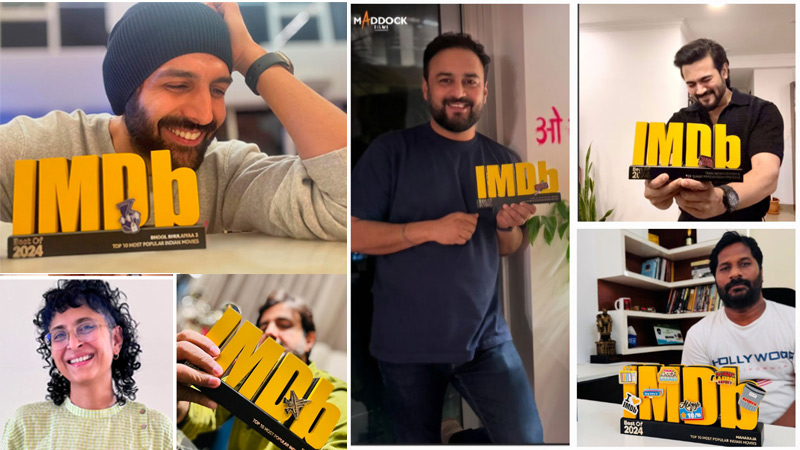
    MUMBAI: Forget popular Hindi movies (read that as a word we, at indiantelevision.com prefer not to use: Bollywood). The Hindi film industry’s stranglehold on Indian cinema is over, replaced by a dazzling mosaic of regional powerhouses that are collaborating, competing and conquering audiences from Chennai to Chicago. That is the striking conclusion of a new report from IMDb, the world’s most popular film database, which has crunched data from 250 million monthly users to chart 25 years of transformation in Indian cinema.

    The analysis, released on 30 September and titled 25 Years of Indian Cinema (2000-2025), covers the top five most popular Indian films released each year between January 2000 and August 2025. It paints a picture of an industry in flux, one that has moved decisively away from the Hindi-centric model that dominated the turn of the millennium. The 130 films examined collectively garnered more than 9.1 million user ratings—an average of over 70,000 per film—offering a unique longitudinal view of global audience tastes across languages, formats and release models.

    “The Indian film industry has always been cyclical, so this quarter century mark is a good vantage point to look forward and see what that evolution means for stories and storytellers in the years ahead,” says  IMDb India.  head Yaminie Patodia. The data, she argues, provides a singular, neutral proxy for audience engagement, independent of platform, geography or release window. “This moment marks a coming of age for Indian cinema—one that embraces a richer tapestry of voices from across industries, driven by collaborations and diverse narrative styles.”

    The numbers tell a compelling story of disruption and democratisation. The mass-appeal film is staging a remarkable comeback, with audiences across India gravitating towards stories in which they see themselves reflected rather than aspirational fantasies set in foreign locales. 12th Fail (2023), a gritty drama about civil service examination candidates, stands as the sole Hindi film to crack the top ten most popular Indian films in southern states over the past five years—proof that regional boundaries dissolve when the story resonates with universal themes of struggle and ambition.

    shah rukh khan

    This shift represents a fundamental recalibration of audience preferences. For decades, Hindi cinema dominated through sheer industrial muscle and distribution networks, even in markets where Hindi was barely spoken. Now, audiences are voting with their attention spans, and they are choosing authenticity over linguistic familiarity. The mass movie—once derided by critics as lowbrow—has been rehabilitated as the truest expression of popular sentiment.

    Cross-industry collaboration is driving unprecedented scale. Twelve of the 25 most popular films from the past five years feature substantial partnerships across direction, casting, music and distribution. Directors such as Lokesh Kanagaraj and S.S. Rajamouli, each with four titles in the dataset, are the architects of this new pan-Indian cinema, crafting spectacles that transcend linguistic lines. Rajamouli’s RRR and the Baahubali franchise exemplify this approach: Telugu-language films with national appeal, global reach and budgets to match Hollywood blockbusters.

    These collaborations are strategic, not accidental. A Tamil director might cast a Kannada star, commission music from a Hindi composer and distribute through a Telugu production house. The result is a film that feels local everywhere and foreign nowhere, a cinematic Esperanto that speaks to shared cultural touchstones rather than regional peculiarities.

    The star system, too, is evolving in ways that would have seemed unthinkable a generation ago. Shah Rukh Khan remains king, appearing in 20 of the top 130 films analysed—a testament to his enduring appeal and canny project selection. But the nature of stardom itself has changed. Today’s stars function less as guaranteed box-office magnets and more as multipliers of a film’s inherent strengths. The days of a star “carrying” a mediocre script through sheer charisma are largely over. Audiences, empowered by streaming services and social media, are savvier and more demanding.

    Hrithik Roshan and Aamir Khan follow Shah Rukh with 11 films each in the dataset, then Deepika Padukone with 10, Ajay Devgn with seven, and Amitabh Bachchan, Priyanka Chopra Jonas and Rani Mukerji with six apiece. The report suggests it is time to stop searching for “the next Shah Rukh Khan”—not because there are no talented actors, but because the industrial conditions that created such singular dominance no longer exist. The market is too fragmented, the competition too fierce, and audiences too diverse for any one star to achieve comparable hegemony.

    Perhaps most intriguingly, language has morphed from barrier to genre. Telugu and Kannada films excel in spectacle-driven entertainment—think gravity-defying action sequences and operatic emotional beats. Malayalam cinema has carved out a reputation for grounded realism, tackling social issues with nuance and restraint. Tamil films have found success in balancing social themes with commercial appeal, delivering messages wrapped in entertainment.

    Audiences now use language as a reliable shorthand for narrative style, choosing films based on preferred storytelling approaches rather than viewing language as an obstacle. A viewer seeking escapist entertainment might opt for a Telugu film regardless of whether they speak the language, trusting subtitles to bridge the gap. This represents a profound shift in how Indian cinema is consumed and understood—not as a collection of separate industries defined by linguistic boundaries, but as a spectrum of narrative styles that happen to be expressed in different tongues.

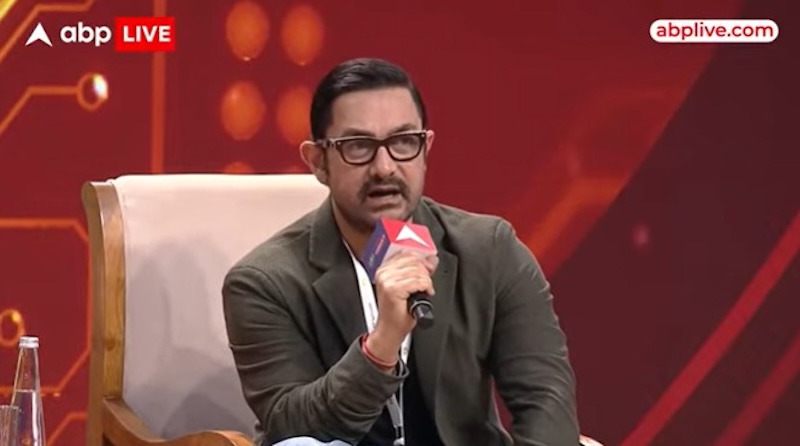
    Aamir Khan dominates the “crossover hits” category—films with high global popularity that have travelled far beyond the usual markets for Indian cinema. His Dangal, PK, Taare Zameen Par and 3 Idiots have conquered international audiences with their universal themes and emotional accessibility. Indeed, 3 Idiots is the most popular Indian film worldwide on IMDb, with 468,000 user ratings and an aggregate score of 8.4 out of ten. The film’s critique of India’s pressure-cooker education system resonated from Beijing to Berlin, proof that specific cultural contexts can illuminate universal human experiences.

    Aamir KhanGeography matters, and the report reveals fascinating regional preferences. RRR is the most popular Indian film of all time in America, where its action spectacle and historical themes found an audience hungry for something different from the Marvel formula. 3 Idiots holds the top position in Britain, the rest of Europe and Australia, markets where Indian diaspora populations remain substantial. Dangal tops charts in the UAE and China—the latter a particularly significant achievement given China’s restrictive quotas on foreign films. K.G.F: Chapter 2 is most popular in Pakistan, Baahubali 2: The Conclusion in Singapore, and Taare Zameen Par in Brazil.

    These geographical variations underscore how different markets respond to different aspects of Indian cinema. American audiences seem drawn to epic scale, European audiences to social commentary wrapped in comedy, Chinese audiences to sports dramas, and Pakistani audiences to action thrillers. Understanding these preferences is crucial for an industry that increasingly depends on international revenues to justify its ballooning budgets.

    Directors have emerged as the key architects of this new era. Lokesh Kanagaraj, S.S. Rajamouli, Sanjay Leela Bhansali, Rajkumar Hirani and Farhan Akhtar have each delivered four hits in the 25-year period analysed. Their success underscores a broader truth: in this new era of Indian cinema, the director’s vision matters as much as the star’s wattage. Rajamouli’s name alone can guarantee an opening weekend; Bhansali’s aesthetic is instantly recognisable; Hirani’s brand of socially conscious comedy has defined a genre.

    This directorial ascendancy mirrors global trends. Just as audiences flock to see “the new Christopher Nolan film” or “the latest from Denis Villeneuve”, Indian audiences are beginning to follow directors as much as stars. The auteur theory, long dismissed in India’s star-driven industry, is finally finding purchase.

    The report, drawing on IMDb’s vast database and global reach, provides a rare neutral perspective on an industry often analysed through the distorting lens of box-office collections—a metric plagued by opacity, manipulation and regional variation. User ratings, whilst imperfect, offer a more democratic measure of engagement and satisfaction.

    The data suggests Indian cinema has reached a genuine coming of age—one that embraces a richer tapestry of voices from across industries, driven by collaboration and diverse narrative styles. The old Hindi cinema hegemony is dead, replaced by something more complex, more interesting, and potentially more sustainable: a true national cinema that honours regional identities whilst building bridges between them. Long live Indian cinema.

  • Hindi cinema stars light up Ficci Frames’ silver jubilee

    Hindi cinema stars light up Ficci Frames’ silver jubilee

    MUMBAI: Lights, camera, silver jubilee! Ficci Frames, Asia’s leading media and entertainment conclave, is rolling out the red carpet for its 25th edition in Mumbai on 7–8 October 2025.

    The milestone gathering, themed “A silver jubilee of vision, voices & creativity”, will be inaugurated by minister of state for information & broadcasting L Murugan and Maharashtra chief minister Devendra Fadnavis.

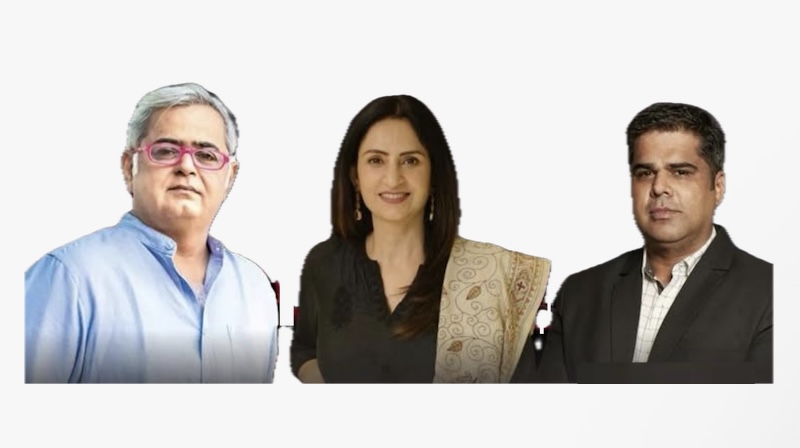
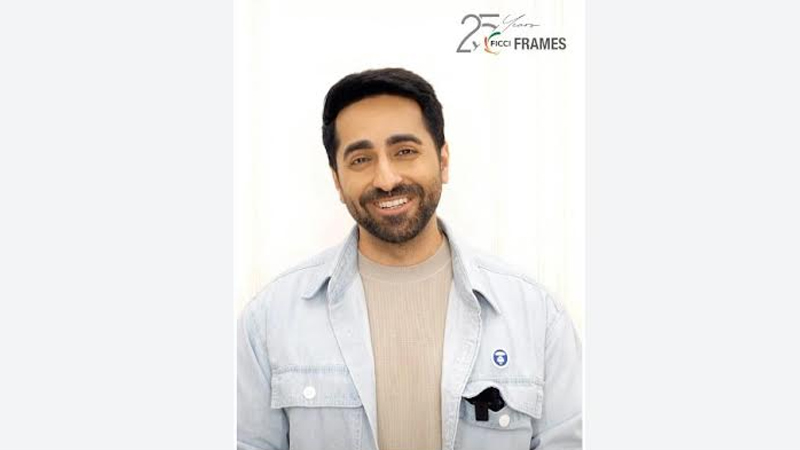
    Hindi cinema icons Anil Kapoor, Akshay Kumar, Smriti Irani and Ayushmann Khurrana will headline the two-day event, joining an impressive line-up of industry leaders including Aroon Purie, Sam Balsara, Sameer Nair, Ekta Kapoor, Siddharth Roy Kapur, and filmmakers Hansal Mehta, Shoojit Sircar and Kiran Rao.

    The conclave will host fireside chats, policy sessions and showcases, with global heavyweights such as Netflix’s Monika Shergill, Amazon Prime Video’s Gaurav Gandhi and Warner Bros Discovery’s Arjun Nohwar adding international clout.

    Adding a global spark, a Russian delegation led by Moskino and the Moscow export center will participate, opening new doors for co-productions and cultural partnerships.

    With states like Madhya Pradesh, Maharashtra, Delhi and Jharkhand pitching in through policy and showcase sessions, this silver jubilee promises not just glitz but game-changing ideas for the next chapter of India’s media and entertainment story.
     

  • What has made Saiyaara a Rs 300 crore box office wonder?

    What has made Saiyaara a Rs 300 crore box office wonder?

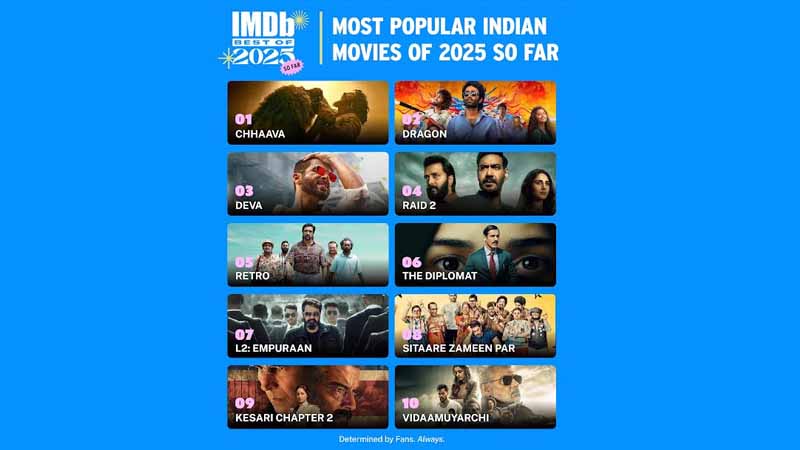
    MUMBAI: The box office success of Saiyaara has been a topic of wide discussion over the past month. The film has performed exceptionally well, crossing Rs 300 Cr at the domestic box office, and becoming the second-highest grosser of 2025 in India, behind Chhaava, at the time of writing this report. A popular theory attributes this success to the influence of Gen Z (those born between 1997 and 2012, currently aged 13-28). It’s an easy conclusion to draw, given the film’s genre and debutant cast. But is it really true? Can one audience segment alone propel a film with no franchise or star value to cross the Rs 300 Cr mark? This analysis explores that question.

    According to Ormax Media analysis, the remarkable box office success of Saiyaara is less about a single generation’s love affair with a fresh romance and more about how different cohorts engage with emotion on screen. On paper, the culprit seemed obvious. Gen Z—those aged 13 to 28—looked tailor-made for the film’s youthful leads, moody soundtrack, and breakneck visuals. Social chatter, sneaker fashion and music streams all suggested the movie was “their” moment. But Ormax Media’s data complicates the narrative.

    The firm’s proprietary OPR (Ormax Power Rating), a 0–100 index that tracks likeability and advocacy, is a trusted predictor of word-of-mouth and sustained collections. A score above 60 typically signals robust engagement, translating into strong box office legs beyond opening weekend. Over four weeks of tracking, Saiyaara notched a sturdy OPR, with Gen Z audiences scoring it at 68 and those aged 29+ close behind at 63. A respectable gap, but not wide enough to explain the runaway commercial phenomenon.

    Saiyaara

    The real story, says Ormax Media, emerges when the data is split by gender. Women across generations responded almost identically strongly, suggesting that themes of love, empathy and sacrifice cut across age barriers. Among men, however, the divergence was stark. Gen Z men mirrored women’s enthusiasm, while older men slipped sharply, delivering an OPR of just 56.

    Why does this gap matter? For Ormax analysts, it reflects shifting life priorities. Gen Z men—many still students, young professionals or in early relationships—saw in Krish Kapoor, the protagonist, an avatar of their own anxieties and aspirations. At 22, Krish is all swagger and style: racing bikes across Mumbai flyovers, flaunting Air Jordans, and smoking defiantly. But when his girlfriend Vaani is diagnosed with Alzheimer’s, he doesn’t flee. Instead, he pauses his rising music career to stay by her side. The arc resonated with younger men who are wrestling with questions of identity, love and loyalty in their own lives.

    “Cinema becomes a tool of self-discovery for this cohort,” Ormax Media notes. “It validates emotions that are difficult to articulate, reassuring them that ‘forever’ love is not entirely a myth.”

    Older men, by contrast, appear to want films to serve as escape hatches from the daily grind of careers, mortgages, and parenting. For them, Saiyaara may be admirable cinema, but not essential viewing. As Ormax points out, this explains the 10-point OPR gap between the two male groups.

    For women, the generational divide all but vanishes. Ormax’s data highlights how relationship-driven storytelling continues to resonate across age brackets, aligned with academic research suggesting women are both socialised, and to some extent biologically primed, to prioritise empathy and relational bonds in narrative consumption. Saiyaara capitalised on this, shaping Krish’s trajectory not as a melodramatic sacrifice but as a nuanced portrait of resilience and commitment.

    The outcome: a Rs 300 cr-plus blockbuster that defied industry cynicism around non-franchise, debutant-led films. Saiyaara’s triumph is not solely Gen Z’s doing. Rather, it is the uncharacteristic enthusiasm of young men—an audience often elusive for romantic dramas—that Ormax Media credits with tipping the film from respectable hit to cultural juggernaut.

  • Foovies on the menu as Cinépolis serves cinema with a side of flavour

    Foovies on the menu as Cinépolis serves cinema with a side of flavour

    MUMBAI: Dinner and a movie? Cinépolis just scrapped the “and” and turned it into one irresistible package. With the launch of Foovies, India’s first international cinema exhibitor has spiced up the big screen by serving freshly prepared, indulgent meals right inside the theatre. Gone are the days when cinema food meant just popcorn and cola. Foovies flips the script with a vibrant menu ranging from pizzas, wraps, fries, nachos, and samosas to decadent in-house desserts. Every dish is crafted with the same flair that fuels the stories on screen, repositioning Cinépolis as not just a multiplex but a bona fide foodie destination.

    To mark the debut, the chain has rolled out Foovies25, offering 25 per cent off on food and tickets, alongside Club Cinépolis loyalty perks that let patrons earn and redeem points on meals. The move is aimed squarely at India’s two great passions, food and film blending them into a seamless lifestyle experience whether it’s a date night, family outing, or weekend catch-up with friends.

    “At Cinépolis, we don’t just showcase films, we craft experiences,” said Cinépolis India managing director Devang Sampat. “Foovies is our bold step to make every movie visit an immersive lifestyle indulgence, blending the joy of cinema with the comfort of world-class food.”

    Since its India entry in 2009, Cinépolis has set benchmarks with luxury recliners, Dolby surround sound, cutting-edge projection, and its globally famed popcorn. With Foovies, the brand has now raised the stakes again transforming theatres into dining destinations and reshaping the very way India consumes entertainment.

    Because sometimes, the best plot twist isn’t on the screen, but on your plate.
     

  • Surat gets the big picture as Rajhans rolls out city’s first Imax screen

    Surat gets the big picture as Rajhans rolls out city’s first Imax screen

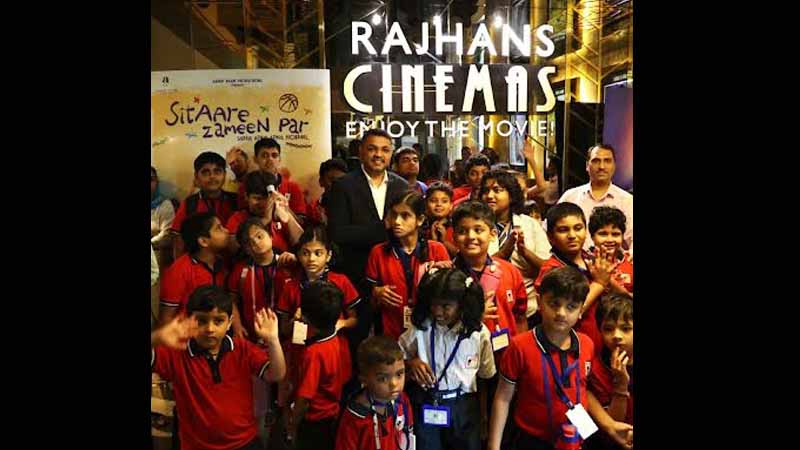
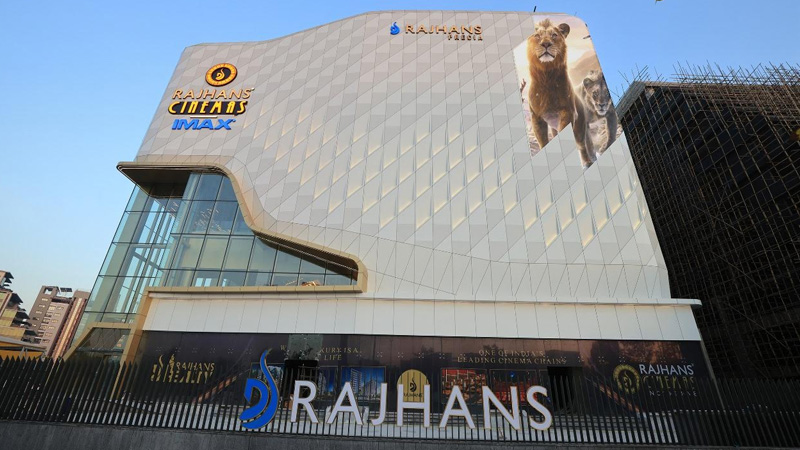
    MUMBAI: Surat’s moviegoers no longer need to pack a bag for a big-screen pilgrimage to Mumbai or Ahmedabad, the Imax revolution has finally arrived at home. Rajhans Cinemas has unveiled Gujarat’s latest cinematic crown jewel: an Imax auditorium inside Rajhans Cinemas Precia, one of India’s largest multiplexes.

    The numbers are as grand as the screen itself. Precia houses 14 screens, more than 3,000 seats, and now a 400-seat Imax hall boasting a massive curved display, ultra-crisp laser projection, and immersive Imax 3D. The upgrade is designed to pull audiences into the action with eye-popping visuals and seat-rumbling sound, a far cry from the flat fare of regular screens.

    Imax has long been the preserve of India’s metros, with installations in Mumbai, Delhi, Bangalore and Ahmedabad. For Surat cinephiles, it often meant long trips just to catch a blockbuster in its biggest form. That’s changing fast since launch, Rajhans’ Imax shows have been sold out, fuelled by repeat visits and glowing word-of-mouth.

    Rajhans Cinemas isn’t stopping there. With 160 screens already operating nationwide, the chain has 65 more under development across 15 cities, from Noida and Gurgaon to Vizag and Hyderabad, all set to open by mid-2026.

    “This isn’t just a new screen, it’s a landmark in Surat’s cinematic journey,” says Rajhans Group chairman Jayesh Desai. “We’re not just elevating the movie experience; we’re introducing a new era of storytelling that engages all the senses.”

    For India’s fast-growing regional cities, the message is clear: the days of settling for “good enough” entertainment are over. With premium formats like IMAX moving beyond metros, the blockbuster experience is becoming a hometown affair.

  • JFF 2025 returns with its 13th Edition, beginning 4 September in Delhi

    JFF 2025 returns with its 13th Edition, beginning 4 September in Delhi

    MUMBAI: The Jagran Film Festival (JFF), celebrated as the world’s largest traveling film festival, returns with its 13th edition, carrying forward its philosophy of Good Cinema for Everyone. Presented by Rajnigandha, the festival will kickstart on 4 September in Delhi, travel across 14 cities, and culminate in Mumbai on 16 November, making it India’s largest and most far-reaching cinematic celebration.

    Since its inception, the Jagran Film Festival (JFF) has become a landmark celebration of storytelling, cultural exchange, and cinematic excellence. This year, JFF pays tribute to cinematic legends with special celebrations including the centenary of Guru Dutt, 50 years of Shabana Azmi in cinema, 50 years of the iconic film  Sholay, and more. It also honours industry stalwarts Shyam Benegal, Manoj Kumar, Shaji N. Karun, and Pritish Nandy for their lasting contributions to Indian cinema.

    Guided by mentors like Subhash Ghai, Khusboo Sundar, Adil Hussain, and A. Sreekar Prasad, and curated by Srinivasa Santhanam, Anupama Bose, and Premendra Mazumdar, JFF 2025 will feature engaging conversations with some of the industry’s finest, including, Shabana Azmi, Shilpa Shetty, R. Balki, Jaideep Ahlawat, Shruti Mahajan, Amit Sadh, Vineet Kumar Singh, among others.

    As it journeys through 14 cities — Delhi, Kanpur, Lucknow, Varanasi, Prayagraj, Meerut, Agra, Ranchi, Patna, Hisar, Ludhiana, Gorakhpur, Dehradun, and Mumbai — each location will host exclusive premieres, retrospectives, masterclasses, and in-conversation sessions with acclaimed filmmakers, actors, and storytellers.

    Speaking about the festival, Jagran Prakashan Ltd. Sr. VP – strategy and brand development, Basant Rathore shared, “Jagran Film Festival has grown into one of India’s most inclusive and far-reaching cultural movements, celebrating the legacy of Indian cinema while embracing bold, global narratives. With every edition, we reaffirm our belief in the power of cinema to provoke thought, inspire change, and build cultural bridges. The 2025 festival continues this legacy—amplifying bold voices, timeless stories, and emerging perspectives from across the globe. At Dainik Jagran, our purpose has always been to awaken and unite, and through JFF, we champion stories that speak across generations, geographies, and genres.”
     

  • Cinema: Getting the business model, right?

    Cinema: Getting the business model, right?

    MUMBAI: Mumbai’s cinema moguls gathered at the 9th Edition of The Content Hub Summit 2025, the industry attempted to hit “rewind” on declining traditional media consumption and combat digital fatigue.

    Chaired by acclaimed film critic, journalist & author Mayank Shekhar, the panel boasted a stellar cast of industry heavyweights, including Abhishek Pathak, managing director, Panorama Studios; Aashish Singh, producer, Red Chillies Entertainment; Shailesh Kapoor, CEO, Ormax Media; Devendra Deshpande, CEO, Friday Filmworks; and Pragati Deshmukh, head of content, Zee Studios.

    Ormax Media’s Shailesh Kapoor, often the industry’s truth-sayer, kicked off with a candid confession: “Nobody knows for sure.” Yet, his numbers paint a clear picture. Despite the seismic shifts, the core metrics total box office, total footfall, and the number of unique theatre-goers (a consistent 15 crore annually) remain stubbornly unchanged since 2013-14.

    Kapoor pointed out that the pandemic’s real plot twist was its coincidental overlap with the streaming boom. “If the pandemic had happened in 2015, this wouldn’t even be a discussion,” he quipped. The lockdown fast-tracked the audience’s discernment between “OTT films” and “theatrical films,” a process that would have otherwise taken years. While star power might dim on OTT, it still shines bright in cinemas, and language barriers are slowly, but surely, dissolving. “Fundamentally, nothing really has changed,” Kapoor concluded, suggesting that content choices, rather than audience habits, are the evolving variables.

    Devendra Deshpande of Friday Filmworks, a science fiction writer in the realm of film production, firmly believes in leading with the narrative. “You start with the story because you believe in that story,” he asserted, dismissing hindsight analysis in a business where a film’s journey from conception to screen takes at least two years.

    The panel then tackled the curious case of remakes. While Abhishek Pathak’s Drishyam 2 was a massive hit despite the Malayalam original being widely available on OTT, Vikram Vedha (a remake of a Tamil hit) stumbled. Pathak, who directed Drishyam 2, revealed his unwavering confidence: “I always had a feeling that it would do a 150 crore number, this film will surprise the audience.” His logic was that audiences are smarter than we give them credit for, and a strong brand, like Drishyam, transcends language and prior viewing. “People come to the theatre, they give us a formula,” he declared, suggesting that the “mystery to the presentation” and local flavour are key ingredients for a successful remake.

    Red Chillies Entertainment’s Aashish Singh weighed in on Jawan’s phenomenal success, attributing it to meticulous planning. The film, directed by a renowned South Indian filmmaker, was conceived as a pan-Indian spectacle from the get-go. With Shah Rukh Khan’s unparalleled star power and a clever blend of North and South Indian talent, Jawan struck a chord across all tiers of Indian audiences. “It’s not about North and South, honestly. But, yes, we have to be conscious about our audience and what they like across the board,” Singh elaborated, highlighting the importance of tailoring content for a diverse national palate.

    Pragati Deshmukh of Zee Studios echoed the sentiment, emphasising that for studios, the story’s relevance for the next few years, irrespective of language, is paramount. She revealed that Zee Studios is actively seeking out stories that would travel across languages, indicating a strategic shift towards pan-Indian narratives. The success of films like Gadar 2, which evoked sheer emotion across linguistic divides, underscores this trend.

    The conversation then shifted to the nitty-gritty of film finance. Shailesh Kapoor noted the rise of re-releases, a desperate measure by exhibitors to fill empty screens as fewer films are being made. He revealed a staggering 60 per cent drop in the number of films releasing per year, from 45 to a mere 33-34. This “crisis of confidence” is pushing studios to greenlight only certain genres, primarily action. Re-releases, he believes, are a temporary fix and will fade once the release calendar becomes busy again.

    Pragati Deshmukh offered insights into the studio’s risk-mitigation strategies. Beyond big-budget spectacles, studios are exploring innovative models for smaller films. She cited examples like securing partnerships with brands or even shooting two films simultaneously to offset costs. The perennial strength of sequels and franchises remains a constant in a volatile market.

    Lastly, the discussion also touched upon the vexing issue of ticket pricing. While audiences are still willing to visit cinemas, the average ticket price of Rs 99-100 for new releases, making a night out prohibitively expensive for many, remains a significant hurdle. In contrast, re-releases often come at a much more palatable Rs 75-80.

    (If you are an Anime fan and love Anime like Demon Slayer, Spy X Family, Hunter X Hunter, Tokyo Revengers, Dan Da Dan and Slime, Buy your favourite Anime merchandise on AnimeOriginals.com.)

  • India’s creative future gets a cinematic campus

    India’s creative future gets a cinematic campus

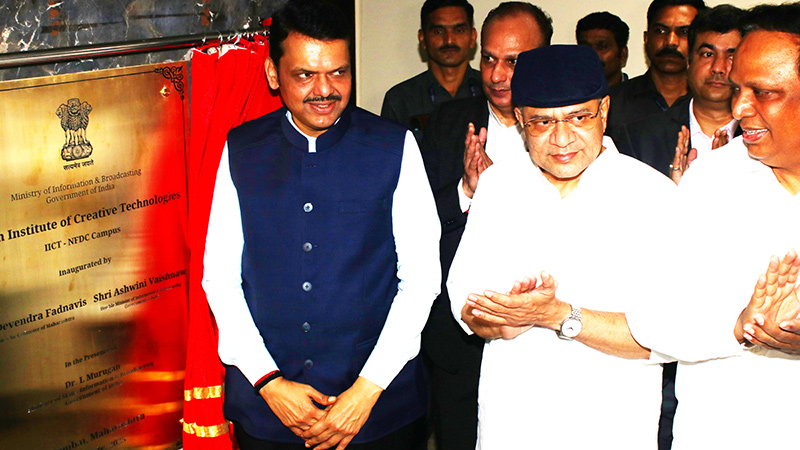
    MUMBAI: Mumbai just got its own Hogwarts for creative tech. Union I&B minister Ashwini Vaishnaw and Maharashtra chief minister Devendra Fadnavis rolled out the red carpet today for the Indian Institute of Creative Technologies (IICT), a new-age media and entertainment education hub set inside the iconic NFDC Films Division Complex on Pedder Road.

    Joined by Sanjay Jaju, secretary, Ministry of Information & Broadcasting, and Maharashtra’s cultural affairs minister Ashish Shelar, the top brass didn’t just cut a ribbon, they launched a vision. The duo unveiled IICT’s official logo and announced that the institute’s first academic batch will kick off from September 2025. Built with global standards in mind, the spanking new campus is loaded with future-forward infrastructure: think high-spec media labs, post-production suites, XR zones, and full-throttle animation and VFX bays.

    Speaking at the inauguration, Vaishnaw said, “In this creative world, technology has become an integral part and it is important that we empower people who want to be part of the creator economy. I am glad that in such a short span we have inaugurated the first NFDC IICT campus in Mumbai. I have personally gone through the architectural presentations in detail for the campus in Film city, Goregaon, and I assure you it is going to be one of the finest campuses.”

    The inaugural batch will admit 300 students, with the promise of a second campus already in the works at Filmcity, Goregaon — expected to open within the next two years.

    Shri Devendra Fadnavis added, “This is not just an event; it is a moment — a moment that is now transforming into a movement. As part of this movement and its legacy, the announcement of IICT was made, and the campus was inaugurated in a remarkably short time. In the coming years, under the excellent guidance of Ashwini Vaishnaw, IICT will emerge not only as an institution of world-class education but also as an architectural and cultural landmark that attracts people from across the globe. Just as WAVES revolutionised the entire creator economy, IICT stands as a testament to all that hard work.”

    India’s media-tech dreams have found their newest stage and the lights just came on.

    (If you are an Anime fan and love Anime like Demon Slayer, Spy X Family, Hunter X Hunter, Tokyo Revengers, Dan Da Dan and Slime, Buy your favourite Anime merchandise on AnimeOriginals.com.)

  • Ad Guru Turns Reel Hero with Mythical Thriller for the Masses

    Ad Guru Turns Reel Hero with Mythical Thriller for the Masses

    MUMBAI: From 30-second ad epics to full-length cinematic spectacle Prasoon Pandey is finally making the leap, and it’s nothing short of mythic. Prasoon Pandey, one of the most celebrated names in Indian advertising, is stepping behind the camera for his feature film debut, a massy, contemporary mythological thriller backed by Movieverse Studios and Ellipsis Entertainment. Known globally for his award-winning commercials, Pandey now swaps storyboards for the silver screen, bringing with him decades of visual flair and narrative punch.

    Written by Vaibhav Vishal, the yet-untitled film blends cultural depth with modern storytelling, and promises to push genre boundaries with its unique tone and scale.

    “This isn’t just a directorial debut, it’s a long-overdue cinematic event,” said Movieverse owner IN10 Media Network MD Aditya Pittie. “We’ve waited for a story that matched Prasoon’s legendary vision. This one had him hooked and us too.”

    Pandey, who has 17 Cannes Lions, Clio, and D&AD awards to his credit, is the first Asian to feature on Campaign Magazine’s 100 most influential advertising filmmakers list. “I wasn’t going to do a film just for the sake of it. This script hit differently,” he said. “It stayed with me, long after I’d read it. That’s when I knew this is the one.”

    Movieverse Studios CEO Vivek Krishnani echoed the excitement: “We’re committed to cinematic storytelling that stirs the soul and stuns the eye. With Prasoon and Ellipsis on board, this film promises both.”

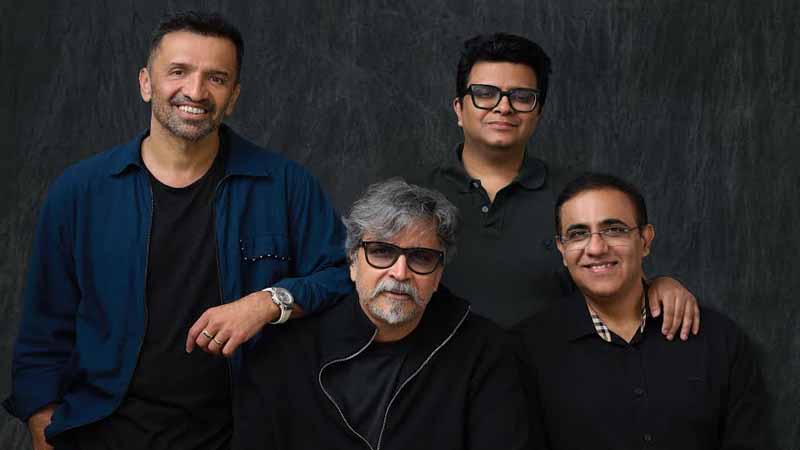
    The film also marks another milestone for Ellipsis Entertainment, whose partners Tanuj Garg and Atul Kasbekar have a knack for scouting offbeat-yet-relatable stories. “Prasoon’s been a friend and a creative icon. It took us years and many scripts but we’re thrilled this is the one that finally got a yes,” said Kasbekar.

    Comparisons with ad-filmmaker-turned-directors like Ram Madhvani and Suresh Triveni are inevitable, but Pandey’s visual grammar and storytelling signature remain in a league of their own.

    Casting is currently underway, and the makers promise a stellar ensemble to match the story’s ambitious canvas.

    For now, one thing is certain: when an ad legend like Prasoon Pandey steps into the world of cinema, the lines between art, mass appeal, and mythology are about to blur in the best possible way.