Category: Hindi

  • Single window service for film shooting to become operational shortly: Tewari

    NEW DELHI: A single window service for promoting cinema tourism is all set to become operational shortly.

    Speaking at the Cinemascape 2013 conclave in Mumbai today, Information and Broadcasting Minister Manish Tewari observed that India with its rich heritage and diverse geography has great potential as a destination for film shooting but the current system of multiple clearances at various levels made it an unattractive destination for filming.

     “Increasingly therefore, most Indian filmmakers have gravitated towards foreign destinations for outdoor shoots. Any lost opportunity is a revenue loss for the country,” he remarked.

    India has a great potential to become a destination for film shooting but the current system of multiple clearances at various levels make it an unattractive destination for filming, says Manish Tewari

     Tewari said the government has now decided to address the issue by establishing a single window service for granting clearances for film shootings in India. He informed that a Committee on Promotion and Facilitation of Film Production in India has been set up. It is chaired by the secretary in the ministry, with senior representatives from the Ministries of External Affairs, Home Affairs; Tourism; Culture; Railways; Civil Aviation; Defence and Department of Revenue etc.

     The state governments have been asked to nominate the nodal officers for film clearance. The minister said Standard Operating Procedures are being developed to accord clearances for film shooting by domestic and foreign producers in India.


    Tewari stressed on the need for a sound legal architecture for promoting cinema as a form of creative expression. While conceding that law and order is a state subject, he said film certification falls in the central domain. He said, “There is an urgent need to update laws relating to film certification and exhibition and I am happy to inform that the committee headed by Justice Mukul Mudgal has submitted its recommendation along with a model bill to replace the existing Cinematograph Act 1952.”

     He said the recommendations of the committee as well as the model bill will be published on the website of the ministry to seek wider public consultation. The minister assured the film fraternity that by the middle of 2014, India would have a contemporary law to deal with cinema.

     Dwelling on the issue of taxation and fiscal incentives for the film and entertainment sector, the minister called upon the industry representatives to set up a committee of experts to draw a comprehensive strategy, which could then be submitted to the Finance Minister on behalf of his ministry.

    Participating in a panel discussion, noted film maker Mukesh Bhatt said 76 different permissions have to be obtained for film shooting in India, while Indian producers are given a red carpet welcome in some of the cine-tourism nations like Switzerland, New Zealand, South Africa, Thailand, Malaysia and Singapore. Bhatt acknowledged that the Ministry’s effort is a welcome first step.

  • Creating a global footprint for Indian cinema

    Creating a global footprint for Indian cinema

    MUMBAI: At the inauguration of the Mumbai Film Mart, it looked like that the Indian film community is all set to go global. So, while it had invited delegations from other countries like Spain to partner for co-productions, the Indian film community also made an extra effort to promote films that have been made in collaboration with other countries. Like, Qissa: The tale of a Lonely Ghost that premiered on the first day of the festival is an Indo-German-Dutch-French co-production.

    NFDC GM, executive producer & head marketing Vikramjit Roy at the inauguration of the Mumbai Film Mart on 18 October, said that to take Indian cinema beyond the confines of the country, NFDC is making many efforts. “We are primarily looking at co-production with seven or eight odd countries that India has treaties with in the near future. These include the likes of Germany, France, UK, Brazil, Italy, New Zealand and I hope Spain, Canada and Australia as well very soon.”

    We have a film called ‘Arunoday’ with France and we are hoping to do one with New Zealand soon, says Vikramjit Roy

    Roy further went onto explain how global collaboration helps a local Indian story like Qissa to team up with local funding bodies of Europe. “For example, if you do an Indo-European co-production with any of the European countries mentioned earlier, you will get to access funds from the central European funding body and the co-producer also gets an access to various regional funds,” Roy explained.

    Qissa got funding from NRW that is located in Germany; it had funding from NFF that is a Dutch film fund and also from France. “Besides, when the film goes on floor and gets a certain positioning, you get a sales agent on board. Like, we had the Match Factory join hands with Qissa. Something like this allows for a certain positioning and global footprint.”

    In fact, to widen its horizon, the festival had invited the official Spanish delegation, Spanish Federation of Producers (FAPAE) for co-productions along with senior decision makers from the Spanish Ministry, Tourism and Film Commission, who are eager to partner with the Indian film community.

    Talking about it, Institute of Cinematography and Audiovisual Arts (ICAA) Spain director general Susana de la Sierra, said: “This is the first visit from the series of visits that we have planned in the time to come. This is to strengthen our relationship with India and also possibly look at making co-productions between the two countries.”

    What makes the Spain delegation more interested in partnering with India is that both the countries are similar in terms of their cultural diversity. “Spain is far smaller than India in terms of landscape and population, but there are a lot of similarities. We both have cultural diversity. We have 17 regions within the country and apart from the national film fund, we too have regional film funds,” she added.

    I feel this is not only a really good opportunity for us to work together but also help find Spanish and Indian films their audiences believes Susana De La Sierra

    Susana looks at this as a great opportunity, not only for working together but also helping Spanish and Indian films find their audiences. “Going forward, I do see more work travelling from India to Spain and vis-?-vis, as it’s a fact that after the Indian representatives visited Spain there are several projects that have been lined up to be shot in and around Spain.”

    There are also plans to import Indian films into Spain and Spanish movies into India and this practice will only intensify further as both the countries will work hand in hand to help each other. The Spanish ministry keeps aside a fixed budget to help nurture and push the film industry to take that creative freedom and showcase the Spanish culture in all its glory.

    The Indian film community has already witnessed the popularity and profit that foreign collaborations bring. In Toronto, NFDC positioned Qissa as a global film, which helped it in achieving the Best Asian Film Award by Net pack. “We are hoping that Qissa turns out to be a trendsetter as now we have a film called Arunoday – directed by Partho Sengupta – with a French collaboration and we are hoping to do one with New Zealand soon too,” Roy added.

    Looks like Indian film community is all set to make an international footprint.

  • Indian American filmmaker and stage director Krishna Shah passes away

    Indian American filmmaker and stage director Krishna Shah passes away

    Indian American filmmaker Krishna Shah, who had made several films in India before immigrating to the United States where he gained fame in Hollywood and the Broadway stage, passed away earlier this week in Mumbai.

    Aged 75, he had been ill since he suffered a stroke last year.

    Shah is best remembered in India for ‘Shalimar’, which he wrote and directed in 1978. It starred Dharmendra, Zeenat Aman, O P Ralhan, Shreeram Lagoo, Rex Harrison, Silvia Miles, John Saxon, Shammi Kapoor, Prem Nath, and Aruna Irani among others.
    Other films that he is remembered for include ‘Cinema Cinema’, a documentary about Bollywood that screened at the Director’s Fortnight at Cannes which he co-wrote and directed; ‘Hard Rock Zombies’, released by Cannon; and ‘American Drive-In’, which he also co-wrote, directed and produced. Indian films included ‘Ramayana: The Legend of Prince Ramayana’ (1992), which he re-wrote as ‘The Prince of Light’ in 2000 when it was directed by Yugo Sako.

    In the last few years, Shah had been more involved with films about India, and had been working since 2009 on the research on an ambitious biopic of former Prime Minister Indira Gandhi.

    He held a series of story-telling seminars for aspiring filmmakers in Mumbai; while he also helped fledgling diaspora filmmakers such as Harish Saluja and Nagesh Kukunoor by presenting the films at festivals and in the marketplace in India.
    Born in India and a graduate of Yale and UCLA, Shah was probably the first Asian-American writer/director/producer to win critical acclaim both in Hollywood and on Broadway.

    He co-authored and directed a South African stage play called ‘Sponono’ on Broadway, and adapted and directed an adaptation of Rabindranath Tagore’s ‘The King of the Dark Chamber’ which ran for a year and received two OBIE awards.
    Other off-Broadway productions included Kalidasa’s ‘Shakuntala’, Athol Fugard’s ‘Bloodknot’ and Milton Hood Ward’s ‘Kindly Monies’ staged at the New Arts Theatre in London.

    His screenplays included ‘Island in Harlem’ for MGM, ‘April Morning’ for Samuel Goldwyn Jr. and the psychiatric thriller ‘Rivals’ which he also produced and directed. ‘River Niger’ starring Cicely Tyson, James Earl Jones and Lou Gosset Jr. earned awards at festivals and a Golden Globe nomination as well. His animated feature film ‘The Prince of Light’ was long listed for the 2002 Academy Awards in its feature animation category.

    He was known in American television as well, having written and/or directed several hit shows such as ‘The Man From UNCLE’, ‘Love American Style’, ‘The Flying Nun’ and ‘The Six Million Dollar Man’; and was an entertainment entrepreneur who served as president and CEO of Double Helix Films, the Carnegie Film Group and MRI Inc., a production and distribution company.

  • Alternative distribution plans for indie films

    Alternative distribution plans for indie films

    MUMBAI: There are nearly 1,000 movies that are made in India every year, but only about 35-40 per cent actually mange to get a proper release across the nation. This is one of the major obstacles for small time independent filmmakers who work on a shoe-string budget on their dream projects.


    The Mumbai Film Festival in its fifteenth edition is trying to plug that hole. In what could have been termed as an intellectually and thought provoking discussion, a panel of dignitaries from the media and film space came together on one stage to show the way to independent filmmakers.


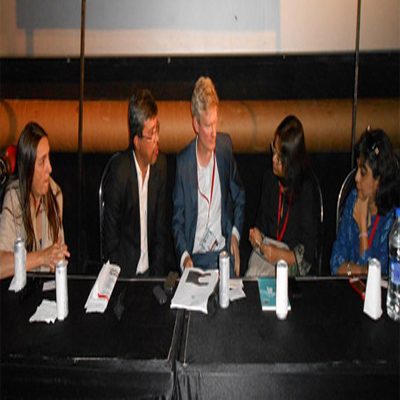
    The session held at Metro Cinema, was moderated by AV Pictures MD Chris Hainsworth and discussed the various alternative distribution avenues for independent films and filmmakers. The panel consisted of Guneet Monga, a film producer and CEO with Anurag Kashyap Films since 2009; Isabelle Dubar, head of distribution at Hapiness Distribution based in France; Anil Wanvari, Founder, CEO & Editor-in-Chief at indiantelevision.com; Nandini, a film producer and finally Shubhra Gupta, a film critic with Indian Express over the past two decades.


    The discussion kicked off with Guneet Monga who briefly started out by talking about her journey so far. “I started producing movies nearly six years ago, but started taking movies to festivals only with That Girl in Yellow Boots. I had no clue how to go about looking for buyers for the movie. But gradually, I realised that the deliverables that we have here in India is nowhere close to the scale at which films are marketed in the international film circuits, and I have learnt things the hard way.”


    On being quizzed on what would be the right place to look for buyers in the overseas market, Monga quips, “Why go anywhere when we have two very good home grown festivals – The MAMI (Mumbai Academy of Moving Image) and the Film Bazaar held in Goa every year – but yes, the scope for buyers is in plenty overseas as well. It’s just about delivering the right mix of content that is of universal appeal. And it is also important that those in the business get to know you and take you seriously because you are meeting them again and again.”


    Isabelle Dubar steps in while speaking about distribution of films. She was the one to take Gangs of Wasseypur (Part I & II) to the French market. “The French market is very outhouse in nature, with approximately 600 films from all over the world coming to the market every year,” says Dubar.


    She further clarifies that the French market is still not that open to Bollywood films and it never really caught on it in a big way, but after observing the response for Gangs of Wasseypur (GOW) at various festivals world over and the appreciation it got at Cannes, she was egged on to give it a shot.


    “We didn’t want to risk releasing both the parts together as a six hour long single feature film and thus adapted to how it was released in India. So, the first part was released around July and we promoted and marketed it like a contemporary Indian take on The Godfather,” Dubar remarks. The results were very pleasing. Though the expectations were high they still managed to get people to watch the movie.


    Dubar says, “We expected nearly 30,000 admissions, but we got 15,000 which is still a sizable number. The second part that we released during Christmas the same year didn’t get much favourable response with only 5,000 attendees. But Anurag Kashyap’s work has been appreciated and the market is open to more Indian films now, so that’s a positive sign.”


    Dubar further threw light on the fact that Kashyap’s Ugly will also be distributed by Hapiness Distribution in and around the French market. “We are also releasing The Lunchbox – a co-production with a French producer – on 11 December in France,” adds Dubar.


    Dubar finally went on to say that be it any language or genre what matters at the end is that the story and the characters should be able to have an universal connect and nothing can stop the film from being accepted and doing well globally.


    The point in question now is how will a film get the right platform to get buyers? “There are bigger markets than just festivals to be tapped into by independent filmmakers. There is Mipcom, Mip Doc and Mip TV, where nearly 11,000 people spend 1,300 Euros a piece to look for buyers or sellers of content, It’s the biggest content trade market in the world,” says Anil Wanvari.


    He further urges the independent filmmakers’ community to unite and pitch for more funding from the government in their distribution efforts. He gave the example of the UK where 50 per cent of all costs to market films and TV shows internationally at markets are paid back to the filmmakers to encourage them to find alternate streams of revenue while pushing the British  perspective and culture. “Even the Andhra Pradesh and Karnataka government offer incentives to producers of animation and gaming to attend markets worldwide to find new customers for their offerings,” he said and added, “Other state governments should be urged to do the same.”


    “Earlier, Prasar Bharti used to screen movies on Sundays from independent filmmakers, maybe that is one thing that needs to be started again. But the need of the hour is for the filmmakers’ community to get together and help raise awareness for these films. Use of social media to bring the importance of independent cinema to the government’s notice and also to transform it into a movement is very essential. More importantly, filmmakers and producers should be aware of the rights they should retain with themselves whether it is SVOD or PPV or NVOD or online or airline or shipping or DTH or whatever right. Never give away all the rights for the movies at once just because a distributor demands them and because you are a first time filmmaker struggling to get your film on the screen. You need to learn to monetise and keep monetising from the product you have created,” Wanvari expounds.


    Film producer and founder of Idyabooster.com Nandini Masinghka too thinks that the need of the hour is to get more clarity as a filmmaker whether the film he is making is for artistic pleasure or for monetising it. “Be clear about your audience; be clear how you will market, how will you distribute. Don’t just put all your money into creation and production,” she highlighted. “If you don’t have the expertise to manage this, then bring in someone who does. Thus, the industry needs more independent producers, who don’t just finance the project but are also responsible for monetising it rightly,” Nandini explains.


    After patiently listening to the conversation, film critic Shubhra Gupta says, “I am surprised that we are discussing the business of cinema without considering the art of it. If the movie is not made artistically, you anyway won’t get buyers for it.”


    Gupta also points out that after the emergence of multiplexes not many films from the independent space get their due at the box-office. “I am forced to see a Besharam on a Friday, when the movie I so wanted to see has been removed. So how will these movies get their due,” Gupta quizzes. She refers to the situation in Chennai where individuals backed and pushed the cause of independent cinema such as Pizza and made it successful.


    Monga highlighted one case in point during her early days as a film maker. “My first film was on cricket and the prints were in the theatres when news emerged that India has been eliminated from the World Cup in 2007. Immediately, the exhibitors sent me back my prints. So I took up the cause of distributing the film myself in Delhi and encouraging schoolchildren to watch it in their schools. I also sold the tickets to universities myself. I then moved this concept similarly to Punjab and made money there. I even made money on the DVD which a home video company had given up on by selling them in the foyers of the theatres where I screened the film. I never gave up on my dream and pursued monetisation from every angle.”


  • Creating a global footprint for Indian cinema

    Creating a global footprint for Indian cinema

    MUMBAI: At the inauguration of the Mumbai Film Mart, it looked like that the Indian film community is all set to go global. So, while it had invited delegations from other countries like Spain to partner for co-productions, the Indian film community also made an extra effort to promote films that have been made in collaboration with other countries. Like, Qissa: The tale of a Lonely Ghost that premiered on the first day of the festival is an Indo-German-Dutch-French co-production.

    NFDC GM, executive producer & head marketing Vikramjit Roy at the inauguration of the Mumbai Film Mart on 18 October, said that to take Indian cinema beyond the confines of the country, NFDC is making many efforts. “We are primarily looking at co-production with seven or eight odd countries that India has treaties with in the near future. These include the likes of Germany, France, UK, Brazil, Italy, New Zealand and I hope Spain, Canada and Australia as well very soon.”

    Roy further went onto explain how global collaboration helps a local Indian story like Qissa to team up with local funding bodies of Europe. “For example, if you do an Indo-European co-production with any of the European countries mentioned earlier, you will get to access funds from the central European funding body and the co-producer also gets an access to various regional funds,” Roy explained.

    Qissa got funding from NRW that is located in Germany; it had funding from NFF that is a Dutch film fund and also from France. “Besides, when the film goes on floor and gets a certain positioning, you get a sales agent on board. Like, we had the Match Factory join hands with Qissa. Something like this allows for a certain positioning and global footprint.”

    We have a film called ‘Arunoday’ with France and we are hoping to do one with New Zealand soon, says Vikramjit Roy

    In fact, to widen its horizon, the festival had invited the official Spanish delegation, Spanish Federation of Producers (FAPAE) for co-productions along with senior decision makers from the Spanish Ministry, Tourism and Film Commission, who are eager to partner with the Indian film community.

    Talking about it, Institute of Cinematography and Audiovisual Arts (ICAA) Spain director general Susana de la Sierra, said: “This is the first visit from the series of visits that we have planned in the time to come. This is to strengthen our relationship with India and also possibly look at making co-productions between the two countries.”

    What makes the Spain delegation more interested in partnering with India is that both the countries are similar in terms of their cultural diversity. “Spain is far smaller than India in terms of landscape and population, but there are a lot of similarities. We both have cultural diversity. We have 17 regions within the country and apart from the national film fund, we too have regional film funds,” she added.

    I feel this is not only a really good opportunity for us to work together but also help find Spanish and Indian films their audiences believes Susana De La Sierra

    Susana looks at this as a great opportunity, not only for working together but also helping Spanish and Indian films find their audiences. “Going forward, I do see more work travelling from India to Spain and vis-?-vis, as it’s a fact that after the Indian representatives visited Spain there are several projects that have been lined up to be shot in and around Spain.”

    There are also plans to import Indian films into Spain and Spanish movies into India and this practice will only intensify further as both the countries will work hand in hand to help each other. The Spanish ministry keeps aside a fixed budget to help nurture and push the film industry to take that creative freedom and showcase the Spanish culture in all its glory.

    The Indian film community has already witnessed the popularity and profit that foreign collaborations bring. In Toronto, NFDC positioned Qissa as a global film, which helped it in achieving the Best Asian Film Award by Net pack. “We are hoping that Qissa turns out to be a trendsetter as now we have a film called Arunoday – directed by Partho Sengupta – with a French collaboration and we are hoping to do one with New Zealand soon too,” Roy added.

    Looks like Indian film community is all set to make an international footprint.

  • Festivals give independent filmmakers an opportunity to showcase talent: Nandita

    Festivals give independent filmmakers an opportunity to showcase talent: Nandita

    The lady has always been admired for her skills in front of the camera but very few know that she received enough critical acclaim even for her directorial debut Firaaq. Yes, we are talking about actor Nandita Das.

    She is often compared to the yesteryear actor Smita Patil for her looks and complexion, besides the kind of roles she has portrayed on the silver screen. Das will soon be seen with husband Subodh Maskara in upcoming Spanish film, Traces of Sandalwood that will go on floors in a month’s time. The film will be shot in Mumbai and Barcelona.

    “I will be in Barcelona at the end of the month. The last time I was there I happened to have the best meal of my life at the Roca brothers’ El Somni,” said Das at the inauguration of the Mumbai Film Mart on 18 October.

    Das added, “The most interesting part of the movie is that it has an all-woman crew, not just in front of the camera but also behind it. It’s so wonderful to see a woman cinematographer and a woman art director.”

    Das finds it really encouraging to see this kind of a platform being provided to young talented filmmakers these days. “Having done close to 30 movies – of which the majority have been in the independent space – I don’t even have the DVDs for most of the films because of various issues around their release,” remarked Das.

    I always try and champion independent films and try and create more space for them says Nandita Das

    The independent filmmakers suffer the most because of either not having the skills; or because of being unaware of the know-hows; or lack of space or platform to release or showcase their films. “Even without having much knowledge of the market space, I directed Firaaq and faced a lot of hurdles. But having said that, I always try and champion independent films and try and create more space for them,” said Das. According to her, all these various festivals that are now becoming a common phenomenon in various parts of the country is a very good sign for upcoming filmmakers.

    “We need to learn more about world cinema and get out of our little well. We do make nearly 1,000 films a year, but are we really proud of all of them?” she remarked and went on to state: “Just like how we learn about new places by travelling, films are a great way to open up the mind and be less prejudiced and get into people’s heads and hearts.”

    “A festival is a great platform for independent filmmakers like us to meet people and understand how to go about taking our film to different parts of the world,” she added. Das went on to explain that there exists a mindset where only a few film festivals are considered prestigious and if the film makes it to that fest then it’s good, else it is not. “Well, that should not be the case, as any festival is a great place to showcase your creativity that you thought of and then translated it onto the screen,” she said.

    Nandita says that she has been fortunate to travel with her films to various parts of the globe. “I don’t get to shoot in these beautiful locals but thankfully I do get to travel to numerous festivals be it big or small. And the one thing you learn is that human emotions and stories are universal,” Das remarked.

  • ‘The Lunchbox’ continues to wow audience worldwide

    ‘The Lunchbox’ continues to wow audience worldwide

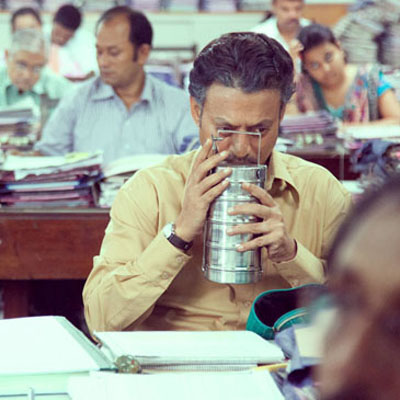
    MUMBAI: After wowing festivals worldwide and winning hearts in India, Ritesh Batra’s The Lunchbox, continues its winning trail. This time, it has won the Church of Iceland award at the Reykjavik International film festival, and the Best Director and Best Actor awards at saint jean de luz Film Festival (a French Festival).

    The film has now been selected in the official competition section of the prestigious BFI London Film Festival. In the 56th year of the festival, The Lunchbox that stars Irrfan Khan and Nimrat Kaur in the lead roles, will compete with some of the best films in the world including the Jesse Eisenberg-starrer The Double and the Scarlett Johansson-starrer Under the Skin. The festival will also screen Steven McQueen’s 12 Years A Slave and Alfonso Cuaron’sGravity in the Gala section.

    In another key development, Artifical Eye has bought the UK distribution rights of The Lunchbox. “We acquired the film both because we loved it and because we feel it will be loved by the UK audiences,” says Artificial Eye Managing Director, Louisa Dent.

  • Aspiring to change with a film

    Aspiring to change with a film

    MUMBAI: In the times of crime against women increasing with each passing day, comes a film about rape and revenge. Dare You is by far the boldest approach towards rape crimes written and directed by Denis Selarka and Mehul Simari and produced by Blueberry Films.


    Starring Alisha Khan, the film revolves around a Kashmiri college girl who comes to Mumbai for completing her higher studies only to be treated atrociously. The story moves ahead when she decides to take charge and give it back to the guys who treated her badly.


    The movie challenges the norms of the conventional cinema where such ghastly crimes are hushed upon. The movie boasts of being a shocking retaliation of a rape victim.
    Rani Diwan, the protagonist of the film is trying to be that “change” which everybody wants to see in the society.

  • Shahid: This one is for the critics

    Shahid: This one is for the critics

    MUMBAI: Shahid is a bio-pic of a Mumbai lawyer, Shahid Azmi, whose story itself is a readymade film plot with so many twists and turns and an untimely death as he was shot down in his office at the young age of 32.

    Shahid and his three brothers, along with their mother, occupy a mezzanine one-room house in a congested Muslim locality of Mumbai. Shahid is keen to study and for this purpose argues with his family to keep the lights on at night even though it disturbs them. One such night, Shahid hears some commotion in the area and steps out to check the cause. There he sees bodies burning or slain with swords. Wanting to return home, he keeps knocking but the family is not sure it is him. The incident makes an instant impact on Shahid who, on an impulse, leaves home to head to Pakistan-occupied Kashmir to train as a terrorist. He soon realizes that he was in the wrong place and runs away to head back home.

    But here he is arrested for plotting against the state and charged under TADA to serve seven years in Tihar jail, Delhi. Like Shahid, there are also others behind bars even though they are innocent. The jail also has an inmate belonging to a terrorist group who tries to brainwash Shahid and other Muslim inmates to join the group. But Shahid is lucky to meet a character played by Kay Kay Menon, and a professor, both framed under false charges. Menon warns him to keep away from bad elements and advises that if he wanted to change the system, he needed to join it. Shahid decides to study further from within the jail and the professor helps him. Soon he is acquitted.

    Producer: Ronnie Screwvala, Siddhartha Roy Kapoor, Anurag Kashyap, Sunil Bohra.
    Director: Hansal Mehta.
    Cast: Rajkumar, Kay Kay Menon, Mohammed Zeeshan Ayub, Tigmnshu Dhulia, Vipin Sharma, Prabhleen Sandhu, Yusuf Hussain.

    After being freed, Shahid goes on to finish his masters in law and joins a renowned law firm where he lasts only few months before going on to work independently. He fights for the Muslim youth charged under another stringent law, POTA, but who Shahid thinks are innocent. Shahid fights these cases pro bono on requests from NGOs, winning 17 acquittals in his seven-year career before being shot dead defending a 26/11 accused who too was later acquitted by the Supreme Court.

    The film’sportrayal of the Muslim pockets of the city looks authentic. While it would have been tempting for the director to linger a bit longer on riots and the Kashmir training parts, he wisely avoids it, keeping only as much footage as needed to make the point. The jail portion is made to look too easy and the inmates look like they are on a picnic. Though a lot of the film is shot in court rooms, the court rooms look shoddy. However, the court duels between Shahid and opposing lawyers are interesting. Rajkumar playing Shahid is excellent throughout the film, whether in his interactions with family or clients; his portrayal of a concerned lawyer is lifelike. Kay Kay Menon, in a brief role, is pleasant. Mohammed Zeeshan Ayub, Prabal Punjabi, Tigmanshu Dhulia, Vipin Sharma, Prabhleen Sandhu and Baljinder Kaur (as Ammi) are all very good.

  • Rajula, a love tale from the hills

    Rajula, a love tale from the hills

    NEW  DELHI: Rajula, a film directed by writer-director Nitin Tewari, which is based on the famous folk tale of Uttarakhand Rajula-Malushahi, released today under PVR Director’s Rare Cut.


    Several eminent personalities from Uttarakhand, including Union Water Resources Minister Harish Rawat, attended a premiere in the capital last evening.


    Shot in the hills of Uttarakhand, the film portrays the changing dynamics in Rajula’s different relationships – with her father, brother or lover. This love story explores the strength of woman and the sacrifices she must make to achieve her love.


    Rajula weaves two eras in a very interesting manner. The narrative of the film attempts to understand and connect the two mindsets prevailing in the two different eras – the ancient era and the present-day generation.


    Ravi, a documentary filmmaker, returns to India after the death of his parents in an accident to research the story of Rajula-Malushahi. The story is popular in the area among different sets of people in different versions. He meets many people, who give him different inputs, before finally meeting Bhavna, a young lady from Uttarakhand, who helps him in his research.


    He gradually falls in love with Bhavna, who is bound by various social taboos. However, it is while trying to understand the real story of Rajula-Malushahi that Ravi also gets an insight into the existing mindset in the area and is able to resolve a long-pending family dispute that began when her parents disapproved of his mother marrying against their will.


    The film in Hindi, Garhwali and Kumaoni stars Ashima Pandey and Karan Sharma in the title roles along with Hemant Pandey, Chandra Bisht and Anil Ghildiyal. The music has been composed by Milind and Sudhir Rikhandi, giving the essence of Uttarakhand.


    Presented by Himadri Productions and produced by Rama Upreti and Prianka Chandola, it has already won the Best Film – Audience’s Choice Award at the Delhi International Film Festival in December 2012.


    Tewari said, “Writing and directing Rajula has been amazing experience for my team, the cast and me.”