Category: Hindi

  • Software and Equipment segments pull down Mukta Arts Q3-2014 profit

    Software and Equipment segments pull down Mukta Arts Q3-2014 profit

    BENGALURU:  Mukta Arts Limited (Mukta Arts) Software division reported a loss of Rs (0.73) crore on operating revenue of Rs 62.49 crore for the quarter ended 31 December, 2013 (Q3-2014) which eroded the operating profits of Rs 0.37 crore and Rs 1.70 crore reported by the company’s Theatrical division and ‘Others’ division respectively. The fourth segment that contributes to Mukta Ars numbers – Equipment division also ate into the Q3-2014 operating profit to the extent of Rs (0.15) crore. Mukta Arts reported an operating profit of Rs 0.92 crore for the current quarter. 


    Let us look at the Q3-2014 numbers reported by Mukta Arts 


    The company reported Total Operating revenue of Rs 76.67 crore in Q3-2014, which was 6.27 per cent more than the Rs 72.14 crore in Q3-2013 and (9.97) per cent lower than the Rs 85.16 crore in Q2-2014. During the nine month period ended 31 December 2013, Mukta Arts Total Operating revenue at Rs 223.27 crore was 17.28 per cent more than the Rs 198.90 crore in the corresponding period of last fiscal. For FY-2013, the company reported Total Operating revenue of Rs 257.82 crore.


    Mukta Arts Total expense for Q3-2014 at Rs 76.61 crore was 15.41 per cent more than the Rs 66.38 crore in Q3-2013 and (9.45) per cent lower than the Rs 84.61 crore in Q2-2014. Total expense YTD at Rs 231.55 crore was 20.78 per cent more than the Rs 191.71 crore reported during the corresponding nine month period of last year. For FY 2013, the company reported Total expense of Rs 253.61 crore. 


    More than 90 per cent of Mukta Arts expense and more than 85 per cent of Total Operating revenue is the Distributors and Producers share. In Q4-2014, the company paid Rs 68.98 crore (90.04 per cent of Total expense, and 89.97 per cent of operating revenue for the quarter) towards this head, which was 11.85 per cent higher than the Rs 61.67 crore (92.91 per cent of Total expense and 85.48 per cent of Total operating revenue for the quarter) in Q3-2013 and (11.81) per cent lower than the Rs 78.21 crore (92.44 per cent of total expense and 91.85 per cent of Total operating revenue for the quarter) in Q2-2014. 


    Distributors and Producers share for the nine month period ended 31 December 2013 at Rs 212.13 crore (91.61 per cent of Total expense and 90.94 per cent of Total operating revenue for the period) was 17.85 per cent more than the Rs 180.01 cores (93.90 per cent of Total expense and 90.50 per cent of Total operating revenue for the period) of the corresponding nine month period of last year.


    For FY 2013, Mukta Arts paid Rs 233.74 crore towards Distributors and Producers share, which was 92.16 per cent of Total expense and 90.66 per cent of Total Operating revenue.


     Segment Revenue


    The lion’s share of Mukta Arts revenue – more than 90 per cent comes from its Software segment. This segment reported revenue of Rs 69.24 crore (90.31 per cent of Total operating revenue) for Q3-2014 which was 1.21 per cent more than the Rs 68.41 crore (94.83 per cent of Total Operating revenue) for Q3-2013, but (13.09) per cent lower than the Rs 79.67 crore (93.55 per cent of Total operating revenue) during Q2-2014. 


    For the nine month period ended 31 December 2013, the Software division’s revenue at Rs 214.83 crore (92.1 per cent of Total operating revenue) was 11.93 per cent more than the Rs 191.93 crore in the corresponding period of last year. For FY 2013, Mukta Arts Software division’s revenue was Rs 246.47 crore or 95.6 per cent of total revenue. 


    As mentioned above, this segment reported an operating loss of Rs 0.73 crore for Q3-2014 as compared to an operating profit of Rs 6.74 crore in Q3-2013 and an operating profit of Rs 0.35 crore in Q2-2014. For the nine month period ended 31 December 2013, the Software segment reported an operating profit of Rs 0.31 crore which was more than 31 times (31.51 times) lower than the Rs 9.86 crore operating profit reported during the corresponding period of last year. For FY 2013, Mukta Arts Software Division reported an operating profit of Rs 8.10 crore.


     Mukta Arts Theatrical Exhibition segment reported operating revenue of Rs 5.16 crore and an operating profit of Rs 0.37 crore for Q3-2014 as compared to the revenue of Rs 2.46 crore and an operating profit of Rs 0.14 crore for Q3-2013 and an operating revenue of Rs 3.52 crore and an operating loss of Rs (0.14) crore in Q2-2014. YTD, its operating revenue was Rs 12.3 crore and an operating profit of Rs 0.21 crore as compared to the revenue of Rs 2.62 crore and operating profit of Rs 0.66 lakh (Rs 100 lakh = Rs 1 crore: Rs 100,000 = Rs 1 Lakh) for the corresponding period of last year. For FY 2013, the Theatrical exhibition segment reported revenue of Rs 5.24 crore and a small operating loss of Rs (-6.61) lakh 


    The contribution by Mukta Arts Equipment division was a very small fragment of per cent to total revenue. As reported above, this segment reported a loss of Rs (0.15) crore for Q3-2014, loss of Rs (0.16) crore in Q3-2013 and equally small fractions for the other periods. 


    Mukta Arts ‘Others’ segment reported operating revenue of Rs 2.17 crore and an operating profit of Rs 1.70 crore for Q3-2014. y-o-y, this segment reported revenue of Rs 1.20 crore and an operating profit of Rs 0.99 crore, and q-o-q the revenue was Rs 1.79 crore and an operating profit of Rs 1.54 crore. YTD, revenue from this segment was Rs 5.67 crore and an operating profit of Rs 4.64 crore as compared to the operating revenue of Rs 4.04 crore and an operating profit of Rs 3.42 crore during the corresponding nine month period month of last year. For FY-2013, ‘Others’ segment reported revenue of Rs 5.74 crore and an operating profit of Rs 4.94 crore. 


    During the quarter the Company has commenced its cinemas at Mumbai, Selu, Junnar and Banswara.
     

    Click here for the financials

  • Today, entertainment is finally about business: Manmohan Shetty

    Today, entertainment is finally about business: Manmohan Shetty

    MUMBAI: Even as the Indian Merchants Chamber (IMC) gears up for the third edition of its ‘IMC FUSION’ under the auspices of its Entertainment Committee, for the first time, the committee will be chaired by film producer-entrepreneur Manmohan Shetty.


    Apparently, Shetty was egged on by good friend and construction magnate Niranjan Hiranandani to accept the position. In a candid chat with indiantelevision.com, he spoke of what the conference would be all about this time…


    Congratulations on your appointment as chair of IMS FUSION 2014. What will be your prime focus as far as the entertainment industry is concerned?


    This time, we are focusing on two aspects of the entertainment industry. One being the business aspect and the other one being the technology used in entertainment. We have invited Tamil superstar Rajinikanth’s daughter, Soundarya and Dr Murali, who will talk about the technology deployed in creating stunning visuals in their upcoming film Kochadaiiyaan.


    Please elaborate on the business aspect the conference will be touching upon. Who will be talking about the business of entertainment at the conference?


    Today, entertainment is finally about business. Big stars are turning producers because they are not only inclined creatively but also want to ensure their movie does good business. I would say the business aspect is more important than the creative aspect. Even students graduating out of film schools like Whistling Woods and others are ultimately looking to make money and do good business.


    Answering the second part of your question, we have invited Mukesh Bhatt to expound on the business aspect of entertainment. He will deliberate on how it is possible to make a small-budget film and still reap profits from it. After the success of Vishesh Films’ Aashiqui 2, I think he is the best person to speak on this subject (smiles).


    This time, IMS FUSION has tied up with IES Management College and Research Centre. What do you intend to achieve through this collaboration?


    The intention is to have a greater interaction with students. We have also invited students of cinema and media. To interact with them, we have invited captains of industry who will share their experiences and insights with them. We believe this will be fruitful for those who want to make a career in the entertainment industry.


    Last but not the least, what is the one thing you intend to achieve as chair this year?


    I feel people are rather private and personal in this industry. For every production company churning out films through the year, there are many which are unable to produce the same number of movies. So, what kind of talent goes into making commercially viable or financially viable films or any other financially viable projects? I want this information to be disseminated which can happen either by reading or listening to people who’ve already been there, done that… I will be happy if such information is passed on by people who have the knowledge and experience to rank newcomers who will be soon entering the industry. If that happens through IMC FUSION, I will be happy.

  • Hasee Toh Phasee… a run of the mill love story

    Hasee Toh Phasee… a run of the mill love story

    MUMBAI: Hasee Toh Phasee is a romantic feel good film along the usual lines which, in fact, is its strength. Tried and tasted has less chance of backfiring. The story is simple and oft told. In fact, two releases this week, Hasee Toh Phasee and Babloo Happy Hai have similar romantic angles. Also, since Sidharth Malhotra is barely one film old (Student Of  The Year) and in the process of creating a following, the film’s star draw is Parineeti Chopra who has established herself as a capable actor. The film also uses the flavor of the season on TV as well as films, a girl with a Gujarati background.


    Malhotra is attending a Gujarati wedding in Mumbai when he watches a tom boyish Chopra climbing the wall of her bungalow to runaway from home. She is stuck between barbed-wired fences and Malhotra helps her free herself. He is invited to join her in Goa but he is keener on attending the wedding with his two friends in tow. The main attraction at the pre-wedding aam ras drinking competition is Adah Sharma; Malhotra and Sharma’s eyes meet and sparks fly. It is love at first sight.


    It has been seven years since sparks flew. Malhotra and Sharma are now ready to cement their bond with marriage. Even Sharma’s skeptical father, Manoj Joshi, who thinks of Malhotra only as a moocher, has agreed. It is seven days to wedding (seven seems to be lucky number of the makers; marriage after seven years, and seven days to wedding!) and Sharma has a special guest she does not want her family to meet. The job to accommodate her, look after her and keep her away is handed over by Sharma to her own fiancé, Malhotra. Well, manipulating a script is the only way to move it forward. The one Malhotra is asked to tend to is none other than Chopra, the girl he helped run away seven years back.


    Chopra is a scholar and a genius, a PhD who can repair a toaster or charge car batteries using mobile phone charger with power stolen from a bus stop glow light! She can reel out medicine formulas as well as effects of the drugs. However, she is eccentric, heavily dependent on drugs and prone to bouts of quirky behavior. She consumes kilos of sugar, drinks litres of water and is prone to eating toothpastes. Being his fiancée’s guest, Malhotra makes sure Chopra is comfortable and failing to get her a decent accommodation in a hotel, brings her home where many of his family’s guests are lodged.


    Malhotra soon learns that Chopra, who is being kept away by Sharma from her family, is, in fact, her sister. The reason is that Chopra had stolen a hefty sum of money when she ran away following which her father, Manoj, had suffered a heart attack. It’s a struggle for Malhotra to keep Chopra away from her father, whom she is very keen to meet. As Malhotra gets to know Chopra’s qualifications as well as her reasons for doing the things she did or has been doing, bonhomie develops between the two which, expectedly, turns into love. While Sidharth is always lost and uncertain about life, Chopra has a logical solution to everything.


    Chopra was in China all these years and there she has devised a miracle ball. However, she has failed to return the loan to her startup funders. To add to that, she had forged her father’s signature as a guarantee. She expects the Chinese to create trouble for him. She needs ten crore and the solution she and Malhotra come up is to hack her father’s bank account and transfer funds; as farfetched as filmy fiction can get!


    Malhotra has another problem, in his seven years with Sharma, he has got used to her returning his engagement ring and breaking off on per day basis. But, he is ’not the type’ to forsake her. He shrugs off Chopra’s suggestion that Sharma was not his type and he should marry her instead. The decision is left for the wedding day while doing the pheras


    The story is linear, proceeding at an easy pace with no twists and turns or surprises. This makes the director’s work simpler with no challenges as such. The romance blossoms even as Chopra is not projected as a romantic types, neither glamorous nor the type to strike chords. The film sags at times and a bit of trimming would have been good for the film. The film has good songs in Zehnaseeb…., Ishq bulaava….., Punjabi wedding number, and a homage to Shammi Kapoor with Shake it like Shammi….It is Chopra’s film all the way and she excels as expected. Malhotra is restrained and his good looks are his plus. Sharma is fair. Joshi is good as usual. Sameer Khakhar, back to acting, is a welcome. Sharat Saxena, Neena Kulkarni and the rest are aptly cast.


    Hasee Toh Phasee has had a weak opening, what with the lingering exam season being bit of a put off. But, aimed mainly at the young multiplex audience, it is expected to get better, especially in major cities. But, that may prove to be a little too late.


    Producers: Karan Johar, Vikas Bahl, Vikramaditya Motwane, Anurag Kashyap.

    Director: Vinil Mathew.

    Cast: Sidharth Malhotra, Parineeti Chopra, Adah Sharma, Manoj Joshi, Sharat Saxena, Neena Kulkarni, Sameer Khakhar.


    Ya Rab… Terrorism has no religion


    Ya Rab deals with Islamic themes related to terrorism. It shows two sides of the believers, two ways of interpreting the book. There is a section which has a logical approach to life and believes in going with the mainstream while the other cites the alleged atrocities committed on the community, amplifies them to incite youth, and creates terror. Not many would risk touching such a subject as there are bound to be reactions from various quarters. This has indeed been the case with Ya Rab, which kept fighting court battles till the release day and will have to continue fighting them.


    Raju Kher is a practicing Muslim living happily with his family in Lucknow. His brother, Akhilendra Mishra is a much respected maulana. Having a huge following, the maulana gets his followers out of trouble with the authorities thus adding to his power. But the maulana’s intentions are not what they seem to be. He has a more sinister side to him, that of inciting mobs and spreading terrorism. He specialises in choosing boys for suicide bombing missions and brainwashes them in various ways including showing them films of atrocities against Muslims.


    On the tail of the maulana is the ATS cop, Ajaz Khan, who has information that something is slated to happen in Lucknow on a certain date. Khan plays a Hindu cop whose love life has been shattered after his Muslim fiancée learnt that her brother is also a terrorist. She decides to atone for him by not marrying! Gradually, Ajaz has zeroed down on the maulana and worked out that a suicide bomber will destroy a crowded mall in the city. He makes it to the mall only to see the bomb going off.


    The bomb blast will haunt the maulana as one of the victims is his brother’s pregnant daughter-in-law, Arjumman Mughal. ATS man Khan’a hopes rested on her since she was seen talking to the bomber before it went off which meant she knew him. She is the only witness to the bombing but she is brain-dead. While the surgeon, Manzar Sehbai (the Pakistani actor one may remember from Bol), wants to keep her alive till the doctors can bring the child out of her, the maulana makes all the efforts to kill her including threatening Sehbai with mob violence and destruction of his hospital.


    The film’s producers as well as the director are Muslims and it is creditable that they chose to put money on this film. The film tries to draw a line between Muslims and terrorists with the message that terrorists have no religion. The film avoids including third force to the equation. Direction is good and so are performances by regulars while new faces also try to be convincing.


    Producers: Mohsin Ali Khan, Meesam Ali Khan, Hoori Ali Khan.

    Director: Hasnain Hyderabadwala.

    Cast: Manzar Sehbai, Ajaz Khan, Akhilendra Mishra, Raju Kher, Vikram Singh, Arjumman Mughal, S M Zaheer.


    Babloo Happy Hai… But why?


    Babloo Happy Hai may sound like a fun and games movie about young lads. It starts of as such. However, in the tradition of director Nila Madhab Panda’s earlier films, I Am Kalam and Jalpari, this film also carries a message. I Am Kalam was about a poor Rajasthani boy’s craving for education and aspiration to be a big man some day after watching the former Indian President, APJ Abdul Kalam, on television. Jalpari, again based in a small Rajasthan village, dealt with the killing of the girl child before she was born. Babloo Happy Hai deals with HIV and how those affected can continue to live a normal life.


    Sahil Anand, Sumit Suri and Amol Parashar are three close friends. Sahil is engaged to high-strung girl, Preet Kamal, Sumit is desperate to get rid of his bachelor tag and Amol is gay and committed to a suspicious and possessive partner. Preet thinks of herself as elite and does not quite like Sahil’s friends. The other two decide to throw a bachelor’s party for Sahil now that he is set to tie the knot. Sloshed out of his senses, Sahil ends up in bed with one of the girls at the party, Erica Fernandes. He faces the threat of his fiancée finding out, a risk that is averted.


    It is Preet’s cousin’s wedding somewhere in Himachal hills and the trio has been invited by her to join in. Seeing this will be his last chance to travel and have fun with his friends, Sahil sets out on scenic roads to the destination, braving snowstorms and running out of gas as well as experiencing a dance performance by gypsy beauties who one thought had been consigned to history in film stories in the 1970s. While the other two have no care in the world, Sahil is always under pressure. His life is controlled by Preet, who sets his timetables and dress codes for the function; Sahil fails to live by any of those.


    The world is small for at the wedding Sahil again comes across Erica, the girl he thought was his one night stand and now out of the picture. The circumstances created by the snowstorm prolong the group’s stay in the hills. Their shelter is an NGO, Ashray, tending to the needs of HIV/AIDS afflicted. It is run by a much in love couple, Anu Chaudhary and Pravin Dabas. The rule at the Ashray is ‘no free meals’ and the boys and girls are asked to work for the cause while they are there. The fun and games are over as an emotional tug of war takes over as Sahil is drawn more and more towards Erica at the same time realising Preet is not the one for him. The later part also involves a message on HIV and how and why those afflicted are not taboo and should not be forced out of day to day life.


    Though director Panda’s intentions may be honourable, this is a script of convenience where loose ends are left untied and connections are manipulated. That limits the prowess of Panda as director. Cinematography by Subhransu Das, who has done more work for serials, is a plus point with beautiful locations to shoot. Music has limited appeal despite finding inspiration from old numbers. Sahil, Sumit and Amol are okay. Erica, with a few South films behind her, is good while Preet can’t act. Anu Choudhury (from Oriya films) and Pravin Dabas are the seasoned ones.


    Babloo Happy Hai, with a title not quite conveying the film’s real purpose and lacking in face value faces tough times ahead at the box office.


    Producers: Gagan Dhawan, Ravi Dutta.

    Director: Nila Madhab Panda.

    Cast: SahilAnand, Erica Fernandes, Preet Kamal, SumitSuri, AmolParashar, ReyhnaMalhotra, ParvinDabas, AnuChoudhury, PoojaTawde, KhusbhooPurohit (item number)

  • Eros International’s ‘English Vinglish’ to become the biggest B’wood release in South Korea

    Eros International’s ‘English Vinglish’ to become the biggest B’wood release in South Korea

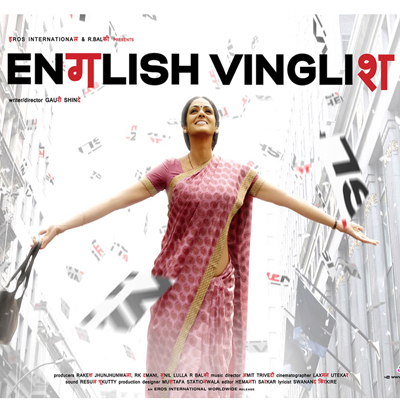
    LONDON: Eros International, a leading global company in the Indian film entertainment industry announced today that it will release the blockbuster film, English Vinglish, in South Korea on February 6, 2014. Following on the heels of the film’s success in Hong Kong and Germany last year, English Vinglish will be released across 150 screens, making it one of the biggest Bollywood releases in South Korea to date.


    Speaking on the film’s success, Kumar Ahuja, President, Business Development, Eros International Media Ltd, said, “English Vinglish is a universal story that truly resonates with global audiences, especially as it relates to acceptance and the challenges of learning a new language. With newer markets for the film consistently opening, we believe audiences worldwide will continue to find a connection with this captivating film.The film, directed by Gauri Shinde, has performed exceptionally well in new markets. In Taiwan, the film was released across 6 screens in December, 2013 and amassed over US$ 300,000, making it the second biggest grossing Bollywood film in Taiwan. English Vinglish also continues to hold a firm position in Taiwan’s top 10 charts.


    “In several new markets, including Asia, audiences have shown that they love Indian ethos and drama. In response to the growing appetite, we plan to release additional films like Dabaang, Dabaang 2, Ra.One and Go Goa Gone into new markets in the coming year.”


    In 2014, Eros will look to further expand its presence in Asia by releasing films such as Cocktail, Student Of The Year and Table no 21 in Taiwan and Chalo Dilli, English Vinglish, Dabaang, Student Of The Year and Agent Vinod in Japan. The Japanese market has already proven to be a strong one for Eros as the Company’s release of Farah Khan’s Om Shanti Om across 14 screens earned over US $ 150,000 at the Japanese box office in 2013.


    Eros is also making inroads in Eurasia and Russia with plans to release some of its hit films including, Yeh Jawaani Hai Deewani, Rockstar, Zindagi Na Milegi Dobara, Student of the Year, Vicky Donor and Desi Boyz in these territories during 2014. This activity comes on the heels of the successful Eros film, Cocktail, which was released in March, 2013 across 19 screens in Kazakhstan and Kyrgyzstan and became the first Indian film in these countries to gross over US$ 100,000 at the box office.


    Finally, Eros has expanded into African markets with the release of its hugely successful Krrish 3 across 14 screens in Egypt this past December.

  • India’s Qissa to compete at Vesoul Filmfest in France

    India’s Qissa to compete at Vesoul Filmfest in France

    NEW DELHI: The Indian film Qissa by Anup Singh, which has already won accolades on the international festival circuit, will one of the nine Asian films in competition at the 20th Festival International des Cinémas d’Asie.


    The Cinemas d’Asie which is a specific festival for developing film industries in Asia will be held from 11 to 18 February in Vesoul in France next month.


    There are two films from Japan, both receiving their European premiere, and one each from China, India, Iran, Philippines, South Korea, Thailand and Turkey in the Festival. Five of these nine films were also screened at last year’s Busan International Film Festival in South Korea.


    Qissa was also the opening film of the 43rd International Film Festival at Rotterdam from 22 January to 2 February and this marked the European premiere of the film. It won the Audience Award at that Festival. 


    The award comprising Euro 10,000 (INR 9 Lakh Approx) is given to the most voted film supported by the Hubert Bals Fund.

    Qissa which received the Hubert Bals Fund for Script & Project Development in 2004, was made with further support from the Netherlands Film Fund, and was co-produced by Dutch company Augustus Film.


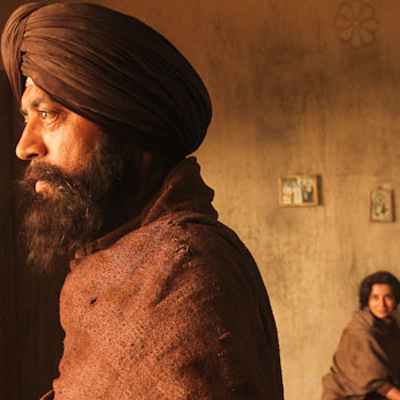
    Set in post-colonial India, the film stars Irrfan Khan as a Sikh who has fled his village to escape ethnic cleansing at the time of partition who tries to start a new life for his family.


    The choice of opening slot for the drama is part of the 25th anniversary celebration of the festival’s Hubert Bals Fund, which had supported the Indian film’s script development ten years ago.


    The festival will also host a retrospective, Mysterious Objects: 25 Years of Hubert Bals Fund, including a screening of the fund’s first recipient, Chen Kaige’s Life on a String (1991).


    Qissa is represented internationally by Germany’s The Match Factory GmbH. The film had its North American and Asian premieres at the Toronto International Film Festivaland Busan International Film Festival respectively.


    Earlier, the film added one more feather in its cap when actor Tillotama Shome won the Best Actress award in the New Horizons competition at the Abu Dhabi Film Festival.

    In Qissa, Shome plays the youngest daughter of Umber Singh (Irrfan Khan) who decides to raise her as a boy.


    Shome made her screen debut with Mira Nair’s Monsoon Wedding in 2001 and went on to play roles in Florian Gallenberger’s Shadows of Time and Dibakar Banerjee’s Shanghai.


    Qissa earlier won the Silver Gateway Award in India Gold competition at the 15thMumbai Film Festival  and the NETPAC (Network for the Promotion of Asian Cinema) Award for Best Asian Film at the 38th Toronto International Film Festival where it had its premiere.


    Set amidst the ethnic cleansing and general chaos that accompanied India’s partition in 1947, this sweeping drama stars Irrfan Khan as a Sikh attempting to forge a new life for his family while keeping their true identities a secret from their community.


    Beautiful, timeless, and touching the deepest of human impulses, Qissa carries the spirit of a great folk tale. Although it’s set in a particular time and place — the Punjab region that straddles India and Pakistan in the years immediately after partition — it is both deeper and broader than any one moment. As this eerie family drama progresses, it cuts to the heart of eternal desires for honour, empathy, and love.


    “Qissa” is originally an Arabic word meaning folk tale. Both the word and the idea migrated from the Gulf into the Punjab, still connected by the ancient oral narratives handed down in communal settings. Working within this tradition, director Anup Singh gives his film both the grand themes and elemental emotions of classic storytelling. As Umber’s daughter is raised as a boy, the characters are propelled with greater and greater urgency towards their inevitable fates.

  • MIFF 2014 opens with Anand Patwardhan getting V Shantaram Life Time Achievement Award

    MIFF 2014 opens with Anand Patwardhan getting V Shantaram Life Time Achievement Award

    NEW DELHI: The week-long festival celebrating the best of documentary films – the Mumbai International Film Festival for short, documentary and animation films has commenced in Mumbai with a rare insight into the life during pre-independence India, and presentation of the V Shantaram Award.


    Maharashtra Governor K N Sankaranarayanan who inaugurated the Festival appealed to filmmakers to lend their voice to raise the problems of disadvantaged through their films.


    Information and Broadcasting Minister Bimal Julka, Festival Director V S Kundu who is Director-General of Films Division, and members of the national & international jury and several prominent filmmakers were present.


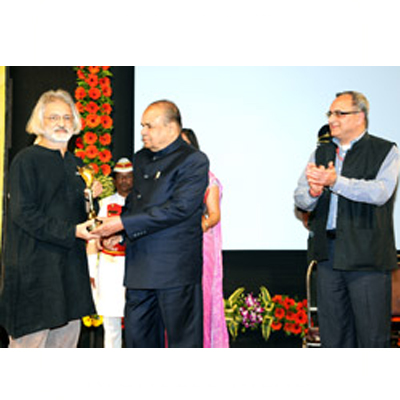
    The veteran filmmaker on social issues Anand Patwardhan who has often raised contoversies through his films was honoured with the V Shantaram Life Time Achievement Award for his contribution to promotion of documentary films movement in India.


    Patwardhan is an acclaimed documentary filmmaker known for his activism through social action documentaries on topics such as corruption, slum dwellers, nuclear arms race, citizen activism and communalism. His notable films include Bombay: Our City (Hamara Sahar) (1985), In the Name of God (Ram ke Nam) (1992), Father, Son and Holy War (Pitra, Putra aur Dharmayuddha) (1995), War and Peace (Jang aur Aman) (2002) and Jai Bhim Comrade (2011), which have won national and International awards. Jai Bhim Comrade had won the Best Film award at MIFF 2012.   


    In his acceptance speech, Patwardhan said, “My feelings are mixed. My films speak about the reality of the disadvantaged. They have raised several socially relevant issues, but the impact has been marginal. The issues I highlighted through my films sine 1980s continue to exist – rampant demolition of slums and uprooting of poor, communal violence, increasing crime against women, atrocities against the downtrodden, nuclear arms race etc, continue to remain as serious challenges”. 


    The V Shantaram Award carries a cash prize of Rs 5 lakh and a citation.


    The opening film – the 86-minute package curated by the British Film Institute National Archive Before Midnight: a Portrait of India on Film, 1899-1947, is a collection of home movies, documentaries , dramas and comedies exploring how life was  lived in British India. It has over 100 short films covering topics ranging from temples to tigers. 


    The Maharajah of Jodhpur’s home movies provide an epic portrait of princely power in the 1930s and 40s, whilst those of the Gorrie family offer an intimate picture of family life and their expeditions into the Himalaya. The collection also features the films and TV dramas that helped to shape the mythologies of British India including The Drum (1938), The North West Frontier (1959) and The Far Pavilions (1984).


    Another highlight of the opening ceremony was the screening of short film titled ‘Checkmate BB’ produced by Mumbai School kids. Seventeen kids from 13 schools were trained to conceptualise, direct, shoot and edit a film of their own at a workshop conducted by by the Linnep Media and CineKids, Amsterdam, as part of the fortnight-long Linnep Kids Film Festival, that was held in 15 schools of Mumbai, Navi Mumbai and Thane, as a run up to MIFF 2014.


    The Indian Navy’s ceremonial Naval band and Bangalore’s noted music group Mystic Vibes also enthralled the audience at the inaugural ceremony.


    The 13th MIFF being held from 3 Feb to 9 Feb at NCPA (Tata Centre) at Nariman Point received over 790 entries including 205 entries in the international section. This biennial film festival organised by the Films Division of the Information and Broadcasting Ministry is held in collaboration with the state Government of Maharashtra and the Indian Documentary Producers Association.

  • BO: A bad start to 2014

    BO: A bad start to 2014

    MUMBA: It has been a dull scene at the box office windows all over as even the Salman Khan film, Jai Ho, has behaved way below expectations. The single screens were made to pay high MGs (the demand was “More than MGs paid for Dhoom3!). All stand to lose 50 to 60% of the MGs paid. They had a happy ending to year 2013 with Dhoom3 but have had a bad start to 2014. Also, there is no major film in sight in near future to rest their hopes on.


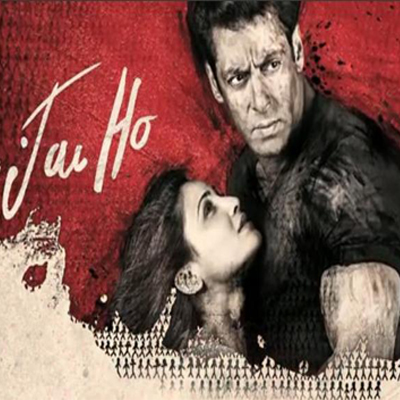
    Salman Khan’s sermonising fare, Jai Ho, has not been able to draw crowds from day one. The audience seems to have a strong antenna about their choice and infer a lot from the publicity campaigns of a particular film. The film had a weak Friday and a Saturday which saw a drop instead of a rise in collections. The only saving grace were the Sunday collections which jumped by about 40% over its opening day figures. With an opening weekend of 57.2 crore, the film has not even managed to cross the mandatory 100 crore mark in its first week which is expected of any major star. The film ended its first week with 82.1 crore. It may just about manage to cross the 100 crore mark which still makes it a loser.


    The solo release of the week, One By Two is a rank bad film and faced the consequences for being so. Lacking any story worth telling and a coherent script backed by poor handling, it failed to attract even a small fraternity of Abhay Deol fans. At many screens, there was ‘No audience, no show’ status. The film collected 1.4 crore for its first weekend.


    Yaariyan, its mediocre content notwithstanding, has made its money. Having collected 32.05 crore in its first two weeks, the film has added another crore to its tally, taking its total to 33.05 crore.


    Dedh Ishqiya has run out of steam by its third week. Adding just 80 lakh for its third week, the film’s three week take is 25.4 crore.

  • Shahid Kapoor’s look in Vishal Bhardwaj’s next revealed

    Shahid Kapoor’s look in Vishal Bhardwaj’s next revealed

    MUMBAI: Actor Shahid Kapoor’s best came out in the 2009-film Kaminey  where he played a double role of twin brothers – Charlie and Guddu – one stuttered and the other lisped. The director of the film Vishal Bhardwaj was given the credit for bringing out the hidden talent of Kapoor. Since then the industry as well as the fans of both the actor and the director have been waiting for them to reunite.


    It seems to be the right time to look forward to something interesting from the duo as the much awaited first look of their next movie together is out. Haider, an adaptation of Shakespeare’s popular work – Hamlet, is a film by Vishal Bhardwaj and Disney UTV.


    The actor’s first look in the film that was released today shows him in a neat buzz-cut for the role of a desi Hamlet. Shahid  says, “I believe in the script and have completely surrendered to Vishal sir’s vision on my character and my look.”


    Being shot in Kashmir, Haider is Vishal’s last film of his trilogy based on William Shakespeare’s tragedies.


    “Disney UTV Studios’ previous association with Vishal Bhardwaj and Shahid Kapoor delivered the cult box office hit Kaminey. The audiences have long awaited the next installment from this team, and in Haider we believe the audiences will find the wait was well worth it. With an incredible ensemble of actors including Tabu, Shraddha Kapur and Kay Kay Menon, this Shakespearean interpretation set against the backdrop of militancy in Kashmir, has some remarkable performances and great music. We believe Haider will be a worthy successor to Maqbool and Omkara,” says Disney UTV Studios Creative Director Amar Butala.


    Haider is set to release on September 12 this year and stars Tabu, Shraddha Kapur and Kay Kay Menon alongside Shahid Kapoor.

  • Muted box office performance pares PVR profit, numbers in Q3-2014

    Muted box office performance pares PVR profit, numbers in Q3-2014

    BENGALURU: Muted box office performance by most of the films released during Q3-2014 resulted in a 48.6 per cent drop in consolidated PAT to Rs 14.16 crore from Rs 27.55 crore in Q2-2014 for Indian motion picture exhibition, production and distribution house PVR Limited. Revenue also dropped by 7.91 per cent in Q3-2014 to Rs 339.39 crore from Rs 367.27 crore in Q2-2014. 


    Consolidated numbers cannot be compared with Q3-2013, because Cinemax became a subsidiary of PVR Limited only effective 7 January 2013.  


    PVR Limited has three main revenue streams – Movie Exhibition; Movie Production and Distribution and ‘Others’ which includes bowling, gaming and restaurant services. 


    PVR says that there were only three big films (Goliyon Ki Raasleela Ram Leela, Krrish 3 and Dhoom 3) in Q3-2014 as compared to seven big films (Student of the year, English Vinglish, Jab Tak Hain Jaan, Son of Sardar, Talaash, Dabangg 2 & Life of Pi) in Q3-2013. The company says that big films like Boss, Beshram, R..Rajkumar, Bullet Raja underperformed. Further it says that occupancy of top 10 movies for Q3-2014 for comparable properties was down by six per cent as against same period last year, while Admits for top 10 movies for comparable properties was down by 17 per cent as against same period last year. Top 10 movies admission contribution was 62 per cent in Q3 2014 as against 71 per cent in same period last year. 


    In spite of the drop in footfalls, the average total ticket price in Q3-2014 at Rs 169 was up by 3.55 per cent from the Rs 163 in Q3-2013 and remained the same as the immediate trailing quarter (Q2-2014). Total consolidated admits in Q3-2014 fell by 5.3 per cent to about 143 lakh (100 lakh=1 crore) from 151 lakh in Q3-2013 and fell by 13.86 per cent from 166 lakh in Q2-2014. 


    Overall net box office revenue (PVR and Cinemax combined) was down by 1.45 per cent at Rs 196.59 crore in Q3-2014 as compared to the Rs 199.48 crore in the corresponding quarter of last year and was 11.59 per cent lower than the Rs 222.36 crore in Q2-2014. 


    Consolidated Food and Beverage (F&B)  revenue grew by 14.62 per cent in Q3-2014 to Rs  73.13 crore  as compared to Rs 63.80 crore in the corresponding quarter of previous year, but fell q-o-q by (-7.95) per cent from Rs 79.45 crore.   


    Consolidated Sponsorship Income during the quarter grew 23.05 per cent to Rs 41.95 crore from Rs 32.28 crore over same period last year and grew 18.24 per cent from the Rs 35.48 crore in Q2-2014; on account of synergies arising out of acquisition of Cinemax says the company. 


    PVR Limited movie production and distribution segment reported revenue of Rs 6.81 crore for Q3-2014, up 11.27 per cent as compared to the Rs 6.12 crore in Q3-2013, but down  by 4.62 per cent as compared to the Rs 7.14 crore in Q2-2014. The segment results were a positive Rs 2.5 crore in the current quarter as compared to a positive Rs 1 lakh (Rs 0.01 Crore) in Q2-2014 and NIL in Q3-2013. 


    Let us look at the other Q3-2014 figures reported by PVR


    The two brands that contribute to PVR Limited movie exhibition revenue are PVR Multiplex and Cinemax Multiplex which was merged last year with PVR Limited (as mentioned above). 


    PVR Multiplex Numbers 


    PVR reported revenue of Rs 224.42 crore in the current quarter, up 15.11 per cent as compared to the Rs 194.8 crore in Q3-2013. Its net box office collection at Rs 136.06 crore was 12.58 per cent more than the Rs 120.86 crore in Q3-2013, but 9.64 per cent lower than the Rs 150.58 crore in Q2-2014. 


    PVR expense during Q3-2014 at Rs 191.24 crore was 19.32 per cent higher than the Rs 160.28 crore in Q3-2013 and 0.7 per cent lower than the Rs 192.58 crore in Q2-2014. 


    PVR Finance cost at Rs 13.34 crore in Q3-2014 was 67.38 per cent more than the Rs 7.97 crore in the corresponding quarter of last year and 14.41 per cent more than the Rs 11.66 crore in Q2-2014. 


    PVR Total Admits in the current quarter grew by 6.6 per cent to about 97 lakh from 91 lakh in the corresponding quarter of last fiscal but fell by 11 per cent from the 109 lakh reported during Q2-2014. 


    PVR Total Average Price per ticket in Q3-2014 at Rs 181 which was four per cent more than the Rs 174 in Q3-2013 and 2.26 per cent more than the Rs 177 in the immediate trailing quarter. 


    PVR F&B income during Q3-2014 at Rs 49.79 crore was up 32.7 per cent as compared to the Rs 37.52 crore in Q3-2013 but was down by 8.64 per cent as compared to the Rs 54.50 crore in Q2-2014. 


    PVR Q3-2014 Sponsorship income was up 30.28 per cent to Rs 30.39 crore from Rs 23.25 crore in Q3-2013 and was up 24.55 per cent as compared to the Rs 24.32 crore in the immediate trailing quarter. 


    PVR Q3-2014 PAT was down by 10.76 per cent to Rs 12.69 crore from Rs 14.22 crore in Q3-2013 and down by 41.87 per cent from Rs 21.83 crore in Q2-2014. 


    Cinemax Multiplex brand Numbers 


    Cinemax reported revenue of Rs 96.51 crore for Q3-2014, down by 17.38 per cent from the Rs 116.81 crore in Q3-2013 and down  by 13.65 per cent as compared to the Rs 111.77 crore in Q2-2014. 


    Cinemax expense during the current quarter at Rs 82.12 crore was 9.69 per cent lower than the Rs 90.93 crore in Q3-2013 and 2.74 per cent lower than the Rs 84.43 crore in the immediate trailing quarter. 


    Cinemax Finance Cost for Q3-2014 at Rs 2.59 crore was 24.27 per cent lower than the Rs 3.42 crore in Q3-2013 and 3.72 per cent lower than the Rs 2.69 crore in Q2-2014.


    Cinemax Total Admits in Q3-2014 were down by 23.33 per cent at 46 lakh from about 60 lakh in Q3-2013 and were down by 19.3 per cent from about 57 lakh in Q2-2014. 


    Cinemax Total Average Price per ticket in Q3-2014 was 1.25 per cent more at Rs 162 in Q3-2014 as compared to the Rs 160 in the corresponding period of last year and 4.52 per cent higher than the Rs 155 in Q2-2014. 


    Cinemax F&B Income at Rs 23.34 crore was down (-11.19) per cent as compared to the Rs 26.28 crore in the corresponding quarter of last year and was down (-6.45) per cent from the Rs 24.95 crore in Q2-2014. 


    Cinemax Sponsorship Income for Q3-2014 at Rs 11.66 crore was 29.13 per cent up from the Rs 9.03 crore in Q3-2013 and 4.48 per cent more than the Rs 11.16 crore of the immediate trailing quarter. 


    Cinemax PAT for Q3-2014 at Rs 4.56 crore was down by 45.58 per cent from the Rs 8.38 crore in Q3-2013 and was down to almost a third (down by 65.18 per cent) of the Rs 13.08 crore in Q2-2014. 


    During the year, PVR says that it has opened 12 new properties with 60 screens and currently operates a network of 408 screens spread over 95 properties in 39 cities across the country. During the quarter, the company also surpassed an important milestone of 400 screens in India, further consolidating its position in the multiplex space in India. The company says that it will continue its aggressive expansion plans and intends to add approximately 40 screens in the next six months. 


    Click below for:-


    Investor Update Q3 FY 2013-14


    PVR BM Outcome 31.01.2014


    PVR Financial Results Q3 FY 2013-14


    Cinemax Financial Results Q3 FY 2013-14

  • Reliance Media Works announces lower loss in Q3-2014

    Reliance Media Works announces lower loss in Q3-2014

    BENGALURU: Indian media and entertainment giant Reliance Media Works (RMW) announced loss of Rs (-91.11) crore for Q3-2014, which was less than half (46.6 per cent) of the loss of Rs (-195.25) crore in the immediate trailing quarter (Q2-2014). Q3-2014 loss was however 2.13 per cent higher than the Rs (-89.21) crore in Q3-2013.


    The company reported (-12.82) per cent drop in operating revenue in Q3-2014 to Rs 111.71 crore from Rs 128.13 crore in Q2-2014 and (-15.17) per cent lower than the Rs 131.68 crore in the corresponding quarter of last year.


    Notes: (1) The board of directors of the company in its meeting on 11 August 2013 has extended the financial year of the company to March 2014 which has been accepted by the Registrar of Companies. Accordingly the financial statements of the company will be drawn for 18 month period ended 31 March 2014. Hence the various quarter have been referred to as SQ (September Quarter) and (JQ) June Quarter of the respective calendar year (not financial year, since this has been changed once again by the company).


    (2) Notes of the attached financial statement must be read along with this analysis.


    (3) RMW’s net worth has eroded, however, having regard to revenue visibility of new businesses in film and media services, improved operational performance of exhibition business, financial support from its promoters, further restructuring exercise being implemented etc., the financial statements have been prepared on the basis that the company is a going concern and that no adjustments are required to the carrying value of assets and liabilities. The auditors of the company had put matter of emphasis on the aforesaid matter in the limited review report for the quarter/fifteen month period ended December 31, 2013 and the same remarks were also included in the Auditors report for the eighteen month period ended September 30, 2012.


    Let us look at the other results reported by RMW in Q3-2014


    Total revenue in the current quarter at Rs 116.52 crore fell by (-12) per cent from Rs 132.21 crore in the immediate trailing quarter and fell by (-14.27) per cent from Rs 135.91 crore in Q3-2013.


    Total expense for Q3-2014 at Rs 143.24 crore was (-11.92) per cent less than the Rs 154.09 crore in Q2-2014 and (-13.55) per cent less than the Rs 165.69 crore during the corresponding quarter of last fiscal.


    Two main segments contribute to RMW’s revenue: Film Production Services; and Theatrical Exhibition and Film Production and Services (Theatrical).


    Film Production revenue at Rs 15.45 crore was (-19.85) per cent lower than the Rs 19.26 crore during Q2-2014 and (-21.59) per cent lower than the Rs 19.69 crore in Q3-2013. This segment returned negative result of Rs (-9.52) crore which was 27.98 per cent more than the Rs (-7.44) crore in Q2-2014 and (-7.21) per cent lower than the Rs (-10.26) crore in Q3-2013.


    RMW’s Theatrical segment also saw a fall in revenues of (-11.46) per cent in Q3-2014 to Rs 100.18 crore from Rs 113.15 crore in Q2-2014 and fell by (-11.89) per cent from Rs 113.70 crore in Q3-2013. This segment returned negative result of Rs (-11.30) crore in Q3-2014 as compared to the Rs (-11.34) crore in Q2-2014 and Rs (-17.72) crore in Q3-2014.


    RMW’s finance cost at Rs 64 crore was (-14.39) per cent lower than the Rs 73.21 crore in Q2-2014 and (-3.78) per cent lower than the Rs 66.51 crore in Q3-2013.


    Click here for full report