Category: Hindi

  • ‘Fandry’ honoured with top feature award at IFFLA

    ‘Fandry’ honoured with top feature award at IFFLA

    NEW DELHI: The Marathi film Fandry by Nagraj Manjule centering around a romance between two people of different castes has been chosen for the grand prize of the best feature film at the Twelfth Indian Film Festival of Los Angeles which concluded in Hollywood this week. 


    The Grand Jury Prize for best documentary went to Powerless, directed by Fahad Mustafa and Deepti Kakkar. 


    The prize for best short, which included a cash grant from HBO, was presented to Alchemy, directed by Pranay Patwardhan, Shivangi Ranawat and Janmeet Singh. 


    Honourable mentions were awarded to the narrative feature Siddharth directed by Richie Mehta, and the short film Love.Love.Love directed by Sandhya Daisy Sundaram. 


    Audience awards were given to Richie Mehta’s Siddharth, the documentary Faith Connections by Pan Nalin’s and the short film Kush


    “All of the films were a pleasure to watch,” the jury said in a statement. “We are in awe of and inspired by the stories that the filmmakers brought to us. Many of the films dealt with the exploitation of children, such as child labour. The film we chose – Fandry – features stunning cinematic quality and powerful story-telling, capturing the inner life of its young hero, and providing a detailed and intimate illustration of the social power structure of his village.” 


    The jurors were Variety critic David Chute, Crackle and Sony Pictures Television head of digital development John Orlando along with actresses Shohreh Aghdashloo and Meera Simhan. 


    Powerless is about India’s struggle to get electricity to its people. “For its portrayal of a community faced with a power struggle over limited resources and its complex web of stories, the jury gives the documentary award to Powerless,” the documentary jury said. 


    Filmmaker Brian Knappenberger, festival programmer Dilcia Barrera and producer Chris Salvaterra served on the documentary jury. 


    The short Alchemy.received the award for being “Culturally rooted and formally inventive, this film used mixed media to create a one of a kind film-going experience,” said the jury comprising HBO’s Gena Desclos, festival programmer Heidi Zwicker, and filmmaker Kamal K.M. 


    The Festival had concentrated on films made outside the Bollywood studio system to Hollywood. The six-day event screened 33 feature films, documentaries and short films by filmmakers from nine countries exploring Indian stories. 


    Festival director Jasmine Jaisinghani said the IIFLA aims to be “the Sundance of Indian cinema”, with films that contrast Bollywood’s often glamorised escapism with vivid realism. “A lot of our filmmakers are interested in telling stories of people that are not represented,” Jaisinghani added, “The films we curate are dealing with touching on various aspects and concerns of the filmmaker’s own society.”


    The festival began with Sold, a gritty drama by director Jeffrey D. Brown about a 13-year-old girl sold into prostitution in India. Brown said he wanted the film to be a call to action globally for people to take a stand against child prostitution and slavery, which as of 2013, involved 115 million around the world, according to the United Nations. 


     Sold, starring young actress Niyar Saikia who turned 13 while filming explores the harsh, terrible reality of child prostitution in India, but with a pinch of song-and-dance to “get the audience through” the dark themes, Brown said. 


    Brown, who won an Oscar in 1986 for best short live-action film, said India is experiencing a “golden age” as filmmakers from the subcontinent breakout into the wider film industry. “It’s a new wave of Indian cinema,” he said. “This is really mainstream, global cinema. It’s not art house exclusively.” 


    Others included Liar’s Dice about a rural village woman who sets off to find her missing husband. The film premiered at the Sundance Film Festival in Utah in January, the largest gathering for the independent film community in the United States. 


    In Siddharth, a father and mother go in search of their 12-year-old son who disappears after leaving home to find work in Delhi. 


    Bombay Talkies is an anthology of short films from four celebrated Indian directors, exploring love stories of ordinary people. The Auction House: A Tale of Two Brothers is a documentary of two Kolkata brothers who own one of the oldest auction houses in the city.


    The festival’s closing night film was Jadoo by British director Amit Gupta, a light-hearted comedy about a British-Indian family, and two food-loving brothers torn apart over the sale of a recipe. Set in Leicester, a city in the East Midlands of England, Gupta mined his own experiences of growing up in a family-run restaurant to tell “a simple story” about family and cuisine. 


    Jadoo, starring Amara Karan as the daughter trying to repair the rift between her father and her uncle, works as both a glimpse into the British-Indian community of Leicester, and the bigger theme of family feuds and culinary traditions, which the director believes will resonate with a larger audience.

  • Hindi films dominate the 61st National Film Awards

    Hindi films dominate the 61st National Film Awards

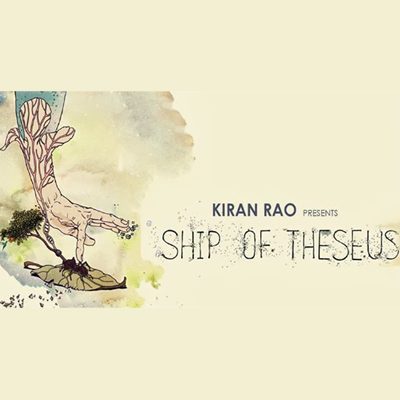
    NEW DELHI: The highly acclaimed film ‘Ship of Theseus’ in Hindi and English which has already won several awards overseas was declared the best film of 2013 in the 61st National Film Awards, while Hansal Mehta bagged the award for best director for his Hindi film ‘Shahid’.


     The best actor award was shared by Raj Kumar of ‘Shahid’ and Suraj Venjaramoodu for the Malayalam film ‘Perariyathavar’ by Dr Biju which also bagged the award for the best film on environment/conservation.


     The best actress award went to Geetanjali Thapa for her role in the Hindi film ‘Liar’s Dice’, while the supporting actor went to Saurabh Shukla for ‘Jolly LLB’ in Hindi. The supporting actress award was shared by Amruta Subhash in the Marathi film ‘Astu’ and Aida El-Kashief in ‘The Ship of Theseus’. The best children’s film was ‘Kaphal’ by Bahul Mukhtiar in Hindi while the best child artiste award was shared by Somnath Avghade of ‘Fandry’ in Marathi and Sadhana of the Tamil ‘Thanga Mangal’.


     Hindi films once again dominated the National Film Awards by getting as many as fifteen awards among feature films. Marathi came next with ten awards followed by Bengali with six and Tamil and Kannada with five each and Malayalam with four.


     However, the highest number of awards went to the Bengali film ‘Jaatishwar’ which won awards for best female playback for Rupankar and the film ‘e tumi kemon tumi’, best costume for Sabarni Das, best make-up for Vilram Gaikwad (for hero Prosenjit) and Kabir Suman for best musical score.


     ‘Bhag Milkha Bhag’ by Rakeysh Omprakash Mehra bagged the award for the most popular film providing wholesome entertainment. ‘Fandry’ got the Indira Gandhi Award for best directorial debut by Nagraj Manjule, the Nargis Dutt award for national integration for Balu Mahendra’s tamil film ‘Thalaimuraigal’ and the social issues award went to the Marathi ‘Tuhya Dharma Koncha’ by Satish Manwar.


     All the films will get awards ranging between Rajat Kamal and Swarna Kamal and Rs 50,000 to Rs 2.5 lakh.


     The best non-feature film is ‘Rangabhoomi’ in Hindi by Kamal Swaroop for Films Division and best debut director for shorts is Christo Tomy of SRFTII for the Malayalam ‘Kanyaka’, with Pranjal Dua getting the best direction award for ‘Chidhiya Udh’ without dialogues.


     The Telugu ‘Cinema Ga Cinema’ by Nandagopal got the best book on cinema award while English critic Alaka Sahani got the best critic award.


    The feature jury was headed by Saeed Akhtar Mirza, the non-feature by Reena Mohan and the book jury by Sharad Dutt.


    The Dadasaheb Phalke Award and the National Film Awards are expected to be given on 3 May to coincide with the release of Phalke’s ‘Raja Harishchandra’ on that day in 1913.


    Please click for the detailed list of awards

  • Actors Rishi Kapoor and Shivaji Satam to get Mangeshkar awards

    Actors Rishi Kapoor and Shivaji Satam to get Mangeshkar awards

    NEW DELHI: Ten personalities in the field of social awareness, music, literature and arts are to receive the annual Master Deenanath Mangeshkar Awards later this month.


    Bharat Ratna and legendary singer Lata Mangeshkar told during a press conference held at her residence in Prabhakunj in Mumbai that the 25th edition of the awards will be presented by her at a function on 24 April at Shanmukhananda Hall, Mumbai.


    While tabla player Zakir Hussain and classical vocalist Pandharinath Kolhapure (father of actress Padmini Kolhapure) will be given the Master Deenanath Paritoshik award for music, senior actor Rishi Kapoor and the versatile Marathi actor Shivaji Satam will get the Master Deenanath Mangeshkar (Vishesh Paritoshik) awards.


    The Master Dinanath Paritoshak will be given to two journalists Anant Dixit and Prakash Bal, while the Vagvilasini Paritoshik will go to litterateur Dr Anand Yadav.


    Dinesh Pedanekar and Mukta Barve will get the Mohan Wagh Puraskar for the Marathi drama ‘Chapa Kata.’


    Anna Hazare gets the Master Deenanath  Mangeshkar (Jeevan Gaurav) for social awareness and Miraj Vidyarthi Singh receives the Anadmayee Paritoshik foir social service.


    The awards will be organised by Master Deenanath Mangeshkar Smriti Prathishthan Trust, which celebrates the Memorial day of Master Deenanath Mangeshkar every year on 24 April where legendary actors, film makers, social activists, musicians, singers, dramatists, dramas and poets are felicitated for their respective outstanding contribution in their field by presenting them with the prestigious ‘Master Deenanath Award’ and a prize of Rs one lakh each. The founders of this trust are Pandit Hridaynath Mangeshkar, Bharati Hridyanath Mangeshkar and Shriram Narayan Gogate.


    This year the trust celebrates 25th anniversary of the awards, and so a two-day festival of award ceremony and concerts will be held as a tribute to the legendary theatre artiste of his times and father of the Mangeshkar’s Lata, Meena, Usha, Hridynath and Asha Bhosle.


     The award ceremony on 24 April, will be followed by a solo Tabla concert by legendary Tabla player-Ustad Zakir Hussain, while the next day will see Asha Bhosle in a live Concert with her musician brother Pandit Hridaynath Mangeshkar.

  • Shabana Azmi to participate in FICCI-IIFA Global Business Forum

    Shabana Azmi to participate in FICCI-IIFA Global Business Forum

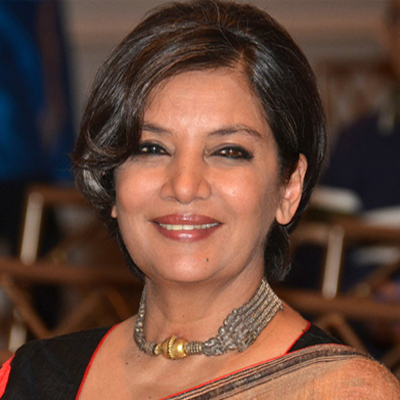
    NEW DELHI: Veteran actor and activist Shabana Azmi is one of the speakers at the FICCI-IIFA Global Business Forum taking place during the International Indian Film Academy (IIFA) awards weekend in Tampa later this month.


    The weekend is scheduled to take place at the Tampa Convention Center on 24 and 25 April during the 15th Videocon d2h IIFA Weekend and is aimed at promotion of businesses opportunities, trade relations and cinema opportunities between India and the IIFA’s host nation. The event is a joint initiative of IIFA and the Federation of Indian Chambers of Commerce and Industry.


    With the trade relationship between India and America at its acme, the theme for the FICCI-IIFA Global Business Forum will see business delegates discuss Indo-U.S. Partnership: A Catalyst for Economic Growth”.  


    The effort is being led by the FICCI, University of South Florida College of Business, Wizcraft International Entertainment, and the Tampa Bay Trade and Protocol Council. Other notable partners include Enterprise Florida, Tampa Hillsborough Economic Development Corporation, Visit Tampa BayVisit Florida, USIBC and TIE. 


    The forum will witness the coming together of some of the biggest change drivers, opinion and business leaders from top brands and business houses to engage in dialogue and explore new and promising commercial possibilities.


    Some of the visionaries include Dr RK Pachauri who spearheads the Nobel prize winning UN Intergovernmental panel on climate change; Infosys executive chairman and founder NR Narayanmurthy, USIBC president Ron Somers, FICCI secretary general Dr Didar Singh, consul general of India Ajit Kumar, and Congressman Gus Bilirakis.


    Some of the prominent women leaders addressing the business forum include Florida Attorney General Pam Bondi, US assistant secretary of state for south and central Asian affairs Nisha Desai Biswal, University of South Florida president Judy Genshaft and University of Houston president Renu Khator.


    Business icons leading discussions include Syntel chairman Bharat Desai, Ambuja-Neotia group chairman Harshvardhan Neotia, Tata Motors president Ranjit Yadav, Reliance Industries president & CEO Vivek Lall and L&T Infotech CEO Mukesh Aghi.


    Among the renowned guests who will grace the forum are over 100 business leaders and policy makers. These eminent personalities will share their precious insights on and examine the copious benefits of a partnership between the two economies.


    The Indian-American community has been at the forefront of innovation, knowledge-based services, and entrepreneurship, creating jobs and contributing to the U.S. economy. Two-way trade in goods between India and the U.S. crossed the $60 billion mark in 2012, but there is potential for reaching the $100 billion mark. The Indian economy has grown to be the10th largest in the world, and experts project India will become one of the top five economic powers by 2050.


    The two-day long forum will convene a galaxy of prominent personalities representing industry, government, academia and intelligentsia. Sectors that power Trade, Commerce & Investment, along with promising areas of cooperation between India and America such as Media & Entertainment, Education, Tourism and Environment & Clean Technology will come under the scanner.


    Some of the key partners of the IIFA US celebrations are: Videocon d2h, Tata Motors, Freedom Health Insurance, Lava Mobiles, Visit Tampa Bay Visitors and Convention Bureau, Visit Florida, Hillsborough County Commission, Jammu & Kashmir Tourism, Vishal Fashions, UST Global and Intuit.


    Other support partners include Mosaic Company, Tampa Steel Erecting Company, and Patina Solutions.

  • It came at the right time – in the birth centenary year of Dadasaheb Phalke: Gulzar

    It came at the right time – in the birth centenary year of Dadasaheb Phalke: Gulzar

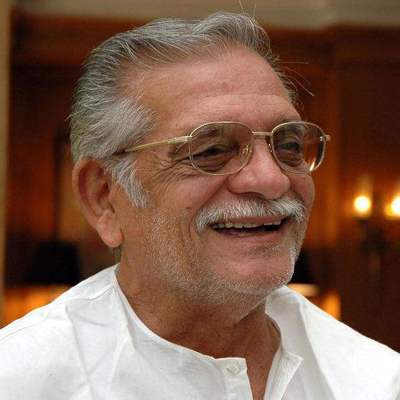
    NEW DELHI: Later this year, eminent director-screen writer-lyricist Gulzar will be honoured with the prestigious Dadasaheb Phalke Award (2013) by President Pranab Mukherjee along with the National Film Awards (2013). Gulzar will be the third lyricist after Majrooh Sultanpuri (1994) and Kavi Pradeep (1998) to win the award.


    According to Information & Broadcasting Ministry Secretary, Bimal Julka, the seven-member selection committee was unanimous in its recommendation of Gulzar for what is the nation’s highest award in cinema.


    “I am particularly happy since the choice was made by an independent committee, though set up by the Government,” said Gulzar. While many feel the honour was bestowed on him rather late, he only said, “This was special, as it came at the right time- in the birth centenary year of Dadasaheb Phalke.”


    An institution into himself, Gulzar has not only penned several Hindi film songs and dialogues but also directed a clutch of notable films. As one of the greatest authorities in the history of song in Indian cinema, he has given talks on the subject, both in India and abroad. Often accused of selecting other people’s novels/stories for adaptation, there’s no denying his talent for optimally adapting the same to Indian/Hindi film audiences.


    Biography


    Gulzar was born as Sampooran Singh Kalra to Makhan Singh Kalra and Sujan Kaur in Dina, Jhelum district, in undivided India, in what is now Pakistan. Sampooran started off as a car mechanic in a garage in Mumbai but went on to become a writer, assuming the pen name, Gulzar Deenvi. His father rebuked him for becoming a writer saying, “As a writer, you will have to depend on your brothers”. He started his film career as a lyricist, going on to write dialogues and screen plays, and later, even directing many critically acclaimed films.


    Gulzar began as a songwriter with music director Sachin Dev Burman in the movie Bandini (1963) with the song, Mora Gora Ang Lai le picturised on Nutan. Gulzar’s most successful songs as a lyricist came out of his association with S D Burman’s son, Rahul Dev Burman, whom he described as the anchor in his life. Gulzar’s lyrics were special in that they formed part of the narrative. As a lyricist, he also had award-winning associations with music directors Salil Chowdhury (Anand, Mere Apne), Madan Mohan (Mausam) and more recently Vishal Bhardwaj (Maachis, Omkara, Kaminey), A. R. Rahman (Dil Se.., Guru, Slumdog Millionaire, Raavan) and Shankar–Ehsaan–Loy (Bunty aur Babli).


    Some of Gulzar’s more notable songs are: Maine Tere Liye Hi from the film Anand; Bole Re Papihara Papihara from the film Guddi; Koii Hota Jisko Apna, a nostalgic number from Mere Apne; Aanewala Pal Janewala (Golmaal); Sun Sun Sun Didi (Khubsoorat); Ae Zindagi Gale Laga Le (Sadma); Roz Roz Aankhon Tale (Jeeva); Tum Aa Gaye Ho Noor and Tere Bina Zindagi Se from the film Aandhi; Saare ke saare gaama ko lekar gaate chale (Parichay); and Dil Dhoondhta hai (Mausam).

    Gulzar won international fame when he was awarded the prestigious Oscar Award (with A R Rehman and Sukhwinder Singh) for writing the Best Original Song  Jai Ho from the film, Slumdog Millionare. He was also honoured with the Grammy Award for Best Song Written for a Motion Picture, Television or Other Visual Media.


    Apart from films, he has written ghazals for ghazal king (late) Jagjit Singh’s albums “Marasim” and “Koi Baat Chale”. Both albums were a great success.


    For the peace campaign (Aman ki Asha) jointly flagged off by leading media houses from India and Pakistan, he wrote the anthem “Nazar Main Rehte Ho”, which was recorded by Shankar Mahadevan and Rahat Fateh Ali Khan.


    Gulzar’s poetry is partly published in three compilations: Chand Pukhraaj Ka, Raat Pashminey Ki and Pandrah Paanch Pachattar (15-05-75).


    Gulzar also wrote dialogues and screen plays for films like Aashirwad, Anand, Khamoshi and more. His short stories are published in Raavi-paar (also known as Dustkhat in Pakistan) and Dhuan (smoke). He has penned dialogues and lyrics for several Doordarshan serials including Jungle Book, Alice in Wonderland, Guchche, Hello Zindagi, Potli Baba ki and more recently, the children’s audio-book series, Karadi Tales.


    Fluent in several languages and dialects, Gulzar has written in Braj Bhasha, Khariboli, Haryanvi and Marwari though he primarily writes in Hindustani (Hindi-Urdu) and Punjabi.


    He forayed into direction with Mere Apne(1971). The film was a remake of Tapan Sinha’s Bengali film Apanjan (1969), where Meena Kumari played the lead role of Anandi Devi, an old widow caught between the local fights of unemployed and tormented youngsters. Anandi Devi’s death in one of the fights makes the youth realise the futility of violence. The film was rated “Above Average” at the Box Office.


    He then directed Parichay and Koshish, with the former based on a Bengali novel Rangeen Uttarain by Raj Kumar Maitra and inspired by the Hollywood classic, The Sound of Music. Whereas Koshish, written by Gulzar, depicts the struggle of a deaf and dumb couple. Sanjeev Kumar won the National Film Award for Best Actor for his performance in the film. The year 1973 saw another directorial venture from Gulzar named Achanak, inspired by the real-life sensational 1958 murder case K M Nanavati vs State of Maharashtra. The story writer, Khwaja Ahmed Abbas, earned a Filmfare nomination for Best story.


    Gulzar’s Aandhi, based on the Hindi novel “Kaali Aandhi” by the renowned writer Kamleshwar, told the story of a separated couple against the backdrop of politics and was often believed to be based on the story of Indira Gandhi though it was actually based on the life of Tarkeshwari Sinha. Along with various wins and nominations, the film also won the Filmfare Critics Award for Best Movie. During the emergency in 1975, the film was banned from theatres. Gulzar’s next, Khushboo, was inspired by Sharat Chandra Chattopadhyay’s Pandit Mashay. While his other film, Mausam, won the National Award for second Best Feature Film, Filmfare Best Movie and Filmfare Best Director awards, along with other six Filmfare nominations. It was loosely based on the story “Weather” from the novel, The Judas Tree, by A.J. Cronin. Sharmila Tagore for her roles of Chanda and Kajli received The Silver Lotus Award at the 23rd National Film Festival.


    Gulzar’s 1982 film Angoor was taken from William Shakespeare’s play, The Comedy of Errors. In his Maachis, a young Punjabi boy becomes a terrorist only to realise the futility of it. While Hu Tu Tu dealt with corruption and one man’s fight against it. Flashback has been an important tool of narration in Gulzar’s films including Aandhi, Mausam, Ijaazat, Machis and Hu Tu Tu among others.


    On the small screen, Gulzar created the popular series Mirza Ghalib and Tahreer Munshi Premchand ki among others. 


    Gulzar, who will turn 80 on 18 August this year, was awarded the Sahitya Akademi Award in 2002 and the Padma Bhushan in 2004. He has won a number of National Film Awards and 20 Filmfare Awards. In 2012, he received the Indira Gandhi National Integration Award.

  • Amitabh Bachchan starrer ‘Bhootnath Returns’ rakes in Rs 18.2 cr at the BO

    Amitabh Bachchan starrer ‘Bhootnath Returns’ rakes in Rs 18.2 cr at the BO

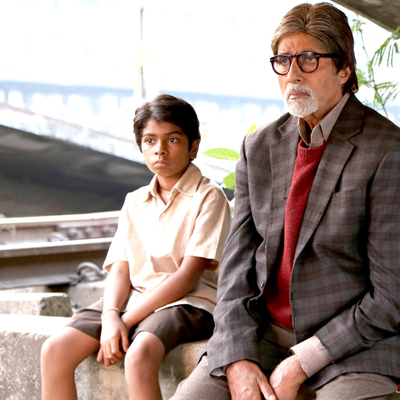
    MUMBAI: Bhootnath Returns, the sequel to the Amitabh Bachchan starrer Bhootnath (2008), opened to a weak response on Friday but consolidated a bit on Saturday and very well on Sunday to collect Rs 18.2 crore for its opening weekend. The film should sustain today as well because of Ambedkar Jayanti holiday and, in parts for Baisakhi as well.


    Main Tera Hero starring Varun Dhawan and Ileana D’Cruz is fair in its first week. The film has managed to collect Rs 36.2 crore.


    Youngistan has added Rs 72 lakh in its second week to take its two tally to Rs 5.97 crore. The figure just goes onto show that it is a very poor performer.


    Jal has collected about Rs50 lakh in its first week.


    Ragini MMS2 has added Rs 1.1 crore in its third week taking its three week total to Rs 46.85 crore.


    Queen continues its excellent run at the box office. The film has collected Rs 2.35 crore in its fifth week taking its five week total to Rs 56.45 crore.

  • Bhootnath Returns…….Ghost Samaritan

    Bhootnath Returns…….Ghost Samaritan

    MUMBAI: It has become a trend for a film to end with a threat of a sequel. Good or bad or outright disastrous, most films leave open the possibility. That is like hoping to build a high rise on a weak foundation since most of these films promising sequels are flops. In that event, what led to the sequel to Bhootnath which was rejected in cinemas though it did better on TV and DVD circuits? Whatever the inspiration, here goes:

    Bhootnath, Amitabh Bachchan, has been referred back to ghost land like a bounced cheque since he has failed to scare people on his first outing with earthlings. Ghosts laugh at him because of his failure to scare humans. Amitabh has eons before he can return to earth as a human and he feels belittled at this treatment by fellow ghosts. He asks the boss of ghost land to give him one more chance to go back and successfully scare people. After all, scaring living beings is what ghosts are supposed to do!I know as much about ghosts as ghosts know about me but this is what the film professes.

    Back on earth, Amitabh uses his ghostly powers to scare some kids playing cricket in a deserted place. The kids are not the kind to believe in ghosts, let alone be scared of one. He comes across a kid, Parth Bhalerao, who can see him and is not scared of him since he does not believe Amitabh to be a ghost; the kid is street smart.  A street smart kid led to Amitabh’s failure on his last trip on earth but, this time, the kid and the ghost both decide to use each others’ strengths.

    Producers: Bhushan Kumar, Krishan Chopra, Renu Ravi Chopra.

    Direction: Nitesh Tiwari.

    Cast: Amitabh Bachchan, Parth Bhalerao, Boman Irani, Usha Jadhav, Sanjay Mishra, Brijendra Kala, Usha Nadkarni.

    It seems the area where Partho lives, Dharavi, is the most neglected and deprived in Mumbai. Bhootnath decides to make his return to the earth at Dharavi, his bad luck! Soon Parth teaches the ghost the game of using each other. While Parth uses Amitabh to first help scare the convent school gang of cricket players and get into their league, Amitabh, in return, earns secrecy about his being and the fact that he is not all that scary a ghost. With a little help from Parth, Amitabh becomes a good neighbourly ghost helping people get their due justice. It is all fun so far but it is also time to introduce the villain.

    Boman Irani is an ex-local goon turned politician and has been ruling the area assembly seat for the last three terms. His is a reign of terror, corruption and exploitation. His voters abhor him but also vote for him. Nobody would contest an election against him and, finally, it is left to Amitabh to do it. The law is silent on weather a dead man can contest an election and his lawyer, Sanjay Mishra, asserts as such. So, it is an electoral fight between Amitabh and Boman. This is where the film loses its purpose and direction and, mainly, its target audience: the kids it is aimed at.

    The film entertains with its witty one liners delivered by Parth but, once the election issue is introduced, it becomes another film altogether. The light moments vanish and moralising lectures take their place, which is boring. On that count, the script loses its purpose. Direction is fair with quite a few liberties taken. There is no scope for songs except for sermonising kinds. Cinematography is good. Dialogue is well penned. The film has sourced a few of its actors from Marathi films. Parth is impressive. Usha Jadhav as his mother is very good. Amitabh Bachchan is his usual self, one who does not have to act to convey his part. Boman Irani goes a bit overboard at times. Sanjay Mishra and Brijendra Kala are good as always. Shah Rukh Khan and Ranbir Kapoor make brief cameos to no effect.

    On the whole, the problem with Bhootnath Returns is that it turns out to be a children’s film with an adult theme coming as it does in the multiplex era where waiting for a DVD works out more economical than sending kids to cinema halls (as has been proved by the performance of Bhootnath on this count).

  • Shaadi.com ties knot for ‘2 States’

    Shaadi.com ties knot for ‘2 States’

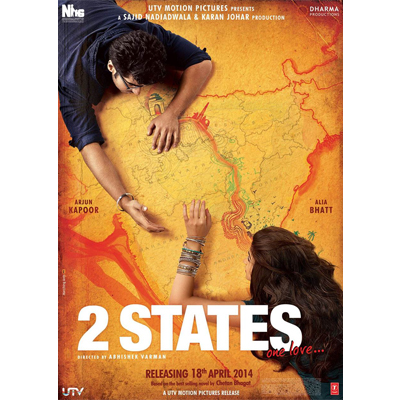
    MUMBAI: Shaadi.com is all set to be associated with 2 States, the forthcoming movie co-produced by Dharma Productions and Sajid Nadiadwala. The matrimonial site has become the official matrimonial partner for the movie. The movie is based on the book ‘2 States’ authored by Chetan Bhagat.


    Commenting on the association, Shaadi.com COO Gourav Rakshit said, “For over 17 years, we at Shaadi.com have been helping people create their own love story, so it is only natural for us to be associated with a beautiful love story like 2 States. We are delighted about this relationship with Dharma Productions and we wish them great success with this movie.”


    The film revolves around a Punjabi boy (Arjun Kapoor), who falls in love with a Tamil girl (Alia Bhatt) and all the hardships they go through because of the cultural differences between the two families. The film is distributed by UTV Motion Pictures and scheduled to release on 18 April 2014.


    “We are glad to be associated with Shaadi.com. The movie is a love story which revolves around two people and their families who are from two different states. So this relationship with Shaadi.com is a perfect fit,” added Dharma Productions CEO Apoorva Mehta.

  • Our aim is to roll up all the taxes under one GST: Uday Singh

    Our aim is to roll up all the taxes under one GST: Uday Singh

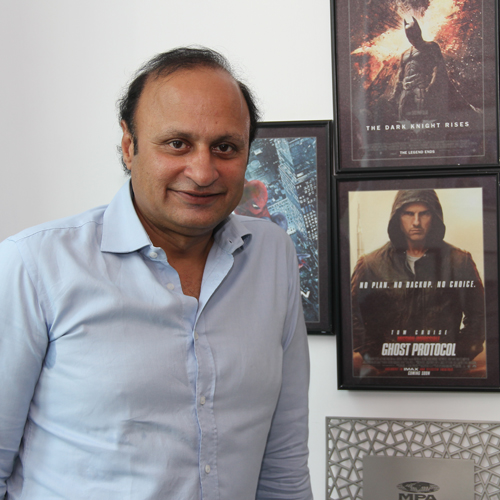
    The word piracy sends shivers down the spines of all content owners, but there is one man who has made it his mission to eradicate piracy from the media and entertainment space. That man is none other than Motion Picture Distribution Association (India) managing director Uday Singh.


    With over 28 years of sales, marketing and general management experience in scaling up operations and building business from start up for MNCs in India and attaining a leadership position in the market and business with significant turnaround and change management; Singh has done it all.


    He has key experience in media entertainment, consumer electronics, domestic appliances and multimedia industries. He has had stints at Philips, Sony Pictures Entertainment (India) and PVR Pictures earlier.


    Being a creative and result driven executive with expertise in setting up new markets developing and delivering strong results; Singh has been ensuring in getting the various industry stakeholders together to fight against piracy.


    Speaking to indiantelevision.com’s Sidharth Iyer, Singh dwells on various perennial issues like piracy, high taxation, specific copyright laws and the difficulties that MPDA faces in propagating anti-piracy in the country.     


    It’s been five years since MPDA India has been present in the industry, how has the journey been? Highlight your roles and responsibilities.


    There are three aspects: first there is the legislative side where we look into getting a specific legal framework into place which can protect copyright. Next we take care of the enforcement, which is basically keeping a check on people who steal content and monetise from the same by redistributing it across the globe and finally the outreach, how do we best reach out to our first line of defense – which is the cinema staff and theatre owners – educating them on piracy and how it works, so that they can recognise it and nip it at the bud.


    On the legislative side we have carried out a lot of initiatives. 90 per cent of all pirated copies are camcorded in cinema halls, and an Ernst & Young 2008 report claims that as much as Rs 16,000 crore is lost every year due to piracy and as many as 577,000 direct jobs are also lost as a result of theft and piracy, afflicting India’s entertainment industry.

    We have been working with local bodies and try and implement the global best practices out here. We have also observed that many jurisdictions like in US, Philippines and other regions in the Asia Pacific as well, specific camcording legislations have made a big difference in getting piracy down and we intend to bring that practice to India as well.


    Is there a set guideline for understanding the copyright laws in the country? Have you managed to reduce the taxation on films?


    We have been lobbying with the government to have provisions made for the same, and the cinematography bill does carry some provisions because only very specific provisions can make a difference, as our copyright laws tend to be very broad and its only best to have specifics in place to better understand and implement the copyright law in the country.


    The other major hurdle for films is the taxation levied on them, and being one of the highest taxed industries it does take a toll on the budget and revenue scale. We have been working with other industries and the government to rationalise those taxes and eliminate some of them if possible and hopefully roll them all into a single goods and services tax (GST).


    However there is a service tax on the input side, so some of the studios that are producing the movie domestically have to face it by increasing its production costs. Currently there are three levels of taxes; the service tax, the entertainment tax and the local body tax. Thus, our recommendation and appeal to the government and the authorities is to roll it all into one single GST to avoid any duplication.


    What are the challenges faced by MPDA and how do you overcome the same?


    There have been issues in the television side of things, where we have been talking to the government and making our submissions on issues such as, liberating the pricing, the must provide and must carry provisions, among others.


    It was also heartening to see that the foreign direct investment (FDI) in the television and broadcast sector also witnessed a hike. So, we look at very generic issues and how the government can better regulate the media and entertainment sector, primarily focused on where our studios feel where we should get involved on the legislative side.


    We also have the Los Angles Film Council, where we have been lobbying for the ease of shooting and working with the government for getting to a single window clearance, there are 70 clearances otherwise required before even shooting a single frame.


    Our efforts and initiatives will be again presented in an E&Y report, which talks about how to simplify, incentivize and further how to promote film tourism. The plan is to promote film tourism in a big way and we have some great examples of how it has been done in other places like Canada and Thailand. Keeping in mind that we have some great technicians and production crews here, India can become an important destination for films as well in the near future.


    On the enforcement side, we are no longer chasing the guys on the streets as it has all moved online and it’s now gotten into camcording. We have managed to eliminate quite a few significant release groups, who have been copying and redistributing a lot of the films. 


    MPDA has played a big role in ensuring that piracy is looked at as a serious offence, how do you intend to put an end to this evil?


    Our intention is not to catch a kid who’s taking a trophy shot in front of the screen, but the people who actually steal the content and make a living out of it. After 2012, there have been almost 67 incidents where we have apprehended pirates who used to capture the video and slap on a different audio and export it to other neighbouring countries.


    We also work with cinema staff and have educated nearly 1,400 of them on what are the best practices to propagate anti-piracy, by putting up signs in the surroundings of the theatre. They have also been educated on how best to deal with incidents of camcording. We have also tried to sensitise various law enforcement authorities on the various issues and problems due to piracy and how they can help in preventing such occurrences.


    I believe, unlike ever before, we have been able to work hand-in-hand with the local film industry and really come together as stakeholders of the industry and really put an end to this evil.


    In the recent past you have associated with the Anti-Video Piracy Cell of Andhra Pradesh, and also carried out various initiatives on the ground, your thoughts on the same…


    The Anti-Video Piracy Cell (AVPC) of Andhra Pradesh has been one of our brightest spots in the fight against piracy. It’s been a very proactive cell and very aware of the changing trends in the space of piracy. They have an in-house team for the mapping of sights, and we found a great ally in them for our fight against piracy.


    With AVPC, we only thought that the need is to contemporize the way we catch hold of the pirates and with the ‘Indian Movie Cop’ and other such applications we have tried to keep a check on digital piracy.


    The app really helps in educating everyone on piracy and the laws of the land, and to keep it interactive we also put up trailers of upcoming releases just to give the user that extra bit to help serve a larger cause among other reward schemes.


    It is a known fact that there have been leakages on the cable TV front, how do you plan to overcome the issue?


    Digitisation has really helped on this front and it has certainly not been an easy process, but a large step by the government to clearly make this decisive move to get to know who the subscribers are and get to know where they are.


    Over a period of time, the broadcast industry has taken interest to resolve the problems relating to cable leakages. It used to be very robust in the analogue world, and still continues to happen, but like the film industry, the broadcast industry too needs to come together to address this perennial issue.


    With a lot of Hollywood studios currently operating in the country, does it help in better promotion of their interests among local production houses?


    Largely, these are decisions taken by the individual studios and it’s for them to be able to decide with whom they want to tie-up. There have been instances in the past three to four years where a lot of studios have taken an active part in the local productions.


    But, again it’s their own strategy on how they best want to enter the market. And once we address larger issues like taxation, ease of operation or piracy, we would be able to provide a substantially better climate for them to come in here.


    Is the regulation in India strong enough to support your initiatives? If not, what is lacking?


    There is a combination of issues; the laws are very generic in nature – while they may have served their purpose – increasingly we have seen that when there are specific laws for specific issues there are better results.


    When we talk about the copyright amendment, we are talking about the technological protection measures. There is an access control and a copy control and barring of hacker tools. In our current legislature, we are talking about copy protection and not about the access; so with the evolving technology, it took almost 10 years to pass that bill.


    So legislation is always going to be a long time consuming process and what we have to do is ensure in bringing to the government’s notice how other jurisdictions have handled these issues and what have been some of the best practices.


    The second aspect of it is enforcement; in terms of the police force they are certainly overburdened and we all recongnise that, with copyright figuring in the lower priority offences. But wherever we have gone and educated them about the issues relating to piracy, they have responded well.


    There are cases where we find the judiciary more proactive in a particular area like Delhi, but in recent history we have had judgments from Mumbai, Chennai and Kolkata as well.  So almost all the high courts are getting up to speed on all the copyright issues.


    And with the piracy now moving online, there is a need for a lot of hand holding to make content distributers and owners aware of how rapidly the landscape is changing. And we can’t ignore the fact that a lot of these offenders are linked to other organised crimes too, thus becoming difficult to track them down.


    Can there be a stop to piracy globally? What preventive measures can be taken?


    There can’t be a total bullet proof plan for this; it’s very similar to other crimes. But, what we can clearly do is to create a favourable environment where if not eradicate then at least we can apprehend the criminals.


    Eventually you will find that there are only a few people who are causing most of the damage and they are part of much more organised syndicates. There also needs to be an updation of the loss due to piracy report as there has been a huge increase in the number of internet connections since 2008.


    The need of the hour is to also educate the film industry on how things work, with most films being made available online just hours after its release. There have been attempts made to resolve this issue, but to no avail.


    There are two ways by which this has been kept under check internationally, one to have an administrative relief and the other a judicial relief. We have noticed that these work in blocking content from getting leaked outside the authorised personals’ hands.    


    Recently there has been a rampant emergence of rogue sites like Torrentz, what is MPDA’s take on them? Also, your thoughts on user generated content sites like YouTube.


    These rogue sites are primarily designed to steal content and monetise by making it available online. Mostly they make money through advertising and in certain cases even through subscriptions. It’s surprising to find that a lot of advertisers who are associating their brands with these rogue sites are only creating a bad impression of themselves on people who then associate them with supporting piracy. They may be having subscriptions, because they may have a camcorded print and they put it up very quickly and start building a premium subscription revenue model.


    To counter these sites, what we have done is listed out the legitimate and licensed sites from where movies can either be streamed or downloaded with a cost attached to give the people the option of viewing legitimate content and also getting the content owner his rightful due.


    Coming to the user generated content sites commonly known as UGCs have brought in a lot of mechanisms to deal with piracy among other issues, but still it’s not been enough. Lot of them have their filters and they have been trying to work with the industry on how best it can work. But in many cases we find that without the permission of the user, any site that puts up that content is something that we are not comfortable about.


    Eventually what I believe is, with more and more filters coming in and more and more legitimate sites coming up the whole content distribution and exhibition will undergo an evolution.


    In the past, physical copies of pirated VCDs and DVDs were available on streets. You don’t find many of these pirates nowadays, what has MPDA done to eradicate this problem?


    Actually in the past few years, we have not really focused much on that front. In the 1990s we were really going after each and every pirate on sight and almost 5,000 to 6,000 cases were being registered, but without a single conviction.


    We realised that the source was through camcording and three major areas where it was taking place was Ahmedabad, Indore and Ghaziabad. As we started making inroads and worked with the police and the theatre owners to eradicate these rogues from the streets, they went deeper into the heartlands.  


    The DVD is practically dead… so what is the way forward for moviemakers to monetise their content?


    The consumption of movies has not gone down, but the way the movie is being consumed has evolved. And technology is allowing us to give legitimate content. For example with Apple TV the user can simply just click on the movie that he wants to watch and buy it or rent it.


    So the consumer is looking at all kind of content, for the big screen, mobile screen, content on the go, and something wherever he can watch. Thus, to cater to the user’s interests we too are changing our business models to accommodate the demands and supplement those demands with supplies.


    In India the video market never really took off like in other parts of the globe. The time when we were looking at buying VCDs, DVDs came into play and now Blu-Rays are in the market, so with constant evolution taking place, the best thing is to move along with the choice of the user and it also helps as we can directly skip to the digital era.


    What is MPDA’s plan for the year 2014?


    In FICCI Frames 2014 we launched a report with Deloitte on the economic contribution of the motion pictures business in India. We have seen that the media and entertainment sector contributed substantially, almost Rs 50,000 crore in 2013 and generates almost 1.8 million jobs.


    It is very important that when we talk to the government they realise the potential of this sector and given the right inputs, it has the potential of proving more employment and also contribute handsomely to the GDP growth of the country.


    Currently, it’s at a growth rate of 12 per cent, which is almost two and a half times our GDP growth and it can grow at a faster rate if given the proper impetus.


    During the year we will continue to simplify the process for films by getting in the single window clearance. So our next step will be to closely look at it and incentivising and finally promoting the initiative. And we would help the industry flourish and get to its optimum potential.

  • IIFA to engage fans through social media

    IIFA to engage fans through social media

    MUMBAI: The 15th IIFA celebrations will see the biggest and best of Indian cinema show up not only in Tampa Bay, Florida, but also on #IIFA’s assets across Facebook, Instagram, Twitter, Youtube and multiple other innovative platforms in a live environment.


    Millions of fans would have a chance to steal a first-look of the IIFA events and green carpets as they unfold at the Videocon d2h IIFA weekend and the Tata Motors IIFA Awards powered by LAVA mobile. The behind the scenes excitement will take centre stage and provide cinema fans voyeuristic pleasure like never before.


    Powered by Lava Mobile, IIFA has lined up a host of exciting interactive social media activities, teaming up with Twitter, reinitiating the very successful Twitter Mirror experience that made its debut at the IIFAs in Macau in 2013 and introducing for the first time ever, the Twitter Vine Booth @ IIFA, Facebook and Instagram (Booth and Stop), giving online IIFAns an All-Access-Pass across the four days of the weekend.


    The Twitter Mirror placed strategically at the green carpet, backstage and green rooms will bring fans candid celeb moments and selfies showcasing many a mood of their much-loved Bollywood stars tweeting with the handle @IIFA. Having proven to be a hit last year among celebrities and audiences alike, the Twitter Mirror makes a comeback and promises to be even more fun and exciting with the possibility of a photo-bomb or two. 


    Another green-carpet entrant in Tampa Bay will see Twitter debut its coolest photo booth yet – The Twitter Vine capturing the Bollywood brigade in a way never seen before. 


    IIFA will lead the pack as it did last year with the Twitter Mirror, and be the first-ever film award ceremony to witness Twitter Vine create magic, after it did the same at the American Music Awards (AMAs). The camera will circle 360 degrees around celebrities to capture a six-second video giving a full view of who wore what and spoke to who. This first-time-ever photo booth promises to arrest the best fashion moments and candid expressions straight from the carpet.


    The Instagram booth is an interesting variant to keep Instagram followers engaged with the candid selfies. Instagram booth and stop will also be present at the green carpets, waiting to capture all the glamour, fashion, sudden, and dramatic moments that the carpet usually witnesses. The official Instagram handle is @IIFAAwards.


    Instagram stop is another social media activity in the line-up, connecting admirers from all over the world to their desired celebrity, the 15 second Q & A platform will enable the fan to shoot questions at the star and receive replies to their query. IIFA’s Facebook page will soon launch a campaign that would collect and screen questions for celebs. Running parallel to the telecast of IIFA’s main Awards ceremony will be a tight second screen engagement via Twitter Amplify. This extremely thrilling social media activity will reveal the highlights of the event in 15 second capsules during the broadcast for online consumption. The second screen engagement will enable online consumers to watch exclusive backstage footage to complement their TV viewing experience.


    As we draw closer to the weekend, IIFA gives its fans a centre seat on the front row to the craziest, star-studded weekend from 23 – 26 April.