Category: Hindi

  • Sports can only be promoted if the govt and corporate houses step in, say filmmakers

    Sports can only be promoted if the govt and corporate houses step in, say filmmakers

    NEW DELHI: Even as films on sports remain a sprinkle despite announcements by the government for promoting sports, actor Nafisa Ali has said the corporate houses and the union and state governments have to join the effort to promote sports.

    She said she was saddened that corporate houses were concentrating only on a few sports like cricket, football, tennis or badminton, and no efforts were being made to explore the talent available in smaller towns in the country.

    Nafisa was talking to indiantelevision.com after the screening of the film ‘Khwaabb’ which marks the directorial debut of Zaid Ali Khan, son of renowned shooter and Arjuna Award winner Moraad Ali Khan who has produced the film. Nafisa stars in the film along with newcomers Navdip Singh and Simer Motiani.

    Interestingly, this week marked the limited release of two films on sports: Zaid Ali Khan’s ‘Khwaabb’ which is being released in just a few cities, and Amole Gupte’s ‘Hawaa Hawwai’ about roller skating which has been released nationally.

    So far, very few films have been made on sports, and names that immediately come to mind are those of Nagesh Kukunoor’s ‘Iqbal’ about cricket, Shimit Amin’s 2007 ‘Chak De! India’ about hockey, Rakeysh Omprakash Mehra’s real-life drama ‘Bhag Milkha Bhag’ about athlete Milkha Singh, children’s film ‘Goal’ by Gulbahar Singh about football, and Aamir Khan’s ‘Lagaan’ which touched on cricket only as part of the drama.

    ‘Khwaabb’ is about athletics and swimming, but also sends out a strong message on behalf of those sports aspirants who are unable to make it to international tournaments despite proving their talent at the local or even the district level.

    Stressing the need for promoting such films, Zaid said that the film had got tax exemption only in Delhi. It was also being released in Mumbai, Meerut in Uttar Pradesh, Pune, and Dubai with a total of 60 to 70 prints but may be released later in the rest of the country.

    He said the main aim of the film was to inspire aspirants, and therefore even the music of the film including the title song by Sonu Nigam had an inspirational quality.

    “It was a real challenge to shoot some underwater sporting action in India but we could capture some scintillating action scenes with the experience of Aharon Rothschild, our cinematographer from the United States.”

    He was confident that film will work well with young children and the main subject will click with the audiences.

    He said that the film was shot at seven different locations including Jamshedpur, Morna in Uttar Pradesh, Jalandhar, Ludhiana, Delhi, Faridabad and Dubai.

    Both he and his father Moraar said publicity had been done both on television channels as well as on digital media and social websites. “It is important to bring awareness amongst the masses about the condition of Olympic sports in India; ‘Khwaabb’ is a step in that direction. Everyone rejoices in winning, but it is the journey towards winning a medal which needs the real support”, said Moraad.

    Asked about what he planned to do in future, he said he would now like to attempt something for television as he felt the future of entertainment was on the small screen, but would come back to filmmaking.

    He said in an answer to a question about his comment that ‘Conventional Bollywood is very calculative’ that there was no film culture for independent filmmakers and even the government did not give much encouragement unless some big names were involved. He said he had preferred making a debut as an independent filmmaker because of lack of support from the studios, but had got good support from Salma Khan who had released his music, and shooter Abhinav Bindra.

    Under the banner of Bullseye productions, “Khwaabb” is a realistic depiction of the Indian sporting scenario focusing on swimming and athletics. It captures the dream and emotions of aspiring sportsmen. ‘Khwaabb’ is a story about the birth of a dream, of ambition and the fierce passion to achieve that dream amidst unceasing tribulations.

    It is also about the way sheer, raw talent gets wasted or destroyed by corrupt and power hungry sports administrators of our country.

    Releasing the music of the film, Salman said: “I have played almost all kinds of sports. I have done swimming, played football. I even used to play cricket, and I strongly feel that sports should be encouraged in the nation, and if there are no facilities for training, how will our sportspersons perform?”

    The title track is sung by Sonu Nigam, composed by acclaimed musician Sandeep Chowta. The album has a rustic fun track “TV ki Jai Ho” sung by Kailash Kher and a soft love ballad “Shamein” sung by Rahat Fateh Ali Khan and Shreya Ghoshal. Both songs are composed by Sajjad Ali Chandwani. Young and extremely talented Amal Mallik has scored the soundtrack of the film. Top international drummer Virgil Donati has played for the title track, the lyrics for which have been penned by Sameer.

    Gupte told indiantelevision.com that his film was not only motivational and inspirational, but even showed how those who failed to get any help could attempt to reach their goals on their own.

    He hoped the film would inspire others to make films on sports and encourage worthy aspirants. His main cast including son Partho Gupte, Saqib Saleem and Pragya demonstrated their skating skills at I-Skate in Gurgaon to promote the film. The film also stars Makrand Deshpande among others.

    Answering a question, Amole said it is easy to work with children. “You just need to understand them and let them be comfortable with you”. He had got inspired to make this film while escorting Parth for skating classes, he added. He said it was a film about people who dare to dream and then work to fulfill that dream.

    Partho said, “My dad, the director, never scolds me on the sets and it is very interesting to work with him”. Performing the role of coach in the movie, Saqib Saleem said, “Sharing the sets with Partho was fun, and working under the captainship of Amole Gupte helps you learn a lot”.

    The song ‘Kuch Sapne Sone Nahin Dete’ summarises the theme of the film, produced by Fox Star Studios.

    Amole had earlier co-directed ‘Taare Zameen Par’ with Aamir Khan, and directed ‘Stanley Ka Dabba’ starring his son Partho. 

  • ‘Hawaa Hawaai’ …Sweet Ride

    ‘Hawaa Hawaai’ …Sweet Ride

    MUMBAI: Amole Gupte has established himself as an ace writer of scripts about children in an era when children’s film is almost a dead genre. And, he deals with relevant themes depicting ambitions and aspirations of less privileged children. His very first script, Taare Zameen Par showcased his special talent. Since then, his son, Partho Gupte, gives life to his child character as he did in Stanley Ka Dibba and now in Hawaa Hawaai.

    Patho works with a chaiwala in a commercial zone of Mumbai delivering tea to offices in the area. After the offices close, when the area becomes deserted, Saqib Saleem, teaches roller-skating to children. Saleem aspired to become a champion but could not fulfil his dream. He now wants to create champions out of other children. His training point is near the tea vendor Partho works for. Partho is fascinated with this sport which involves precision and is full of grace.

    Partho is a recent arrival in Mumbai having lost his father, Makrand Deshpande, to a heart attack after a crop failure in his native village. While his granny looks after his kid sister and other sister attends school, his mother works as domestic help and Partho tries to augment the family income with his earning of Rs 50per day delivering tea. But, besides this, he has a bunch of urchins as his close friends. The group conducts its daily meeting on a traffic island before they proceed to their work. These are Ashfaque Khan (Gochi), Salman Chhote Khan (Bhura), Maaman Memon (Abdul) and Tirupati Krishnapelli (Bindaas Murugan). While one works for a motor garage, and the other at a zari weaver’s while one sells gajras at traffic signals and one is rag picker.

    Partho tells his friends about the skates and the friends decide to help him and make him a champion. Gochi inquires about the cost from a skater and mistakes 30k for plain Rs 30. They collect Rs 30 and proceed to buy a pair only to realise their mistake. But, Gochi is a genius with tools. The kids embark on a trip to junkyard to collect material to make roller skates in Gochi’s garage. And, they do come up with a pair which works as well as the one worth 30k. The pair is duly decorated by two pieces of zari work.

    Producer- Director: Amole Gupte.

    Cast: Partho Gupte, Saqib Saleem, Ashfaque Khan, Salman Chhote Khan, Maaman Menon, Tirupati Krishnapelli.

    Partho now waits for the skating sessions of Saleem to get over and the skating area to empty out so he could start his own session. He observes Saleem’s sessions and later tries to emulate his instructions to other skaters. However, things are not going as well as he wished. Realising this, his buddies decide to literally launch him in the midst of Saleem’s session. Impressed by his enthusiasm, Saleem decides to take him on. Happy with the progress, Saleem decides to enter Partho in a district level competition. The day of the reckoning is here but Partho is not. He is nowhere to be seen neither at the venue nor at his usual hangouts. There is a setback in the plans which teach Saleem a vital lesson that champions can’t be produced in such a hurry without taking into account other issues.

    Watching Hawaa Hawaai is a delight while the boys’ camaraderie continues and for their single-minded determination to make a champion out of Partho. In later parts, there is a bit too much happening in the film and not all of this is easy homour as it was through the earlier parts. The boys, Partho, Ashfaque, Salman, Maaman and Tisupati are all very natural and confident. Saleem has a pleasing demeanour. Neha Joshi does well.

    Direction and script by Amole Gupte are well handled with ample humour and depicts the contemporary Indian story of small town talent making it big.

    Hawaa Hawaai is worth a watch, for kids and grownups alike. Having opened to weak response, some word of mouth may help it do better over the weekend.

    ‘Manjunath’…Bleak and Drab

    This is the biopic about of a local hero, a well educated (IIM graduate) young man who took his job responsibilities seriously and tried to challenge an oil mafia; a clique of fuel pump owners who indulged in illegal means for profiteering. Since the story of Manjunath is less known, some mistake for the story of another whistleblower, Satyendra Dubey, of Bihar, who squealed on highway construction wrongdoings. He graduated from IIT Kanpur and got his masters from IIT Varanasi and went on to join Indian Engineering Services.

    Manjunath (played by Sasho Satiiysh Saraathy) is a Tamilian from Bengaluru who excelled academically and finally got a job at Indian Oil Corporation, which is represented in the film as Bharat Oil. Manjunath stumbles across a discovery that petrol pumps mix petrol with kerosene thereby depriving poor people of kerosene which they end up buying in Rs 30 per litre instead of recognised rate of Rs 11. This act, of course, is widespread adding to the coffers of the pump owners. This mafia has become so powerful, nobody dare touch it.

    Producer: NFDC and Viacom 18 Motion Pictures.
    Director: Sandeep Varma.

    Cast: Sasho Satiiysh Saraathy, Seema Biswas, Kishore Kadam, Yashpal Sharma, Anjori Alagh, and Faisal Rashid.

    Manunath soon realises that not only do his colleagues know of what is happening; some of them may even be involved. However, he decides to continue his crusade against the mafia singlehandedly only to be faced with regular threats. He is advised by his friends and colleagues to seek a transfer to his hometown but Manjunath is not ready to give up. Soon, the threats start working on his mind. He sees his killers everywhere. He is advised to take a break and visit home till he is normal again.

    Despite his family’s insistence, Manjunath refuses to accept a job in hometown and returns to UP and resumes his job. Here, back to his strict ways, he seals the same pump, belonging to Yashpal Sharma, for the second time. Sharma has had enough of Manjunath whom his cartel even offers Rs 50 lakh and let them continue doing their business as they wish. One day, after a heated argument, Yashpal calls Manjunath to his pump to collect his instrument used for checking fuel purity. There again, Yashpal tries to reason with Manjunath who refuses to bow down. In the heat of the moment, Yashpal shoots at Manjunath. Lest he may survive this single bullet shot, his colleague completes the task and Manjunath ends up with six bullets in his body.

    The body is found accidently by the police after two days. To speed up police action, an alumnus of his institution, Divya Dutta, starts a movement and raises funds to fight the legal battle. There is usual candlelight marches and media interactions follow.

    Manjunath is a one honest man’s fight against corruption. This is a biopic but even in our commercial films, the hero is always honest so what is new? Manjunath is so psyched that he is perpetually scared of somebody chasing him to kill him, then how come he becomes brave when his killer is right in front of him pointing a gun at him? That makes the script quite contradictory. Direction is passable. Sasho Satiiysh Saraathy acts sincerely, aptly supported by Seema Biswas and Yashpal Sharma.

    Poorly promoted with an insipid theme, Manjunath will be an also ran.

    ‘Koyelaanchal’… Gory Saga of Nothing

    Coal mining and coal mafia are the news headlines of yesteryears. The mining of coals was nationalised in 1974 but that did not change things much except making the government a partner with mafia. Coal mining continues to remain a controversial subject since the strings are now pulled from Delhi in the guise of mining rights. But, does it make a worthy subject for entertainment which a film is supposed to be. The past record of films on coal mafia has failed to stir the audience interest. Yash Chopra’s Kaala Patthar, Shatrughan Sinha’s Kalka, Raakesh Roshan’s Koyla are some examples. These films boasted of superstars of their era. Koylaanchal, on that count, has two past their prime actors in Vinod Khanna and Suniel Shetty.

    Vinod Khanna runs his reign in these coalmines regions for 40 years with terror being his only tool. The exploitation of the people and labour is total and there is no way law can do anything to Khanna as most of his activities are officially in the name of his subordinates. However, the district has got a new collector, Suniel Shetty, who is a bit of a stickler for rules. On the other hand, there is some movement against Khanna as the people of backward community have risen against him, killing his people and spreading hatred against him.

    Producer- Director: Ashu Trikha.   

    Cast: Vinod Khanna, Suniel Shetty, Vipino, Roopali, Brij Gopal.

    Khanna decides to let loose his main weapon, a living killing machine, Vipino, on these people. Vipino looks scary enough with his perfectly chiselled muscular body, long hair and a face that never betrays emotions. His way of killing someone is brutal to say the least and worse if it is someone who has abused Khanna for Khanna is the only god he has known.

    Suniel, contrary to his image, is not a fighting machine here but a practical government official with wife and a child to tend to. But, then, he sees Vipino loose his control despite Khanna’s orders to stay cool and kills a villager for writing dirty message against Khanna on a village wall. Suniel being an eyewitness to the incident, Vipino has to be arrested who is sent into hiding by Khanna. As Khanna feels uncomfortable with this new DC for the first time in his reign, he sends Vipino to scare him that harm may come to his family if he persists with his ways. Vipino’s ends up hurting Suniel’s wife grievously and, unknowingly, ends up with Suniel’s child in his lap.

    Since Suniel alone is not enough, there is help come from Intelligence Bureau who also fails to contain Khanna and soon more officers join in. Finally, in absence of any evidence of wrongdoing, Khanna is arrested for cruelty to animals; he, it seems, uses a banned drug on his herd of cows.  While Khanna is in police custody and Vipino in the hiding, the people have joined hands with Maoists and destroyed his house and properties.

    Koyelaanchal is an orgy of gory violence and nothing in the name of entertainment. Despite Khanna and Suniel around, the hero of the film is Vipino considering the footage given to him. Vinod Khanna is his usual self. Suniel Shetty is okay. Vipino looks sinister enough which he is supposed to. Rupali is good. Direction is average. Rest of the aspects are uninspiring.

    Koyelaanchal stands no chance at the box office.


  • ‘Singham 2’ now turns ‘Singham Returns’

    ‘Singham 2’ now turns ‘Singham Returns’

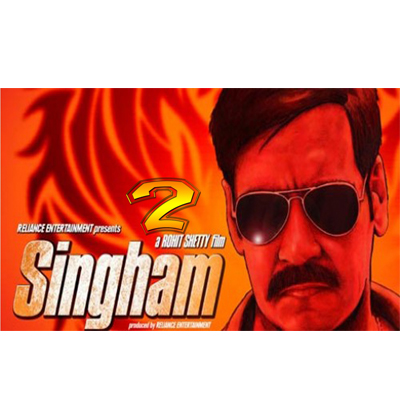
    MUMBAI: The second installment of Singham which is currently being shot has a new name.


    The sequel of Singham which was earlier named Singham 2 will now be called Singham Returns.


    Coming from the makers of Golmaal series, Singham is another franchise from the actor – director duo Ajay Devgn and Rohit Shetty.


    The pair who is known to offer superhit entertainers, are currently shooting for the film in Mumbai.


    But what’s got everyone all the more excited is the ‘return’ of Kareena Kapoor with the macho men after Golmaal Returns. Ajay-Kareena pairing and chemistry has long been appreciated in both serious and comedy genre. This time again, they are set to create magic on the big screen.  


    Popular amongst the masses for their comedy and action packed entertainers like Golmaal series, All the best, Bol Bachchan and Singham 1, Rohit Shetty and Ajay Devgn films are one of the most sought in the box office. Considered one of the most anticipated movies of the year, Singham Returns will release in August.

  • Reliance MediaWorks bags ‘Best Laboratory of the Year’ Award for ‘Mandrake Mandrake’

    Reliance MediaWorks bags ‘Best Laboratory of the Year’ Award for ‘Mandrake Mandrake’

    MUMBAI: The field of technology for visual enhancement of filmed content is rapidly evolving in India. A company that is constantly innovating itself and working towards an enhanced cinema viewing experience is Reliance MediaWorks – the media and techno-creative solutions provider and a part of the Reliance Group.


    Adding to its kitty of numerous awards and accolades is the recently achieved ‘Best Laboratory Award’ in the cinematography category for the film Mandrake! Mandrake!


    Produced by the National Film and TV Institute of India, the diploma film is the story of a young man, who transforms a rundown warehouse into an Aladdin’s cave through the fun and frolic of the moving image, where magic, mystery and adventure become possible. Reliance MediaWorks is solely responsible for the processing of this film.


    Reliance MediaWorks handled the colour correction, processing and printing of the entire film. Reliance MediaWorks CEO Venkatesh Roddam said, “Awards and recognition always feel good, because it is a validation of the commitment to the industry and hard work at Reliance MediaWorks.”


    Added Reliance MediaWorks president, post production services Krishna Shetty, “Among other honours, a national award feels even more special since it is the highest honour instituted by the government of India and thus, yes winning this award for the lab makes me really happy. That we have been winning this award several times over the last few years, is again a reinforcement of the quality, commitment and difference that we at Reliance MediaWorks make to the process of filmmaking through our consistent efforts. Yes it is the 16th award, and the third one in a row now. In the past as well, we have won this award for successive years, once for six years in a row.”


    The company that recently completed 400 films has revolutionised the way films are processed in India and has worked with production houses such as Dharma Productions, Yashraj Films, Balaji Motion Pictures, Red Chillies Entertainment, Disney and Sony Pictures amongst others. Its consistent effort has helped reduce the cost of films and increases the speed of overall production.

  • Raymond Weil felicitates Prasoon joshi as part of its Global practice

    Raymond Weil felicitates Prasoon joshi as part of its Global practice

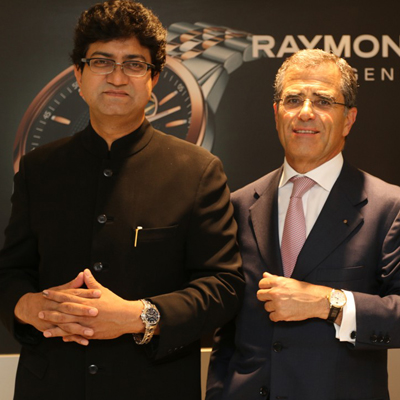
    MUMBAI: Well-known for its watchmaking excellence, creative design and high quality standards offered at unequalled price points, the famous independent Swiss watch Brand, RAYMOND WEIL strengthens its presence in Mumbai. As a Brand deeply involved in arts and music from which it draws its literary inspiration, the Swiss Brand felicitates the most celebrated lyricist, screenwriter and advertising guru- Prasoon Joshi -at the RAYMOND WEIL Boutique at Palladium,Mumbai, on May 2nd, 2014 (Today).


    Prasoon Joshi is considered a legend in the Indian Bollywood industry and is known for his remarkable contributions in music in various Bollywoodmovies. He has also received the best film fare lyricist award 3 times in his tenure. Prasoon is also a proud recipient of the National award for best lyricist.


    In the course of the felicitation, Mr. Olivier Bernheim, President of RAYMOND WEIL said: “We are extremely proud and feeling enthusiastic to celebrate our flourishing presence in Mumbaias we have the most iconic personality of the country with us today.At RAYMOND WEIL, it has always been our endeavour to cherish and share success. We would like to express our appreciation and seize the opportunity to bestow them with sober, yet elegant novelties from RAYMOND WEIL as a mark of appreciation to their contributions so far in the field of music”.


    RAYMOND WEIL’s collections reflect both modern innovative design and the traditional values of the Brand while maintaining attractive price positioning. They clearly demonstrate the family understanding of clients’ expectations. Consumers will appreciate the wide range of watches offered by the Brand: the very elegant and classical, fully mechanical maestro collection, with chronograph, balancier or moon phase functions; the historic and noble parsifal collection; the stylish, powerful and sleek nabucco; the urban and contemporary, sober and elegant freelancer; or the full-bodied, opulent yet delicate feminine collection noemia and jasmine.


    RAYMOND WEIL

    Founded in Geneva in 1976, RAYMOND WEIL is one of the last remaining Swiss independent family-owned and family-operated watchmaking companies. Based in Geneva, home of Switzerland’s most prestigious watchmakers and of the industry’s topmost expertise in component and material supply, the Brand enjoys a unique position in the exclusive world of luxury with a collection of refined timepieces that embody an elegant and contemporary blend of elements inspiring emotions with both customers and partners.


    Music has always been at the centre of the RAYMOND WEIL universe. This is borne out by the names of the Brand’s collections — taken from famous operas such as nabucco and parsifal, or with musical connotations, such as maestro or jasmine — and the various musical partnerships RAYMOND WEIL has signed with iconic musical venues, exclusive musical awards ceremonies, live music platforms and music related charities.


    Emotions, precision, performance: these are the values common to music and watchmaking that RAYMOND WEIL wishes to share with its clients.

  • Disney announces ‘ABCD 2’

    Disney announces ‘ABCD 2’

    MUMBAI: Post the success of India’s first ever 3D dance movie ABCD – Any Body Can Dance, a youthful and vibrant film which became a nation-wide phenomenon garnering critical acclaim and box office, Disney India’s studio business today announced its sequel ABCD 2, directed by Remo D’Souza.


    The second chapter of the movie promises to be even bigger in scale with the current heartthrobs Varun Dhawan and Shraddha Kapoor in the lead along with Prabhu Dheva. Inspired from the true story of an Indian dance troupe that participated in the world Hip Hop Championships, this movie is slated to be shot extensively in Las Vegas, with over 10 songs and extravagant dance sequences that will add grandeur to the exciting script


    The film will go on floors in July.

  • BO: A disastrous week

    BO: A disastrous week

    MUMBAI: It has been a week of multiple disasters at the box office. Purani Jeans, a youth oriented film shot at scenic locations, has not been able to make a mark at the box office. The film barely manages to cross the one crore mark in its first weekend by collecting Rs 1.05 crore.


    Angry Young Man and Kahin Hai Mera Pyar have also failed to muster enough footprints to open screenings at many places. Kya Dilli Kya Lahore has met with poor response with negligible figures of Rs 25 lakh to show for its first weekend.


    Kangana Ranaut starrer Revolver Rani added little to its opening weekend collections of Rs 6 crore to finish its first week with figures of Rs 8.8 crore. Samrat & Co. is very poor in its first week with collections of Rs 1.4 crore. Kaanchi fares below the mark, its title failing to suggest its theme adding to generally poor promotion of the film. The film has collected Rs 3.6 crore.


    Arjun Kapoor and Alia Bhatt starrer 2 States has sustained very well in its second week as well as it collected Rs 24.1 crore taking its two week tally to Rs 84.3 crore. Bootnath Returns has collected 1.2 crore in its third week to take its three week total to Rs 36.05 crore.


    Queen has added another Rs 20 lakh for its eighth week to take its eight week total to Rs 58.2 crore.

  • Cinematic content should have desirable impact on social behaviour: Pranab Mukherjee

    Cinematic content should have desirable impact on social behaviour: Pranab Mukherjee

    NEW DELHI: President Pranab Mukherjee has said filmmakers should make a concerted effort to distinguish between what clearly is an art form and what is not and the cinematic content of films should have a desirable impact on the social behaviour of people, especially the new generation.


    He said, “I take this opportunity to reflect upon an important aspect of cinema. Besides being a strong medium of expression, cinema is a vehicle of influence and persuasion for the youth. When our children witness scenes depicting violence and bloodshed, it does affect their psyche.”


    Speaking after presenting the Dadasaheb Phalke award to poet-lyricist-filmmaker Gulzar and the 61st National Film Awards for 2013 over the weekend, Mukherjee said: “Faced with erosion of values in today’s context, cinema should play a catalytic role in resetting our moral compass. Our filmmakers should deploy their creative efforts to present and propagate core values such as patriotism, respect for women, compassion and tolerance, honesty and discipline. I am hopeful that everyone associated with the film industry will use their talent and artistic pursuits to create meaningful and socially relevant cinema.” 


    Cinema has played a critical role in highlighting social and political issues of concern as well as exposing the deficiencies in our political system. It is an industry which has provided opportunities for many to rise from rag to riches. He called upon the film industry to nurture and strengthen its openness, pluralism and inclusiveness and disseminate the same throughout the country.

    He added: “India’s media and entertainment industry is today at the cusp of a transformation. It is poised to leapfrog into a completely digital landscape. Indian cinema connects with millions of people – within the country and abroad, directly through theatres, close to 2,000 multiplexes and through TV as well as the internet. In 2013, the Indian Media and Entertainment (M&E) industry registered a growth of 11.8 per cent over 2012 and did a gross business of around Rs 92,000 crore. The industry is expected to register a compound annual growth rate of 14.2 per cent to touch Rs 1.8 lakh crore by 2018.”


    Earlier, Gulzar who is turning 80 later this year was given a standing ovation as he went up to the dais of the tastefully decorated Vigyan Bhavan to receive his award for outstanding contribution to the growth and development of Indian cinema. The presentation was preceded by a short showreel into his work, and included tributes paid to him by several cine artistes. The award consists of a Swarn Kamal (Golden Lotus), a cash prize of Rs 10 lakh and a shawl.


     Speaking after receiving the award, Gulzar paid a tribute when he described the film field as the only industry after the Armed Forces which was totally secular and welcomed all.


    He said his honour belonged to scores of film personalities like the late Bimal Roy and Sachin Dev Barman who had given him the right chances at the right times and even younger talent like Shankar Ehsaan Loy and A R Rahman. “Many like R D Burman, Madan Mohan, and Laxmikant are no more. But one could not always live in nostalgia had to move on,” he said.


    Information and Broadcasting Minister Manish Tewari agreed with Gulzar and said cinema was the great unifier. He said the National Film Awards were reflective of the heterogeneity of the film industry which was a confluence of many Indian languages. These awards were truly a tribute to the diversity of thought, and recognition of excellence.


    The report of the feature jury was presented by Manju Borah on behalf of chairman Saeed Akhtar Mirza, while the non-feature book jury were presented by chairpersons Reena Mohan and Sharad Dutt respectively.


    A total of 41 awards were given by the President in the non-feature film category while 40 were given for feature films. Three awards were given to Best Writing on Cinema, including one for the best film critic. 


    The winners of the Best Male playback singer – Rupankar – and Best Female Playback singer Bela Shende renderd their award winning songs ‘E Tumi Kemon Tumi’ from the film Jaatishwar (Bengali) and ‘Khura Khura’ from the film ‘Tuhya Dharma Koncha (Marathi)’ respectively.

    The award for the best feature film was conferred on Ship of Theseus (English-Hindi) produced by Recyclewala Films and directed by Anand Gandhi. In the non-feature film category, the award for the Best Film was conferred to Rangbhoomi (Hindi) produced by Films Division and directed by Kamal Swaroop. In the category of Best Writing on Cinema section, the book Cinema Ga Cinema (Telugu)written by Nandagopal and published by Praga India, Hyderabad bagged the top honour, while Alaka Sahani (English) was conferred the award for the Best film Critic. 


    Hindi films once again dominated the National Film Awards by getting as many as 15 awards among feature films. Marathi came next with 10 awards followed by Bengali with six and Tamil and Kannada with five each and Malayalam with four. 

  • National Award winning duo’s ‘Citylights’ to release on 30 May

    National Award winning duo’s ‘Citylights’ to release on 30 May

    MUMBAI: The successful team of Fox Star Studios and Vishesh Films is back with ‘Citylights’, this May.

    ‘Citylights’ brings back the National Award winning duo Hansal Mehta and Rajkummar Rao, after their earlier venture ‘Shahid’ wowed the audiences and the critics alike.

    Rajkummar Rao is paired opposite actress Patralekha who will be making her debut with this film.

    ‘Citylights’ is based on the life of a trader in Rajasthan who comes to Mumbai with his wife and daughter in hope of a better life. The challenges they encounter in a big city and how they rise to meet those challenges nurtured by the power of their love is what ‘Citylights’ is all about.

    At heart ‘Citylights’ is a love story, a story about familial bonding, a thriller that explores the depths of human nature and a drama about sacrifice in the city of dreams.


    The film is an official remake of the international award winning film ‘Metro Manila’ that has received critical acclaim and won many awards internationally.

  • ‘Purani Jeans’ Review: Purani Story

    ‘Purani Jeans’ Review: Purani Story

    MUMBAI: This one is a love triangle and, like most love triangles, it has a forced script of convenience in which people don’t own up to the things they are supposed to when they should or create a situation where he is on the verge but something keeps him from doing so. Love triangles thrive on silence.

    Tanuj Virwani and Aditya Seal are childhood friends in the hill station cantonment town of Kasauli. With three other friends they make a bunch of five, nicknamed Kasauli Cowboys who celebrate life together. It is summer time and the town gets its due share of holidaymakers. While at the railway station to receive Aditya, who is returning from UK after finishing his studies, Tanuj bumps into pretty and petite Izabelle Leite causing her to spill things from her baggage. Izabelle, along with her sister, has come to spend her holidays in her ancestral home. It is a small town and it is not long before they meet again at a music shop. Love blossoms. But that is not the end of their love story.

    Aditya’s love is music and his dream is to one day cut an album. He forms an impromptu band with the Kasauli Cowboys to perform at the local summer mela. That is where Aditya eyes Izabelle and it is love at first sight for him. Love is something he has always been deprived of. His father died when he was a child, his mother is always high on alcohol and he can’t stand his stepfather who is cheating on his mother.

    Izabelle realises what is happening. She loves Tanuj and wants him to clear things with Aditya as she sees him becoming obsessed with her. Somehow, Tanuj never gathers the courage to do that and it is strange because in love triangles the one whom the girl loves is always the underdog, under much obligations of the other man. Here, Tanuj has no such obligations and no reason to act like a subordinate to Aditya which he does all through the film. However, Izabelle distances herself from Aditya.

    Producer: Manju Lulla.

    Director: Tanushri Chattrji Bassu.

    Cast: Tanuj Virwani, Aditya Seal, Izabelle Leite, Rati Agnihotri, Sarika, Rajit Kapoor, Manoj Pahwa, Param Baidwan, Kashyap Kapoor, Raghav Kakad, Kashika Chopra, Umesh Rajput.

    The summer mela has helped two other friends to find girlfriends, one of which is Kashika Chopra. When she becomes pregnant and the one of the five, Param Baidwan, leaves her high and dry and even leaves the group, Aditya helps her and earns some brownie points from Izabelle. The pendulum of this triangle goes through all the routine swings until Aditya sees Tanuj and Izabelle together in bed. This is followed by Aditya taking a leap from a cliff along with his jeep.

    Tanuj, who is in the US now, lives with guilt all his life blaming himself for the suicide of Aditya. He avoids coming to Kasauli until his mother passes away and he has to return to complete the rituals and also get rid of the cottage. The past catches up with him as does his love, Izabelle. He meets Aditya’s mother, Sarika, who helps clear his conscience when she tells him that a family feud had led Aditya to take the drastic step and not Tanuj.

    This being a film with unknown actors, it should have been a little shorter so as to lessen the burden on the actors. Also, some things become repetitive. Still, fresh faces coupled with scenic locations backed by good cinematography do make it pleasant watch. Direction is fair but some things could have been clearer in the narrative. The film has peppy music catering to youth. Dialogue is not up to mark. Performance wise, Aditya is impressive. He acts well, looks good and holds promise. Tanuj is okay. Izabelle has to look pretty and that she does. She is not taxed with acting. Sarika is convincing. Manoj Pahwa, Rajit Kapoor and others are adequate.

    Lack of face value will deprive ‘Purani Jeans’ of a decent showing at the box office.

    Kya Dilli Kya Lahore Review…………Who Cares!

    India-Pakistan stories work when the Indian hero gets the better of the Pakistanis as in ‘Gadar: A Love Story’ or, more recently, in ‘Bhaag Milkha Bhaag’.  Otherwise, it is a drain on the audience’s mind.

    ‘Kya Dilli Kya Lahore’ is a film about an expatriate Muslim from Chandni Chowk in Delhi (Vijay Raaz), now in Pakistan, and a Hindu one, Manu Rishi, from Lahore, who now lives in a refugee camp in Old Delhi. Both have joined the army of their adopted countries. A day comes when both come face to face in a war zone. Raaz has infiltrated into Indian territory on his senior’s say so to pick a file which contains details of a secret tunnel India has dug from Lal Killa in Delhi to Lahore!! As ordered, Raaz walks into Indian territory and to a camp as if on an evening walk. He is not aware that at that moment, the cabin is occupied by only one person, the camp coo, Manu. Yet he starts shooting at the cabin. Isn’t that rather suicidal in case there are more soldiers inside? And what would a secret file be doing inside a deserted army outpost few hundred meters from the border? But that is how a juvenile this script works.

    Producer: Karan Arora.

    Director: Vijat Raaz.

    Cast: Vijay Raaz, Manu Rishi, Vishwajeet Pradhan, Raj Zutsi.

    After initially shooting bullets, a dialogue starts between the two. Manu denies the existence of any such file, so with little else to do they go into a debate on partition: who caused it and who faced injustice. Who lost how much personally leads them to talking about what they had to leave behind and about friendships, no matter if one was Muslim or Hindu, in the undivided India.

    The two spend the night talking and carry the film for most of its 98-minute running time. Bonhomie is created between the two and Manu even throws boiled potatoes at Raaz for breakfast. But, after breakfast, enters Raj Zutsi, a vagabond dressed in khakhi aspiring to join the army as an officer. Meanwhile, Raaz finds some bullets and takes Manu by surprise, planning to take him to Pakistan to serve as a cook there. Zutshi thinks Manu is deserting the army and crossing over to Pakistan and takes control of the situation—and then loses control too. By then, Vishwajeet Pradhan, Raaz’s superior also comes for a walk in the Indian land. He kills Zutsi and is about to kill Manu but is killed by his own army man, Raaz, instead.

    ‘Kya Dilli Kya Lahore’ looks like it was written as a stage play and some temptation made the makers convert it into a movie. It is ancient in its story content. Had it come in, say, 1950, it would have had some relevance to that generation. Both the main characters are not doing this for the love of their country; they are underdogs and doing what they are to make a living. No emotion comes through due to this. Direction is patchy. In terms of production values, this must be one of the cheapest productions with just about four players and a log cabin and surroundings as background. The one song the film has is bad. While Raaz is subdued for a change, Manu does really well. Vishwajeet is fine in a small role and Zutsi goes overboard with his expressions.

    ‘Kya Dilli Kya Lahore’ won’t find any takers.

    Kahin Hai Mera Pyar Review           Audience Kahin Nahi

    ‘Kahin Hai Mera Pyar’ looks like the outcome of a director who has nursed the ambition of making a film for a long time, has seen many films, especially old ones, and eventually got around to making it. The influences of decades-old films are apparent in its story, scripting, characterisation and treatment.

    Producer:  Mahesh Vaijnath Doijode, Santosh Vaijnath Doijode, Balasaheb Vaijnath Doijode.

    Director: Mahesh Vaijnath Doijode.

    Cast: Jackie Shroff, Sanjay Kapoor, Abhishek Sethiya, Sonia Mann, Gajendra Chauhan    Kishori Shahane Vij, Nishant Sharma, Karuna Arya, Shankar Sachadev, Sunny Agarwal, Dhaval Barbhaya, Krupa Sindhwad.

    Abhishek Sethiya is an artist who lives with his younger sister. He is trying to create the painting of his love, the woman he will fall in love with. The painting is not coming through and he is exasperated. One day, he is so angry he spills all his colour tins on the canvas and the room. Out of this shower of colours, a face emerges on the canvas. Now he has a face and he goes on painting her. His sister is making tea for everybody all the time and considering Abhishek keeps making only his imaginary lover’s paintings, it is a mystery where she gets milk, sugar and the stuff for tea. Food is another matter!

    Jackie Shroff is a hotel owner who likes to promote young talent and holds exhibitions in his gallery. He offers Abhishek the chance to hold an exhibition of his paintings but Abhishek does not want to exhibit or sell his love and refuses the offer. Like all purane zamane ki films, his sister meets with an accident and money is needed for her operation. Reluctantly, Abhishek agrees to an exhibition and there, when the bidding reaches four lakh, Sanjay Kapoor materialises from nowhere and bids 25 lakh. The villain of the love story which is yet to happen is already here.

    Abhishek knows the only way he can find his love is through Sanjay as he would have bought all the paintings only due to some interest in the face. It turns out the girl in the paintings works for Sanjay’s company. He has been very helpful to her family and he wants her to himself. The usual planning and plotting follows to eliminate the hero, because, not only has he traced the girl, now she also loves him.

    The film has gone stale in the making and the content would have been stale even fifty years back. Treatment is amateur. Music is passable. Performances are uninspiring.