Category: Hindi

  • AGP is exploring different genres to target different audiences, says Ashvin Gidwani

    AGP is exploring different genres to target different audiences, says Ashvin Gidwani

    MUMBAI: With adult comedy being the current flavour of Bollywood, Ashvin Gidwani Productions (AGP) has certainly broken the norm by introducing the same into theatre. And Ashvin Gidwani, head honcho of AGP, has no regrets about it.


    The prominent theatre personality says, “Indian audiences are very open to mature content. Most of our adult comedy shows run to full houses and I’ve never seen people come out with frowns on their faces”.


    Ashvin Gidwani Productions has been tapping into the many genres of comedy with an aim to cater a larger spectrum of audience. It has been hugely successful with plays like ‘Battle of Da Sexes’, ‘History of India VIRitten’, ‘Blame It on Yashraj’ and more. The reason these plays are super successful is because, according to Gidwani, “Audiences see a mirror of their lives or the ones of the people they know to relate to the play.”


    With most of his plays being staged across the globe, Gidwani agrees the future of Indian theatre is indeed bright. He further adds “our work is adapted as we tour various cities in India as well as internationally.” Each play is customized according to the audience it is targeted at.


    With these efforts, AGP has set its objective of growing a niche market supported by educating the masses about original homegrown theatre. Gidwani, who has not only introduced a new genre of theatre, signs off saying “modification of content is the key to the globalisation of the Indian theatre industry.”

  • Not so ‘Happy Ending’ at the BO

    Not so ‘Happy Ending’ at the BO

    MUMBAI: Happy Ending is a reasonably funny film but opens weak as the film’s star cast lacks the draw at the box office and depends only on its public reports to sustain. During the weekend, the public reports were fair and so were the reviews, but the collections remained below par at Rs 13.5 crore for its opening weekend.


    The other release of the week, Titoo MBA remained very poor.


    Kill/Dil maintained well through the week, albeit on the lower side as appreciation was missing. Not a film befitting YRF repertoire. The film has collected Rs 30.82 crore for its first week and adding another Rs 1.54 for the second weekend.


    Chaar Sahibzaad (Animation) has made a record jump in its second week thanks to its Punjabi version. This should emerge as the biggest Punjabi hit on religious theme since the 1969 Punjabi film, Nanak Naam Jahaj Hai, produced by the Maheshwaris (Kalpanalok) who have a memorable Hindi hit around the same time in Kaajal, a Raajkumar starrer.


    The Shaukeens has added Rs 2.1 crore in its second week to take its two week total to Rs 20.6 crore. Rang Rasiya has collected Rs 75 lakh in its second week to take its two week total to Rs 4.7 crore.


    Super Nani has collected Rs 25 lakh in its third week to take its three week total to Rs 29.1 crore. Happy New Year has collected Rs 1.4 crore in its fourth week taking its four week tally to Rs 171.2 crore.

  • ‘Bhopal: A Prayer for Rain’ wows American audiences

    ‘Bhopal: A Prayer for Rain’ wows American audiences

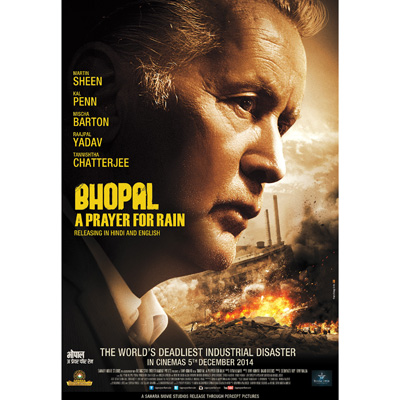
    MUMBAI: Bhopal: A Prayer for Rain, the social thriller scripted around the Bhopal gas tragedy of 1984, has opened to rave reviews in American theatres. Directed by Ravi Kumar and produced by Sahara Movie Studios and Rising Star Entertainment, the film has found an emotional resonance with audiences and critics alike.

    Martin Tsai of the Los Angeles Times calls the film “a revolutionary cautionary tale” applauding how “Kumar vividly recreates the Bhopal disaster.”

    Gurinder Chadha, director of much-loved films like Bend It Like Beckham, calls Bhopal: A Prayer for Rain “outstanding, a must see film!” Kerry Kennedy, niece of former US President John F Kennedy, tweeted: “Saw Bhopal starring Martin Sheen tonight… powerful film must see for all interested in business and human rights.” Naomi Canton of Asia House called the movie “better than Slumdog Millionaire and 12 Years A Slave” while Liza Forman of Financial Times London wrote that Bhopal is “a story that needed to be told.”

    Sheen, who plays Union Carbide CEO Warren Anderson in the film says: “When I was invited to participate in the film about the Bhopal incident I felt compelled to accept.  And the response to the film here reinforces the faith I had in the subject. It has been 30 years since the tragedy but it is as relevant as ever.”

    Reacting to the overwhelming response to the film in the US, Sahara Movie Studios producer Seemanto Roy said: “We are very happy with the way the film has been received in America and now hope that Indian audiences take to the film and the youth becomes aware of the mistakes that were made in the past.”

    Bhopal: A Prayer for Rain, produced by Sahara Movie Studios and Rising Star Entertainment will release in India on 5 December 2014.


  • Shakti Kapoor is in awe of Rajkummar Rao

    Shakti Kapoor is in awe of Rajkummar Rao

    MUMBAI: Actor Shakti Kapoor admires young actor Rajkummar Rao. The National award winner has found a fan in Kapoor. They are working together in upcoming movie ‘Shimla Mirchi’ with popular actress Hema Malini and Sholay director Ramesh Sippy.


    According to the sources, Rajkummar Rao, Shakti Kapoor and Ramesh Sippy all gelled well during the shoot. Chatting with each other, Kapoor got to know that Rao has graduated from Film and Television Institute of India, Pune. He was more than happy to know that as he himself has graduated from there and makes him Rao`s senior.


    Kapoor says, “We have both graduated from Film Institute of Pune, which makes me his senior. He`s a good human being and an amazing actor.”


    Kapoor and Rao both have pivotal roles in ‘Simla Mirchi’ and with Ramesh Sippy as the skipper of the ship, the movie is touted to be next year`s blockbuster.


  • “Women portrayal problematic in cinemas and papers”: Aamir Khan

    “Women portrayal problematic in cinemas and papers”: Aamir Khan

    NEW DELHI: Eminent stars Aamir Khan and Deepika Padukone were the highlights of the day at the final session for the first day at the 12th edition of the Hindustan Times Leadership Summit.

     
    However, Khan decided to do some plain speak at the session moderated by renowned director Karan Johar when he expressed his disappointment over the trend of buying editorial spaces to garner positive reviews for upcoming movies. He said that it would be better if the fraternity channelized its energies in making good films.

     
    The talk touched on several sensitive issues that emerged in the film fraternity in the current times including buying of editorial spaces and the rat race for soaring box office collections.

     
    Khan said he loved movies like Pyaasa and Mughal-e-Azam, the box-office collections of which remain unknown to the world.

     
    The session also touched upon more grave issues like the portrayal of women in Indian cinema.  Padukone with reference to her latest controversial posters said “it cannot be denied that men too are objectified in Indian cinema.” Khan said women portrayal are problematic in cinemas and papers.

     
    The actors also agreed that the audience has matured over time and it becomes important to cater to the evolving taste of the audience. They also touched upon the blurring lines between the mainstream and parallel cinema.

     
    Khan welcomed the competition in the industry. The veteran actor said that stiff competition would only help the industry rather than pulling it down. He said that the idea to reshape Indian cinema would require making movies which would infuse grace into the social fabric of the society.


  • ‘Happy Ending’… Weekend watch

    ‘Happy Ending’… Weekend watch

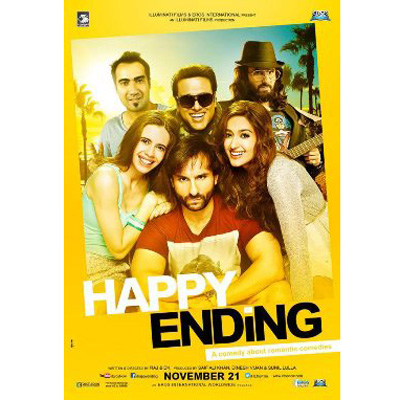
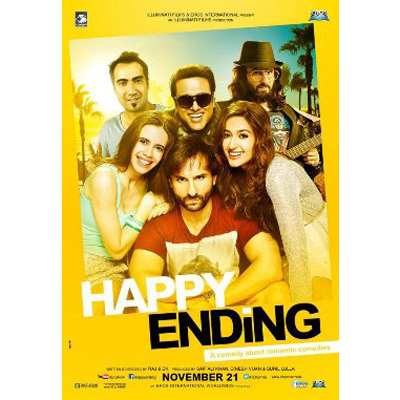
    MUMBAI: Saif Ali Khan seems to be trying new ideas lately. His Go Goa Gone was a rare zombie movie on Indian screens. With Happy Ending, he tries something contemporary in theme and treatment. In other ways though, The hero is love proof; five affairs and he is still single because he refuses to or is not the kind to fall in love. No permanent commitments from him.  

    There was a time when shooting a film abroad was a novelty and, sort of, made up for a weak script to an extent. That is to say, the visuals helped distract the viewer from the narrative. That fad died out. People soon realised that shooting abroad was generally not relevant to the film. Yet, Happy Ending is based in the US and still things remain the same. All major players are Indian and always the bosses, while the whites are mere extras.

    Saif Ali Khan has written a book, Payback Time, which became a best seller. He is now a celebrity, loaded with cash, driving a convertible sports car and changing girlfriends frequently because he does not believe in love. He is living on his past glory and money. His best seller made him enough money to afford all of the above and his logic is, why work when I can enjoy life? However, he soon comes face to face with the fact of being, a one-book wonder. His money has run out and his car has been towed away for failing to pay instalments. It is over five years since his first and only best seller and cash as well as the glory have faded.

    Producers: Dinesh Vijan, Saif Ali Khan, Sunil Lulla.

    Directors: Raj Nidimoru, Krishna DK.

    Cast: Govinda, Saif Ali Khan, Ileana D’Cruz. Kalki Koechlin, Ranvir Shorey, in guest roles, Priety Zinta and Kareena Kapoor. 

    Saif’s problem doubles as he has also failed to live up to his commitment to deliver another manuscript to his publisher. To add to his misery his own agent has introduced another writer, Ileana D’Cruz, to the publishers who writes romantic mush which takes her to the top position. She is now a best seller.

    Saif is an ‘I specialist’, which is to say that he is all about “I, Me and Myself”. He does not see beyond his own nose. His encounter with Ileana starts with envy followed by mental games until he realises that she herself knows she is selling pulp to people through her bestsellers. Broke to the core, Saif needs money urgently. He also needs his convertible back besides money for booze and affairs. To add to his troubles, he is stalked by his last girlfriend, Kalki Koechlin. He had broken up with her but she is still in love with him and plans to spend rest of her life with him. This break up is one-sided because Saif has not been able to convey his decision to Kalki.

    This is when his agent convinces him to stoop a little and meet Govinda, a super star of single screens who wants to capture multiplex audience too, for which he needs a script. Saif is assigned to write it and he accepts it because, he is told, “Paise ka koi problem nahi.” The problem is, Saif is not a romedy writer which is what Govinda wants while Ileana specialises just in those! Also, another problem with Saif is that, he has written many manuscripts but never been able to complete any because he has never been able to find a happy ending. 

    Saif has his alter ego to guide him, which is a version of Saif who is potbellied, unkempt and always hogging on some food or other. On his say so, Saif manages to date Ileana over the weekend and they become friends. Next, Saif accompanies her to her book reading and book-signing road trip to another city. Spending the night in the same room, after initial resistance, both agree to have sex on the condition that there would be no binding, no saying ‘I love you’ on either side. 

    Predictably, love happens between them, which neither one of the two is willing to confess. It is time for Ileana to leave for India. Saif is uncomfortable but still refuses to believe he could fall in love. It takes some convincing from his ex, Preity Zinta, and his alter ego, the potbellied Saif, until he agrees to stop her before she boards her flight. His script with a happy ending is now ready for Govinda. 

    Happy Ending is a fun film most of the time despite the pace dropping in the second half; some trimming could make it racy. The film’s mainstay is its visuals and dialogue. The dialogue are witty and peppy and worth a chuckle. Direction is generally good with some patchy moments. Music holds appeal in the film more than it did on audio tracks. Of the cast, Govinda excels as a caricature of a super star. Ranvir Shorey does very well despite a small role. Saif, in both his roles, is underplayed; a wise thing to do after the debacle of Humshakals. Ileana is fair. Kalki is okay.

    Happy Ending caters mainly to high-end multiplex and metro crowd who can get its subtle humour, mostly thought up in English. A slow starter, Happy Ending is an ideal DVD watch.

  • Dharma Productions prepone the release of ‘Brothers’

    Dharma Productions prepone the release of ‘Brothers’

    MUMBAI: Brothers starring Akshay Kumar, Sidharth Malhotra, Jacqueline Fernandes and Jackie Shroff will be ready to open in theatres months before the original release date, on 31 July 31 2015.

    The film went on floors in September and a considerable amount of scenes have already been filmed. Now, Brothers is likely to be completed way before the originally scheduled release date of 2 October 2015. However when Karan Johar zeroed in on 31 July, he realised that Akshay had already decided to release his home production on that day. Johar had a word with Akshay, who, thrilled about his upcoming Dharma project, offered his July date to Johar.

    Producer of the film, Johar confirms the news, saying, “The energy of the shoot has been incredible, so we have actually decided to prepone our release to 31 July. Akshay and Ashvini have graciously given us that date and we have given them our previous date.”


  • ‘Happy Ending’ making match on Tinder

    ‘Happy Ending’ making match on Tinder

    MUMBAI: The much awaited Happy Ending that stars Saif Ali Khan, Ileana D’cruz, Govinda, Kalki Koechlin and Ranvir Shorey is set to release on 21 November. Directed by Raj & DK, Happy Ending is a story about two writers Yudi and Aanchal who are both commitment phobics, and their journey towards a happy ending. Pegged as a ‘Rom-Com about Rom-Coms’, the digital campaign for this film has gone ahead of the traditional social media of Facebook and Twitter and has explored the popular dating app Tinder.

    The lead pair of the film, Yudi and Aanchal (Saif and Ileana) joined Tinder three days prior to the release. Post the announcement on social media, a lot of people ‘matched’ their profiles on Tinder and started having a conversation with the characters. The activity quickly picked up and in less than an hour both their Tinder profiles had over 100 matches.

    On Twitter, many users engaged in fun conversations with Yudi & Aanchal where the characters asked them to meet them on 21 November hence popularising the release date.

    The Glitch group head entertainment strategy Mehak Sabat said, “Look around and you will find the youth is on Facebook, Twitter, Instagram and Tinder. If social media platforms are evolving, so should our movie promotion campaigns. With Happy Ending, we are the first to tap the potential of Tinder. We have gained immense traction on the app ever since we have launched this activity, and users are not only reacting to the novelty of the campaign but also relating with the movie protagonists.”

     “A small research in our circle helped us find out that Tinder is full of commitment-phobic people! Young boys and girls just looking to spend some fun time together not really caring about ‘Where is this relationship going?’ and knowing our characters as from Happy Ending Yudi & Aanchal, we were sure they would definitely  be the first ones to sign up on Tinder. What better way to get the boys to fall in awe of Aanchal and the girls to fall for Yudi?,” Eros International marketing team said.

     Happy Ending releases in theatres this Friday.


  • Cricket meets bollywood in the city of joy

    Cricket meets bollywood in the city of joy

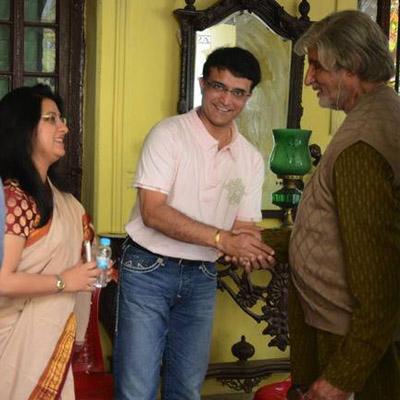
    MUMBAI: It’s not every day that one gets a chance to see legends meet. This special occasion was witnessed on the sets of Shoojit Sircar’s Piku in Kolkata recently. The city of joy was abuzz with excitement as the Prince of Kolkata, cricketer Sourav Ganguly, met the star of the millennium Amitabh Bachchan. Ganguly was accompanied by his wife Dona Ganguly. Both self confessed Bachchan fans were delighted for a chance to interact with him.

    ‘Dada’ as he is commonly called, wished to meet his favourite star as soon as he knew the actor was in the city for the film’s shoot. Having met on several occasions earlier too, the couple couldn’t contain their enthusiasm during the visit. The well known cricketer wore a white polo shirt with denims while Dona looked graceful in a traditional Bengali sari. Bachchan Senior was in his Piku look, with a Nehru jacket and a pot belly.

    According to a member of the unit, “The couple was very glad to have met their favourite star. They had a great time together speaking about his character and the movie. Amit ji played a perfect host for Sourav and Dona and also interacted briefly with the film crew.”

     For the Bengal Tiger Sourav Ganguly, it was a day well spent with the legendary actor. After speaking to Big B, the cricketer is excited about the film and is looking forward to its release.
    With incredible performances by a talented cast, Piku is set to take 2015 by storm.


  • “Cinema has evolved with technology as a more democratic medium”: Govind Nihalani

    “Cinema has evolved with technology as a more democratic medium”: Govind Nihalani

    KOLKATA: Indian film director, cinematographer, screenwriter and producer Govind Nihalani, who has proved the power of his cinema through his television series ‘Tamas’, vehemently believes that cinema has evolved with technology as a more democratic medium.


    “Cinema is a very powerful medium. It acts as a dialogue between the filmmaker and his viewers. It can convince you to pick up a gun and kill someone,” Nihalani said, on the sidelines of the ongoing 20th Kolkata International Film Festival.


    ‘Tamas’ is not a daily soap. It deals with the issue of national importance. The emphasis is on the characters and evoking of the period when the partition took place, makes it different from other soaps. “I think it will have a small relevance even today. These programmes are not even being made today,” he said.


    “In these times of hope and convictions, cinema will never die because it has tremendous possibility of creating magic, poetry and change,” he further added.


    On the context of shifting from his usual “serious” content to an animated movie, he mentioned that one should always keep expanding one’s horizon. With reference to digital technology taking over celluloid and the advantages it provides he said, “Technology is all that you want and it will get better with time.” He appreciated Japanese animation as an ingenious art form, but added that it will be sometime before India embraces such content in animation.


    Nihalani has been the recipient of six national film awards (India). His first directorial venture was Aakrosh starring Om Puri, Naseeruddin Shah, the late Smita Patil and the late Amrish Puri. The film is scripted by Marathi playwright Vijay Tendulkar. The film shared the Golden Peacock for best film at the International Film Festival of India held in New Delhi in 1981. He then directed Ardh Satya, based on a story by S. D. Panwalkar. The film has received critical reception for depicting the police-politician-criminal nexus. In 1997, he adapted Bengali novelist, Mahasweta Devi’s acclaimed novel by the same name to Hazaar Chaurasi Ki Maa.


    While interacting with movie lovers, Nihalani flashed upon his memories of a chat session with Sandeeep Ray (son of famous film-maker Satyajit Ray) on Mahasweta Devi’s novel.


    “On a moment like this, I delve into my past when I first met Mr. Ray, two decades later I dared to call him Manik da,” he said.


    Nihalani put forth his initial days with the master and expressed his gratitude when Ray narrated Pikoo’s Diary to him from the very first shot to the last. “It’s very important for a filmmaker to remain relevant to his times and be connected to his reality, his harsh reality,” he concluded by echoing Ray’s words.