Category: Hindi

  • Sunny Leone fails to grab eyeballs at box office

    Sunny Leone fails to grab eyeballs at box office

    MUMBAI: It is sex over sermon and Sunny Leone scores over legendary actors Paresh Rawal, Naseeruddin Shah and Annu Kapoor as her first double role film, Ek Paheli Leela, scores over talent packed Dharam Sankat Mein.


    Not that Ek Paheli Leela is great shakes. It remained on the lower side on Friday and failed to add to its opening day figures on Saturday. The film ended its first weekend with figures of Rs 11.2 crore mainly on the strength of its performance at single screens.


    Dharam Sankat Mein lacked in the pre-release promotion and suffered on this count. The film had a poor opening despite stalwarts like Rawal, Shah and Malik in the cast. The comparison to Rawal’s trendsetting OMG: Oh My God was inevitable and Dharam Sanakat Mein fell short by miles besides the fact that quite a few films on the similar theme have followed OMG. The film gets a poor opening and barely manages to cross the Rs 1 crore-mark on its opening day and hardly improves on Saturday. The film has had a weekend of Rs 5.1 crore.


    Barefoot To Goa stays out of contention as far as box office is concerned. Such group funded idealistic films need a commercial approach.


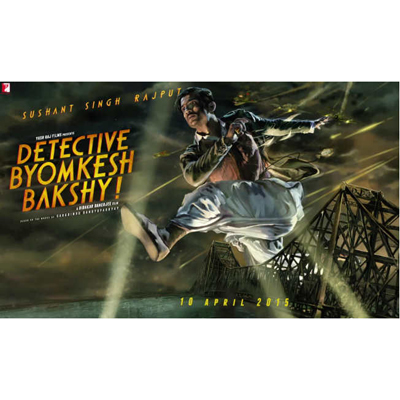
    Detective Byomkesh Bakshi, another small film after Dum Laga Ke Haisha from Yash Raj Films, remains average. An indulgent film based on the WW2 era Bengali fictional character, the film falls prey to its mediocre content. It manages to collect Rs 19.97 crore for the first week. The film has added Rs 3.27 for its second weekend to take its two week tally to Rs 23.14 crore.


    Barkhaa is a lost cause. The film fails to cross Rs 1 crore mark even after two weeks.


    Dum Laga Ke Haisha has collected Rs 35 lakh in its sixth week to take its six week tally to Rs 30.32 crore.


    NH10 added Rs 30 lakh in its fourth week to take its four-week total to Rs 30.5 crore.


    Far from the days when English films released in India eons after their premiere release in the West, that too at one Metro at a time, Fast & Furious 7, released at multiple screens across India and opened to a bumper response.


    The fact that the brand equity had been built over the years helped as did the ensemble star cast. The film collected better than many Hindi super star films in its first week with figures of about Rs 70 crore.


    Vidhu Vinod Chopra’s foray into Hollywood cinema with Broken Horses, a rehash of his 1989 Hindi film Parinda, comes a cropper. The film has gone almost unnoticed in Indian cinemas.

  • IFFLA: ‘Chauranga’ wins Best film award, ‘Kaaka Muttai’ bags audience choice

    IFFLA: ‘Chauranga’ wins Best film award, ‘Kaaka Muttai’ bags audience choice

    NEW DELHI: Filmmaker Bikas Ranjan Mishra’s Chauranga won the Best Feature (Grand Jury) award at the 13th annual Indian Film Festival of Los Angeles (IFFLA).


    M. Manikandan’s Kaaka Muttai won the Best Feature award (Audience Choice) at the festival, which was held from 8 to 12 April at the ArcLight Hollywood.


    Actresses Kalki Koechlin and Shweta Tripathi were in a tie as winners of the Best Actress award for Margarita with a Straw and Haraamkhor respectively. 


    Chauranga, co-produced by Sanjay Suri and Onir, stars Suri and Tannishtha Chatterjee. It is a fictional account of six days in a dark corner of India, telling a story of violence of class oppression that still exists in rural India.


    Onir tweeted, “Super Proud that our film #CHAURANGA won the BEST FEATURE – GRAND JURY prize at #IFFLA :). (sic)”.


    “Thrilled ! #CHAURANGA wins Best Feature (GRAND JURY) prize at #IFFLA2015 @bikas @IamOnir @TannishthaC @ArpitaCP,” Suri tweeted.


    The Best Short Film (Audience Choice) award was given to Safar by Pratyusha Gupta, while the Grand Jury prize in the same segment went to Dandekar Makes A Sandwich by Leena Pendharkar.


    A total of around 25 films including sixteen features – among them the opening filmHaraamkhor by Shlok Sharma and several shorts including Jai Ho on A R Rahman by Delhi-based filmmaker Umesh Aggarwal – were screened at the Festival.


    Starring Nawazuddin Siddiqui, Haraamkhor has been produced by Anurag Kashyap and Guneet Monga.


    The closing film was Dhanak, a coming-of-age film directed by Nagesh Kukunoor. The centerpiece film was the British comedy One Crazy Thing directed by Amit Gupta. The movie stars Ray Panthaki and Daisy Bevan and centers on a man struggling to overcome the notoriety from his sex tape. 


    Actor-producer Abhay Deol was a member of the jury and the other narrative jury members were filmmaker Sean Baker, HFPA member and frequent board director Yoram Kahana, Warner Bros EVP – physical production Ravi Mehta and author and film curator Berenice Reynaud.


    The shorts jury include actor Danny Pudi, Outfest director of programming Lucy Mukerjee-Brown, Sundance shorts programmer Lisa Ogdie and Heather Morris Washington, manager of the Emerging Writers Fellowship at Universal.


    The festival saw four world premieres, seven North American bows, two American and 10 Los Angeles premieres from not just India, but also the US, the United Kingdom, France, Germany and Cuba, in 10 languages including English, Spanish and German.

  • ‘Welcome To Karachi’ becomes first Indian film to be promoted in Pakistan

    ‘Welcome To Karachi’ becomes first Indian film to be promoted in Pakistan

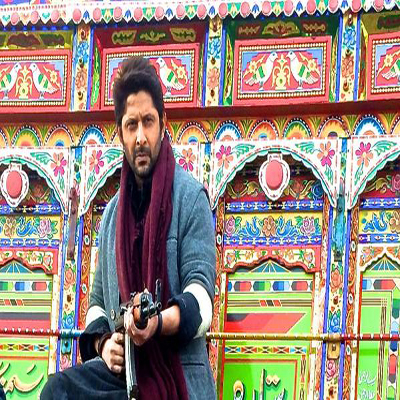
    NEW DELHI: The Jackky Bhagnani – Arshad Warsi starrer Welcome to Karachi has become the first film to officially travel to Pakistan for movie promotion.


    The cast and crew have been invited by the Pakistan Government for this purpose.


    The movie is produced by Vashu Bhagnani. A source close to the project said, “It’s quite a big achievement not just for Bollywood but for the entire country. Since the film has Karachi word mentioned in the title and talks about the relations between India and Pakistan, the Pakistan government may have come up with the idea to promote the movie in Pakistan.”


    Bhagnani added, “I’m very happy that Welcome To Karachi is the first film to go to Pakistan for film promotion. I’m highly obliged with the Pakistan government to invite us for our film promotion in Pakistan. It’s not just making Bollywood proud but also our country. I’m looking forward to travel to Pakistan along with my movie cast and crew.”

  • ‘Dharam Sankat Mein’ as also box office prospects

    ‘Dharam Sankat Mein’ as also box office prospects

    A remake of the 2010 British film, The InfidelDharam Sankat Mein is one more in the line of films depicting Baba-led sects and sub sects and juxtaposing one religion against another. Viacom18, one of the makers of the film, promotes it with a tagline: From The Studio Which Brought OMG- Oh My God. This, along with the fact that like OMG, this film also stars Paresh Rawal as the protagonist, makes a comparison inevitable.

    Rawal is a successful caterer in Ahmedabad tending to most big weddings and events. He is an atheist yet he has a problem. His son is in love with Auritra Ghosh, whose father and rest of the family are the followers of Neel baba (Naseeruddin Shah). Auritra is stuck between her love and her father’s choice of a suitor for her. She knows her father would prefer to marry her only into a religious family, especially one following the ways of Neel baba.

    Rawal, who wakes up to call of Azaan from a nearby Masjid, which irritates him, starts his day by playing a pop number by his favourite Sikh singer to change his mood. His son pesters him to come visit Neel Dharma sessions, if for nothing else, only to please his prospective father in law. Now, Rawal is a family man, who loves his wife and kids and every time he decides to comply with his son’s wishes, something comes in the way.

    His character has an inherent hatred for Muslims and the early morning Azaan and his verbal scraps with his Muslim neighbour, Annu Kapoor, only add to his discomfiture for the community. Annu’s car is always parked in the way making it impossible for Rawal to manoeuvre his car out. For every small reason, Annu, a lawyer by profession, sends legal notices to Rawal as well as to other society members.

    After Rawal’s mother demise, his wife keeps reminding him to go check her bank locker. One fine day, Rawal decides to do just that. And therein he finds a document, which turns his world upside down. He finds an adoption certificate and it emerges that he was born to Muslim parents, later left with an orphanage from where a Hindu Brahmin family adopted him.

    Rawal raids the orphanage registration office, breaks into their cupboards and gets hold of his file. He learns the name of his father. He now seeks help from Annu to help him find his biological father, wanting to meet him once and find out what made him desert him. Ahmedabad Muslim community is not small by any means and finding Rawal’s father after 50 years is worse than finding a needle in a haystack! Surprisingly, Annu does it in a day! Rawal’s father is counting his last days at a community sanatorium.

    Rawal visits the sanatorium but the Imaam there, Murli Sharma, won’t allow him. The reason? As it were his father was on last stage and seeing that his son is a Hindu, he would die of shock! Rawal seeks Annu’s help to learn the Islamic ways to once see his father. This goes on every time Rawal tries to meet his father as Murli blocks him till the matter lands in a court where Annu fights on behalf of Rawal.

    On the other hand, Rawal’s attempts at placating his son’s to be in-laws backfires. As he tries to find his identity between a Hindu and a Muslim, he loses his family and his standing in life. While his family leaves him, nobody wants to do business with his reputed catering service.

    That’s where the comparison between comes up between Dharam Sankat Mein and OMG: Oh My God. Though Rawal’s problems are same in Dharam Sankat Mein as in OMG, the latter was a debate about the very existence of God. As a film, it had an excellent material, better cast and a great screenplay where the court scenes stole the show not to forget its star power. Dharam Sankat Mein on its part, has no solid issues, while it highlights a fake Baba, it is mainly concerned about Islam bashing. The court case here is muted with no arguments played up. The final exposure of Shah is too stagey to carry any appeal. What also goes against the film is that Shah’s part in the film has been used a bit too much to promote the film which, though looks interesting the first time you watch it on screen, becomes monotonous the next time and thereafter it is forced on you.

    This is a Rawal vehicle all along, though his character or his part is not as strong as OMG. Just seeing him on screen is a treat. Annu Kapoor gives one of his best for the third time after Mr India and Vicky Donor. Shah in a cameo overacts. The supporting cast is okay. While the direction is just passable, the adaptation from The Infidel is too loose to merit a mention. Dialogue is mundane. Music has not been blended well. Editing is amiss.

    Dharam Sankat Mein has not opened well and with word of mouth not being in favour, it will disappoint.

    Producers: Viacom 18, Sajjad Chunawala, Shariqu Patel.

    Director: Fuwad Khan.

    Cast: Rawal Rawal, Annu Kapoor, Naseeruddin Shah.

    ‘Ek Paheli Leela’: Rides on Sunny Leone

    Ek Paheli Leela is a reincarnation story. By casting Sunny Leone, the makers make their intentions clear that the genre is just an excuse and their idea is to cash in on Leone’s skin show. There are people out there who expect her to shed whatever skimpy clothes she wears someday!

    Meera (Sunny Leone) is a super model having descended from Italy for a shoot in Rajasthan. She has a phobia for air travel having survived a plane crash in which she had lost both her parents. However, her agent, Andy, has made a commitment to shoot in Rajasthan and hence she has to travel.

    In Rajasthan while she is shooting, a local royal, Mohit Ahlawat, falls for her and finally also wins her over. They both get married.

    Meanwhile, Jay Bhanushali, has his own story. He has moved into a new house and since then, he has been having these dreams of his past making him wake up suddenly. To solve the problem of his dreams, which deprive him of restful sleep, Jay meets up with a guru. He is informed by the guru that he has been reborn because his love 300 years back had remained unrequited. He was in love with Leela but had not been able to marry her because of an evil man, Rahul Dev, who was besotted with her and had even created an indestructible statue for her.

    Jay proceeds instantly to Rajasthan to meet Leela and tell her about their past lives. Here, Jay realizes that Leela, of his past life, is now a super model named Meera and is married to Mohit. The rest is about convincing Meera about their love three centuries ago and dealing with those who destroyed their love.

    The story is predictable as all past life love stories are similar. Direction is fair though length is an impediment. Leone is not known for her histrionics and distractions are provided with glamorous costumes and a horde of songs composed by half a dozen music makers; some of this are already popular. Ahlawat is good while Bhanushali is passable. Dev is his usual self.

    Ek Paheli has managed a decent opening and it also caters to single screen audience. The film is likely to sail safe.

    Producers: Bhushan Kumar, Krishan Kumar, Ahmed Khan, Shaira Khan.

    Director: Bobby Khan.

    Cast: Sunny Leone, Jay Bhanushali, Mohit Ahlawat, Rajniesh Duggal, Rahul Dev, Jas Arora, Shivani Tanksale, VJ Andy.

    ‘Barefoot To Goa’: Direction shows indulgence

    Barefoot To Goa is a road film of sorts with the roadies being two young kids. A brother sister duo, Prakhar Morchhale and Saara Nahar, are not at ease with their mother, Purva Parag, a dominating householder. Her husband and the father of these two kids, Kuldeep Dubey has little interest in them and even lesser interest in the matters of the house.

    The kids have a good memory of their paternal grandmother while their mother, Purva wants no hint of her in their house. All the besan ladoos she sends for her son and grand kids are consigned to the garbage bin by her before her husband or kids can see them while the letters are hidden in the closet.

    The kids are fond of their grandmother and keep asking about her, while their unnecessarily villainous mother puts them off the subject. The husband is indifferent not having the courage to argue on why, while her mother can stay with them and his mother can’t.

    The kids, kin on meeting their loving grandmother, accidentally (read contrived) come across their grandmother’s letters to their father, which their mother has hidden in her closet. They don’t know whether they should inform their father of the mother’s guiles or not. Instead, the kids just decide to go meet their grandmother.

    They run away from home after breaking their piggy bank to go met their grandma in Goa. The rest of the film is about their travel and travails till they reach Goa, which reads like any of the children’s adventure stories from the Famous Five and Enid Blyton kind of children’s literature.

    However, the makers, in an attempt to make this simple, unimaginative film into a classic, screw it up totally with an unpleasant, unnecessary unhappy ending. Totally illogical when it comes to storytelling involving kids.

    The only noteworthy performers in the film are Nahar, who excels and Mochhale, who is a natural. Rest pass muster. Direction shows indulgence. Cinematography is pleasant.

    Producer: Praveen Morchhale, Satyajit Chourasiya.

    Director: Praveen Morchhale.

    Cast: Saara Nahar, Prakhar Morchhale, Farrukha Jaffar, Purva Parag, Kuldeep Dubey.

  • Around 25 films including biopic on maestro AR Rahman screened at IFFLA

    Around 25 films including biopic on maestro AR Rahman screened at IFFLA

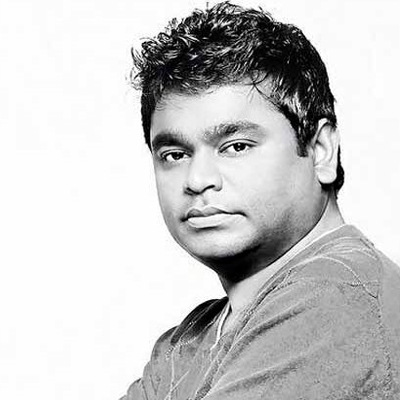
    NEW DELHI: A total of around 25 films including sixteen features – among them the opening film Haraamkhor by Shlok Sharma and several shorts including the acclaimed Jai Ho on maestro AR Rahman by Delhi-based filmmaker Umesh Aggarwal are being screened at the ongoing 13th annual Indian Film Festival of Los Angeles.


    The Festival which started on 8 April will go on till 12 April at the ArcLight Hollywood.


    Starring Nawazuddin Siddiqui, the opening film has been produced by Anurag Kashyap known for many acclaimed films including The Gangs of Wasseypur and Guneet Monga of the Lunchbox fame.

    The closing film is Dhanak, a coming-of-age film directed by Nagesh Kukunoor, and the centerpiece film is the British comedy One Crazy Thing directed by Amit Gupta. The movie stars Ray Panthaki and Daisy Bevan and centers on a man struggling to overcome the notoriety from his sex tape. 


    Actor-producer Abhay Deol has been included in the jury and the other narrative jury members are filmmaker Sean Baker, HFPA member and frequent Board director Yoram Kahana, Warner Bros executive vice president (Physical Production) Ravi Mehta, and author and film curator Berenice Reynaud.

    The shorts jury includes actor Danny Pudi, Outfest director of programming Lucy Mukerjee-Brown, Sundance Shorts programmer Lisa Ogdie, and Universal manager of the Emerging Writers Fellowship Heather Morris Washington.

    Aditya Vikram Sengupta’s debut feature Labour Of Love following one day in the life of a married couple is also being screened.


    Other highlights are Danis Tanovic’s Tigers, Cannes entry Titli by Kanu Behl and the Los Angeles premiere of Miss India America.


    The films, including four world premieres, seven North American bows, two American and 10 Los Angeles preems from not just India, but also the US, the United Kingdom, France, Germany and Cuba, in 10 languages including English, Spanish and German.


    Tanovic’s Tigers stars Emraan Hashmi and is about the true-life tale of the salesman who took on a drug company that marketed a deadly baby formula. 


    Titli  is a coming-of-age story starring Shashank Arora; while Miss India America stars Tiya Sircar (The Internship) and Hannah Simone (New Girl) in the story of a woman who enters a beauty pageant after losing her boyfriend to a former Miss India America.


    Apart from the films, there will be an Emerging Writers Program designed to identify and cultivate new and unique voices with a passion for storytelling. Talented screenwriters who have the potential to thrive, but do not have access to or visibility within the industry are taking part. Writers chosen for the programme will work exclusively with the NBC Universal studio for one year to hone their skills. 

  • Amitabh Bachchan receives Padma Vibhushan amidst thunderous applause

    Amitabh Bachchan receives Padma Vibhushan amidst thunderous applause

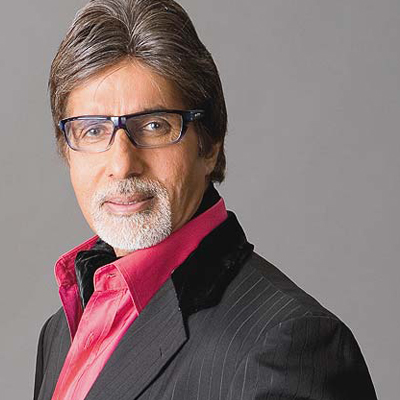
    NEW DELHI: Bollywood megastar Amitabh Bachchan received the nation’s second highest honoour Padma Vibhushan from President Pranab Mukherjee in the presence of various dignitaries as well as his family.


    Due to illness, 92-year-old veteran actor Dilip Kumar, who was also one of the Padma Vibhushan awardees, could not attend the civil investiture ceremony held at the majestic Durbar Hall of Rashtrapati Bhavan.


    The 72-year old Bachchan was cheered by actor son Abhishek, daughter-in-law Aishwarya Rai, wife Jaya and daughter Shweta Nanda, her son Agastye and daughter Navya Naveli. Dressed in a black ‘bandhgala’ suit, Bachchan folded his hands in respect as he received the honour from the President to thunderous applause.


    Bachchan received the Padma Shri in 1984 and the Padma Bhushan in 2001.


    Vice President Hamid Ansari, Prime Minister Narendra Modi, senior Ministers, BJP patriarch L K Advani, Delhi Chief Minister Arvind Kejriwal were among those who were present. 


    The Padma Bhushan awardees included 12-time national award winning film maker Jahnu Barua.


    The awards were presented in two batches, the first batch, having been presented on 30 March. 


    Those from the film and music industry who received the Padma Shri awards included music maestro Ravindra Jain, vocalist Tripti Mukherjee, founder of Shillong Chamber Choir Neil Herbert Nongkynrih, and South Indian film star Kota Srinivasa Rao.


    The Padma Shri recepients from the field of sports included Captain of Indian women cricket team Mithali Raj, Portuguese yoga grand master Jagat Guru Amrta Suryananda Maha Raja, and Women hockey player Saba Anjum, were given Padma Shri awards.


  • LA India Film Council proposes setting up Film Commissions in India

    LA India Film Council proposes setting up Film Commissions in India

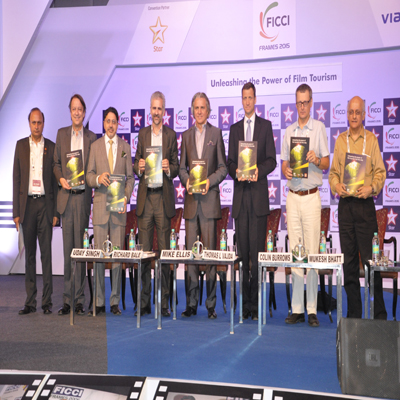
    MUMBAI: The LA India Film Council has proposed to set-up of Film Commissions in India and also its operational framework at a national and state level. In its latest report titled – Unleashing the power of film tourism: the first step – LA India Film Council has highlighted India’s potential to become a preferred film shooting destination. 


    The role of a Film Commission is to serve as a local government liaison, to provide and coordinate public and private services for film shoots, attract foreign productions to India, create a sustainable ecosystem that benefits both international productions and the local economy through effective film incentive programs and promote film tourism.


    The report also assessed the current single window clearance mechanism for film shooting, recommended solutions to build a strong production tax regime in the country and highlighted global best practices to promote film tourism in the country.


    India has natural advantages in terms of scenic locations, incredible cultural diversity, trained film crews and low production costs to attract film productions. The current Single Window Clearance Mechanism to support productions is a welcome step by the film industry, however multiple challenges faced during the clearance process at the regulatory and administrative level – including procedural hurdles during the application stage – undermine the potential of film production and its allied industries to grow.


    In 2014, the media and entertainment industry was recognized as one of the top 25 sectors in the ‘Make in India’ initiative. Transforming India into a global film-shooting destination will require establishing an effective single window clearance system to simplify and expedite flow of information between various government bodies and the industry in an efficient and resourceful manner.


    MPA, Asia Pacific president and managing director Mike Ellis said, “India’s film and television industry is one of the largest and fastest growing sectors in the country, and there has been a renewed surge of investment into the country by global companies. Simplification of clearance procedures for film shooting, support to productions through a robust tax incentive regime, and adopting global best practices, will help to attract big budget productions and in turn boost inbound tourism.”


    Film & Television Producers’ Guild of India (FTPGI) president Mukesh Bhatt added, “A Film Commission should be an independent full time body and involve participation from film industry stakeholders who have the experience and understand the film making process. Moreover, it would really help if the members of the Film Commission were compensated either project-wise or on payroll. This would ensure active participation by members.”


    U.S. Consul General Thomas L. Vajda opined, “There is great potential for expanded collaboration between our film and entertainment industries. Whether it is Indian studios shooting in the United States, US studios filming here in India, developing strategies for intellectual property protection, or sharing knowledge on production methods and technologies, both countries can benefit from efforts to bring our film and entertainment industries closer together. We look forward to working with partners here in India to provide knowhow, experience, and whatever other value we can to take this relationship forward.”


    Consul General Canada, Mumbai Richard Bale asserted, “With Canada and India having signed a bilateral Audio-Visual Co-Production Agreement in 2014, India has a wonderful opportunity to attract Canadian producers and directors to shoot in India. Improving the ease of doing business in the film sector through the establishment of Films Commissions and a transparent framework of incentives would be very effective next steps for India to build on the new interest in India among Canadian filmmakers.”


    FICCI president Jyostna Suri opined, “Our country has a vast wealth of spectacular terrain and it is important that we explore and exhaust avenues of locale shooting for entertainment with state governments as our partners. This can only happen in the true spirit of a public-private model. Through effective film tourism and enhancing our locales, we will lay strong foundations for India as the most dynamic destination for international stakeholders, generating local revenues and jobs and providing on-the-job skills for the workforce.”


    Setup in 2010 by a joint declaration between the City of Los Angeles and the Indian film industry, the Council continues to provide new platforms to foster knowledge exchange and partnerships between stakeholders in the US and the Indian media and entertainment industries.


  • “CBFC should examine a film’s message & not ban it due to some scenes”: Paresh Rawal

    “CBFC should examine a film’s message & not ban it due to some scenes”: Paresh Rawal

    NEW DELHI: In the wake of fingers being pointed at the current Central Board of Film Certification (CBFC) chairman Pahlaj Nahalani’s questionable decisions regarding many a films that have come up for release recently, veteran actor Paresh Rawal has said that the message of a film and not some shots here or there should come in for scrutiny before the CBFC.


    Rawal said that every film may contain one or two scenes that may hurt someone, but what has to be seen is whether the message sought to be conveyed by the film is meaningful. He felt that the work of the CBFC was a thankless job.


    Referring to protests held outside film theatres, often by persons who had not even bothered to see the concerned film, Rawal said this was sad. He added that even the communal divides in the country often occurred because of misinformation.


    Denying reports that his latest film Dharam Sankat Mein had been shown to some religious leaders to get their approval, he said it would be a “dangerous trend if a film is shown to extra-constitutional authorities.”


    Rawal, who was in the Capital for promoting the film along with actor Annu Kapoor, said: “Even a serious message if conveyed lightly manages to make an impact.”


    Replying to a question posed by Indiantelevision.com about the run-of-the-mill comedies that he acts in along with some meaningful cinema, he said that it should not be forgotten that it was the money made from those so-called trashy comedies, which helped him take serious cinema even at fees far lower than he would otherwise get.


    Rawal revealed that he was making the biopic on Narendra Modi under his own banner. He said that films on Modi had been made in Gujarati, but never in Hindi. The movie is slated to go on floors in August.


    He also said a sequel to OMG was underway with him, Akshay Kumar and Mithun Chakraborty.


    Rawal informed that he loved serious cinema and therefore his most memorable films were Sardar, which was a biopic on Sardar Vallabhbhai Patel, Road to Sangam, and OMG – Oh my God.


    Hailing from the theatre background, Rawal had never planned his career in cinema when he came on the big screen in 1984.


    Answering a question, he said that he had cut down the number of films he would do to three or four a year, after become a Member of Parliament. However, he said he was an actor first, then an MP. Rawal also informed that his perspective about Parliament had changed since he became an MP.


    Stressing that the country faced problems because there was no ‘Manav Dharam’ or ‘Rashtra Dharam,’ Rawal said that if people loved their country, there would have been no need for the Government to announce programmes on Swachh Bharat or sanitation.


    Agreeing to his point of view, Kapoor said that problems like rape etc. were not confined to India, but Indians themselves often talked about them as if they were ashamed of being Indian but did little to stop these crimes. He said Manav Dharam should be uppermost. He added that while there was freedom of speech, why did people resort to freedom of action.


    When asked about simultaneously acting in comedy and serious films, he said that every theatre person learnt to have a ‘switch on, switch off’ quality and therefore he has no problem going from the set of light film to that of a serious one.


    Speaking about the message that their latest film conveys, Kapoor said, “We are sure that you’ll learn something from this film and the message it gives is of ‘humanity’ and that of all religions, humanity is the biggest religion.”


    Directed by Fuwad Khan and produced by Sajjad Chunawala, Dharam Sankat Meinis a remake of the 2010 British comedy film The Infidel and also stars Naseeruddin Shah.


    The story revolves around a character named Dharam Pal, played by Rawal, who faces the dilemma of choosing between two religions and goes through identity crises when he discovers that what he believed himself to be was actually born to a Muslim family.


    The film is slated for release on 10 April.

  • ‘Detective Byomkesh Bakshy!’ collects Rs 14.06 crore in opening weekend

    ‘Detective Byomkesh Bakshy!’ collects Rs 14.06 crore in opening weekend

    MUMBAI: Yash Raj Films usually has a good experience with its small budget films and the studio’s one such film, Dum Laga Ke Haisha, has already established itself as a mini hit. These films also create a valuable repertoire for the studio. 


    However, its latest, Detective Byomkesh Bakshy! is not quite living up to expectations. The film did not make much of the Friday despite being a holiday. The collections remained stagnant on Saturday but showed some improvement on Sunday to close its opening weekend with a figure of Rs 14.06 crore.


    Barkhaa rates as a total loss film barely managing to touch the Rs 1 crore mark in its first week.


    Delhiwali Zaalim Girlfriend adds Rs 40 lakh in its second week to take its two week tally to Rs 4.1 crore.


    Hunterrr collects Rs 2.9 crore in its second week to take its two week total to Rs 9.75 crore.


    NH 10 maintains reasonably good collections in its third week in absence of any watchable opposition. The film collects Rs 3.15 crore in its third week to take its three week total to Rs 30.2 crore.


    Dum Laga Ke Haisha has become a mini hit; the film has added Rs 1.9 crore in its fifth week to take its total to Rs 29.97 crore. The sixth weekend took it past the Rs 30 crore mark by adding Rs 17 lakh for three days.


    On the other hand, Dirty Politics has added approximately Rs 5 lakh in its second week to take its two week total to Rs 6.11 crore.

  • Ultra to promote 3D Marathi films

    Ultra to promote 3D Marathi films

    MUMBAI: Ultra Media & Entertainment is all set to promote 3D Marathi films in India. Ultra Studios & Digital Labs – a division of Ultra Media & Entertainment with its state of the art studio will be offering various end-to-end 3D film making solutions for the Marathi filmmakers in subsidized rates globally.


    A custom made solutions package will be provided for every 3D filmmaker as per their unique requirements under this vertical. The core idea behind this initiative is to provide specialized, hi-tech 3D content output of global standards for these filmmakers in India.


    The various services offered under this vertical will be: 2D to 3D Stereoscopic Conversion using the studio’s in-house indigenous software VFX for 3D films; analytical quality measurement and enhancement software application; providing specialized 3D direct cameras on rental supply made to order 3D camera rigs on rental; and provide technically sound stereographers for film direction and assistance etc.


    In the recent past, the Marathi film industry has been churning some interesting 3D films but with a rare frequency. The first 3D film in Marathi Aai Mala Maru Nako was made by Satyaprakash Mangtan and released in 2012. This was followed with Zapatlela 2 by Mahesh Kothare in 2013. Dhyaaas, which released in 2014 was the last 2D to 3D stereoscopic film in Marathi that was released in India. 


    Currently young filmmakers are making interesting films on various contemporary and out of the box subjects. This has opened up a new set of viewers who patronize such films. 3D technology can enhance viewing experience especially of films made by these makers in certain genres like sci-fi, action and adventure, horror and thriller etc. 


    Ultra, in the recent past, had successfully provided complete 3D solutions to many national and international projects. Especially by providing these 3D solutions package, Ultra particularly wants these experimental filmmakers to experience the “Make in India” phenomenon in its true sense. 


    In their endeavor to provide a one-stop shop service for the Marathi film industry from shooting the first scene to the end DPX/ DCP format, Ultra Studios recently also started providing them with their state of the art, in-house post-production facilities in subsidized rates.


    Ultra Media & Entertainment MD Sushil Kumar Agrawal said, “We at Ultra have always offered all our services abreast with its latest technology. Currently Marathi cinema is going through a very interesting phase with films made in all genres possible for the global audience. I can foresee many Marathi films being made in 3D in the immediate future and our specialized 3D film solutions will only enhance the story telling and viewing experience for the audience. By offering these exclusive services in subsidized rates we only would like to help these filmmakers. It will actually assist them to completely concentrate in their craft of making interesting 3D films with less commercial burden.”