Category: Documentary

  • Documentary dreams: Unveiling the fascination and power of authentic storytelling: Rhea Bakshi

    Documentary dreams: Unveiling the fascination and power of authentic storytelling: Rhea Bakshi

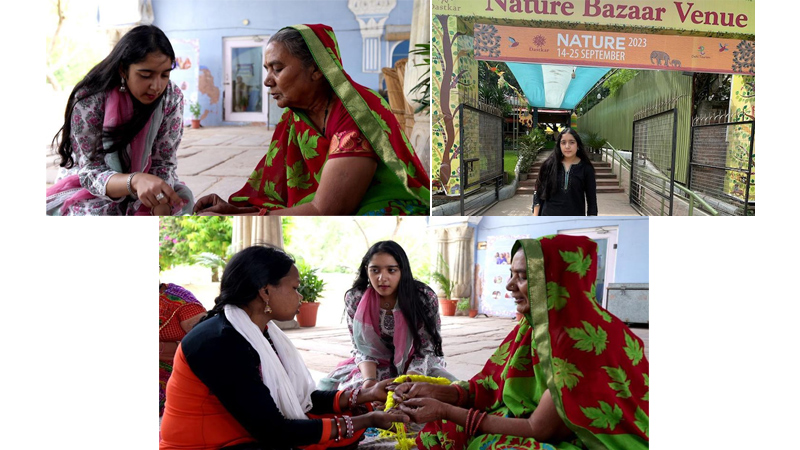
    Mumbai: The vibrant and bustling markets of Jaipur have always been a paradise for silver jewellery enthusiasts. Rhea Bakshi, a 17-year-old economics student at Delhi’s Shri Ram School, these markets hold a special place. Her maternal roots are in Rajasthan, she has been a frequent visitor to these markets since her childhood and has always been captivated by the silver jewellery she encountered and purchased.

    This year she directed a documentary film, titled “Indian Treasures inspired by this market and her passion for an inclusive economy and sheds a spotlight on silver jewellery artisans from all across the country.

    The documentary was chosen as a finalist in the Best Student Film category by the New York International Film Awards, a monthly Film and Script Competition with a public screening held every three months in the heart of Manhattan, New York. While it didn’t secure the top prize, Rhea is content that the film succeeded in bringing the livelihood concerns and the struggles of these artisans to a global platform, gaining recognition from a wide audience.

    This 20-minute documentary takes an in-depth look at the fascinating journey of India’s timeless traditional art forms, particularly silver jewellery, and sheds light on the lives and challenges faced by Indian artisans. From the narrow lanes of Jaipur, where artisans reside, to the village of Jharkhand, home to one of the oldest metalworking traditions, “India’s Treasures” beautifully captures the dedication and struggles of artisans who are committed to preserving India’s rich heritage. Whether it’s the exquisite art of Meenakari in Jaipur or the delicate filigree work of Jharkhand, these artisans are tirelessly carrying forward these traditional art forms, many of which are at risk of fading away. For instance, take filigree, which was originally introduced to the state of Odisha by the Mughals during their rule. This intricate metalwork, utilizing silver wires, demands precision and skilled craftsmanship. Over time, it made its way to Jharkhand, where Senthal women adorn themselves with delicate filigree earrings, continuing this exquisite tradition.

    Rhea is a highly motivated individual with a deep-rooted passion for economics, astrophysics, and music. She finds immense joy in exploring the intricate workings of these fields and uncovering the connections that exist between them. Her journey in these disciplines has not only broadened my intellectual horizons but has also fuelled her desire to make a meaningful impact in society.

    Economics captivates her intellectual curiosity and drives her professional pursuits. With a strong background in economics, she is dedicated to leveraging her skills and knowledge to make a positive impact in this field. Rhea’s passion for economics is complemented by a project experience including a documentary, research paper, internship, workshops, and articles, where she collaborated with Indian artisans, promoting their empowerment through inclusive and sustainable economic growth.

    Indiantelevision.com spoke to Rhea Bakshi, about the documentary and what inspired an economics student to venture into filmmaking and much more…..

    On being a young filmmaker what made you want to do this documentary

    The reason I decided to focus on handmade silver jewellery for this documentary is because of my grandmother’s profound connection to Jaipur and the captivating world of silver craftsmanship.

    My grandmother, who is incredibly dear to me, shared enchanting stories of Jaipur, a city renowned for its vibrant culture and history. Her stories and the cherished silver jewellery she possessed became a bridge connecting generations, linking her past experiences with my present and, I hoped, with the future of these skilled artisans’ craft.

    Furthermore, the documentary aligns with Prime Minister Narendra Modi’s vision of inclusive economic growth, a crucial element in his mission to elevate India to the status of the world’s third-largest economy. It highlights the significance of sustainable development, wherein every individual can contribute and earn while having equitable access to resources and opportunities.

    On being impressed by the new Vishwakarma Scheme for Small & Medium Enterprises, how did you go about researching for the documentary

    My first step towards working with the artisans was writing a research paper on their problems and offering my recommendations. I conducted several interviews with artisans and read many other resources such as research journals. I extensively researched the past and present government policies and their updated impact on the recipients.

    On what made you choose Rajasthan

    I chose to make a film about Jaipur’s silver makers to honour my family’s love for the craft and to support PM Modi’s goal of helping everyone succeed together.

    My film talks about mostly Jaipur,( also covers Jharkhand and Delhi), but I think its message is important for everyone, everywhere. I believe our shared experiences connect us, no matter where we’re from. Through my film, I want to share stories from Jaipur that can touch people’s hearts all over the world.

    On being an Economics student, and done a course on Physics and Technologies of the Future from Columbia University what made you get into filmmaking that to a documentary

    From a young age, I’ve been captivated by documentaries. They have a unique power to transport us to different places, share authentic stories, and educate us in the process. As I grew up, I began to realize the immense influence that films and television can have in capturing people’s attention and delivering vital messages.

    I got into filmmaking, particularly documentary filmmaking because I believe it’s a powerful medium for storytelling and raising awareness about important issues. My background in economics and my coursework in physics and technologies of the future from Columbia University have given me a unique perspective. I realized that by combining my knowledge in these fields with the art of filmmaking, I could create compelling documentaries that explore complex economic and technological topics.

    Movies have a unique ability to elicit emotions and connect viewers with the characters on screen. I aimed to harness that power, enabling audiences to experience genuine emotions of love, understanding, and care through the real stories of artisans in India. These incredibly skilled individuals often remain unnoticed, and I wanted to shed light on their talents and challenges.

    In essence, my documentary is not merely a film; it’s a fusion of in-depth research, heartfelt emotions, optimism, and a call to action. It’s an earnest appeal to everyone to extend their support and appreciation to the artisans in India and make a positive change in their lives.

    On looking at other states now as a follow-up for this documentary

    Yes, I’m considering looking at other states as a follow-up to my initial documentary. India is a land of immense diversity and a rich tapestry of cultures and traditions. Each state has its unique set of artisans and craft traditions, and I believe there are countless untold stories waiting to be shared.

    By exploring different states, I can not only showcase the incredible variety of artistic skills and traditions but also shed light on the specific challenges and opportunities that artisans face in various regions. It’s an opportunity to delve deeper into the cultural and economic dynamics that impact these communities.

    Moreover, extending the project to cover other states would allow me to reach a broader audience and promote a more comprehensive understanding of India’s artisanal heritage. I hope to continue raising awareness, inspiring support, and celebrating the remarkable talents of artisans throughout the country.

  • Black Sand wins best documentary at Best Film Awards

    Black Sand wins best documentary at Best Film Awards

    MUMBAI: Dr Sohan Roy’s directorial Black Sand has won the Best Documentary honour in the Nature Documentary Category at Best Film Awards. The documentary film is produced by Abhini Sohan Roy under the banner of Aries telecasting, and was also officially selected for Best Documentary Award, L’Age d’Or International Arthouse Film Festival and Rajasthan Film Festival 2021.

    Based out of London, Best Film Awards is an organisation that brings IMDb Monthly Qualifying Film Festival with live screening once a month. It also makes an annual film for filmmakers around the world.

    The documentary showcases the horror caused by the irrevocable damage caused by mining in Alappad, which turned into a graveyard far from the scenic beauty it used to be. Alappad is a coastal region, where consistent plundering of the black sand resource through mining has engulfed half of the inhabitants’ land and homes. Roy zeroed in on this subject for the documentary after realising the grave importance of bringing the intensity of this environmental threat to light. A compassionate person concerned about social and environmental well-being, he has worked relentlessly in numerous ways to address the issues faced.

    Dr Roy is well-known for his Hollywood movie DAM 999, which contended for the 2011 Oscars and received five selections in three categories. He has also been instrumental in sending 24 Indian movies including Pullimurugan, Kayamkulam Kochunni, Aickarakkonathe Bhishaguguranmaar, etc which all contented for Oscars in the Best Picture Category in the last few years.

    Documentary video Link:

    https://vimeo.com/474663719/7779f72d3c


  • Enjoy the Premiere of Zack Snyder’s Justice League on your TV screens with Tata Sky Showcase and Tata Sky Mobile App

    Enjoy the Premiere of Zack Snyder’s Justice League on your TV screens with Tata Sky Showcase and Tata Sky Mobile App

    Zack Snyder’s Justice League has been awaited with much anticipation by fans across the globe and the wait is now over with the World Premiere today. Available only for a digital release in India and with select platforms, Tata Sky subscribers can be rest assured as the most epic battle unfolds directly in their living rooms. Subscribers can opt for pay-per-view with rental charges of INR 150, available for viewing from 00:00 onwards on Tata Sky Showcase and on Tata Sky Mobile App from 18th March at 12:31 hrs.

    With a run time of 4 hours, movie buffs and fans can feast on the most thrilling battle played out with a blockbuster cast and Zack Snyder’s expert direction for an action-packed ride. 

    Fuelled by his restored faith in humanity and inspired by Superman's selfless act, Bruce Wayne enlists newfound ally Diana Prince to face an even greater threat. Together, Batman and Wonder Woman work quickly to recruit a team of metahumans to stand against this newly awakened enemy. Despite the formation of an unprecedented league of heroes — Batman, Wonder Woman, Aquaman, Cyborg and the Flash — it may be too late to save the planet from an assault of catastrophic proportions.

  • A Bra Ka D Bra is a takedown of the culture of body shaming

    A Bra Ka D Bra is a takedown of the culture of body shaming

    NEW DELHI: Insecurities. Everyone has them. Stemming from the perception of how others see us. In the age of Instagram we’re all on display, and for many people, their self-esteem hinges on that one ‘heart’ from virtual strangers. Even though no two bodies are alike, and there is no right way to be beautiful, we’re all chasing that unattainable ideal – be it bubble booties, thigh gaps or perfectly plump bosoms.

    Which brings us to the heart of the movie A Bra Ka D Bra – the story of a young woman struggling to accept the fact that she is flat-chested. Her struggle is very real and very valid, for she inhabits a society where adolescent girls put women like Kim Kardashian and Kylie Jenner on a pedestal and want to look like them in the hopes of one day getting a taste of their high-rolling lifestyle. While the protagonist Bani may not aspire to be a Kardashian, she is exceedingly conscious of her own lacking assets, a fact that is rubbed in her face at every turn by family members, peers and even random passers-by. Her cousin knowledgeably points out to her – bada hai tabhi to behtar hai (Bigger is better) – which perfectly sums up the mindset of people today.

    Living in this toxic environment does a number on Bani, who resorts to every trick in the book, from creams to padding, to give her cup size a boost. While these scenes may have been presented humorously, they also highlight the insidious effect that body image issues and body shaming can have on a person’s psyche. Bani, played brilliantly by Prachi Bansal, is far from defined by her boobs (or lack thereof). She is a confident ace basketball player, a starry-eyed small town girl who moves to the big city, and dreams of fulfilling her passions and finding love. Yet her vibrant personality and busy life are gradually overshadowed by one aspect of herself that she is insecure about – which society has conditioned her to believe is the be-all and end-all of being a woman.

    Like any teenage girl, Bani wants to fit in, make friends, have a lit college life – so when nature fails her, she takes matters into her own hands and stuffs her bra with fake pads. The scheme pays off – for a while. The pads hamper her when she plays, so she quits basketball. It also attracts an unwelcome suitor, which leads to unsavoury consequences. Eventually, the pretence and lies catch up with Bani, pushing her into despair and making her consider an extreme and irreversible step.

    But thanks to her clueless but supportive father, better sense prevails. The message is clear: love yourself. Acceptance and being comfortable in your skin may be hard to come by, but its better than kowtowing to superficial standards of beauty that invariably take a toll on one’s self-esteem.

    Bani’s story is a reality that millions live with. Some are unhappy with the shape of their body, some with their height, others with their skin tone. They are trolled and shamed both online and offline; they are depressed and filled with self-loathing. Producer Shyamashis Bhattacharya and director Neelima Bajpai take up a bold subject to explore in their maiden venture for the big screen and they execute it well. Bani’s inner turmoil and frustration with the world that constantly looks down on her is showcased with a deft hand by the writing team comprising Bajpai, Amit Babba and Indira Bisht. The screenplay could have been more cohesive and flown better, but doesn’t detract from the overall impact of the story. The supporting cast also leaves an impression – Avinash Mishra is Vidyut, the lovable himbo Bani crushes on; Poulomi Das plays the prickly friend Shanti and Luv Vispute shines as the happy-go-lucky confidant with a few secrets of his own.

    A Bra Ka D Bra is a step in the right direction. It’s a wake-up call for a society obsessed with outward appearances, and a shot in the arm for those lacking in body confidence. The film can be streamed online as a pay-per-view on BookMyShow.  

  • PUBG launches documentary film – ‘BE THE ONE’ on YouTube

    PUBG launches documentary film – ‘BE THE ONE’ on YouTube

    MUMBAI: PUBG MOBILE has created a short documentary capturing the journey of homebred competitive players who boldly pursued their dreams of building a career in esports. The 21-minute long documentary film, aired on YouTube on November 4, and has already garnered over 8 lakh views.

    Three individuals, MortaL, ScoutOP and Carry have played significant roles in advancing esports and gaming in India. While they come from diverse backgrounds, what they share in common is hard work, persistence, and determination.

    PUBGM opened the doors to competitive gaming and provided large scale platforms to talented players to compete and showcase their in-game skills to the world. This gave them the much-needed scope to transform themselves into pro players. While this is a tribute to their contribution towards esports in India, this also is an encouragement for anyone in India to be inspired by these stories and take up gaming as a career.

  • Sundance, World Cinema award-winning Indian docu ‘Machines’ to premiere at MAMI

    Sundance, World Cinema award-winning Indian docu ‘Machines’ to premiere at MAMI

    MUMBAI: After making the World Premiere at Sundance Film Festival 2017 and bagging the World Cinema Documentary Special Jury Award for excellence in Cinematography, Rahul Jain’s internationally acclaimed directorial debut documentary feature, Machines to make its India Premiere in the competition category, India Gold in Mumbai Film Festival (MAMI), 2017.

    Jain says, “I am happy to bring Machines in the place where it was made. I am really looking forward to the film’s reception in India. And what better a place for that than MAMI itself.”

    The film will also be screened at Dharamshala International Film Festival, 2017. The documentary is a sensorial and kaleidoscopic meditation on the meaning of labor in an Indian textile sweatshop.

    The film was selected as one of the Work-in-Progress Lab projects at NFDC’s Film Bazaar 2015 from where it got picked by international buyers and started its film festival journey.

    Since then, the internationally acclaimed docu-feature has been screened and won awards in over 50 prestigious film festivals including Sundance Film Festival.

    The film produced by Jain (Jann Pictures) and co-produced by 
Likka Vehkalahti (IV FILMS LTD), Thanassis Karathanos (Pallas Film) has released theatrically in across the world.

    Synopsis: Our technological times enable us to reduce working hours like never before in human civilization. But, the reduction of effort by technology is a first world reality, where relatively comparable technology with lesser material infrastructure could do the same for a much higher mass of the population.

    ‘Machines’ attempts to examine the experiential reality of factory culture and labor processes through temporal observation. Rather than documenting chronology or history, it creates a portrait of the breathing rhythms of the humans who inhabit the labyrinths of the textile factory with its machines.

    Background: India has domestic migration issues. There is historical inequality in the Indian government’s push for the development of industrial infrastructure. This has led to cases of extreme poverty and wealth being generated in particular states, leading to mass migrations for employment.

    Film Festival journey and Awards: Institute of Contemporary Art – New York City. Frames of Representation – Opening Film. CPH DoX Denmark — Best Film. Thessaloniki Film Festival, Greece – Best Film. Greek Hellenic Parliamentary Award — Human Rights Award. International documentary festival of Amsterdam – Netherlands – Producers Award. Documenta Madrid – Spain — Best Film. Docs Barcelona – Spain – Best Film. MakeDox – Macedonia – Best Moral Approach Award.

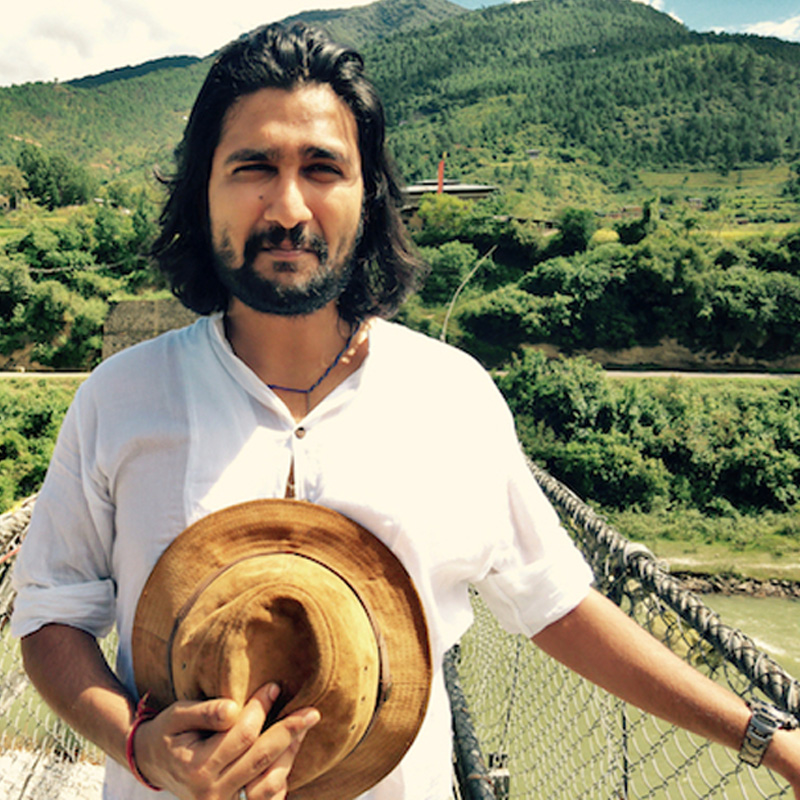
  • A chartered accountant, a wildlife film, international awards and buyers…

    A chartered accountant, a wildlife film, international awards and buyers…

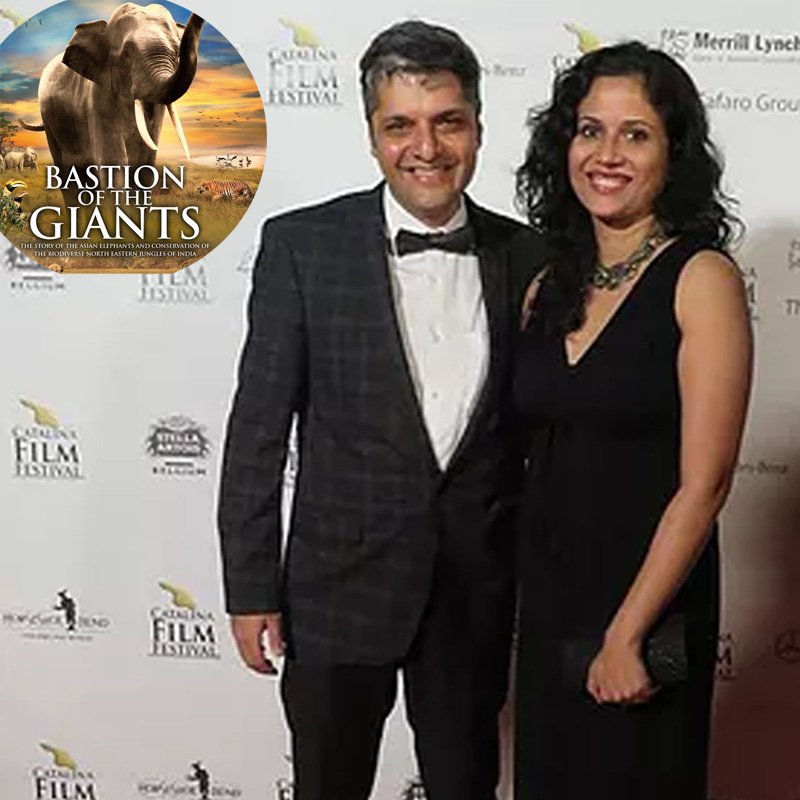
    MUMBAI: You may have not heard of this chartered accountant and lawyer who transformed himself into a wildlife filmmaker. But, TV channels in Europe are beginning to take note of Sumesh Lekhi of Brave Age Film Productions and his 84-minute documentary — Bastion of the Giants which had a budget of around $100,000. This apart, it has also bagged many an award: Wildlife Conservation Film Festival, New York, Best Film Documentary Short International Movie Award and Indonesia, among other.

    His professional degrees don’t really qualify him to do what he is doing. But, his passion for saving the environment led him to taking up the camera and filming in danger prone areas like the jungles, amongst elephants, tigers and scorpions.

    Lekhi, who is a part of Friends of the Environment which helped save the mangroves in Mumbai’s Andheri Lokhandwala Complex Area and also resuscitate the lake there, decided to document on camera some of his activities as he went about on his conservation drive around four years ago. The idea to make a documentary on elephants sprang from this urge. Says he: “My childhood passion for nature and wildlife kept beckoning me away from urban life, taking me deep into the Indian and African forests to be with what I loved the most.”

    Lekhi became the director of photography (DOP) himself and spent six years capturing scenes of the tuskers in their natural habitat in the Kaziranga National Park in the east of India (Assam). Says he:  “We went in the dense forests of West Bengal and tall grasses of Assam to study the elephant behaviour, uncontrolled environment of the jungles, filming villages around wildlife parks, writing the script, film editing, sounds and music design. In our film, we gave the insights gained over time spent with forest departments and villagers that live alongside these large animals.”

    Lekhi says that filming in a dense forest of Kaziranga isn’t everyone’s cup of tea. The crew used to begin their day at 4.00 am, wait for the elephants to come out, so that they could shoot them for their film. Before setting out to film his pet project, Lekhi had reached out to some top-notch DoPs from Bollywood but they advised him to do it himself as wildlife filming is more run and gun style, especially in the dense forests; hence he decided to don that hat himself. “Filming animals requires rapid reflexes in terms of zooming in on animals; how much distance to keep from them so you don’t upset them,” he says. Hence, I became the DOP myself.”

    Seeing his passion for the subject, Canon and Panasonic lent him the cameras to experiment with and he opted for HD, though he believes he would now like to move on to 4K HDR. Lekhi said that his film was made out of passion, and it was an experiment which has garnered great success.

    His team included his wife Rashmi — a fashion designer, to coordinate and record the sounds and then help in production and outreach of the message.

    Talking about his experience in the forest, he says: “While we were shooting, the forest department used to come saying ‘jaldi aao’ (hurry up, come this side) because they knew we were from Bombay shooting for the documentary, so we used to go and capture all the animals coming to the field, and the guards driving them back.”

    Lekhi also shares his experiences with an example of his hand. He explains: “The jungle was like our hands, and the spaces between our fingers were the villages. The elephants moved from point A to point B to C, which were the spaces going through the villages.”

    He also adds that the guards knew the elephants, and the elephants knew the guards, with the former yelling at them “badmash vaapas jaa” (go back, you naughty ones) so the elephants would return but they would come out after 1km. 

    Lekhi is currently following another pet subject of his:  the Great Bengal Tiger, if anyone can call it a pet of any sort. “I have already invested around $150,000 in Bengal Tigers,” he reveals. “And then there’s Prowling Undergrowth. Both of these are being made for the US and international markets and I am looking for co-producers.”

    That should be a cinch for him as the interesting narrative and visuals of Bastion of the Giants caught the attention of Austrian natural history distributor ORF-Enterprise – a subsidiary of the ORF, Austria largest public sector broadcaster.

    ORF Enterprise has since the past year struck licensing and syndication deals with Amazon Prime, CCTV- China, EBS- Korea and Love Nature channel-Canada. Despite all the accolades and international acclaim, Bastion of the Giants has yet to find a domestic broadcast partner as

    Lekhi has been busy with his new documentaries and has yet to reach out to factual channels.

    He is clear that his passion for conservation and filming natural history is something that is going to keep him pre-occupied for a long time.

    “The business will come I know. Good work attracts it,” he says.

    Inshallah, as they say.

  • ‘Algorithms’ shortlisted for Britain’s Grierson Awards

    ‘Algorithms’ shortlisted for Britain’s Grierson Awards

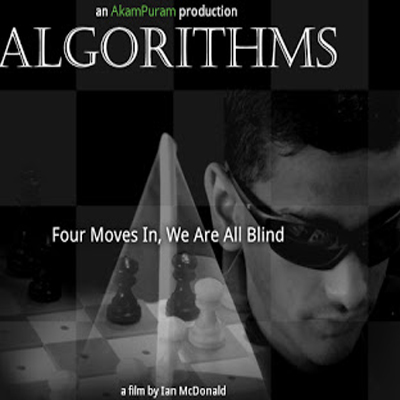
    NEW DELHI: Algorithms, Ian McDonald’s award-winning documentary on India’s young blind chess players, is among films shortlisted for the prestigious Grierson Award in the Best newcomer documentary category.


    The final nominations for the Grierson awards will be announced on 16 September prior to the awards ceremony in London on 3 November.


    Excited about the nomination, the British filmmaker said, “We are really thrilled to make the shortlist. It is a great honour and it also means it will bring the story of India’s blind chess community to the attention of an audience in the UK and beyond.”


    Directed by McDonald and produced by Indian producer Geetha J, the documentary has been screened at over twenty international film festivals and won six awards, including Best Film at Film SouthAsia in Kathmandu.  It is the first ever feature documentary on Blind Chess. 


    Filmed over three years from just before the World Junior Blind Chess Championship in Sweden in 2009 to just after the next championship in Greece in 2011, it follows three talented boys from different parts of India and a totally blind player turned pioneer, who not only aims to situate India on a global stage but also wants all blind children to play chess


    The New York based First Run Features, a leading distributor of independent films in America, acquired the North American rights to the film early this year.


    Established in 1972, the Grierson Awards commemorate the pioneering Scottish documentary filmmaker John Grierson, widely regarded as the father of the documentary.

  • Filmmaker S Sukhdev to get a grand tribute on his 35th death anniversary

    Filmmaker S Sukhdev to get a grand tribute on his 35th death anniversary

    NEW DELHI: The renowned late filmmaker S Sukhdev who set new trends in documentary and non-feature films in the country will be remembered on his 35th death anniversary on 1 March with the screening of the film The Last Adieu by Shabnam Sukhdev.


    The event to be held in Films Division in Pedder Road in Mumbai will also see the release of DVDs of Sukhdev’s films.


    The Last Adieu is a 90-minute film with English sub-titles that is a personal quest of a filmmaker daughter to unravel the past and make a connection with her filmmaker father, S. Sukhdev, who died suddenly at the age of 46, leaving behind a huge body of work and an unresolved relationship with his daughter.


    While he was an accomplished filmmaker in the public eye, his family had another story to tell. With the help of archival audio recordings, old photographs and Sukhdev’s films, Shabnam endeavours to construct a picture of her father as she struggles to love and respect him for who he was.


    The film is an important record of a phase in documentary history that inspired and paved the way for the new wave in non-fiction narratives, and pays homage to Sukhdev, an important filmmaker who revolutionised documentary filmmaking in India in the mid sixties and through the seventies.


    Produced by Films Division and directed by Shabnam Sukhdev, the film has been edited by Jabeen Merchant with sound design and sound mixing by Mohandas VP and camerawork by Ashwin Shukla.


    Sukhdev directed 29 films between 1958 and 1980, his last documentary Sahira being released after his death.


    Some of his renowned films were After the Silence, Thunder of Freedom, Nine Months to Freedom: The Story of Bangladesh, Khilonewala, Tomorrow May Be Too Late, An Indian Day, Homage to Lal Bahadur, After the Eclipse, Wild Life in India, And Miles to Go…, and Frontiers of Freedom.


    He also directed the feature – My Love in 2970 starring Shashi Kapoor and Sharmila Tagore, apart from writing, producing and scripting some other films.

  • Govt releases six documentaries for DD and YouTube

    Govt releases six documentaries for DD and YouTube

    NEW DELHI: Six documentary films produced by the Department of Administrative Reforms and Public Grievances (DARPG) on good governance initiatives are to be telecast on National Network of Doordarshan and other television channels.


    According to Minister of State for Personnel, Public Grievances and Pensions V Narayanaswamy the number of such films will now go up to 67.


    The films include: Tackle the problem of adverse sex ratio – initiative of District Administration of Nawashahr, Punjab; Initiative of Strengthening CSR spending in Raigarh District, ChattisgarhEducational initiatives in Dantewada, Chhattisgarh; Saving Open Space and Urban Lakes (SOUL) and Cultural Rejuvenation of the Twin City of Hubali-Dharwad, Karnataka; Excellence in Rural Management and Development in the Challenging Physical Environment of the Sikkim Himalaya; and Kaushalya Vardhan Kendra (Skill Development) project of the Directorate of Employment & Training, Gujarat.


    The films were formally released by DARPG Secretary Sanjay Kothari. The documentary films of three-and-a-half-minute duration were also screened in the release function. These are of different duration and can also be used for classroom study and discussions in the training institutes, and for conferences where senior level officers participate.


    Based on stakeholders’ consultation, the films have been made in three durations – 14 minutes, three-and-a-half-minute, and 30 seconds. The 14-minute format is for class room study and discussion in the Central Training Institutes (CTI) and Administrative Training Institutes (ATI); the three-and-a-half-minute film is meant for larger conferences where senior level officers participate, or if the audience is already aware of the broad contours of the schemes or for the meetings with non-officials. These are also meant for telecast on national network of Doordarshan or other television channels. The 30 second version is like a teaser to be used for advertising or to evoke interest in the audience to watch the larger version of the film.


    These films are available on YouTube and the department’s website www.darpg@nic.in.