Category: Print

  • The collective wealth of India’s 100 Richest was flat at $799 billion this year.

    The collective wealth of India’s 100 Richest was flat at $799 billion this year.

    Mumbai: In a dramatic shift in the pecking order at the top, Mukesh Ambani reclaims the number one position on the 2023 Forbes list of India’s 100 Richest. The collective wealth of India’s 100 Richest was flat at $799 billion this year. The complete list is available at www.forbes.com/india and www.forbesindia.com. The list can also be found in the October issue of Forbes Asia and the December issue of Forbes India.  

    India is on a high after hosting the G20 Summit in New Delhi this September and becoming the fourth country to land a spacecraft on the moon. Reflecting this sentiment, India’s stock market has risen to 14 per cent since fortunes were last measured. However, that jump, tempered by a  weaker rupee, was not reflected in the collective net worth of India’s 100 Richest, which flatlined at $799 billion.  

    Mukesh Ambani, who transformed his Reliance Industries into a diversified conglomerate, reclaims the number one spot with a net worth of $92 billion. Shortly after spinning off and listing Jio Financial Services, which has an asset management joint venture with BlackRock, Ambani cemented his succession plan by appointing his three children to Reliance’s board as non-executive directors in August.  

    The fortune of infrastructure magnate Gautam Adani, who rose meteorically to overtake Ambani as India’s richest person for the first time last year, reversed dramatically after a damaging report by U.S. short-seller Hindenburg Research in January sent his group’s shares tumbling. Despite recovering somewhat since, his net worth, which includes that of his family, fell by a whopping $82 billion to $68 billion – down the most in both dollar and percentage terms – and he slips back into second place.  

    Software tycoon Shiv Nadar climbs two spots to return to No. 3 with a fortune of  $29.3 billion, as shares of HCL Technologies jumped 42 per cent in the past year amid a tech rebound. Matriarch Savitri Jindal, of the O.P. Jindal Group, a power and steel conglomerate, ranks number four with $24 billion, up 46 per cent, thanks partly to the September IPO of ports unit JSW  Infrastructure, by her son Sajjan Jindal. Rounding out the top five is Radhakishan Damani of  Avenue Supermarts, whose fortune declined to $23 billion from $27.6 billion previously.

    Forbes Asia, Asia wealth editor and India editor Naazneen Karmali said: “India is riding high and is considered a hot spot by global investors. That buoyancy has made the elite  club of India’s 100 Richest even more exclusive this year, with the minimum net worth to make  the cutoff rising to a record $2.3 billion.”  

    The biggest percentage gainer this year is Inder Jaisinghani at number 32 with $6.4 billion. His family’s net worth nearly doubled as his wires and cables company, Polycab India,  benefited from increasing electrification. Pharma brothers Ramesh and Rajeev Juneja got a  handsome 64 per cent boost from the May listing of their Mankind Pharma, bringing them to number 29 with $6.9 billion. The Juneja siblings also appear on the cover of the October issue of Forbes Asia.

    There are three new entrants this year: Renuka Jagtiani, chairwoman of Landmark Group, a Dubai-headquartered retailing giant, enters the list at number 44 with $4.8 billion, following the passing of her husband Micky Jagtiani in May. Also new to the list is the Dani family (number 22, $8 billion) of Asian Paints, heirs of patriarch Ashwin Dani, who died in  September. The third newcomer is garment exporter K.P. Ramasamy (number 100, $2.3 billion),  founder and chairman of K.P.R. Mill.  

    Among the seven returnees this year is Ranjan Pai (number 86, $2.75 billion), who cashed out $1 billion from selling part of his stake in hospital chain Manipal Health Enterprises to  Singapore’s Temasek. Notable among the eight drop-offs are ed-tech couple Byju Raveendran and Divya Gokulnath, whose firm Byju’s saw its valuation marked down drastically amid myriad challenges.  

    The top 10 richest in India are:  

    1) Mukesh Ambani; US$92 billion  
    2) Gautam Adani; $68 billion  
    3) Shiv Nadar: $29.3 billion  
    4) Savitri Jindal; $24 billion  
    5) Radhakishan Damani; $23 billion  
    6) Cyrus Poonawalla; $20.7 billion  
    7) Hinduja Family; $20 billion  
    8) Dilip Shanghvi; $19 billion  
    9) Kumar Birla; $17.5 billion  
    10) Shapoor Mistry & Family; $16.9 billion

    This list was compiled using shareholding and financial information obtained from the families and individuals, stock exchanges, analysts and India’s regulatory agencies. The ranking lists family fortunes, including those shared among extended families such as the Bajaj and Godrej families. Public fortunes were calculated based on stock prices and exchange rates as of September 22. Private companies were valued based on similar companies that are publicly traded. The list can also include foreign citizens with business, residential or other ties to the country, or citizens who don’t reside in the country but have significant business or other ties to the country.
  • WWM appoints Rohit Gopakumar as CEO

    WWM appoints Rohit Gopakumar as CEO

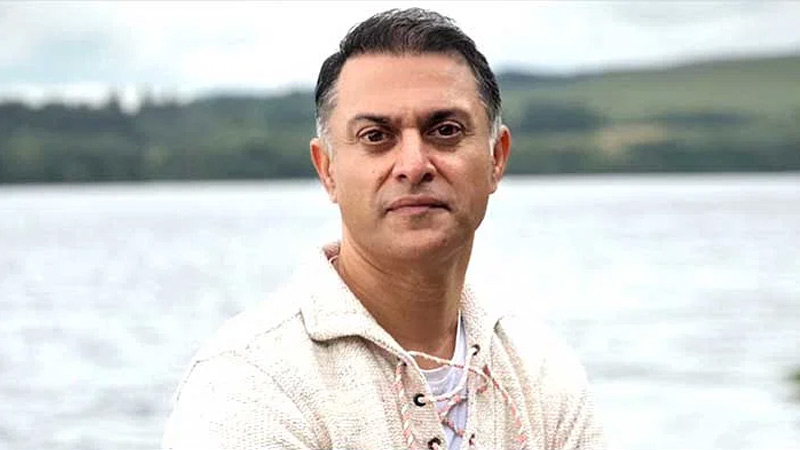
    Mumbai: Rohit Gopakumar has been appointed as the chief executive officer of Times Group’s Worldwide Media.

    With experience in driving P&Ls, change management, and building robust teams, Gopakumar was previously the chief operating officer of Optimal Media Solutions for more than ten years.

    His extensive career includes roles at BBC Advertising, BBC Worldwide as VP – South Asia, and Senior VP at NDTV. Commencing his journey as a management trainee at Taj Group of Hotels in 1993, he brings over three decades of expertise to his new role at WWM.

  • Femina features president Droupadi Murmu on its August cover

    Femina features president Droupadi Murmu on its August cover

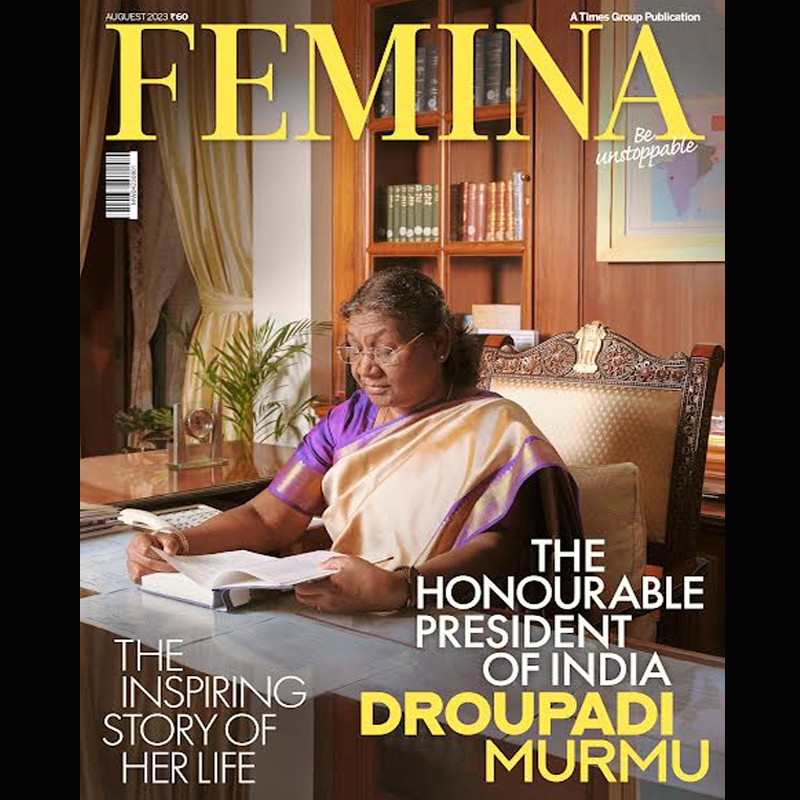
    Mumbai: Femina is deeply privileged to feature India’s first-ever tribal president, Droupadi Murmu on the cover of its August 2023 issue, the ‘Freedom’ special. The president’s story is one of courage, determination, overcoming struggles and breaking barriers with many firsts to her credit.

    Hailing from the town of Uparbeda in Odisha, India’s 15th president was the first girl of her village to go to Bhubaneshwar for college, the first woman from her village to enter politics and the first woman to hold the position of the governor of Jharkhand. President Murmu’s emphasis on education and her dedication to serving as a teacher for many years showcases her commitment to the betterment of the youth and the nation. Today, she holds the highest office of our country.

    In her first address to the nation, the honourable President Murmu said, “I want to tell the youth of our country that you are not only building your own future but also laying the foundation of the India of the future,”

    On the eve of the 74th Republic Day, the honourable president encouraged women to follow their passions and said, “I am amazed by the confidence of young women. I have no doubt in my mind that they are the ones who will do most to shape tomorrow’s India. What miracles cannot be achieved if this half of the population is encouraged to contribute to nation-building to the best of their ability.”

    Worldwide Media CEO Deepak Lamba said, “Femina is truly privileged to feature the honourable President Droupadi Murmu on its cover and showcase her journey to the highest echelons of our nation. President Murmu’s extraordinary life serves as a powerful testament to the indomitable spirit of perseverance and boundless compassion. Radiating grace and wisdom, our esteemed President’s presence on the cover embodies the profound impact she has had on the citizens of India.”

    Femina editor-in-chief Ambika Muttoo said, “We are filled with pride to feature our esteemed President on the cover of Femina. She epitomises selflessness and serves as a beacon of motivation for promoting equality. She is a genuine source of inspiration for India’s young women and the youth of our nation, igniting within them the spirit to relentlessly work towards realising their dreams.”

    To read more about our honourable president Droupadi Murmu, grab the issue of Femina, on stands now.

  • Crypto platforms ramp up ad spends this festive season

    Crypto platforms ramp up ad spends this festive season

    Mumbai: As the market pins its hope on the festive season for a hike in sales, the crypto exchange platforms too aren’t lagging behind in wooing users to invest in the digital asset class. In an evident change from last year when the platforms were cautious and muted in their approach, they are all set to make the most of the opportunity this year, with an increase in ad-spend across all media.

    Apart from the digital, crypto brands are also opting for mass mediums such as TV and print as they plan an advertising salvo. The fledgling industry is trying to mark a dent in the market with promotions and marketing activities involving audio-visual podcasts and even full front-page displays in leading dailies.

    One such platform, which has been investing heavily in print is CoinSwitch Kuber, which claims to have onboarded as many as 10 million users already. The brand has come out with full front-page ads in leading newspapers in the last few days. “Print is always a viable medium. While digital media enables us to target a certain set of audiences, print has the accessibility to the most basic audience group which finds credibility in the print news,” said CoinSwitch Kuber chief business officer Sharan Nair.

    The brand is also constantly connecting and engaging with local newspapers, media, and prominent ‘finfluencers’ (finance-influencers) on social media platforms to reach its target set.

    “Traditional media can make audiences search and engage with them on the website, while digital media through apps can be used to continue re-targeting the interested segment,” said Havas Media India managing partner – South Saurabh Jain, highlighting that crypto platforms need to focus on “building the top of the funnel first” to attract new retail investors since the penetration of this category is currently low. Jain recommends a 65 per cent spend on traditional media and 35 per cent on digital display plus programmatic spends in this phase, as the threshold costs associated with traditional media remains high.

    A recent study by Havas Media Group India also highlighted how print remains one of the most trusted mediums to influence brand perceptions on critical factors like quality, price, and trust, despite the short-term interrupted circulations and de-growth of newspapers during the initial wave of the Covid-19 pandemic.

    “Especially for new-age categories like crypto exchanges who are in their next phase of growth in India, it becomes even more crucial to target beyond the early adopters of this digital world by associating with traditional mediums like television and print,” added Jain. “Building trust will be key as a lot of uncertainty and risk has been associated with cryptos in the past. So, print will definitely be a viable medium to build credibility and trust.”

    CoinSwitch Kuber is also planning to reach the audiences via emerging OTT platforms. It has already been working with Amazon Prime Video, and SonyLIV, and has partnered with Disney+ Hotstar for the current edition of the Indian Premier League (IPL) which resumed on Sunday. “Considering the huge traction we witnessed after the last IPL campaign, we are looking to promote crypto assets through upcoming sports events as it perfectly captures our target group, which is – upwardly, young and tech savvy-mobile Indians,” added the CoinSwitch Kuber chief business officer.

    On the other hand, crypto trading platform Mudrex is completely targeting digital. The focus of the brand’s marketing campaigns for the coming months is primarily through influencers and creators on different platforms across the social spectrum.

    “We believe the demographics of the investors and traders in the crypto market are such that the digital medium is best able to reach the target audience,” said CEO and co-founder Edul Patel. “At Mudrex, we usually associate with influencers who have a deep interest in cryptocurrencies and believe in the idea of smart investing and trading in the crypto market.”

    Cryptocurrencies have gained traction over the past few months, and the subsequent interest from the investor sentiment, leading to rising trading volumes despite the regulatory uncertainty. As the brands try to cash in on this crypto gold rush ahead of festivals, there is also a need, however, to create more awareness and to share knowledge on the finer aspects of the virtual currency. And that is what CoinDCX is aiming at, through ‘DCX learn’ during the festive season.

    “We have always tried to find fresh ways to entice and educate new investors through our marketing efforts. One of our main objectives is to raise awareness about the cryptocurrency business and urge Indians to consider it as a viable investment option,” said CoinDCX head of brand and communication Ramalingam Subramanian.

    The brand has recently come out with a campaign #BitcoinLiyaKya, which was in line with its direction of raising investor awareness and CoinDCX plans to build on that. “We are offering coupon codes of Rs 100 worth of bitcoins to everyone who signs on the exchange for the first time to raise curiosity among prospective new users. This encourages them to learn more about crypto, and interests them to enter the space,” explained Subramaniam adding that the brand is also looking to form new brand alliances to enable the users.

    According to the crypto platforms, the interest in dealing in the new asset class is definitely increasing among Indians.

    To put it in perspective, India today ranks second in terms of crypto adoption worldwide, ahead of countries such as the US, UK, and China, according to the 2021 Global Crypto Adoption Index by blockchain data platform Chainalysis. This is chiefly led by crypto adoption in the smaller towns of India. Currently, active crypto users in the country are around 15 million with the number of blockchain startups going up to over 300 in the current year.

  • Govt ad spend on print falls by 54 % in last 3 years

    Govt ad spend on print falls by 54 % in last 3 years

    New Delhi: The government’s expenditure on print advertisements has dropped by almost 54 per cent in the last three years.

    According to the latest data presented in the Parliament, the government had spent Rs 429.55 cr in print advertisements in 2018-19, which decreased to Rs 295.05 cr in 2019-20, and further plummeted down to Rs 197.49 cr during the pandemic in 2020-21. The data was shared by the union minister for information and broadcasting Anurag Thakur during the ongoing monsoon session of the Parliament.

    The ad-expenditure on electronic and digital media has also also recorded a significant drop over the last three years, said Thakur in a written response to a question raised by BJD MP Sasmit Patra. According to Thakur, the Centre spent Rs 514.29 crore on TV ads in 2018-19. In 2019-20, the allocation for ad expenditure on electronic media platforms was slashed to Rs 316.99 crore, which further came down to Rs 167.98 crore in 2020-21.

    All these expenditures refer to expenses incurred by the Bureau of Outreach and Communications (BOC), which acts as an advisory body to the government on its media strategy, and undertakes information, education, and communication (IEC) campaigns of the government through its empanelled media platforms as per the policy guidelines.

    The plummeting ad spends by the government come at a time when the print industry is struggling to survive the pandemic’s severe blow. The print media thrives on advertisement expenditure of industries including e-commerce, automobiles, and finance, which were also impacted by the lockdown. Many businesses ended up pulling out advertisements, as part of budget cuts and also due to a drastic fall in the circulation of newspapers and magazines. The prolonged lockdown restrictions forced several publications to limit the number of pages, shut their editions and resort to layoffs.

    Last year, the Indian Newspaper Society (INS) had also raised concerns over the rising newsprint and logistics costs and increasing preference for online content. It had also demanded a 50 per cent increase in government advertisement rates and a 200 per cent increase in the Centre’s spend on print media advertising and an immediate settlement of advertisement bills outstanding to both central and state governments.

  • Apurva Purohit steps down as the president of the Jagran Group

    Apurva Purohit steps down as the president of the Jagran Group

    Mumbai: Apurva Purohit, the president of the Jagran Group has announced her decision to step down, after working for over half a decade with the group and nearly 16 years with MBL (Radio City). She will remain with the organization till 30 June. 

    Purohit played a pivotal role in its transformational growth of Radio City as a leading brand in the FM radio industry. MBL went public in 2016 and is currently among the most valuable FM players in the public market. 

    “Apurva’s key strengths lie in her ability to simplify complex problems, build teams, and implement innovations and strategies in a focused and extremely effective fashion. Her understanding of consumer behavior and what drives change in people, and managing the tough business of media which requires both right and left brain thinking, and her business acumen have been invaluable to Jagran, especially in the last few difficult years. Her exit is a great loss to the Group,” said Jagran Prakashan Limited, group chief financial officer, R K Aggarwal. 

    In a statement released on Thursday, the company said Purohit helped the group to pivot from a deep-rooted reliance on its traditional print businesses to focus on new age emerging businesses. The strategies adopted under her tutelage and her emphasis on excellence in implementation have helped create strong and resilient verticals in radio, print, outdoor and digital with the ability to power through difficult economic scenarios, it added further. 

    Purohit has spent nearly 32 years in media, beginning with Lodestar to working in television, radio, print, and digital. “These three decades have given me incredible opportunities to build and scale up a diverse set of businesses – from fledgling ones like Radio City to new ventures like Times TV and supervising turnarounds in mature organizations like Zee TV. I will continue to use these experiences to mentor and guide CEOs and entrepreneurs to build valuable businesses, a role I have been doing for the past few years at Jagran and the other companies I am associated with,” Purohit said on Thursday. 

    Elaborating on her decision, Purohit added, “I have been reflecting recently, especially in this period of crisis, that it is the job of each one of us who has the ability and the resources to drive change, to worry about the economic situation around us and do everything in our power to create positive impact. This phase of my journey is about creating and funding businesses which work towards generating employment where it is needed, and at scale, a sorely needed initiative given the significant number of people who have been rendered jobless in the past year.”

  • Print faced setback in advertising & circulation in 2020, could re-grow this year

    Print faced setback in advertising & circulation in 2020, could re-grow this year

    NEW DELHI: Who could have known that a microscopic organism would disrupt the global economy and adversely impact businesses across the board in a single year – but the Coronavirus did. And the media industry was no exception to its rampage. In 2020, print media de-grew 36 per cent, and this unexpected plummet came at a time when the industry has been ceding ground to digital media. 

    Advertising and circulation impacted

    A recent FICCI-EY study report indicates that advertising revenues for newspapers in 2021 fell by 41 per cent in 2020. Subscription revenues for print media also plummeted by 24 per cent last year. Compared to regional newspapers, it was English newspapers that witnessed a more pronounced decline. 

    Advertising revenues of English news publications fell by 52 per cent in 2020, while revenues of Hindi and other regional language contents dropped by 35 per cent. 

    As the world limps back to normalcy, industry experts believe that advertising and subscription revenues could increase in 2021. According to the study report, advertising revenues will grow by 25 percent in 2021, thus elevating the revenue share to Rs 152.1 billion. The subscription revenues are also showing signs of revival, and it is expected to grow 25 per cent in 2021 and exceed 2019 levels by 2023. Meanwhile, magazine revenues that were halved in 2020 may not recover until 2023. 

    Print companies adopting measures to stay financially afloat

    To combat the ongoing crisis, print media companies have implemented significant cost reduction measures to achieve between 25 per cent and 40 per cent efficiencies, and this trend is expected to continue in the upcoming years as well. 

    Some of the noted cost-cutting measures adopted by print media include shutting down unprofitable editions, downsizing the employee base, curtailing the rental of leased properties, and giving work from home options to certain employees. Some publications pulled the plug on low-cost subscription packages, while a few others implemented salary reductions and abeyances. 

    Even though most of these measures are reversible when the business environment picks up again, industry experts believe that some of these reductions may be here to stay and could eventually enable print companies to stay financially afloat. 

    Print ad revenues rely on FMCG, auto, and education

    Further, the report suggests that the top five categories that contributed to print ad revenue in 2020 were FMCG, auto, education, retail and real estate, and home improvement. These five categories contributed 59 per cent of ad revenues, up from 50 per cent in 2019. 

    Almost all categories showed de-growth as advertisers fear that print media circulation has not returned back to pre-Covid levels. 

    Due to the Coronavirus outbreak, digital hands of print media gained massive popularity in 2020. Online news viewership has surged to 454 million unique visitors in 2020, much greater than 394 million unique visitors in 2019. Many print companies have now started to give importance to digital news publications as well, and they are focusing on products like websites, apps, and e-papers. Amid these positive signs, monetisation remained an issue with most print companies, as they generated only five percent of their revenues from their digital handles. 

    Contribution by ad-volumes

    Amid the Covid pandemic, Hindi has continued as the largest contributor to ad volumes with the largest reach of any language in India, growing its share by four per cent. In 2019, the ad volume generated by Hindi newspapers was 37 per cent, and it grew to 41 per cent in 2020. English language publications had slight degrowth in 2020 and have lost two per cent volume share since 2018. 

  • Govt ad spends on print down 51 per cent from last year

    Govt ad spends on print down 51 per cent from last year

    New Delhi: Print publications received a hard wallop with the outbreak of Covid2019 last year – circulation dropped, subscribers cut ties, and revenue dried up as advertisers tightened their purse strings. Now, it has emerged that the government, which is one of the biggest newspaper advertiser, slashed its spends on the medium by more than half during 2020.

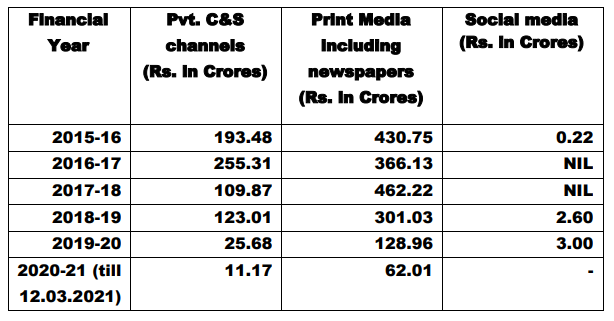
    The NDA-led Centre spent roughly Rs 62 crore on print advertisements to publicise its activities and programmes during the pandemic ravaged 2020-21, which is 51 per cent down from last year. In 2019-20, the government’s total ad spend was Rs 128.96 crore.

    The information was shared by union minister for information and broadcasting Prakash Javadekar in the Rajya Sabha on Monday.

    According to the data, the government had spent Rs 430.75 crore in publishing print advertisements in 2015-16, which came down to Rs 366 crore in 2016-17, and increased substantially to Rs 462.2 crore in 2017-18. However, the downward trend began in 2018, when the print ad spends decreased from Rs 301 crore in 2018-19 to Rs 128.96 crore in 2019-20 and further shrunk to Rs 62 crores last year.

    The plummeting ad spends by the government come at a time when the print industry is struggling to survive the pandemic’s severe blow. Print media thrives on advertisement expenditure of industries including e-commerce, automobiles, and BFSI, which were also impacted by the lockdown. Many businesses ended up pulling out advertisements, as part of budget cuts and also due to a drastic fall in the circulation of newspapers and magazines. The prolonged lockdown restrictions forced several publications to limit the number of pages, shut their editions and resort to layoffs .
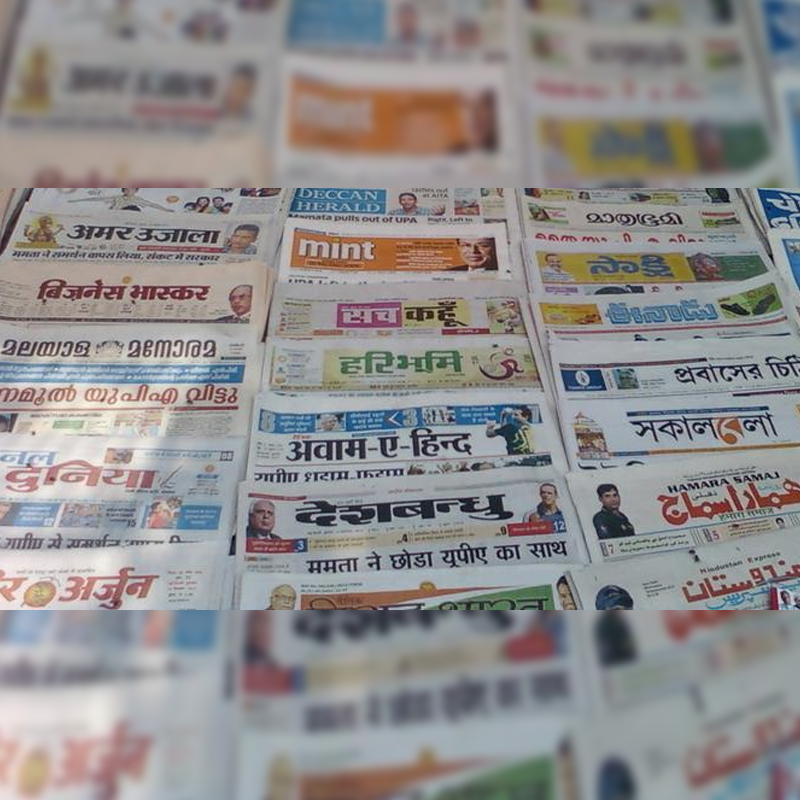

    Last year, the Indian Newspaper Society (INS) had also raised concerns over the rising newsprint and logistics costs and increasing preference for online content.

    The data shared also showed that the Centre spent relatively less money on advertising its programmes and policies on private satellite and cable TV channels compared to 2017. The overall ad spend on television came down from Rs 123 crores in 2018-19 to 25.68 crores in 2019-20 and just Rs 11 crores in 2020-21. The ad spends on social media remained a miniscule part of the total budget, the data indicated.

    The Bureau of Outreach and Communication (BOC), which acts as an advisory body to the government on its media strategy, undertakes information, education, and communication (IEC) campaigns of the government through its empanelled media platforms as per the policy guidelines.

    Javadekar also informed the Parliament that BOC adopted a media mix approach and it is also using digital cinema, internet websites, SMS, and social media along with print, radio and television advertisements for dissemination. He said that BOC had also conducted an all-India survey – an impact assessment study of multi-media campaigns covering 722 districts to study the impact of the campaigns run on various media platforms. 

    When asked if the government plans to increase the ad spend over the next few years, the I&B minister said, “BOC releases advertisements keeping in view the campaign requirements, target audience, availability of funds, and preferences indicated by the client departments.”

  • PubNation: Actually, local languages are not a discovery of digital era

    PubNation: Actually, local languages are not a discovery of digital era

    NEW DELHI: It was in 1492 that Columbus, with his three ships – the Nina, the Pinta, and the Santa Maria – set out from Spain to seek the riches of the Indies. He sailed towards the west for days altogether, his crew getting restless with no land in sight. It was nearly a month later that they reached a new continent, America. What followed were three more tips and lots of exploration. Columbus believed that he had discovered America. But that was certainly not the case. He had only introduced the new world to western Europe. 

    You must be wondering how that story matters here. Well, it does, because for the past few months, many marketers and experts have been claiming that they have discovered the potential regional languages have in India; to promote businesses and increase sales. But is that really the case?

    Vikatan Group MD B Srinivasan (Srini) opines that the saga of the industry discovering regional languages and its potential is quite similar to the tale of Columbus discovering America. “It is not something new. We Indians have always been doing our own thing and we are really good at some of them. The advertisers or the agency can’t really say that they discovered it because there is already some great work happening in that space,” he said at the recently concluded PubNation, hosted by Indiantelevision.com in partnership with Quintype and Gamezop. 

    He aired this view during a panel discussion on the state of the local language market in India. Moderated by Wavemaker India chief growth officer and south head Kishankumar Shyamalan, the session was also attended by Punjab Kesari Group of Newspapers director Abhijay Chopra, Lokmat Media Ltd editorial director Rishi Darda, Mathrubhumi director – digital business Mayura Shreyams Kumar, and Eenadu general manager – marketing Sushil Kumar Tyagi. 

    Srini added, “India has always been a land of multiple diversity and we have been doing a fabulous job (in the regional markets). I am very happy that brands are now beginning to see that with print too. It was always very different when TV came in. Regional television has always taken the lead when compared to English channels. However, that still hasn't changed with English newspapers.”

    It was rightfully pointed out by Srini. The Broadcast Audience Research Association (BARC) report stated that the viewership of regional channels grew from 15 per cent in 2016 to 23 per cent in 2019. Meanwhile, Hindi channels saw a viewership increase of 31 per cent in the same period. 

    Tyagi supported Srini’s thoughts while also sharing some insights. “We launched our Telugu-language news channel in 1995 and penetrated around 30 per cent of overall India. In Andhra Pradesh, we claimed 90 per cent of the audience. Similarly, when we were planning to launch ETV Bangla in 1999, everyone told us that it will not work as Bengal is a prominent part of the HSM (Hindi-speaking market). But we got a phenomenal response from there too.” 

    He added that with Eenadu.net, they are getting great engagement from the NRI community, which goes to show how important regional languages are for Indians. 

    Darda chipped in, “You can look at some interesting data points from a global perspective. If you look at the largest news consumption area, which is the United States, and then look at the top 10 news sites there, eight of them are actually part of either a newspaper group or a television group. Whether it is CNN, Wall Street Journal, or Washington Post. Only two, Huffington Post and BuzzFeed, are independent. Of course, they both are now owned by the same company. Now when you look at the top 10 most read newspapers in India, there's only one English newspaper. The other nine are actually regional local language newspapers. So the future is very clearly going to be with that credible language.” 

    He advised that for any brand, it is extremely important to understand the local nuances and culture. In between the pages is where the opportunity lies in the form of hyperlocal targeting.

    Chopra agreed and noted that Punjab Kesari Group is now decentralising its language offerings with hyperlocal content. “We have been in the market since 1948 and the audience was always there. Now, with digital, we are getting even deeper into the markets. If we just talk about Hindi, there are so many different dialects depending upon the region. So, I have hired a Haryanavi-speaking jaat for our digital channels, who reads the news for that region. I can’t even understand fully what he is saying, but the audience numbers went through the roof. Similarly, we are getting someone native from Himachal Pradesh, who will read the news for the region in their own language.” 

    All these people will be working from their home states permanently, creating a new form of organisational structure that is more agile. 

    In the same vein, Kumar pointed out that Mathrubhumi, too, is diversifying its digital presence as the importance of regional content is amplified now. “We are playing around with a lot of audio and video formats, which is getting us a lot of engagement. User-generated content and network-driven insights, both remain in our focus. We are not digital-first yet, as 85 million people still subscribe to our papers, but the transformation is really happening.”

    The panel opined that marketers and agency personnel should really spend more time in discovering and investing in the hyperlocal capabilities that these digital arms of print publications are equipped with. This will help them in connecting better with their consumers. 

  • Mathrubhumi.com wins at Wan IFRA’s South Asian Digital Media Awards 2020

    Mathrubhumi.com wins at Wan IFRA’s South Asian Digital Media Awards 2020

    Kochi: Mathrubhumi.com the digital news platforms of mathrubhumi group was recently conferred with a bronze metal at South Asian Digital Media Awards 2020 jointly presented by Wan – IFRA, (World Association of Newspapers and News Publishers,).  

    Creating its impact in the industry the metal was honoured to Mathrubhumi under Best Data Visualisation. The article titled’ Lockdownil Pranayuviny Jeevanvechu’ highlighted and explained the difference in air quality in different cities after the lockdown was implemented. The article was selected for illustrating the quality of air in various Indian cities using graphs.

    Mathrubhumi executive editor (Periodicals & Digital) Ramachandran O.R said, "This award winning visualisation is on the unbelievable air quality changes happened during lock down period in India. It is based on the air quality data published by Central Pollution Control Board on their website. They took measurements of 6 air quality elements from 120 cities in India during the four stages of lockdown and compared it with the observed values of the same elements 30 days before lockdown. We analysed the entire data and took a subset of the data having measurements from cities of Kerala and selected cities outside Kerala and made a sun burst visualisation of this data. This visualisation reveals the rise in air quality happened in the cities of Kerala during lockdown. This conveys a positive message to our readers about the reasons behind the rising air pollution of the state and the need of keeping it clean. The whole package was the result of journalistic passion ignited with technology and team work”.  

    The South Asian digital media awards presented by Wan –IFRA, recognise publishers who have adopted digital media and mobile strategies as part of their total product offering to meet the major changes in how people consume news today. Wan-IFRA digital media awards are presented in every region across the world and the winners from each region subsequently compete for the world digital media awards.   

    South Asian Digital Media Awards are presented in ten different categories including best website, audience engagement, native advertising /branded content, paid content strategy, news literacy and Covid19 projects among others. Twenty judges from across the globe evaluated the entries and selected winners. The winners will be presented trophies and shall be honoured virtually at the upcoming Digital Media India 2021 Conference on 2-4 March, next year.