Category: MAM

  • Madison logs into digital future with Vivek Das as chief digital officer

    Madison logs into digital future with Vivek Das as chief digital officer

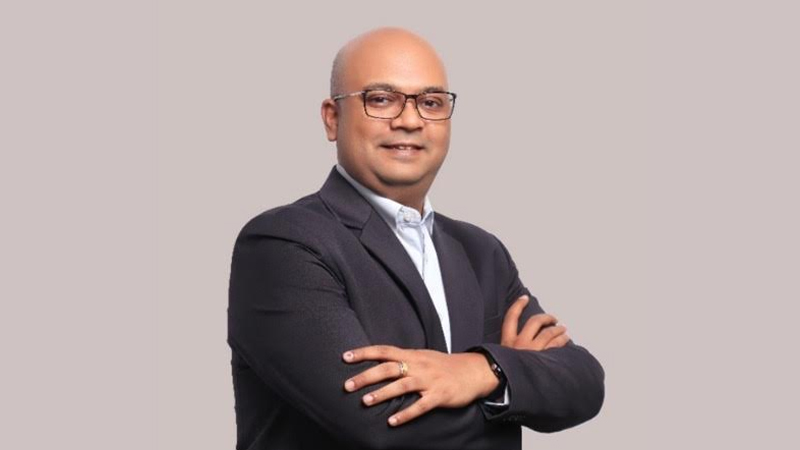
    MUMBAI: When the digital world calls, Madison Media answers with a double click and its newest hire is set to hit refresh on the agency’s future. Madison Media, part of Madison World, has roped in Vivek Das as chief digital officer, a role in which he will report to Ajit Varghese, partner and group CEO, Madison Media and OOH. With more than 20 years of experience spanning entrepreneurship, integrated media, and digital transformation, Das is no stranger to reshaping how brands connect with audiences.

    Most recently, he was on the India leadership team at Essencemedia.com, where he helmed Google India and Southeast Asia WPP’s second-largest account globally. His résumé also features leadership stints at Mindshare and VML (formerly Wunderman), besides a CEO turn at Foxymoron. Beyond the boardroom, he mentors LGBTQIA+ professionals and startup founders, reflecting a commitment to inclusivity and new-age entrepreneurship.

    Welcoming him aboard, Varghese noted, “Vivek joins us at a pivotal time… At Madison, we are building an AI-first planning framework and embedding digital-first thinking into everything we do. His rich experience makes him the perfect leader to accelerate this journey.”

    Das added his own perspective: “I am thrilled to join Madison at a time of great opportunity and change… In the era of platforms, LLMs, and Artificial Intelligence, I look forward to strengthening Madison’s leadership in new media and enhancing the value we bring to clients and the industry.”

    For Madison, this appointment isn’t just about filling a role, it’s about future-proofing its position in a market where AI, creativity, and consumer-first strategies are rewriting the playbook

  • RED FM & Bengaluru police helm road safety with Ganesha

    RED FM & Bengaluru police helm road safety with Ganesha

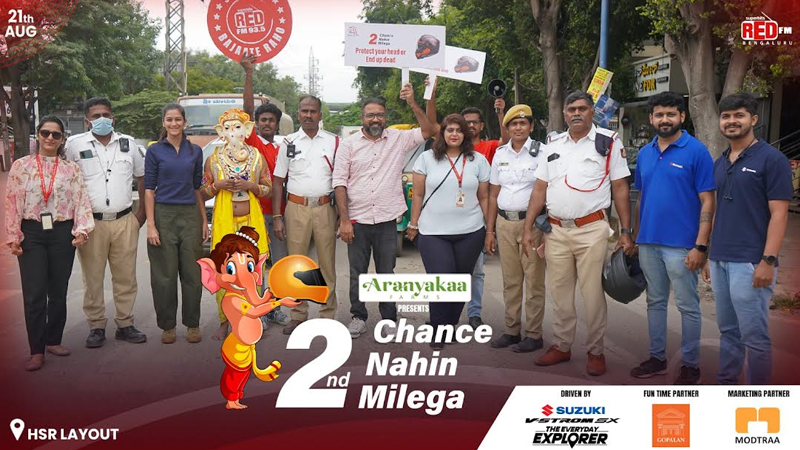
    MUMBAI: Lord Ganesha may have been blessed with a second head, but Bengaluru’s riders won’t be as lucky. That’s the message 93.5 Red FM and the Bengaluru Traffic Police hammered home this Ganesh Chaturthi with their cheeky yet sobering campaign, ‘Second chance nahi milega’.

    Running from 18–29 August, the initiative took a mythological twist on road safety, reminding riders that while Ganesha was revived after his beheading, mortals don’t get divine do-overs. The only shield between life and tragedy? A helmet.

    And Red FM made sure that message wasn’t just lip service. Rjs hit the city’s busiest junctions such as Indiranagar, Silk Board, MG Road, Rajajinagar, Koramangala, and more, alongside the traffic police, stopping bare-headed bikers in their tracks. Instead of just a fine or lecture, riders got a free, ISI-marked helmet and a much-needed reality check.

    The campaign went beyond the roads, too. On-air banter, live bytes, and social media snippets carried commuters’ stories and witty safety reminders to thousands more, weaving road sense into festive celebrations.

    “Through ‘Second Chance Nahi Milega’, we transformed festive celebration into civic action,” said Red FM, general manager – Karnataka, Suresh Ganesan. “By linking mythology with modern road safety, we gave people a reason they could never forget.”

    Bengaluru’s traffic police were just as upbeat. “A helmet is not for the fear of law, it is for your own safety,” stressed joint commissioner of police, traffic, Karthik Reddy. “We are happy Red FM took up this initiative and gave free helmets to riders.”


  • Lauritz Knudsen flips the switch with cricket stars for nonstop India

    Lauritz Knudsen flips the switch with cricket stars for nonstop India

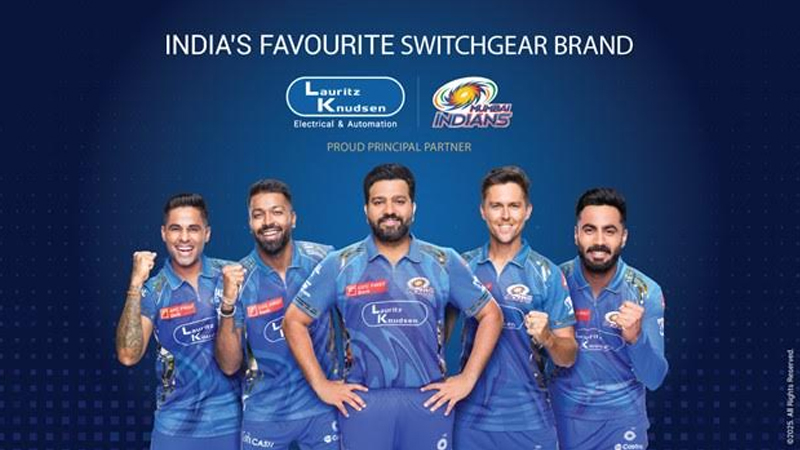
    MUMBAI: When the lights stay on and the game never stops, you know someone’s powering the innings behind the scenes. Lauritz Knudsen Electrical and Automation, a leader in India’s electrical and automation space, has rolled out its latest campaign Powering a Non-Stop India with the star power of Mumbai Indians’ trio, captain Hardik Pandya, Rohit Sharma and Suryakumar Yadav.

    As the Principal Partner of Mumbai Indians, the brand isn’t just about logo placement on jerseys. The campaign spotlights how Lauritz Knudsen keeps India moving from hospitals running 24/7 and factories working round the clock, to homes that never miss a beat. The film runs seamlessly through these everyday scenarios, reflecting the company’s promise of reliability and resilience.

    Backed by creative muscle from Saatchi & Saatchi India, the campaign goes beyond advertising bravado. “Empowering bold and future-ready operations is at the heart of what we do,” said Schneider Electric vice president of marketing for Greater India Rajat Abbi emphasising Lauritz Knudsen’s role in driving a relentless India forward. Saatchi’s Chief Creative Officer Rohit Malkani added, “When you have three cricketing giants and a brand that never stops, the film itself had to move nonstop.”

    With India’s love for cricket as its amplifier and a message rooted in everyday resilience, the campaign blends entertainment with utility. Live across multiple platforms, it plugs Lauritz Knudsen’s story straight into households, reminding viewers that while the stars may play on the field, it’s reliable power that keeps the country’s innings going.

    Would you like me to also suggest a crisper alternate headline option without the cricket pun, in case you want to emphasise the “non-stop India” theme more strongly?

  • Tax Benefits of ULIP Plans vs. Term Life Insurance: 2025 Update

    Tax Benefits of ULIP Plans vs. Term Life Insurance: 2025 Update

    In India, the world of finance is always changing, especially when you look at life insurance and ways to save on taxes. ULIP plans and term life insurance are popular for those wanting to protect their family and get the most out of tax breaks. If you’re planning to in invest in 2025, it’s good to know the tax differences between these options.

    What are ULIP plans

    ULIP stands for Unit Linked Insurance Plan. These plans mix investment and insurance together. A portion of what you pay goes to life insurance, and what’s left is invested in stocks, bonds, or a mix of both. How well those investments do decides how much your ULIP is worth later on. That’s why ULIPs can be a good pick if you want both insurance and a chance to earn some money from the market.

    What is term life insurance

    Term life insurance is a simple kind of insurance. It gives you risk protection for a set time. If you pass away during this time, your beneficiary gets a payment. It doesn’t have any investment or maturity payouts. People like it because it gives you a lot of coverage for a low price.

    Key tax benefits of ULIP plans and term life insurance

    Tax deductions under Section 80C

    Both ULIP plans and term life insurance premiums qualify for deductions under Section 80C of the Income Tax Act, 1961. You can claim a maximum deduction of up to Rs. 1.5 lakh per financial year.

    ULIP plans: Premiums paid for self, spouse, or children are eligible.  
    Term life insurance: Premiums paid for self, spouse, or children also qualify.

    The premium should not exceed 10% of the sum assured, else the deduction will be restricted. This rule is applicable for policies purchased after 1 April 2012.

    Maturity and death benefits under Section 10(10D)

    Section 10(10D) of the Income Tax Act offers exemptions on maturity proceeds for both ULIP plans and term life insurance, under specific conditions.

    For ULIPs: The maturity benefit, including bonus and top-up premiums, is exempt from tax if the premium amount does not exceed 10% of the actual sum assured. For policies issued after 1 February 2021, if the aggregate premium paid in any year for ULIP policies exceeds Rs. 2.5 lakh, the maturity proceeds will be taxable as capital gains.

    For term life insurance: Since these policies do not have any maturity benefit, the provision is relevant for the death benefit, which is always tax-free for the nominee.

    Death benefit exemptions

    In both products, the death benefit paid to the nominee is fully exempt from tax in the hands of the recipient, regardless of the premium amount paid.

    Taxation of surrender value

    ULIPs: If surrendered before completing five years, the surrender value is taxable as per your income tax slab. After five years, surrender value and gains are tax-free unless the annual premium exceeds Rs. 2.5 lakh for policies issued after 1 February 2021.

    Term life insurance: As there is no surrender or maturity value, this aspect is not applicable.

    Recent changes and 2025 updates

    High value ULIPs and taxability

    The Union Budget, 2021 introduced a rule that greatly impacts ULIP plans. If the annual premium paid on ULIP policies issued on or after 1 February 2021 exceeds Rs. 2.5 lakh, the maturity amount will no longer remain entirely tax-free. Gains above this limit are taxed as capital gains under Section 112A, which currently stands at 10% without indexation benefits for amounts over Rs. 1 lakh. In 2025, this rule remains unchanged. It is crucial for high net-worth individuals to evaluate the implications before purchasing multiple ULIP policies to maximise tax-free returns.

    2025 updates for Section 80C

    Section 80C is still the main way to get tax deductions on premiums you pay for ULIP plans and term life insurance. But, the total limit for each person is still Rs. 1.5 lakh. This includes all the investments that qualify, not just insurance premiums. New options like the National Pension System give you extra chances to save on taxes under Section 80CCD(1B).

    Comparing tax benefits of ULIP plans and term life insurance

    ULIP plans and term life insurance both provide tax benefits, but the nature and scope of these benefits vary. While both allow deductions under Section 80C, ULIPs offer additional advantages like tax-free maturity under certain conditions. However, ULIPs also involve complexities such as potential capital gains tax and taxable surrender value if exited early. The table below summarises the key differences:

    Practical examples for Indian policyholders

    Let us consider two investors, Rahul and Priya.

    Rahul buys a term life insurance policy with a sum assured of Rs. 1 crore and pays a premium of Rs. 12,000 per year. He claims this amount under Section 80C, and his nominee will receive a Rs. 1 crore death benefit, completely tax-free under Section 10(10D).

    Priya invests Rs. 2 lakh annually in a ULIP plan. She claims the premium under Section 80C. Upon maturity, since the aggregate annual premium does not exceed Rs. 2.5 lakh, her maturity proceeds will be tax-exempt under Section 10(10D).

    If Priya’s annual premium was Rs. 3 lakh, only the death benefit component would be tax-free. The maturity proceeds would be taxable as capital gains.

    Important considerations for choosing between ULIP plans and term life insurance

    Assess your financial goals

    ULIP plans suit those seeking long-term wealth creation with life cover. The market-linked nature presents both opportunity for growth and exposure to risk. Term life insurance remains best for those wanting to protect their family with a large sum assured and low cost.

    Evaluate premium limits

    To maintain tax exemption on maturity, ULIP investors should restrict annual premiums to Rs. 2.5 lakh across all policies purchased post-February 2021. Term life insurance premiums tend to be much lower for high coverage.

    Investment flexibility

    ULIP plans offer switching benefits between funds, catering to investors with changing risk profiles. This flexibility is not available with term life insurance.

    Conclusion

    For Indian investors in 2025, both ULIP plans and term life insurance are still key parts of a tax-smart financial plan. Term life insurance is simple, cheap, and covers a lot of risk, so it’s great if you just want protection. ULIP plans give you both life cover and a chance to grow your money with the market, plus good tax breaks if you follow the premium rules. Recent tax changes mean it’s really important to pick the right kind of policy and premium amounts.

    If you understand the tax perks, rules around Sections 80C and 10(10D), and how high-value ULIPs are taxed now, you can invest wisely. Always think about what insurance you need and how much you can save on taxes, and make sure your family’s financial safety comes first, not just quick gains. If you’re not sure what works best for you, talk to a financial advisor.  
     

  • Ganesh Chaturthi 2025: Brands pull out all stops for the festive season

    Ganesh Chaturthi 2025: Brands pull out all stops for the festive season

    MUMBAI: Ganesh Chaturthi, the festival that brings Mumbai to a standstill and fills Indian homes with chants, modaks and the heady sound of dhols, has long been more than just a religious celebration. For brands, it is a marketing carnival. The ten-day festival celebrates Lord Ganesha, remover of obstacles and patron of new beginnings. It also signals a consumer mood of optimism and indulgence.

    Companies from FMCG giants to real estate firms time campaigns to coincide with this wave of sentiment. Families repaint homes, stock up on groceries, splurge on new clothes, buy sweets in bulk, and even consider big-ticket purchases such as cars and property. This year, marketers approached the festival with unusual zeal. The result was a crop of campaigns that combined technology, nostalgia and product innovation—some deft, some daring, but all designed to link brands to the emotional core of Ganesh Chaturthi.

    Instamart: Groceries become art
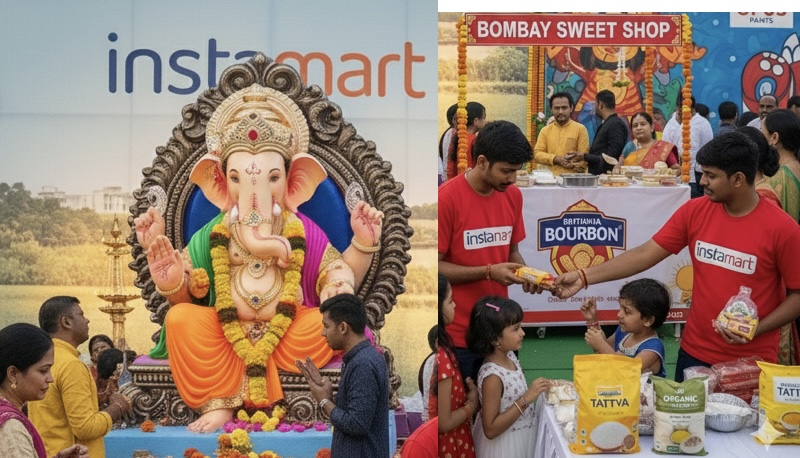
    Quick-commerce platforms usually shout about speed: delivery in ten minutes, essentials at the tap of an app. But Instamart chose subtlety. Teaming up with Arthat Studio, it erected a striking installation in Mumbai’s Inorbit Mall. At first glance it appeared to be nothing more than a chaotic heap of coconuts, diyas, flowers and puja thalis. But scan it through a smartphone, and the pieces aligned into a three-dimensional idol of Ganesha.
    The symbolism was neat. Just as the scattered objects formed a whole only when viewed through the right lens, Instamart promises to assemble the seemingly random pieces of a festive shopping list into one convenient order. Beyond the art, the campaign also functioned as a product catalogue: eco-friendly idols, temple prasad, modaks, decorations, and other essentials featured prominently on the platform. For Instamart, the festival was not only about spectacle but also about asserting itself as the indispensable partner for India’s season of plenty.

    Britannia Bourbon X Bombay Sweet Shop: Tradition with a twist
    If Ganesh Chaturthi has one culinary icon, it is the modak. Sweet shops across Maharashtra line their shelves with hundreds of varieties, from the classic steamed ukadiche modak to innovative chocolate and mango-flavoured versions. Into this crowded space stepped Britannia Bourbon, a mass-market biscuit brand, in collaboration with the boutique Bombay Sweet Shop.
    Their creation—the Bourbon chocolate modak—was a clever cultural remix: a peda made of crushed Bourbon biscuits and choco crème, topped with edible gold leaf. It hit stores and delivery platforms across Mumbai just in time for the festive rush. For Britannia, this was not merely a seasonal gimmick but a signal that even humble biscuits can aspire to festive luxury. For Bombay Sweet Shop, it was another instance of blending old traditions with urban tastebuds. The tie-up underscored a wider marketing trend: heritage foods reinvented for Instagram and the urban millennial palate.

    Organic Tattva: Purity as positioning
    Amidst the sugary excess, one brand chose restraint. Organic Tattva’s campaign was centred on “authenticity”, linking pure, chemical-free food to the sanctity of religious rituals. In a short film featuring Reshma More, a modak specialist, the brand emphasised that offerings made with organic jaggery and flour are more than just healthy—they are spiritually appropriate.
    The move taps into a growing consumer anxiety: are today’s foods safe? By associating itself with puja rituals, Organic Tattva positioned its products as the morally correct choice, not just the nutritious one. In a world of fusion modaks and instant mixes, the brand argued for a return to roots. It was less about modaks themselves than about staking ownership of the values underpinning festivals—purity, health, and continuity of tradition.

    Ganpati babaBirla Opus Paints: The colour of devotion
    For paint companies, the festival season is peak season. Homeowners rushing to refresh walls ahead of Diwali and Ganesh Chaturthi make for a lucrative market. Birla Opus Paints approached the festival with a story rather than a sales pitch. Its digital film showed a boy yearning to bring Ganesha home for the first time. His parents, hesitant because repainting seemed a hassle, eventually relented, understanding that devotion outweighs logistics.
    The metaphor was simple: painting is not just about colour, but about emotional renewal. The act of giving one’s home a fresh coat becomes part of the ritual of inviting joy in. The campaign, closing with the line “Rangon Ko Khushiyan Phailane Do, Duniya Ko Rang Do”, elevated paint from commodity to symbol. By focusing on the child’s perspective, Birla Opus sidestepped the hard sell and instead wrapped its product in emotional resonance.

    Sunny Cooking Oil: A journey home
    Cooking oil is hardly the stuff of cinematic storytelling. Yet Sunny Cooking Oil’s “Letter to Bappa” managed to turn it into one. The film followed a young girl travelling from her city home back to her ancestral village. Along the way she witnessed varied forms of celebration: modest pujas in small homes, elaborate pandals in city streets, and community feasts.
    Her reflections coalesced in a letter to Lord Ganesha, reminding viewers that while rituals differ, the essence—devotion, family, and food—remains constant. Sunny’s long-standing tagline, “Life Aapki, Recipe Aapki”, slotted neatly into this narrative. The implicit message: whether frying festive snacks or preparing a simple family meal, Sunny is a quiet enabler of togetherness. It was an attempt to take an everyday staple and imbue it with festival emotion.

    JSW MG Motor India: Practicality with panache
    In the crowded car market, features such as touchscreen displays, panoramic sunroofs and safety ratings usually dominate. MG Motor took a different tack. Its digital film set in a showroom depicted a family shopping for a car, with a son oddly obsessed with inspecting the boot. Only in the final scene did the reason emerge: he was making sure their new car could carry Lord Ganesha home.
    The reveal was both heartwarming and slyly strategic. For Indian families, festivals are a prime moment to justify big-ticket purchases. By linking boot space—a mundane but practical feature—to a cultural ritual, MG embedded itself into the festive decision-making process. The campaign exemplified how even a rational purchase can be reframed through the lens of emotion.

    Homesfy: A roof for Bappa, a dream fulfilled
    If Ganesh Chaturthi is about beginnings, then few beginnings are as momentous as owning a home. Homesfy, a digital-first real estate brokerage, tapped into this with an ad film tracing a boyhood memory. A group of children marvelled at Ganesha idols in a workshop. One remarked wistfully: “To bring Bappa home, you need a home of your own.” Decades later, the same boy, now a man, finally achieved that dream—with help from his Homesfy advisor.
    The film struck at a deep cultural truth: festivals, especially Ganesh Chaturthi, are intertwined with aspirations of stability and progress. By aligning itself with the emotional climax of home ownership, Homesfy elevated its service from transaction to life milestone.

    The wider lesson
    What unites these disparate campaigns is the way brands sought to move beyond surface-level festivity. Some relied on spectacle and technology (Instamart), others on culinary innovation (Britannia Bourbon), while still others leaned on emotion and memory (Birla Opus, Homesfy). All tried to embed themselves in the rituals, values and aspirations that define Ganesh Chaturthi.
    There is always a risk of over-commercialisation—of sacred traditions reduced to product placements. But when handled deftly, as many of these examples show, brands can do more than sell: they can become part of the collective experience of celebration. In a festival devoted to the remover of obstacles, perhaps it is only fitting that marketers too find creative ways to enter Indian homes, hearts—and shopping baskets.

  • Mumbai gets a slice of heaven as La Chérie’s ‘Dancing Cloud’ lands

    Mumbai gets a slice of heaven as La Chérie’s ‘Dancing Cloud’ lands

    MUMBAI: Desserts don’t usually make the city stop and stare, but this one jiggles its way into the spotlight. La Chérie, Pune’s cult-favourite cheesecake label, has floated into Mumbai with its now-iconic “Dancing Cloud” Japanese cheesecake, a dessert so airy it’s redefining indulgence.

    Unlike the dense, sugar-heavy cheesecakes most Mumbaikars know, La Chérie’s version is souffle-light, made in small daily batches, and entirely preservative-free. The texture is the star delicate, cloud-soft, and melt-in-the-mouth with no gelatin, agar, compound chocolate, or artificial stabilisers sneaking in. A quiet rebellion against hyper-processed sweets, it focuses on freshness, technique, and purity.

    The range caters to every mood: a Mini Dancing Cloud at Rs 299, a Chocolate variant at Rs 359 for solo indulgence, or the Big Dancing Cloud Whole Cheesecake at Rs 899 for celebrations. Available via Swiggy and Zomato, the cakes are crafted to be enjoyed warm or chilled, depending on preference.

    The timing couldn’t be more perfect. With Japanese flavours gaining ground in Mumbai from matcha menus to omakase dining La Chérie taps straight into the city’s evolving palate. What started as a quiet cult in Pune is now shaping Mumbai’s premium dessert scene, proving that sometimes the lightest creations leave the heaviest mark.
     

  • Vidya Balan and Welspun spin a ghostly yarn to show quality makes a difference

    Vidya Balan and Welspun spin a ghostly yarn to show quality makes a difference

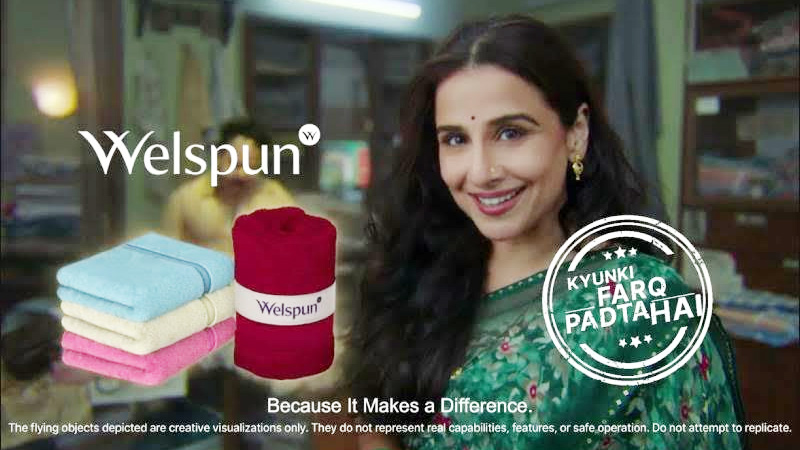
    MUMBAI: When towels turn terrifying and bedsheets get a supernatural twist, you know Vidya Balan is up to something spooky but stylish. Welspun Living Limited (WLL), the global home textile giant, has roped in the National Award-winning actor for its new campaign Kyunki Farq Padta Hai, proving that when it comes to linen, quality really can be a matter of life and afterlife.

    Conceptualised by Atom network, the campaign rolls out with two witty short films, one showcasing Welspun’s Quikdry Towels, the other its Purekot Bedsheets. Both films play with horror-comedy tropes, where ghostly nudges push clueless characters towards smarter choices. Think jump-scares, but with punchlines, as the campaign flips the familiar “kya farq padta hai” on its head to remind us, yes, it does matter.

    Welspun Living MD & CEO Dipali Goenka summed it up: “Every homemaker knows that what we bring into our homes is about trust, care, and durability. Kyunki Farq Padta Hai is our way of showing how small differences in quality can transform everyday life.” Balan, meanwhile, brings her signature blend of gravitas and humour, saying: “There’s a difference between ordinary and better, random and reliable and that’s the story we’re telling with drama, comedy, and truth.”

    Rolling out across TV, digital, print, outdoor and social platforms, the campaign is targeting millions of urban and semi-urban households. With cultural quirks, a dash of nostalgia, and Vidya’s star power, Welspun’s latest isn’t just another product push, it’s a playful reminder that in home linen, the right fabric doesn’t just cover you, it comforts you.

  • Dentsu weighs retreat from global stage after $5 billion gamble falters

    Dentsu weighs retreat from global stage after $5 billion gamble falters

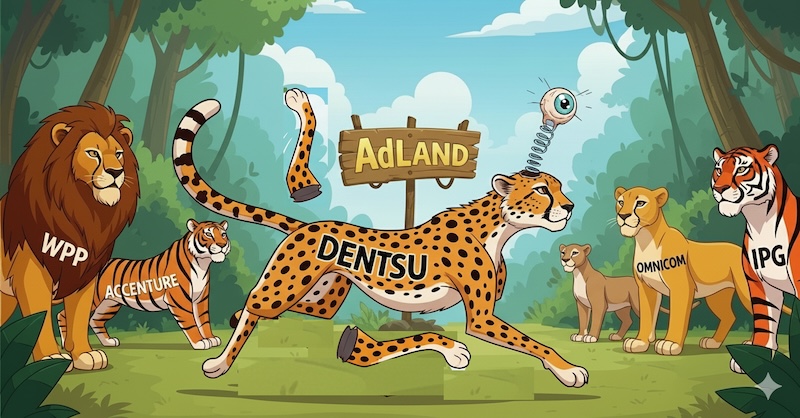
    TOKYO: It was once viewed as a cheetah making a smooth and speedy dash to the finish  tape as it went about muscling itself with acquisitions. But, hardly a decade later,  in 2025, Dentsu, Japan’s largest advertising group and one of the industry’s oldest names, is considering pulling the plug on its international ambitions after more than a decade of struggle abroad. The Tokyo-listed company has hired Mitsubishi UFJ Morgan Stanley and Nomura Securities to approach potential buyers for its overseas creative and media arm — a sprawling business that includes the former Aegis Group, US consultancy Merkle and digital production house Tag — according to a report in the Financial Times on Thursday.

    The move could culminate in a deal worth several billion dollars, insiders told the paper, and would mark a dramatic retreat for a group that only a decade ago sought to rival WPP, Publicis and Omnicom on the global stage. Options on the table range from the sale of a minority stake to an outright divestment of the entire overseas division, which generated $4.5bn in revenues last year but remains chronically underperforming.
    The potential sale underscores the failure of Dentsu’s boldest bet — the £3.2bn ($5bn) purchase of Aegis Group in 2012, then one of Britain’s largest media-buying companies. The deal was meant to be Dentsu’s passport to the global top tier. With Aegis, the Japanese powerhouse — already near-hegemonic at home — vaulted into the ranks of the world’s top five ad holding groups.

    But integration proved difficult. Dentsu’s Japanese arm remained culturally and operationally distinct from its international business. The London- and New York-led operations frequently clashed with Tokyo headquarters, leaving the business fragmented. Over time, larger rivals poached key clients, while the promise of scale failed to materialise.

    Even subsequent purchases, such as the $1.5 billion acquisition of US-based Merkle in 2016, could not reverse the trend. Instead, the group accumulated goodwill impairments and rising restructuring costs. Earlier this year Dentsu wrote down $1.38 billion on its American and EMEA units and earmarked $327 million for further restructuring, including IT upgrades and headcount cuts.

    The pressure has intensified this year. In February, Dentsu unveiled weak 2024 results and suspended dividends. In August, it reported a 0.2 per cent drop in organic revenues in the first half, cut 3,400 jobs — about 8 per cent of its global workforce — and downgraded full-year guidance from 1 per cent growth to flat. It now expects an operating loss of ¥3.5bn ($24 million) for the year, compared with a previous forecast of ¥66 billion profit.

    Hiroshi Igarashi, the group’s president and global chief executive, offered a rare public apology: “I deeply regret this situation and offer my sincere apologies on behalf of the company.” In a call with analysts, he admitted that the international unit “continues to face negative growth across all regions”. Japan, by contrast, delivered record revenues and profits.

    Industry analysts say the bifurcation of Dentsu’s fortunes reflects a deeper problem: a business structurally divided between a dominant home base and underperforming overseas assets.

    “Dentsu’s ownership of the international business was somewhat unusual because of the complete separation between it and the domestic business,” said a media observer. “Japan’s idiosyncratic isolation within the global agency industry meant the leadership in Tokyo was not plugged in to the rest of the world.”

    That disconnect became even clearer after Wendy Clark, then global CEO, quit in 2022, triggering an internal restructuring aimed at closer integration. Yet the changes failed to stem the tide.

    According to people close to the discussions, potential suitors include Accenture Song, large independent networks, and private equity funds that have circled the sector in recent years.

    IPG and Omnicom, however, are seen as unlikely contenders. The two American giants are preoccupied with completing their own merger — a blockbuster deal set to close by year-end, creating a North American behemoth. Meanwhile, Havas has been spun out of Vivendi into a standalone public company, and WPP has fended off repeated speculation about being a takeover target itself.

    That leaves Accenture — which has aggressively expanded into creative services — as perhaps the most credible buyer. Private equity funds could also be tempted by the chance to carve up the business, but the declining revenue outlook, heavy job cuts and uncertain future of traditional agency models may weigh on valuations.

    Any sale would also take place against the backdrop of an industry in flux. Artificial intelligence, once seen as a tool to aid campaign targeting, is now automating functions from media planning to creative production. Rivals such as WPP and Publicis are pouring hundreds of millions into AI platforms that promise cheaper, faster and more personalised ads.

    “Revenues are already shrinking,” one person familiar with the sale process told the FT. “It’s been bad and could get worse as no one knows what AI will do to the industry.” For Dentsu’s global unit, which has struggled even in the best of times, the disruption could prove 

    For Dentsu, a sale would be nothing short of a reset. At home, the company remains unrivalled, commanding more than 25 per cent of Japan’s advertising market. Its domestic operations continue to churn out record profits and steady growth. By contrast, its international adventure has been a costly distraction.

    Back in 2023, Igarashi insisted that selling was “totally not part of my mindset”. Today, facing mounting losses and a fragmenting industry, he has softened his stance, saying only that “strategic alternatives” are under review.

    A sale of the international arm — once Dentsu’s vehicle for global expansion — would symbolise a retreat from ambition to pragmatism. It would also leave the advertising world reshaped yet again, in a year already marked by consolidation, divestments and upheaval.

    Whether buyers emerge — and at what price — may be the truest test of how investors now value traditional ad agencies in an AI age.

  • Easy Trip Planners makes changes at the top

    Easy Trip Planners makes changes at the top

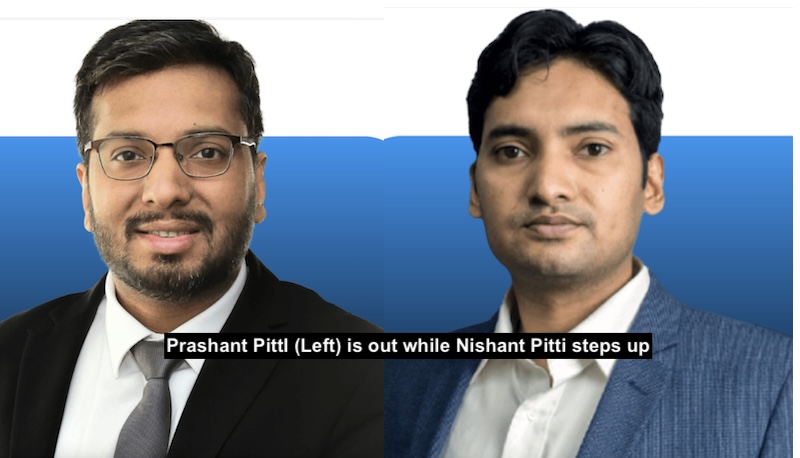
    MUMBAI: Ease My Trip has announced a sweeping boardroom reshuffle. The online travel agency’s board, meeting on 29 August, cleared the elevation of Nishant Pitti from whole time director to chairman-cum-managing director for a five-year term, subject to shareholder approval. Nishant, who co-founded the company, will now steer the business with expanded authority as it eyes growth in a competitive market.

    Alongside, the board appointed Vikas Bansal as whole time director, also for five years, signalling a fresh push to strengthen management bandwidth. Bansal’s induction marks a key addition to the leadership bench as the company looks to broaden its strategic play beyond flight and hotel bookings.

    The shuffle also saw a notable exit. Prashant Pitti, another co-founder, resigned as managing director with immediate effect. His departure trims the Pitti family’s active leadership presence, leaving Nishant firmly at the helm.

    The moves, cleared under SEBI’s listing norms, underline a generational shift in Ease My Trip’s governance and a sharper delineation of roles at a time when India’s online travel sector is recovering momentum post-pandemic and intensifying its battle for market share.

  • Gitika Sharan takes charge of marketing at Wadhwani AI Global

    Gitika Sharan takes charge of marketing at Wadhwani AI Global

    MUMBAI: Gitika Sharan has been appointed head of marketing and communications at Wadhwani AI Global, the artificial intelligence non-profit applying technology to solve challenges in the Global South.

    Sharan joins from Welspun World, where she was general manager martech. Before that, she spent over four years at Indira IVF group, heading internal and external communications, CSR and ESG initiatives, and franchisee operations. Her earlier stints included senior communications roles at Platinum Guild International, MSL Group, Ogilvy PR and Burson.

    In her new role, Sharan will shape Wadhwani AI Global’s brand voice and outreach as it works on AI-led interventions in agriculture, public health and other development priorities. 

    “We are applying AI to address some of the most pressing challenges in the Global South… the focus is on ensuring technology truly serves communities and creates sustainable impact,” she said.